
We talk about the film 'Roma' – Fellini's arrogant and sensual message to himself and everything he loved
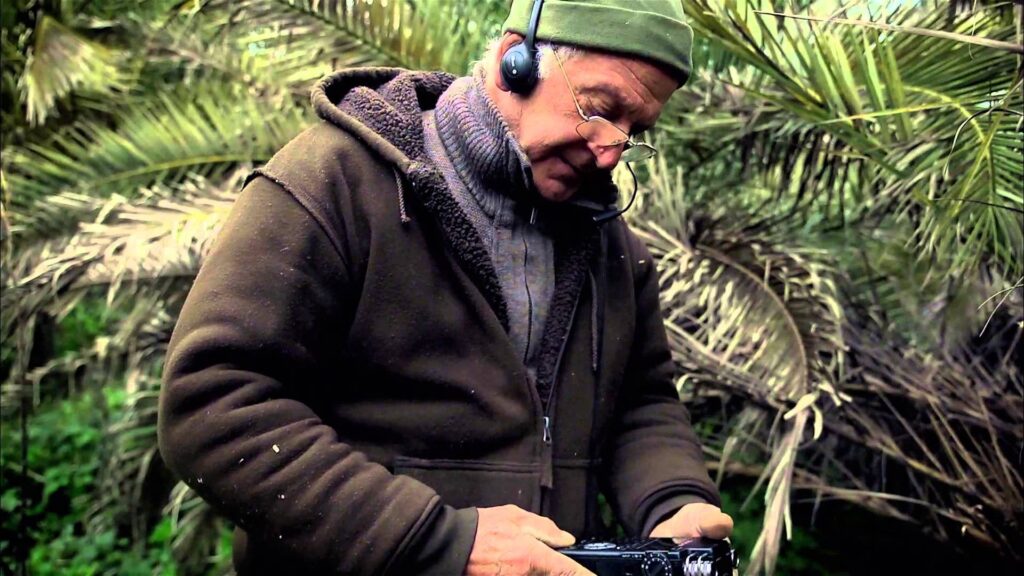
Is the Roman ring road really sacred? It is kind to its visitors and those who live within its bounds, its facade identity scattered in a stream of interpretations and meanings: fishermen on the Tiber, chessboard squares inside patios, communal backrooms stuffed with leopard taxidermy, hunched viaducts, palm hearts and their devourers – weevils. Gianfranco Rosi repeated once more for everyone: Rome is an open city, albeit a bit ringed. Its wonders are documented in a single copy multiplied by infinity.
New documentary filmmaking does not seek analogies; it is subject to that external erosion that has taken hold of thought itself. 'Sacred Roman Ring Road' is precise in its depiction because it chose its heroes and images abstractly, rather than selecting them from a system of resemblances, of symbolic unity. Rome does not belong to Gianfranco Rosi. Actually, Rome belongs only to the community of its citizens, but some find this hard to accept.
The Viewer Is Still Alive
Rimini, 1930, 340 kilometers from Rome, a school principal with a powdered face gives an eccentric history lesson. The silence in the classroom is broken when, instead of cultural and historical heritage, a slide of a naked Italian woman appears, like the 25th frame from 'Fight Club'. This is where the alternative history of Italy's glorious capital begins, as the elderly Federico Fellini takes the director's chair, unwilling to share a single pied of the praiseworthy land.
The school that mocks the phenomenon of the naked body is the classic educational institution 'Giulio Cesare', where Fellini studied from 1930 to 1938. The camera, showing a swelling wave of teenage excitement, does not find its hero – this is the strength and principle of the author's approach, who never forgets the audience and his kinship with it. 'My viewer is dead' is not just a catchy example of Italian wit, but a sad confession of a huge whale whose trill is muffled in the dark depths of the waters.
It was not Fellini who laughed at pious rigorism, not he who attended cinema premieres with Greta Garbo, not his family who gathered around the radio hoarse with the voice of Pius XI. This is the 'merit' of all those born before the spread of washing machines and birth control pills in the stifling provincial bustle.
The motifs of abandonment and autochthony never leave Fellini throughout his life: settledness, but at the same time the desire and necessity to become a match and burn in a puddle of gasoline of the developed industrial north of Italy (and not only, sometimes Fellini's heroes just need to change one backwater for another or lift the curtain of the dream world for a second). This is what his early films are about – 'Variety Lights', 'La Strada', 'The White Sheik', and of course, 'I Vitelloni'. The hero of the latter, Moraldo Rubini, is no different from his clueless peers, 'milk calves', but he leaves his hometown, forever breaking with youth.
'I Made Up Almost Everything About Myself'
It can be noted that the fusion with the masses was facilitated not only by intrapersonal conflict but also by social formations that shifted to culture. In the 1940s and 1950s, it didn't matter much whether you were born in the Sforza Castle, 'visiting' the family box at La Scala, or doodling caricatures of classmates and teachers between attending performances of a traveling theater troupe. You would still make films about the lot of outsiders, financing production from your bottomless pocket or creating a cooperative and fearing to exceed the budget.
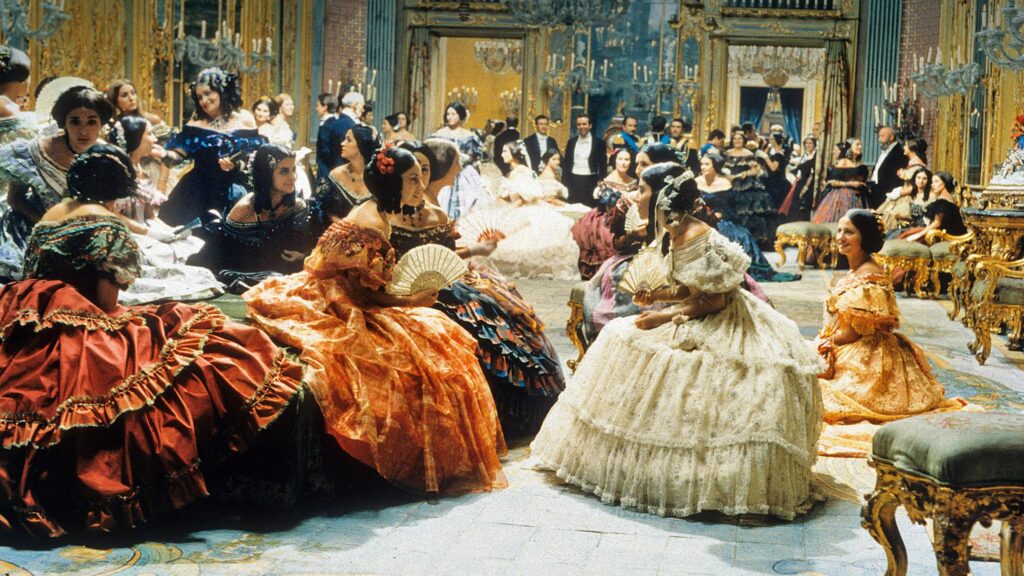
However, later a simple pattern emerges: a director who has caught luck by the tail (if not Roberto Rossellini) does not want to spend his entire career painting slum landscapes and giving portraits to prostitutes and the homeless. Thus, Luchino Visconti distances himself from the Communist Party and turns to the most aristocratic literature of the twentieth century – Camillo Boito, Giuseppe Tomasi di Lampedusa, Thomas Mann, and Marcel Proust (due to the director's death, the search for lost time ended before it began).
Fellini, the son and underfed 'calf' of Italy, feels a natural need for publicity, entropy of the authorial core. Georges Bataille wrote about the excess and uselessness of all art, comparing it to solar bursts, a solar opera, but one can disagree with this. To breed life similar to oneself, one must realize oneself as a 'proto-image', reject the sages of Salamanca, and sail to an unknown continent. Until this moment, all excess drowns in commonality. In Italy, this commonality was the movement – neorealism.
Federico Fellini timely and paradoxically successfully rethought his cinema. His last neorealist film was released in 1957, and just three years later, Moraldo Rubini, who left 'I Vitelloni', changes his name to Marcello and joins bourgeois society. Can it be said that Fellini preferred the monologism of personal history to the rare sobs of his fellow citizens? 'La Dolce Vita' and 'Roma' can, if not answer, then level the value of this question.
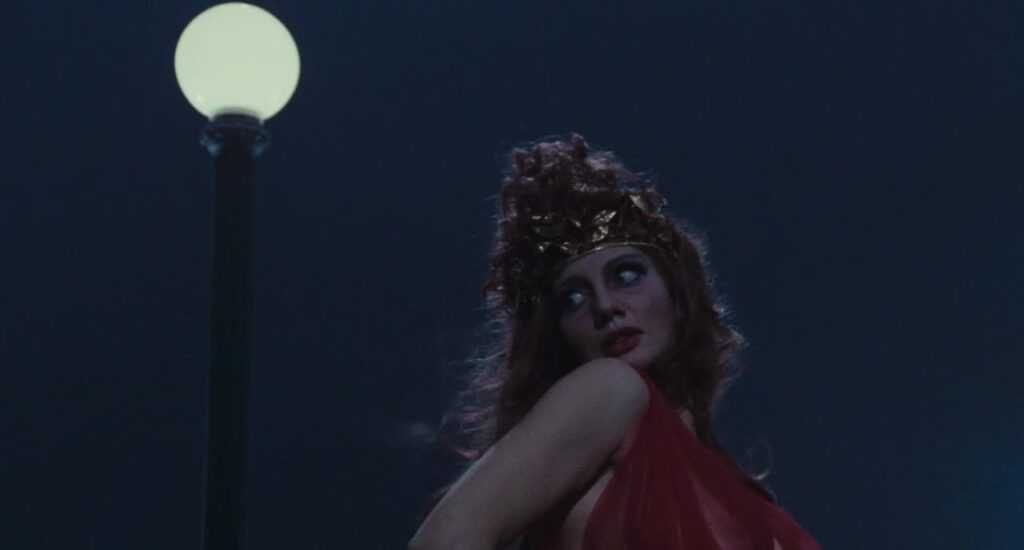
Fellini's work was never honestly and openly biographical:
'I made up almost everything about myself: my childhood, my character traits, nostalgia, dreams, and memories. I made it up so I would have something to tell. There is nothing autobiographical in my films.'
We have no right to dispute the introspectiveness of this phrase, but we allow ourselves to note its deliberate sharpness and contradictoriness.
The director never filmed himself, never turned to the church-canonizing genre of hagiography – that is true, but practically every one of his works after 'Nights of Cabiria' screams about the significance of the one who made it. Marcello Rubini bears that surname because Moraldo bore it, but besides that, they are united by loyalty to the director's mood and life situation, in which Fellini exists not as a person, but as a character.
His unspoken appearances in 'La Dolce Vita', '8½', 'Fellini's Casanova', 'Amarcord', and 'Roma' are like the baths of Artemis – a hymn to self-ostracism and isolation. Artemis did not allow the violation of personal boundaries, so she sought solitude. Fellini chose a different tactic and hid not in a narcissistic pond, but in one of the noisiest places in Europe and simultaneously outside its borders.
The author so diligently multiplied the myth about himself and his independent 'enclave' Italy, so fiercely rejected the new viewer, so carelessly distorted the complacency of linear structure, that he created his own Rome, which resembles the real city no more than Francis Ford Coppola's Megalopolis.
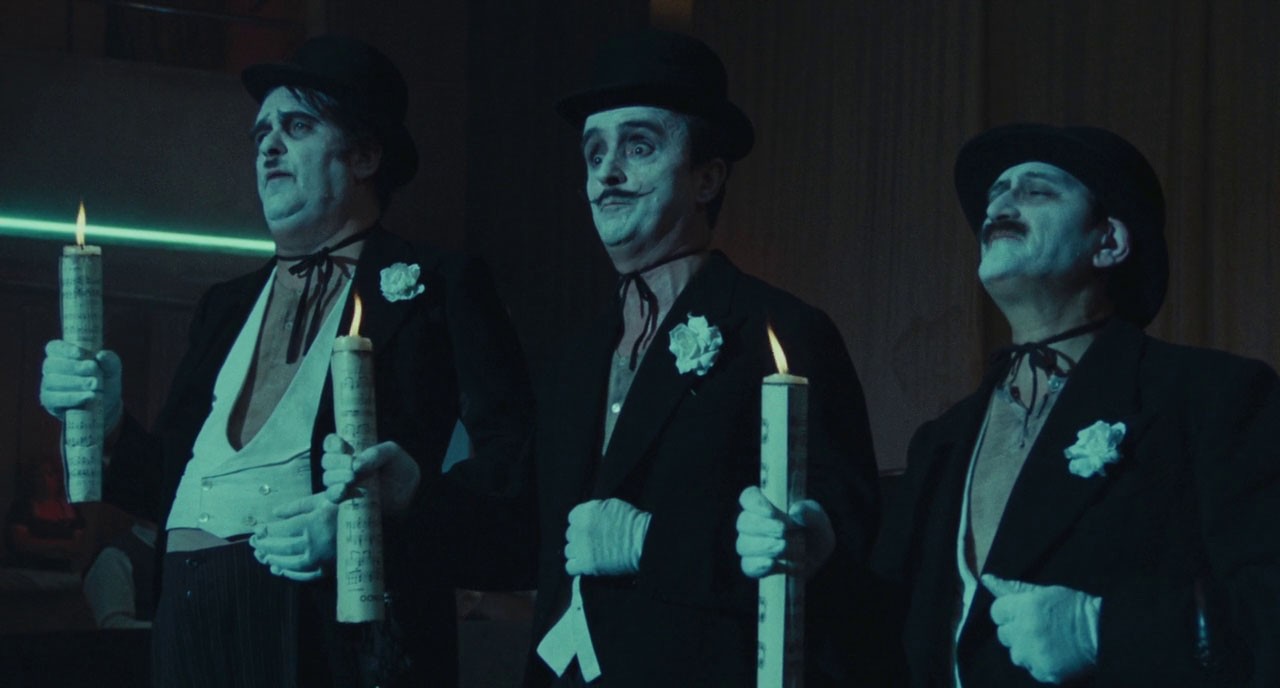
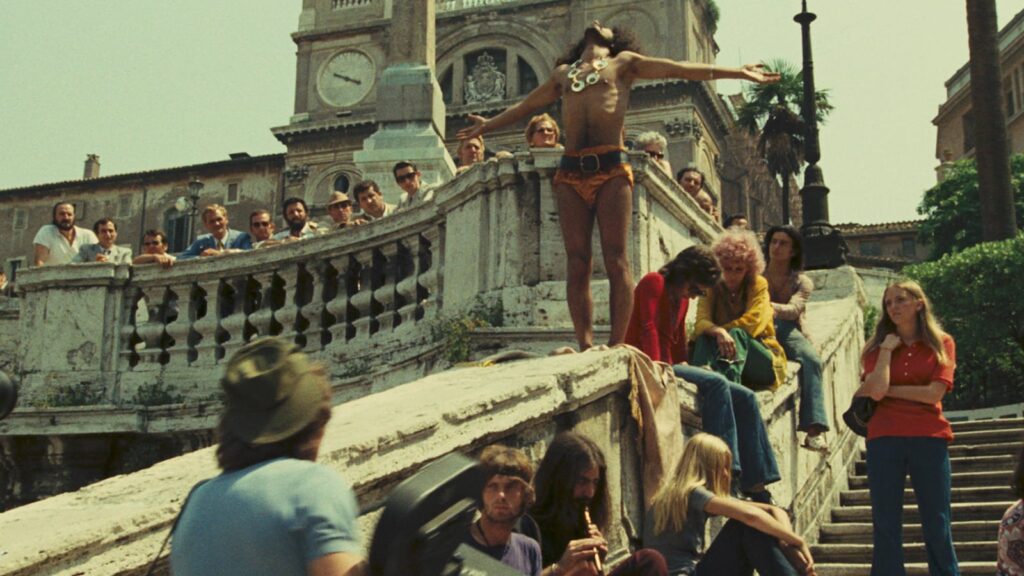
The semi-documentary film about Rome begins in Rimini, inconsistently captures several timelines, through theater addresses the emperor of the Roman Republic Caesar, fragments the plot into semi-incoherent novellas, makes up characters as mimes, as if anticipating the appearance of the melancholic Swedish Bosch – Roy Andersson, and through the lips of Anna Magnani says: 'Federico, I want to sleep.'
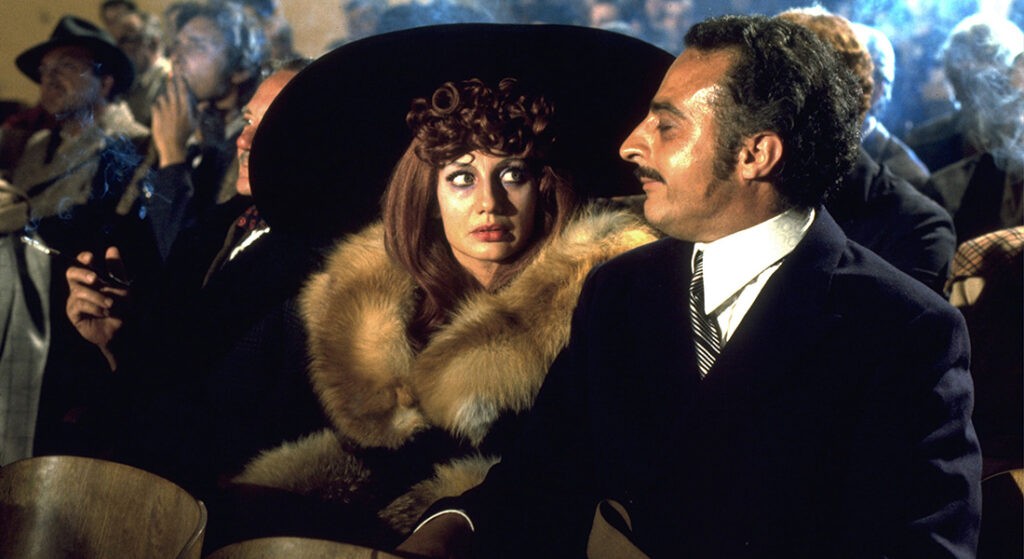
Anna Magnani is included in the narrative layer not only for a short pre-final dialogue. She is part of the architectural order, the legacy of Rome named after Fellini. Just like Marcello Mastroianni, Alberto Sordi, Gore Vidal, and John Francis Lane. Artemis hides surrounded by nymphs; they legitimize her secret, the cult of her divinity. The only difference is that in Fellini, the nymph is beautiful in her sophistication, so it is Magnani who adorns the shaky heights of the atonal work.
The Roman ring road is indeed sacred, and Rome itself is an open city. So say those in love: Gianfranco Rosi and Roberto Rossellini. One could recall a dozen more 'Romes'. The anxious Rome of Umberto Lenzi, the dirty but free one of Pier Paolo Pasolini, the poor and hopeless one of Giuseppe De Santis. There is even a 'different' Rimini, on the leeward side of which wanders the fat and lost Ricky Bravo. But among them there is no Rome of Federico Fellini, forever hidden under the four letters of the original title Roma.
Trailer:
Comments
0No comments yet.
Sign in to join the discussion.