
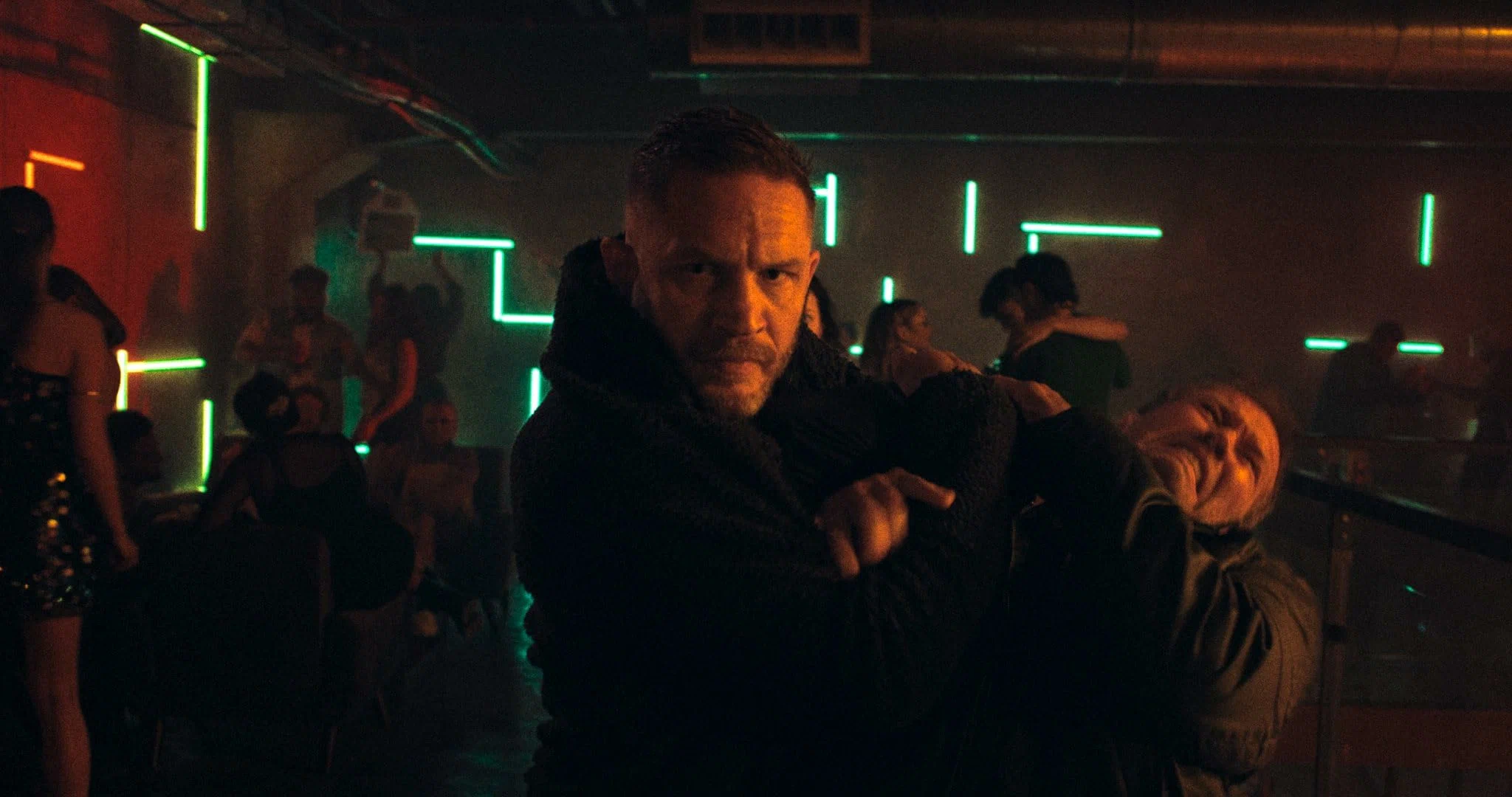
How a new auteur action film was born in a country without a film industry, and why Hollywood destroyed it. We tell you about the new Netflix blockbuster "Havoc."
Gareth Evans' experience as a director is unique. After earning a master's degree in screenwriting from the University of Glamorgan, he found no professional use for it and followed his wife to Indonesia, where he worked in television. Commissioned by a production company, Evans took on a documentary about the martial art of Pencak Silat and, like Wim Wenders, turned a commercial concept into an artistic one, just without the toilet stalls.
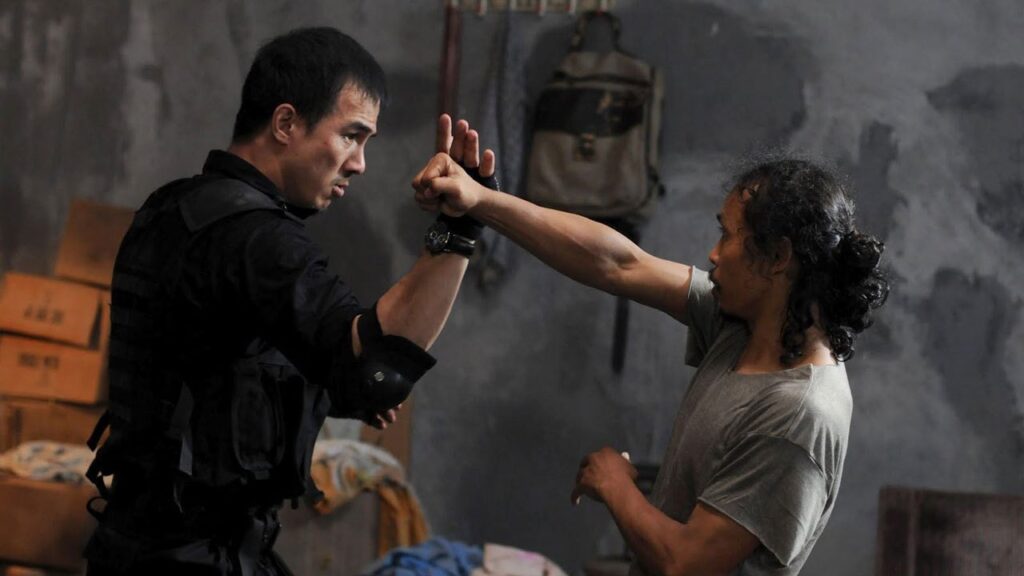
Indonesia became more expansive with Evans' cinematography. Iko Uwais and Joe Taslim helped shake off the shock of cultural jet lag. Silat guided the concrete stomach of the film "The Raid": any body part can inflict injury and become injured in an acrobatic fight. Perhaps this modularity can be taken as the philosophy of the "Raid" duology and the standalone "Merantau."
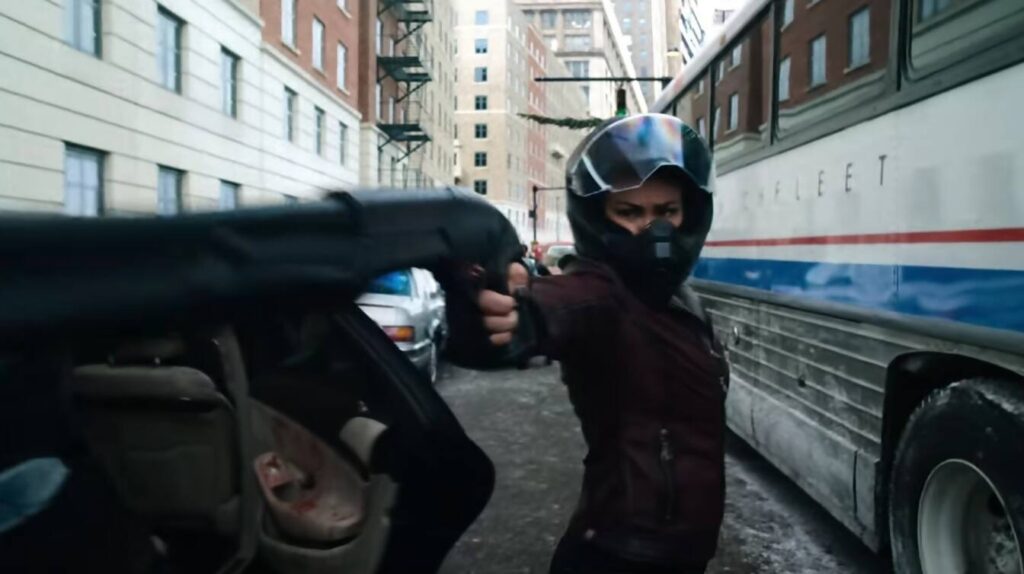
Even weapons Evans imbued with the spirit of a martial school. For instance, Alicia Hammer Girl wielded hammers with sharpened claw hammers – a nod to one of the branches of silat, silek harimau (open palm technique imitating a tiger's paw).
However, the director is not just a "forced" fan of Indonesian martial arts. Evans grew up on Asian action films and auteur cinema. The same Alicia is an unexpected fierce double of Brigitte Lin's character from "Chungking Express," and Uwais' character from "Merantau" is a referential likeness of Ting, born from the mind of Tony Jaa.
They Were Making "The Raid 3"
Gareth Evans' new film has moved to a criminal American metropolis, but the director insisted on the Hong Kong nature of the film "Havoc", although ideologically it oscillates between two worlds. Aggressive, blood-pulsing chamber scenes, like John Woo's, grainy contrasts fading into monochrome, like Johnnie To's, the impulsive hatred of the Triad syndicate, but at the same time corrupt police, a dialogue of American rationalism and a drive for self-destruction, a Christmas backdrop, and the highlighted destructiveness of disorganized social policy.
For a second, it might seem that the synthesis described above spins Evans into a new productive career turn. The director sets up production in a country with an underdeveloped industry and lands a big-budget star blockbuster. Without losing his composure, he makes a promise: "Havoc" is what the canceled "The Raid 3" could have been.
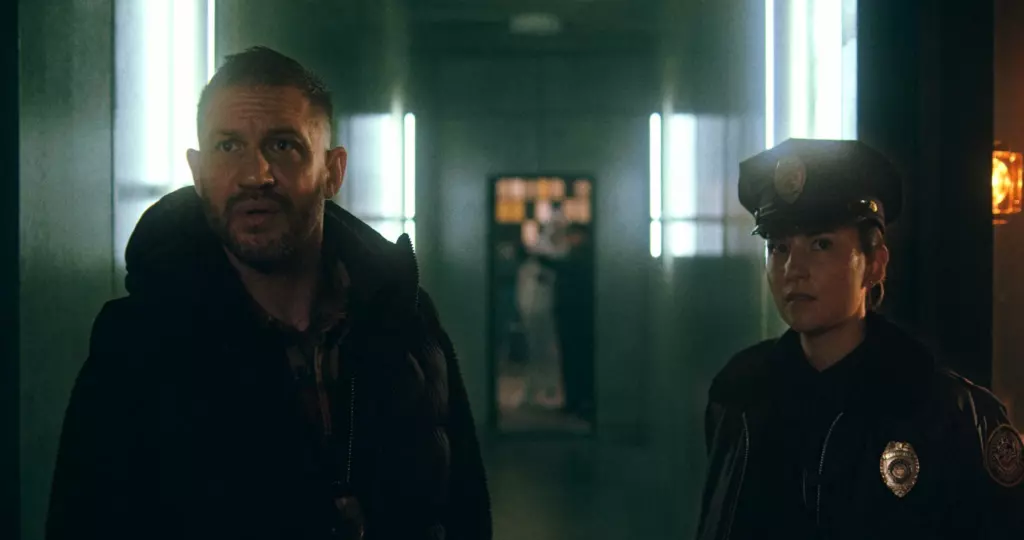
The beginning greets the viewer with a weighty statement from protagonist Walker (Tom Hardy) about the fatal consequences of a single choice. He committed an unforgivable act against his conscience, betrayed his police badge, and destroyed a happy marriage. Additionally, the son (Justin Cornwell) of a friendly politician (Forest Whitaker) gets caught in a shootout between the Triad and sinister "demons" in masks. Walker traditionally wants out, but to do so, he must get involved in a war between criminal groups. A principled and empathetic colleague, Ellie (Jessie Mei Li), helps the lawman carry out his plan.
The polyphonic bark of a quarreling orchestra is a common situation for a modern action film. Opposing sides are usually more than two, the causes of conflict are a matter of intrigue, and the main characters are overwhelmed by complex feelings. If the action film is successful, the character arc mess is counterpointed and supplemented by storytelling through action and environment, leaving the answers to the most bland questions out of work. "Havoc" functions differently.
A Greedy Anti-Action Film
The film wants a charismatic corrupt politician, wants an intricate double game in the police department, limps but pretends to be a buddy movie, narrows the Triad's motives to personal bias, fits a city of vanished historical perspective into the runtime, and talks, asks, explains, interprets, stops—in short, uses all sorts of techniques to retard the artistic tempo.
It seems impossible, but in Gareth Evans' nearly two-hour film, there are three action segments, one of which is a chase! In total, they take up less than a third of the film, which for a pure-blooded action film, its predatory speed, is a death sentence.
Antonin Artaud conceptualized doubling as a way to overcome micro-traumas from the cycle of repetitions of the theater of cruelty. Before filming "Havoc," Tom Hardy should have been provided with a specially trained split that would travel through the actor's past roles and erase them from treacherous memory. Walker is a mix of any sociopath played by Hardy and the goofy duo Brock – Venom. And if those two were clowning and having fun, then the serious tone of "Havoc" must make room, because now Walker will be the one joking.
Every stand-up needs a listener, so Evans tries his hand at the buddy adventure genre, and Ellie is paired with Walker, but only for fifteen minutes. Next on the schedule: a speech of the offended about revenge, memories, a demonstration of the antagonist's cruelty, and sticky layers of lazy exposition.
How to Catch All the Fish in the Ocean?
Streaming services have always relied on a formula for creating film-containing products. Sometimes the formula worked, and the company's library was replenished with a dozen excellent projects in a single year. However, any strict structure leads to universalization and de-uniquification, and if at the beginning such an approach allows for deviations, encourages moderate and balanced creativity, then once it gains strength, it ceases to be flexible. Netflix of 2025 does not target a specific viewer; it needs an all-encompassing abstract viewer, whose existence is biologically impossible.
Back in the 20th century, Gestalt theory personalized the system of patterns in viewer perception, noting fluctuations in the area of basic elements of the cinematic medium, but the strategy of film giants does not see the difference between two states: being friendly-attractive and being for everyone. The first helps attract a differentiated audience, the second – jelly shores in management's dreams.
In the 21st century, attempts have already been made to separate mass cinema and genre cinema, for genre is a phantasm of specialized cinematic techniques, the appearance of which on screen is necessary for the formation of aesthetics. Gareth Evans' "Havoc" is not an action film or a genre film, but the embodiment of a disfigured model of mass cinema, a ruthless "all-cinema." From a creative standpoint, the director gains almost nothing from collaborating with Netflix.
It is important to note that Gareth Evans is incredibly talented, and the fragments of hand-to-hand combat scenes that survived the editing table look unique and mind-blowing, but this bright and pleasant insignificance cannot hide the global impoverishment of the author's style and the bitter despondency from watching "Havoc" and subsequent comparison with the "Raid" franchise.
Trailer:
Comments
0No comments yet.
Sign in to join the discussion.