

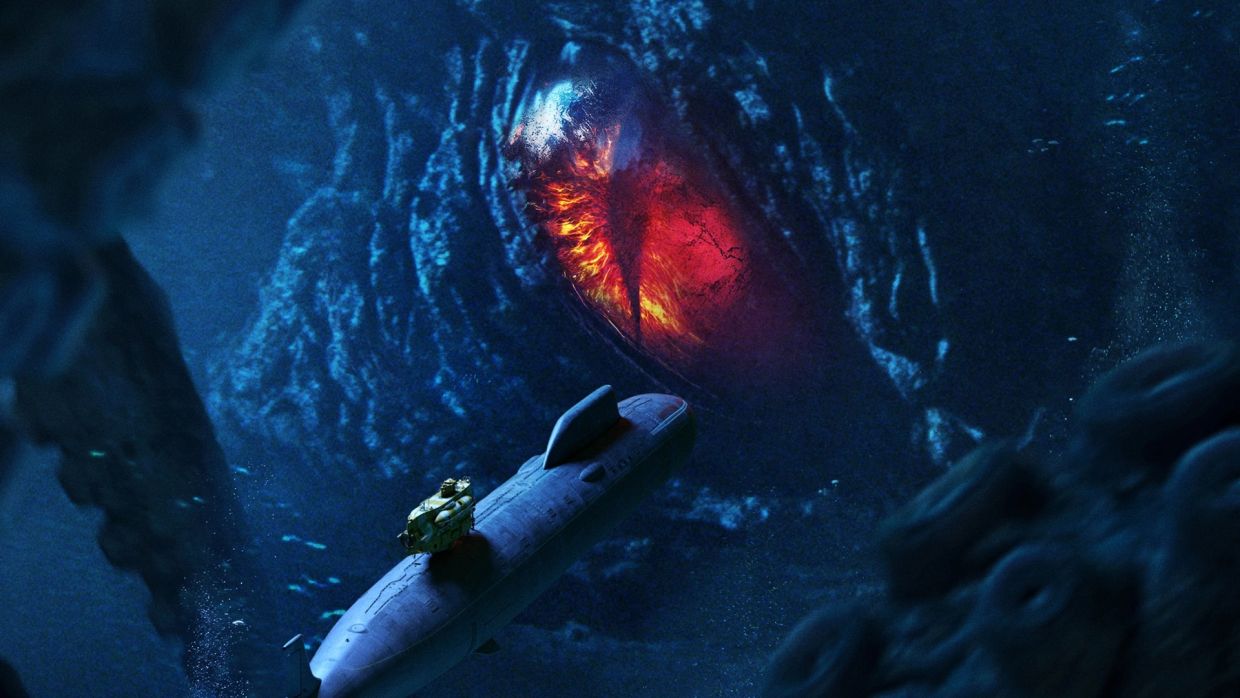
According to legend, Davy Jones has a monster in his service, a creature with giant tentacles that tear faces from bones and drag entire ships to the bottom, into the abyss of darkness. This is <i>Kraken</i>—a new Russian film starring Alexander Petr...
In the Greenland Sea, during a secret mission, a special-purpose nuclear submarine, the Ermak, suffers a disaster. Captain Alexander Voronov (Viktor Dobronravov) manages to send a rescue beacon at the last moment, which will transmit the coordinates of the sunken submarine.
Immediately after receiving the signal from Commander Viktor Voronov (Alexander Petrov), Alexander's younger brother, he is recalled from leave to carry out a critical mission. His task is to save the crew if possible and destroy the top-secret weapon stored on board the Ermak to prevent it from falling into enemy hands.
At the same time, in northern waters, the Kraken awakens—a giant sea monster, a cephalopod that has been the nightmare of thousands of sailors. The monster's awakening is triggered by geological research at a polar station. It is this creature that the sailors searching for the missing submarine will have to face.
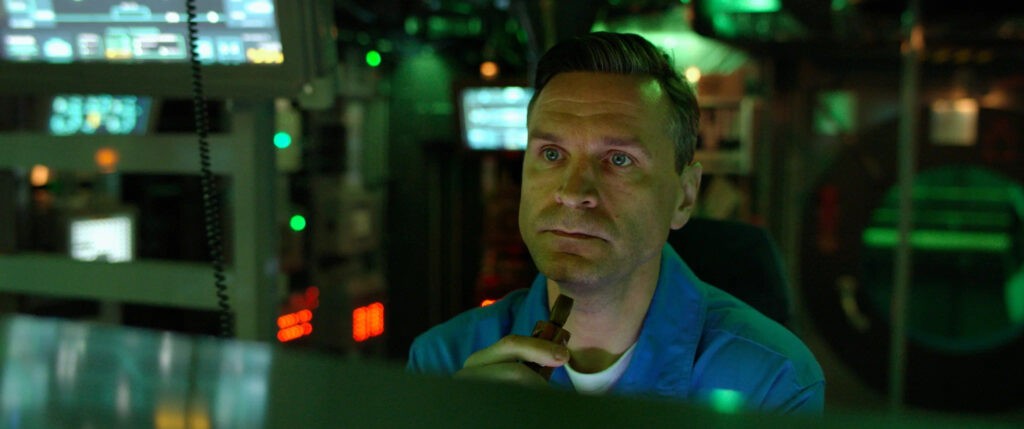
The sci-fi action genre is not particularly popular in Russian cinema. Although in the mid-2000s, Timur Bekmambetov directed a decent adaptation of Night Watch and Day Watch, which not only performed well at the box office but also gained popular love. After that, there were no particularly outstanding projects that could achieve similar popularity. One could recall Fyodor Bondarchuk's duology Attraction and Invasion. But for many, such an example would likely evoke mockery and skepticism towards Russian entertainment cinema, largely due to negative reviews from BadComedian. However, as an exception, it is worth noting the recent success of 100 Years Ahead, which seems to have somewhat brightened the situation.
Russian filmmakers are doing slightly better with grounded blockbusters that feature neither giant monsters nor time travel. Among these, <i>The Crew</i> by Nikolai Lebedev and <i>T-34</i> by Alexei Sidorov (<i>Brigada</i>, <i>World Champion</i>) stand out. They were the key figures responsible for creating the domestic version of <i>Godzilla</i>. Lebedev took the director's seat, and Sidorov became the screenwriter. What could possibly go wrong?

From <i>Legend No. 17</i> to <i>Dodgeball</i> – here are 5 best hockey films.
Open material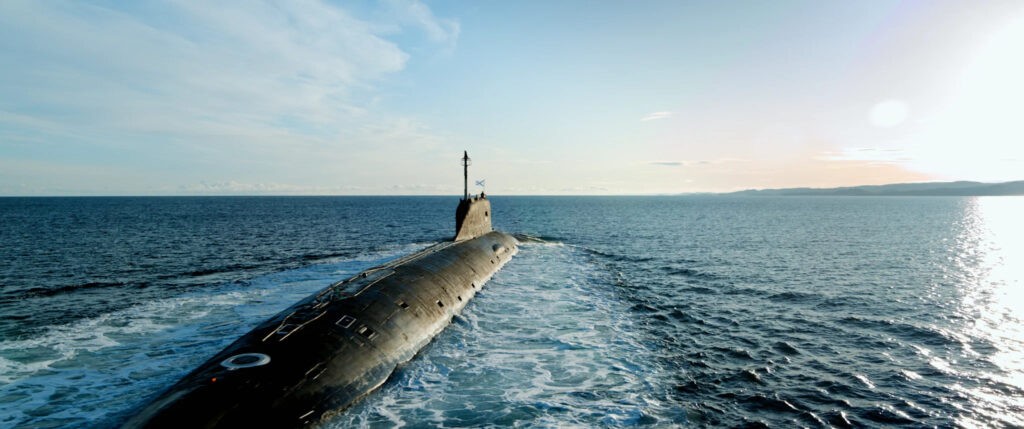
From the very first minutes, the viewer dives into the thick of events, immediately understanding who is responsible for the submarine's disappearance. Then begins a standard introduction of the main character, created according to the templates of cheap Hollywood action films. Loud, pompous music plays in the frame, under which a cool man in sportswear with a hood and headphones runs through the city, while secondary characters speak of him as a superhero. This technique is so overused that it can itself cause laughter and bewilderment. Although for many, this may seem like a minor detail.
Next, we are superficially introduced to the protagonist's inner world, and then the most banal story about saving a drowning person begins. The attempt to add intrigue to the story is noticeable but does not hold up and falls apart in the very first minutes of the film. But what about the hero, for whom, in fact, the entire filming process was started? For most of the film, the giant monster carefully hides its true form in the dark depths of the ocean, but we will still get to see it in all its glory in one tiny scene. However, the glory will be short-lived, because high-quality graphics are an expensive pleasure.
Even if you ignore all the fantastical assumptions, what is most surprising is that the film, which positions itself as entertainment, does not provide any pleasure at all. The picture is not particularly dynamic, and the attempt to create an atmosphere characteristic of Stanislavskian theatricality on screen looks ridiculous and does not match the genre.
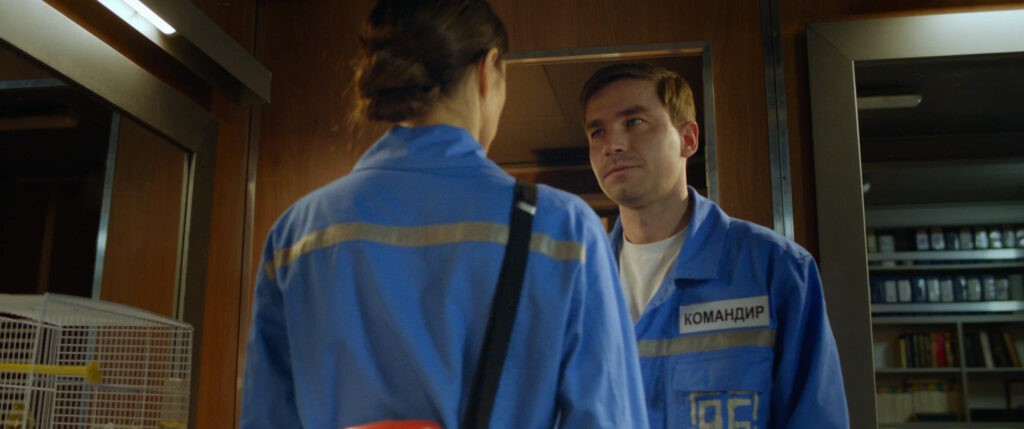
Kraken lacks lightness, gripping plot twists, and real tension. Even the final battle with the monster, which we were prepared for over two hours, does not evoke the emotions that should have appeared at the end. They were lost during the viewing due to the insufficient development of the character and weak dramaturgy between the characters. Moreover, the love line in the film resembles scenes from cheap Russian melodramas that can be seen on the Domashny TV channel, which only exacerbates the situation. Don't the creators have any questions about the quality of the script?
However skeptically the Russian viewer may perceive the film T-34, it must be admitted that it at least does a decent job of fulfilling its main task—entertaining as a cinematic attraction (as much as possible for Russian cinema). In the case of Kraken, the creators should fear not so much criticism for the accepted conventions (unfortunately, they are always unavoidable) as accusations of primitiveness and inability to relieve boredom. One does not expect this from an adventure disaster film.
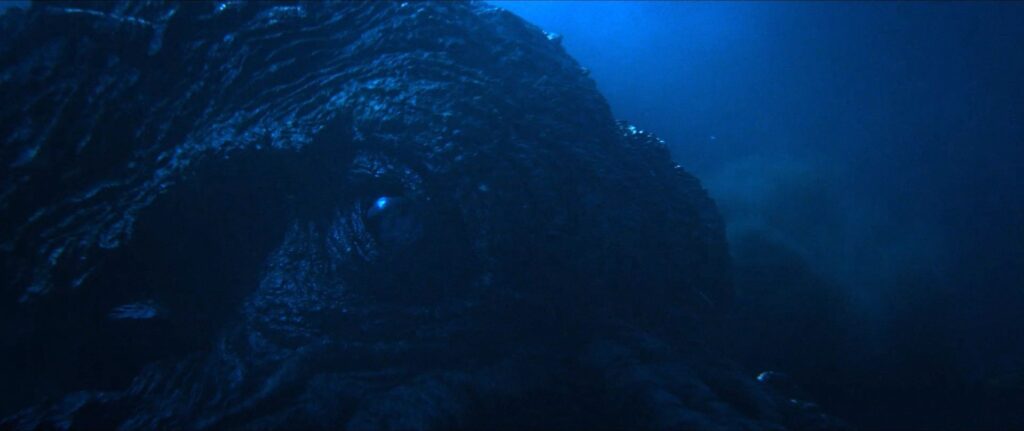
The main mistake of the creators is the attempt to make a serious film about the notorious giant underwater monster the size of a skyscraper. The idea is too absurd to be taken without a smile. Neither the pompous bravado of the submariners nor the talented actors make the plot deep and unique. Instead of giving the film originality and distinctiveness, which would help it stand out favorably from Hollywood blockbusters, the creators repeat clichéd tropes. As a result, instead of a coherent sea monster, we get something vague and uninteresting, resembling Frankenstein's monster, glued together from pieces. Famous actors and an active advertising campaign will attract viewers' attention. But further, only good word-of-mouth will help. And there is little hope for that in this case.
Comments
0No comments yet.