

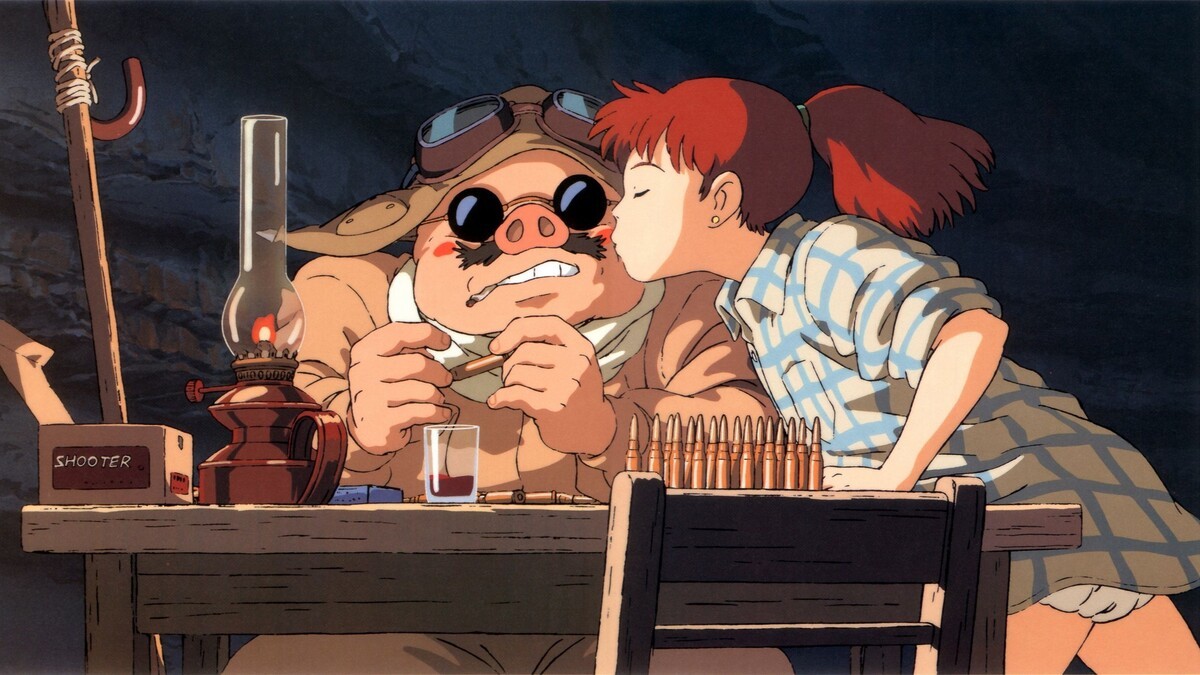
We continue the marathon of reviews of Hayao Miyazaki's works. On April 17, the most non-fairy-tale film of the master, "Porco Rosso," was released. We talk about pigs, airplanes, and figure out what the war in Croatia has to do with it.
Porco Rosso, or Marco Pagot, is a hero of World War I. The character was a bit unlucky and instead of numerous medals, he got a pig's snout. But time does not stand still, and fascists come to power in Japan, disrupting Porco's peaceful life. Now, instead of conquering the sky in a crimson seaplane and fighting air pirates, the hero has to hide from new enemies to avoid arrest.
At the same time, Porco Rosso's best friend—his seaplane—needs repairs. And how can you escape from fascists when your only reliable comrade can't help? Of course, you can't, so the character goes to fix the "machine" and meets a young aircraft designer, Fio Piccolo.
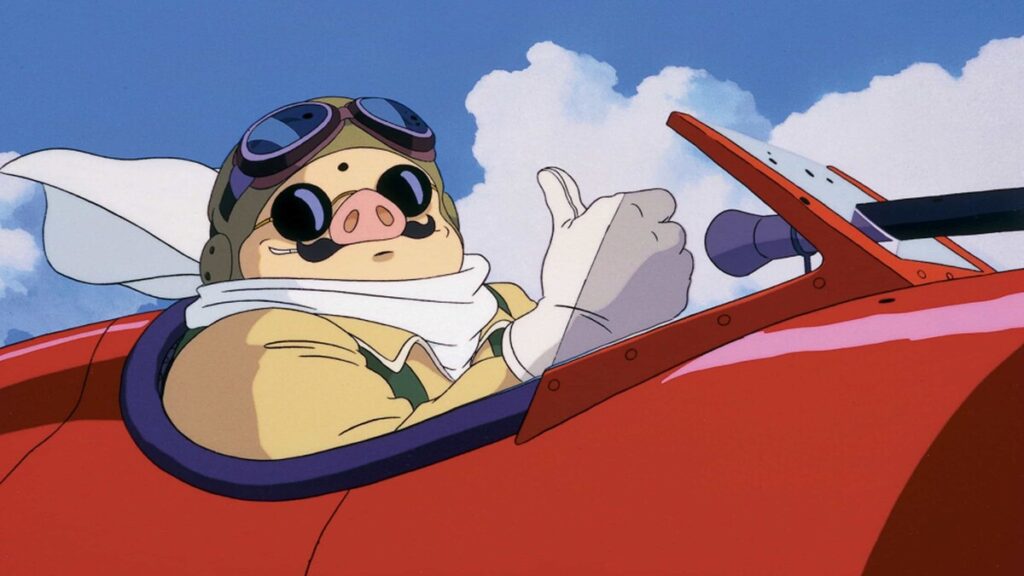
"Porco Rosso" was created based on the manga "The Age of the Seaplane." Originally, the film was planned as a short movie that Japan Airlines commissioned from the director to show on short flights. But the war in Croatia disrupted all plans. The master had to move the setting of "Porco Rosso" to an unknown island and slightly rework the plot of the film.
On December 7, possibly the last anime of the brilliant Hayao Miyazaki, "The Boy and the Heron," will be released in official Russian theaters. In this regard, our editorial team decided to briefly tell why
Open materialBecause of this, the runtime increased, anti-militarist statements and a touch of drama caused by the war reappeared. Thus, "Porco Rosso" grew from a light in-flight film into a movie with a strong (and another for Miyazaki) agenda. By the way, at the beginning of the film, you can see opening credits written in ten languages. This decision was made precisely because the film was planned to be shown on board aircraft, which could be international.
"'Porco Rosso' is a breath of fresh air for those who constantly travel on business trips and whose brains are already tired of long flights. Of course, it should be a work that will appeal to boys, girls, and their aunts. But we must not forget that the main viewers of this anime are tired middle-aged men, whose exhausted brains are more like tofu."
The main pacifist of the film is Porco. Disillusioned with people and life, and having seen all the horrors of war, he renounced weapons. Even in the final scene (the aerial duel), the character shoots only into the air, or does it as proof that the machine guns are not jammed and the machine is working. Here, it's not even worth reminding again that Miyazaki is an avid anti-militarist. His works speak for themselves. And by flipping through sources a bit, you can learn that the master's childhood fell during World War II.
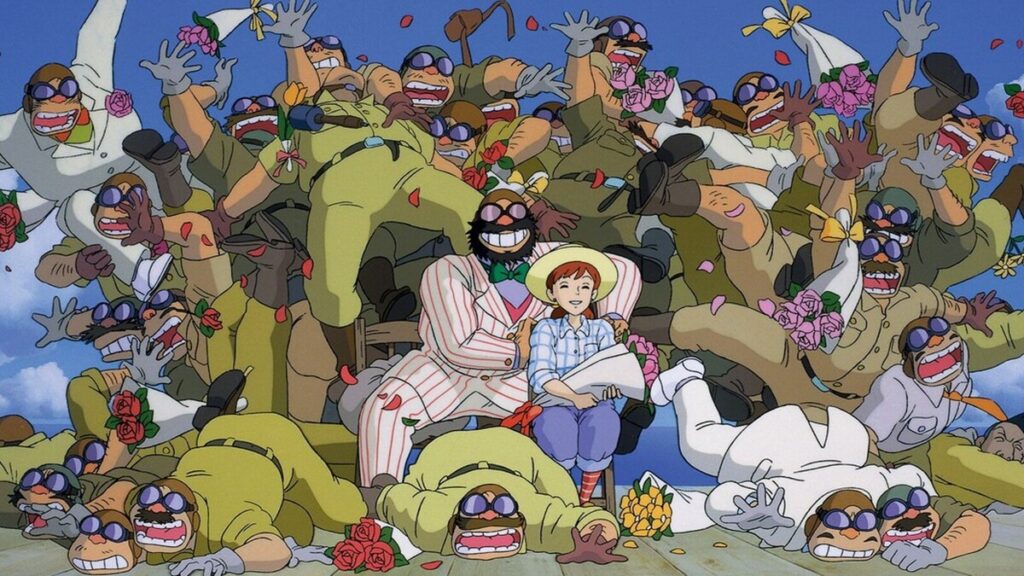
It is unknown what made Porco an anthropomorphic pig: the war and his actions there, or something else. But from this follows a rather simple idea: many heroes of "Porco Rosso" do terrible things or simply turn out to be bad people. Be it fascists or greedy heroes chasing profit. They all behave like pigs, but this curse is placed only on the main character, who has more humanity than many others.
Most likely, the character's appearance is a reflection of his alienation from people. The hero has no friends, girlfriend, or family. He does not build social connections, and those that exist, he completely cuts off, for example, with Gina, who has been in love with him all her life. Porco does not let anyone close and does not take the first steps towards creating relationships, whether friendly, companionable, or romantic. He has distanced himself so much from humanity that he himself has ceased to be human.
Or perhaps Porco is the embodiment of human sins. One carries the burden of responsibility for everything bad. Or maybe something happened in the war, or it is his punishment for being the only survivor among a group of friends. But who knows, there is no clear answer to this question.
Miyazaki himself portrays himself in the image of a pig and believes that middle-aged men are very similar to them. Perhaps the character's appearance is an embodiment of a midlife crisis, or the external and internal image of a man of those years, when many stop taking care of themselves and disregard others.
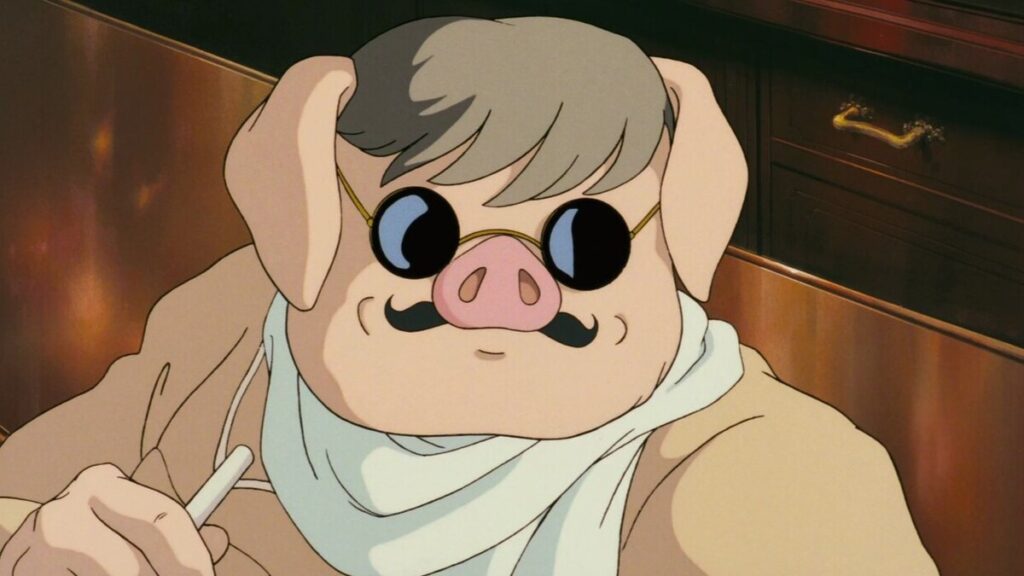
"Porco Rosso" differs from other works by Hayao Miyazaki. There is no magic (except for turning into a pig) and fantastic journeys. Everything is quite grounded (if you can say that about a film about the sky), events take place in the real world, and the oppressive truth and Porco's sharp remarks about fascism elevate the film to a non-childish rank. And when were the master's works exclusively for children?
Despite all the simplicity of the plot, there is plenty to see in the film. Even without breathtaking landscapes and fairy-tale castles, the film attracts so much that it's impossible to look away. And the absence of all those magical things that are not in the film is not even noticed.
In addition to the anti-war agenda, Miyazaki's works have a peculiarity: often the main character is a man, but the plot is driven by a girl. For example, "Princess Mononoke" (yes, the title contains the name of the main female character, but that doesn't stop the story from being told from the guy's perspective), where Ashitaka has problems, but it is San who becomes the reason for the boy's journey into the mysterious forest world.
Same in "Porco Rosso." Despite the title and the hero himself, it is Gina and Fio who lead the character by the hand through the main events. Because of the 17-year-old girl, Porco enters a duel, and Gina warns Porco about the approaching fascists and tries her best to help him.
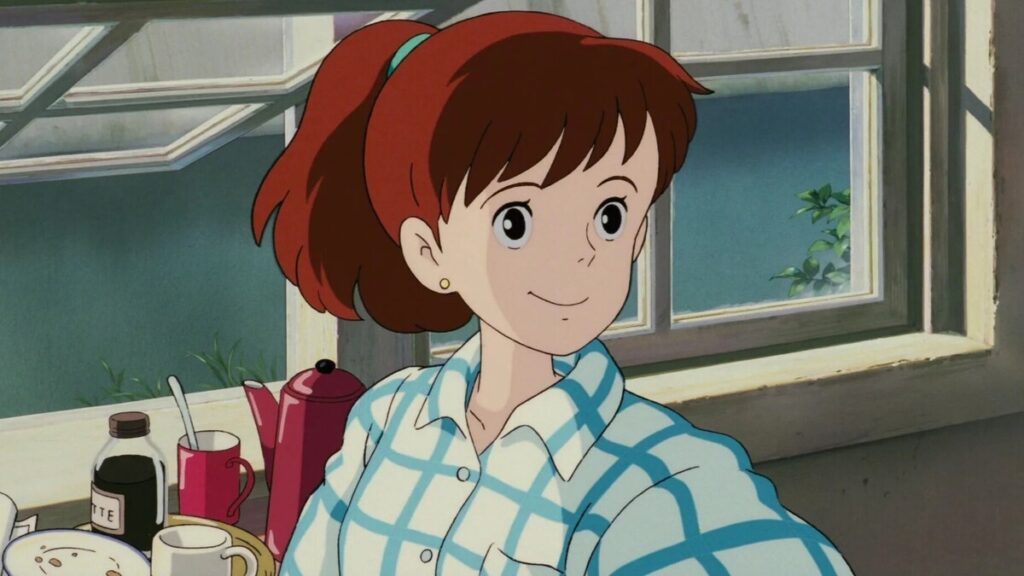
Despite the fact that at the end we do not get answers to the question of why Porco looks the way he does, or what ultimately happened to him, this does not hinder the perception of the film. "Porco Rosso" turned out to be unique, it differs from all other works by Miyazaki in its special atmosphere and realism (yes, one could argue and cite as an example, but still).
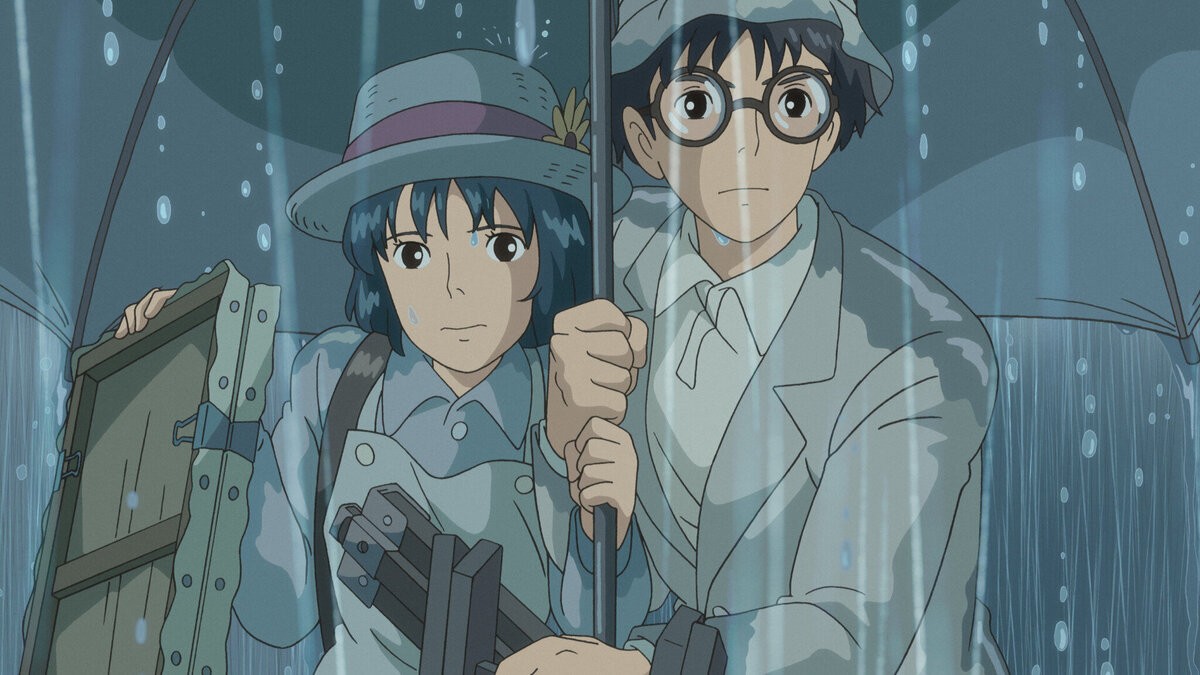
On January 16, the most realistic work of master Hayao Miyazaki, "The Wind Rises," was re-released. About the historical subtext, real biographies, and more – in our article.
Open materialAll the omissions are left for the viewer to figure out, which gives "Porco Rosso" a continuation of the story, but already in the minds of each viewer. An engaging story, and if you describe it apart from the visuals, you might think it's not a Miyazaki story at all. Because here you have fascists, aerial battles, pirates, mobilization, and much more.
Comments
0No comments yet.
Sign in to join the discussion.