
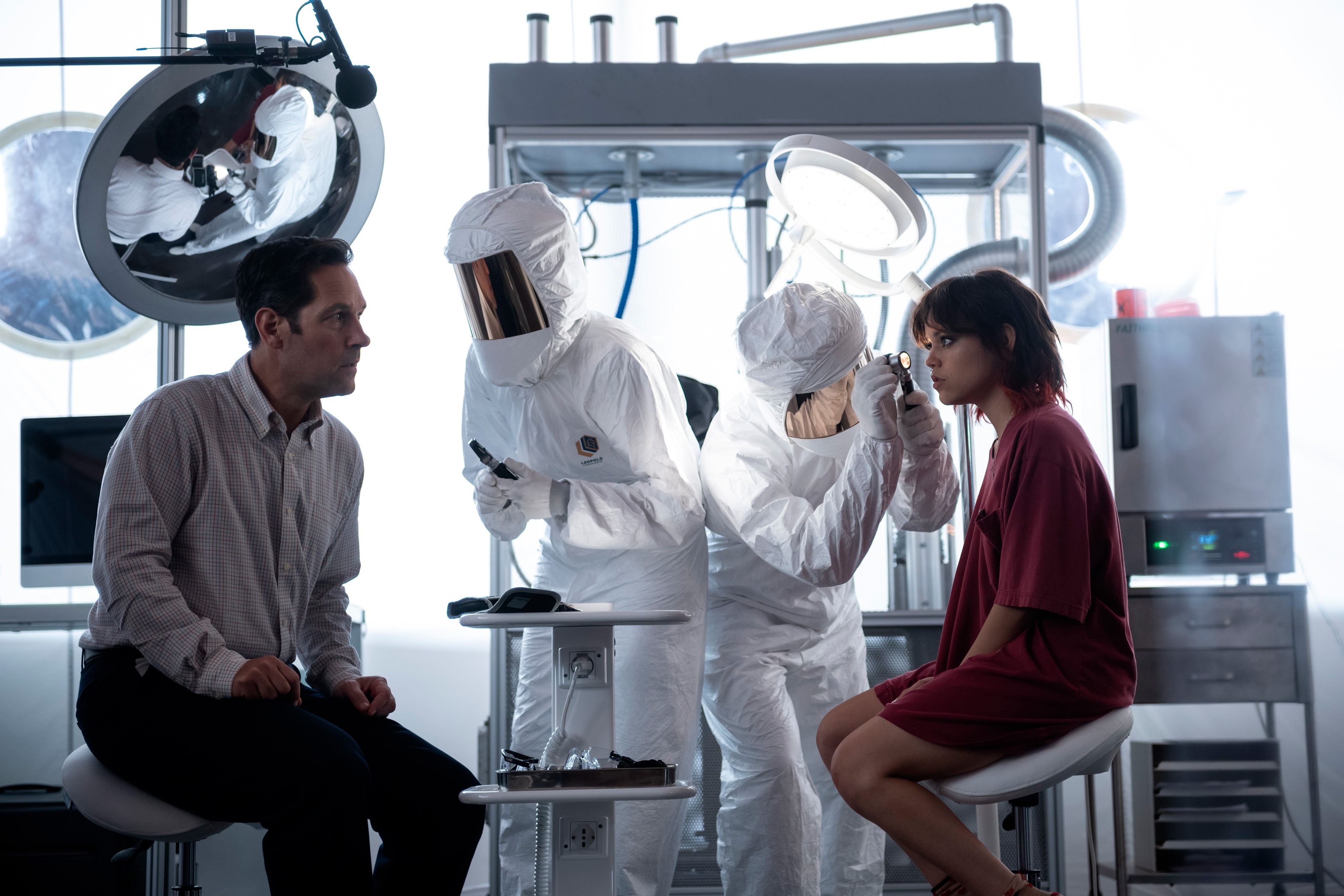
On April 3, ‘Death of a Unicorn’, a new satirical horror from A24 studio, will reach Russian cinemas. Read our review to find out whose garden debutant Alex Scharfman throws the stone of his contempt into, and how good he is at throwing.
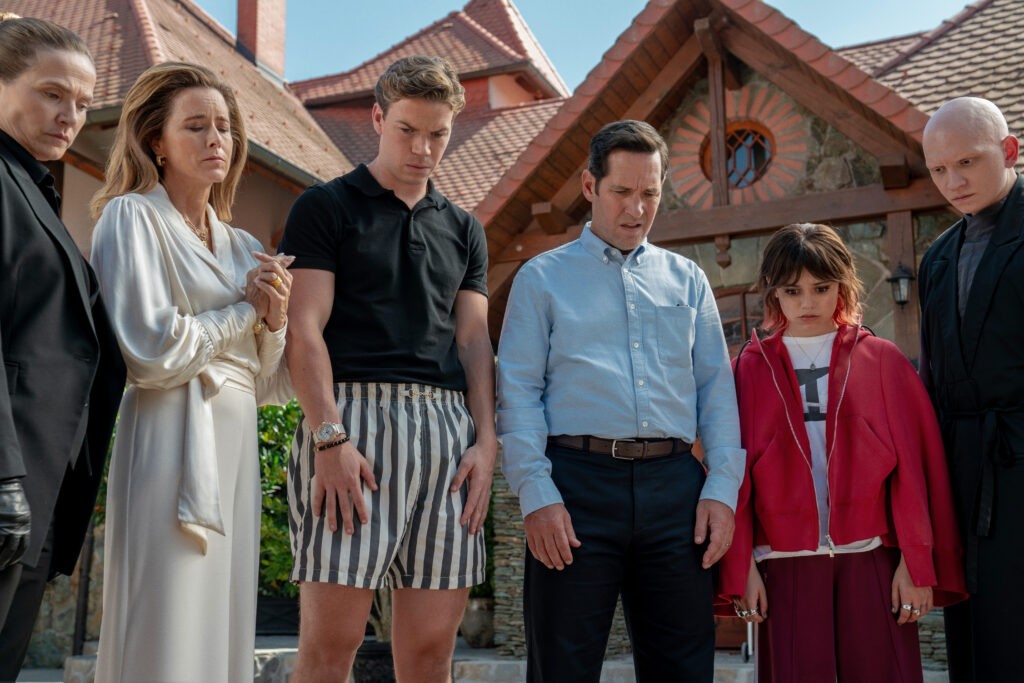
According to the plot of the film ‘Death of a Unicorn’, Ridley (Jenna Ortega) and her father Elliot (Paul Rudd) go to visit the oligarchic Leopold family, who made their fortune producing and selling pharmaceutical products. The clan’s patriarch, the elderly and seriously ill Odell (Richard E. Grant), plans to pass the business on to his heirs, for which he invites a lawyer for an informal meeting at his estate. On the way, the visitors hit a creature with their car that looks like a unicorn (and indeed, it is one).
Elliot hypothesizes that the animal they hit might belong to a protected species living in a nature reserve. The pair can think of nothing better than to load the animal’s corpse into the trunk and bring it with them to the mansion. When the Leopolds learn about the road accident, they confiscate the magical carcass for scientific research. It turns out that the unicorn’s blood contains special elements that can cure any disease—from teenage acne to terminal cancer.
Greedy capitalists, already anticipating their triumph, decide to bring the miracle drug to market. Ridley, citing medieval tapestries, makes futile attempts to convince them not to do so. The unicorn’s relatives, unhappy that humans have killed their offspring, show up at the luxurious villa’s doorstep.
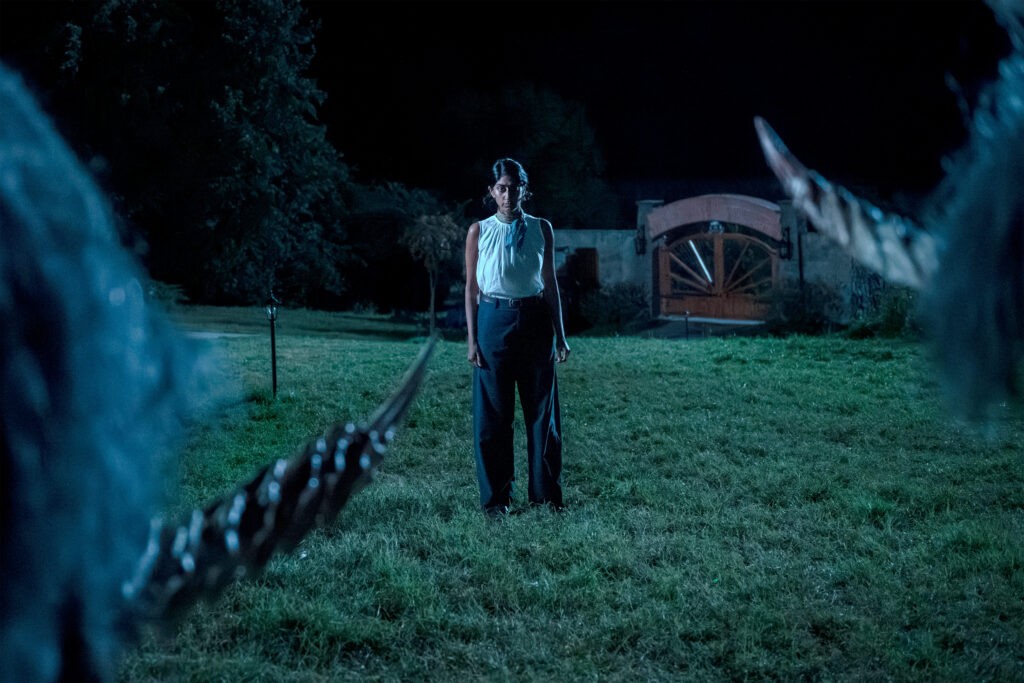
In the debut film of Alex Scharfman, as in any other animal horror, the strange creature with cannibalistic tendencies is present in the plot to expose the vices of human society. In Spielberg’s ‘Jaws’, the greedy mayor of a resort town, by refusing to close the beaches, caused almost more harm than the maniac shark that staged a bloody massacre. In ‘Death of a Unicorn’, the blame for the series of horrific murders lies entirely with the people, or more precisely, with the Leopolds and the weak-willed opportunist Elliot.
The film’s director unambiguously hints at the root cause of the tragedy (or rather, the uproariously funny farce) unfolding before the viewer’s eyes. Of course, it is capitalism, which is built on extracting maximum profit, often by ignoring ‘costs.’ When immense wealth is on one side of the scale and the ecosystem, human lives, or just common sense on the other, the powers that be will choose the former. In his critique of the system, Scharfman proves to be much more caustic and radical than even Bong Joon-ho with his ‘Mickey 17’.
The plot about the extermination of animals for the supposedly healing properties of their horns did not come out of nowhere. Between 2007 and 2014, poaching in the South African region, mainly targeting white rhinos, increased by 9000%. On the black market, their bone growths are worth more than gold and diamonds. Despite scientists having long debunked the myth of the miraculous medicine made from them, the product is still in high demand.
In the comedy horror from the studio, the horned creatures turn out to be not as harmless as their real-life counterparts and give people a worthy rebuff. The latter, however, are not at all pitied. Enough time passes before the first murder for you to hate the local fat-cat parasites. By the way, the fictional dynasty of pharmaceutical bourgeois was modeled after the Sacklers, who were guilty of the opioid crisis.
A24 studio produces films truly worth attention. And which of them are guaranteed to give you a wealth of emotions—find out from our selection.
Open materialWhen the family of antagonists, realizing the ambitiousness of the startup, becomes ecstatic, the heroine played by Téa Leoni joyfully blurts out that she hasn’t felt anything like this since the early 90s, when they released a ‘drug with side effects’ on the market. This refers to the infamous Oxycodone. By the way, the economic term ‘Unicorn Company’ appeared in the last decade. This nickname is given to startup companies whose market value is estimated at a billion dollars.
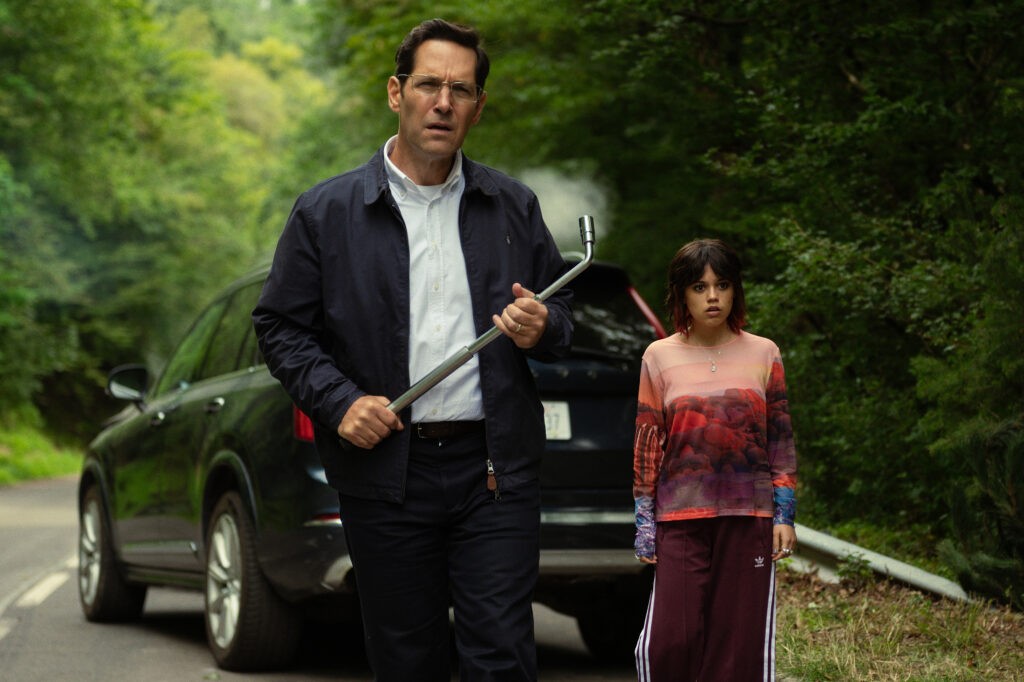
In ‘Death of a Unicorn’, the class conflict, as is customary in such stories, is shown through the opposition of generations. Ridley is the first to denounce the stupidity and greed of the powerful. She immediately notices that the charity work the Leopolds engage in helps the oligarchs whitewash their reputation. A few minutes later, viewers will see this for themselves when Odell’s wife cannot remember where the money went—to vaccination or to evacuating refugees: the words are indeed similar.
If Jenna Ortega’s character is the ambassador of sanity in the film, which makes her sympathetic, then her father, played by Paul Rudd, is the emissary of cowardice and servility. He grovels before his boss, hoping for a promotion. So that Elliot doesn’t feel powerless and shirk dirty work, the rich constantly cheer him up by painting career prospects and affectionately calling him ‘partner.’ The weak-willed parent also seeks to profit from the mess he accidentally initiated. He justifies this, of course, by concern for his daughter.
True, capitalists are capitalists—they have no intention of sharing their magical discovery with anyone except solvent citizens, those they call ‘the best people on the planet.’ Since neither young Ridley nor her spineless father can stop the villains, the unicorns take on the role of punishers. The fantasy creatures burst into the mansion and start butchering people, trampling their heads with hooves and spilling the contents of their bodies. Moreover, these murders are seasoned with a huge number of cinephile references, which are a pure pleasure to recognize!
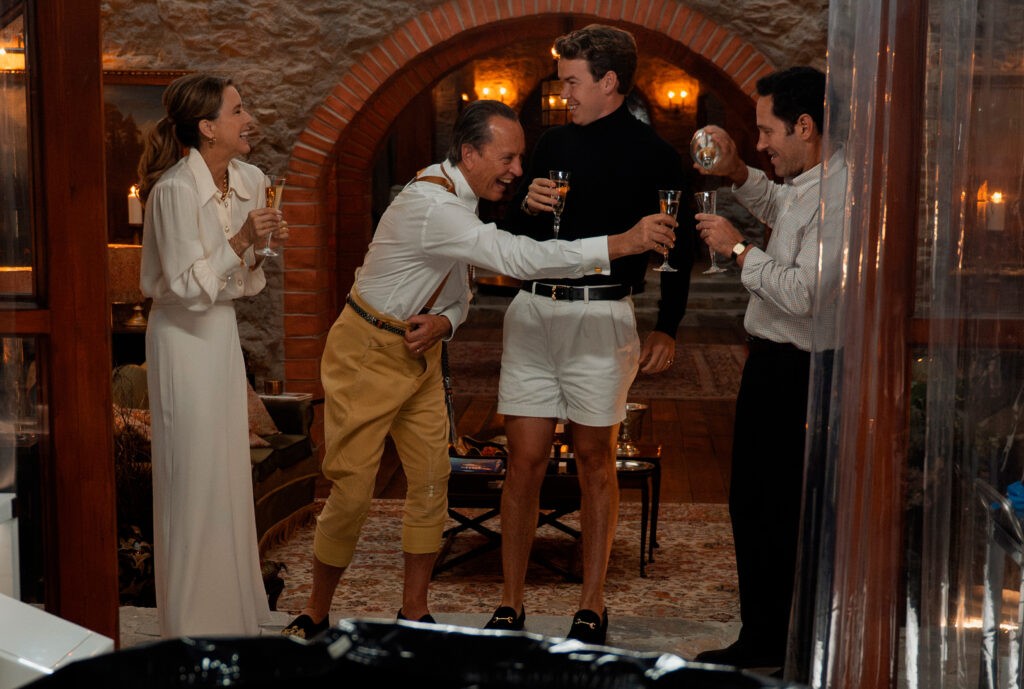
Despite the fact that ‘Death of a Unicorn’ is primarily a satirical study in anti-capitalist tones, and a rather thoughtful one at that, its entertainment component is in good order. Alex Scharfman skillfully, not at all like a debutant, assembles a cynical pamphlet, a black comedy, and a bloody vinaigrette into one, not forgetting to sweeten this dish with family values, fairy-tale morality, and picturesque landscapes. Yes, at times the acting may seem overly grotesque, and the plot twists predictable and not entirely realistic, but magically you forget about these flaws as soon as you leave the theater.
‘Death of a Unicorn’ is another film that tells the viewer outright that there isn’t enough champagne for everyone, and someone (most likely you) will have to stand with an empty glass, like Paul Rudd’s character. That is precisely where its main value lies!
Trailer:
Comments
0No comments yet.
Sign in to join the discussion.