
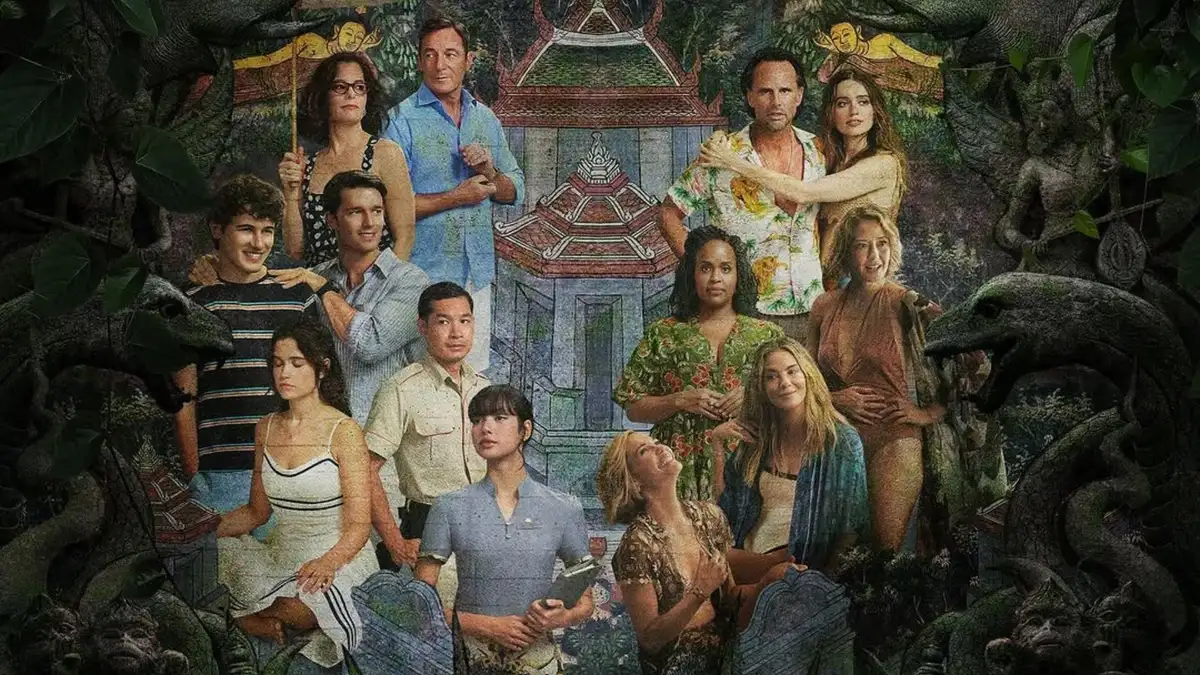
A review of the third season of 'The White Lotus'. We've broken down the symbolism, opening, themes, characters, and all the theories that make viewers' hands tremble, to fill in the bingo: who will be killed in the finale.
'The White Lotus' (The White Lotus) from HBO has long ceased to be just a series about rich people on vacation. Now it's more of an elite psychological detox, where champagne is served with paranoia, and a relaxing massage comes with an existential crisis.
If the first season teased with grim irony, the second flirted with eroticism, then the third is no longer joking: it's playing directly with death. With monks, snakes, a gun under the pillow, and monkeys that seem to know more than they let on.
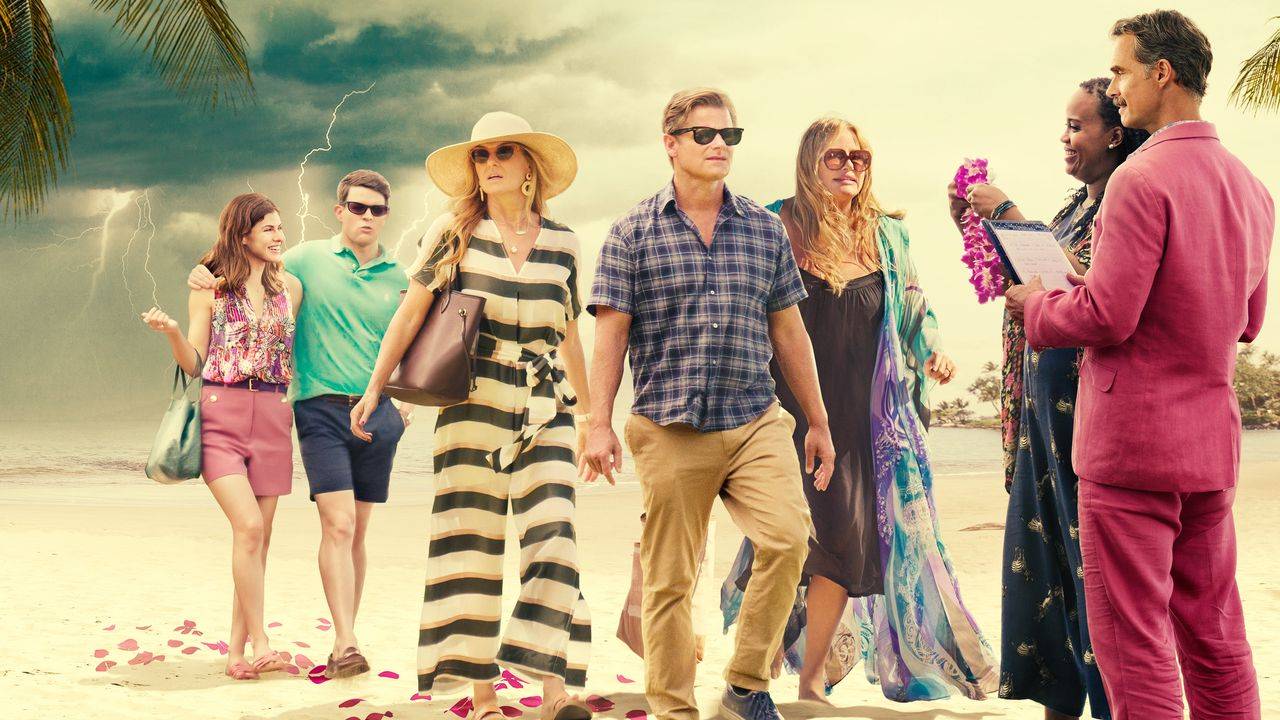
'The White Lotus' is a new satirical HBO series about a vacation in Hawaii that turns into hell... or purgatory.
Open materialMike White maintains the recognizable structure: a luxury resort, a group of privileged people, and the shadow of someone's death — whose exactly, we don't know. But if before we guessed who would be the victim, now suspicion falls on absolutely everyone. And the most interesting part is not even who will die, but why.
The script of this season balances between funny and frightening, spiritual and vulgar, metaphysical and physical. It's not a drama, not a thriller, not a satire — but all at once, in the right doses. Although, we admit, sometimes the spice is lacking: compared to the first two seasons, the third sometimes feels more drawn out and even.
Only a few days remain until the finale, and everything is set for a truly thrilling conclusion. So let's toss aside the beach towels — and dig deeper into the sand: into Easter eggs, visual symbols, character traits, and fan theories about who will be killed in the finale. And who might already be dead.
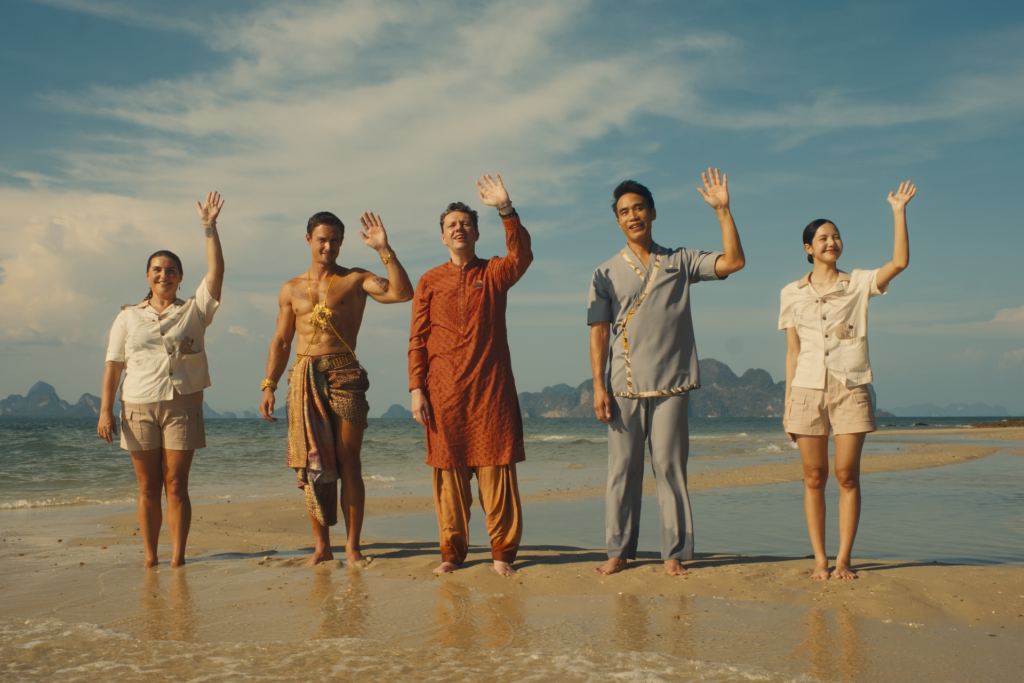
A Paradise You Want to Flee From
The third season of 'The White Lotus' takes us to Thailand — to a luxury hotel where it's always sunny, monks smile, and guests are greeted with fake politeness and fruit offerings. But behind the perfectly cleaned facades and staff smiles, something constantly itches and stirs.
As always in this series, we are warned in advance: there will be a corpse (and maybe not just one). And the entire season gently but persistently unsettles us — so we understand: anyone here could kill. And anyone could be killed. And everyone has a reason.
The guest lineup is perhaps the most eccentric and fragmented in the history of White Lotus. Here — an ultra-rich family with dark secrets, an elderly man with a turbulent past and a young lover, and a toxic girls' trip where old grievances begin to surface. Plus — an unexpected return of Greg, whose past is shrouded in the shadow of Tanya's death.
So, the main characters — the Ratliff family:
- Timothy (Jason Isaacs) — a deceiver with the face of a bankster (a mix of banker and gangster) and the soul of a drowning man.
- Victoria (Parker Posey) — a wife who loves money more than her husband.
And three children, each a little tragedy in themselves:
- Saxon (Patrick Schwarzenegger) — aggressive, lost, and frighteningly detached from morality;
- Lochlan (Sam Nivola) — a silent observer;
- Piper (Sarah Catherine Hook) — so far gone into her own spirituality that she seems no longer here.
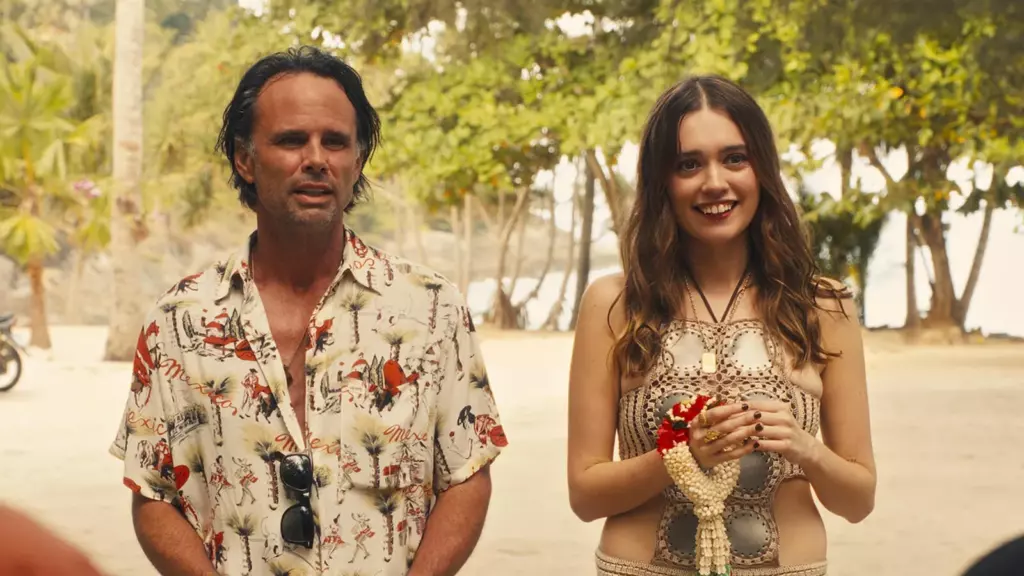
There are other guests as well:
- Belinda (Natasha Rothwell), familiar from the first season, now works at the Thai branch of the hotel — and comes face to face with her past.
- Greg, aka Gary (Jon Gries), Tanya's widower, suddenly appears here under a different name — and, it seems, with new problems.
- Rick (Walton Goggins) — one of the few who doesn't lie, but also doesn't say anything.
- Chelsea (Aimee Lou Wood) and Chloe (Charlotte Le Bon) — two girls looking for love, money, and possibly salvation.
- The trio of Kate (Leslie Bibb), Laurie (Carrie Coon), and Jaclyn (Michelle Monaghan) — childhood friends who have long forgotten how to speak directly to each other, but excel at emotional undermining.
And behind the service facade — the hotel team:
- Mook (Lalisa Manoban), Valentin (Arnas Fedaravičius), Gaitok (Tayme Thapthimthong), and of course, Fabian (Christian Friedel) — all polite, helpful… and raising more and more questions. Especially in light of the fact that on this island, no one is as simple as they seem.
Cleansing in Hell: Themes of 'The White Lotus'
The third season was never just a series about the rich. It's about the fact that money doesn't solve anything if you're empty inside. So, what themes are presented to us:
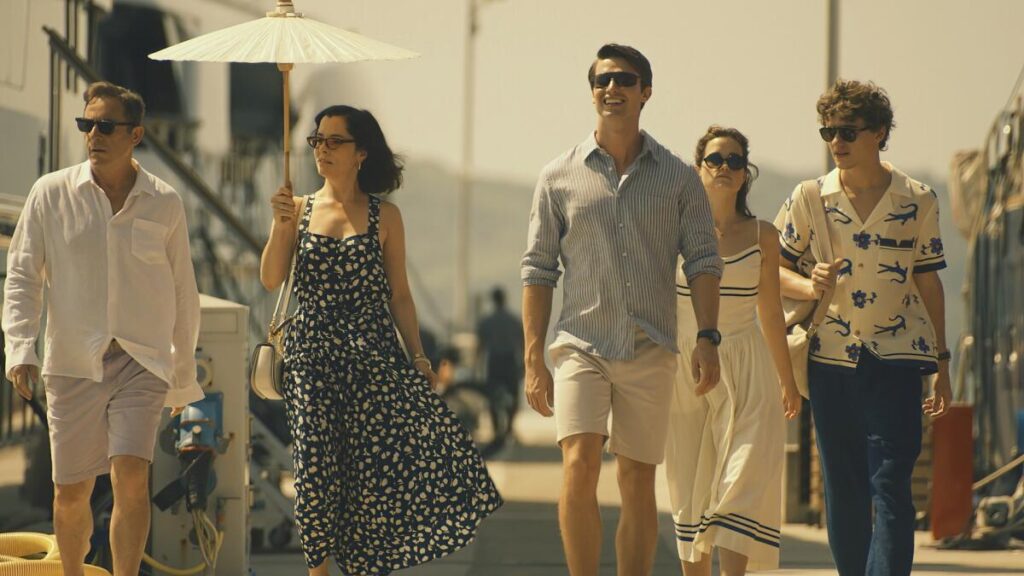
Death as a Way Out of the Plot
The central arc of Timothy Ratliff is the quintessence. He is a financier caught up in a fraudulent scheme and already understands: soon his entire fortune, like a house of cards, will collapse. Instead of trying to fix things, he begins to imagine his own death: how he would shoot himself in the hotel room, how he would kill his wife and himself, how he would disappear forever. So far, these are just fantasies. But they become more persistent and detailed.
A special place is occupied by his conversation with a monk. Perhaps this is one of the most poignant scenes of the season. The monk says: 'We are just a drop that returns to the ocean after death.'
For Timothy, death becomes not a tragedy, but, it seems, the only redemption.
The Illusion of Control
The Thai monkeys are not just a visual touch. They run through the entire season: from the opening with carved motifs to literal encounters with animals. But the main thing is that they reflect the state of the characters themselves.
In Buddhism, there is the concept of 'monkey mind' — a restless, fussy mind that jumps from one thought to another. Like a monkey from branch to branch. This is exactly how we see most of the characters: they are unable to concentrate, don't know how to be 'here and now,' drowning in anxiety, impulses, and escape from themselves.
Buddhist practice, like Zen or Vipassana, teaches not to suppress these thoughts, but to observe them — allowing the mind to calm down without resistance. But in this season of 'The White Lotus', no one truly meditates. Everyone clings to their illusions of control.
So what about spirituality?
It seems everyone here is seeking enlightenment:
- Piper meditates — but at the same time isolates herself from her family and hears no one except her own inner voice.
- Chelsea talks about self-development and growth, but in reality remains straightforward, rude, and naive — especially in relationships.
- Saxon is sure he is an alpha — until he faces a situation he cannot control and begins to fall apart.
- Lochlan, on the contrary, is silent, agrees, as if dissolving into the background. But in his silence, not peace but an internal storm is brewing.
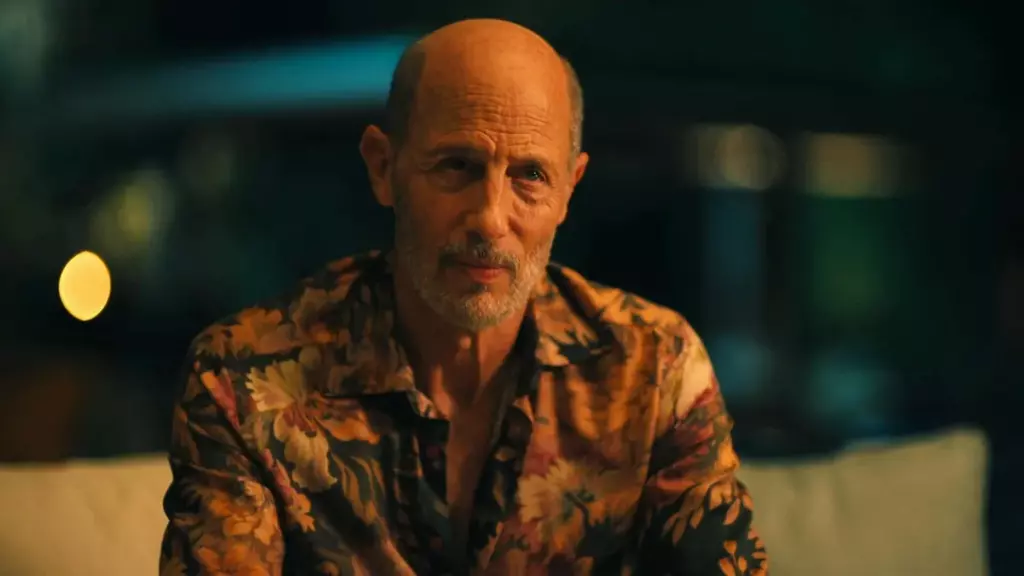
Power and Money
Oh, here we have a whole generation of characters living under the motto: 'The main thing is not to become poor.'
- Victoria — as one of the most tragic figures — sincerely says: 'If we lose the money, I don't want to live.'
- Greg clearly feels comfortable with such a mansion and yacht.
- Timothy, to avoid breaking the image and losing status, is ready to kill himself and his family.
- The children, raised in luxury, don't even imagine how to live otherwise.
- The friends who came to relax at the expense of the richest among them.
- The hotel staff, often mentioning future wealth in dialogues.
- Chloe, who has comfortably settled under the wing of the rich Greg, and clearly parasitizes him.
The Illusion of Maturity and Spirituality
Almost all the young characters play at enlightenment. Piper — with her retreats and Buddhist books, Chelsea — with mindfulness exercises and natal charts that don't stop her from falling into emotional extremes. Even Rick, avenging his father, acts like a child who needs to prove to himself that he is capable of something important — but he himself is not sure if he is right at all.
Each of them seems to try on the mask of an adult, but underneath it is still a frightened, lost, approval-hungry child. They read books, quote gurus, appeal to meaning — but in the end, they play at spirituality without truly living it. Enlightenment here becomes the same decoration as the palm trees outside the window or the spa treatments.
Style from the First Second
The opening of the third season of 'The White Lotus' deserves a separate analysis. This time it's not just beautiful — it programs the mood, literally pulling you into an ornamental, anxious symphony of symbols.
We are 'led' inside a picture full of Thai and Buddhist symbolism: dancing crocodiles, smoking monkeys, flying elephants — all to a soundtrack that starts as a meditative chant and then suddenly turns into a ritual trance.
And, in essence, the entire series is structured on the same principle: it starts as a vacation — and ends in psychosis.
Fans suggest that each character in the intro has a visual metaphor encoded, revealing their essence or foreshadowing the finale. And if you look closely — the details really do say something:
- Timothy — a figure trapped in knives. In the plot, he is indeed surrounded by traps: financial, moral, psychological.
- Victoria — monkeys, one of which is smoking. A direct reference to addiction, escape from reality, semi-conscious madness.
- Piper — a woman in a meditation pose on a hill — an obvious reference to her interest in Buddhism and pursuit of spirituality.
- Lochlan — a boy lying in water in underwear — literally references scenes in the season where Lochlan swims. Could this be a foreshadowing that he is the 'body in the water' in the finale?
- Saxon — men peeping at a naked woman, hiding in the foliage. A clear hint at his perverted inclinations and behavior in the series. Well, there's an obvious hyperfixation on the theme of sex, masculinity, and toxic behavior.
- Belinda — first a shot of a crocodile looking into the distance, then a bird looking at its reflection. Then her name appears. This could be a reference to the myth of Narcissus, or to her realization of who Greg/Gary really is.
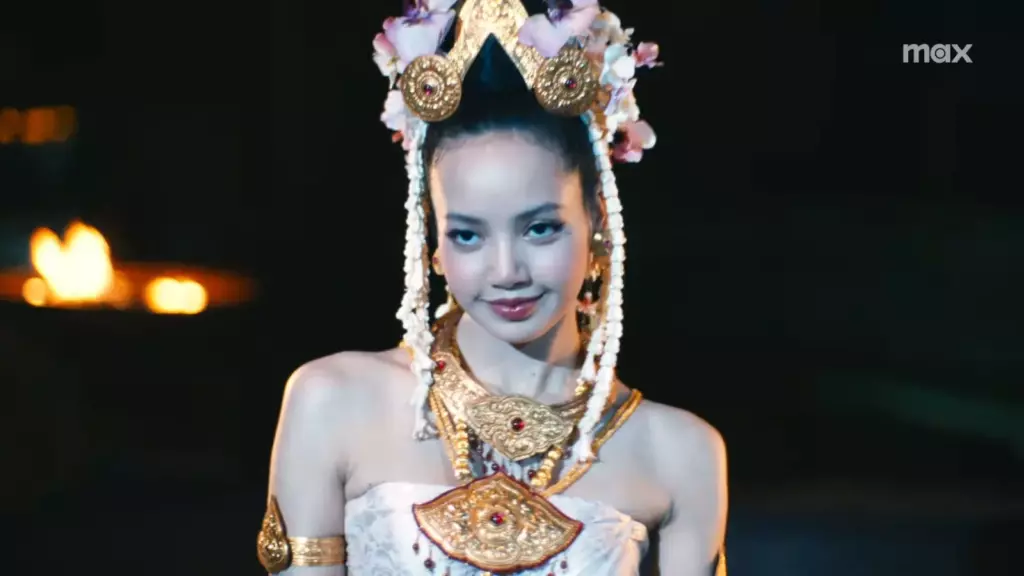
- Mook — a woman with an umbrella flirting with a man. This is most likely a symbol of her cautious but active approach to Gaitok.
- Jaclyn — a half-naked woman on a balcony. A direct reference to Jaclyn's obsession with youth and sexuality, her status as an actress, and constant search for confirmation of her attractiveness.
- Rick — a lone figure in a tower — a symbol of his isolation from others. He is alone, immersed in his thoughts and mission.
- Kate — surrounded by elephants — a symbol of memory. Kate recalls a meeting with Victoria ten years ago.
- Laurie — also an elephant, but isolated from the herd. In the group of friends, Laurie is constantly pushed aside, talked about behind her back.
- Chelsea — a large animal attacks another — at the moment her name appears. The other animals watch. This could mean that violence is gathering around Chelsea — but whether she will attack, or be attacked, remains a question.
The main motif of the opening is observation. Eyes everywhere: behind curtains, in windows, in foliage. People freeze in spy poses, animals in translucent silhouettes, as if hiding to eavesdrop. The feeling: everyone here is being watched.
And finally — violence. In the intro, we see tigers hunting people, monkeys piercing with swords, fighting people, and sharks finishing off victims. All these scenes hint at several deaths — and that they will be of different kinds.
Can't Do Without Symbolism
In this season, everything around is a clue: wristwatches, a book in hand, even the positioning of actors in the frame is sometimes a direct quote from Buddhist iconography. If you watch carefully (and read reviews) — the series tells much more than the characters themselves.
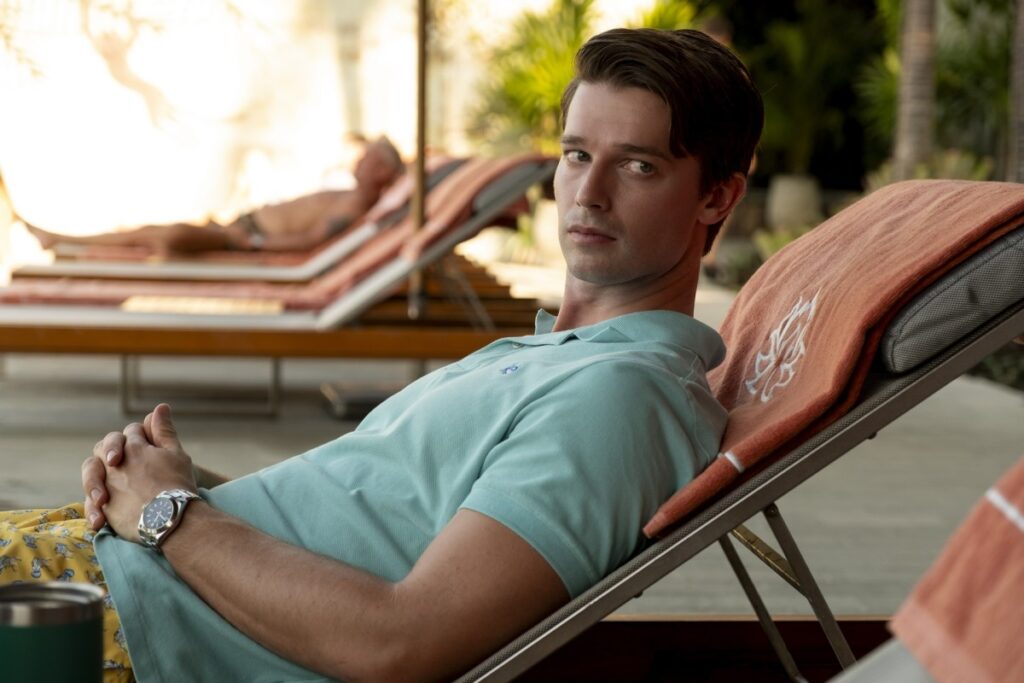
Watches in this season are not just status markers. They speak of fears, lies, masks:
- Timothy and Victoria wear identical Rolex Day-Date — gold, status, aristocracy. But one hides collapse, the other refuses to live without comfort.
- Saxon brought three (!) pairs: Hublot for show, Apple Watch for body control, and Rolex Milgauss — a family heirloom with a claim to individuality.
- Lochlan is the only one with inexpensive but stylish MoonSwatch. He doesn't play the prestige game, but he's not entirely free from it either.
- Valentin wears Russian Vostok Amphibian — brutal, cold.
- Rick — Timex, vintage, unremarkable. He is a man outside the race.
- But Piper, Chelsea, and Belinda don't wear watches at all.
Almost every character has a specific book in hand. Not by chance in the frame. And not by chance in the plot:
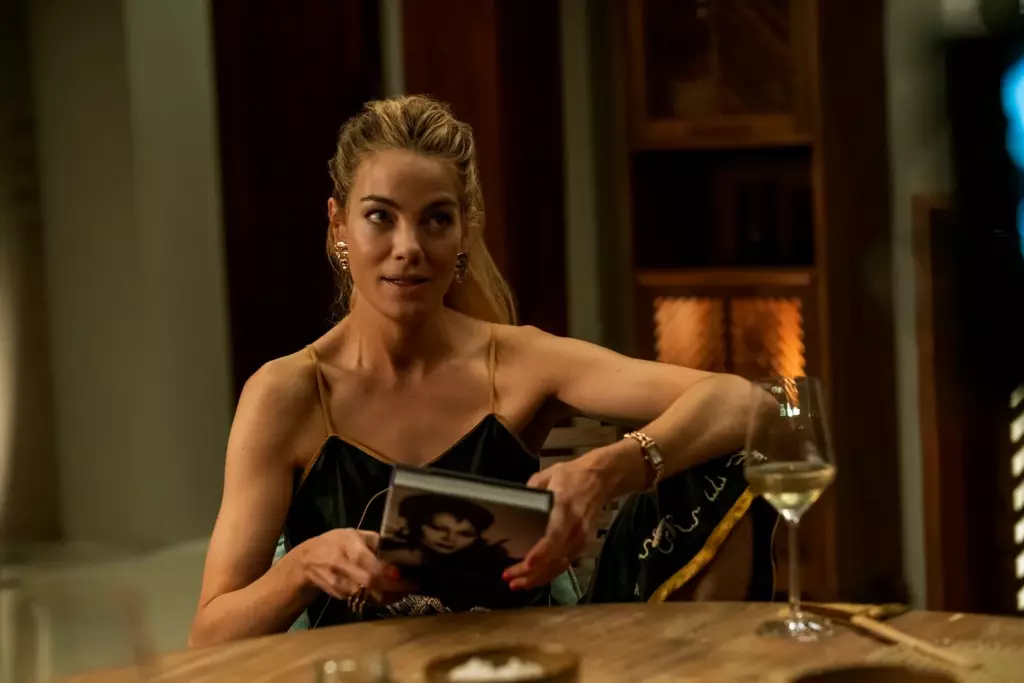
- Jaclyn reads Sritala's autobiography, then Barbra Streisand's memoirs. Diagnosis: obsessed with others' greatness, looking for a recipe for significance.
Lochlan reads 'Hunger' by Knut Hamsun — this is the story of a young writer who starves in the city, fights for recognition, and balances between a sense of reality and fits of rage and despair. The book highlights the difference between the brothers: Lochlan is sensitive and searching, unlike the frivolous and superficial Saxon. - Belinda — 'Surrounded by Narcissists'. This book teaches how to recognize narcissists and set boundaries.
- Victoria — 'The Beautiful and Damned' by Fitzgerald. This is a story of love, luxury, decline, and addiction.
- Piper — a fictional book 'The Loving Kindness' — pseudo-spirituality that doesn't save her yet.
- Chelsea reads, most likely, 'Start Where You Are' — a book about self-acceptance and working with inner pain.
Three Monkeys — Three Children
The most obvious Easter egg was hidden at the very beginning — in the scene on the boat. The trio of Ratliff children in classic Buddhist poses. This scene references the well-known Buddhist parable 'See no evil, hear no evil, speak no evil', personified by three monkeys.
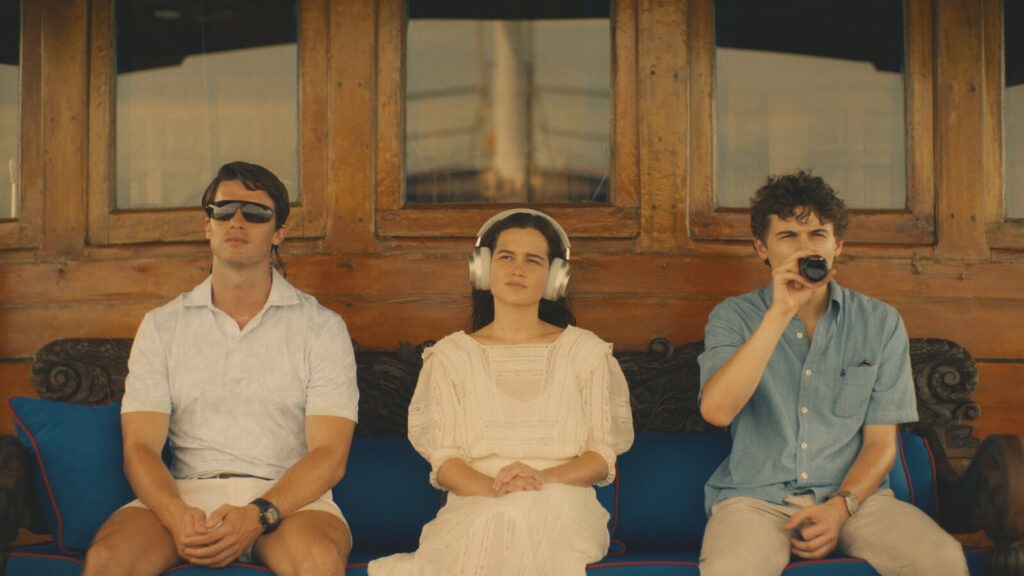
- Saxon in sunglasses — 'sees no evil,' ignoring his father's crimes and his own behavior;
- Piper in headphones — 'hears no evil,' not noticing warnings;
- Lochlan is silent — 'speaks no evil,' he is silent, observing, but has not yet dared to state his position.
It is also possible that all three live off their father's money, not paying attention to how he obtained it. If Timothy goes to prison, their entire reality collapses simultaneously.
Mook and Valentin: Those We Don't Want to Trust
Mook (acting debut of Lisa from BlackPink) at first glance seems like a sweet and helpful hotel employee — patiently answering even the strangest guest requests, always smiling, always on the spot. But it's precisely this 'on the spot' that raises suspicions: Mook is constantly nearby — with security, with guests, in moments of chaos and anxiety. She flirts with Gaitok, and as soon as they get close, the guard suddenly leaves his post. Coincidence? I don't think so.
Fans are sure: Mook is in cahoots with Valentin, as well as with the Russians involved in a series of robberies. She talks about her poverty, easily flirts with security — but only with those who are 'with money.' And this is not just a script trick — in interviews, Lalisa smiles mysteriously when asked: 'Is Mook really good?'
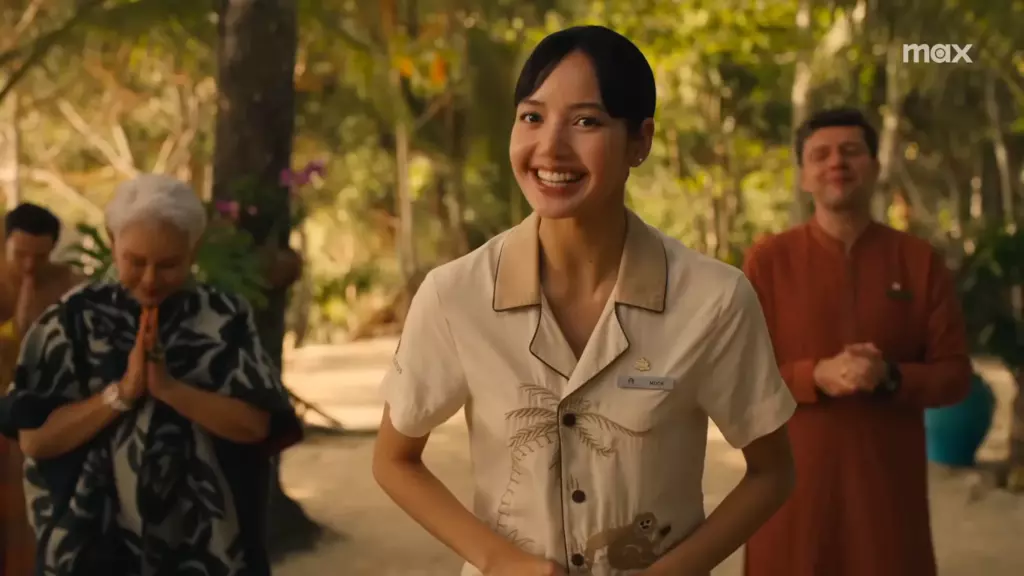
Valentin, unlike Mook, acts more quietly. He behaves pointedly politely, but at the same time does not hide his interest in wealthy guests. He appears next to them, ingratiates himself, sets people against each other. He doesn't shout, doesn't threaten, doesn't make sudden moves — but that's exactly where the anxiety lies.
Valentin's passivity is not protection, but cover. He seems to be constantly watching, gathering information, waiting for the right moment.
What's Wrong with Fabian?
Fabian, the hotel manager, at first glance is the complete opposite of his predecessors. He is much quieter, calmer, and... as if less interested in everything happening. Instead of intervening, he sings songs at dinners and stays away from the drama. This sharply contrasts with the explosive Armond from the first season or the suppressed but deeply wounded Valentina from the second.
But it is precisely this detachment and faceless politeness that make him suspicious. He is like an empty space among characters who all have something boiling under their skin.
He doesn't react when Belinda informs him about Greg. He avoids direct questions, behaves too neutrally in situations where you expect a reaction from a manager. This behavior creates the feeling that Fabian is either in on it, or is silent out of fear — or, even more dangerously, out of self-interest.
If we assume that Mook, Valentin, and Aleksei are the executors, then Fabian could well be the one covering for them from above, using his position as a shield.
Portia — Laurie's Daughter?
Laurie mentions: 'I have a daughter. She works with influential women. Often in Italy.' Fans immediately remembered Portia — Tanya's assistant from the second season. The connection is not confirmed, but it's in Mike White's style: he likes to connect seasons with such subtle hints.
Who Will Die? Place Your Bets

Closer to the finale, fans eagerly analyze all the clues to guess — who will be the body in the water? Or maybe even more corpses that just haven't been shown yet. And here are the most suspected:
1. Greg / Gary
If Greg dies, it would be a symmetrical act of karma: payback for Tanya, whose death he essentially orchestrated. Or maybe revenge from someone who knew Tanya and has now come for the truth.
The $100,000 he offers Belinda for her silence looks suspiciously cheap — and too late. Everything in his behavior suggests he is cornered, and now either pays or falls.
2. Timothy Ratliff
If anyone looks like a walking disaster by episode 7, it's Timothy. He has been on autopilot of self-destruction for several days. Charges of financial crimes, collapse of reputation and empire, insomnia, breakdowns, alcohol, pills, and fantasies of death — all this makes him an ideal victim… or a potential killer.
He has already seen the gun, and more than once imagined himself with it. The question is only whether he will be able to reach the weapon, or simply end up at the center of a tragedy due to his own inadequacy.
The main argument against this version is that it's too obvious.
3. Laurie or Jaclyn
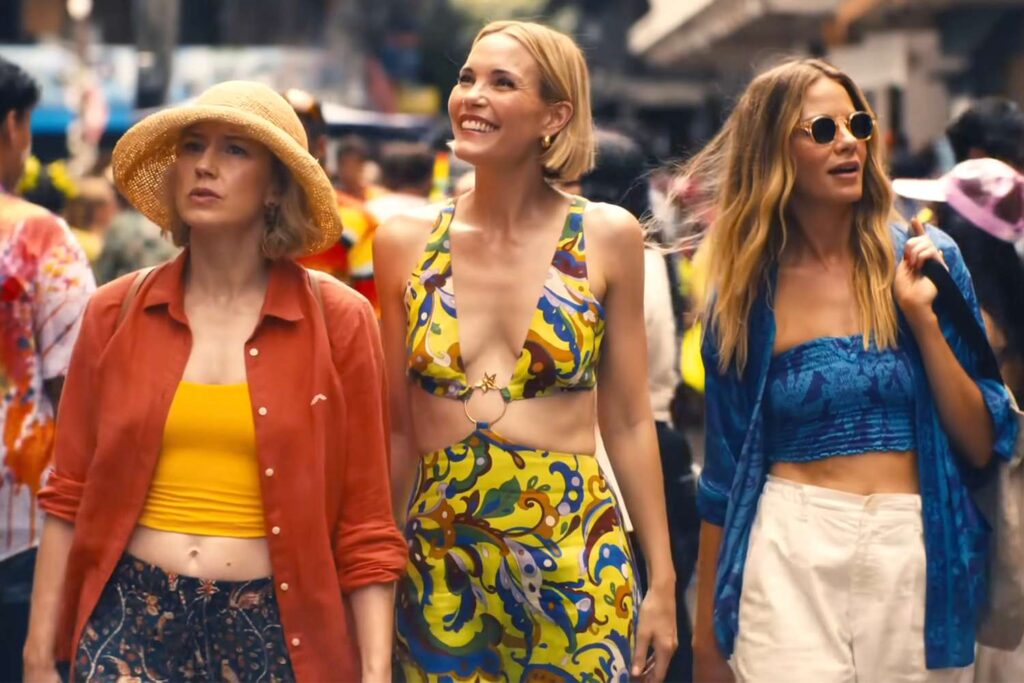
Up until the seventh episode, it seemed that Laurie, Jaclyn, and Kate existed in a parallel line — dealing with their grievances, old conflicts, jealousy, and jabs. But everything changes abruptly when Laurie sleeps with Aleksei — a charming stranger who, as it later turns out, is a friend of Valentin.
Aleksei starts extorting $10,000 from her, and then — during a panicked attempt to escape — Laurie learns that he may be involved in an armed robbery at the resort. And this changes everything: now it's not a harmless fling, but a direct threat to life.
Could this end in an attack? A robbery? Or death — accidental or intentional?
4. Gaitok
If Valentin really tries to pull off another extortion before the girls leave, everything could go wrong — and Gaitok, a guard with good intentions and very questionable luck, could be drawn into the whirlwind of events.
Both have access to weapons, and this could well explain the numerous shots we hear in the first episode. Perhaps it will all end in a shootout during an escape attempt, when one of them decides there is no way out.
Gaitok, despite his external softness and inclination towards spiritual reasoning, could snap — to prove to Mook that he is a 'real man,' as she demands of him. Or, conversely, he will remain true to his pacifism — and that is what will make him a victim.
5. Chelsea
As they say, bad things come in threes — and Chelsea has already had two encounters with danger: first she was bitten by a snake, then she was taken hostage during a robbery. If she dies, it will be, without exaggeration, the most tragic death of the season. She is not a villain, not a manipulator, not a predator. She is just trying to survive in a world where everyone is either playing or pretending.
6. Saxon
Saxon is falling apart live. Throughout the season, he never rested, never relaxed, never found himself. Instead, he went through a moral collapse, a drug-induced incest scene, and a complete break with his own 'alpha' image.
In the early episodes, he became interested in a Thai fruit that could be poisonous. Since then, he constantly prepares protein shakes, annoying everyone with his loud blender. And it seems all this is not without reason. As if everything hints: something deadly will enter his body — either through food or a drink. Saxon's death could be quiet, almost 'sporty': without shots, but with a taste of exotic poison.

7. Rick
One of the most intriguing theories of the season is that Sritala's husband might actually be Rick's father. The scene where he remembers Rick's mother is too warm and heartfelt for someone who supposedly barely knew her.
But then — only disappointment: the moment Rick 'exposes' Jim ends with… an overturned chair. Seriously? After all these years and long reflections, he didn't even prepare a better story than 'we're making a movie'?
The last time we saw Rick and Frank (Sam Rockwell) was in the epicenter of nighttime madness in Bangkok. For Frank, this trip ended in a relapse — he started drinking again. And although they left the screen, geographically they are still just a couple of hours' flight from Samui. Fans suggest that Rick might return to the hotel to see Chelsea — and possibly bring Frank along, who is not ready to end the 'party.'
And now pay attention: the owners of White Lotus — Sritala and Jim — have most likely already warned the staff that Rick entered their home under false pretenses and attacked Jim. If so, upon his return, he might be met by security and the Thai police, including Gaitok, ready to act. And then — a shootout, panic, and the body surfacing in the prologue.
8. Wild Card: Monkey with a Gun
And finally, the craziest — and therefore the most beloved among fans — theory: one of the monkeys steals a weapon and goes on a bloody rampage.
Sounds absurd? Possibly. But if you've watched previous seasons of The White Lotus carefully, you know — nothing is impossible here.
So What's the Verdict?
The third season is not perfect. It's looser than the first, less cohesive than the second, sometimes loses rhythm, and is overloaded with characters. But at the same time — it's the boldest: in themes, in symbolism, in how much it demands from the viewer. You don't just watch — you have to read, guess, reflect.
And actually, Mike White has already said it all for us:
'All the characters in this season are already dead. They just don't know it yet.'
Death here is not always a bullet or poison. It can be a slow internal decay, loss of face, meaning, self.
That's Buddhism for you.
The finale airs on April 7.
Welcome to the White Lotus. And thank you for checking in.
Comments
0No comments yet.
Sign in to join the discussion.