

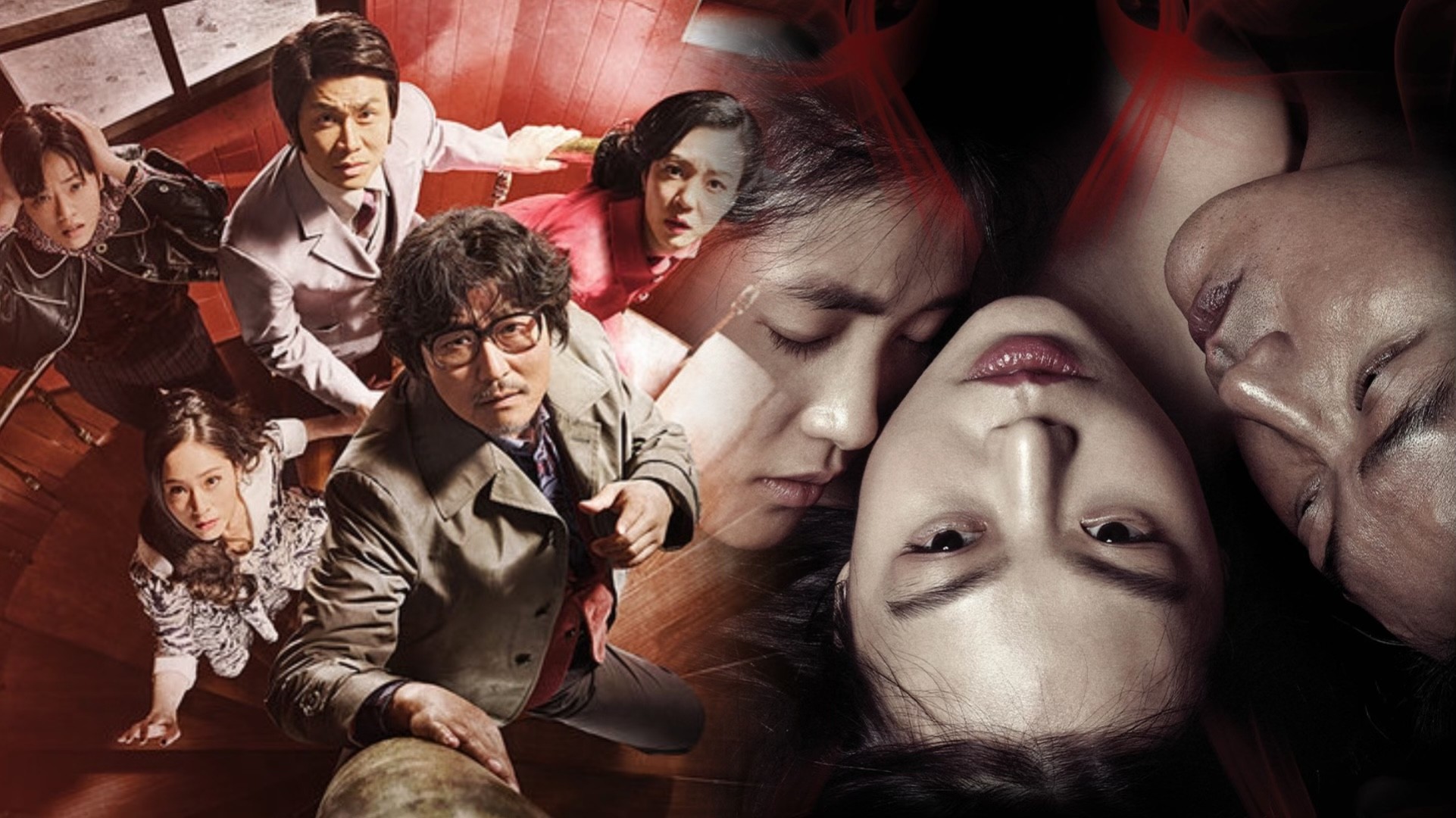
Kim Ki-duk's debut, Park Chan-wook's hits, and much more – in our selection of favorite Korean films.
Korean films are always about emotions, a mix of genres, and a unique style. No matter what direction a director works in, the movie will evoke a reaction, surprise with unexpected plot twists, and delight the eye. We at the editorial office decided to recall our favorite Korean films that can serve as a kind of guide to the world of South Korean cinema for you.
«Crocodile» (1996)

1996 for the South Korean film industry is akin to 1969 in Hollywood, when, without prior agreement, several prodigies launched a new cycle of film rotation in world cinema, elevating their talent to the socket altar of the cine-eye. Hong Sang-soo and Kim Ki-duk encoded a message and captured it in the anti-dynastic history of the Korean New Wave.
Kim Ki-duk's «Crocodile» is not «Crocodile Dundee» and not a story about a person at all. The Crocodile, played by Cho Jae-hyun, is a bipedal creature with a penchant for exhibitionism and violence, but at the same time with nascent empathy. One day, his ambivalent nature forces him to first save a girl and then rape her. However, the eccentric responds with boundless love for the thug. According to Jean Genet, true Good lies not in the desire to do universal Good, but in love for subjectivity and even the disgusting manifestations of its essence. From this perspective, Hyun-jung's feeling for the Crocodile is absolute and angelic.
Kim Ki-duk would later have many victories, but «Crocodile» is the starting point that constantly pulls the author back. A perverse, murky in the urban canal of the metropolis, ghostly and vulgarly carnal film would later set the tone for Kim Ki-duk's romance and disrupt the resonance of the dramaturgical tuning fork of New Wave directors, screaming the name of Korean cinema into the ear of the era.
«Memories of Murder» (2003)
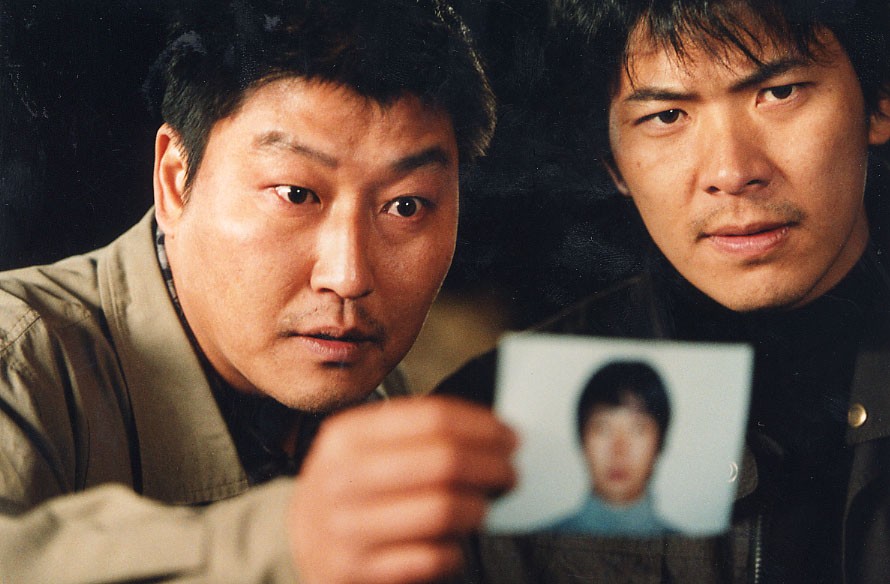
Already a cult classic, the film is a loose adaptation of events related to the crimes of the first serial killer in South Korea and the subsequent investigations. In such a plot, it is difficult to avoid clichés, but Joon-ho happily breaks stereotypes.
«Memories of Murder» is a masterclass in storytelling, character study, and genre deconstruction. Bong Joon-ho masterfully 'positions' his actors like chess pieces, focusing on the personal lives, difficulties, and flaws of the characters, the power dynamics in each specific scene, and the critique of the system that primarily allowed the madness to flourish.
There is room for humor in this film (which cannot be surprising for those familiar with the director's work), but it is a heartbreaking, brutal, devastatingly sad story. And the ending stays in memory for a long time, if not forever, reminding us that in this world there is (and will be) evil that no one is actually fighting.
«Sympathy for Lady Vengeance» (2005)
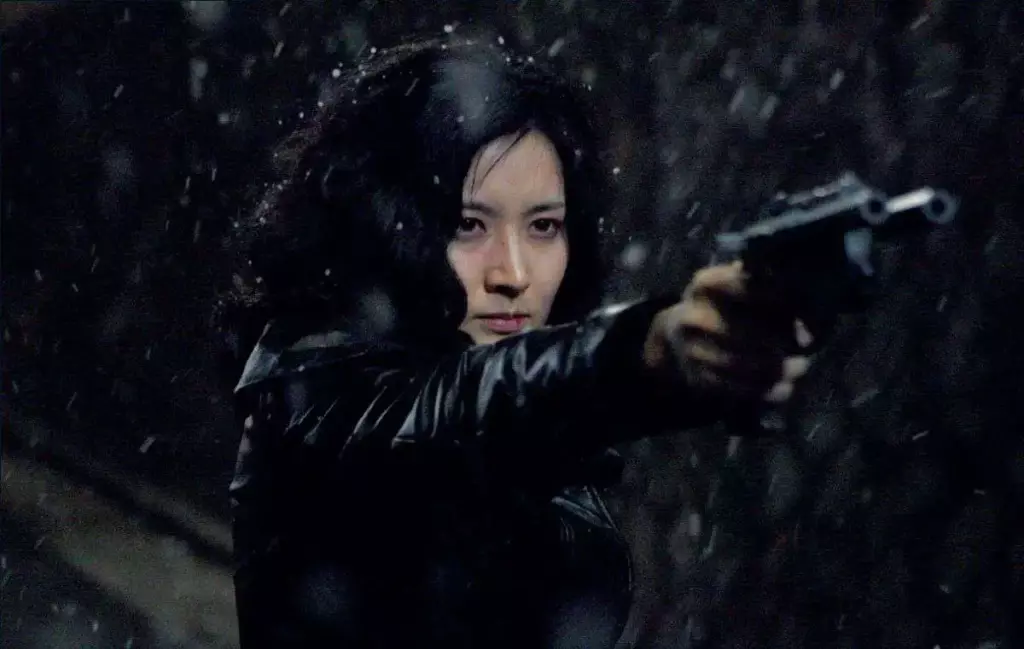
Lee Geum-ja goes to prison on false charges of murdering a child. After 13 years, she, along with her cellmates, finds the real killer and arranges a public, lengthy execution, inviting the parents of the victimized children, who are no less interested in a colorful lynching than the girl. But it doesn't get better. The poisonous stain, fed by thoughts of longed-for revenge, grows even larger.
If a woman wants revenge, pop culture offers not only the sweet-velvet voice of Justin Warfield but also the predatory gaze of Uma Thurman. However, even in the bloody postmodern and cheerful «Kill Bill», the heroine cries while dealing with the last victim. Park Chan-wook collects these tears and elevates them into the leading moral-philosophical dead end inherent in the other two films of his «Vengeance Trilogy» shot in the early 2000s.
The natural reflexivity of Asian cinema mixes with the ancient concept of fate. Avoiding direct hints (as in «Oldboy»), the director borrows the very unwieldy block of ancient Greek myths. Lee Geum-ja has no choice here; she cannot remain inactive, but action multiplies her mental anguish. True, even among the black, slimy, vibrating darkness, white pure snow sometimes falls.
«The Man from Nowhere» (2010)

The quiet pawnshop owner Cha Tae-sik, masterfully played by Won Bin, is a former special forces soldier with a tragic past. His life changes when the neighbor girl So-mi and her drug-addicted mother get involved in stealing drugs from a local gang.
The film, which set the tone for all modern Korean noir, combines sharp action with emotional depth: the fight and shootout scenes are not just spectacular but metaphorical—each blow seems to reflect the hero's inner pain. Director Lee Jeong-beom virtuously balances between tender moments (e.g., the piano scenes) and black humor, and the finale leaves a bitter aftertaste, making one think about the price of redemption.
«The Assassination» (2015)

South Korean cinema has an abundance of historical films, especially those set between 1910 and 1945. Resistance to the Japanese occupiers occupies an important place in the national consciousness of any Korean, regardless of political preferences. Hence the high demand for films about the exploits of partisans. One such domestic hit is «The Assassination» by Choi Dong-hoon, which tells the story of a sabotage squad's attempt to assassinate the Governor-General and a collaborator businessman.
As is typical with Koreans, it is impossible to classify the film into one or even two genres: the comedic balances the dramatic, and the lyrical balances the epic. At times, the film veers into lofty seriousness (the theme is no joke), then turns into an action buffoonery with shootouts in the best traditions of Hong Kong mixed with Bollywood. Despite the abundance of storylines, impressive runtime, and frequent tonal shifts, «The Assassination» hardly loses momentum, rushing by like the main characters through the streets of Seoul in the finale. Incidentally, the colorful characters are, without exaggeration, the best thing about the film. Chief among them is the conscientious gangster nicknamed Hawaiian Pistol, played by Ha Jung-woo, the star of «The Handmaiden».
«The Handmaiden» (2016)

An atmospheric story of a scam, love, and betrayal, where a Korean thief infiltrates the home of a Japanese aristocrat to help a con artist seize her fortune.
Park Chan-wook turns an erotic thriller into an exquisite game of perspectives: the viewer re-watches the same events three times, each time discovering new layers of lies. The film hypnotizes with its visuals—from velvet interiors to surreal scenes in a basement cabinet of curiosities. But the main thing here is not perversion, but the theme of liberation: the heroines break patriarchal chains, using against their oppressors their own weapons—欲望 (desire) and 恨 (han, Korean sorrow).
«Along with the Gods: The Two Worlds» (2017)
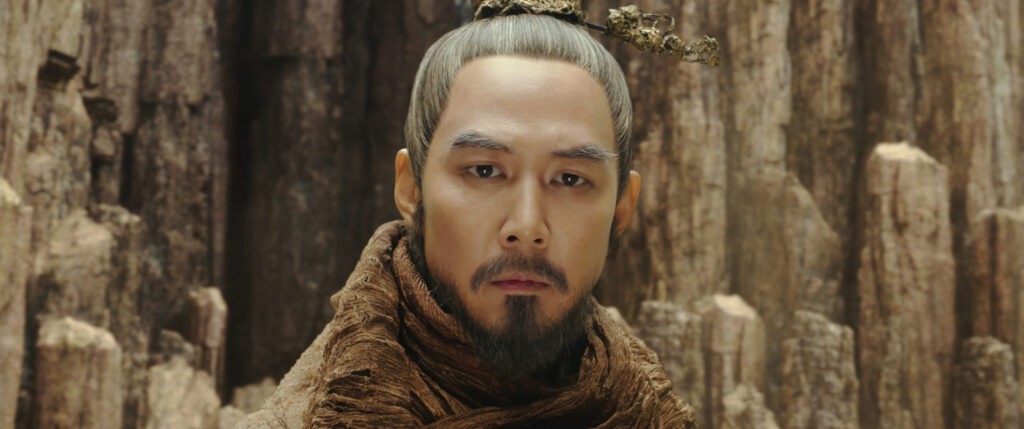
An epic fantasy about a firefighter who, after death, becomes a 'defendant' in an afterlife trial. To be reborn, he must pass 7 trials reflecting human sins within 49 days.
The film impresses with its scale: from visual effects on par with Marvel films to philosophical questions about sacrifice and forgiveness. Director Kim Yong-hwa combines Buddhist myths with Hollywood action, but the heart of the story lies in the hero's relationship with his mother, whose sacrificial love becomes the key to salvation. The box office success (over $100 million) confirmed that Korean cinema can compete with Western blockbusters without losing its soulfulness and signature flavor.
«Deliver Us from Evil» (2020)
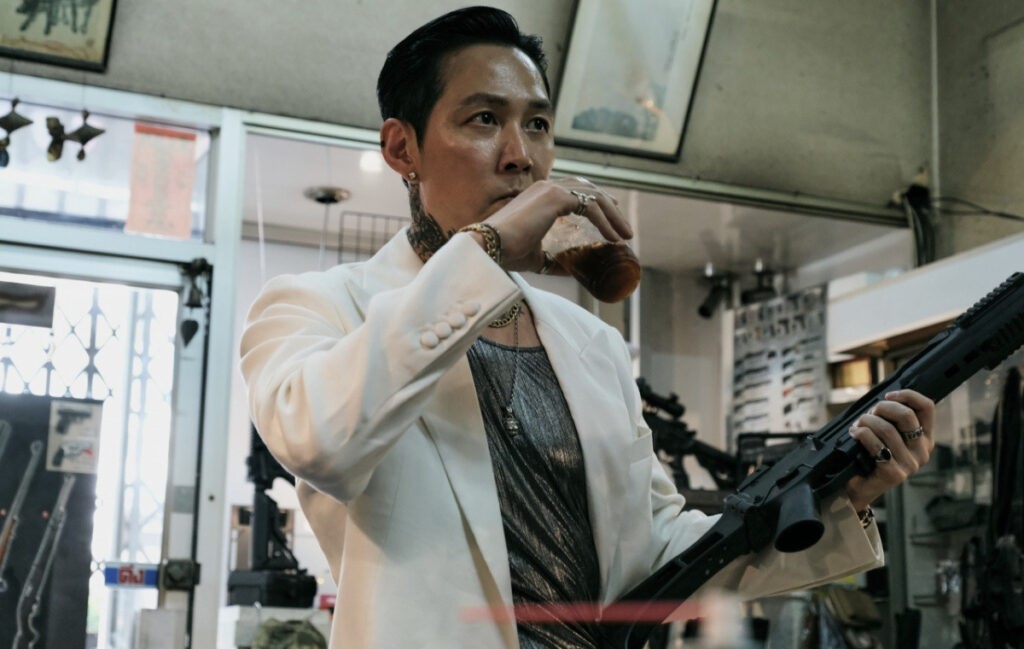
A colorful, dynamic, and, as expected of Asian cinema, bloody and brutal action film with exquisitely staged action scenes. The plot follows retired hitman In-nam (Hwang Jung-min) who carries out a final assignment to kill the head of a yakuza clan and wants to retire. But the clan is not going to let things slide so easily. After finding out information about the contractor, they first kill In-nam's girlfriend, then kidnap her daughter, about whom the hitman knew nothing. In-nam sets out on a search, while another hitman—the brother of the deceased clan head—is already on his trail.
«Deliver Us from Evil» continues the glorious traditions of Korean action films, where complex choreographed scenes coexist with drama, and every carefully constructed frame immerses us in a dark world where hitman goes after hitman, and the rest better stand aside while these two beat each other up.
«Emergency Declaration» (2021)
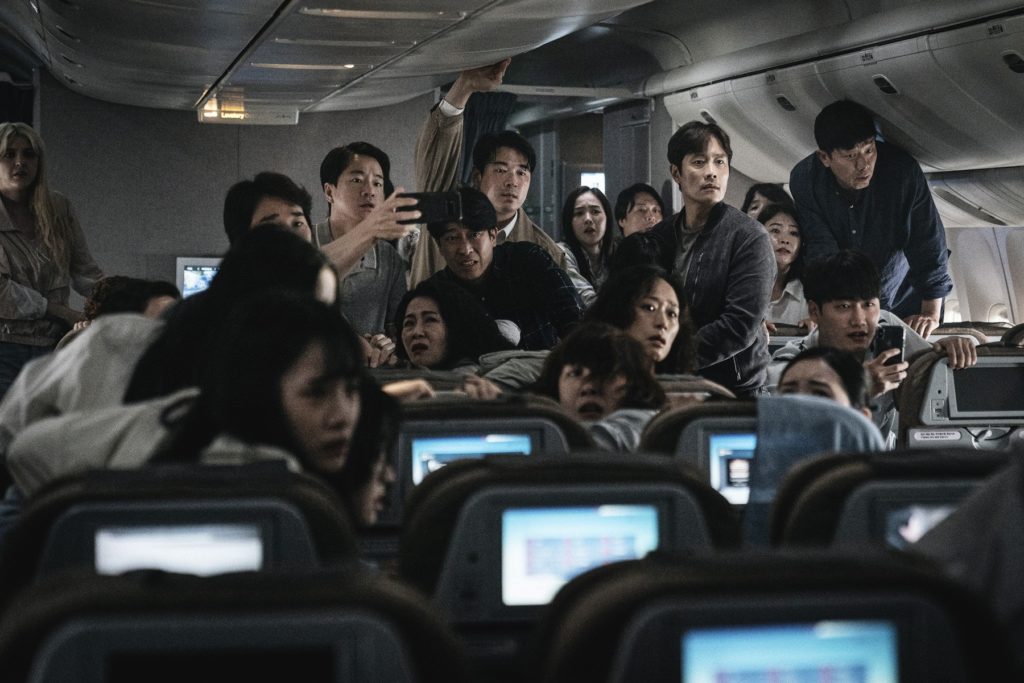
«Emergency Declaration» is an absolute hit in its home country and the highest-grossing blockbuster of 2022. The film is about a deadly virus on board a passenger airliner that is forced to wander from one airport to another, hoping that somewhere it will finally be allowed to land and the passengers will receive medical assistance. But on the ground, not everyone is ready to accept an infected plane, and they do their best to rock the slow bureaucratic machine.
This is a fairly powerful crowd-pleaser with polished visuals, excellent dynamics, and masterfully honed suspense. But for South Korean cinema, that is still not enough. At that time, debut director Han Jae-rim was not just making a disaster film. Here, among other things, at every turn of the plot, there is a dose of the already familiar sociality—a monotonous detective, tragic monologues, and flagellation of capitalism. Added to this was the unceasing public anxiety from the recent pandemic. And the director clearly showed that simply running away from the problems that have fallen on your head by plane is no longer possible. Times have changed.
«In Our Day» (2023)

Hong Sang-soo is one of the key auteurs of contemporary Korean cinema, and indeed world cinema, although his quiet dramas rarely attract attention outside a circle of fans. However, every couple of years, he makes forays not exactly into big cinema, but, let's say cautiously, not into such small cinema: «The Woman Who Ran» was a moderate hit, «A Traveler's Needs» enjoyed certain success (primarily thanks to Isabelle Huppert in the lead role). Those who are ready to watch how people live, drink soju, meet and part, will be equally unable to tear themselves away from the screen even in the director's most modest films.
Among them, «In Our Day» is especially remarkable. A meditative story about an actress tired of her profession and a poet quitting drinking. The characters here again talk and drink (though they try not to), look for a cat, argue, but reveal a little more about what they really feel. Given Hong's productivity, «In Our Day» feels like another visit to a familiar bar with an old friend, but suddenly something new is discovered in both the friend and yourself, and an ordinary meeting is remembered for a long time. In the finale (no big spoiler), everyone cheerfully plays an alcohol version of rock-paper-scissors, and after that, of course, you don't want to do anything else in life.
«Cobweb» (2023)
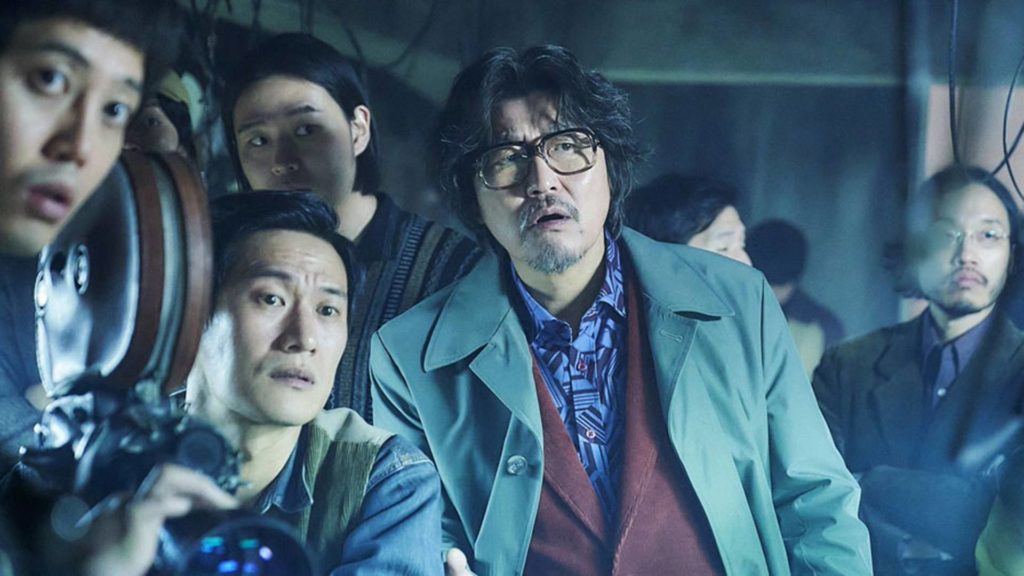
Kim Jee-woon is one of those directors primarily associated with contemporary South Korean cinema. The golden age of his career came in the second half of the 2000s. However, after the striking thriller «I Saw the Devil», the director went off in a different direction, or more precisely, onto the Texas plains. «The Last Stand» with Schwarzenegger was not successful either creatively or commercially. However, Kim later managed to rehabilitate himself.
His latest work to date is the self-ironic comedy «Cobweb», which is something between «The Disaster Artist» by Franco, «The Book of Solutions» by Gondry, and «Hail, Caesar!» by the Coens. The main character of the story is a director, modeled after the classic Korean filmmaker Kim Ki-young and played by the star of «Parasites», Song Kang-ho. He secretly decides to reshoot the ending of an already completed film, but, of course, everything goes wrong, and the hapless artist with impostor syndrome has to extricate himself from a whirlwind of actor quarrels and unfortunate incidents. On top of that, censors drop by the set. However, the characters find an elegant solution by presenting the new ending as anti-communist propaganda directed against the 'northern neighbor'.
Perhaps the main feature that distinguishes the national cinema of the Republic of Korea from others is its complex genre identity, and Kim Jee-woon's films are no exception. «Cobweb» lies at the intersection of a comedy of errors, political farce, adventure thriller, and melancholic drama about the nature of art and talent. The average viewer will laugh out loud watching the characters get into absurd situations, while a creative person will surely share the suffering and pain of the unlucky director.
Comments
0No comments yet.
Sign in to join the discussion.