
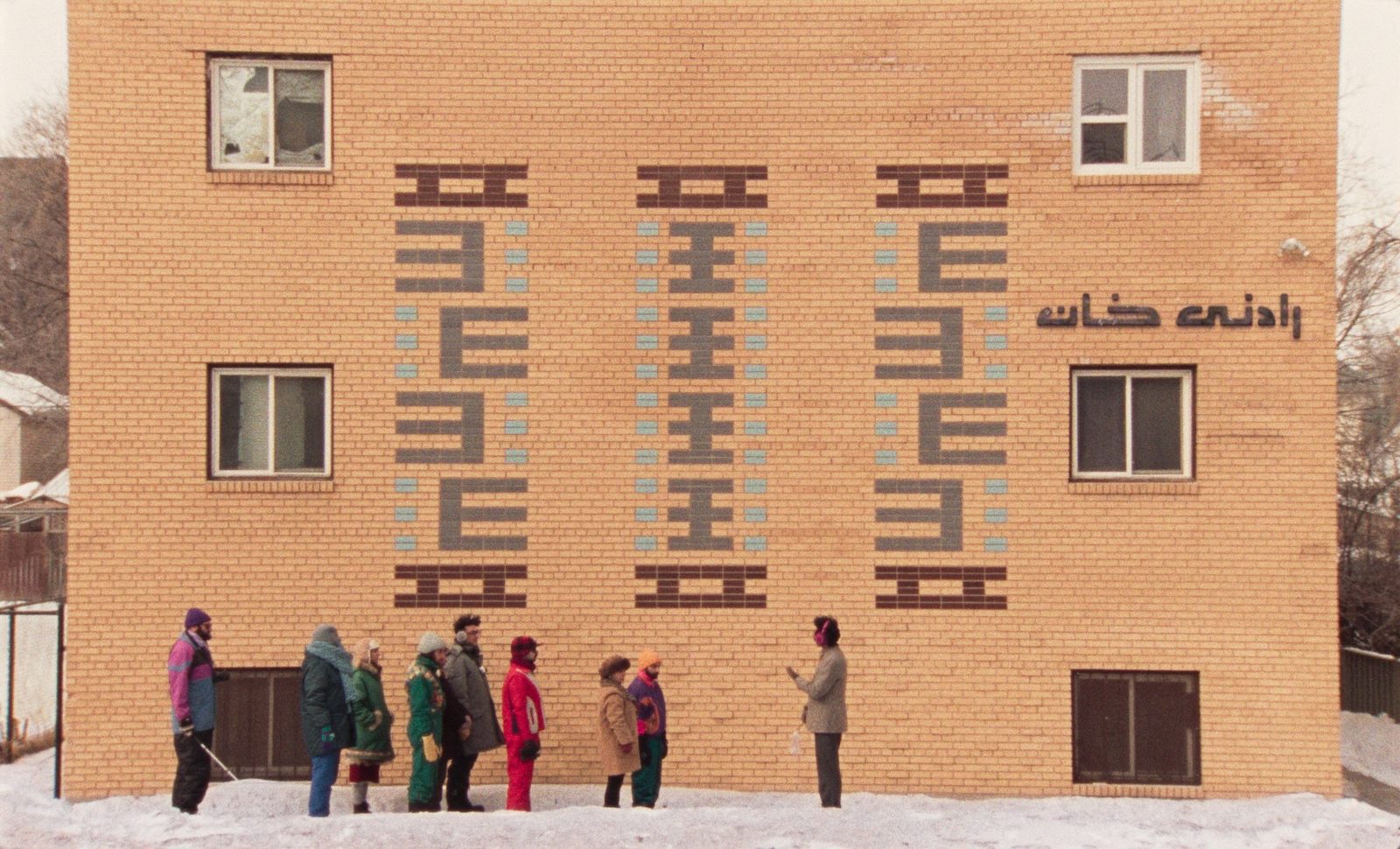
You can still catch the touching comedy and heartwarming drama 'Universal Language' by Matthew Rankin in theaters. The film won the Audience Award at the Cannes Film Festival, so the language truly turned out to be universal. Sofia Bikkanova writes a...
After the holidays, a furious French teacher scolds the students. Somewhere between reading an existential revelation written in chalk on the board and smoking a cigarette right in the classroom, the teacher concludes: “You won’t succeed. And do you know why? Because there is reality”. But that’s not true, sir.
As theory has shown, reality is a rather shaky substance. It can be a basis for mixing forms and materials, slightly distorted, as for the surrealists. It can be an imperfect form hiding the truth under a pile of unnecessary and clumsy words, as for the symbolists. Perhaps it hides nothing at all, which cancels all the rules of the game, as in postmodern thought. Maybe reality doesn’t exist at all in the language of art, as for the Russian modernists, because “no one takes a painting for a view out an open window” — notes Valery Bryusov. But what is reality here, in the province of Manitoba?
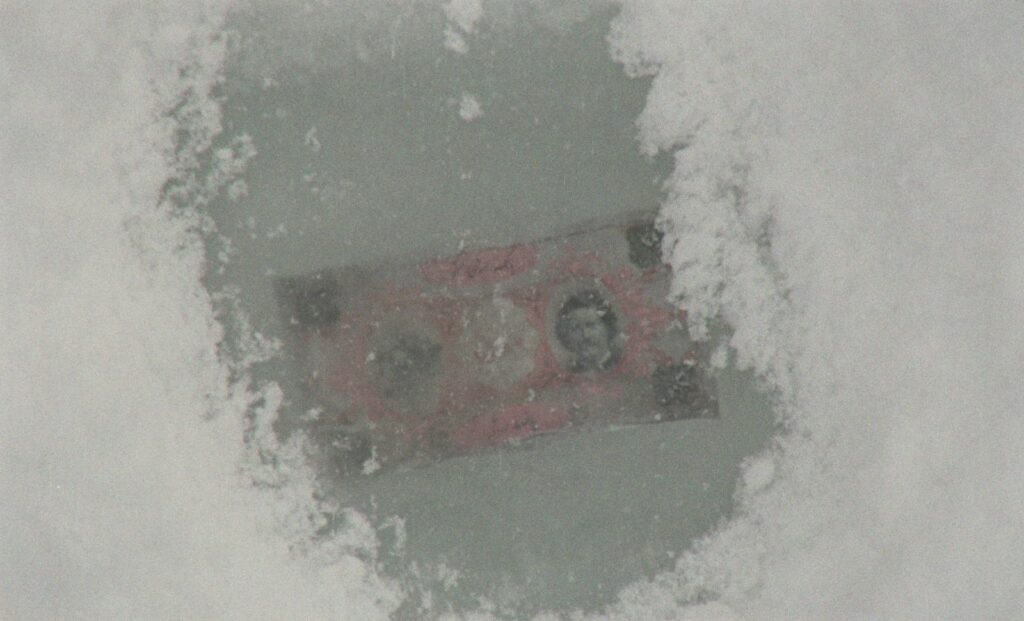
Winnipeg, the main source of inspiration and object of admiration for Matthew Rankin, is itself a bit surreal. And it’s not just about the dreamlike rhythm of identical buildings and strips of light after sunset. It seems that logic and meanings themselves are refracted, remaining somewhere out there in Toronto, never quite reaching the province. Instead of Apollinaire’s phoenixes, hummingbirds, pigeons, and kites, turkeys run through the snow here. One of them, rumored to be the most beautiful and most expensive for the local magnate, stole a boy’s glasses. Now the sisters are trying to retrieve the money frozen in the ice to help him.
In addition, there is a mourning girl with a collection of tears, a store with disposable handkerchiefs, a cemetery at a highway junction, and much more. In one day in Winnipeg, so many events, meetings, partings, sorrows, and joys occur. The plot takes such dives that by evening all the comic stories gather into a cohesive dramatic canvas.
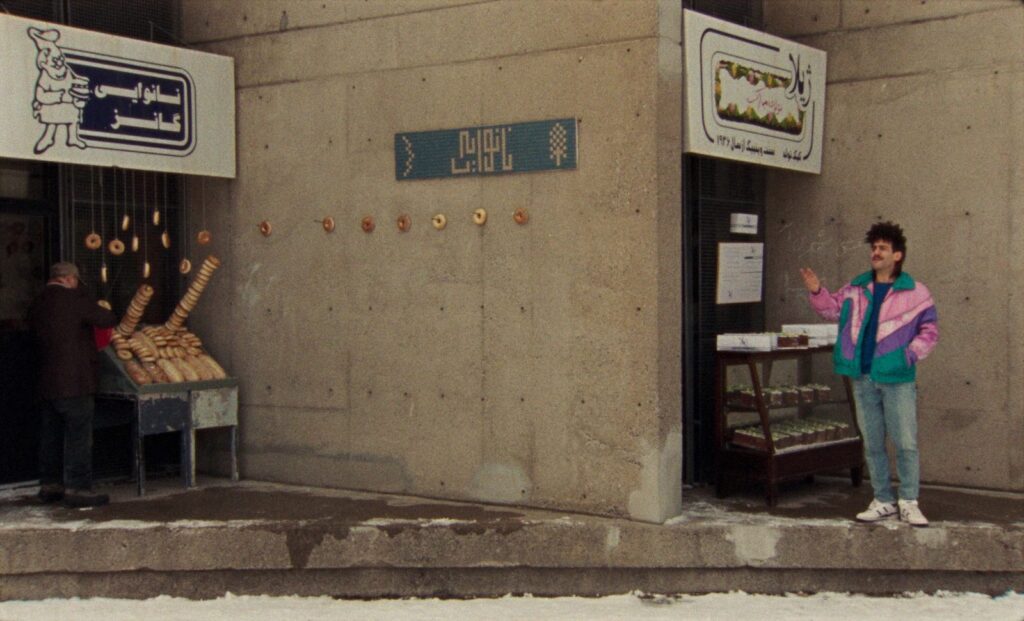
The province dear to the director’s heart often consists of myths. Whether it’s scary tales, like in the first season of 'True Detective', or fish in a coffee pot from Pete in 'Twin Peaks'. Far from the roar of big cities, there is always room for a little absurdity and a little irony, without malice, but with great tenderness. Everyone drinks tea and rejoices, and Matthew (Matthew Rankin) returns home after resigning from service.
At first, he falls into a trap of strangeness and gets lost in a raging stream until the city accepts him back. This happens when, among the rhythm of identical houses with different brickwork patterns, Matthew finds the place where he grew up. He sees and feels through the walls. He sees and feels that other people now live here.
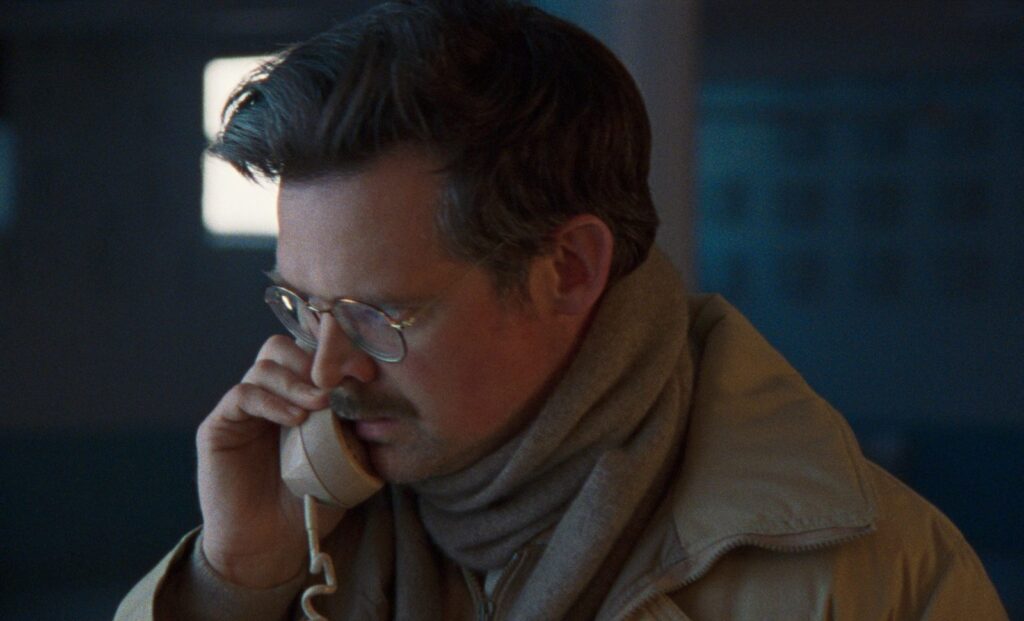
In search of his now-lost home, the hero agrees to meet Massoud (Pirouz Nemati), a good-natured doppelgänger of Matthew. Although it’s hard to judge whose double is whose, because mustachioed men in thin-rimmed glasses with small curly hair easily swap places. The characters are similar not only in names but also in the retro aesthetic from which both are carved. The interior of nostalgia for the 80s, reminiscent of an antique shop where young post-punk enthusiasts hang out, complements them both.
'Universal Language' is compared to the works of Wes Anderson for its decorativeness and fairy-tale quality, and to the films of Yorgos Lanthimos for its degree of absurdity. Matthew Rankin loves not only symmetry and static shots but also editing solutions that break away from the general flow of meditative dissolves. For example, in one dialogue, the number eight is replaced by mirroring the frame, so the men jump from corner to corner until their conversation stops heating up. Or the alternation of medium and close-up shots, which makes the mustachioed bourgeois uncle seem ready to jump out at the viewer.
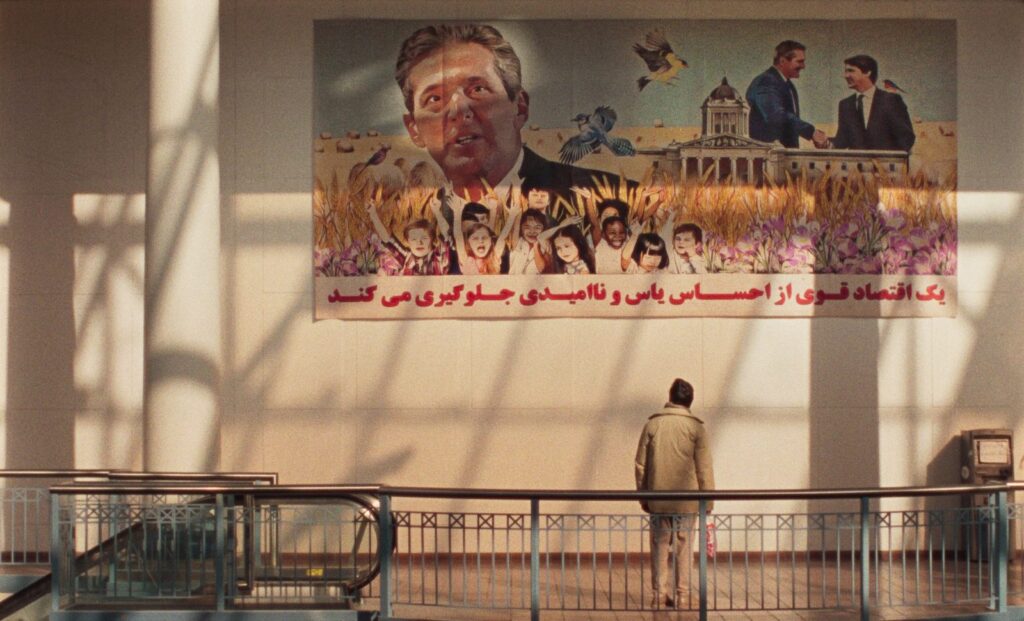
'Beautiful city of Winnipeg' emerges from under the snow. Now instead of a gray-green color grading film over angular offices, there are peach highlights and sunny geometric shapes on the walls. The pattern from the saucer flows onto the Turkish carpet, ends up on the walls of an old samovar, and from there moves through cracks in the concrete into a small shop with signs: “Don’t shout near the flowers”. In 'Universal Language', Eastern aesthetics are reflected not only in the exotic patterns of ceramic tiles but also in language: after a long absence, the hero discovers that everyone now speaks Farsi.
Even while the mosaic of plots is still shattered by the hammer of strange provincial quiet reality, the city does not seem strange to Matthew. For him, Winnipeg hasn’t changed at all during his absence, because the scariest thing is not recognizing the place where you grew up. Sadness slowly creeps along the dark winter alleys when it seems that just a little more and the hero will never be able to fit into the ornament of his beloved city.
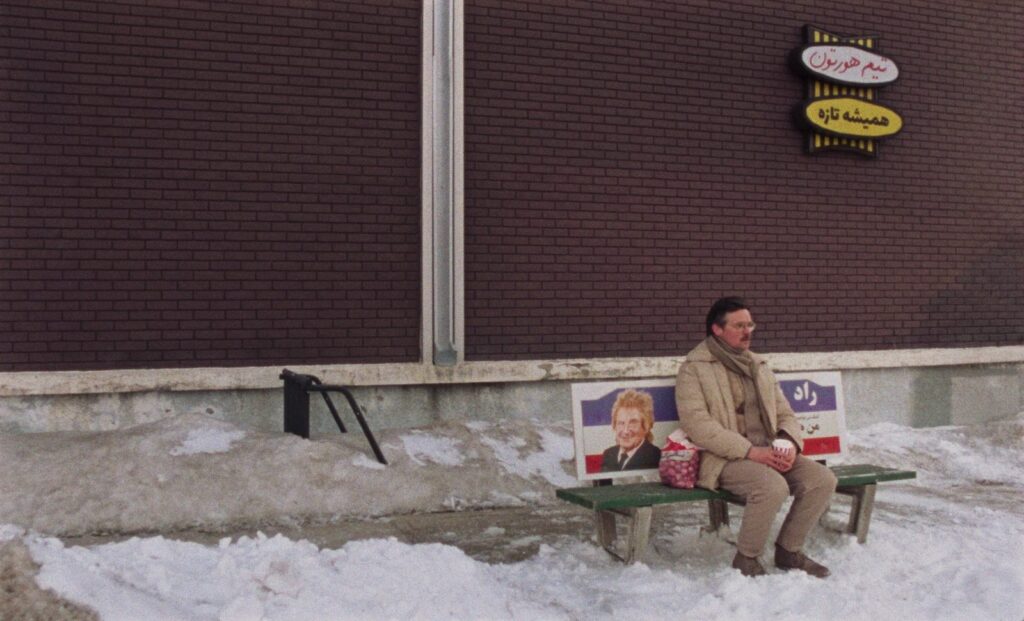
The past tries to jump out of the heart and slip away, so you have to chase it through all the once so familiar places: from the supermarket where you can’t loiter without purpose, to the mobile tea shop and back. Not only nostalgia is universal, but also the sensitivity with which the characters listen to each other. The enchanted Winnipeg asserts that 'Universal Language' is the language of memories, humanity, and feelings. Here people give nuts in sugar, lend a kettle of boiling water, hug a little longer than outside the province, and gather chaos into a sweet bedtime story.
Comments
0No comments yet.
Sign in to join the discussion.