
You can still catch "Small Things Like These" in theaters, an Irish drama about a man who did not accept another's grief. About why this is the most important film in theaters — in our review.
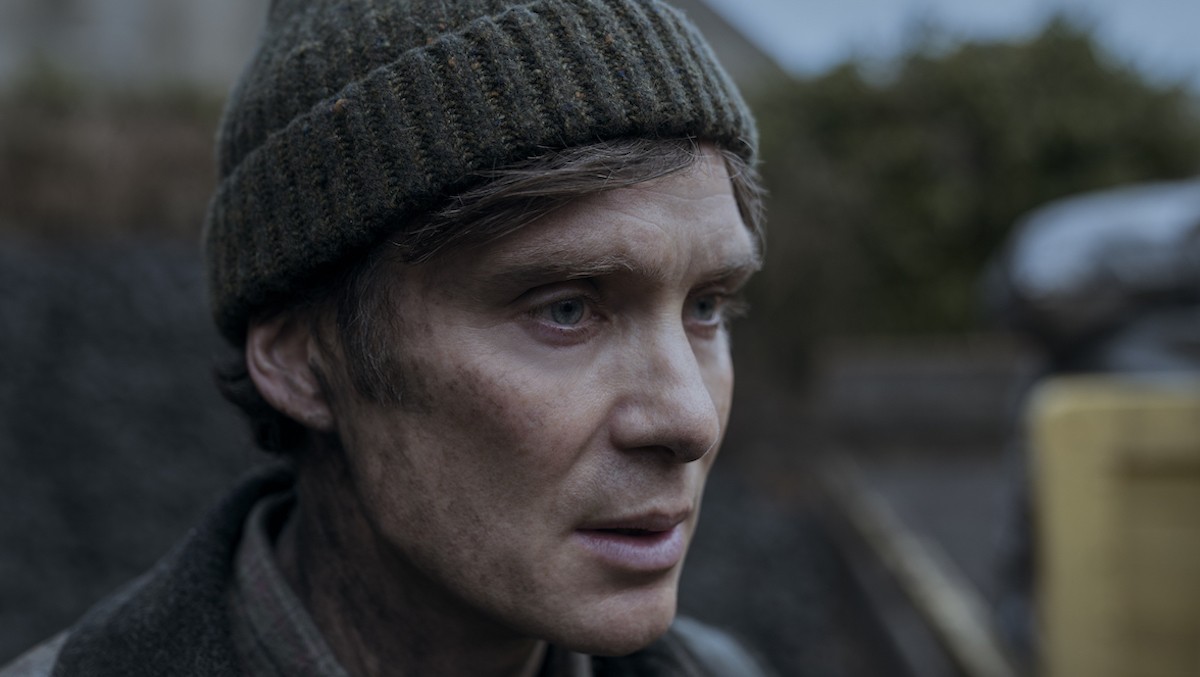
Bill Furlong (Cillian Murphy, one of the film's producers, here in top form) is the owner of a small coal delivery business. Since it's Ireland in the 1980s, one can assume his business is doing reasonably well, but for how long? Progress, as often happens in social dramas, will not bring Furlong happiness — what will become of him if the heating system changes?
Furlong has a wife and five daughters — a large and happy family. His wife Eileen (Eileen Walsh) is preoccupied with financial worries, the children go to school or prepare for it, the eldest daughter already talks to boys, but not yet enough to cause parental concern. Yet something weighs on the hero: he lies awake at night, is more often silent, averts his gaze, and on Christmas Eve sits by the window, sinking into memories of a happy but tragedy-marred childhood.
At some point — quite by chance — Furlong realizes that in a convent housing a Magdalene laundry, unmarried pregnant girls are being brutally exploited. Seeing a glimmer of compassion in a stranger's eyes, one of them rushes to him crying for help, while the nuns, on the contrary, drive him away rather aggressively. Thus begins the story of Bill Furlong's moral torment, and for the remaining hour of the film, Cillian Murphy gazes at those around him — but above all, at himself — with unbearably sad eyes.
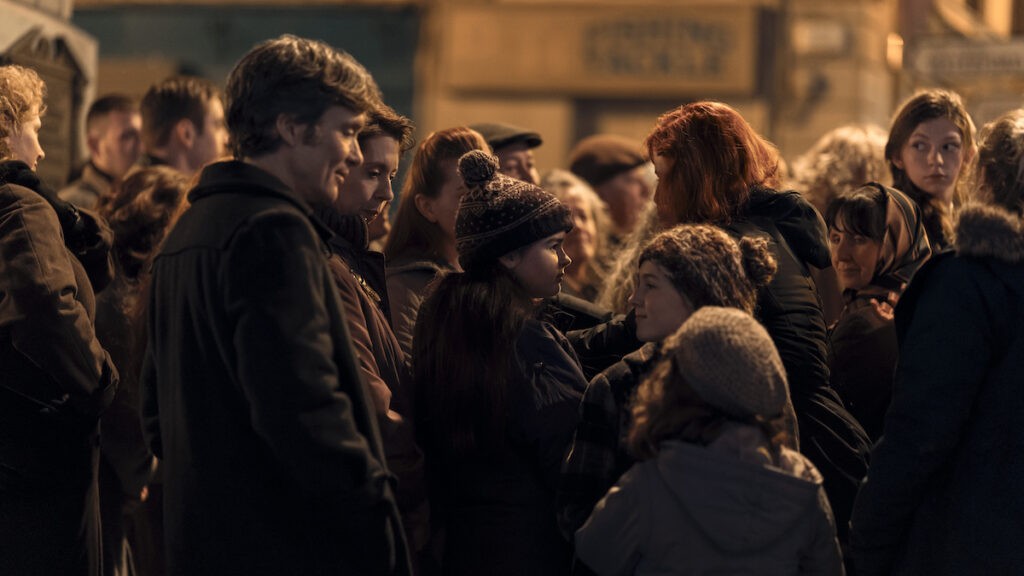
Perhaps most frightening is that the film, like the eponymous novel by Claire Keegan on which it is based, is faithful to historical facts. Such laundries did indeed exist, and thousands of women endured their torturous conditions. This is a hushed-up part of Catholic and Irish history, but many will probably recall "Philomena", a charming drama by Stephen Frears, where the great Judi Dench played a victim of a Magdalene laundry whose newborn son was taken from her by the nuns.
"Small Things Like These" is an heir to the outstanding tradition of British social realism. Like the wonderful films of Mike Leigh, it is quiet cinema, subtle work: life just goes on, people just suffer. No one explains anything, because everything is written in Murphy's eyes. As with Ken Loach — another living classic of the genre — there is much pain in "Small Things", but also much hope. Ultimately, this is a film about someone who cares. The best Loach films — from "I, Daniel Blake" to, say, "Riff-Raff" — are built on not being indifferent to the fates of others. And in its best moments, "Small Things Like These" reminds us precisely of them.
One might ask, why should we watch the suffering of Irish citizens, yet another social drama about someone else's hard life? Many answers could be offered, but one seems particularly convincing: it's about the specific perspective chosen by the filmmakers. At the center of the story is not only the tragedy — the pain and suffering of girls rejected by society, who found only hatred and torture in shelters of mercy — but also how this tragedy reflects on the people who witness it. How to live knowing that someone nearby is suffering — without guilt and without reason? How to live knowing that, essentially, you turn a blind eye to it?
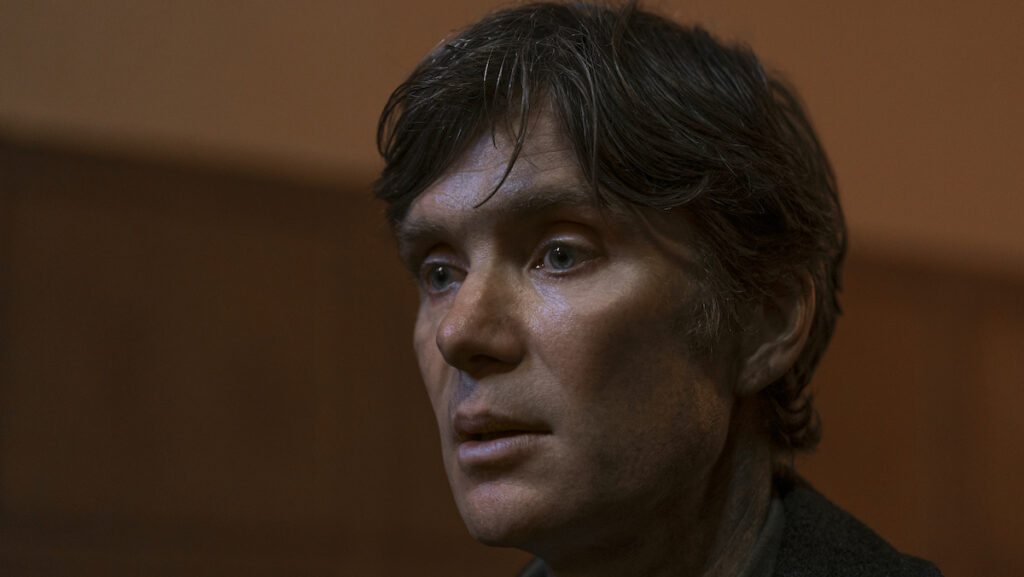
The protagonist could not, unlike his neighbors, get off lightly in these matters. To say the girls were to blame themselves. That the authority of the Church was too great. That the consequences were too frightening. And the entire film, in fact, is about how he could not. How he tried to wash his hands of it, look at himself in the mirror and come to his senses, consult with his wife, listen to the voice of reason, and how in the end he never understood why doing something obviously bad was considered reasonable, while doing something good was not. Why betraying and turning a blind eye is reasonable, but saving even one life is not only reckless but even somehow reprehensible?
Of course, "Small Things Like These" is a film of serious civic pathos, a drama of moral unease. However, there is no abstract moralizing, no overly simple answers or imposed solutions that, when they appear in films, always betray the authors as either somewhat foolish or unscrupulous. Bill Furlong is not a hero (in the usual sense). He avoids arguments, nods along in difficult conversations, is, frankly, slow to act and at times moves very quietly. But he goes further than others — if not in some economic or other sense, then in a moral one. His heroism is quiet — blink and you'll miss it — he overcomes himself under cover of night, virtually without witnesses and without any visible reason for others.
The best moments of the film are devoted not to action, but to observing Furlong sitting alone or walking. Why can't he sleep? Why does he wander the deserted streets until morning? And why does he have more compassion (or, as his wife puts it, soft-heartedness) than his neighbors? His wife sees the reason in that he grew up in the "hothouse conditions" of a wealthy estate and did not know in childhood the hardships that make up the lives of others. This is an interesting guess, and one very common in Russian discourse: whoever hasn't smelled the dirt, hasn't drunk from a puddle, hasn't seen life — "real life", as they usually say when advancing such a thesis.
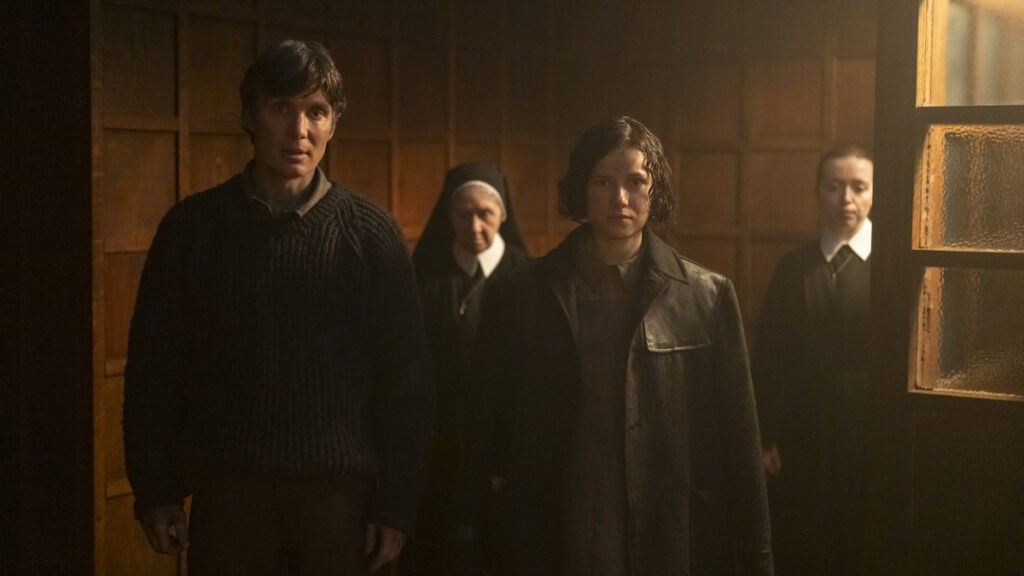
"Small Things Like These" does not exactly openly argue with this position, but, like the protagonist, avoiding direct confrontation, it turns everything upside down. A person who has seen good in life, who has seen kindness and participation, turns out not to be more hothouse, soft-hearted, or compassionate, but on the contrary — more principled. It takes more strength to do something than to close one's eyes to the world. This is probably an understandable thought, but like any good film, "Small Things Like These" is interesting not only for the moral one can extract from it, but also for the opportunity to watch how the actor Murphy walks in the night, scrubs his hands until they bleed, worries, suffers, and grows beyond himself.
In a better world, Murphy would go down in film history for roles like this one; for films in which life is visible, not the scale of the concept. However, there is still a chance for that, and in individual cinephile conversations, the quiet fame of "Small Things Like These" will yet equal the more obvious popularity of "Oppenheimer" and even, dare I say, "Peaky Blinders" (the director of "Small Things", Tim Mielants, by the way, was also one of the directors of the series). Which, of course, is not so important — films like this are valuable in themselves, as valuable as the story of everyone who found the strength to care about the fate of another.
Comments
0No comments yet.
Sign in to join the discussion.