
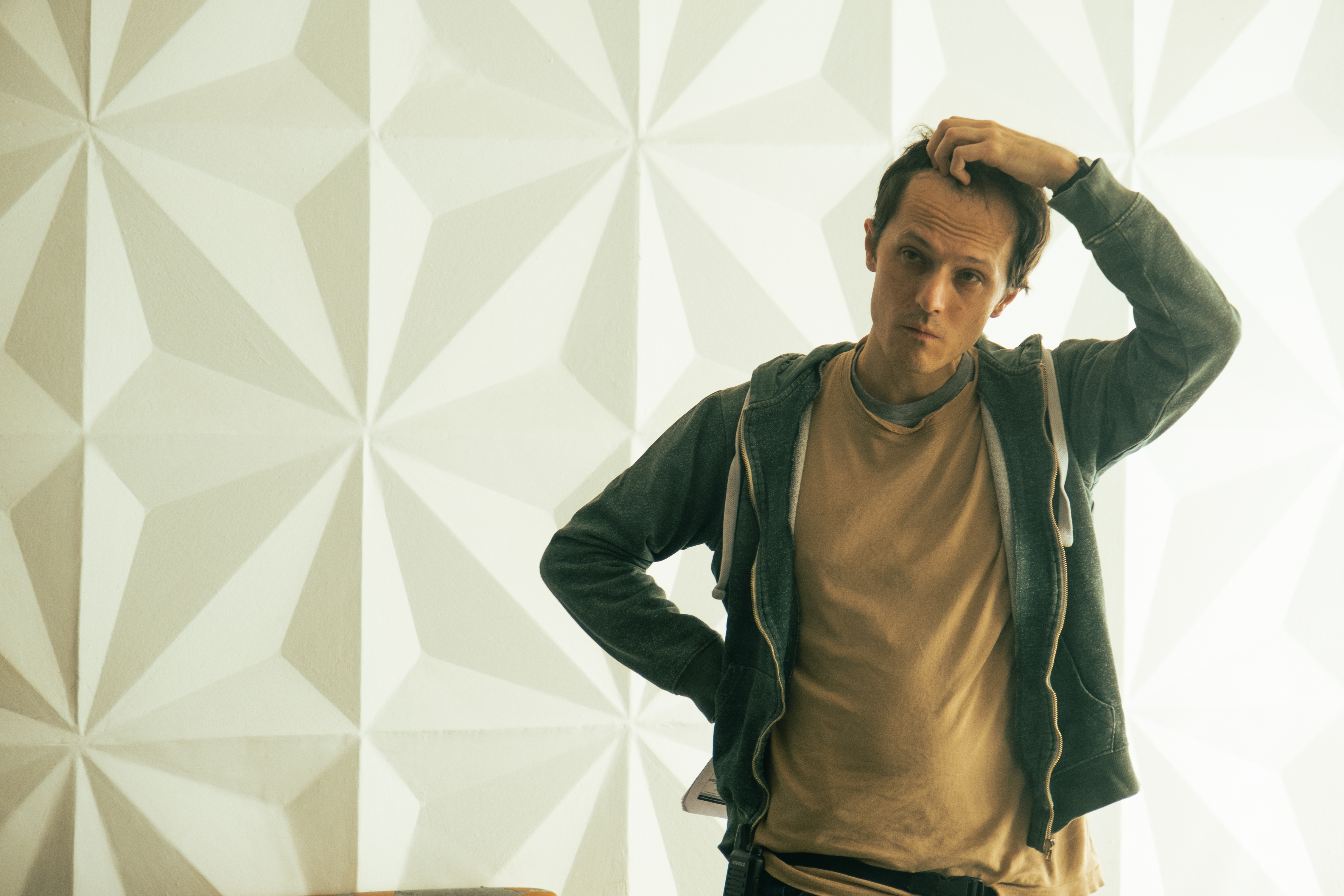
On February 13, the online cinema Okko premiered "Outsource", one of the most anticipated series of the year. We spoke with director Dušan Gligorov about filming in Kamchatka, Balabanov's cinema, and series as an opportunity to enter into a dialogue...
How did the project on such a topical subject — amid constant talk about the return of the death penalty — come about?
I don't write scripts myself and joined the project when Anna Kozlova's work was almost complete. She would probably answer this question better, but I can say for sure that neither she, nor I, nor the producers from Sreda and Okko had any intention of capitalizing on the topic's popularity. When the script was being written, the public discourse had not yet started another round of debate on the death penalty, so there was certainly no calculation on our part.
But what attracted you to this particular issue?
Any interesting drama involves irresolvable conflicts where characters choose not between good and bad, but between two bad options. It's a no-win choice situation. It's no coincidence that many series focus on police work, on what it's like to regularly encounter violence and death. This is, if you will, fertile ground both for revealing characters and for showing a somewhat different world than the one we routinely encounter when we leave home.
Through the same lens of confronting death, the characters of "Outsource" are revealed. At the heart of the series, it seems to me, is a story of life in a transformative era, and such a premise — selling the right to execute — allowed us to show the daily lives of prison workers who carry out sentences from an unexpected angle.
The time is 1996. Theoretically, the very premise of outsourcing the death penalty could be set in any time. Say, in the future or an alternative present. Why was it important to show specifically the 90s?
We initially had no desire to go into some kind of convention, showing the death penalty, I don't know, in 2010. That would raise obvious questions about what kind of world we are showing. The decision to shoot about the 90s in this sense is driven precisely by realism. 1996 is the last year the death penalty was still applied.
I was recently asked if I had any desire to somehow close the trend of series about the 90s. Of course not. We didn't want to make a better series about the 90s than anyone else, nor to outdo any series, nor, so to speak, to close the topic. When the script was written, this trend itself wasn't yet an obvious phenomenon.
In general, when you start making a series or a film or writing a book, there is a theme, there are emotions or situations through which you tell the characters' story. But you should never start something with the thought that now I will close the topic of the 90s. Sometimes it happens that way, possibly, but it shouldn't be the goal. Just as the topicality of a theme shouldn't be the sole reason for creating a series. Now the theme of "Outsource" is relevant again, that's true, but it's a coincidence, not a calculation.
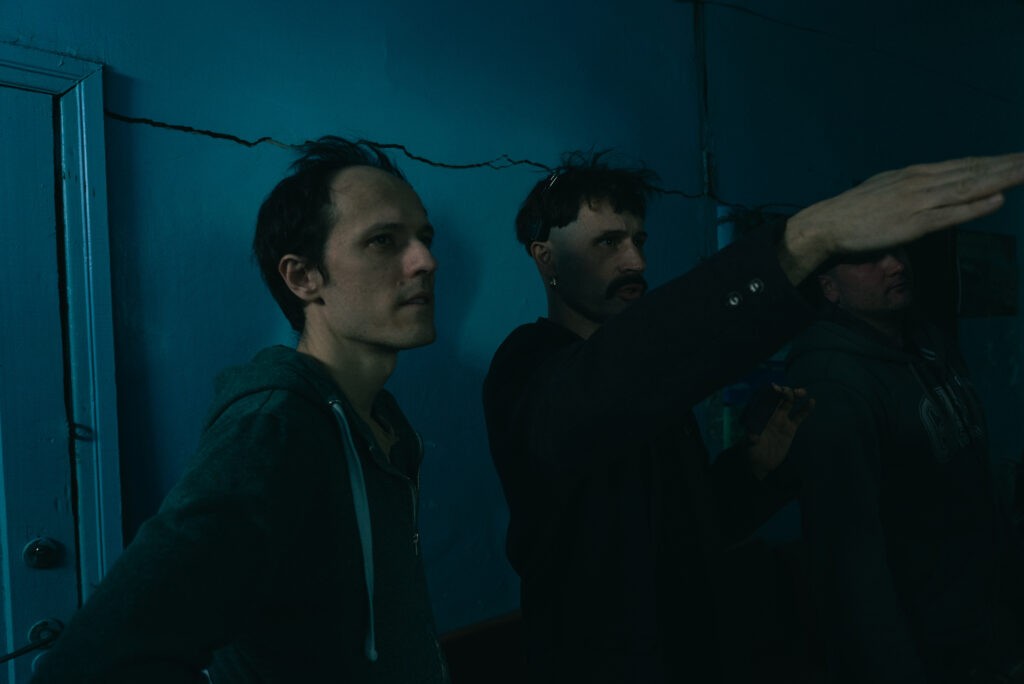
What do you remember about the 90s? In one interview, you said that in 1992 your father moved to Russia to work. Did your memories of that time influence you in any way while working on the series?
I actually came to Moscow in 1992, lived here, went to a Russian school. I was between 12 and 16, a period of personality formation when you perceive the world around you quite acutely. To be honest, I didn't try to somehow transform my experience, but I hope we managed to convey the spirit of the 90s. There was a feeling that something very significant was happening, that we were living in an era of great historical upheaval and the birth, perhaps not of a new world order, but certainly of a new way of life for the country — a big country with big problems. And everyone was somehow a part of it. Everything was possible and very fast. Many were drawn to this uncertainty.
I remember the music of that time very well, by the way. In the 90s, you could hear the full genre palette. From hard rock, punk rock, and even some deep underground to, of course, popular pop and chanson. Now on central television, everything is mostly in one genre, but back then the diversity and the possibility of choice were striking.
It was a contrasting time, and it is precisely this feeling that we tried to recreate. So that even those who didn't live then could feel both the temptations and the horrors of the era. Moreover, even without experiencing that time, the viewer can always sense falsehood, the absence of life in the frame.
Batyr Morgachyov, Olya Nikulina, all of us were born around 1980 and tried to recreate some of our own memories, and it was very gratifying when on set the actors said they remembered their fathers having the same lamps or sweaters. Or when an actor told us that in 1993 he was brought the same hat as in the series. This is important not only for the viewer to believe in what is happening on screen, but also for us, while we are filming and trying to imagine ourselves in the characters' shoes, to believe in what is happening to them.
Music is actively used to create the atmosphere, but it's only one of the conduits to the past. And far from the only one.
Yes, there are many. Here, of course, the enormous work of our production designer Denis Isaev and the cinematographer, who looked for ways to convey light, color, and selected lenses. We also used the 4:3 aspect ratio, which has become so unusual that many perceive it as some kind of sophisticated creative technique, although not so long ago everything on TV was broadcast in this format and there wasn't even a thought that it could be otherwise.
For lovers of old cinema, 4:3 is probably like home.
It seems to me that the 4:3 format is even more harmonious for perception than widescreen. For me, working in it was unexpectedly interesting, comfortable, and even somehow more convenient from the point of view of staging mise-en-scène and framing. In general, it was a very positive experience.
Since I shot my diploma film in 2004, we used the 16:9 aspect ratio, so working in a new format was primarily very interesting, but it also serves the story.
What signs of the era did you consider paramount to recreate on screen?
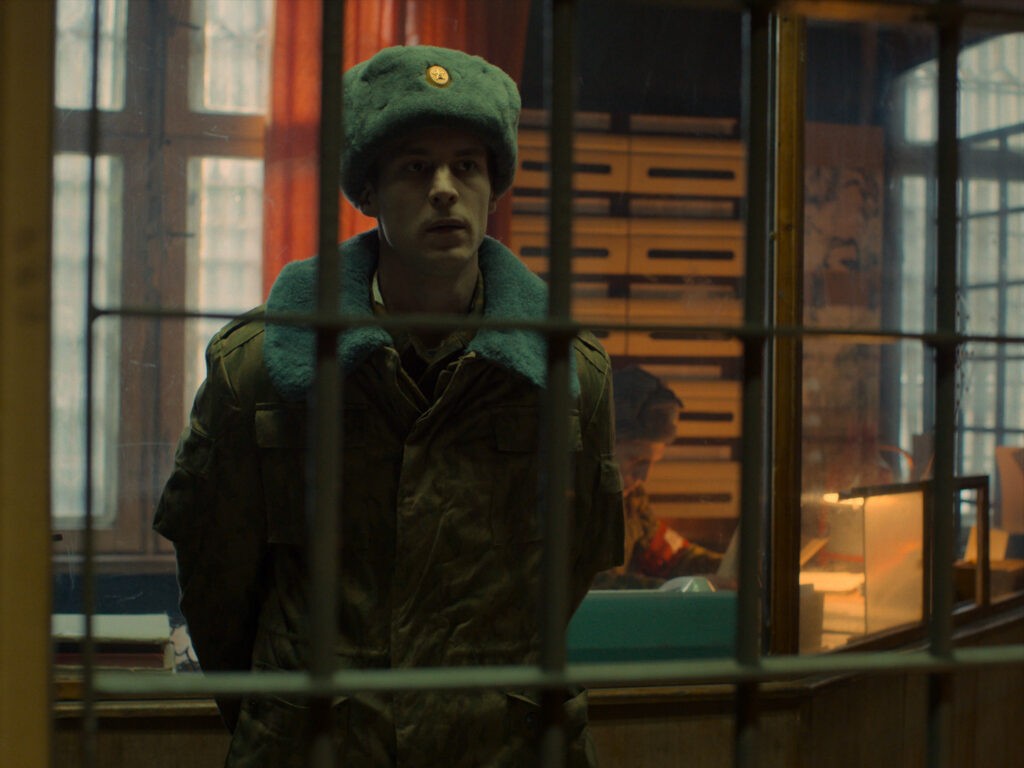
Our team — the cinematographer, the artist, the director — we always try to follow the texture. To have everything in the frame as real as possible. Real shelves, parquet, apartments. For instance, the layout of apartments from that time is so deeply ingrained in the consciousness of every Russian person that any attempt at deception or substitution is caught, it seems, intuitively.
The same goes for the characters' costumes: many items that appear in the frame are actual clothing from that time. In this matter, thrift stores are our everything. I think that from such elements the overall feeling of realism and truthfulness is built. It's a cumulative effect, and it consists of many small details.
However, it must be understood that the main task is still not only to convey the era, but to create the best conditions to reveal the theme, the characters, their personalities. We also proceeded from the overall visual concept — the desire to, as it were, lock the viewer within the frame. In a cage, so to speak, in which all the characters are in one way or another. The geometry of the frame — straight lines, squares, simple shapes — all serve the global task of placing the viewer in the context of the characters' lives.
I have to ask about filming in Kamchatka. Was it difficult to find suitable locations? What do you remember about the process? And, of course, the weather conditions, I think everyone is curious about.
First of all, it was very difficult. Filming itself is a big logistical operation. In a large project, at least fifty people are involved, a bus for the crew, three or four large trucks with equipment and props, a large wardrobe, makeup rooms, and finally a toilet. It's just a big caravan of cars — thirty or even more — plus trailers for the actors. And none of this exists in Kamchatka.
But the worst part is not that it's not there — we often shoot in places where everything needs to be transported — the problem is that there are no land roads to Kamchatka, and everything had to be brought by ferry. So it was a big adventure; we consciously went without most things.
We were so involved in the process, we had a desire to do something good and real, that the actors and all departments agreed to do without most of what they usually have at hand on a film set, say, in the Moscow region. In short, it was an adventure, a kind of guerrilla filmmaking, as they say in English.
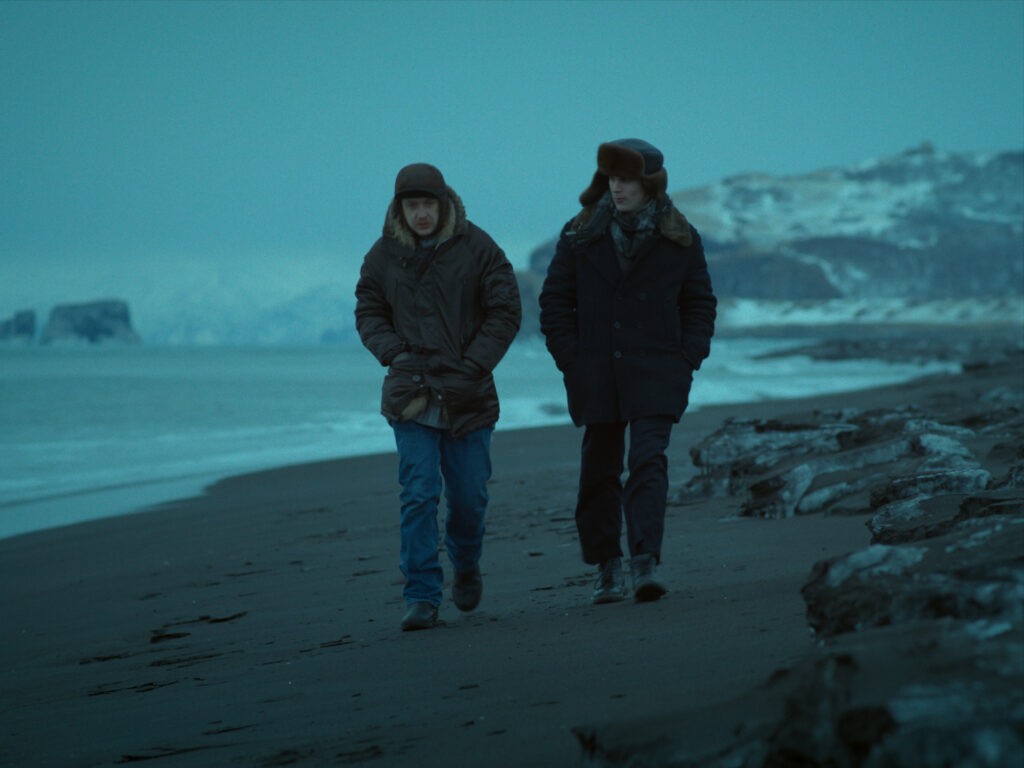
When I first found myself on the Pacific Ocean beach — in the first episode, the characters walk along it — it surprised me a lot. Everyone is used to beaches with light sand, palm trees, waves, but in Kamchatka I saw black volcanic sand, some huge ice floes. A terribly cold wind was blowing, impossible to protect against, and waves were crashing against the shore. This gloomy grandeur of nature, to the extent that we managed to convey it, seems to me to work perfectly to create a unique setting for the story.
The contrast of such beautiful and harsh nature with the lives of seemingly small people in a small town gives rise to a new layer of feelings and reflections. This is enhanced, it seems to me, when you realize that these people's lives pass with a view of the mountain, but this mountain, so to speak, periodically smokes, and one morning an eruption could simply happen, and everyone would be gone. It seems to me that this is a fairly accurate metaphor for life in the 90s — life as if on a volcano.
Common features of many of your series are striking. And first of all, the theme of life in small towns. What attracts you to stories about small towns and, so to speak, people lost in them?
In the case of "Outsource", it's because, as far as I know, the prisons where death sentences were carried out were somewhere in remote places, not in big cities.
And in general, I don't write scripts myself, I choose them. And it so happened that stories set in such small towns, written by Oleg Malovichko (screenwriter of, among others, "Crystal" and "The Route"), Anya Kozlova, turn out to be more interesting than others, including those about big cities. This is, of course, understandable, because they are currently top authors among domestic screenwriters, and it's a great happiness to be able to read their stories and work with them.
If we are still talking about small towns, it's funny that all my life I, on the contrary, spent in big cities — Belgrade, Moscow — and I know about life in the provinces from literature, stories, from cinema, and I only end up there during the preparation for filming. If I manage to convey this life convincingly, I think it's more the merit of the actors and the scriptwriters, whom I manage not to interfere with.
Andrei Konchalovsky, by the way, also can't be suspected of closeness to the village, but his most successful films are practically rural prose (referring to the films "Asya Klyachina" and "The Postman's White Nights").
I don't know what the secret is. Maybe in the village people know more about each other, communicate more closely, a person's whole life is in plain sight, and therefore there are more opportunities for various situations that are cinematically interesting. The same situation with prisons, by the way.
You mentioned several times that you don't write scripts, but you haven't ruled out turning to independent cinema. Do you have any plans in this regard?
Unfortunately, no. Independent films require an author: the same person who writes the script should direct. Otherwise, it still turns out to be commercial cinema. Not that I don't like it, but good ones don't come out very often and impress less often. And to be an author in that strong sense, I don't write, although I sometimes wish I did. I could probably learn to do it quite professionally, but my talent seems to lie somewhat elsewhere, and it's better for everyone to mind their own business.
As for independent cinema. It seems to me that we live in a happy time when series, in terms of dramaturgy, depth, and image quality, are not inferior to films and are sometimes even more interesting than big cinema. They can also be auteur, so I don't have the feeling that I will make a film and only then become a real director. For me, a good story is important, and if it can be better told in eight or sixteen hours, then that's the most important thing.
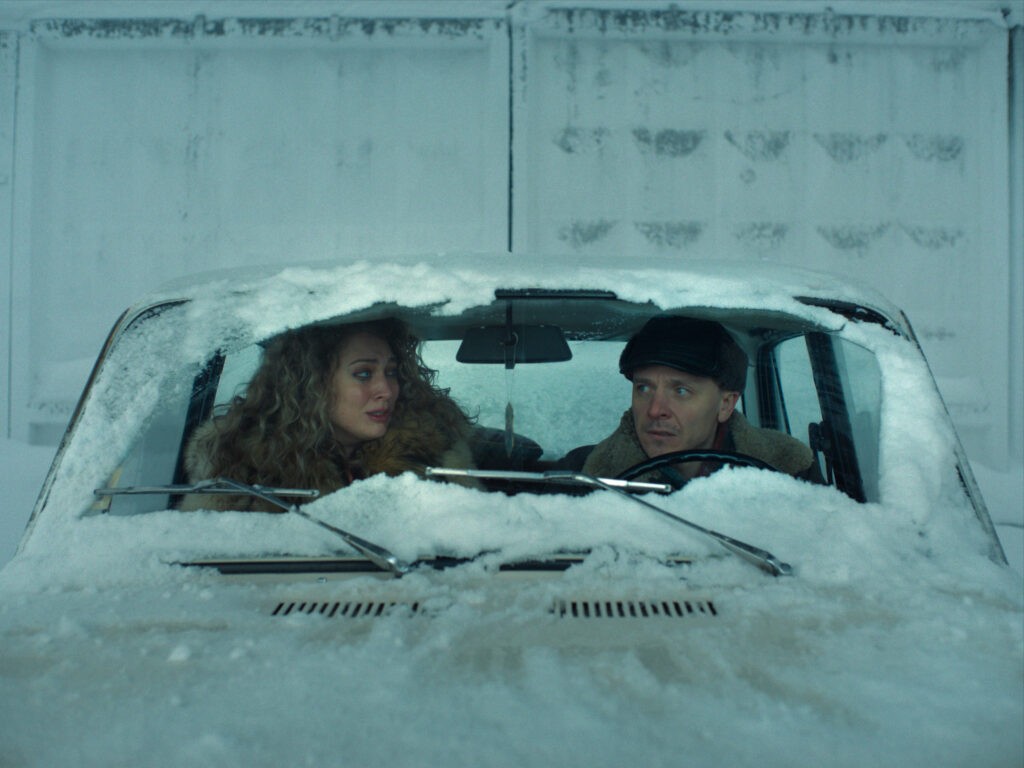
The series as a form is actually closer to the novel than the film.
Of course. I generally love long prose, classic novels, it's closer to me than short stories, for example. And cinema and series are equal mediums for me, and working on series is even more comfortable for me because, say, drama as a genre requires greater distance to show the development of a character, to immerse oneself in the story, for which an hour and a half may not be enough. Series allow us to approach such gradual storytelling, the full realization of a creative vision.
The lead role was played by Ivan Yankovsky. At first glance, he again, as in "The Boy's Word", plays a conditional Danila Bagrov. In the first half hour, he is an unequivocally positive hero, but then he reveals himself as a much darker character, a tempter. How do you see this image yourself, what characters did you rely on?
"Brother", in my opinion, is one of the best films made in Russia in the last 30-40 years. Nevertheless, it seems to me that the figure of Kostya Volkov is a bit more complex, if you will, and for everything to come together, to discern this complexity, you probably need to watch the series to the end.
Not that Volkov is a "hero of his time", but he is from that class of people who appear in such times, in difficult eras when tectonic social, political, and ideological shifts occur. Konstantin, albeit in a different sense again than Danila Bagrov, is characteristic of his time and historical moment. He is a very complex character, in whom one can discern both good and evil, greed, and unexpected moral qualities.
Some of your projects, both "Outsource" and "Crystal", seem to belong to neo-noir. In some scenes in "Outsource", I even recalled "Fargo". Was that intended?
We tried to look in that direction, so to speak, and "Fargo", like the work of the Coen brothers in general, is one of the main references. In Anna Kozlova's script, I really liked this tone of subtle satire or, as I read in one review, black dramedy. The same tone is characteristic of the Coen brothers' cinema. And I, in fact, wanted to make an ironic drama, to convey the mood of the text, including through pauses, silences, and composition of the frame. At the premiere at Oktyabr, it was very gratifying to hear laughter in the places where we hoped for it. If we really managed to make not just a gloomy, heavy story, but also to show a more complete picture of that world, in which there is room for jokes, then that's a big victory.
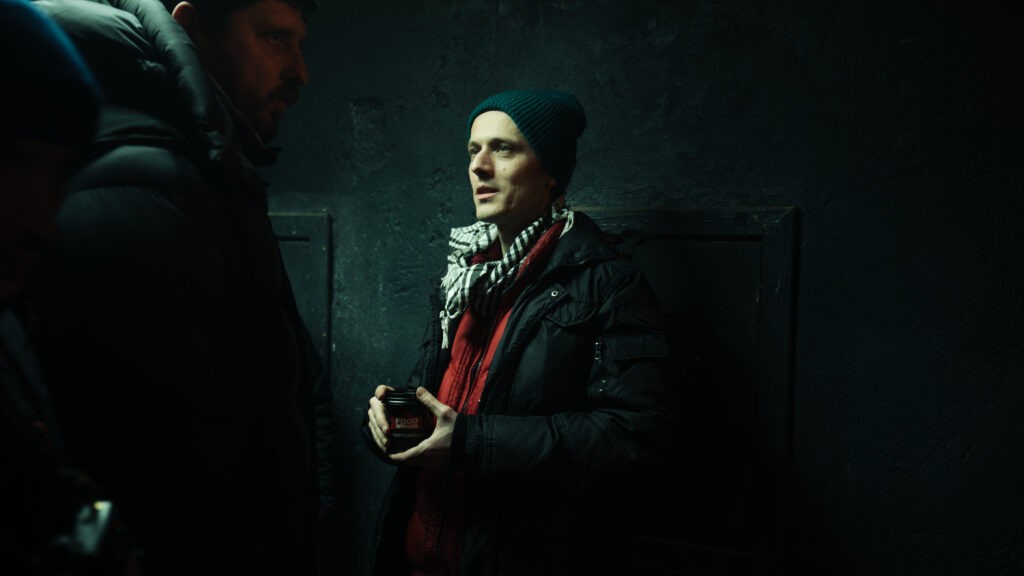
The angle for discussing justice and the death penalty in the series is very original; I can't recall exact analogues of the outsourcing idea, but there was a not very well-known American thriller "The Star Chamber" with Michael Douglas, which also explores the dangerous line between recognizing the ineffectiveness of state justice and the desire to do everything quickly and fairly. Have you seen this film? And in general, what films or series would you name as sources of inspiration for the series?
I haven't seen "The Star Chamber", unfortunately, although it sounds interesting from your description. In general, I look first not for thematic, but for sensory, visual references, although understandably they sometimes coincide. There were many sources. The work of the Coen brothers (not only "Fargo", but also "No Country for Old Men"). The existential comedies of Roy Andersson. "The Decalogue" by Krzysztof Kieślowski, amazing in the way the actors exist in the frame.
My personal main reference was Alexei Balabanov's film "Cargo 200". On first viewing, I experienced only that terrible shock from the realism and horror of what was happening. This shock absorbs the viewer's attention, and it's quite easy not to go further and overlook the film's other merits. When I rewatched "Cargo 200", I realized how much I had missed. The violence on screen was no longer such a sensation, and it became clear that in places it's a cynical black comedy with all those deeply ironic scenes in the spirit of a ride in a Zaporozhets to extremely inappropriate cheerful 80s music.
And, of course, "Cargo 200" is also a story of a small town in a terrible time, during a war, a turning point. It's amazing how Balabanov shows the destruction of everyday life — with deliberately simple filming, without using multiple cameras and elaborate editing. On the contrary, everything is modest, even crude. In "Outsource", I had an attempt to reproduce such a creative decision.
You also named Roy Andersson. A very interesting director. Some scenes from "A Pigeon Sat on a Branch Reflecting on Existence" are still etched in my memory. Charles XII on a horse in a store, for example.
And I didn't know who Andersson was 20 years ago; I read some interesting review and went to see "Songs from the Second Floor". It was amazing. I really liked this absurd convention, although I usually don't perceive absurdity well. I can't establish a connection with the characters, and at some point it just becomes boring. In "Songs", everything is different: you cry, suffer, and laugh along with the characters, although at first glance, some nonsense is happening on screen. It's amazing cinema.
Roy Andersson's films, say, these absurdist dramas with their subtle humor and theatricality, impress with how their narrative moves from the everyday level to the mythological, philosophical. I see in the text of "Outsource" the same organic transition from drama to tragedy and already from tragedy to comedy: when the characters can no longer suffer, they start laughing, and this seems to be the only possible reaction to the challenges they face, to the questions they have to answer for themselves.
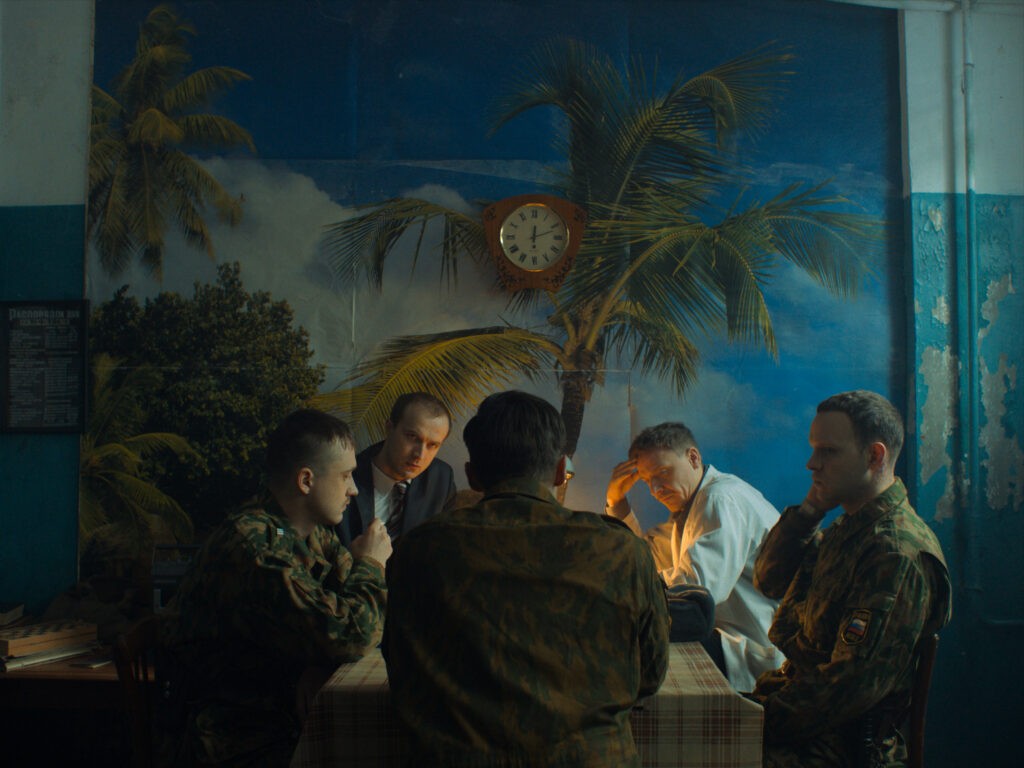
You studied under Karen Shakhnazarov and love his films "Courier" and "Winter Evening in Gagra". How did this influence you, do you notice stylistic continuity?
Of course, I am close to the cinema of Karen Georgievich. I really love the film "Courier", even more than "Winter Evening". It's a wonderful film and a rare, so successful and sincere film about growing up. I would like to someday make a film about this period in the life of a young man or woman. About what happens at 19, at 20. It was a very intense, bright time in my life, and I think it is in everyone's life. But it's very difficult to write about. It's a pity, but I haven't come across good scripts about this age, about this moment in life.
Actually, I learned a lot from Karen Georgievich's lessons. During training, when we all didn't know anything yet and couldn't get anything right with staging, Karen Georgievich sometimes went on stage and simply showed how to come up with a physical action for an actor, how a scene is built, what action with an object and interaction with a partner are. And these practical tips were very important.
However, I studied at VGIK not only with Shakhnazarov. We also had workshops with Vladimir Alekseevich Fenchenko and Andrei Andreevich Eshpai. After film school, I worked with Andrei Andreevich on three of his feature films. I was a second director, in post-production, and served as an executive producer. The very opportunity to be on set, to help the director, to participate in the creation of cinema, allowed me to learn the profession, to understand what it means to make films.
It was a huge school, not only in terms of professional skills, but also on a personal level. It was very important to have the opportunity to communicate with an already established great director. To see Andrei Andreevich's attitude to the story, the actors, the crew, to the problems that arise on set, to editing. This is more valuable than anything.
I remember when I first enrolled, Karen Georgievich told us that he couldn't teach us directing, that only we ourselves could learn. I thought then that it was a pretty weak excuse, and only over time did I realize that these were very truthful, important words. You can't teach anyone to be a director. You can only learn if you want to, if you observe, watch, try. Directing is practice. When you've read a textbook but haven't shot a certain number of scenes, haven't written a certain number of scripts, haven't worked with actors, with a cinematographer, you can't say you've learned anything. Directing is learned all your life. For me, every project is almost like the first time; I can't think that I know everything and shoot with my eyes closed.
That's probably the most important thing. Not to lose interest, among other things.
Yes, loss of interest is the most dangerous thing. Probably, when you realize that you already know everything and can do everything, then you should probably stop making films altogether. It seems like you won't do anything good anymore.
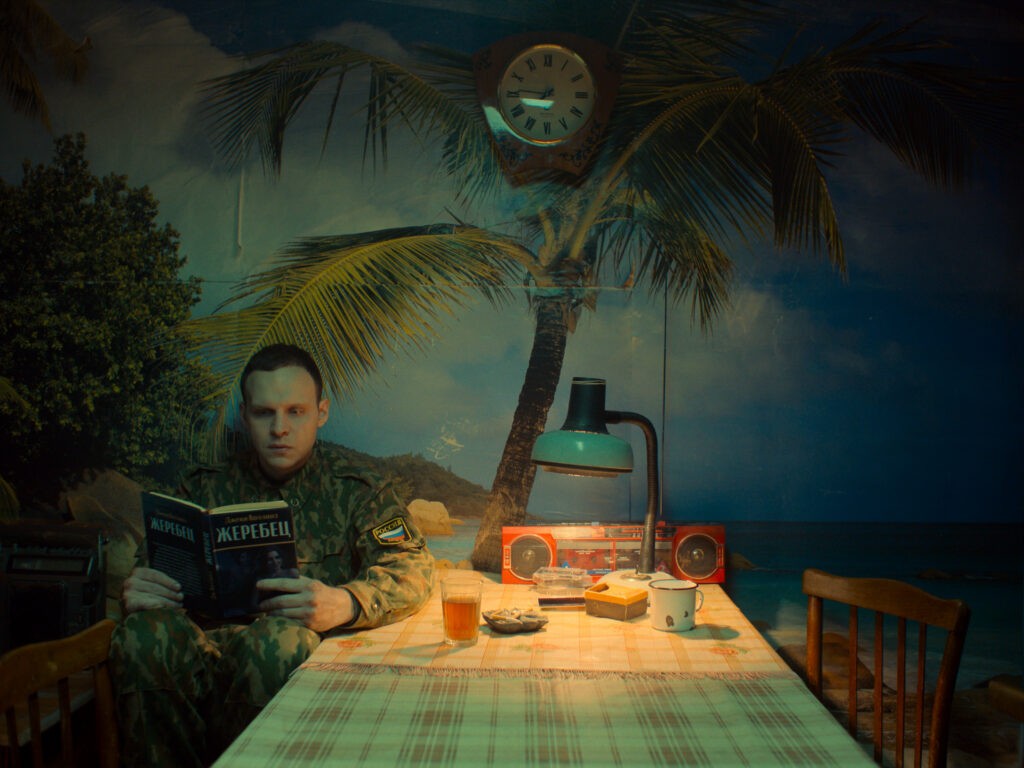
When Konstantin's wife describes Jackie Collins' erotic novel to Danil Steklov's character, she reflects on the purpose of art and the differences between high and low genres. She says she always thought that art — in her case literature, but this also applies to cinema — should offer its readers a moral conflict, irresolvable dilemmas, in other words, not just entertain. You seem to hold exactly this position.
Yes, indeed, cinema is interesting to me as a medium for conversation, for discussing problems. At the same time, it's clear that not everyone is ready every evening, coming home, to think about the death penalty, for example. For some, series and films are one way of escapism. But we try each time to still engage viewers in a serious conversation, manipulating the genre wrapper. We have to deceive a little. Both "The Route" and "Crystal", for example, are detective stories intertwined with themes of child abuse, childhood trauma, the past catching up with the characters.
"Outsource" is an experimental series for us in the sense that we try to slightly push the usual boundaries of the genre, to move away from classic serial and cinematic principles where there is a direct answer to a direct question. We simply ask questions, leaving the viewer the opportunity to answer them themselves.
Especially in such a story, when it comes to questions of life and death, categories of good and evil, justice, simple and straightforward answers most often turn out to be false, and moralizing and teaching only provoke a desire to argue. I hope our series will still be an invitation to reflection, to dialogue.
Comments
0No comments yet.
Sign in to join the discussion.