
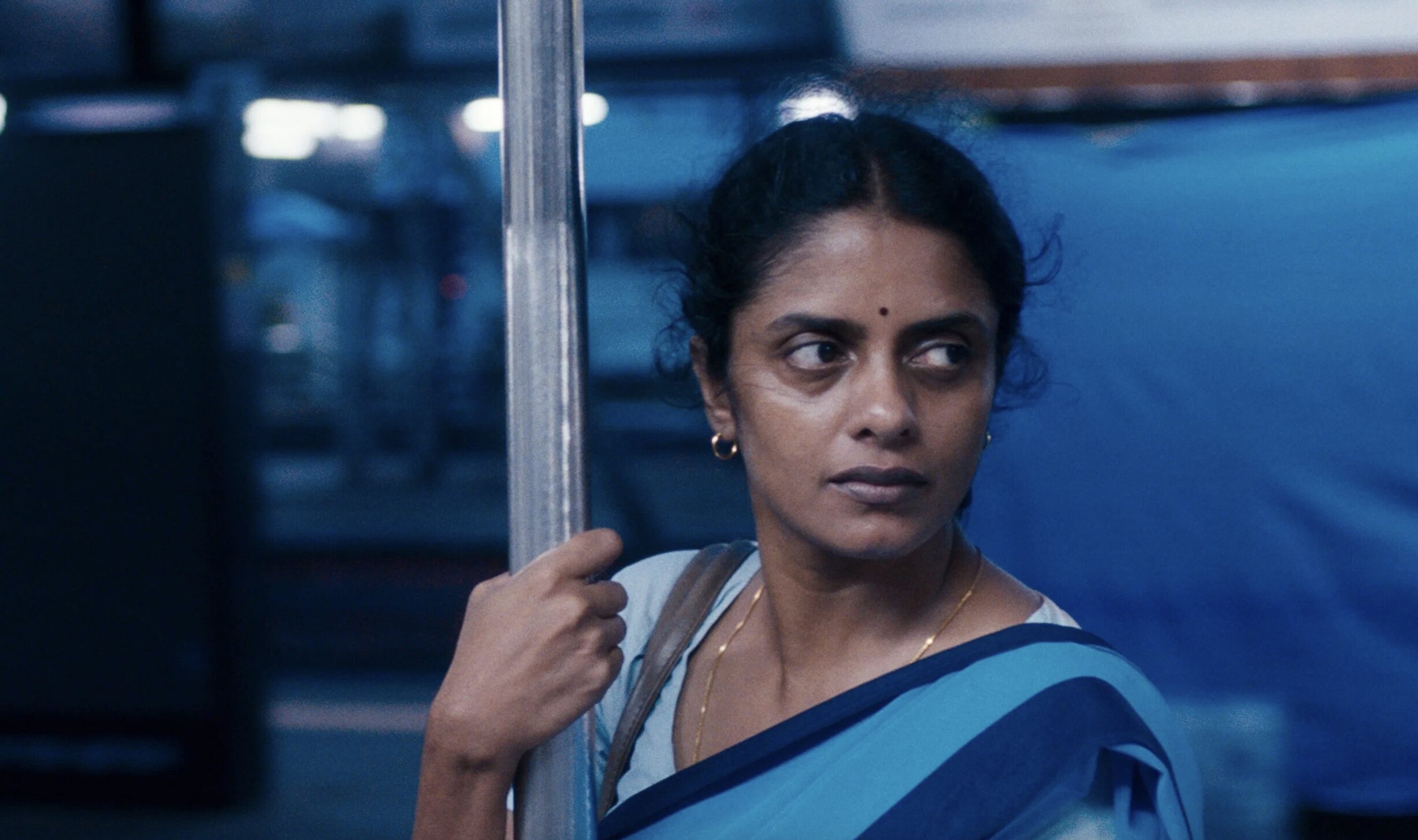
On big screens, you can still catch the drama by Indian director Payal Kapadia, which won the Grand Prix at the last Cannes Film Festival. We tell you what the blue of Mumbai holds and where to look for the light.
On the streets of Mumbai, there is a continuous flow of faces, stories, and destinies. At first, the frame lets everyone in indiscriminately, but soon three heroines emerge from the colorful kaleidoscope: Prabha (Kani Kusruti), Anu (Divya Prabha), and Parvati (Chhaya Kadam). All three are nurses. After work, they have to make their way through the thick blue twilight to get home. Meanwhile, the camera continues to impassively observe the ebb and flow of the city's life current.
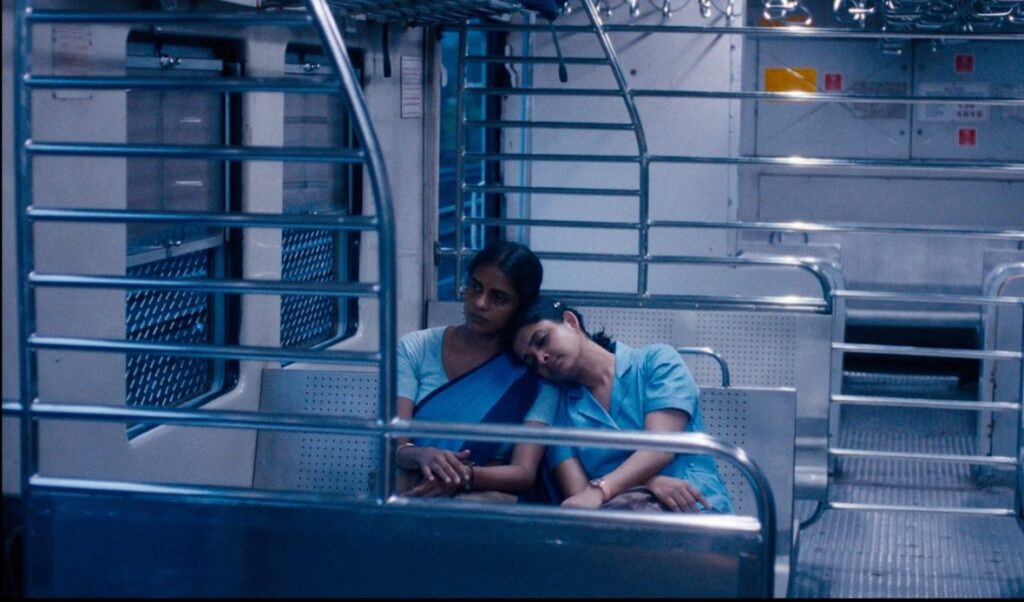
The city itself, Mumbai, is one of the film's characters. The director immerses the viewer in the pulsating depths of the metropolis using documentary film techniques. This is not surprising — Payal Kapadia has two documentary films under her belt. She does not create her own Mumbai but observes it, and this admiration for the living city gives it a soul. The music here is born from the metronome of the train's dull clatter, the incessant construction, and, most importantly, from the hum of voices creating a melody to the industrial rhythm.
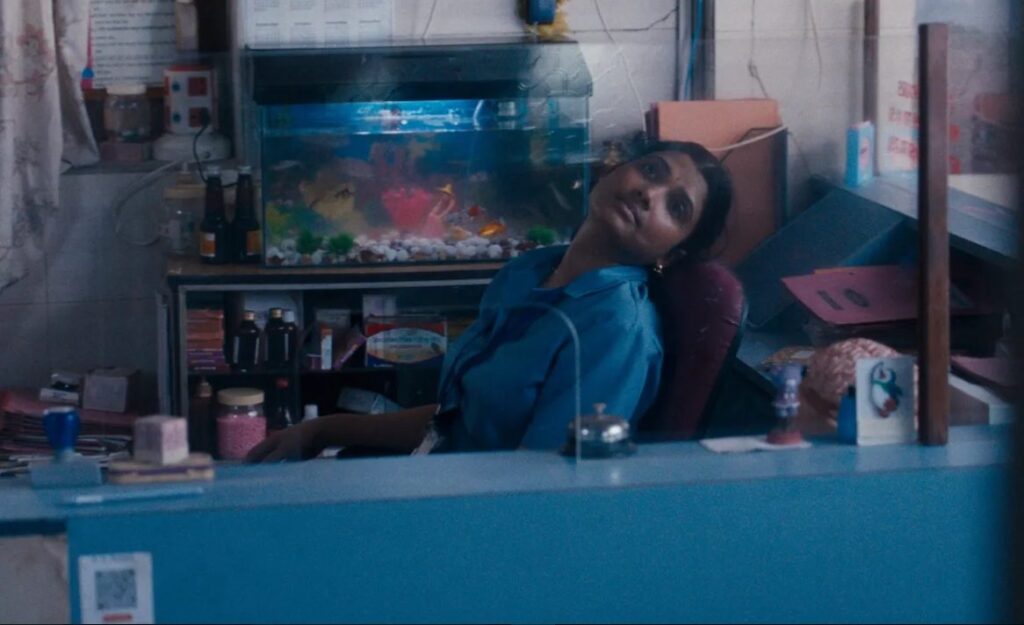
But not everyone can find their place in this chorus: the city expands, grows, like a living organism, rejecting what is unnecessary. For example, Parvati's fate is broken: she is evicted from the apartment where she lived for twenty years. The woman's husband died and took with him the knowledge of where the documents for their house were. And without the paperwork — welcome to the street. The country honors tradition, but bureaucracy is still stronger. But the other heroines also have to survive in this place, even if they are not deprived of their homes.
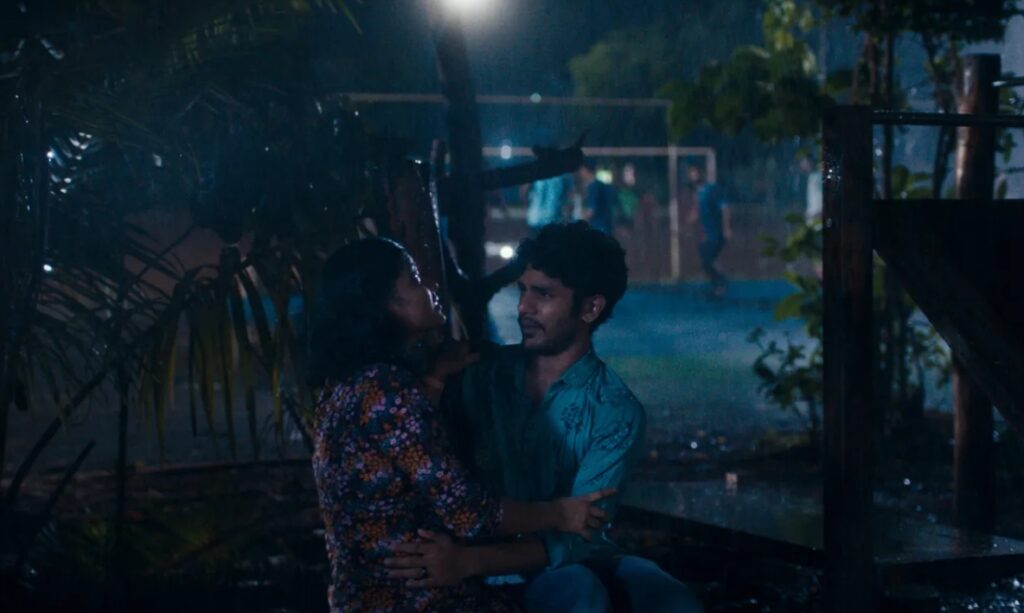
Mumbai hides Anu and Shiaz (Hridhu Harun) in its labyrinth, whose love lives with the motif of 'Romeo and Juliet.' The 'Capulets,' who practice Hinduism, send their daughter photos of suitors, not suspecting that Anu does not intend to get married. The 'Montagues' do not leave their son unattended: Shiaz's orthodox Muslim family will not accept such an emancipated bride, especially of a different religion. Touching acoustic dates lead the heroes to the question of their own future, which until recently seemed too distant. In Anu's words, decisive 'freedom' and 'escape' appear. Shiaz does not possess such courage, but he trusts his beloved. For Prabha's friend, such intentions even cause irritation: 'You can't escape fate.'
After all, Prabha herself never tried to escape fate. It seems that fate ran away from her. The heroine was married off very young to a stranger. But before she could taste the life of a married woman, she was left alone — her husband went to Germany to earn money. Prabha froze in anticipation while romances, family building, and life itself passed her by.
In her melancholy, there is no lost love, only fundamental 'duty' and 'morality' — as she understands them. Her liberation will be extraordinary. A boat will wash ashore in a small village where Parvati helped Prabha move; in the boat, there will be an unconscious man. Prabha will help him come to his senses, only to later recognize him as her husband. Of course, this is not her spouse. It is just a fantasy, a materialization of the strongest desire. But even this illusory meeting will help her free herself, renounce the past, which, in fact, was also a chimera.
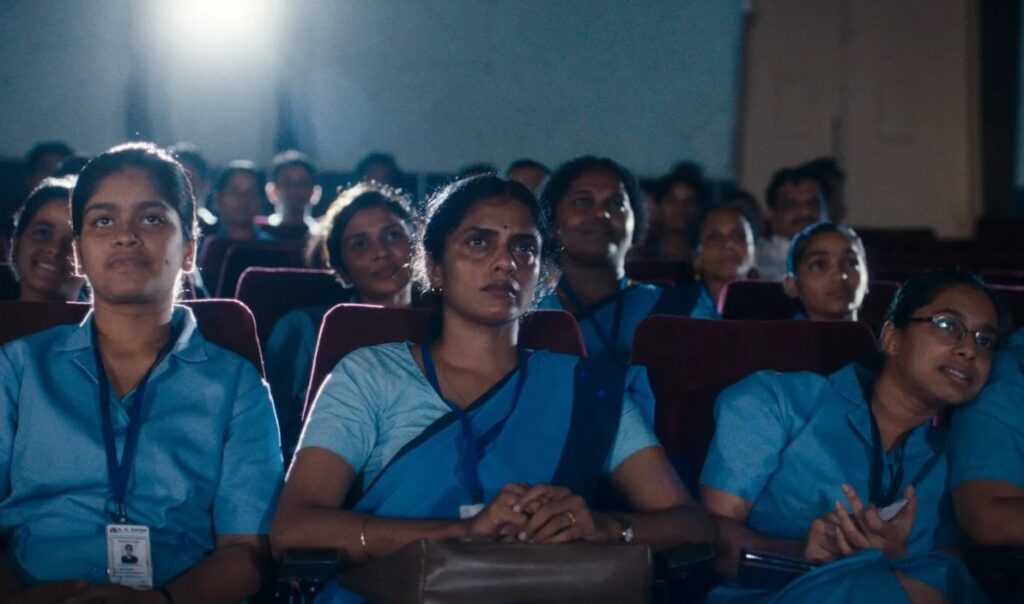
In this bittersweet tone of the film lies its magic. Not a viscous longing in which you sink and perish, but a subtle melancholy that dissolves into everyday life. Small tragedies are hidden here behind a blue haze with the scent of clean bed linen, in the electrified air before a storm. 'All That We Imagine as Light' is a small kitchen in a rented apartment, stuffed with boxes of spices, dried fruits, towels, and countless little things that give this place life.
Over the past couple of years, everyday life in cinema has increasingly become an object of observation, influencing the tone and structure of the film. From the compulsive repetition of stereotypical situations, it turns into an endless stream full of special beauty. If in David Fincher's work, everyday life was hidden in editing cuts or turned into a ripple with a minus sign, then in Wim Wenders', routine replaces the plot, dictating dramaturgy almost without external interference. If in Darren Aronofsky's work it is aestheticized, expressing the hero's internal psychological state, then Celine Song does not construct everyday life, releasing the power of its eloquence. Payal Kapadia also does not try to tame what takes shape spontaneously. She creates space for contemplation, allowing things and surroundings to exist independently.
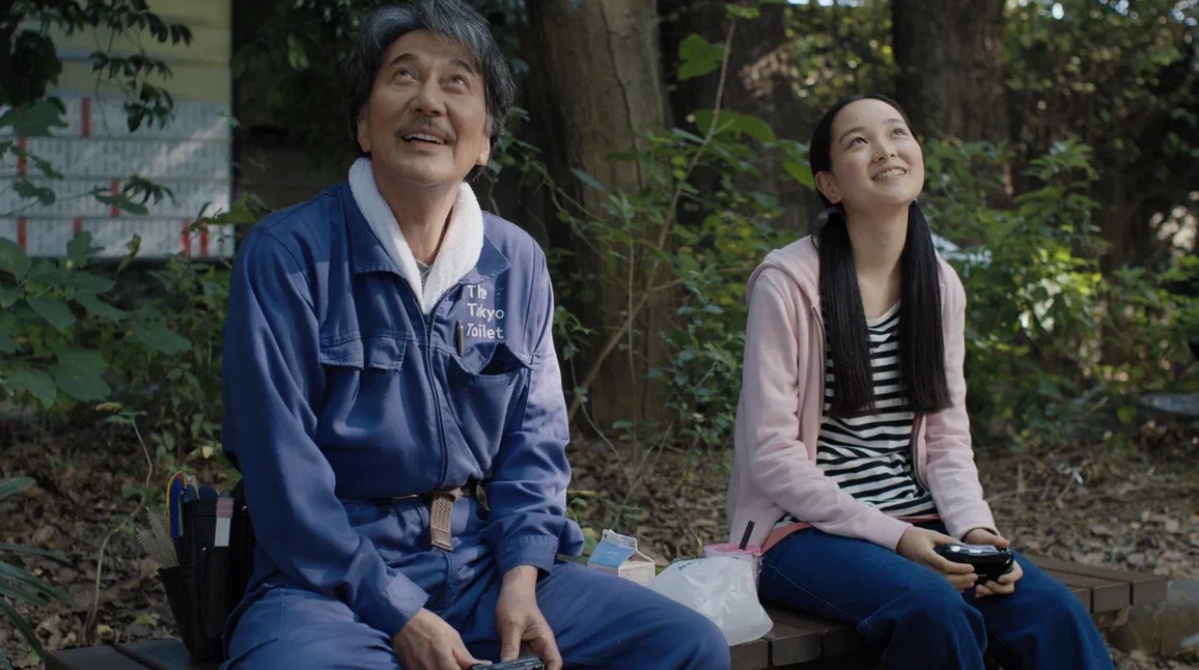
Recently, the American Academy of Motion Picture Arts and Sciences announced the Oscar nominees. The new film by director Wim Wenders, 'Perfect Days,' about the life of a Tokyo toilet cleaner, will compete for the Best International Feature Film award.
Open material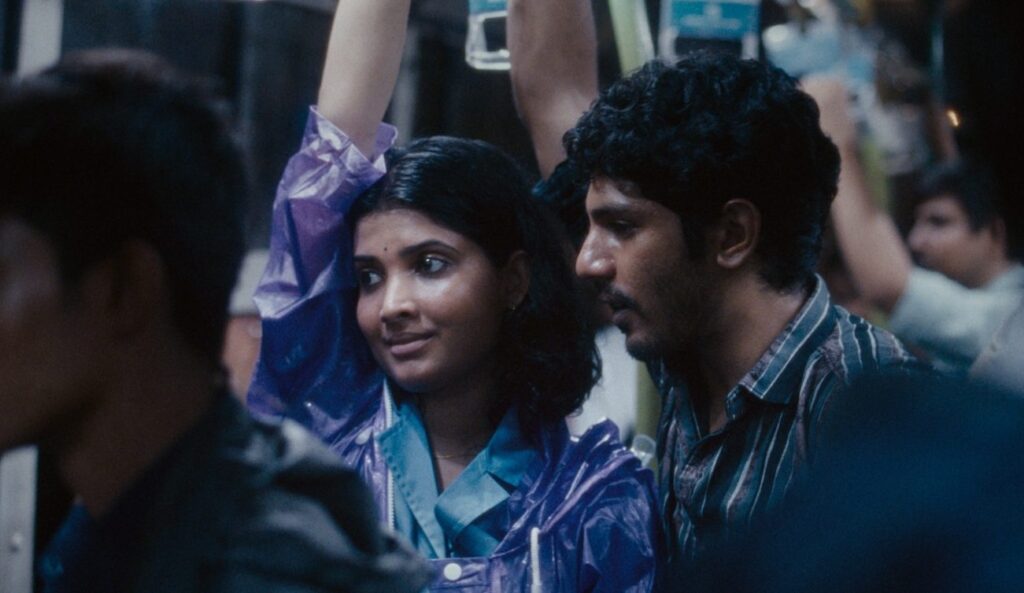
The second part of the film gives the heroines hope for a different life. In the village where Parvati moved, the roar of rain turns into the sound of the surf. The blue gives way to the tropics. The city's drum machine no longer beats the rhythm; instead, there is a lullaby of wild nature. Leaving the city, the women free themselves from its influence. But the observation of daily life remains; only instead of the white walls of the clinic, there is a soft wooden house, and instead of the urban mosaic, a deserted beach. When the city's illusions were washed away by the rains, the three women were able to truly grow close. Openness with others inevitably leads to openness with oneself. The heroines help each other while simultaneously accepting themselves.
'All That We Imagine as Light' does not seek beauty but easily finds it. A small notebook with poems glows in the dark apartment. Anu's face glows under the low stormy sky. The patterned tiles in the kitchen of the rented apartment glow. The frame itself glows from within, no matter what is in it. Life itself, with all its kaleidoscope of little things, can become light, if only you look closely.
Comments
0No comments yet.