
Ahead of the Oscar awards ceremony, we talk about each of the five nominated short films, give a brief description, subjectively rank them from worst to best, and assign ratings in a whimsical manner.
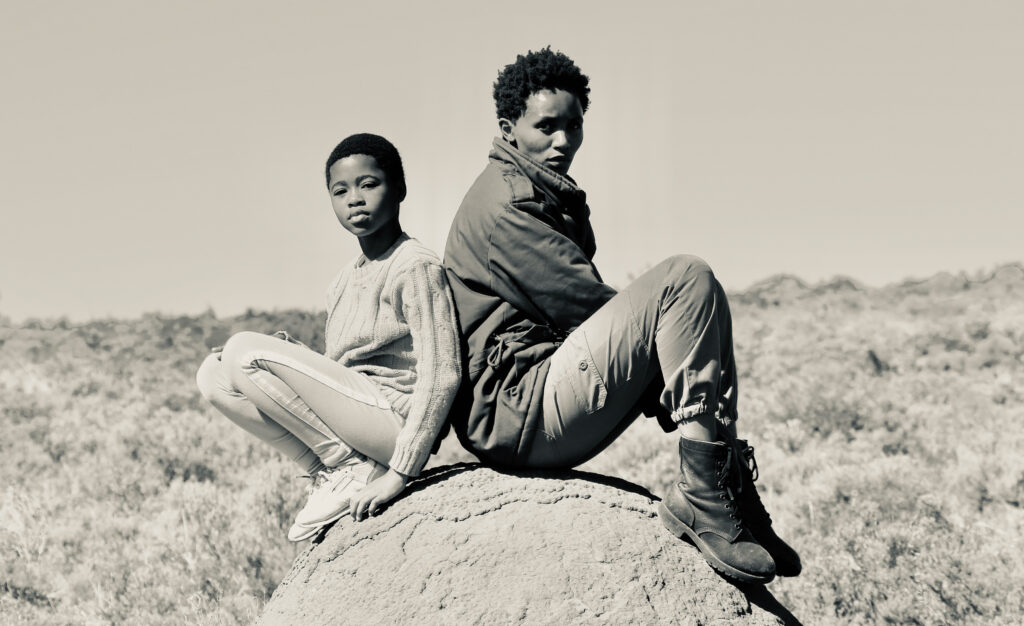
5) The Last Ranger by Cindy Lee
The short film categories are highly international and experimental. At least, that's how it should be, and that's how the audience sees them. They are less burdened by distribution and production concerns, so the path for peripheral voices is wide open.
"The Last Ranger" is a South African film about the fight against poaching to preserve the rhino population. In the director's chair sits Cindy Lee – the daughter of a casting director and a talented music video director. And as often happens, she is completely detached from her native roots.
Lee has nothing in common with the liminal spaces of Mati Diop or Idrissa Ouédraogo that are familiar to Europeans. "The Last Ranger" is an American view of a diorama of African territory, simply put, a safari through the Amakhala Game Reserve accompanied by violin music seemingly from "Pirates of the Caribbean." The result is a tedious and familiar Hollywood story about evil evil and good good.
4.5/10
4) I'm Not a Robot by Victoria Warmerdam
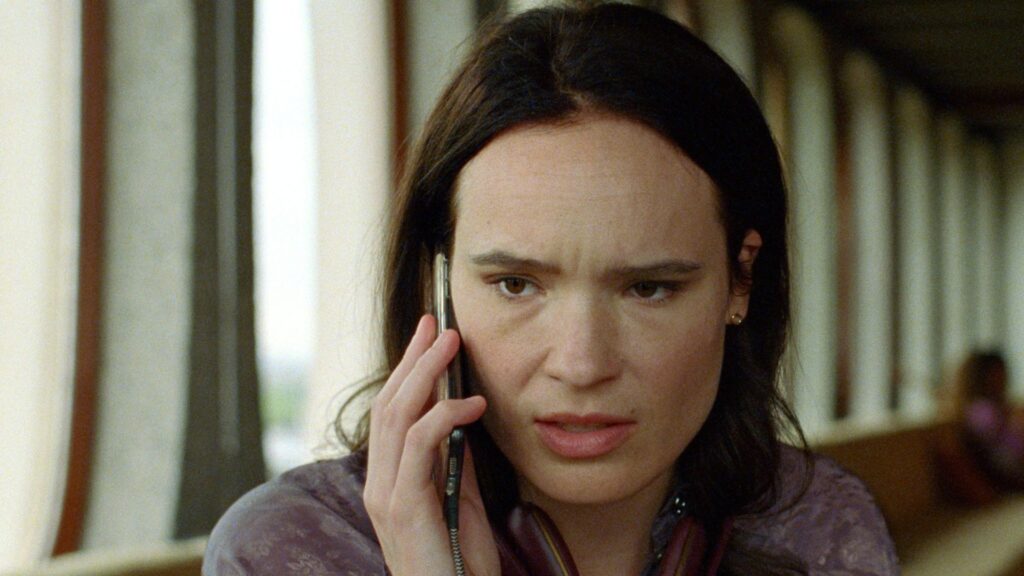
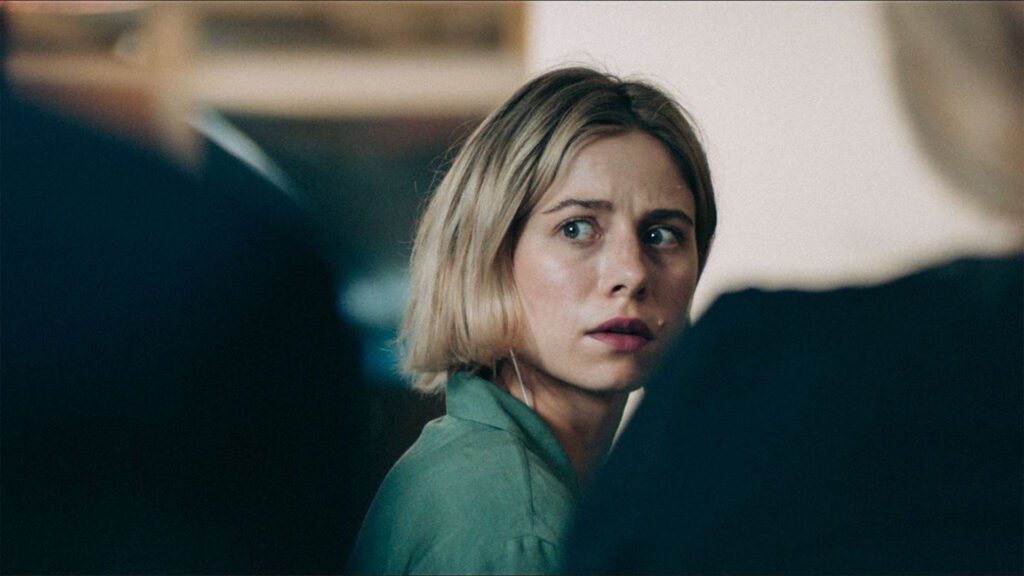
The Netherlands rarely appears at the world's main film award, so it's even more interesting to see what Victoria Warmerdam has achieved in her encounter with the science fiction genre.
Music producer Lara learns during work that she is a robot – the girl cannot pass a CAPTCHA. The idiocy of the narrative solution is obvious, but the overall tone and goals of the film prevent it from falling apart at this stage.
Warmerdam's short begins and ends with the song "Creep," which simultaneously emphasizes the imperfection of the human shell and serves as a multiple projection of one musical phenomenon. What other composition captures the essence of the stated conflict so accurately?
"I'm Not a Robot" looks like a solid episode, costs less than an episode of "Black Mirror," and reflects on themes absolutely typical of "Black Mirror" (not the best set for an Oscar). Not the New Year's special "White Christmas," but if you decide to watch it, it won't be the most boring twenty minutes of your life.
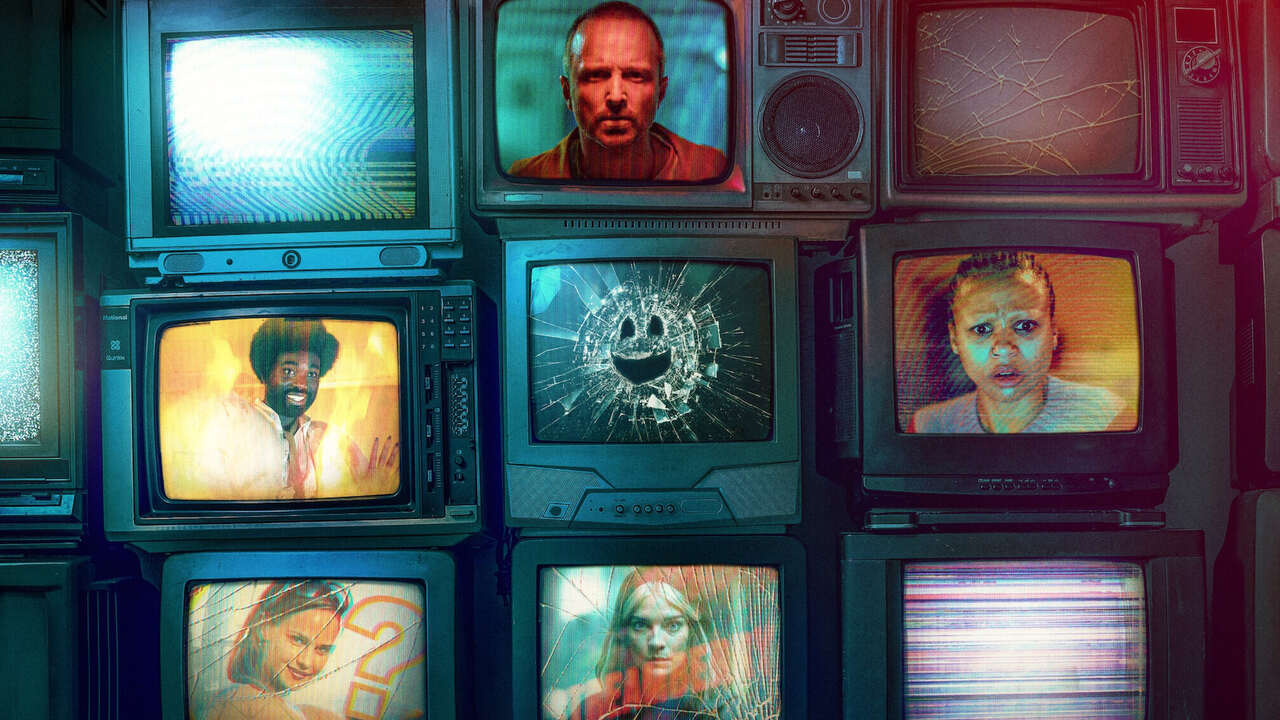
On June 15, Netflix released a new season of the famous anthology created by Charlie Brooker. "Black Mirror" began as a set of science fiction stories about technology and people, but in
Open material6/10
3) A Lien by David Cutler-Kreutz
The only truly American film in the Oscar nomination. The immigration issue in the US is both a national tragedy and an eternal existential narrative, leading researchers deep into the history of the civilizational frontier.
Conversations about immigration are always relevant, always opportunistic. And so "A Lien" once again tries to remind us of the pain an immigrant must go through, inadvertently weaving the figure of Trump into the narrative via a television broadcast.
"A Lien" is propaganda because it does not shy away from extrapolating a particular case, and it is good cinema because it places the viewer at the epicenter of the situation. The editing, like in Jason Bourne films with cuts every two seconds, not only creates dynamism but also constructs the spatial uncertainty of the Knossian labyrinth inside the government building of the immigration service.
"A Lien" bites not on an emotional but on a physiological level, so the bleak finale promises not a sleepless night but a cloudy calm.
6.5/10
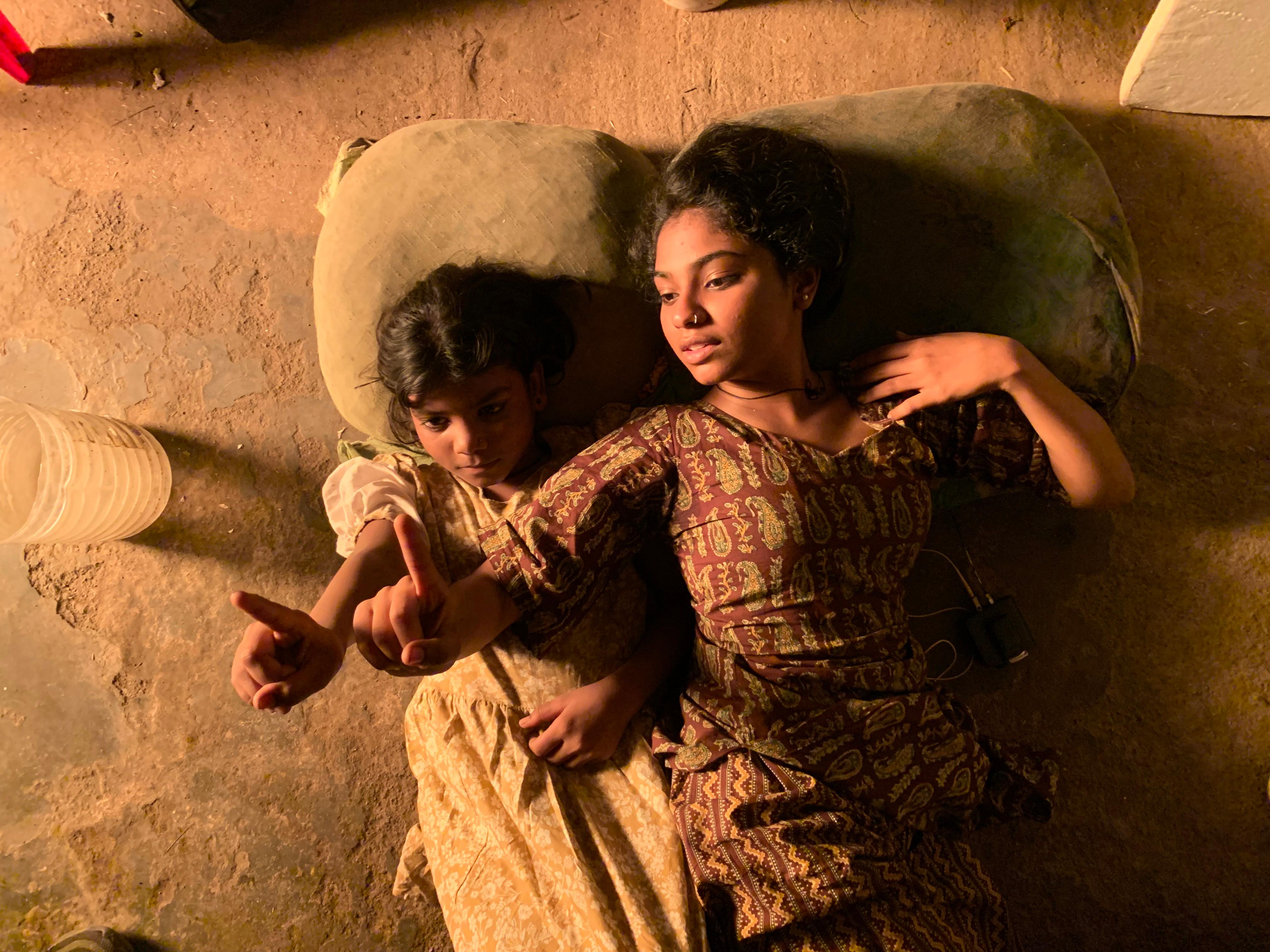
2) Anuja by Adam J. Graves
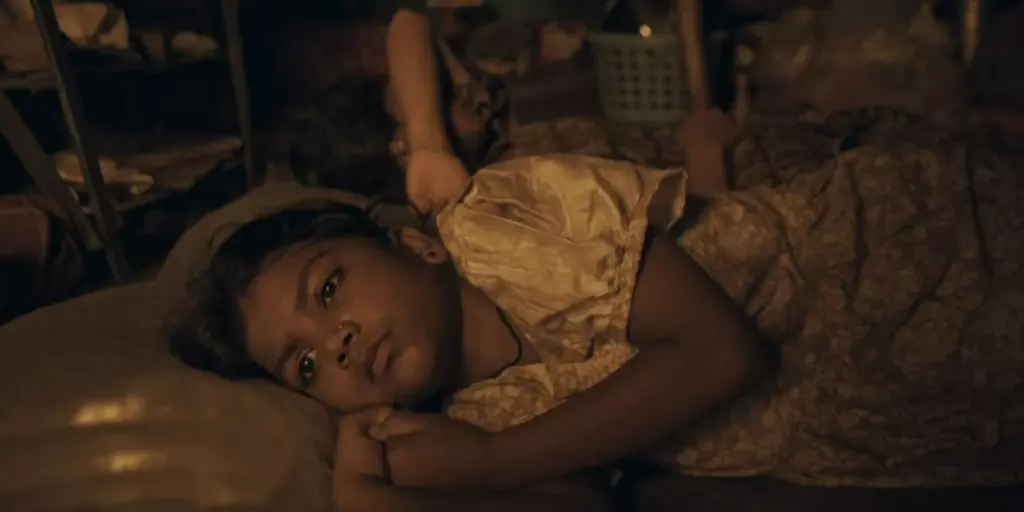
What if Amadeus Mozart had been born not in Salzburg but in an Eskimo family near Hudson Bay? Would he have become a great composer or died in obscurity, fighting the wild?
The protagonist of the eponymous film, Anuja, is certainly no Mozart and lives in an Indian megacity, not in northern Canada, but her problems are no less. The girl has impressive mathematical abilities but does not even want to develop them because her head is filled with other questions: where to find money for food and how not to be late for a 14-hour work shift.
"Anuja" is an extremely simple and unpretentious film about the facets of child poverty that deprive a young person of freedom of choice. It is a statement on a pressing social issue from those who are interested and concerned, who by trial and error try to find a way to reach the right people: potential sponsors of Salaam Baalak Trust and other charitable organizations.
And, despite all this, the film can surprise with visual diversity, chaotic and meticulous montage coherence, and, of course, the chemistry between Anuja and her older sister Palak.
7/10
1) The Man Who Could Not Remain Silent by Nebojša Slijepčević
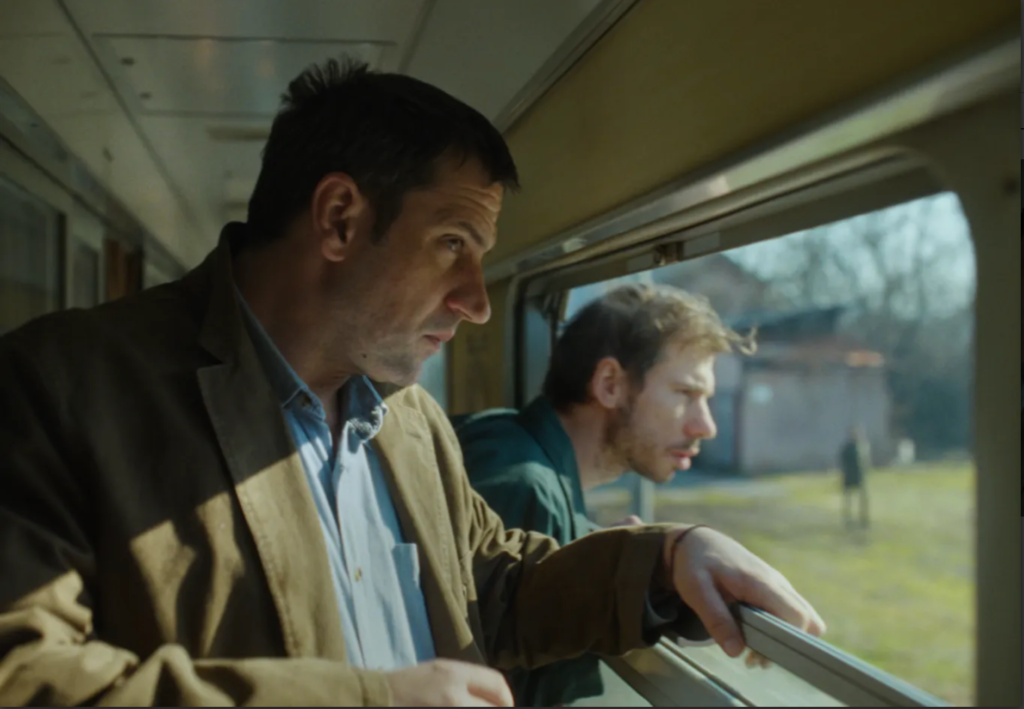
At the tail end of this cosmopolitan cinematic excursion, we encounter the work of Croatian director Nebojša Slijepčević, awarded at the Cannes Film Festival.
Unlike other short films, Slijepčević's film does not operate with widely accessible contexts, but in a fragmented manner brings to light an episode from the Štrpci massacre, carried out by the Serbian group "Beli Orlovi" (White Eagles) as part of ethnic cleansing.
"The Man Who Could Not Remain Silent" through the discomfort of quiet threat and silent consent once again reminds us of our defenselessness before the grin of a tormenting ideology and "congratulates" the world on a new right-radical course.
7.5/10
Disappointing Conclusions
Cinema has defended its identity for generations, drawing the viewer's attention to implicit properties: the space of cinematic language, editing, and the frame as a means of figurative expression. The short films of 2024 forgot about this and deemed it necessary to turn the "cinematic apparatus" into a way of spreading ideas and opinions. Is this bad? Not entirely, but we must state: the short film Oscar turned out to be meager.
Comments
0No comments yet.
Sign in to join the discussion.