

We talk about each of the five projects, rank them from worst to best, give four-pound ratings on a metric system, and determine what is a "Royale with Cheese" and what is just a "Cheeseburger."
2025 is set to go down in history for many reasons, and feature-length animation, unfortunately, is not one of them. But don't despair, because no one has taken away from us the short film nominations of the Oscar ceremony, which will restore historical justice (the award for Alberto Mielgo's "The Glass Cleaner"), and cross a fox with Idris Elba ("The Boy, the Mole, the Fox and the Horse"), and send a fem-version of Scott Pilgrim to explore the world of teenage corporeality ("My Year of Dicks").
5) Beautiful Men by Nicolas Keppens
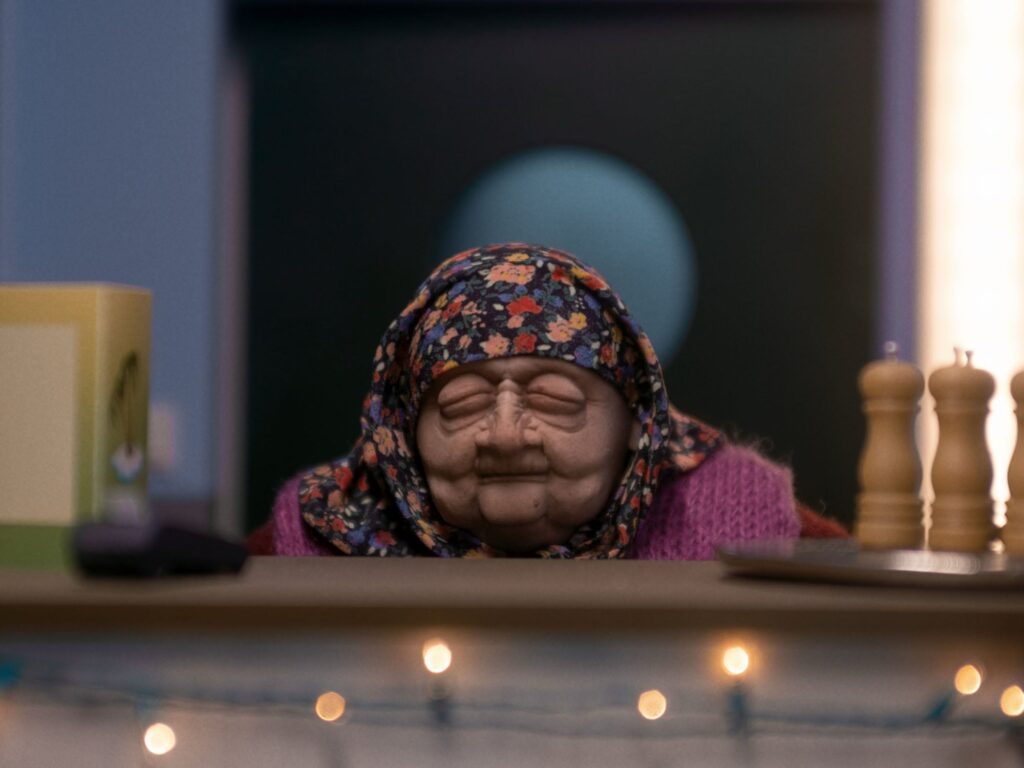
The author of "Beautiful Men", Nicolas Keppens, is more of a teacher and animator than a director and screenwriter, so his new project is unquestionable in the technical execution of a felt-plasticine panopticon and equally poor and inexpressive in the narrative aspect.
The script floats in the primordial soup of one-act dramaturgy of European symbolism and atheistic existentialism of the mid-20th century, and we had no need to use these terms until the film arbitrarily switched to the language of "high" matters.
"Beautiful Men" is the story of three brothers who travel to another country for a hair transplant. Upon arrival, one of them admits that he set the others up, because he only booked one surgical chair. The brothers wander around nighttime Turkey, slowly and unhurriedly quarrel, and do not forget to mention Simone de Beauvoir in vain.
The latter said that gender is not an innate quality, but an acquired one. Screenwriting skills also come with experience, so we wish Keppens new creative achievements. For now, his opuses faithfully serve as a justification for quality animation.
5.5/10
4) Yuck! by Loïc Espuche
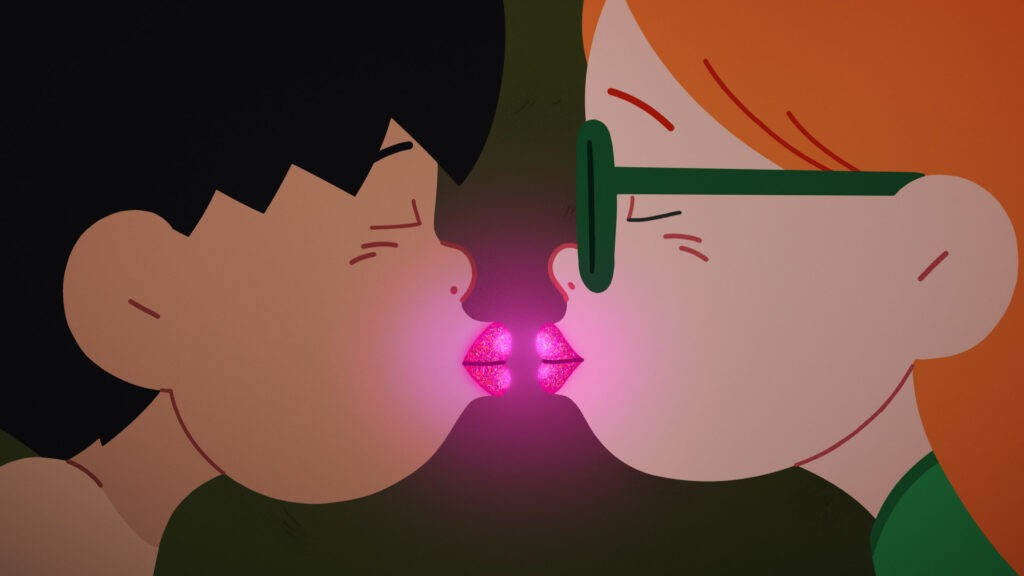
"Yuck!" shouts a girl, demonstratively crossing her arms, "Gross!" replies a boy, grimacing and wincing in indignation. These children have just seen a kiss and solemnly promised each other that they will certainly never engage in silly adult things.
"Yuck!" is a light "beach episode" about first love and overcoming childhood shyness, with minimalist animation and the mischievous character of Little Nicolas. The French comedy tradition stopped developing more than half a century ago, but its format and accompanying clichés have survived and can still delight viewers.
6.5/10
3) In the Shadow of the Cypress by Hossein Molayemi
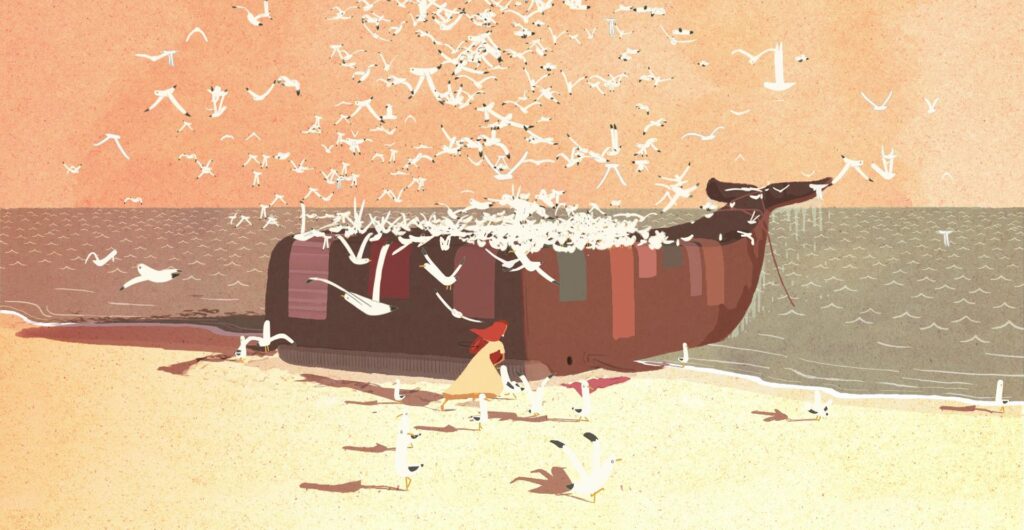
It's strange to talk about obvious favorites among short animation, but if we had to make predictions, the first in line for the statuette would be the film by Hossein Molayemi. There is a special quality in the story he wants to tell and the animation, as if recreated according to the patterns of "The Red Turtle" by Dudok de Wit.
The visual style is ornamental, each color occupies a strictly designated place and is not subject to mixing, and the characters and objects are like shadows located at a light source, with clear linear silhouettes.
The central figures of the canvas are a daughter and her father, suffering from PTSD. The short film did not clothe the attacks and breakdowns in a metaphorical layer, but showed them in action: the man constantly reaches for a weapon, inflicts bodily harm on himself, and in a violent fit can even harm his own loved one.
"In the Shadow of the Cypress" feels big, despite the runtime, location, and approach to animation, and in this lies both its main merit and its main drawback. Serious and important, but too general and clumsily obvious.
7.5/10
2) Magic Candies by Daisuke Nishio
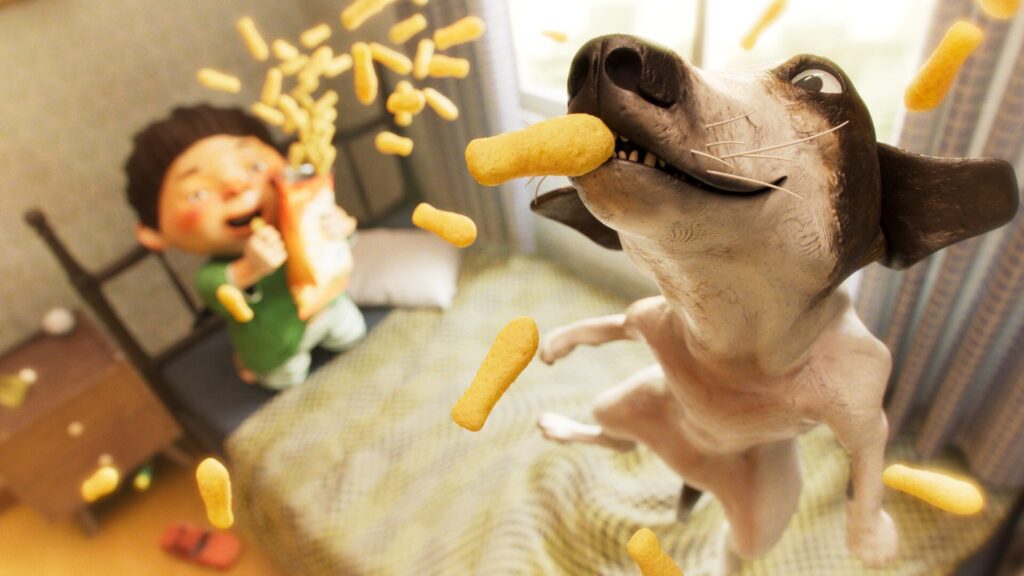
"Magic Candies" is not even close to indie cinema. It took four years and the labor of employees of Toei Animation Co, controlled by the media giant Toei Company, to create the 20-minute film. Did this affect the final result? Probably yes, because "Magic Candies" could afford luxurious stop motion (as could two other films on today's list), but at the same time, the iron grip of the producer's hand could not be detected, nor the tendency to compromise.
The boy Dong-Dong spends his childhood alone in the grip of his father's control, but one day sweet patterned candies appear in his joyless life. The child quickly realizes that consuming them allows him to hear the voices of objects, animals, and people's inner monologues.
The film does not waste the concept's potential on familiar gags, although it handles them well. Dong-Dong gradually de-reifies the world of tight solitude to build communication with his faithful dog, understand his father differently, look into the metaphysical nature of the mortal sea, and, of course, find a friend.
The emotional discoveries of the young hero are accompanied by unobtrusive inclusions of the wabi-sabi teaching, as well as calligraphic achievements of Japanese writing.
The premiere of "Magic Candies" took place at the International Children's Film Festival in New York, which does not prevent the film from capturing the attention of a multi-age audience and, through the fingerprints of the artists on the plasticine environment, talking about the child and his way of comprehending reality.
8/10
1) Wander to Wonder by Nina Gantz
Children's puppet shows are increasingly turning to the viewer with a previously unseen side, and if in the series "Kidding" the puppets only framed the crisis period of Jeff Pickles (), then in Nina Gantz's short film, under the stupid voluminous costumes hide little people – Mary, Billybud, and Fumbleton.
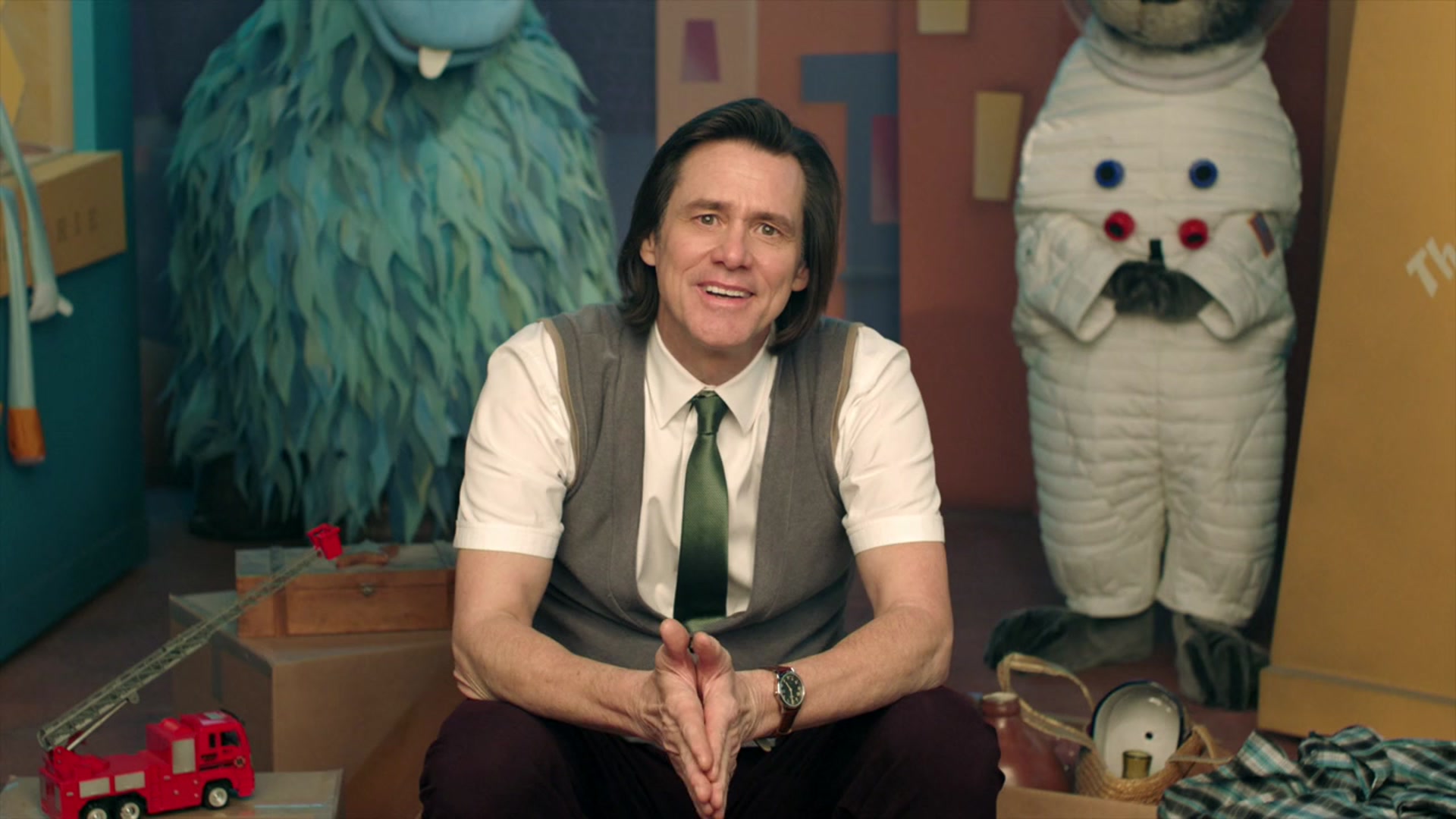
The "After Credits" team selected 10 cool TV series that deserve more viewer attention than they get.
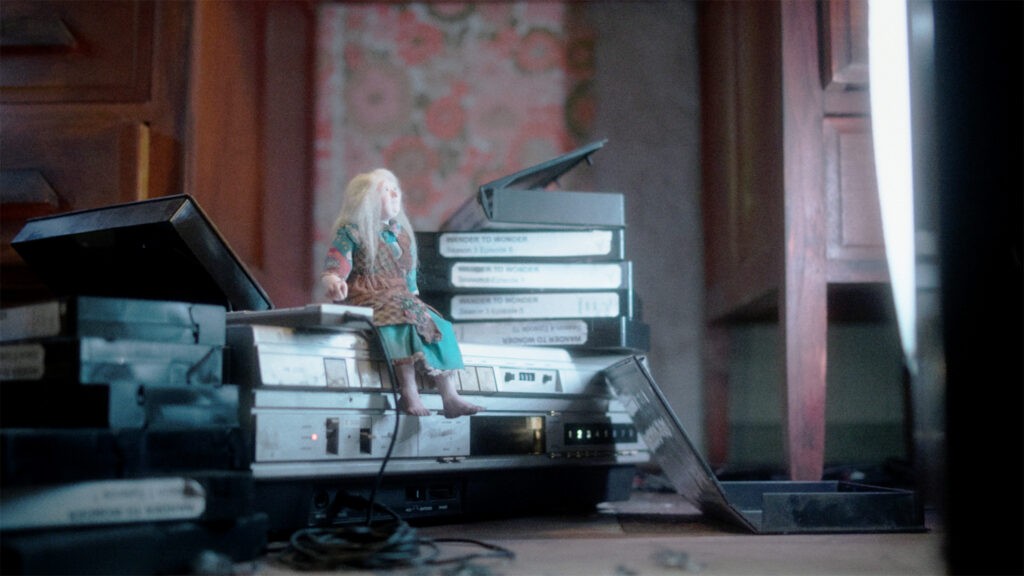
Open materialTheir creator and host of the show suddenly dies, leaving the shocked and ill-equipped actors in a desolate apartment. Now they are left to their own devices, just as the world is left at their disposal.
It is important to understand that Mary, Billybud, and Fumbleton represent a modern formation of man, raised in the crucible of culture and having said goodbye to the natural principle. The search for peace and selfhood is coupled with floundering in the card index of personal and universal memory, and therefore Mary reviews old recordings, Billybud endlessly reproduces his former self, and Fumbleton turns to monuments of world literature.
In all this, it is impossible to find a way out of the tragic situation, and the film solves the problem in a very non-trivial way, reducing its heroes to early stages of evolutionary development. "Wander to Wonder" is in no hurry to paint over the dark spots, offering the viewer a concentrated experience of hypertrophied but everyday madness of lost beings turned inside out by fate.
8.5/10
Conclusions
Having spent more than an hour and a half alone with short animation, we can confidently say that it is inferior to feature-length animation only in runtime, but not in quality. A bright, (almost) independent, and concentrated experience will surely find its audience, and the upcoming awards ceremony should help with that.
Comments
0No comments yet.
Sign in to join the discussion.