
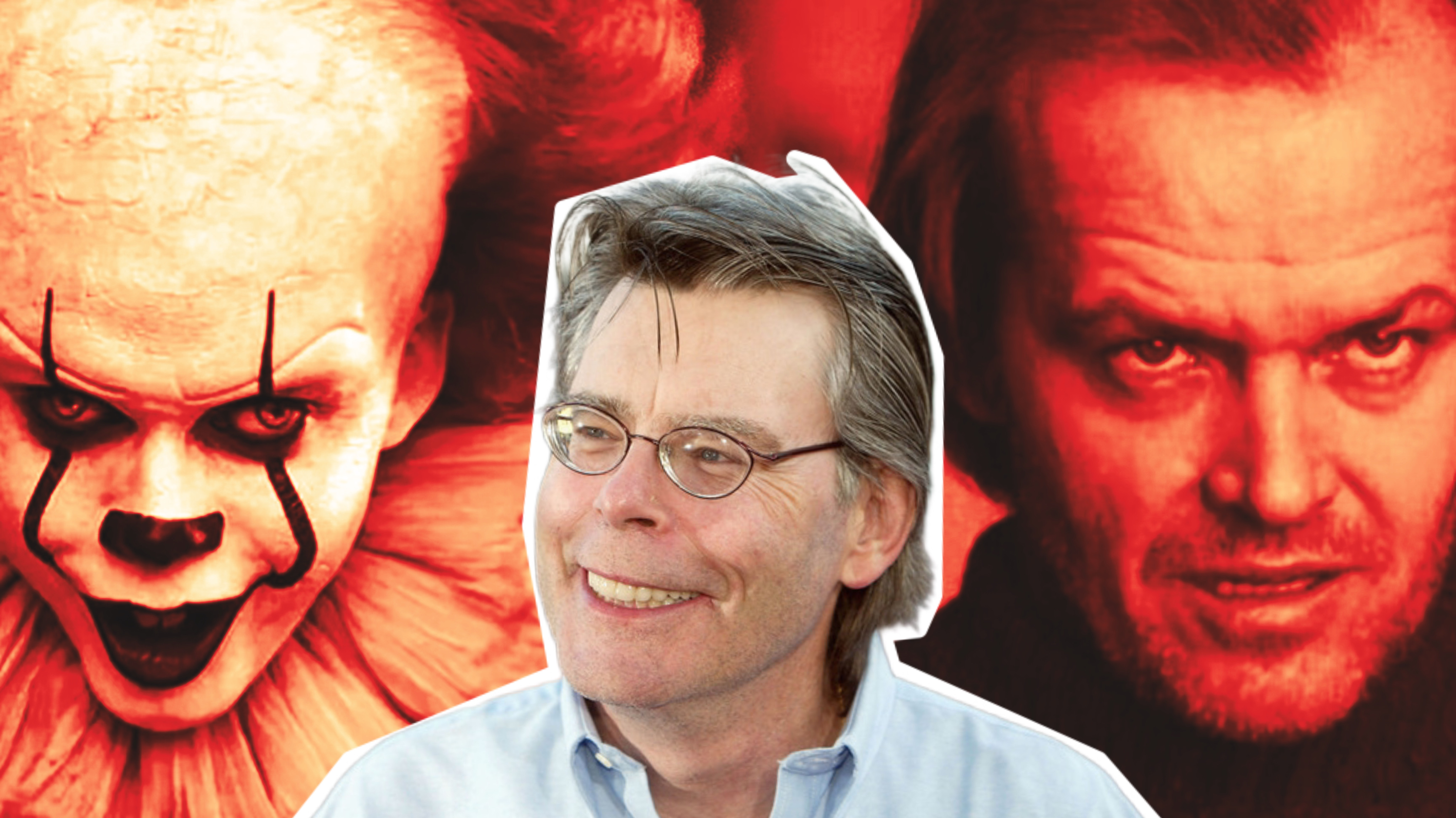
Pennywise, Annie Wilkes, the Moon Man, Church the cat, and all the rest... We recall the most worthy adaptations of the 'King of Horror's' works, in our opinion.
Tomorrow, the comedy horror film The Monkey, based on the short story of the same name by Stephen King, will reach Russian cinemas. The film has been well received by the professional press. Some critics have even dubbed the new release "one of the best adaptations of the master's works." Those members of our team who have already seen Oz Perkins' film share this view, but that's not what we're here to discuss. We couldn't pass up such a major news hook, so we decided to share with you a list of films based on the books of the "King of Horror" that we hold dear.
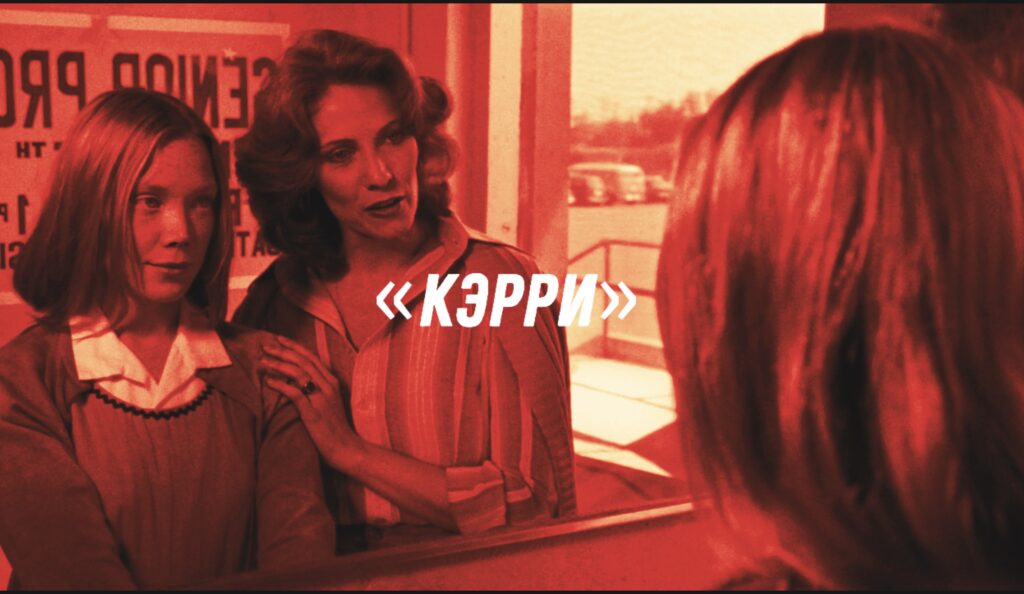
If, when listing favorite films based on Stephen King's works, we didn't mention the first adaptation of his first novel, which became the starting point of his career, such a list would certainly be incomplete. The story centers on the timid and trusting high school student Carrie (Sissy Spacek). Her classmates regularly bully her at school, while her mother, a religious fanatic, constantly applies psychological pressure at home, reproaching her for even the most minor transgressions. At the same time, she discovers an unusual ability in herself—telekinesis. The classmates planning a cruel prank on the girl have no idea what consequences they will face.
For most of the runtime, we observe the life of the main character. This creates an oppressive atmosphere that matches the cruel world of teenagers. Bullying in the school environment, devout Puritanism, alienation from society—all of this could serve as the basis for a genuine social drama. Perhaps this artistic approach makes the film even scarier, or at least more unpleasant. Although Brian De Palma's film may now seem outdated in many respects, it can still evoke a sense of discomfort, even if not among the most seasoned viewers.
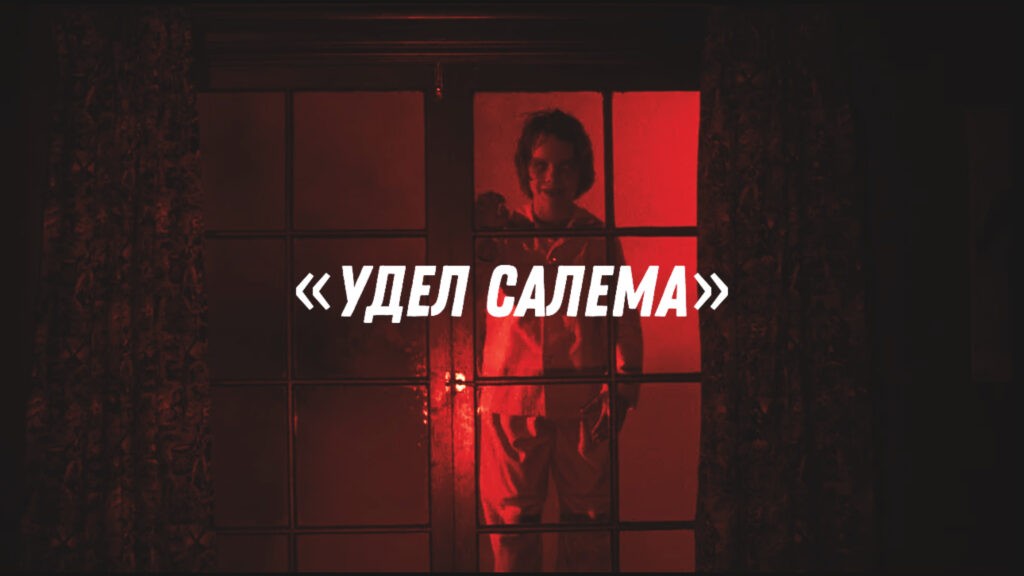
A widely acknowledged somewhat dull mini-series, which in some places is even watched in its entirety—all three hours as one film. The idea is wild, but to some extent, it reveals new facets of Hooper's cinema. Tobe Hooper is a great director, interesting in how he feels the fabric of his stories: while watching The Texas Chain Saw Massacre, it's easy to feel like the main character in the climactic scene when she is forced to look evil in the face; in the short story about the alien eye from Body Bags, your head spins from the constant deception of vision.
Salem's Lot logically fits into this tradition: this film is at times as tedious as life in a small town, but at moments as mesmerizing as an unexpectedly opened antique shop, and, of course, as eerie as a vampire's coffin (excellently made up, by the way) in the basement of that shop.
Many scenes from Salem's Lot, not very well known now, influenced horror cinema in their time, and the key theme—how quickly evil spreads once it appears—still doesn't seem archaic. Watching evil take over a town is interesting both as an example of moral panic, as a metaphor for much more real epidemics, and ultimately as a relevant commentary on the life of any society that believes in its own virtue.

Jack Torrance (Jack Nicholson) arrives at a hotel preparing for its dead winter sleep. The last guests and staff depart. The empty rooms of the refined castle—almost a living organism—are at the disposal of Jack and his family. Amidst endless snowy mountains, the hero finds himself trapped for the entire winter. The empty rooms of the Overlook Hotel, which hold a secret, rhyme with the dark recesses of Jack's own subconscious in a solemn ode to shadows.
The aesthetic of The Shining is composed of the elegant interior of the Overlook, gloomy winter landscapes, and a living fear that fills everything external and internal.
The psychedelic, frightening component of The Shining is calibrated with mathematical precision, like Stanley Kubrick's famous perspective. The film is overflowing with either Freudian riddles or echoes of the chaotic darkness of the hotel itself. Such mysterious ground has spawned many theories of varying degrees of insanity: from YouTube videos in the series "You Didn't Understand The Shining" to Rodney Ascher's documentary.
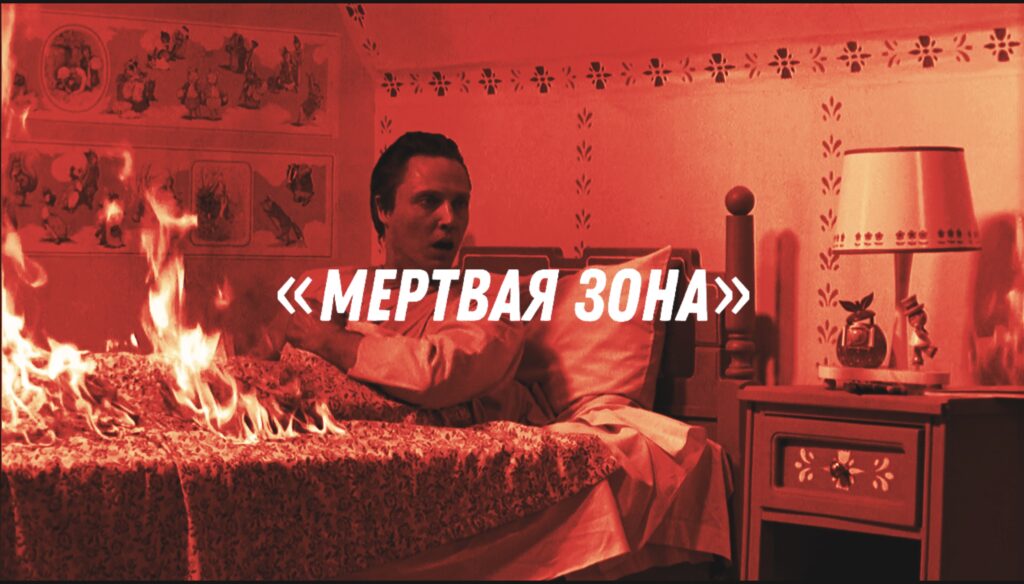
An unexpectedly traditional thriller for director David Cronenberg, a straightforward adaptation of one of the author's best novels. John Smith (the outstanding Christopher Walken), a schoolteacher who, after an accident and five years in a coma, discovers a psychic gift. Living with it is not easy, and making the right decisions is even harder. It's good when foresight tells you how to save a boy, but what do you do if you shake hands with a politician and see that he will start World War III?
Many recalled The Dead Zone in the context of the US election campaign, and that is perhaps characteristic. It doesn't matter much whether President Trump resembles the hero Martin Sheen—a populist politician promising everyone everything at once—or not; what matters more is the despair that permeates the last third of the film. How can an ordinary person influence not just the course of history, but even local elections? How can they reach politicians? John Smith gives a very definite and therefore very sad answer.
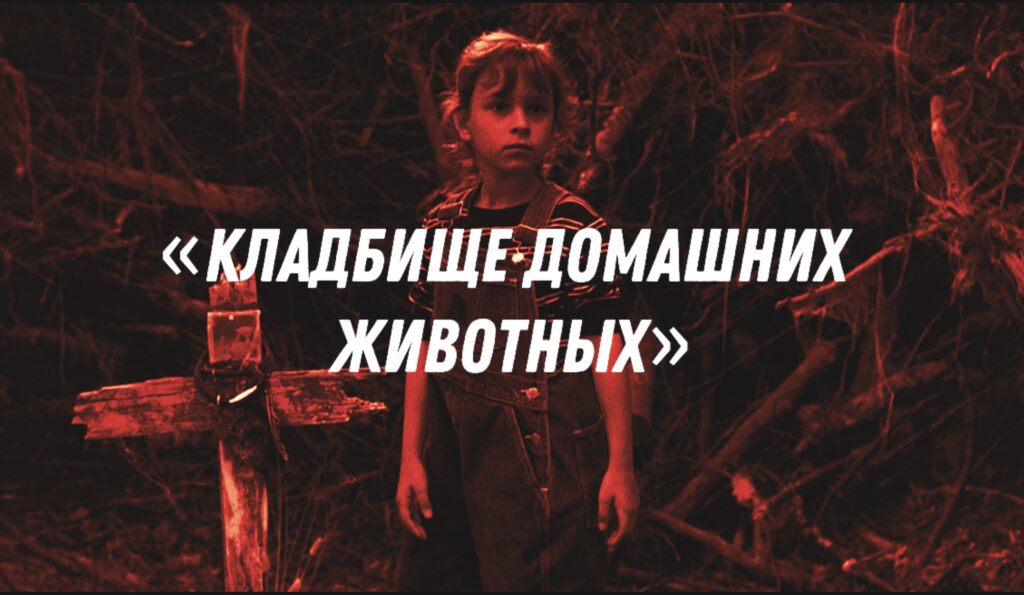
According to Stephen King himself, he considers the source material his most frightening novel—and the adaptation lives up to that. Mary Lambert's film is not only genuinely scary but also incredibly sad. Starting with a sad event (unfortunately, common in many people's lives), the perfect life of the charming family of Dr. Louis turns into hell. But the main character can only be blamed for his decisions out of great love for his family and a desire to shield them from pain.
The naivety characteristic of 80s films does not hinder but rather creates a mad and terrible contrast. The beautiful young couple played by Dale Midkiff and Denise Crosby, their wonderful children playing on the lawn, the impeccable "Americana" in the spirit of Frank Capra, the red truck, the gloomy neighbor (the inimitable Fred Gwynne), the eerie flashbacks from the childhood of Dr. Creed's wife—these are images that firmly settle in the memory.
For a long time, it was hard for me to imagine a film that could be hated as much—not because of its quality, but because of its hopelessness. This is not only a good horror film that has become a classic, but also a drama whose tragic power can compete with most other representatives of the genre.
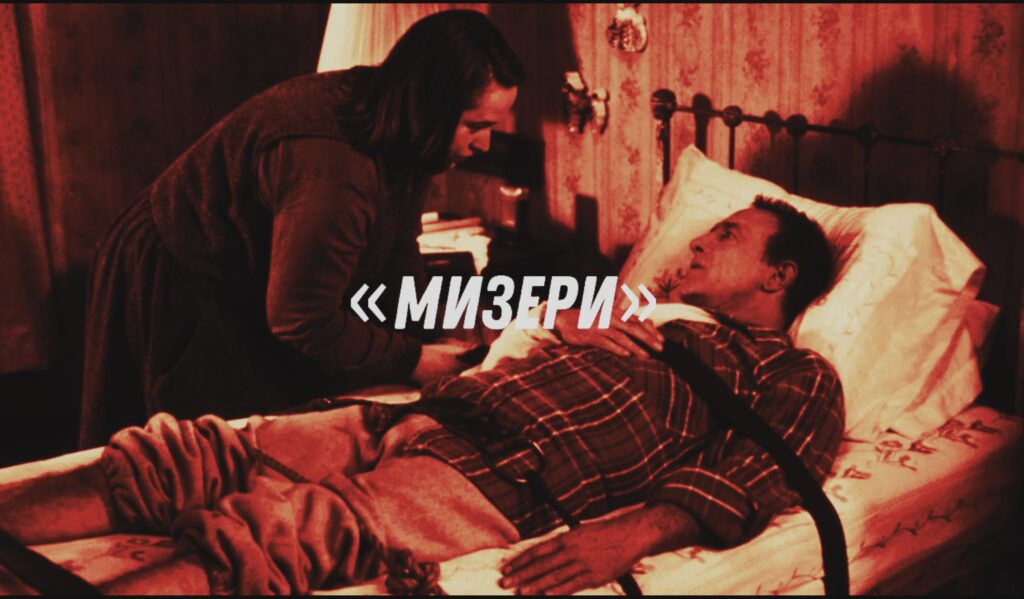
"I'm your number one fan"—an extremely frightening phrase for a person of worldwide fame. King knows firsthand about obsessed fans who can send kitten skeletons or even a live scorpion to their favorite writer. Not to mention that Mark David Chapman personally met Stephen King, praising him. And a year later, he shot John Lennon. Yes, that happens too.
All of this led the writer to create the novel Misery (1987), and in 1990, the eponymous film adaptation was released, starring the wonderful Kathy Bates in the lead role. The story has no fantastic subtext or world evil in the form of the clown Pennywise. There is only an obsessed fan who was lucky enough to encounter her injured favorite author. How could she pass by and miss the opportunity to keep him hostage? Annie Wilkes doesn't know the answer to that question either. And she takes him into her hands, literally.
Constant tension, an oppressive atmosphere, and brutal scenes of violence from the "number one fan" do their job. Misery doesn't need jump scares to frighten the viewer; a confined space and the helplessness of the main character are enough. In modern realities, the film looks even more relevant, as the distance between stars and fans has noticeably shrunk due to the internet. Now anyone can start harassing a famous favorite in the comments, fueling paranoia. And you don't even have to break their legs for that.
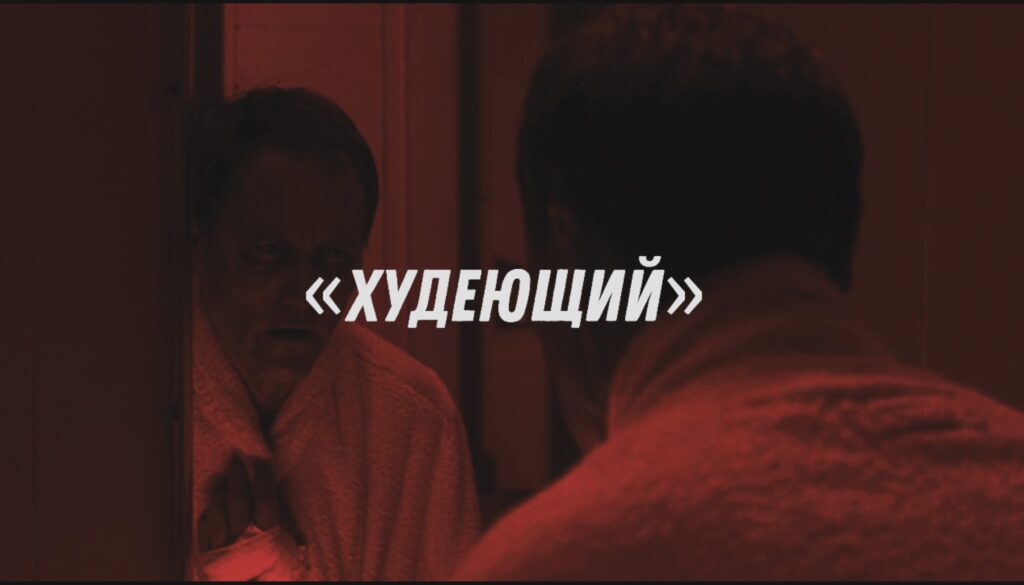
Thinner is not the most famous Stephen King novel, and its film adaptation, directed by Tom Holland (not to be confused with the actor playing Spider-Man), is rarely found on lists of the best. Moreover, the cinematic adaptation received rather low ratings from critics. The film can hardly be called scary, and even considering the display of body horror on screen, it's questionable to classify it as horror. Nevertheless, I definitely appreciate the ideological component of this film.
Behind the story (almost a parable) about a gypsy curse that falls on a corrupt lawyer, judge, and policeman lies a critique of a justice system mired in corruption. Therefore, in the book and film, justice is entrusted to a century-old gypsy baron. In Thinner, people accustomed to solving everything with bribes encounter a possessor of higher power who cannot be bribed and is not so easily intimidated. In short, the moral is crystal clear: sinners will in any case be repaid for their deeds.
Among the film's merits, one can also highlight the work of the makeup artists. If at first the main character, played by John Burke, looks like he escaped from a silly American comedy of the 1980s, then closer to the finale he turns into a walking skeleton with skin stretched over it. The actor himself also tried to convey these changes: during the filming process, he lost almost ten kilograms.

Everyone knows how reverently Stephen King treats adaptations of his works. The writer does not accept when directors undertaking adaptations indulge in their own inventions, changing endings and character traits. Thus, such cult works as Paul Glaser's The Running Man and the aforementioned The Shining by Stanley Kubrick fell out of favor with the "King of Horror." However, in some exceptional cases, King is willing to forgive filmmakers' liberties.
For example, the author was delighted with how Frank Darabont, who previously directed The Shawshank Redemption and The Green Mile, reworked the story's resolution in the film The Mist. While the original novella essentially ended with an open finale, where the further fate of the characters was not predetermined, the last minutes of the film are an emotionally devastating spectacle. Moreover, this outcome seems more appropriate in terms of dramaturgy than the book's.
Otherwise, The Mist is a fairly close adaptation of the source material. It is 100% a "King work"! The main monsters here, as usual, turn out not to be giant spiders or a tentacled creature, but people who, under extreme conditions, are ready to believe any nonsense and, at the behest of charismatic power-lovers, commit atrocities.

Director Mike Flanagan is already unofficially considered one of the best horror filmmakers of our time, as well as one of the best adapters of Stephen King's novels (first place, of course, goes to Frank Darabont). Like the source material, the film Gerald's Game is an intimate psychological thriller that is actually not so much about nightmares and the survival of a woman chained to a bed, but about fighting inner demons, freeing oneself from the shackles of a long-outlived marriage, and (once again) rediscovering oneself as a person. The film skillfully balances horror atmosphere, drama, and quasi-philosophical reflections.
Despite the events taking place in one room and the entire story revolving around the heroine played by the incredible Carla Gugino, the film can outdo many in terms of suspense, sound design, and visual solutions. There are no jump scares here, but a sense of horror hangs in the air, and at some point, what is happening makes you doubt whether the heroine is conscious. Some scenes are shot as if we are observing hallucinations; during viewing, we increasingly disbelieve the realism of what is happening, and only in the finale does the situation become clear.
Yes, compared to King's novel, the setup in the film unfolds too quickly (in less than a quarter of an hour), and some internal experiences and fears are described superficially. In some scenes, Flanagan has to directly explain metaphors and symbolism. But the film's runtime is only 103 minutes. King had it easier in this regard. Mike clearly tried very hard and made a good adaptation that clearly proves that limited space and time are not an obstacle if you correctly place accents in the script and skillfully use sound and imagery.
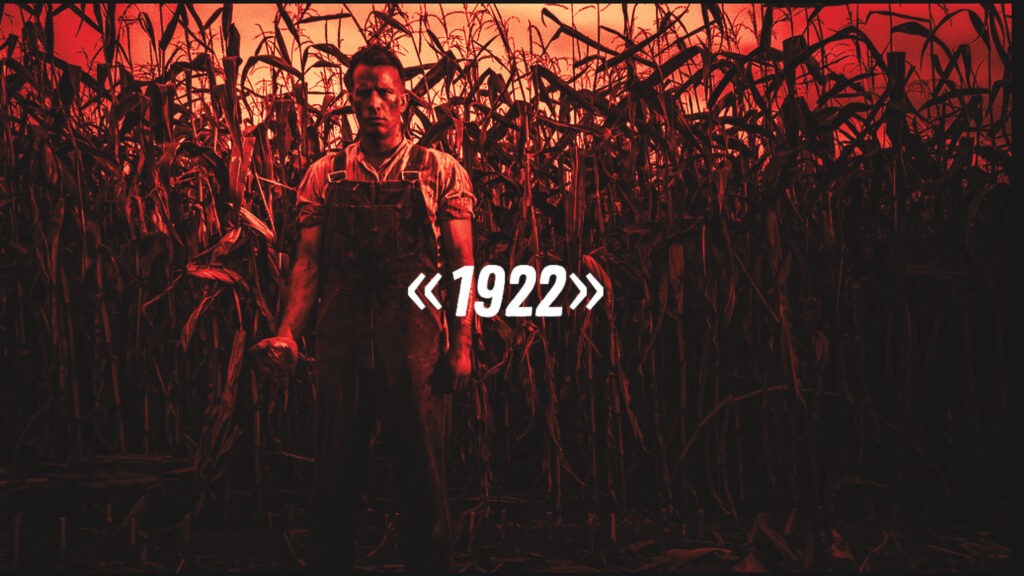
A novella overshadowed by adaptations of more famous Stephen King works, about farmer James Wilfred, who killed his wife. He threw the body into a well, where it was immediately eaten by rats. Official justice did not touch the farmer—no body, no case. But soon the ghost of his deceased wife began to appear to him, and James himself began to go mad.
A minimalist and grim horror that will not please fans of lavish horror movies with obligatory scares living in yet another basement. 1922 does not waste time on the supernatural at all, but rather leans closer to drama, focused on man and his inner demons. It is no coincidence that the film was shot by the regular cinematographer of director Taylor Sheridan, Ben Richardson. His lens is always focused on the rough faces of simple men who face severe trials. Therefore, capturing the mood of true Southern Gothic and the bleak landscapes of corn growing everywhere is possible from the very first frames.
And the main star of the film is undoubtedly Thomas Jane (The Punisher), who embodied the image of uncharismatic evil on screen, but at the same time endeared himself to the viewer with his mental anguish after committing the murder. This is a slow, oppressive story in the spirit of Dostoevsky's novels, about how a criminal will not escape punishment one way or another. And even if Themis has nothing to do here, magical forces may come into play.
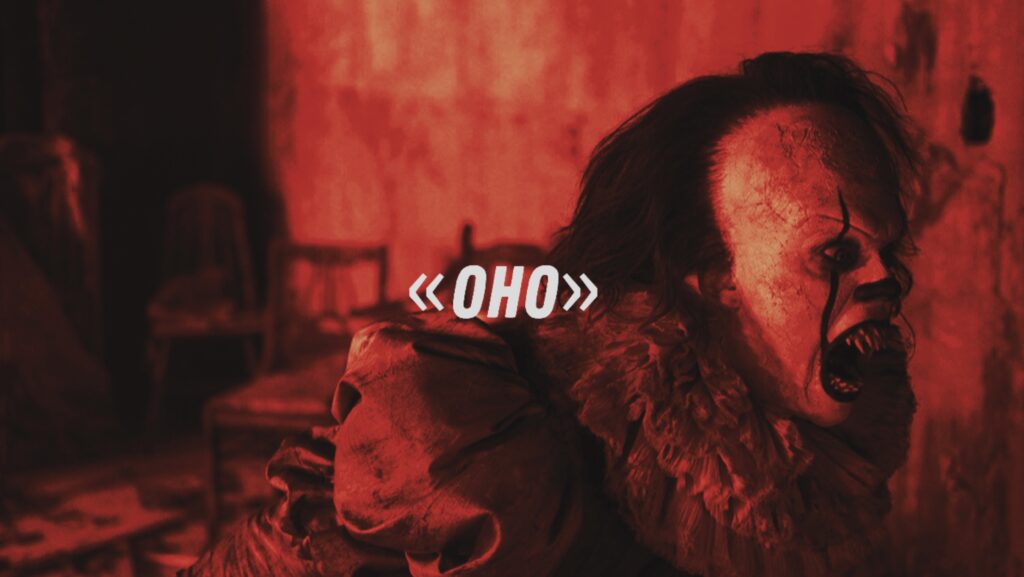
It hit so hard because Andrés Muschietti didn't just adapt King, but made the story truly alive and relatable to the audience. The "Losers' Club" is the heart of the film: the children turned out so real that you genuinely care for them, even if you yourself are far from being a teenager. Instead of a standard set of horror clichés, there are scarier things here—bullying and family problems. And of course, the creepy monster from the sewer hasn't been canceled.
And Pennywise, played by Bill Skarsgård, is a whole different conversation. He is both terrifying and hypnotic, as if inviting the viewer into his own labyrinth of fear. The "boo" episodes work perfectly here: sometimes you get scared by the sudden appearance of a clown waving a victim's severed arm, sometimes you are enveloped in an atmosphere of anxiety. But the main thing is that the film not only scares but also makes you remember your childhood, friendship, and those very moments when you first realized that fear can be overcome.
Comments
0No comments yet.
Sign in to join the discussion.