
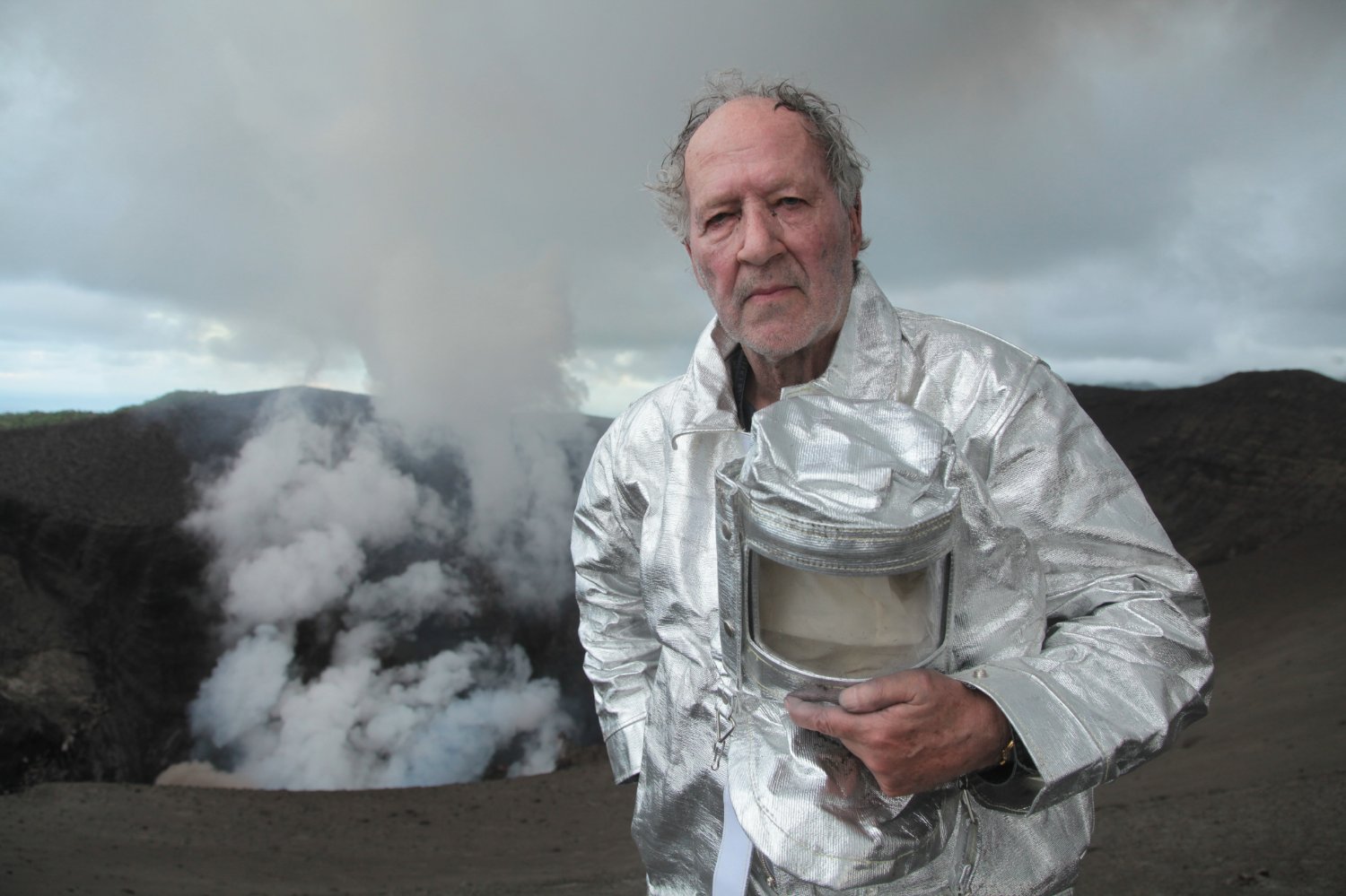
The format of texts about directorial style implies peering into the diverse and vast worlds of great filmmakers. This time we will discuss the career of Werner Herzog and learn what dangers the Jungle holds, how a dictator differs from a traveler, a...
“What will the world be like without living languages, whose diversity is rapidly and inexorably shrinking? What will the world be like without a deeply imaginative language – and therefore without my profession? Such a world may come to an end, after which there will be no revival.” – sums up Herzog in his memoir chronicle Every Man for Himself and God Against All.
Lamenting the end of the world is the sacred duty of every intellectual. One can turn eschatological fear into entertainment, like Beigbeder, or reproach contemporaries for their philistinism, like Márquez, but only Herzog, who has peered behind the mighty universal ear, is capable of immediately mentioning the impossibility of revival.
These words do not sound presumptuous; on the contrary, they carry great weight. To speak of the edge of the world, brighter than dawn but darker than night, one must speak with the person who has taken up residence there.
He went weeks without eating and earned money selling parking spots during Oktoberfest, tried to walk the entire border of Germany, debated with Günter Grass, broke into strangers’ homes and solved their crossword puzzles. In the end, he forged a unique directorial signature, which we will discuss today.
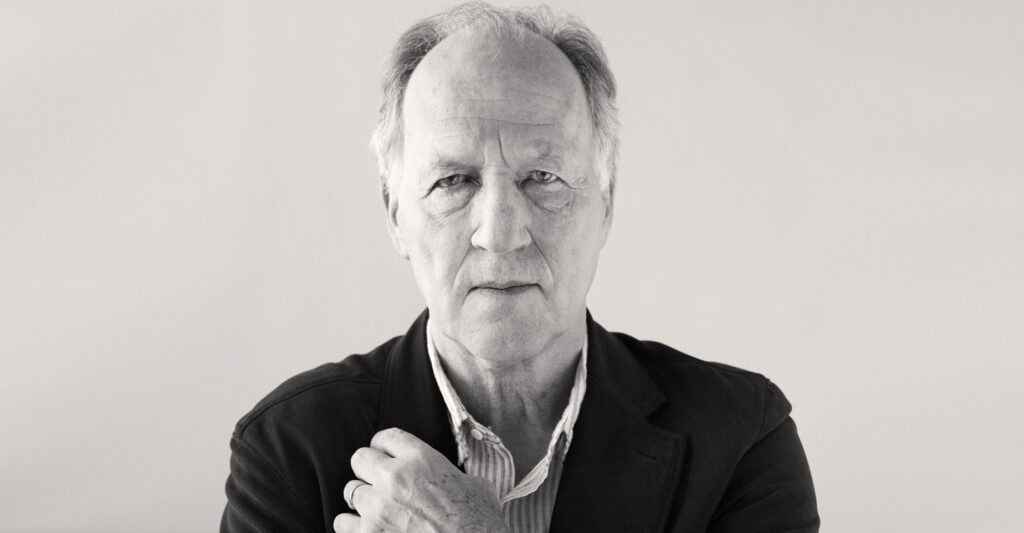
Werner Herzog's Cabinet of Curiosities
Like any artist, Herzog was in constant search of texture. One might assume he was relentlessly haunted by visions of the snow-capped Himalayas or the salmon spawning in Niigata Prefecture, but that is not the case at all. The filmmaker always aimed at man, but a man of special qualities.
Werner Herzog was open to people, but ruthless. He recalls a chance encounter with a stranger with affection, but speaks with bile about representatives of his own profession:
Most directors were not athletic at all, some were fat and could barely run.
(about the “actors vs. directors” match in Cannes during the festival)
Rejecting fat filmmakers, Herzog invites us to look at those who can be characterized by the word “spiritual.” Moreover, spiritualization, as it should, finds its bearers spontaneously, not by the principle of similar traits. Having chosen a hero, the German does not probe him with the camera, but asks questions of the essence sitting inside, and is enchanted by the facets of its selfhood.
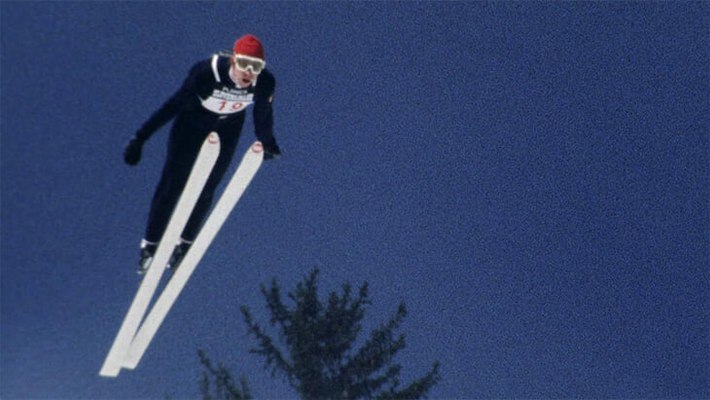
In the documentary The Great Ecstasy of the Woodcarver Steiner, he observes pale teenagers at ski jumping, but not during the flight, but before it. He has no need to waste film on a blurred, grainy squirrel-like figure in the air, because its appearance is spectacular but not constructive. It will not reveal the secret fear before the jump or the athlete’s dissatisfaction with his thin legs.
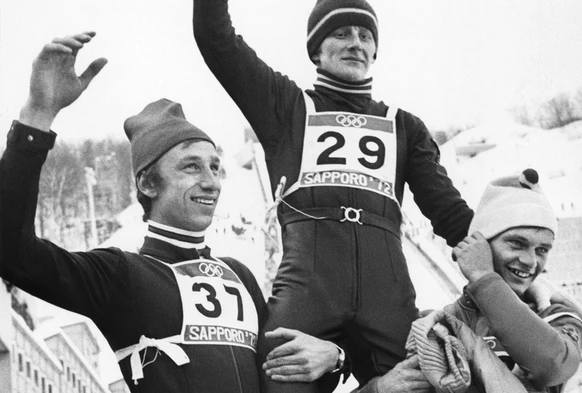
Walter Steiner interested Herzog despite mediocre results in competitions and self-doubt, for he was that necessary rarity, a white bone in the overripe flesh of a watermelon. Steiner is a skier, also a woodcarver, and once the owner of a tame raven, which makes him a previously unseen object of photogenia.
When Werner Herzog makes fiction films, he builds photogenic relationships with the characters according to similar patterns. His hero is always an exceptional person in exceptional circumstances.
Eisenstein edited attractions, Rudolf Arnheim grasped cinema through gestalts, André Bazin cut film into facts. Werner Herzog pushes the viewer from one volitional and mad act to another. The average heart could not withstand such swings, so Herzog’s portrait gallery is impressive: pilot Dieter Dengler, geologist Lance Hackett, the Ritoringu tribe, adventurer Fitzcarraldo, soldier Woyzeck, and not a single outsider.
Behind the Veil of Heaven: Colonizer and Aborigine
In the documentary The White Diamond, Dr. Michael Wilk gets a unique opportunity: to look behind the Kaieteur Falls. Despite the long presence of humans on planet Earth, none of the living had achieved such a feat. The doctor took a camera with him, but flatly refused to share the footage. Herzog did not insist: he understood the importance of personal discovery and, moreover, sacralized nature. But it is not so easy to suppress the thirst for exploration.
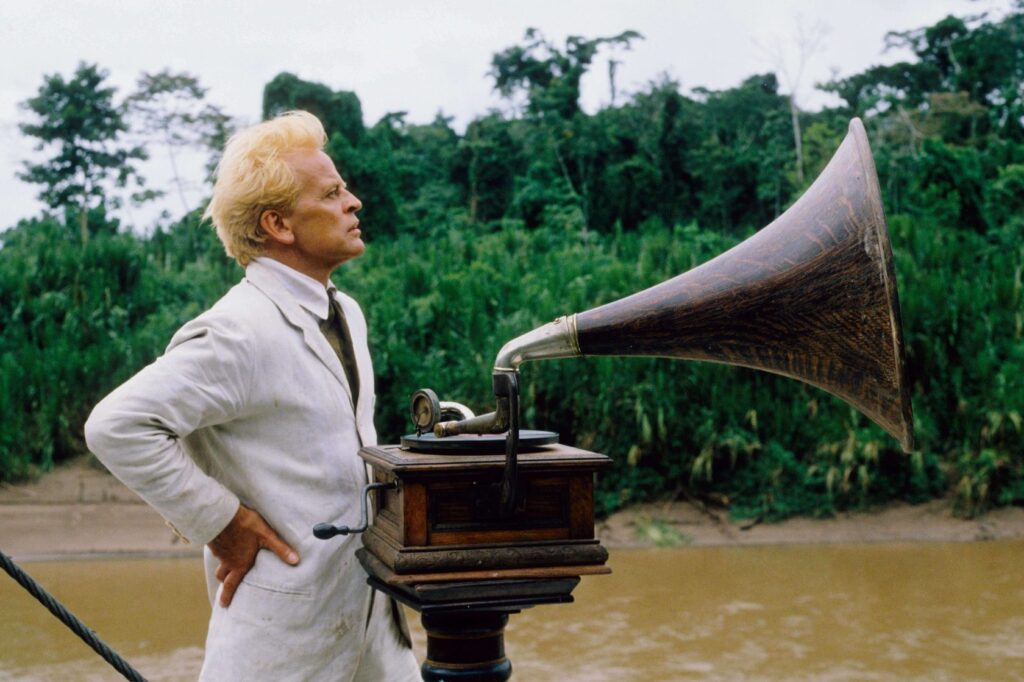
It is easy to notice that the characters most resonant with the author’s figure are the conquistador in iron armor and the rubber baron, that is, Aguirre and Fitzcarraldo. Their exhausting odyssey is not a delicate expedition but a colonizing mission. The rule they follow: at any cost, complete an abstract task. Expendable are strings of animals, retinue, locals, and the initiators themselves, leading the projectors to an inglorious end.
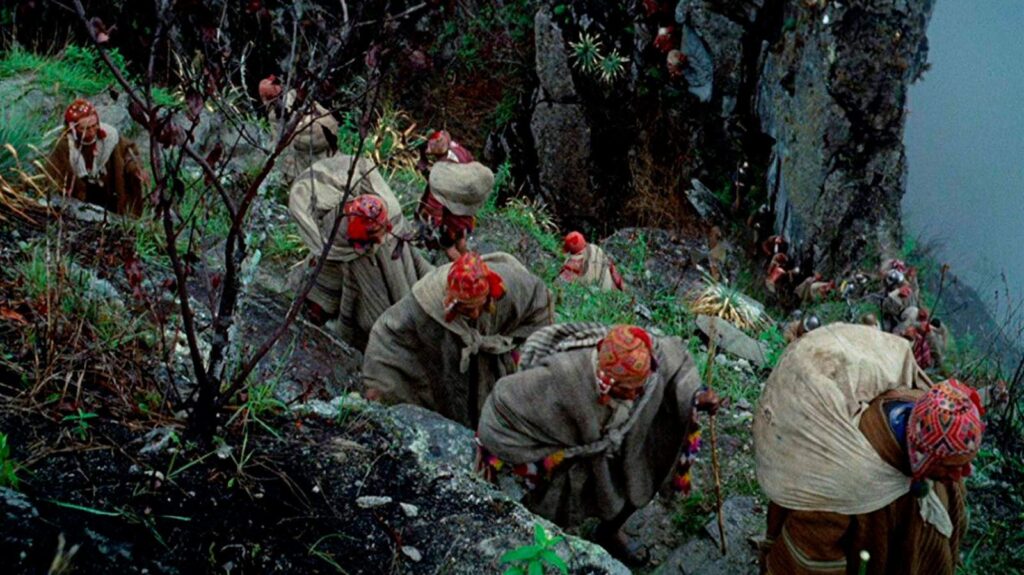
Herzog certainly builds the dramaturgy of cinema as a lesson to all who dare to encroach upon the anecumene, but the plot twists within Fitzcarraldo and Aguirre, the Wrath of God remarkably mirror the situations on the set.
Herzog is not content to merely state that Fitzcarraldo transported a ship over a mountain. The director dismissively commented on the intentions of 20th Century Fox and Jack Nicholson (the actor was eager to play the lead role) to shoot the film in the San Diego Botanical Garden. He also refused to shoot near the city of Iquitos with hotels and air connections. The filmmaker dreamed of two parallel tributaries of the Amazon and a narrow mountainous isthmus, to walk the path of his hero from beginning to end.
Nor should we forget the border war between Peru and Ecuador, which also did not cool the ardor of the film crew. More details about the incredible story of the filming of Fitzcarraldo can be found in the autobiographical book Every Man for Himself and God Against All, but to understand Herzog’s professional philosophy, one sentence suffices: “The end of this film would mean the end of all my dreams, and I don’t want to live without a dream.”
With Aguirre, the Wrath of God, Werner Herzog also did not stand on ceremony and sailed with the actors on a raft along the bends of a Peruvian river into the unknown. Naturally, his aspirations were not imbued with Aguirre’s death instinct or Fitzcarraldo’s power neurosis, but one cannot help but note the contradictory nature of the director.
Perhaps such a dichotomy is dictated by the struggle between the desire to privatize cultural experience and Herzog’s documentary instinct. If the assumptions are correct, this is a rather unusual set of qualities for a representative of the profession.
Didactic Tone and Alarmism
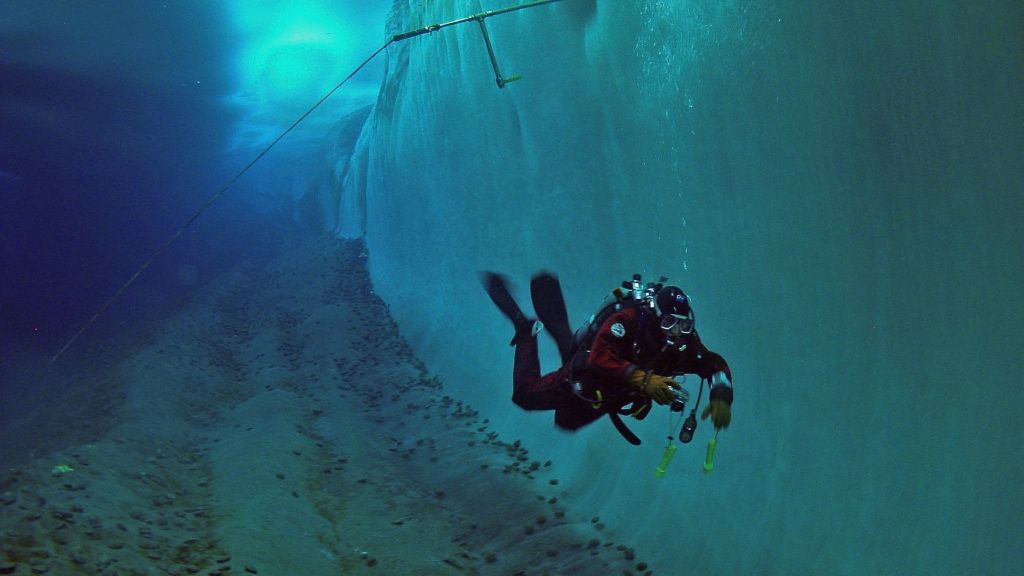
At the South Pole, in an icy crypt, Werner Herzog’s team left a frozen sturgeon, epistolary messages, and other artifacts of a dying world for aliens who, in the near future by planetary standards, will have to study human civilization. This humorous episode in the film Encounters at the End of the World demonstrates the yawning abyss of the director’s pessimism.
Encounters at the End of the World are encounters at one of the “poles” of the Earth, but also encounters before the imminent advent of the apocalypse. It is no coincidence that a word from the Christian book tradition appears here, the title of one of the parts of the New Testament, because Werner Herzog is pessimistic to the point of religious awe. This is evidenced by the chanted prayer “Lord, have mercy!” which cuts off the underwater footage of the film.
The reverent and mutually respectful conversations with a linguist, a glaciologist, a former prisoner, a zoologist, a diver cannot drown out the threatening message: “We will go extinct like the dinosaurs.”
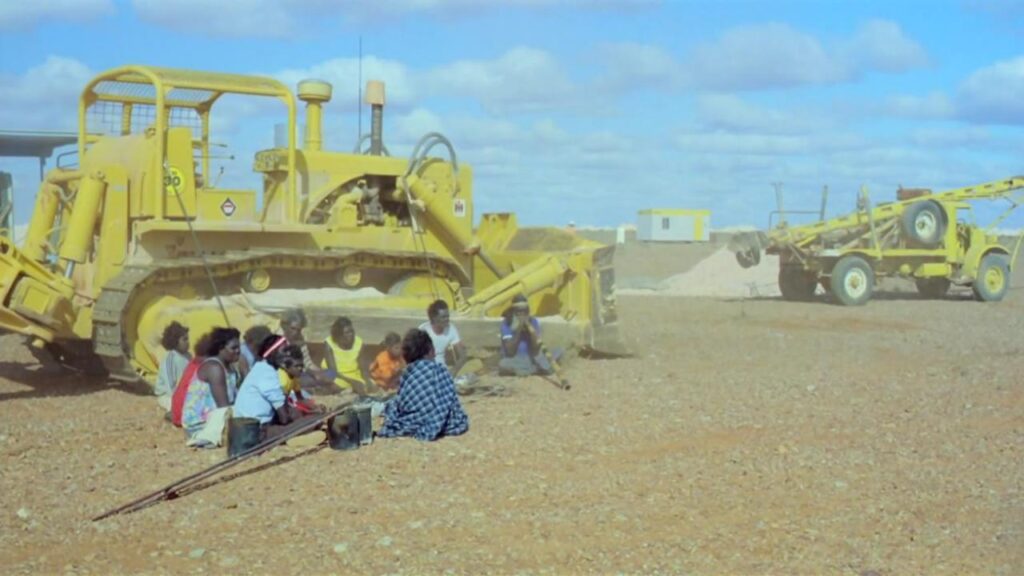
The fear of the end of the world correlates with the previous point of the article: Werner Herzog sees doom in the corrupting power of human intervention. In the desert drama Where the Green Ants Dream, the filmmaker molds the image of a natural man from Australian Aborigines who guard the sensitive sleep of deities (the very ants) from the mining company Ayers.
The main problem is not the corporate desire to take “what is theirs,” but the absolute lack of understanding between industrialists and locals. All according to Christopher Leonard: the capitalist construct identifies private interests with common ones, offering the Aborigines material goods that the latter do not need.
The above examples prove that Herzog is not a boring, aged whiner, but a bearer of the humanistic tradition, preaching the idea of non-interference by humans in natural laws.
On the one hand, the thought is not new; on the other hand, who else would propose treating the extinction of languages the same as the extermination of the whale population?
The Branching Tree of Possibilities
In documentary cinema, Werner Herzog never managed to devote an entire film to one theme. The polyphony of “voices” is either reflected immediately in the title (Encounters at the End of the World, Happy People: A Year in the Taiga, Lessons of Darkness), or the director smoothly shifts the camera’s focus to secondary characters as the film progresses.
In one of his early projects, Last Words, Herzog fundamentally does not construct an act of communication, but captures the sound shell of a thought expelled from a human mouth. The last words do not belong to a specific person or situation, so they can be spoken by anyone about anything. It creates the impression that Last Words became the author’s creative manifesto and subjugated all his other artistic “creations.”
Thus, while making a film about the inventor of an aircraft (The White Diamond), Herzog does not miss the opportunity to visit a mighty waterfall or talk about homesickness with Mark Anthony Yhap (just a passerby). And in the film Into the Inferno, before proceeding to explore the Paektusan volcano, Herzog opens before the viewer the chambers of the North Korean state structure.
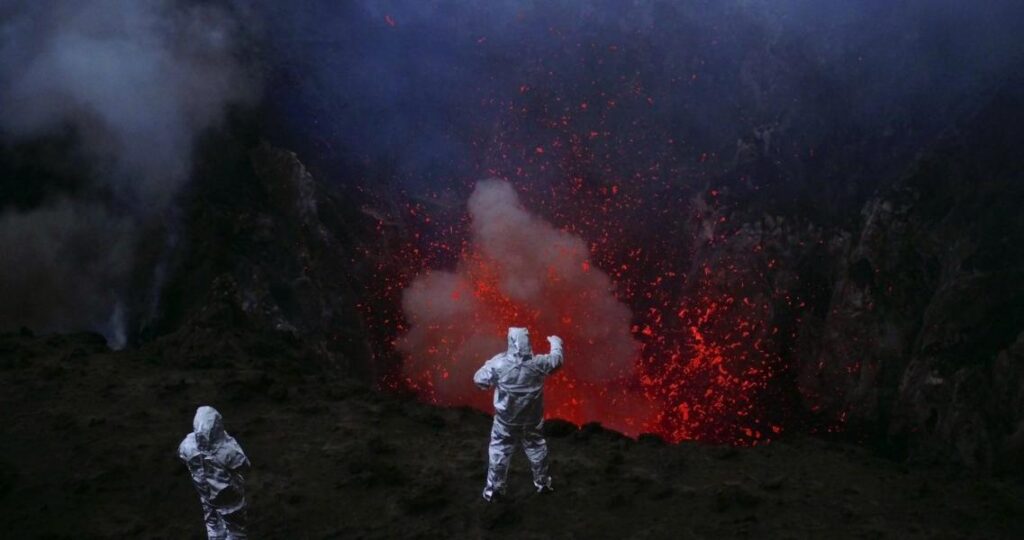
In fiction films, this tendency is expressed in the absence of adequate goal-setting or the power of fatal coincidences. Aguirre, Fitzcarraldo, Stroszek, Dengler – their adventures are always not what they initially seem. And some of them are quite agreeable to this.
Fitzcarraldo, realizing that he did not succeed in bringing opera to the wild lands, settles for a concert on the water – a remarkable submission to fate for one who is used to challenging it. The twice-escapee Dengler also does not follow the beaten path and finds protection not under the wing of the American government, but in the combat brotherhood of a squadron.
Perhaps this is the meaning of the phrase so important to Herzog: “Every man for himself, and God against all.” It is very difficult to follow a plan when God himself opposes you, so all that remains is either to come to terms with reality (Fitzcarraldo, Dengler) or to part with life (Stroszek, Aguirre).
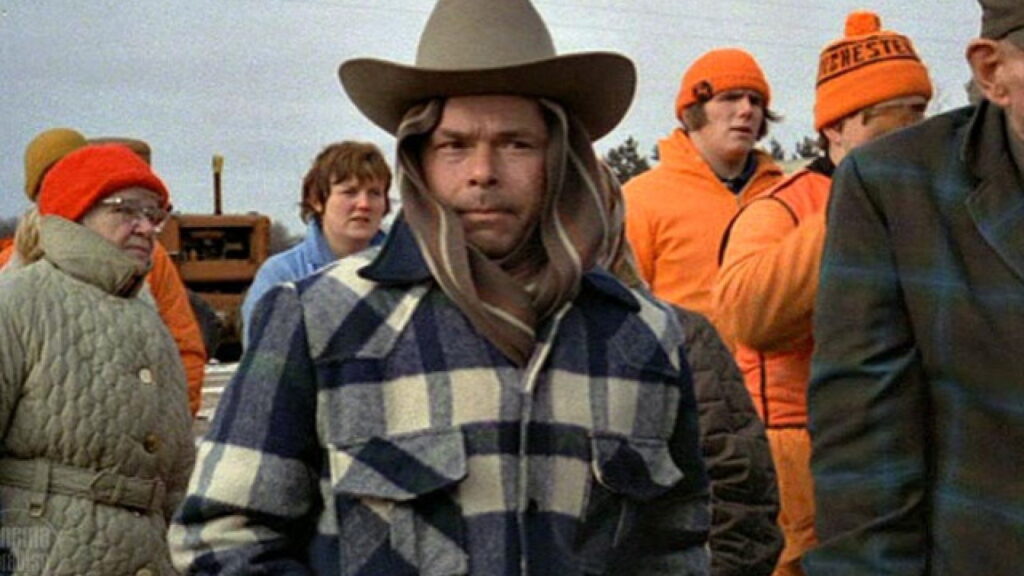
Cinematographer Thomas Mauch, Half-Brother Lucki Stipetić, Muse Klaus Kinski
It is hard to be a loner when you have crisscrossed the globe by air. Friendship follows Werner Herzog everywhere and always. He wears his friends’ backpacks, uses their footage in his films as opening shots (Encounters at the End of the World), is friends with fellow directors (Ramin Bahrani, Terrence Malick), and yet there are three special people in his life.
The first is Thomas Mauch. He is far from Herzog’s only cinematographer. Over the years, this position was held by Peter Zeitlinger and Jörg Schmidt-Reitwein, but it is Mauch who holds the first place. Not because of professional competence: it is difficult to single out any of them in this aspect.
It is with Mauch that one of the few episodes is associated in which Werner Herzog could not show courage and take responsibility. The fact is that actor Klaus Kinski had long been persuading Herzog to make a film based on a 600-page script of his own production. The film was to be called Kinski Paganini.
In this opus, Kinski wanted to tell the world about the “demonism” of his essence using the biography of violinist Niccolò Paganini. The film would later be released and become Kinski’s last, but that is another story. What matters here is Herzog’s refusal to direct and the actor’s reaction to the criticism of the script.
On the set of Cobra Verde, Kinski did not confront Herzog; he chose a weaker target: the actor began terrorizing Thomas Mauch, and by the end of filming demanded that the cinematographer be fired. Fearing for the fate of the film, Herzog gave in. This incident later led him to reflect on his betrayal and the destructive power of the filmmaking process, and also influenced a cinematographer-centric model of film production: “It is the cinematographer who always unites the film crew.”
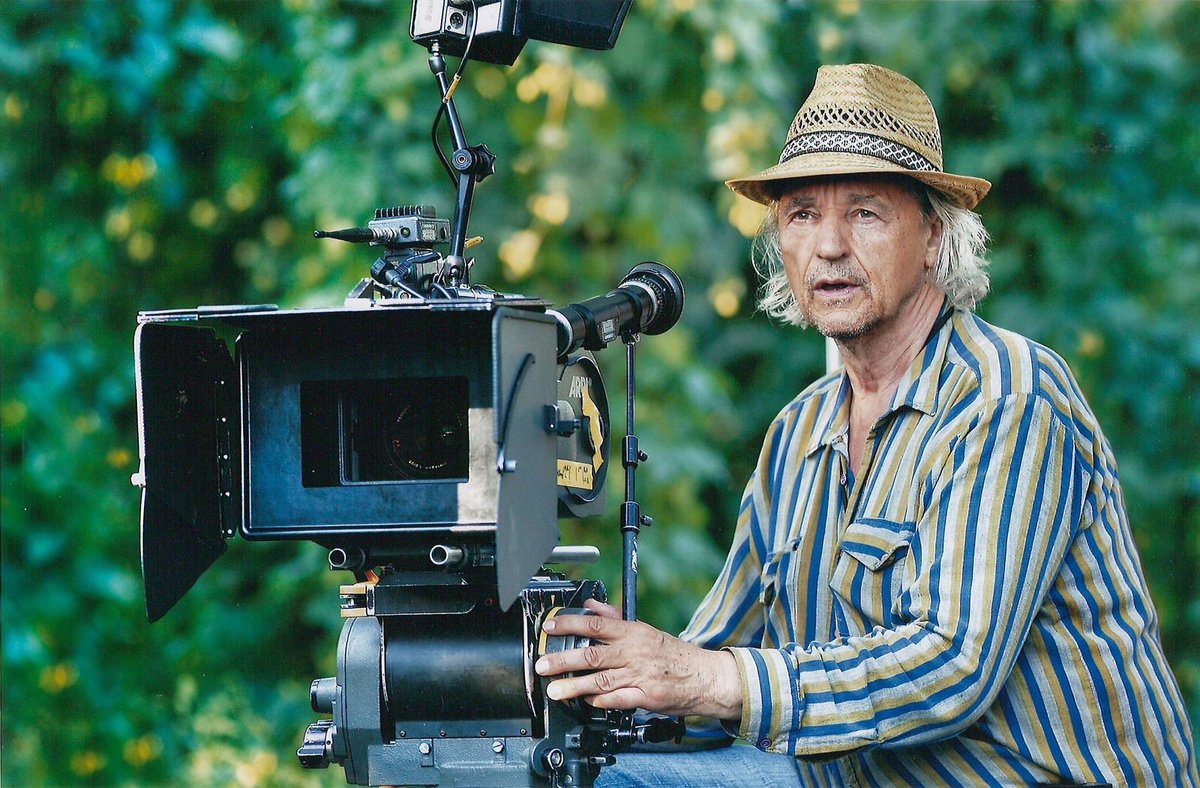
The second pillar of Herzog’s team is his half-brother Lucki Stipetić, who turned out to be an excellent crisis manager, which perfectly compensates for the director’s boisterous character and ambitions. Having achieved financial well-being early, Lucki (as he was commonly addressed) joined Herzog and took over all organizational matters. Incidentally, it was on his initiative that a foundation was created to manage the brother’s cinematic and literary works.
It was Lucki who twice saved the film Aguirre, the Wrath of God. The first time by literally beating the pavement in Miraflores in search of funds. The second time when a Lima transport company lost the negatives of the first half of the film. Lucki allowed Herzog to be independent and make films on shoestring budgets.
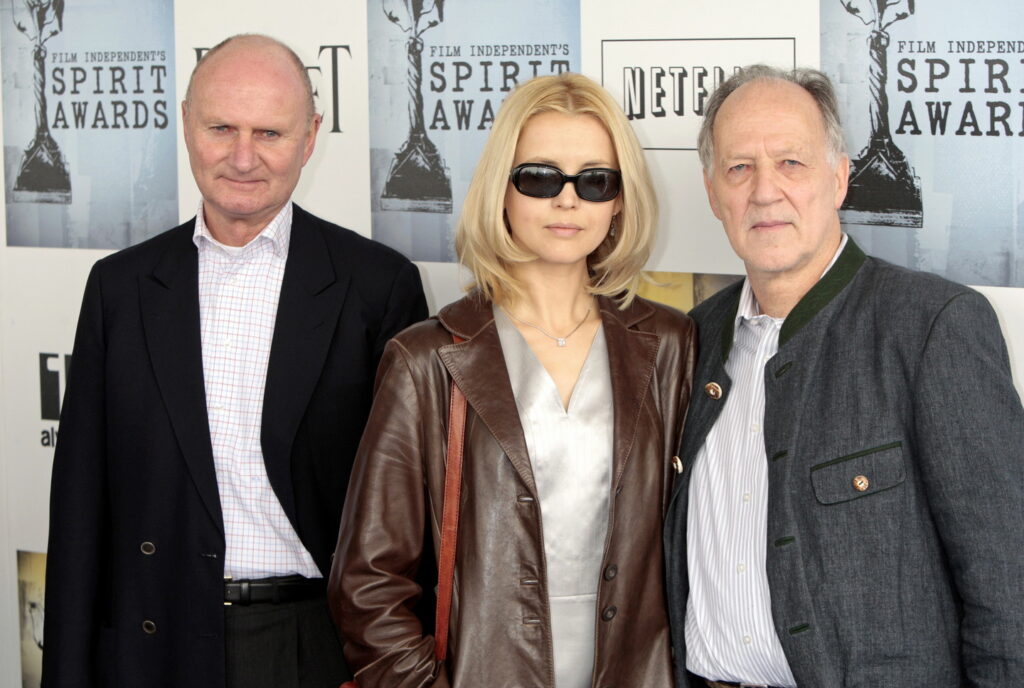
The third participant (the most controversial and the most important) is Klaus Kinski. His creative partnership with Herzog is paradoxical. Klaus Kinski lived in the same apartment as the director and his mother and already then showed his “angelic” character: “One day, returning from school, even on the stairs I heard some noise. I opened the door and immediately saw Hermine, a stocky cook of about eighteen from a village in Lower Bavaria. She was chasing a guy I had never seen before and beating him with a wooden tray for getting under her skirt. The fleeing man was letting out piercing screams. It was Klaus Kinski.”
Later, Kinski did not let up. He drove Thomas Mauch away, nearly shot Peruvian extras in a fit of rage, threw potatoes at a theater critic, beat his Vietnamese wife, and almost drove Herzog to murder. At the same time, he could show considerable understanding of the situation; in particular, with his screen partners (Claudia Cardinale and Eva Mattes), the actor was quite courteous.
Despite Klaus Kinski’s appalling behavior, Werner Herzog loved him and sincerely considered him a friend. In the posthumous film about the actor, My Best Fiend – Klaus Kinski, the director sadly admits that he misses the madman’s company.
Kinski did not show his feelings openly, but an attentive viewer could notice some dynamics in his filmography. The actor wallowed in European cinema of the lowest sort, calling himself a whore ready to take on any paid role. In such projects, he was generally passive and boring. Only with Herzog did he strain every nerve and truly try, because he considered the director’s films his destiny.
That's All. So What?
Werner Herzog did not develop a unique visual code. Instead, he proposed an authorial architectonics of the cinematic world. The uniqueness of Herzog’s creations lies in the desire to tell a parable about a sick humanity in thousands of different languages, through the mouths of an immense multitude of fellow adventurers.
Herzog is serious and didactic, but free and experimental. His work should be evaluated not by individual moments, separate shots, or vivid scenes, because he achieves special monumentality in the philosophy of production. Relationships with the team, travels, production conflicts, the insignificance of the result, empathy for man and nature – this is the real Werner Herzog.
Comments
0No comments yet.
Sign in to join the discussion.