
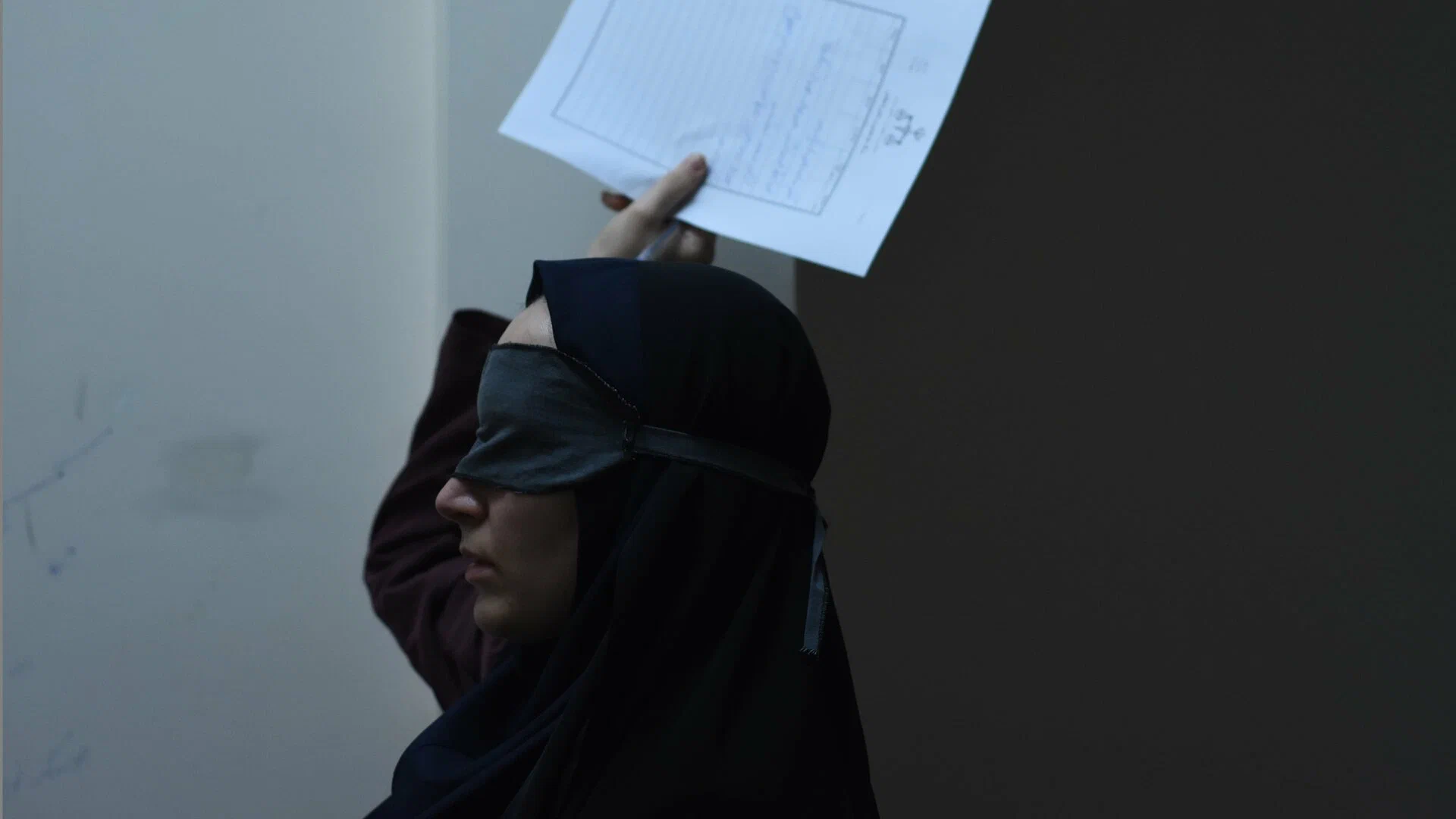
We tell about one of the winners of the 2024 Cannes Film Festival and the most scandalous auteur film of recent years.
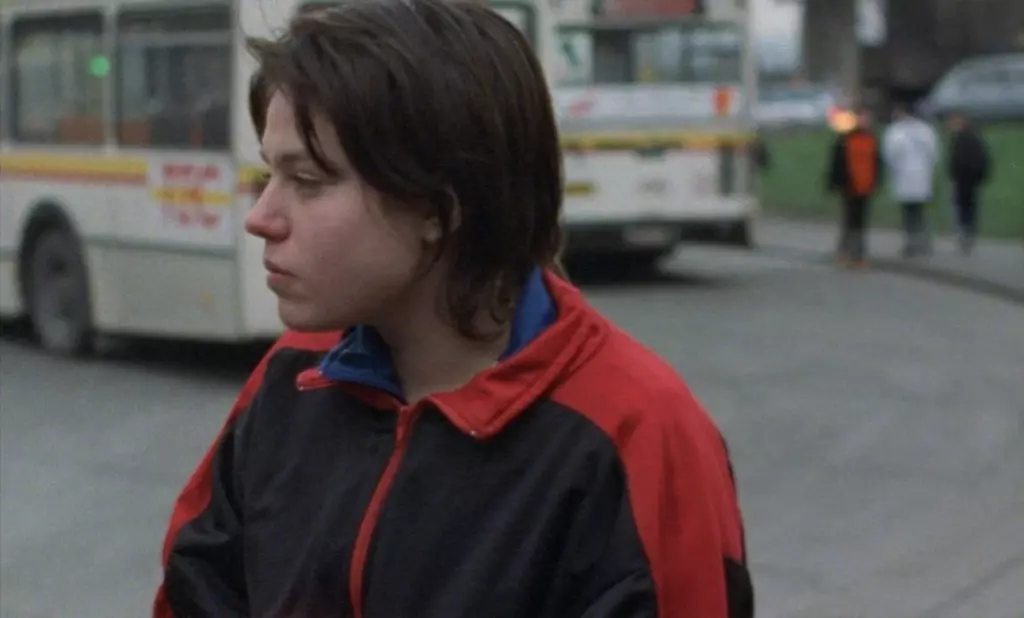
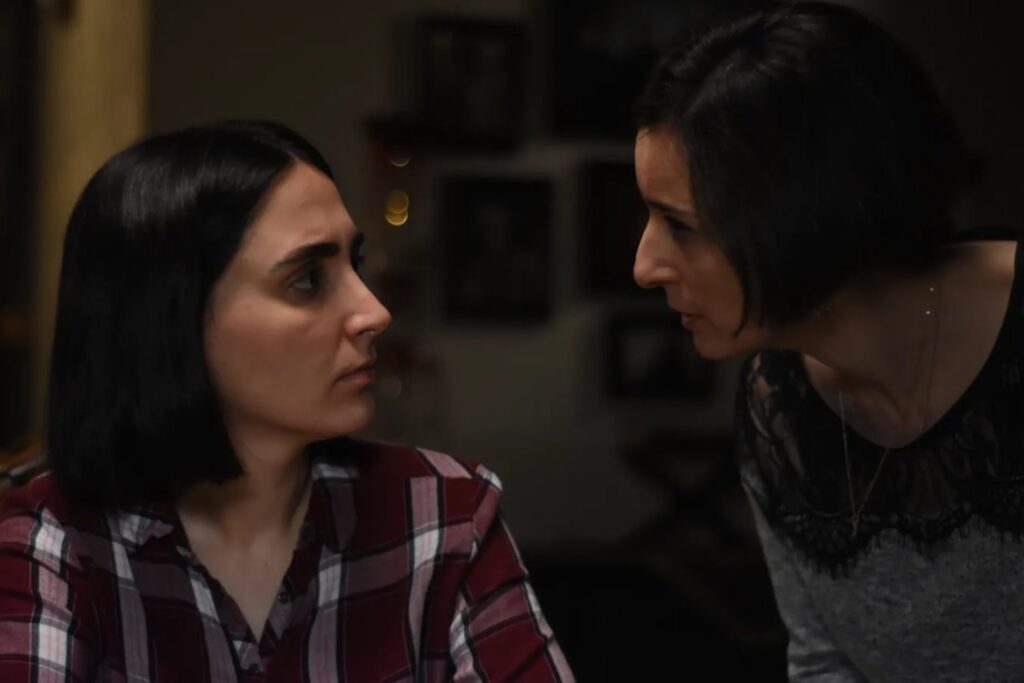
If you look at the cast of Mohammad Rasoulof's film 'The Seed of the Sacred Fig', you will see that most of the actors involved have no filmography behind them. The method of the Dardenne brothers and their most successful film 'Rosetta' immediately comes to mind, where the main characters are played not by professionals but by green amateurs. Jean-Pierre and Luc are not unique in this regard.
Roughness, virginity, and naturalness of performance were also demanded by Konchalovsky and Agnès Varda. This reflects a deliberate striving for a free style, a desire to elevate chance over control. One way or another, this is a conscious choice and even, in a sense, an authorial dogma. Casting in the Middle East is quite different.
Random Actors
The workers of the Iranian cinematic rear are comparable to the heroes of paintings, worked on by a brush rather than a film camera. Simah Mobarak-Shani, Amir Farrokh Hashemian, Bahareh Seddiki, Hossein Sabzian, Ashkan Koshanejad – they are caught in a moment, created by the author forever.
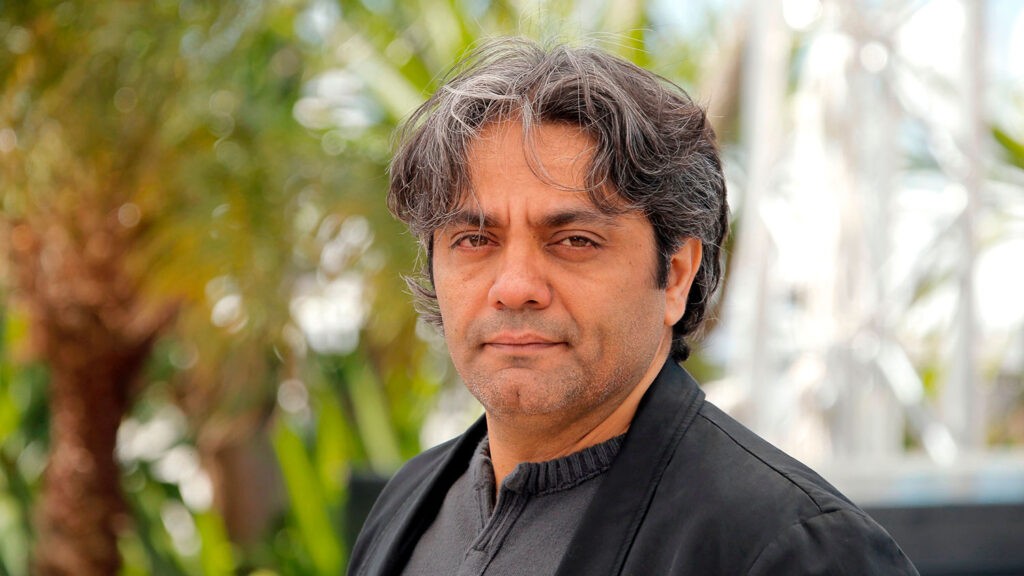
None of them became a film hero twice, which means none of them are actors. They have much more in common with Veronica Gambara from Antonio Correggio's painting or with the sinners at the Last Judgment by Michelangelo than with Hollywood performers. And one would like to say that Sabzian or Seddiki are just isolated cases, but unfortunately, such is the film industry of Iran, whose main feature is its absence. Films are smuggled out, directors flee illegally. Mohammad Rasoulof is no exception.
Eastern Orders, Western Values
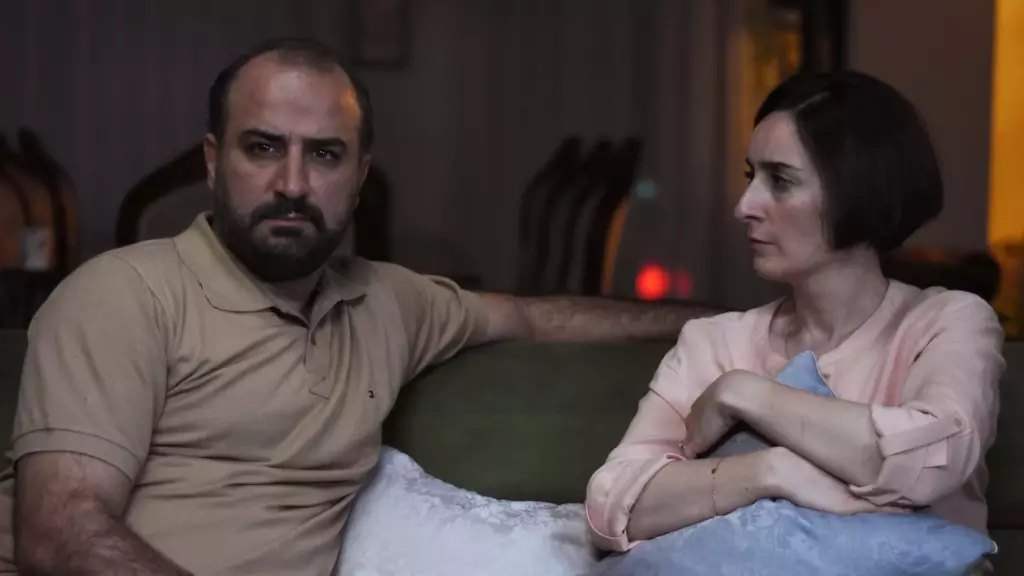
The plot of his film is as tragic as it is typical. Iman, a bloodhound lawyer of the Ayatollah regime, receives a long-awaited promotion. He has to shoulder some of his masters' crimes (death sentences, interrogations based on denunciations), but all this pales in comparison to the promises of financial well-being and satisfying his wife's demands. By the way, Mrs. Najmeh's desires are very European: a bigger apartment and a dishwasher.
'The Seed of the Sacred Fig' is not a story about poverty. Rasoulof allows a glimpse into the middle-income class, which is not often seen in Iranian cinema. However, even solid citizens are not shielded from problems. Upon taking the new position, Iman, with his wife's assistance, establishes strict rules: no dubious acquaintances, no guests, and adherence to draconian network hygiene.
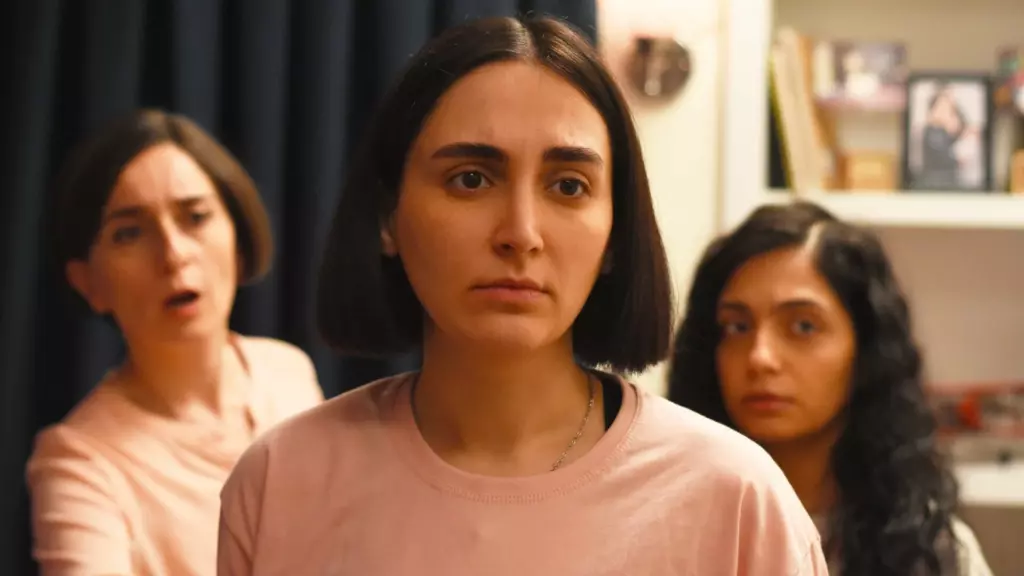
The domestic 'idyll' collapses against the backdrop of full-scale protests following the death of Mahsa Amini. Iman's daughters, for some reason, sympathize with the protesters rather than the authorities of the sacred Islamic republic, and on top of that, the family father's service weapon mysteriously disappears.
From this brief description, it becomes clear that 'The Seed of the Sacred Fig' cannot function as a detective story. Otherwise, the straightforwardness that the creator demands from the film is lost. Yes, the pistol goes missing due to the daughters' fault, and yes, the father goes mad.
Everything Subordinated to the Idea
The film, of course, tries to flirt with the genre (it is much friendlier than the Cannes Festival would suggest). The film's finale does not skimp on an emotional suspense chase in a labyrinth. Perhaps deliberately, but rather intentionally, Rasoulof has tapped into a Kubrickian perspective: a maddened man first locks his family up, then tries to catch the runaways to kill them. Only instead of an axe, there is a compact pistol, and instead of ice, the sandstone of ancient structures.
But the plot, in this case, is a byproduct of the statement. The title is also subordinated to the latter. The sacred fig (or fig tree) has a double meaning. It is both a multiple object of worship for various religions (from Hinduism to Jainism) and Ficus religiosa, which penetrates the trunk of the host tree and splits the carrier from within, which is a transparent metaphor for the theocratic regime of modern Iran, using religion as a justification.
An unambiguous interpretation is outlined by Rasoulof with a frantic line, as he was not afraid to include documentary footage of street demonstrations in the film. And this is the most valuable part of his work.
Godard and Iranian Cinema
As mentioned above, 'The Seed of the Sacred Fig' stands out against the deprivation of the rest of Iranian cinema not only by the economic stratum of Iman's family but also by a cluster of visual solutions. The Iranian film crew is a guerrilla. They have no time for pre-production, they are inspired by chance, their 'runs' occur in a ragged tempo.
Handheld compact camera, cheap microphone, spatial uncertainty, unmotivated cuts – these are components that do not belong to Rasoulof's work. He prefers carefully planned domestic sketches, a cooling pale color correction, smooth camera movement.
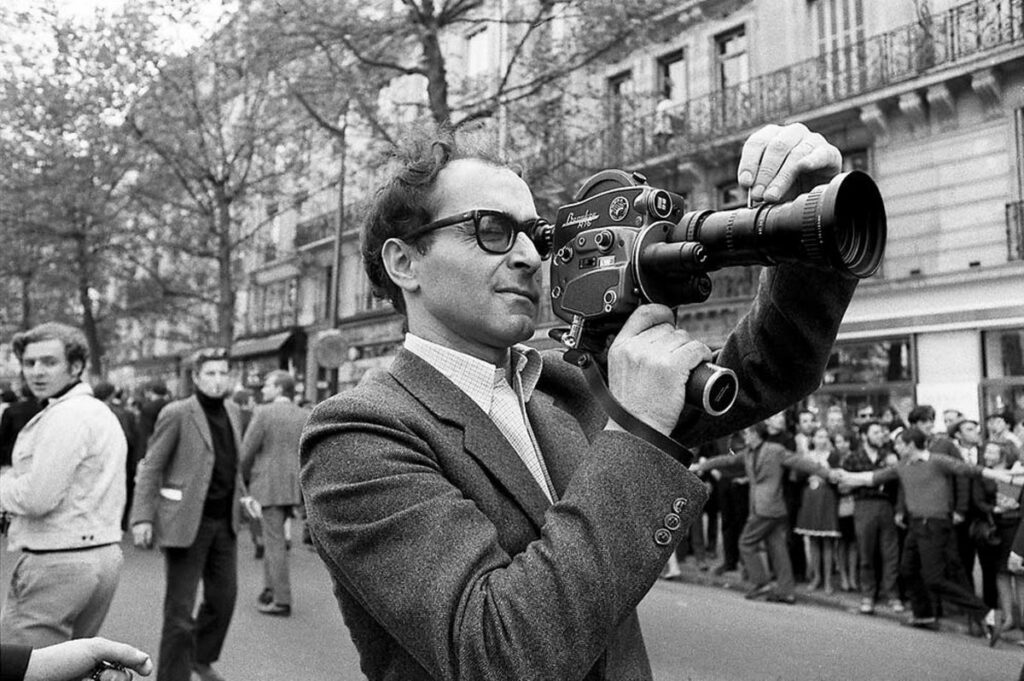
He seems to ignore the methods of waging cultural warfare developed during the modernist upsurge (student revolutions, tendentious French and Italian waves, the famous 16mm Godardian Cameflex), but firstly, the context demands it, and secondly, he does not forget about emblematics, inserting real footage of protesters. And it is precisely (paradoxically) tradition that screams about their importance.
Because otherwise we would be watching not Iranian cinema, but Orientalist, Western European cinema. Moreover, by using other people's photographs and Instagram live streams, Rasoulof elevates domestic cinema to a new level in two directions.
First, Iranian cinema becomes even more unpredictable. Studio shooting can now be interrupted by a pixelated mess of a real battle, swapping horizontal orientation for a phone's vertical one. Second, art becomes truly popular. This is not just Rasoulof & Co., but a hybrid of authorial and collective creativity. The director not only captured the general mood but also tried to integrate it into the cinematic language.
Another classic element of the Iranian cultural code has been and will be imported music, genre systems, and foreign culture in general. Thus, in the film 'No One Knows About Persian Cats', young and enthusiastic people secretly play rock, dreaming of fame in the Western world; in 'Offside', girls fight for the opportunity to watch the FIFA World Cup (a ban on women attending the event was in effect); and in 'The Seed of the Sacred Fig', Iman's daughters scroll through their Instagram feed.
And yet, even here Rasoulof finds a compromise. The director is well aware of the power of tradition, so one of the daughters rebels not to the Beetles, but to Persian music, inserting a cassette with the song 'Gisoo' by singer Marzieh into the player (symbolically, the artist died in Paris, having been exiled during Khomeini's rule).
Agreement in Everything Except...
'The Seed of the Sacred Fig' is a space of compromise in everything. Rasoulof shoots a political statement as a tense thriller, demonstrates authorial essence in collective creativity, sees equal benefit in progressive internet culture and in a 20th-century Iranian singer. However, he will never allow himself to agree with those who torture political prisoners, with those who cowardly sign a blanket death sentence, and with those whose hand holds a club over the head of a compatriot.
And perhaps some will not like such an act of simplifying the relationship between citizen and state, but direct action itself knows when to compensate for the failures of intricacy and gray morality. Moreover, there is nothing wrong with unambiguous cinema, especially when it succeeds. And Mohammad Rasoulof succeeded.
Trailer:
Comments
0No comments yet.