
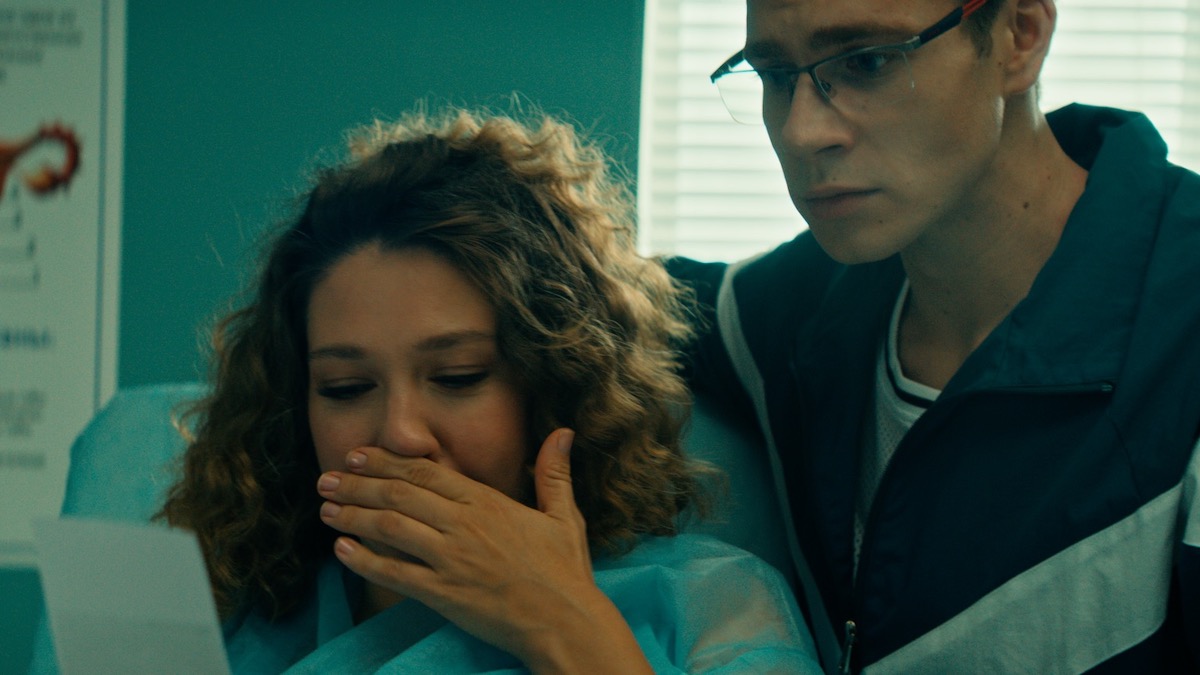
Between Chinese New Year and Valentine's Day, the comedy "We Give Birth!" by director Dmitry Suvorov was released. At first glance, a clear propaganda of demographic growth, this film nevertheless surprises and, while still remaining propaganda, actu...
At the glamorous premiere in the large hall of the Oktyabr cinema, everyone gathered, including those who are hard to classify as the target audience of Russian holiday comedies. What were these people thinking as they watched a promising girl live in the dilapidated apartment of her boyfriend's parents, from whom she accidentally became pregnant and whom she doesn't even like? Turning to each other with giggles — and from the balcony you can see everything — were they thinking about the greatness of the motherland? About demography? Were they thinking?
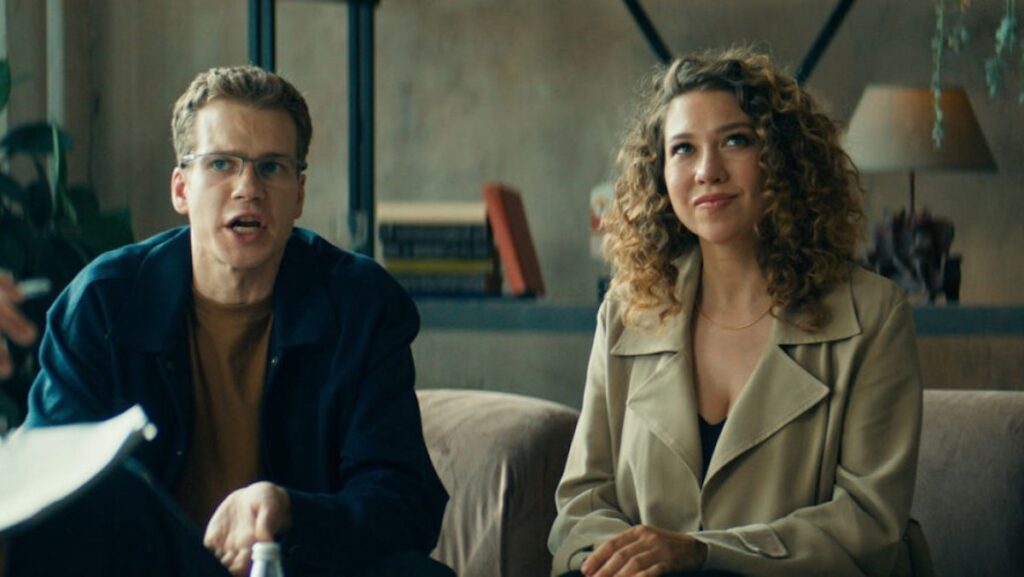
And there was certainly plenty to think about. The main character Anya (Alina Alekseeva, artistic) is a successful marketer who always gets the best projects. Maybe it's because she's a wonderful professional, but maybe it's heavily hinted at from the very beginning because she's the boss's girlfriend. Either way, her career is cut short at the start: while Anya is working, the boss cheats on her with a new employee, and the girl, upon finding out, ruins an important deal with the Chinese. And, naturally, loses her job. And her hopes, and prospects. In the morning, besides the hangover — existential included — the girl finds in her apartment a neighbor from the stairwell, in whose arms, so to speak, she found solace.
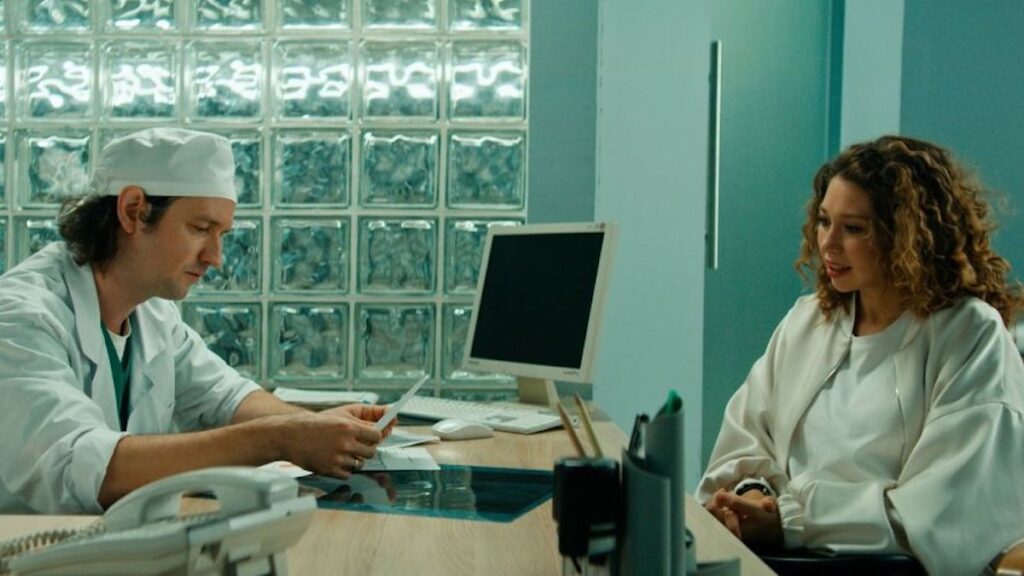
Soon it turns out that Anya is pregnant. She can't get a job — both because of the circumstances of leaving her previous one and because of the prospect of maternity leave — and she doesn't want to return to her parents in Tver. Her father, played by the outstanding Yan Tsapnik, at first glance loves two things in life: hunting and the tiles produced by his factory. And his daughter just can't live up to his expectations and accept the role of heir to the tile kingdom.
In despair, the girl decides to have an abortion, but can't go through with it because the doctor offers her to listen to the fetal heartbeat. And Dmitry, that same neighbor, runs to the clinic shouting "I won't let you!" Since the girl has no money, she agrees to live with Dmitry and his parents, who, in addition to other inconveniences, insistently call their son Mitya and her Nyura, which irritates everyone immensely. The audience, perhaps, even more than the characters.
Dmitry ( Kuzma Saprykin , outwardly resembling Hayden Christensen and occasionally intoning just as strangely) — aka Dima, aka Mitya — is an unbearably infantile young man; he has ideas but no plans; intentions but no tangible prospects. The first third of the film — while the characters try to get along with each other and with the guy's parents — is at times quite funny (especially thanks to Dmitry's parents, actor Stepin , in particular), but a horrifying spectacle, a landscape of existential despair. Where to go? How to go to a decent restaurant with someone who might show up on the summer terrace with shawarma? It's well known that comedy and drama can share the same plot, and it all depends on perspective, but few, perhaps, took it as literally as Dmitry Suvorov , .
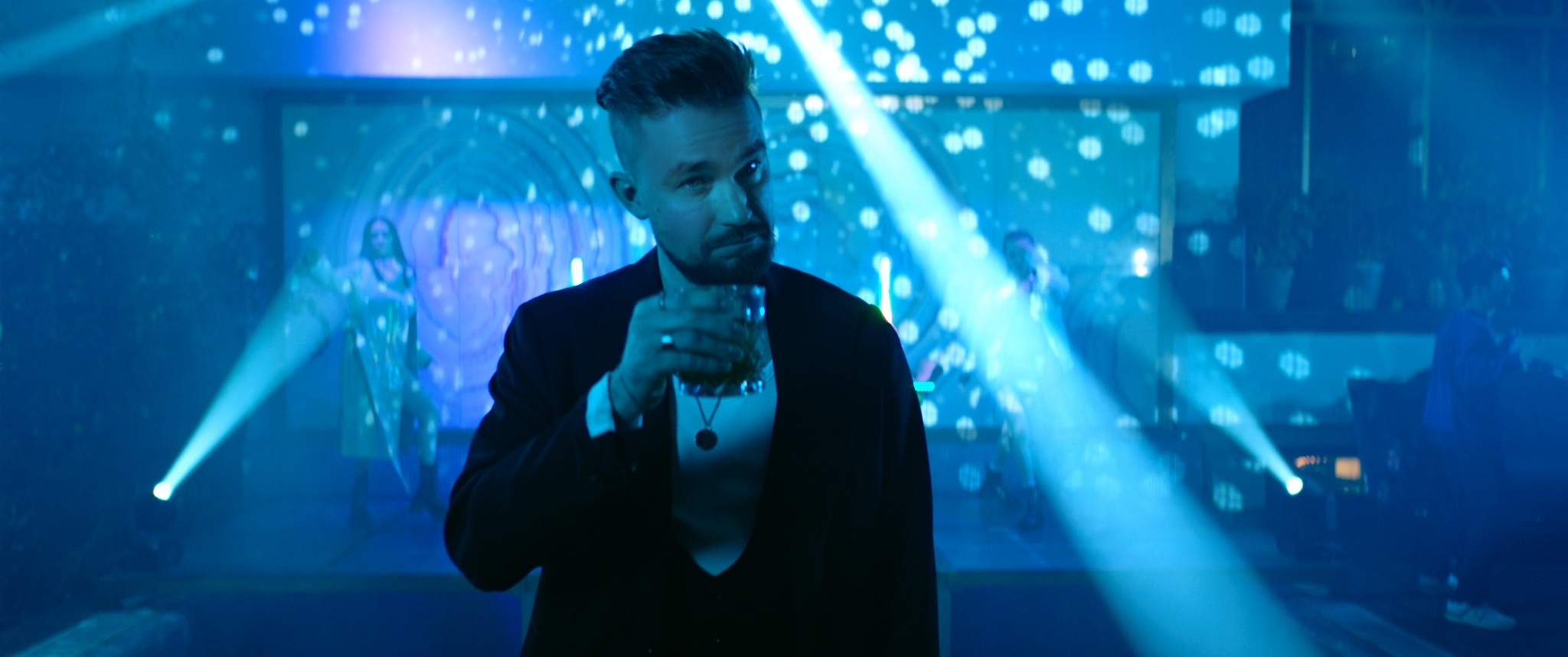
On February 14, the erotic melodrama "Naughty" is released, the domestic response to "50 Shades of Gray" with Alexander Petrov in the lead role. About why this belated centuries
Open materialSuvorov as an author (albeit a vulgar one, in the vein of, say, Michael Bay) is astonishing in the childishly naive honesty of his perspective. To make their terrible comedies, less gifted people like Sarik Andreasyan have to create a country from scratch, removing any signs of life from the frame — so his characters are exclusively residents of the Garden Ring, whom most viewers have never seen; therefore, their apartments always have garish interiors, as if designed by a colorblind person based on stories from another colorblind person who once visited IKEA. In such films, there are no feelings, no truth, not even anything remotely resembling real-life situations. It's a huge amusement park built because otherwise the comedy doesn't work. At least, the comedy for which the entire release schedule will be cleared.
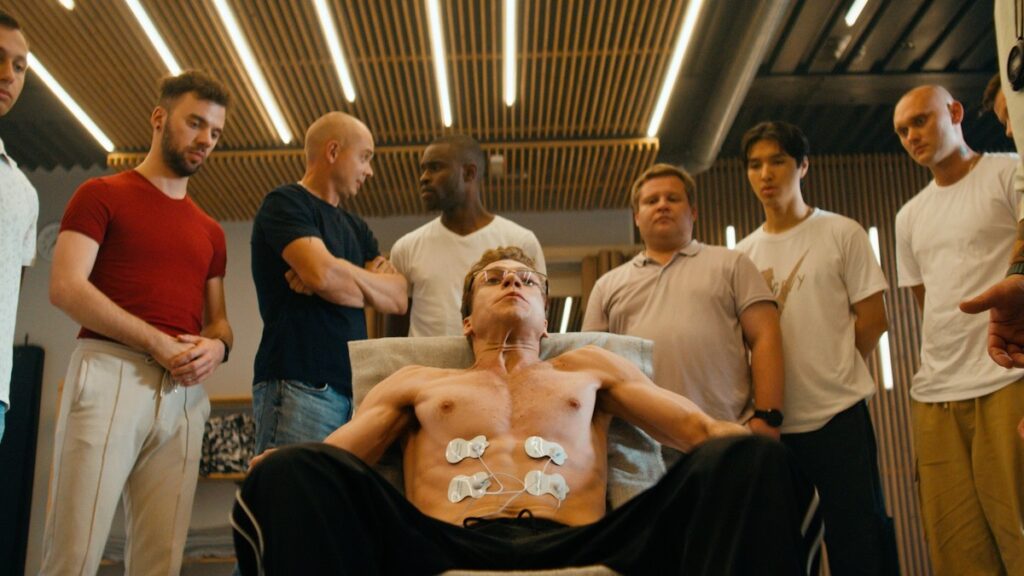
Suvorov is still a director of a different order, as was clear even from "Naughty," his previous film. Unlike his colleagues, he is capable of filming reality. Both at the beginning of the erotic thriller with Petrov and in the first half of "We Give Birth!," the same Russia is shown as in the films of domestic indie directors, the same as, say, in the comedies of Mestetsky. It's not Zvyagintsev, of course, but far from Andreasyan. Corruption, betrayal, poverty, the existence of simply bad people (which is usually denied in comedies of this kind) — all of this falls into Suvorov's lens, but he seems not to allow himself to work with the material.
"Naughty" and "We Give Birth!," despite all their differences, use the same plot scheme, both in terms of character development and in terms of gradually burning reality out of the story. The first similarity is perhaps obvious. In "Naughty," a girl involved in animal rights and activism encounters a seemingly destructive male figure — a businessman who doesn't care about animals. In their confrontation, they discover their similarities and ultimately, firstly, the man changes for the better, and secondly, the girl finds her patriarchal ideal.
In "We Give Birth!," careerist Anya, under the influence of an accidental pregnancy, changes, accepts traditional values, and the guy Dmitry — also initially a destructive figure — transforms similarly, infantilism gives way to determination, love for anime to cooperation with the Chinese (do the authors know that anime is part of Japanese culture? Not sure). The confrontation with men and accepting them as the embodiment of life success — the core of both films essentially boils down to this.
The second similarity — that both films are built on a gradual rejection of reality — is perhaps less obvious but even more important. This is a structural similarity. The plot setup in both films occurs in the real world — with real problems, pain, people — but the further the narrative goes, the more the characters move away from life, the action transitions into the realm of fantasy. The quite plausible interiors of the characters' apartments are replaced by apartments of Andreasyan's aggressive "home comfort." Dmitry, having transformed from a simpleton into a successful person, begins to speak like a robot. The mythical Chinese partners, for whose advertisement it feels everything was filmed, provide the characters with a bright future, completely detached from Russian reality.
Many domestic films — whether Andreasyan's comedies or the fairy tales that have flooded the release — immediately choose a fictional world as the setting. Director Suvorov, however, is a more subtle and more frightening escapist: the endings of his films are still advertising brochures for the ministries that funded them, but he arrives at them by first showing living characters and then gradually draining all human traits from them.
"We Give Birth!" is structurally similar to a classic story of a journey to a magical land — like the Irish "Voyage of Bran," "The Wonderful Wizard of Oz," or "The Chronicles of Narnia" — except that from Narnia, as from Oz, the characters have to return one way or another. The film, however, promises that there will be no need to return, that in the fake world of Chinese partners and obsessively cozy apartments, one can settle forever. But then the credits roll, the illusion shatters, and anyone who believed the promises of domestic cinema is in for a surprise.
Comments
0No comments yet.
Sign in to join the discussion.