
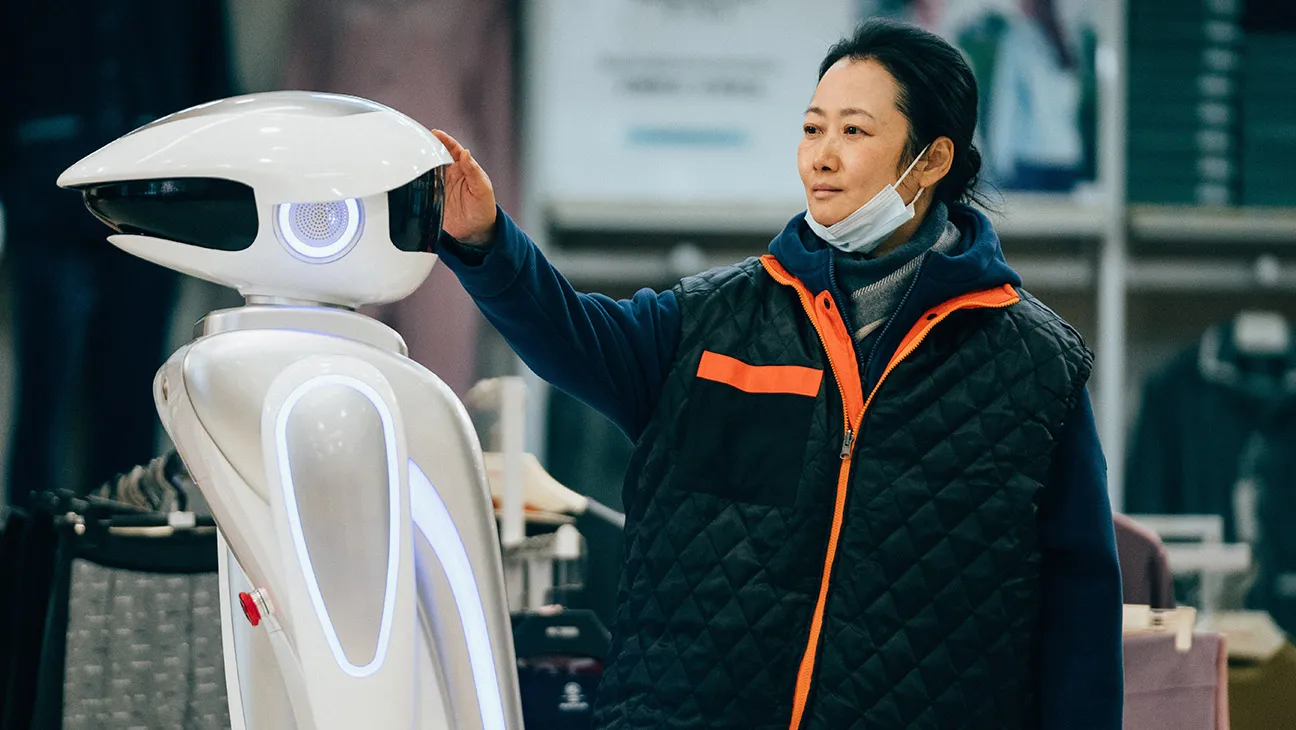
We talk about the film 'Caught by the Tides', a participant in the main competition program of the 2024 Cannes Film Festival, which draws a line under the sixth generation of directors of the PRC.
There is a common belief that modern China has no culture, only an all-consuming daily life. More precisely, culture exists, but it is trapped in the snares of the past: the tetralogy of classical novels, Pingju opera, Ming dynasty hard porcelain. Cinema does not contradict this general conviction.
We are used to hearing about achievements, but we do not even think about China's role in the success of the island region. This is quite fair, given several crucial aspects of the formation of its unique industry, as well as its 'flickering' political status.
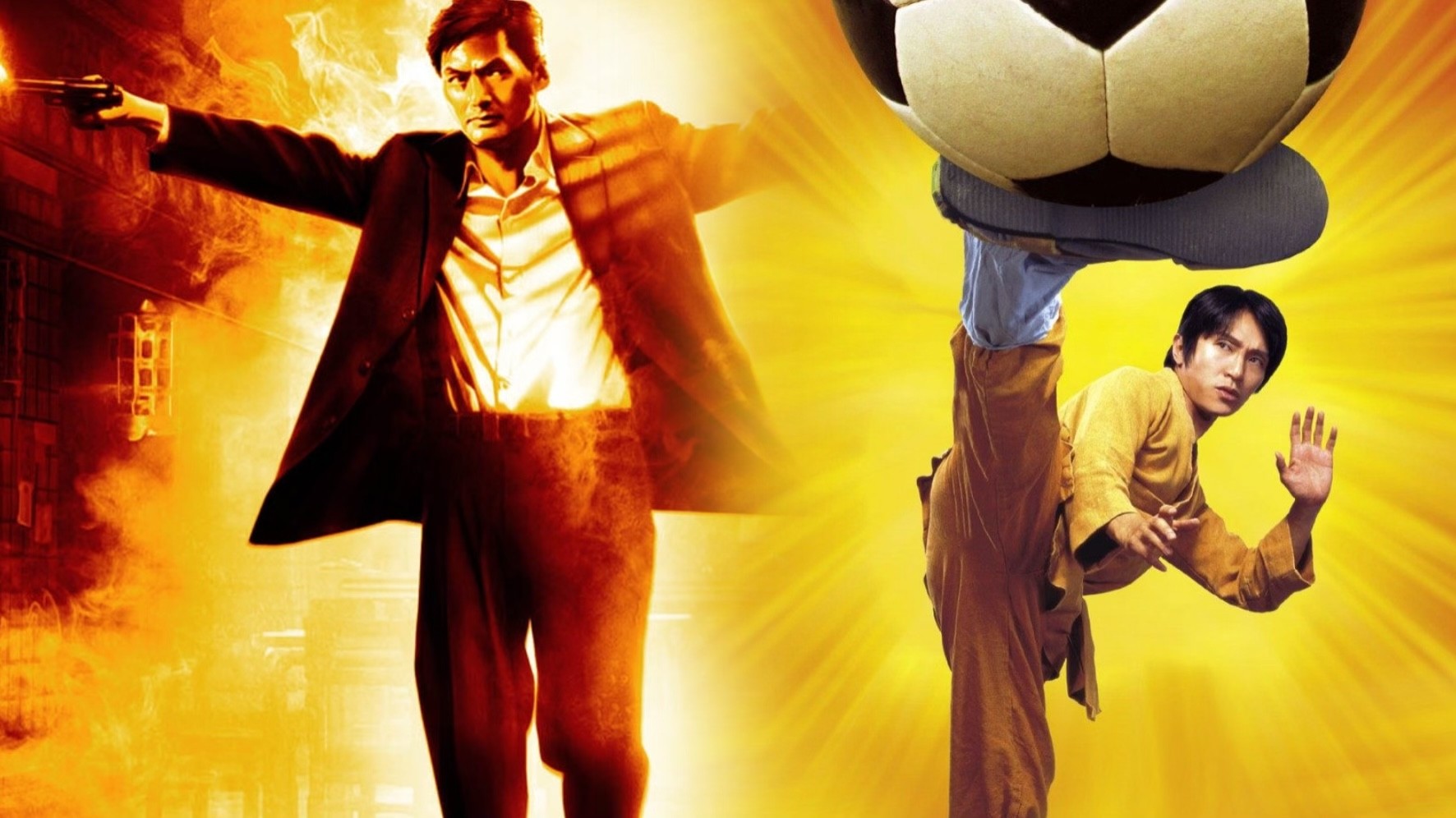
January 29 marks the Chinese New Year. In connection with this event, our team decided to recall Chinese films that delighted, surprised, amused us, and generally stuck in our souls.
Open material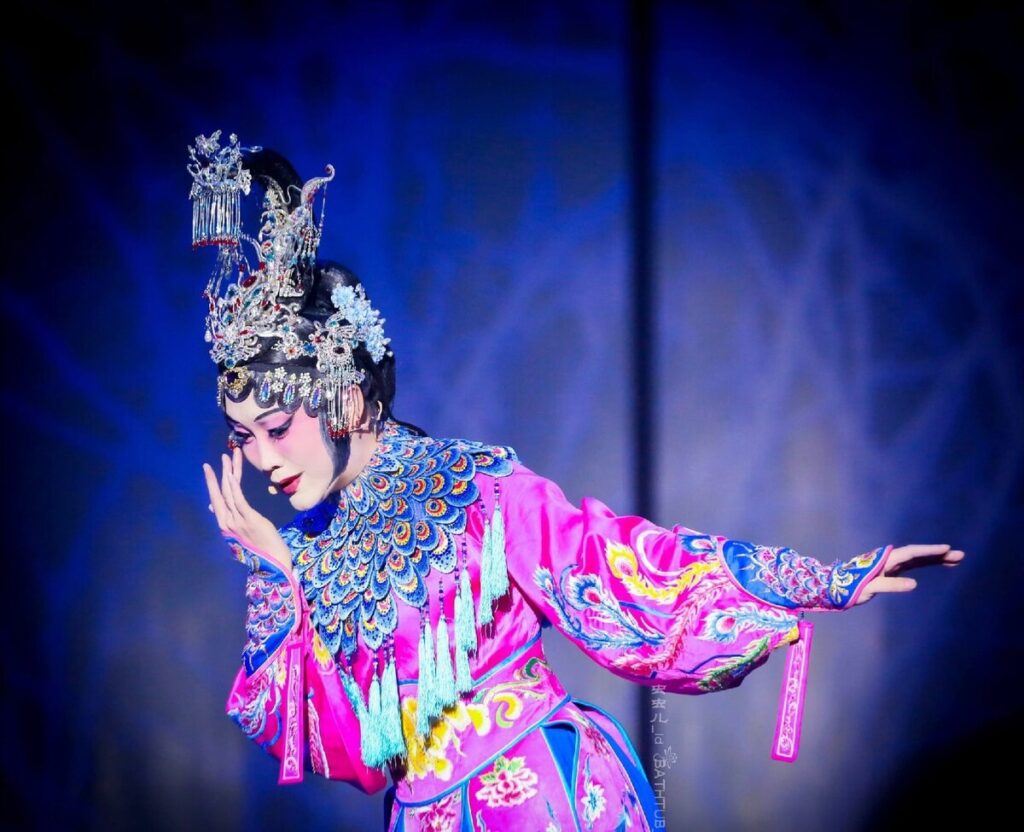
Islands of Luck and Frightening Modernity
Hong Kong film production owes its cultural code to British colonizers, who launched a trend toward liberalization of mass culture and introduced the European genre system. The Taiwanese market, on the other hand, breathed the ozone freshness of auteur cinema, in particular, the Piedmont heat and Roman heat of Italian neorealism.
For mainland China, everything was supposed to change with the emergence of the fifth generation of directors. The ashes of Mao's Cultural Revolution had cooled, the economy stabilized, censorship yawned and stretched in its century-old stupor, but kept one eye alert. The new creative intelligentsia feared its attention.
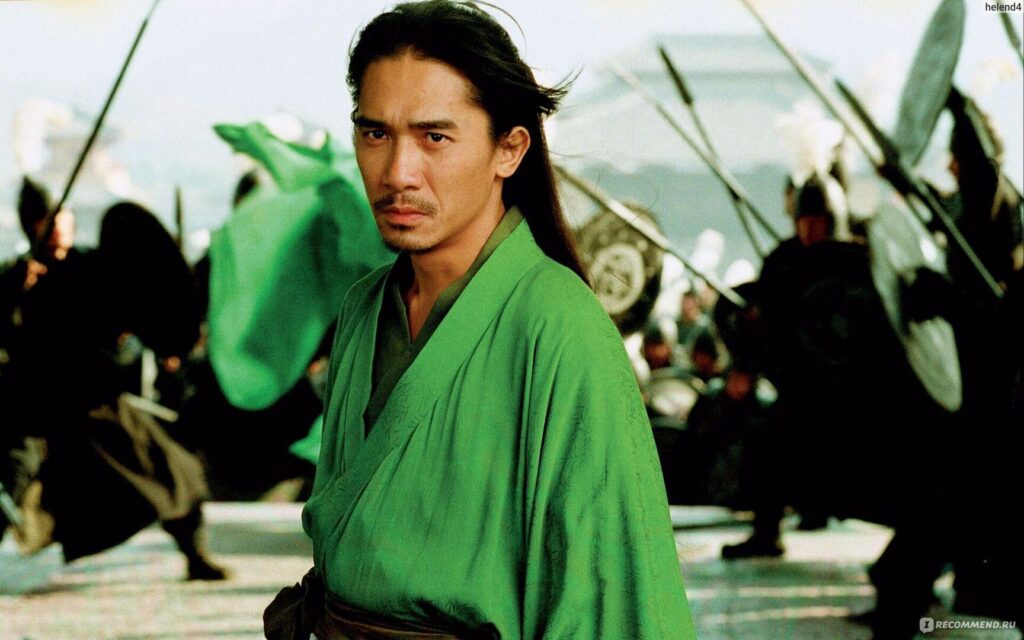
Zhang Yimou, Chen Kaige and Zhang Junzhao studied under VGIK professors, presented at major European festivals, but, unfortunately, drowned in passeistic attempts to reshape the past due to the Chinese fear of the present. Costume war dramas ('Hero', 'Curse of the Golden Flower'), palace intrigues ('The Emperor and the Assassin'), opera theater ('Farewell My Concubine') – films with similar symptoms appeared in other countries, but decades earlier and for a second round. Thus, Luchino Visconti made 'Senso' only after paying his debt to the current era in 'Ossessione', a similar story happened with Kurosawa and 'Seven Samurai'.
Between Center and North
The sixth generation used the new social order quite differently, in particular, two directors from the northern province of Shanxi – Wang Bing and our hero Jia Zhangke. They are not interested in the European tradition, unlike their 'central' colleagues (Lou Ye, Wang Xiaoshuai), they do not clothe their statements in genre, they neglect talk of the distant past.
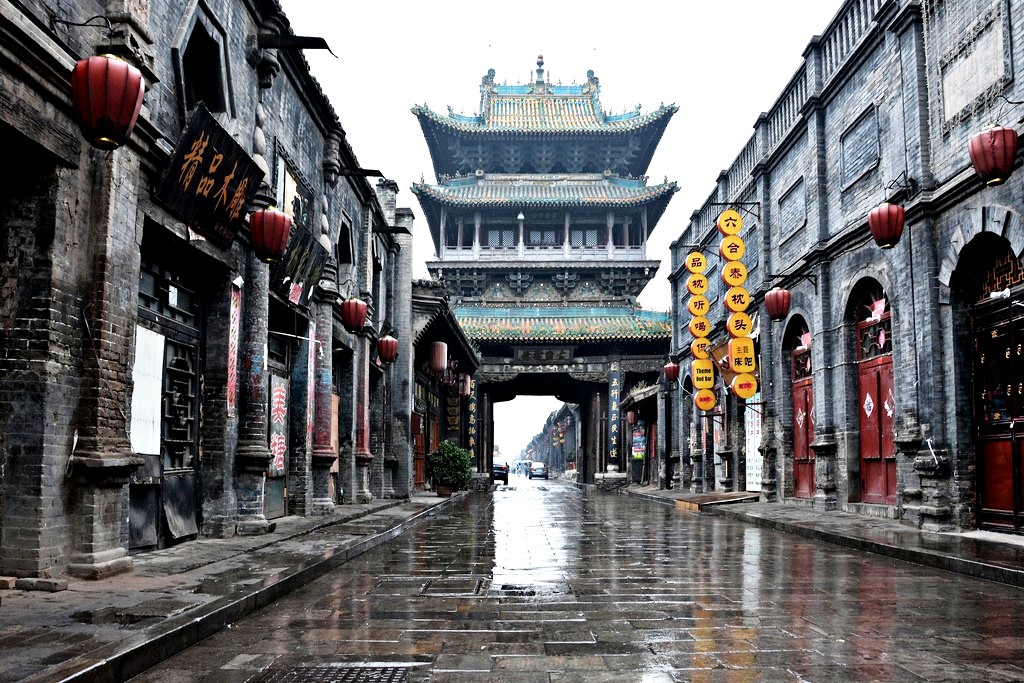
All films by Jia Zhangke are about the 90s and 00s, rarely about the 70s, in which his early childhood passed. The set of locations is also limited. A small share of attention goes to Beijing, more often to Fengjie County, the aforementioned Shanxi Province, the small by Chinese standards urban district of Jinzhong and its ancient part Pingyao.
However, the topos of China's administrative center is very important, because the characters of his films constantly migrate in search of a better life. And this is not an author's whim: the dramatic situation arises as a consequence of Chinese economic policy. The restructuring of the planned system included the creation of special economically open zones, to which state and foreign subsidies were directed, as a result of which the standard of living in the Celestial Empire fluctuated from province to province, reminiscent of the limestone terraces of Pamukkale.
Meeting for Parting
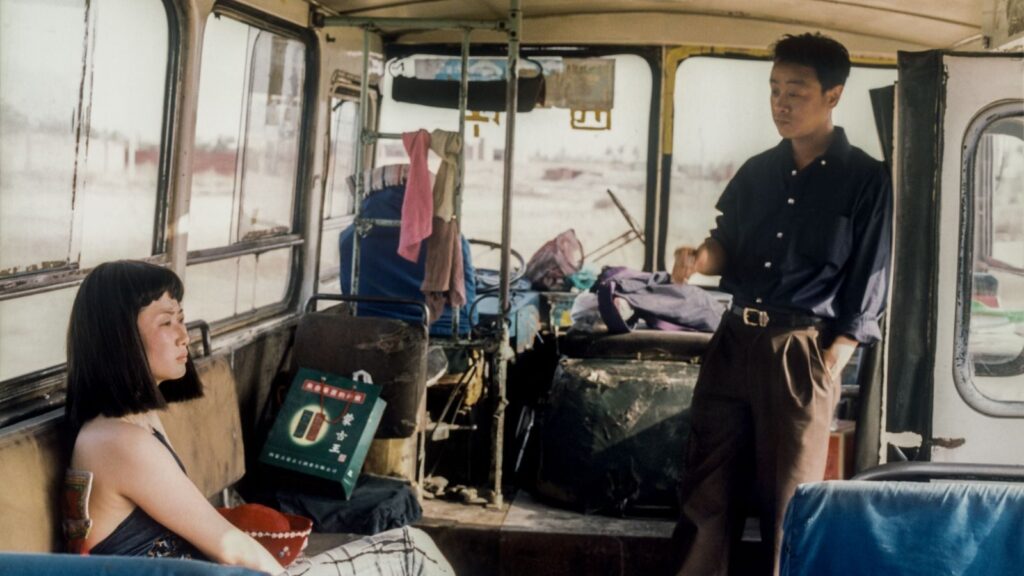
Spatial movements do not happen instantaneously, so in Zhangke's works time is not constituted into a linear narrative, but turns into 'time-image' – a purely cinematic substance. A leap through the years can take several camera passes, and sometimes even one song (as in 'Platform') or a visual metaphor. Both the first and second directly relate to 'Caught by the Tides'.
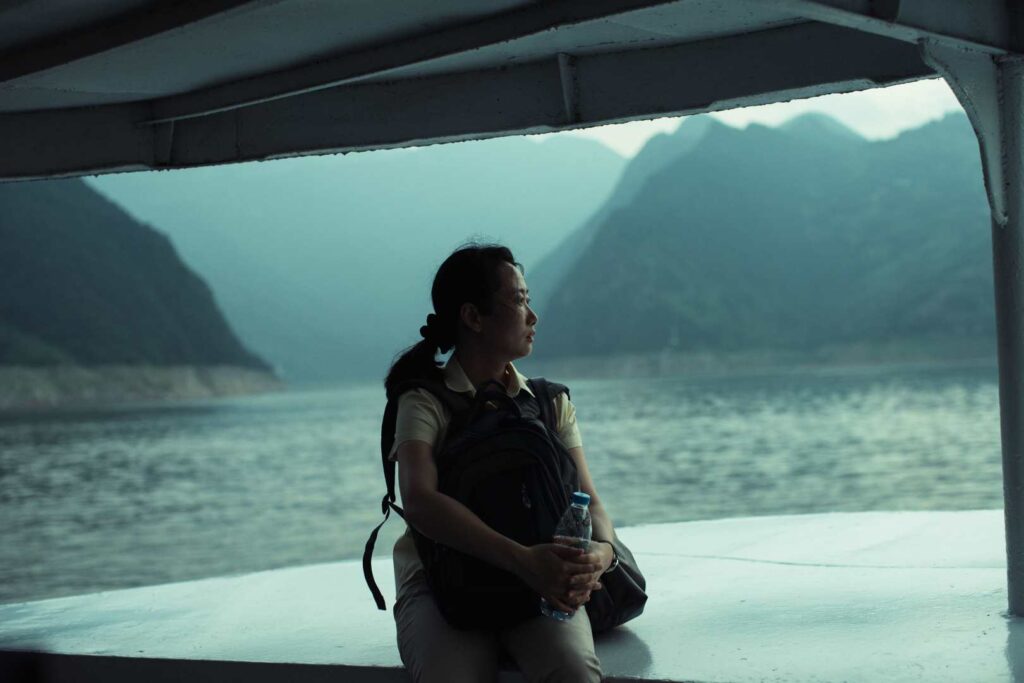
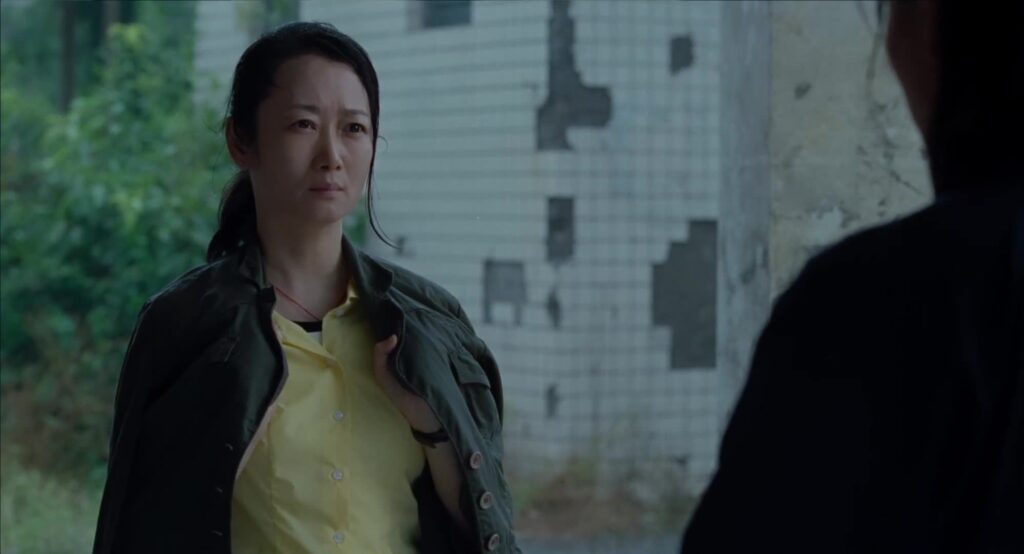
To understand what the new film by the Chinese master is, you don't need to follow the plot. It is typical for Zhangke – the fates of people undergo dramatic changes as a result of the modernization of the entire society. A couple in love, played by Zhao Tao (Zhangke's wife) and Li Zhubin, parts in the 00s, only to meet by chance in the 20s – the height of the pandemic (Zhangke is always tightly fused with current events in his home country).
Trembling Thread of Sound
And everything seems to be in its place. Zhao Tao dances again (the director discovered her precisely as a ballerina), but this time to the pop music of the turn of the millennium – she, like the film, is ready to make concessions to time and swap a ballet tutu for a crop top. The radio station and megaphones again blare about rising water levels in Shanxi, and in general sound becomes important again. Critics' fears were not confirmed, because Jia did not forget about the audio design of communist China and its echoes: party messages, ringtones, cheap operas, karaoke. The handheld camera is in place, and with it the ability to find random sounds.
Everything is so familiar that in the frame, as in previous works, walls are demolished and autochthonous workers fuss in cement dust. Everything is so familiar, because 'Caught by the Tides' is a re-edit of 'Unknown Pleasures' and 'Still Life', as well as footage shot but not used over 22 years of the director's career.
On the one hand, the decision is clearly dictated by COVID restrictions, so new viewers may find the film unnecessary and even hackneyed, which is completely untrue. Those lucky enough to be familiar with early Zhangke will rather be surprised by the artistic method used in 'Caught by the Tides'.
Each Time Anew
Jia Zhangke is, first and foremost, a practicing sociologist. Each 'field trip' with this approach cannot be accompanied by the triumph of discovery, because the director is not a falsifier or a fantasist. Besides sociology, he is of course interested in cinema. With unflagging zeal, he searches for a method, an idea, a rhyme, a word in each new work, and always finds them.
Even in his least successful films, we note this striving. Thus, in the film 'Ash Is Purest White', Zhangke plays out a crime drama, winking at the wuxia genre, all to denote the volume of the theoretical part of his 'research', enriching human crowds with bright portrait sketches.
'Caught by the Tides' is even more of a gift for targeted study of the creative process. Over 22 years (from 2001 to 2023), Jia worked with two cinematographers (the ubiquitous Eric Gautier and the impressionist Yu Lik-wai), changed several image formats, reshaped the sound fabric of films, all to establish himself in the world of perestroika Chinese chaos (and become related to Linklater).
Epoch = Creation = Author
During amateur smartphone shooting, a sweaty finger often slips off the edge of the device and covers the lens with its pinkness. The use of footage from early works alongside chronicles of modern China is a reminder that the epoch had its chronicler, whom history also did not ignore. The filmed material is irrefutable proof that even behind the 'automatic writing' of documentary lies a personality who has the right to interpret and tell. Is this not what critics were looking for? Is this not the real challenge to the monumental state system and the creeping tiger of the ghostly Mao?
'Caught by the Tides' is a declaration of love, but not to the epoch, but to one's place in it. Even the title contains a value judgment, unlike 'Still Life' or 'Platform', because a romantic is a qualitative content of a person.
The cold of the 20s, the alienation of a long journey through time, looks all the more eloquent. It is funny and sad that Zhangke completely abandoned surrealism and futurism – the bizarre robots of the 00s appear only on a TV screen, while in 'Still Life' aliens really nested in China in the guise of an administrative building. Now the future has replaced fantasies in the form of a smooth robot in a shopping mall.
And at the same time, 'Caught by the Tides' does not criticize modernity. Jia Zhangke has never criticized anyone. The film only allows itself to be nostalgic, and during nostalgia, sometimes you don't notice how indignation accidentally escapes from your chest.
Zhangke lived through and comprehended the 70s, when his family was exiled to the periphery, plunged headlong into the turbulent 90s and 00s, and perhaps his directorial prowess will be enough for the 20s as well. And if not, he and his company Xstream Pictures are already engaged in nurturing a potentially new, seventh generation of Chinese cinema.
Trailer:
Comments
0No comments yet.
Sign in to join the discussion.