
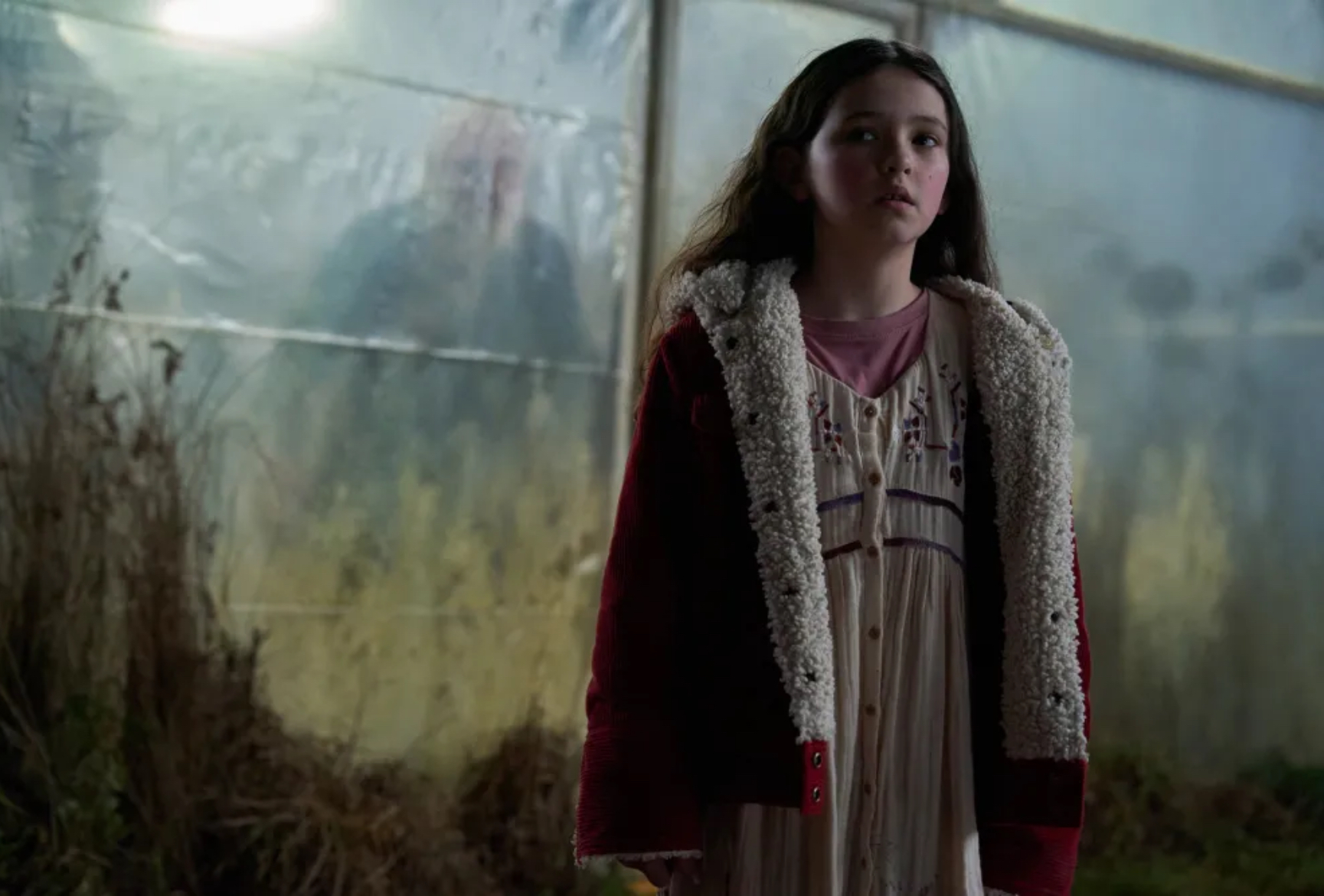
'Wolf Man,' a new horror film from the director of the critically acclaimed 'The Invisible Man,' has been released digitally. About what came of yet another attempt to venture into werewolf territory—in our review.
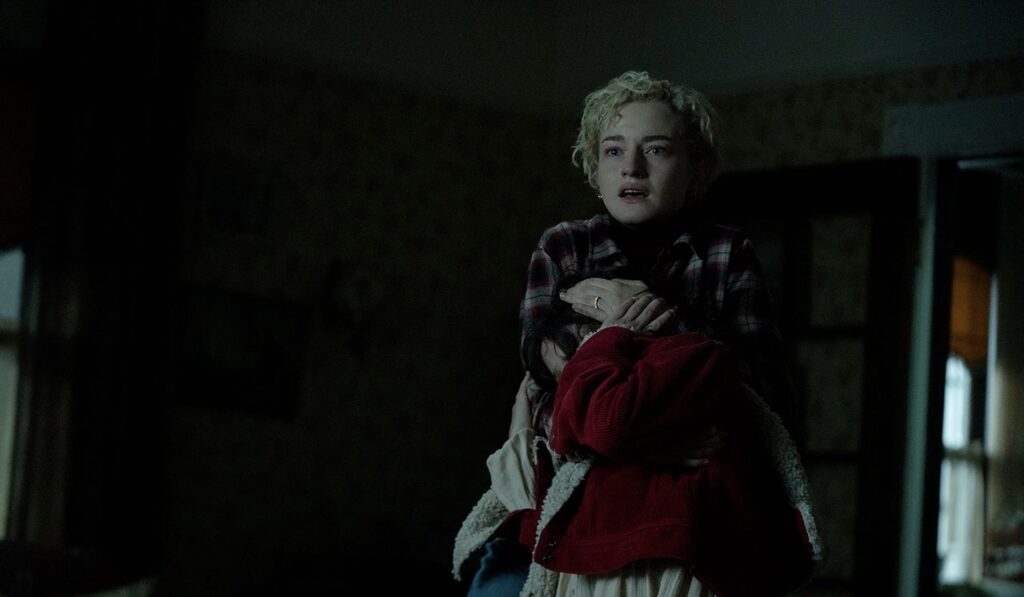
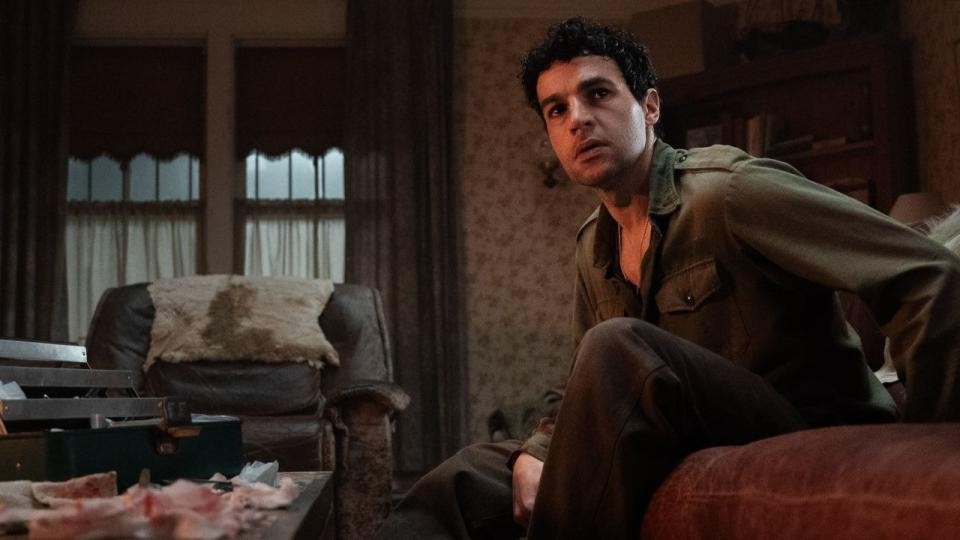
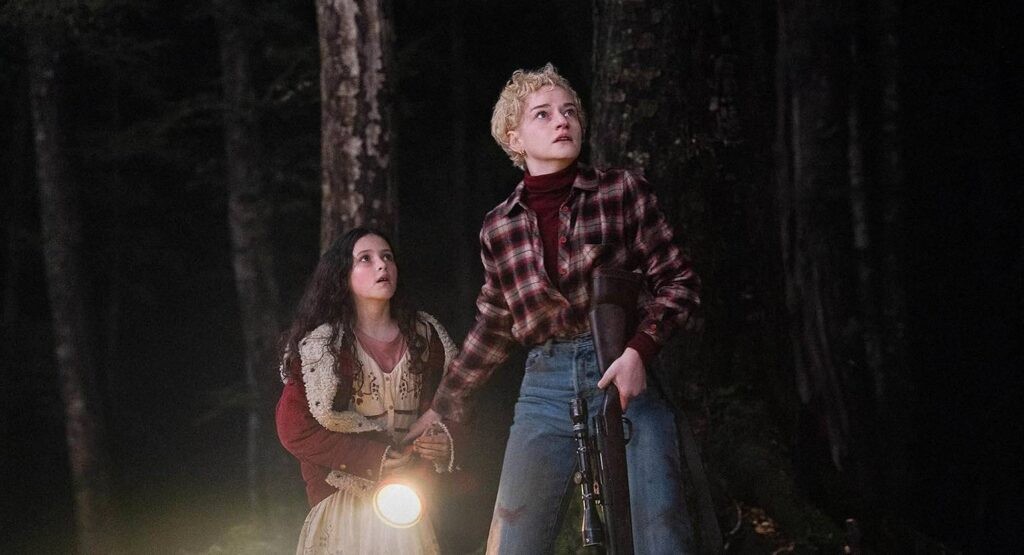
According to the plot of the film 'Wolf Man', Blake (Christopher Abbott) receives news that his father, who disappeared many years ago in the forests of Oregon, has finally been declared dead. He decides to travel with his family to the hunting lodge where he spent his childhood. On the way, they get into an accident, and the man is bitten by an unknown creature. Fleeing the scene of the crash, he, along with his wife Charlotte (Julia Garner) and daughter Ginger (Matilda Firth), locks himself in a dilapidated dwelling. Soon Blake realizes that he has been infected with the so-called 'mountain fever,' which local tribes called 'the face of the wolf.'
In 2004, two graduates of a Melbourne film school struggled to find funding to turn their diploma work into a full-length horror film. Thus, the 'Saw' franchise was born, achieving commercial success and audience love. Subsequently, James Wan, the film's director, would launch the 'Insidious' and 'The Conjuring' film series and become a world-renowned horror filmmaker and producer. But Leigh Whannell, the staff screenwriter for 'Saw' and 'Insidious,' had to wait much longer for his personal 'star hour' as a director.
He only came into the spotlight in 2018 when the sci-fi action film 'Upgrade' was released. The film was so often compared to 'Venom,' naturally not in the latter's favor, that it became a meme and a byword. Whannell's next project was the techno-thriller 'The Invisible Man,' where the classic story by H.G. Wells was modified under the influence of the #MeToo movement. Science fiction with a topical commentary not only pleased critics but also performed well at the box office. And if Covid-19 hadn't hit theaters, that sum could have been even larger.
His new work—a remake of the classic horror film George Waggner's 'Wolf Man'—was initially supposed to be part of Universal's 'Dark Universe,' but the studio later abandoned those plans. However, even considering the fact that the film grew into an independent work, it did not escape the fate of all previous attempts to launch this franchise.
The key problem with the film lies in the fact that Leigh Whannell could not decide what he was making—a genre entertainment or a meaning-laden bait for critics. In chasing two hares, 'Wolf Man' catches neither. Both audiences and the press did not appreciate the film. The trick the director pulled off five years ago in 'The Invisible Man' did not work a second time.
The film can be interpreted in different ways. In this regard, it cannot be called completely uninteresting. Christopher Abbott's character embodies 'new masculinity.' Blake is a reflective father and husband who does not hide his feelings, enjoys doing household chores, and spending time with his daughter. Above all, he fears becoming like his father, who was known for his rough temper and military approach to upbringing. By a cruel twist of fate, he will have to become just that to protect his loved ones.
Julia Garner's character, in turn, is the complete opposite of her vulnerable stay-at-home husband. She prioritizes work, while family is pushed to the background. Finding herself in extreme conditions where her child's life is at stake, the woman is forced to tap into her maternal instinct.
It is unlikely that 'Wolf Man' is a call to return to the traditional role distribution where the man is the 'protector' and the woman is the 'keeper of the hearth.' At least, this motif does not align with the director's previous film, in which the main character escaped from domestic slavery. In fact, the wolf mutation metaphorically refers not to the awakening of masculinity, but to the manifestation of heredity, which Abbott's character feared so much.
The main intrigue of the film: will Blake be able to preserve the individual traits of his personality and not become an exact copy of his father? Whannell's dialectical attitude toward the position of men in the modern world opens up a wide scope for various interpretations. So why did the film generally not appeal to Western journalists? The fact is that critics are also viewers who cannot be fed with meanings alone.
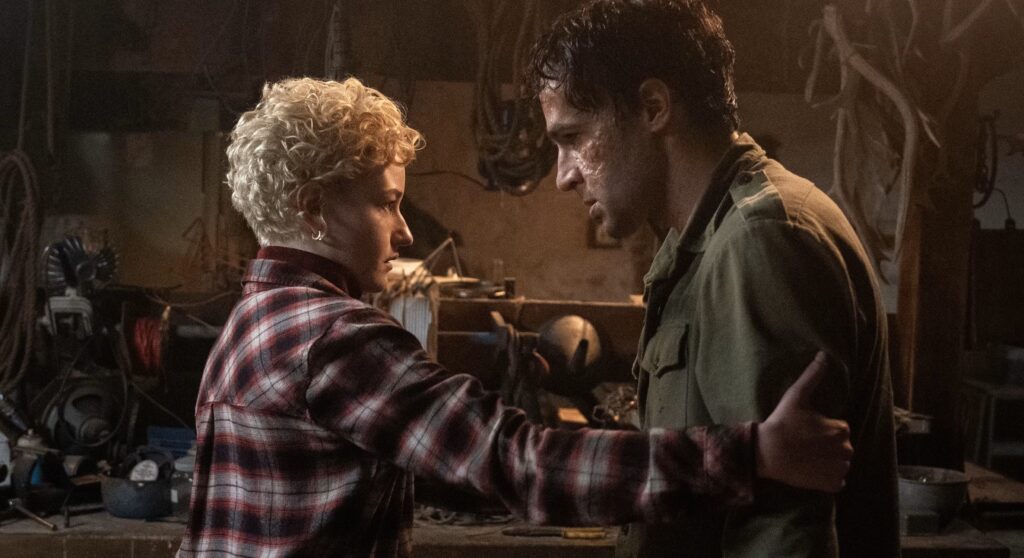
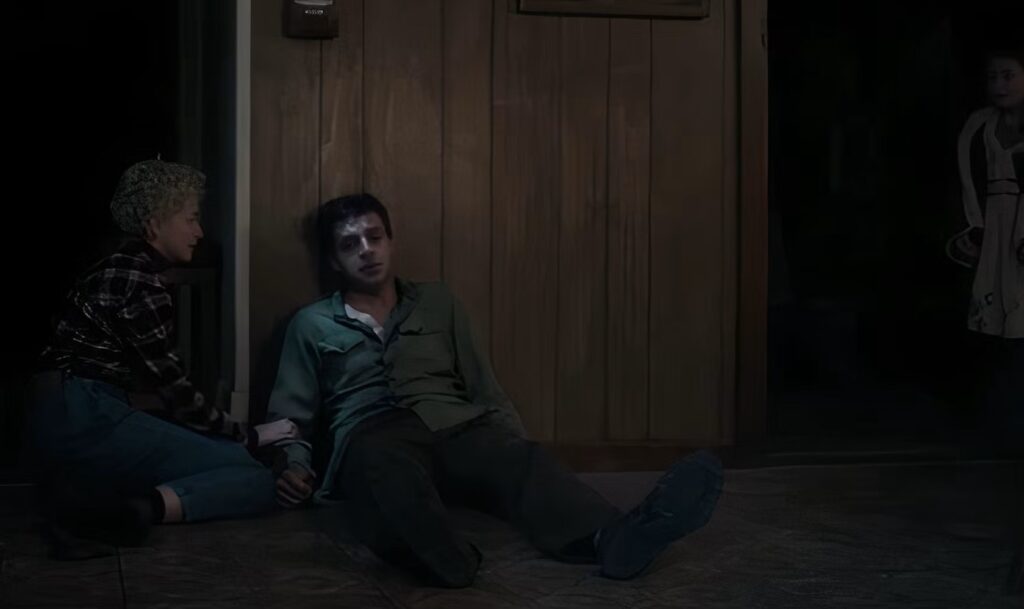
Unfortunately, 'Wolf Man' is completely inadequate as a horror film. Of course, one can praise the new release for its acting and decent makeup, but its merits end there. The only truly tense and scary part is the prologue of the story, while the main action feels bland and formulaic. Two-thirds of the film consist of a chase in pitch darkness with a barely noticeable light source.
Some scenes in the film are nothing less than a reference to Malevich's 'Black Square,' because it becomes so difficult to see anything in this gloom that you could howl like a wolf. In light of what Leigh has filmed before, the sparse visual palette of the new work is perhaps the biggest surprise of the latter. 'Wolf Man' has nothing else to surprise you, the audience, and especially the director's fans.
One hopes that this incoherent passage about family values and werewolf men will not break the director's career, and that he will not leave Hollywood Hill with a 'wolf ticket.' Against the backdrop of the film's box office failure, the news that Universal will allocate money for Robert Eggers' 'Werewolf' sounds like a bitter mockery of the once-promising Whannell.
Trailer:
Comments
0No comments yet.
Sign in to join the discussion.