
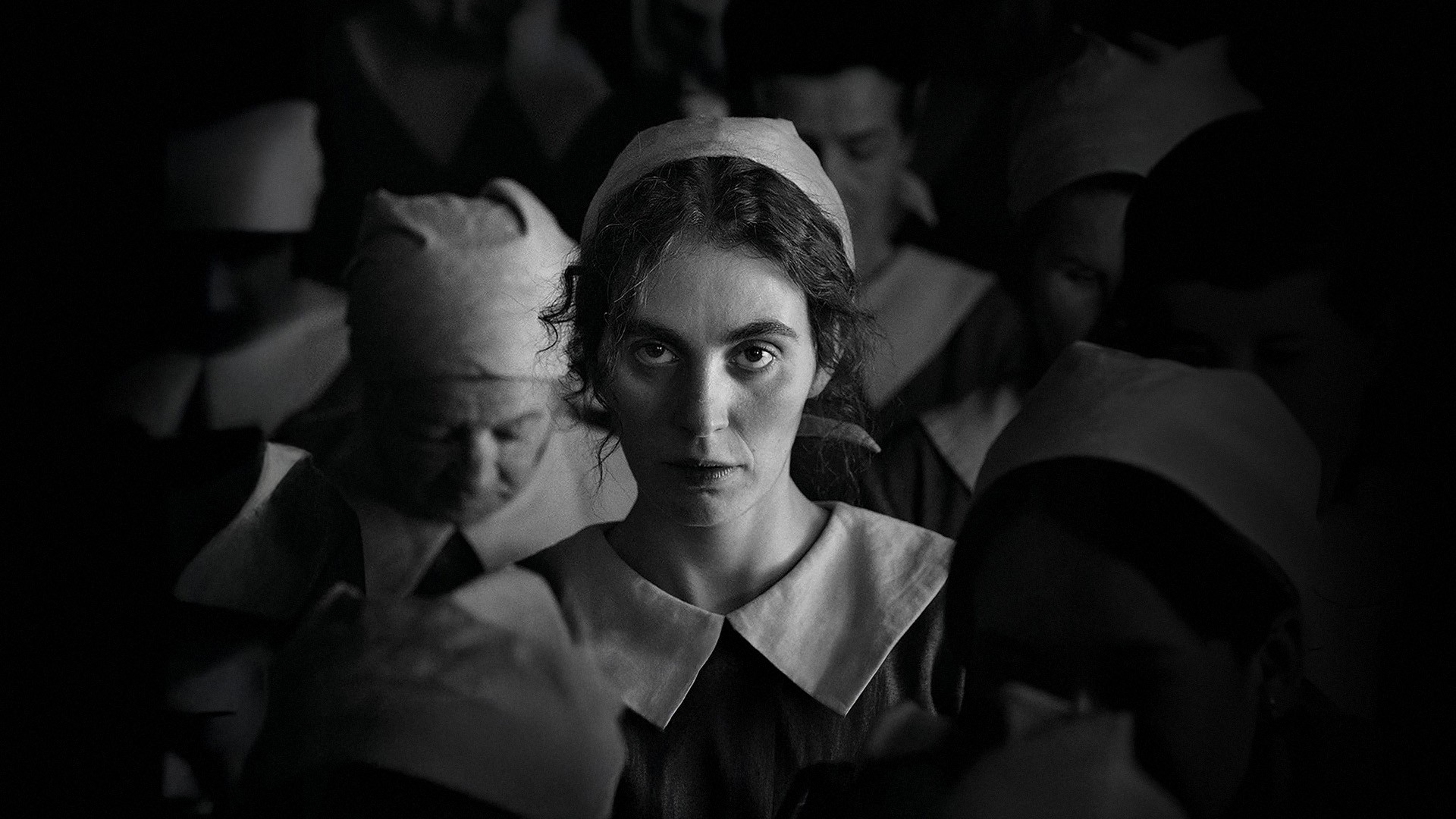
We tell you about the revelation of the 2024 Cannes Festival. The black-and-white thriller 'The Girl with the Needle' by Magnus von Horn, a promising director of recent years.
Within the cross-border paradigm of the modern world, situations arise where a person cannot identify themselves with just one country, a specific mentality, or a limited circle of people. Some of us even prefer to be spiritual 'apatrides' and cherish our 'inner Mongolia' rather than search for a home. Directors and even their films become prisoners of this as well.
No Way Home
Having multiple 'citizenships' is common for cinema. As a rule, this is related to distribution channels. For example, 'The Apprentice' by Ali Abbasi, presented in the main program of the 2024 Cannes Film Festival, was a 'child' of co-production between four countries (which often happens with independent films) under the direction of an Iranian-born director, but aesthetically and thematically it was perceived as a purely American product.
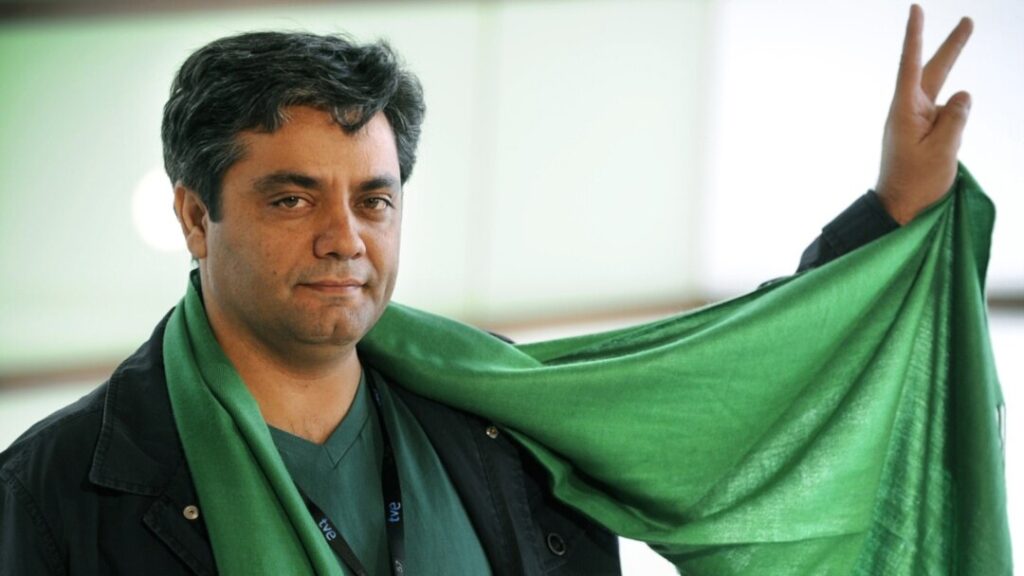
A more winding path was taken by the film 'The Seed of the Sacred Fig' by Mohammad Rasoulof. It was created by an Iranian film crew with an Iranian cast on the territory of former Persia, but Rasoulof ended up on a 'hit list' and was forced to flee his home country. After that, the film fell into the hands of Franco-German distributors and ceased to be Iranian.
Danish-Polish 'Consensus'
The film 'The Girl with the Needle' differs from the above examples by a unique interweaving of cultural narratives. In the 'country of production' column, only Denmark is modestly listed, which is not surprising – the film was created based on the crimes of a Danish murderer in the Danish Kingdom with money from Nordisk Film. And yet, this is not entirely Scandinavian cinema.
The director of the project was the Pole Magnus von Horn. More accurately, this is a Pole who forced himself to immerse himself in the horrifying consequences of World War I, which could not but affect the cinematography of the project.
Fateful Meeting
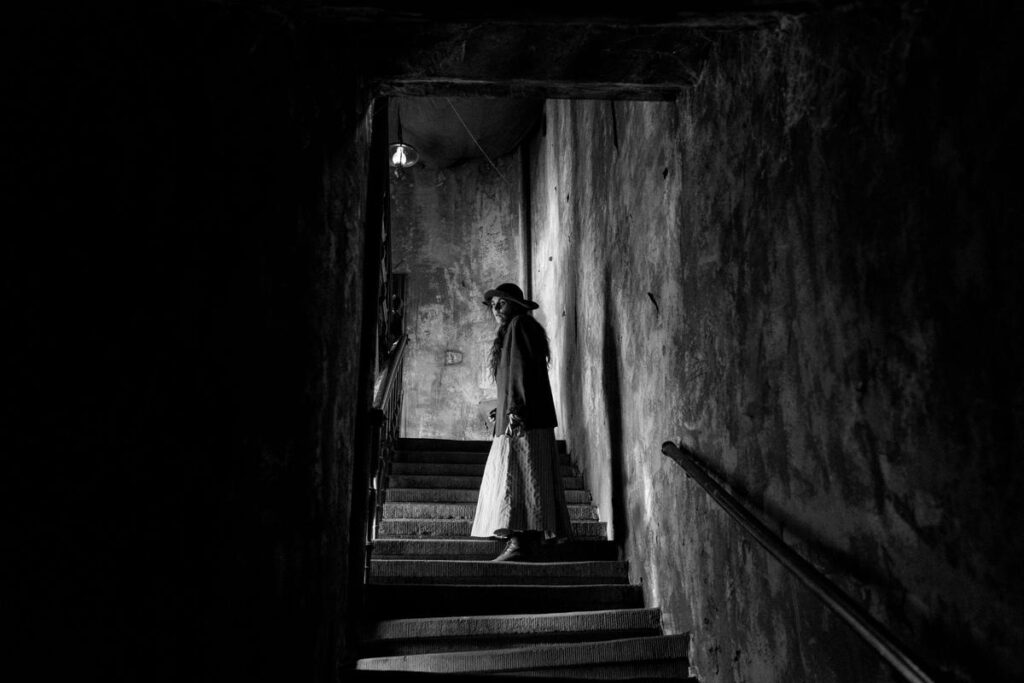
At the center of the plot is a young Danish woman, Karoline, who lost her husband in the war and works as a seamstress in a factory. Fate brings her together with the charismatic production manager Jørgen, with whom the relationship develops rapidly: unprotected sex in an alley, pregnancy, courtship and gifts, preparation for an engagement. Plans for personal life are trampled by Jørgen's authoritarian mother, as a result of which Karoline finds herself abandoned into an abyss of poverty with an unwanted child. In her shattered emotional state, she is found by Dagmar Overby – a baby killer.
Weak Men, Annoying Women
Alongside the classical film tradition (more on that later), 'The Girl with the Needle' also finds a rhyme with very recent projects. The infantile wimp Jørgen is both Ivan from 'Anora' and Sasha from 'Beanpole', while Karoline herself seems to exist within the motif organization of Sean Baker – she is the embodiment of rough and unwanted coexistence, like Halley from 'The Florida Project' or Mikey from 'Red Rocket'.
If you ask the director himself about his sources of inspiration, he will definitely mention 'The Lighthouse'. 'The Lighthouse', with its expressive manner of dialogue and what is called Helldunkel (a term by Lotte Eisner denoting a special play of light and shadow), certainly leans toward the cinematography of Béla Tarr ('The Man from London', 'The Curse'), while Tarr, obviously, was inspired by German film expressionism. This is where the journey of Polish trauma through the fragments of German artistic film documentation begins.
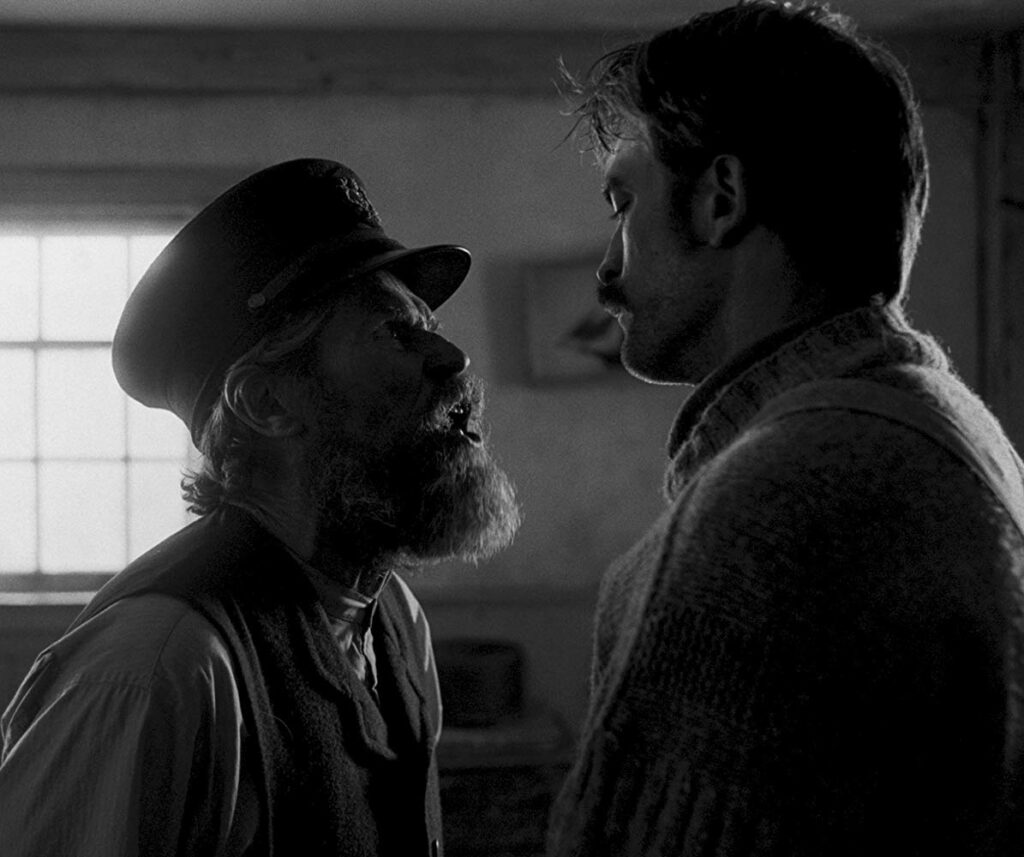
Inverted Picture
It is important to emphasize that 'The Girl with the Needle' is not film expressionism at all, because it borrows its elements but uses them differently. It would seem that the volume and depth of the image equally belong to both Horn's film and, for example, the films of Robert Wiene, but the German would never allow himself to neglect the background, while the Pole does so regularly. As if in defiance of tradition, he shrouds the industrial streets in a misty relief using a 75mm Leitz Hugo, saying that his tools are depth of field and perspective, not a theatricalized fake proscenium and pushed-back footlights.
Special mention should be made of the work of Jagna Dobesz, who gave some facades and interiors a Weimar cut: smooth monograms, the semicircular light of the cinema, factory wood striving to be iron. All this cannot be seen in the deliberately handcrafted, almost avant-garde sets of German cinema of the 1920s.
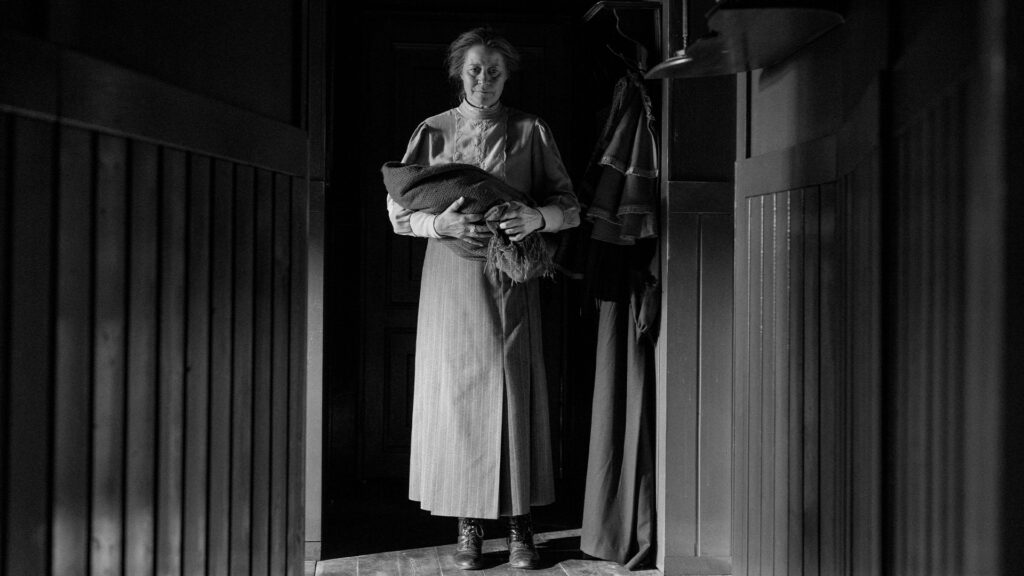
When we enter the murder house of Dagmar Overby, we encounter a semblance of Goethe's alchemical cabinet, where the ether – the hostess's favorite 'medicine' – has not yet dissipated. Need it be said that the trendsetter for German cinema was Abel Grau, who looked with interest at retorts and prima materia?
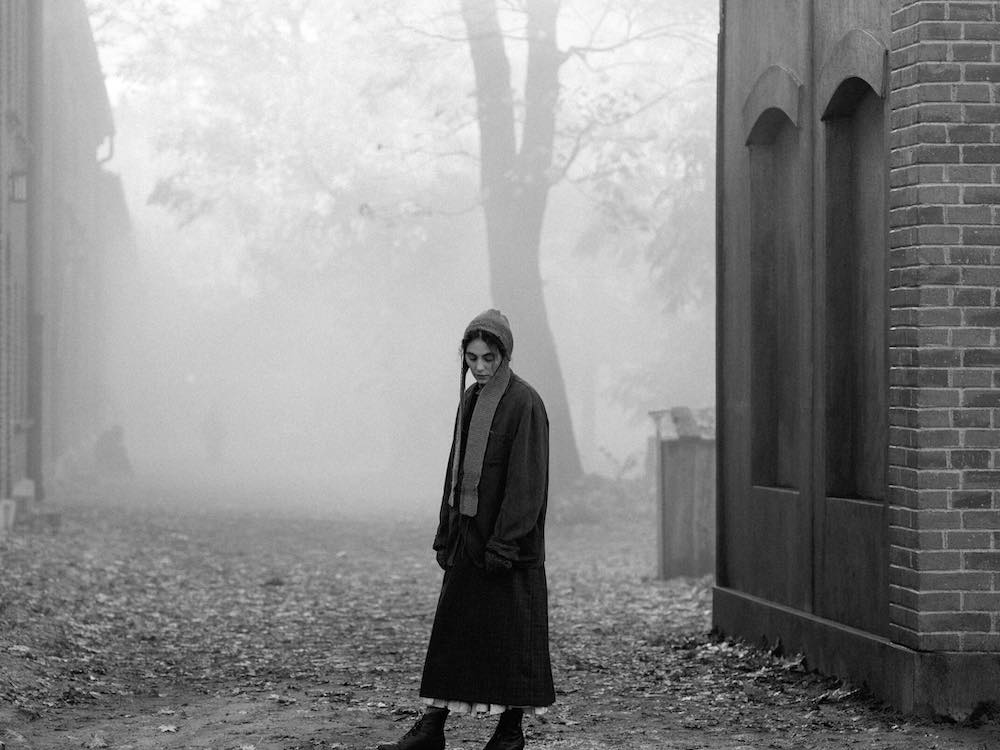
No One Is to Blame
To be honest, 'The Girl with the Needle' becomes a Danish film (only thematically) in those moments when the Orlak organ falls silent, and the smug grin of the industrialist Jørgen ceases to hint at the doppelgänger of Oskar Schindler. And even in these moments, the film does not speak words but mumbles into a peeling mustache. It does not want to acknowledge Denmark's collaboration with the NSDAP, so the only reminder is perhaps the image of a mutilated soldier – Karoline's returning husband. 'The Girl with the Needle' is a film about Germany, and Denmark has nothing to do with it. It is no coincidence that variations of the phrase 'a Danish soldier is an exception, the war is over and most of you were not participants' are uttered several times by different characters.
Thus, we get a cocktail of German-Polish reflection under a Danish umbrella, presented with Baconian skewed faces and drawn into the funnel of Buñuel's pupil.
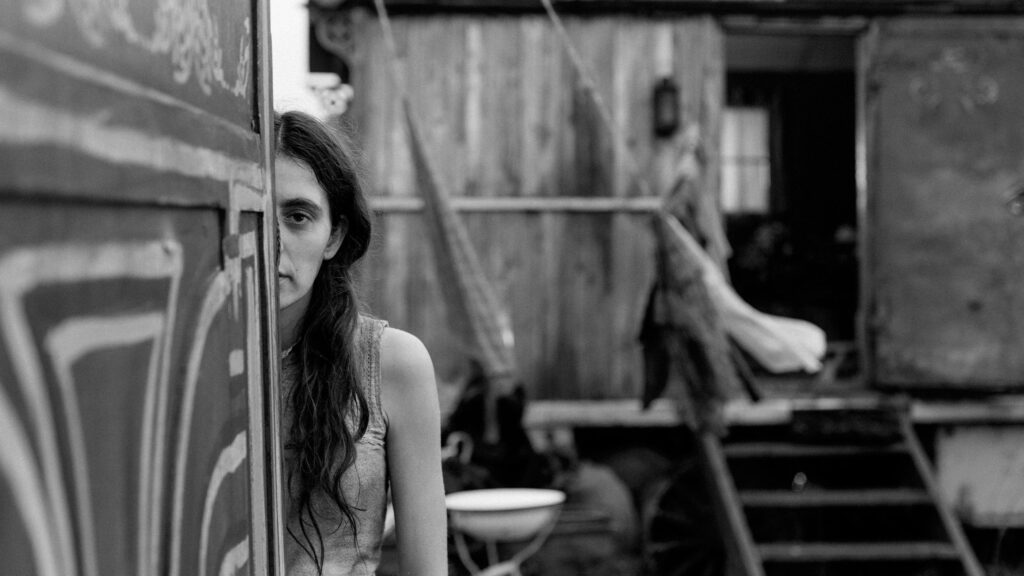
Path to the Black Wigwam
Delving into the referential appearance of 'The Girl with the Needle' is a great pleasure until you start thinking about the role of director Magnus von Horn. His previous film 'Sweat' is stylistically and narratively within a cannon shot of the 2024 work, so it is difficult to say whether the director is searching for his style or, on the contrary, not even trying to find it. All we can glean from his interview: he makes films about his fears. With such an authorial vision, Horn can be safely sent to the black wigwam, but one cannot fail to note the quality of his new film.
'The Girl with the Needle' is excellently written and brilliantly acted. Many critics question why the script surrogate – the girl Karoline – was brought to the forefront instead of devoting the entire runtime to the sinister Dagmar Overby, and this seems reasonable until we recall the array of antagonists in thrillers of recent years. Now it is not the embodiment of strength and madness, but a finely tuned string. Thus, Overby is not just a monster, but a monster in plain sight of the viewer, which deprives the narrative of intrigue but allows it to focus on characters rather than the confrontation between good and evil.
All that remains for us is to wait for Magnus von Horn's new film, for it must be defining. Whether the Pole will return to fighting abstract fears or continue to piece together an authorial 'body' is one of the questions posed by the Cannes Film Festival, which included 'The Girl with the Needle' in the main competition.
Trailer:
Comments
0No comments yet.
Sign in to join the discussion.