
An animated film about a dark cat traveling due to a global flood in a boat with other representatives of the animal world is no longer a dark horse of the awards season. Created using a free software resource, the story captures the hearts of viewer...
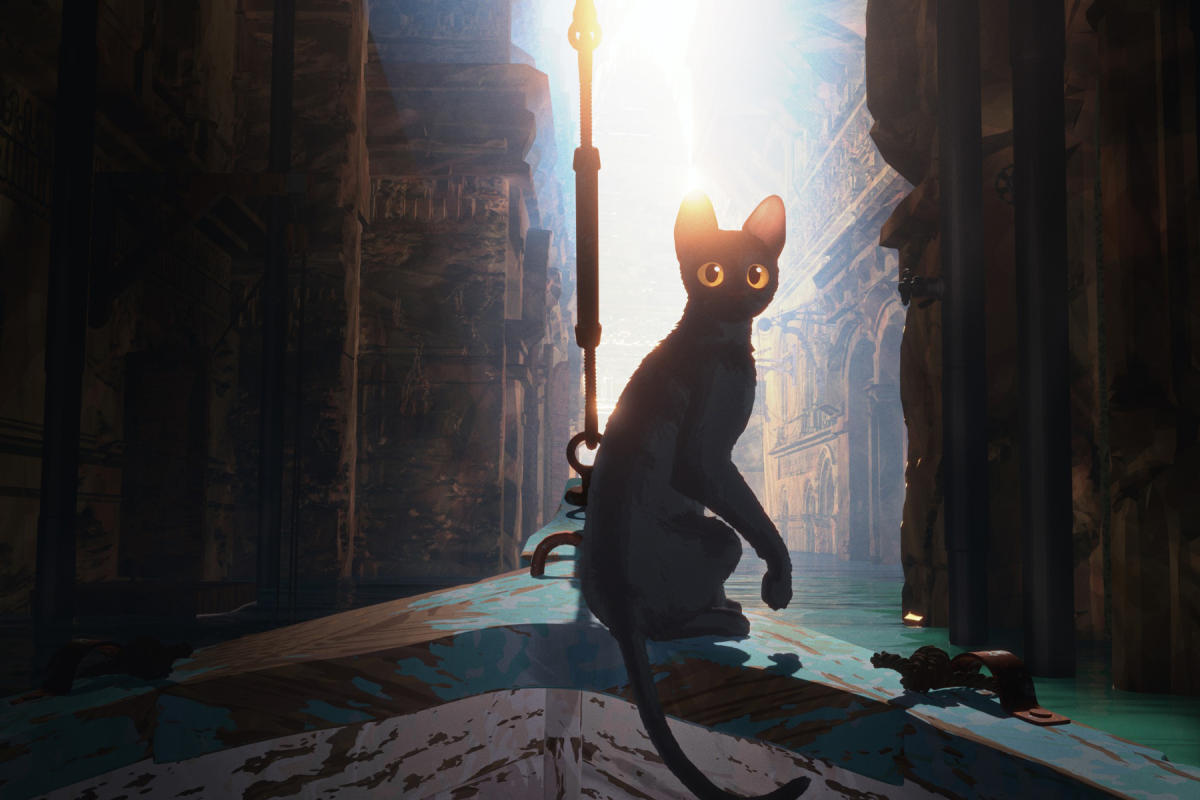
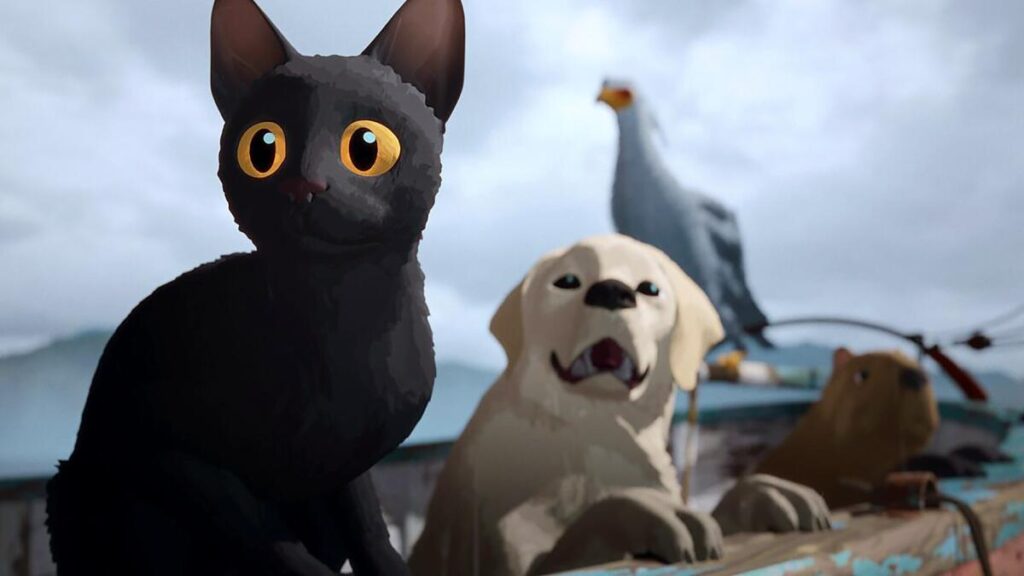
A world once inhabited by humans now retains only cultural images and man-made objects as a memory of them. Among these are multiple cat statues, and in an empty house, a black fluffy cat lives its feline life. The day passes monotonously and lazily: basking in the sun, glancing at its own reflection in the river, catching a fish, escaping from dogs. But everything changes when the usual solitude is disrupted by an uncontrollable flow of water that appears from nowhere, covering all the land. Now the cat’s only refuge is a boat, where an emotionally imperturbable capybara, a “good boy” Labrador, a kleptomaniac lemur, and a wise secretary bird also find salvation.
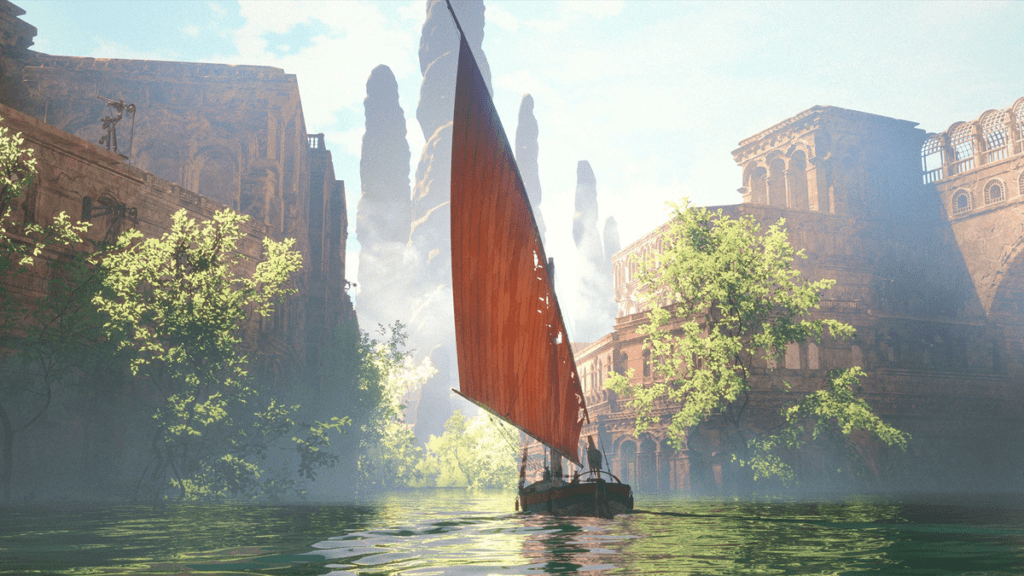
“Flow” by Latvian director Gints Zilbalodis presents a soft form of post-apocalypse, removing only humans from the equation of existence. You truly won’t encounter them in the film, and consequently, the laws accompanying human perception will also be blurred – a certain scientific component that would explain climate change, the reason for such a rapid flood, and even, simply, the setting, since specific points converge elements, buildings, and natural phenomena that seem to belong to different cultures and territorial segments.
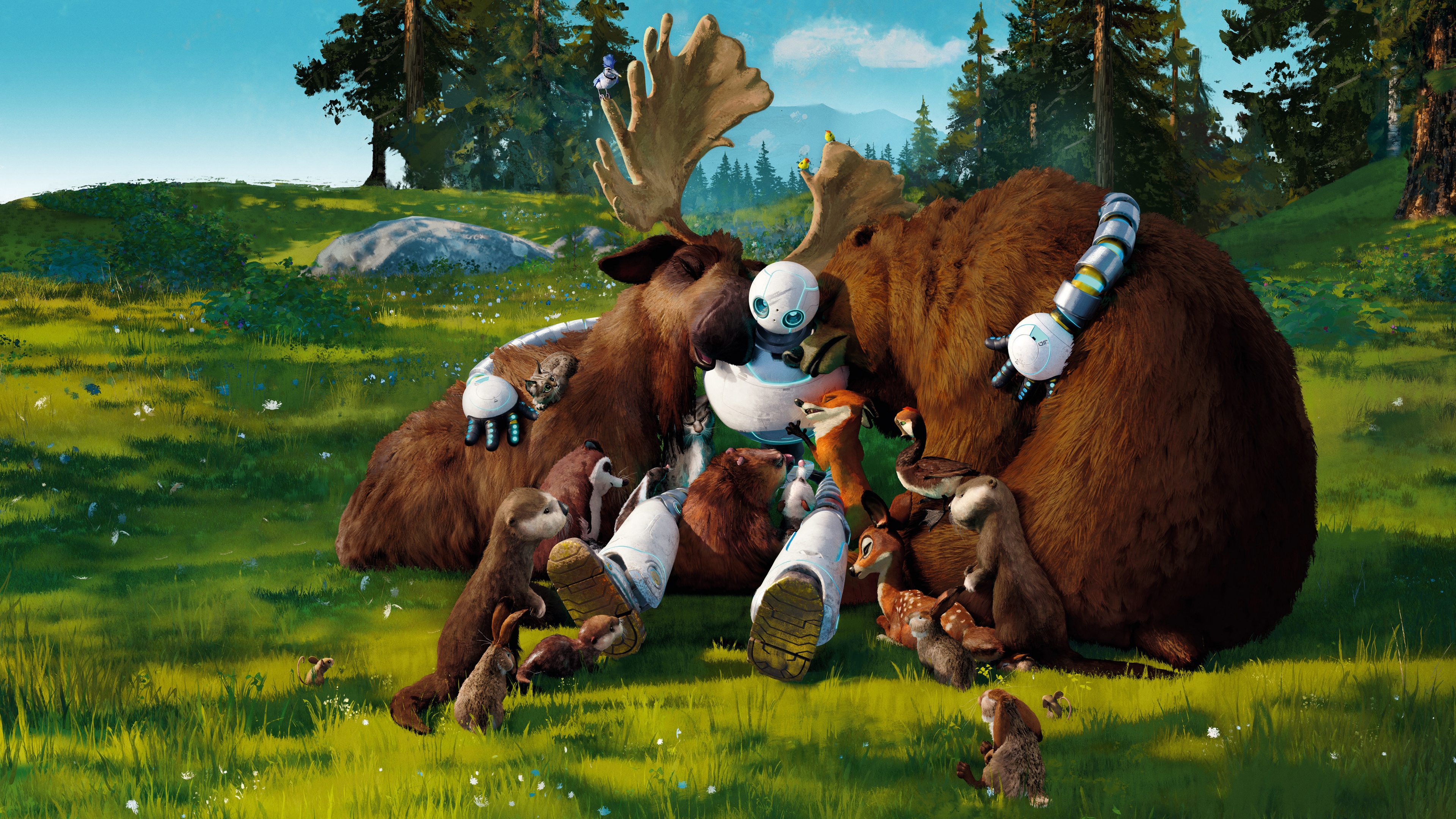
Animals perceive the world on a completely different level, and therefore the viewer will do the same. A similar trick was already performed by “The Wild Robot” (we wrote about it) by dropping the viewer onto an island inhabited only by animals, but the robot as an object and external embodiment of the creator still retained a sense of closeness to the human spirit.
On October 15, the new DreamWorks Animations animated film “The Wild Robot”, based on the fairy tale book of the same name by Peter Brown, was released digitally. We tell how this simple story tou
Open materialIn “Flow,” however, humans are the missing element, and oddly enough, not lost in vain. For the perception of the film, this creates the necessary feeling of imbalance. Yes, animals feel at ease, living according to their basic habits (with some characteristic exceptions), but the interaction of worlds we are accustomed to is presented only in a truncated version of animals interacting with human household items, and since the animals in the film are non-anthropomorphic, unlike their counterparts in “The Wild Robot,” one must perceive the film’s idea based on their now, apparently, higher form of communication.
This is precisely what distinguishes two films that are somewhat ideologically similar: one advanced conflict through logically sound and emotional dialogues, the other (lacking a robotic translator) relies on natural sounds and images. The issues will be built on interspecies friction, hissing, silent sniffing, and demonstrative turning of the fluffy rear toward the boat and companions in misfortune.
The cat will repeatedly find itself overboard, but even the floundering in the water directly conveys the development of the character arc (yes, even the cat has one). Forced baths caused by fear, anger, or stupidity, in the stage of accepting the situation, transform into magnificent swims where both the cat and the camera fully enjoy the underwater world.
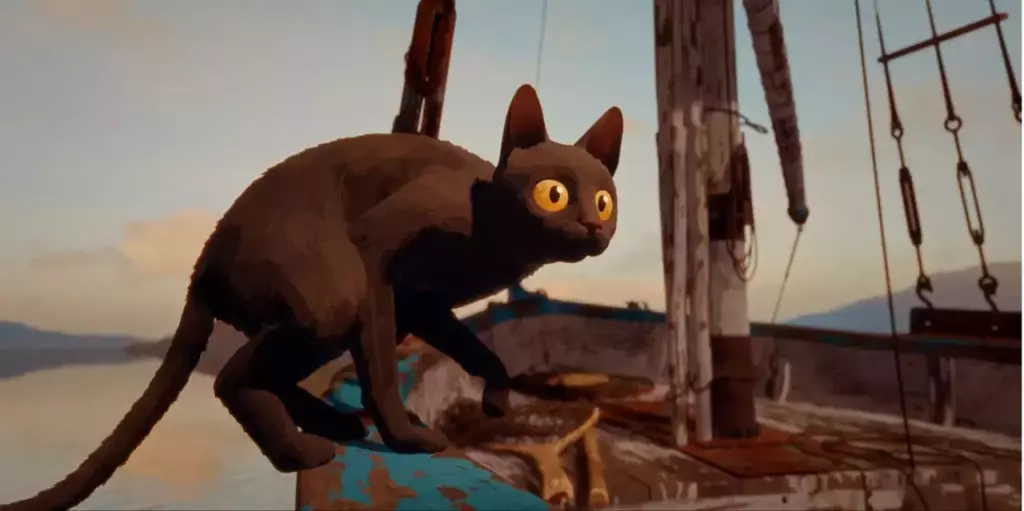
As the animals apply their skills for survival, the idea of the need for mutual assistance and harmonious coexistence of outwardly and inwardly different characters is revealed.
The idea works well also because, despite the animals not speaking, each of them plays a vivid role model characteristic of humans, which one can intuitively grasp. The imperturbable capybara reflects a calm personality that does not succumb to emotional swings even in unstable situations; the lemur – a certain embodiment of those clinging to external appearance and material surroundings – has such a pernicious dependence on things that at times it seems ready to turn away from friends for their sake. And the secretary bird and Labrador will show how one can go against their own for someone else’s protection if they are wrong.
The film explores the concepts of “loneliness” and “the pack” through examples of healthy relationships and critical states, allowing them to transform, flow into each other, and coexist. They create a cyclical nature, which is reinforced, in addition, by background elements and visual images: circles, whirlpools, rushing into the sky or into the depths, recurring moments. They help to loop the narrative but elevate it emotionally and spiritually to a higher level, leaving the conclusion that the same event can change someone, unite them, while someone will never change, remaining true to their habits.
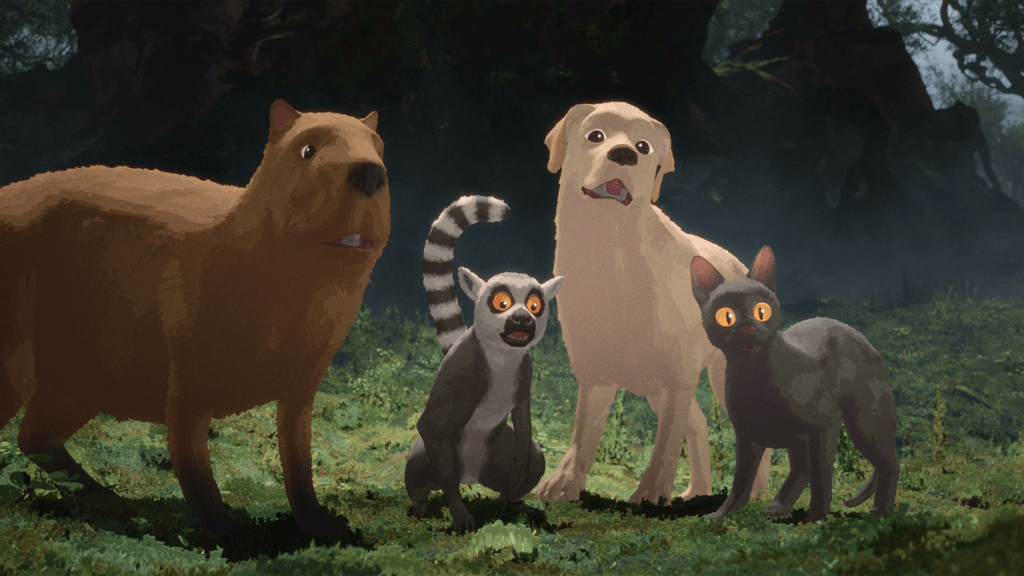
Naturally, “Flow” is visually far from the watercolor backgrounds and drawing style set by “The Wild Robot,” but we also note the colossal difference in the budgets of the films and the methods of their creation. While one was created by a huge company, the other is the brainchild of a few people, born on the basis of free software resources. And there is a certain charm and feeling of groundedness in these underdrawings. As well as an extra reminder that animation is based not only on sequels (which, by the way, is also an opponent of “Flow” in the nomination) but also on unexpected surprises, which European animation increasingly provides.
And so the cat, who looked at its lonely reflection at the beginning of the film, sees itself again in the finale, but already surrounded by close animals. And the viewer understands that they have just watched a relaxing miracle. And while composer Rihards Zaļupe immerses the consciousness in a flowing stream of compositions, “Flow” confidently conquers its place in the animation industry. But will this small victory of Gints Zilbalodis over himself be enough to win the main award of the season?
Comments
0No comments yet.
Sign in to join the discussion.