

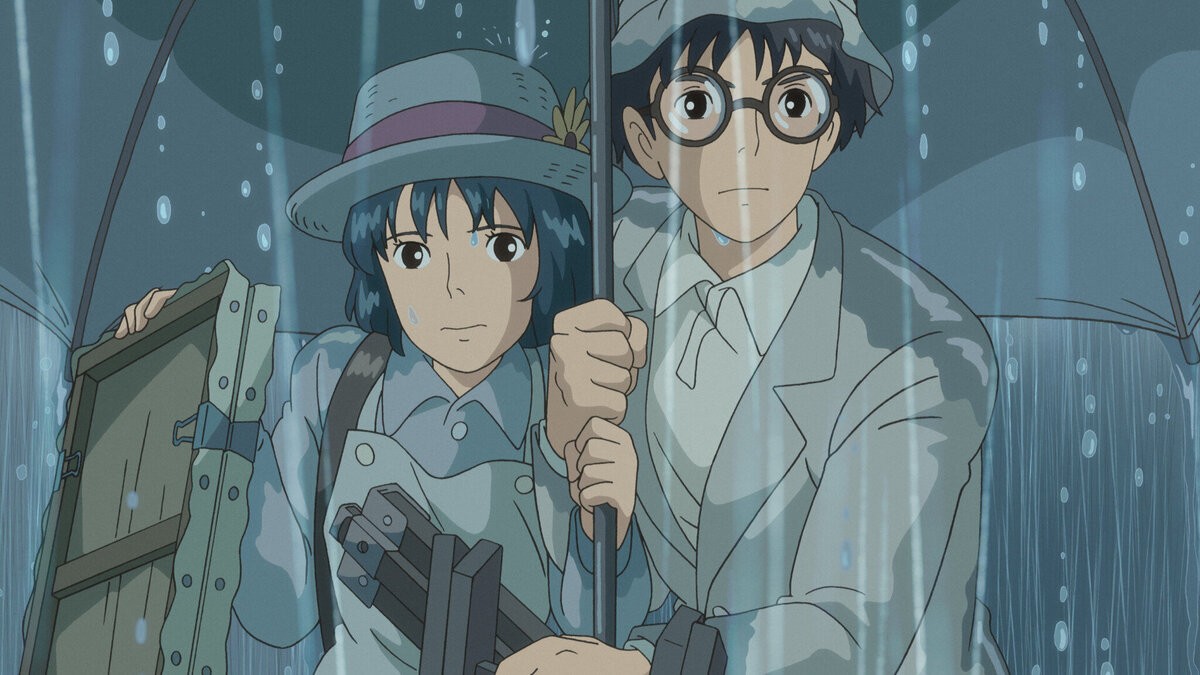
On January 16, the most realistic work of master Hayao Miyazaki, "The Wind Rises," was re-released. About the historical subtext, real biographies, and more – in our article.
"The Wind Rises" was released in 2013. For 10 years, it was believed that the film would be the last work of Hayao Miyazaki. Everyone looked for Easter eggs and secrets of history to piece together the puzzle of the farewell work, but that didn't happen, and in 2023 we saw "The Boy and the Heron". Now that was a real farewell.
But who are all these people on screen, and what historical events are being discussed in "The Wind Rises"? Let's dig into the subtexts and simplify understanding before watching.
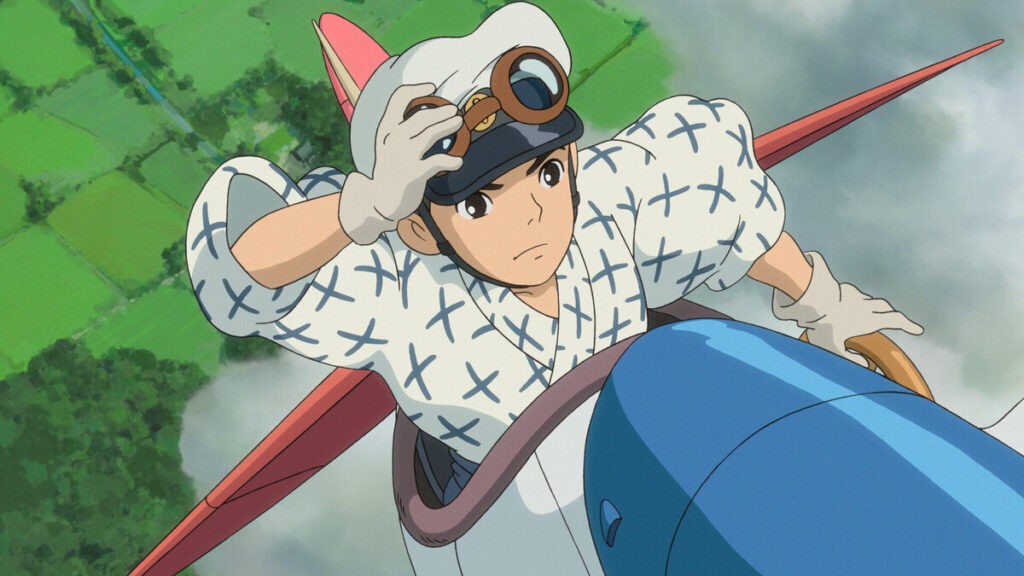
Jiro's passion is airplanes. He is drawn to conquer the sky, but due to his nearsightedness, he is not destined to become a pilot. However, dreams do not leave the boy, and he comes up with the idea of becoming an aircraft designer. Along the way, Jiro experiences failures and terrible disasters, but finds the strength and becomes the best in his field.
An airplane is not a weapon of war or a tool for commerce. An airplane is a beautiful dream, and the designer is the one who brings that dream to life.
About the Characters and Prototypes
The prototype of the main character was aircraft designer and engineer Jiro Horikoshi. For clarity: Jiro's achievements for Japan are comparable to the contribution of Mikhail Kalashnikov for the USSR. The aircraft produced by Horikoshi outperformed foreign counterparts. The "Mitsubishi A6M "Rei-sen"" (or "Zero") was considered one of the best fighters of World War II and the most mass-produced. In simple terms, like the T-34 tank for the USSR.
Throughout the runtime, the characters talk about Japan's backwardness from the West by 20 years. They want and try to fix it, and they succeed. At the end of the anime, Jiro watches the planes flying off to the front and realizes that not only has the West been caught up, but it has also been surpassed. But that was not at all the goal of Miyazaki's character, certainly not military fighters...
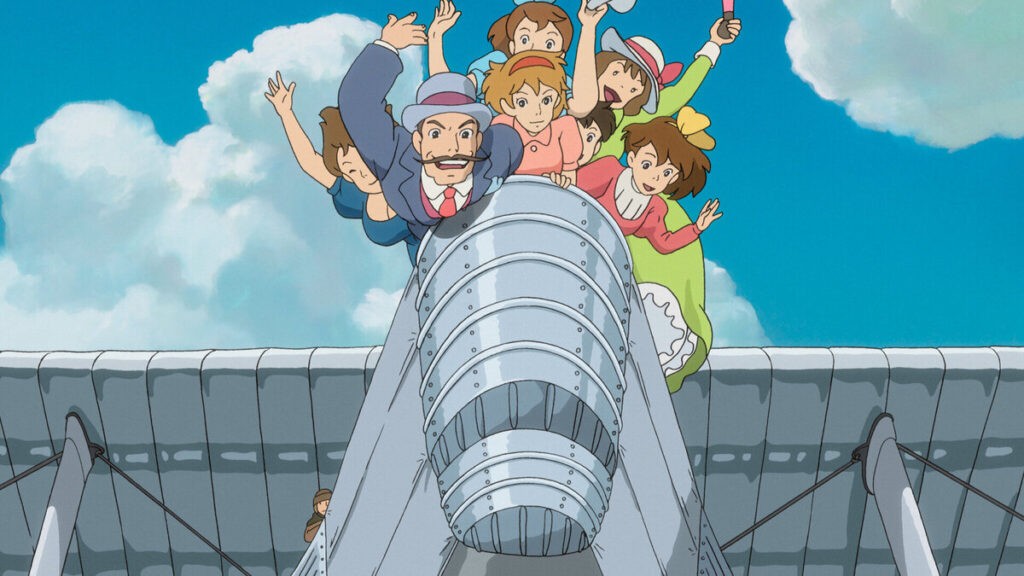
One of those with whom Jiro communicates and who gives him motivation is Giovanni Battista Caproni, an Italian aircraft designer. Caproni's factories produced military aircraft, and his contribution to Italy's armament is enormous. But precisely because of this, both Caproni and Horikoshi are criticized as being involved in militaristic policies.
"The Wind Rises" tries to show engineers from a different side. Dialogues about the simple beauty of airplanes, about the desire to create something truly elegant, constantly appear. That is why Jiro admires the smooth curve of a fish bone, because it is so similar to a neat airplane wing.
What Else the Story Is Based On
In addition to the biography of Jiro Horikoshi, the story weaves in the novella "The Wind Rises" by Tatsuo Hori. At the center of the story is the love of a young writer for a girl suffering from tuberculosis. Actually, the romantic storyline of the film is built on this.
Also included here is the biography of Miyazaki. The animator's father managed a factory producing parts for the Zero A6M aircraft, the very ones designed by Jiro. And the director's mother suffered from tuberculosis. So it turns out that "The Wind Rises" incorporates historical prototypes, literature, and the author's nostalgic memories.
Airplanes are a passion not only for Jiro but also for Hayao Miyazaki himself. In almost every work, the animator conquers the sky. Whether it's "Porco Rosso" or "Nausicaä of the Valley of the Wind." Everywhere the technology is different, but the sky is conquered. By the way, the basis for the name of Studio Ghibli was the Italian reconnaissance bomber Caproni Ca.309 "Ghibli."
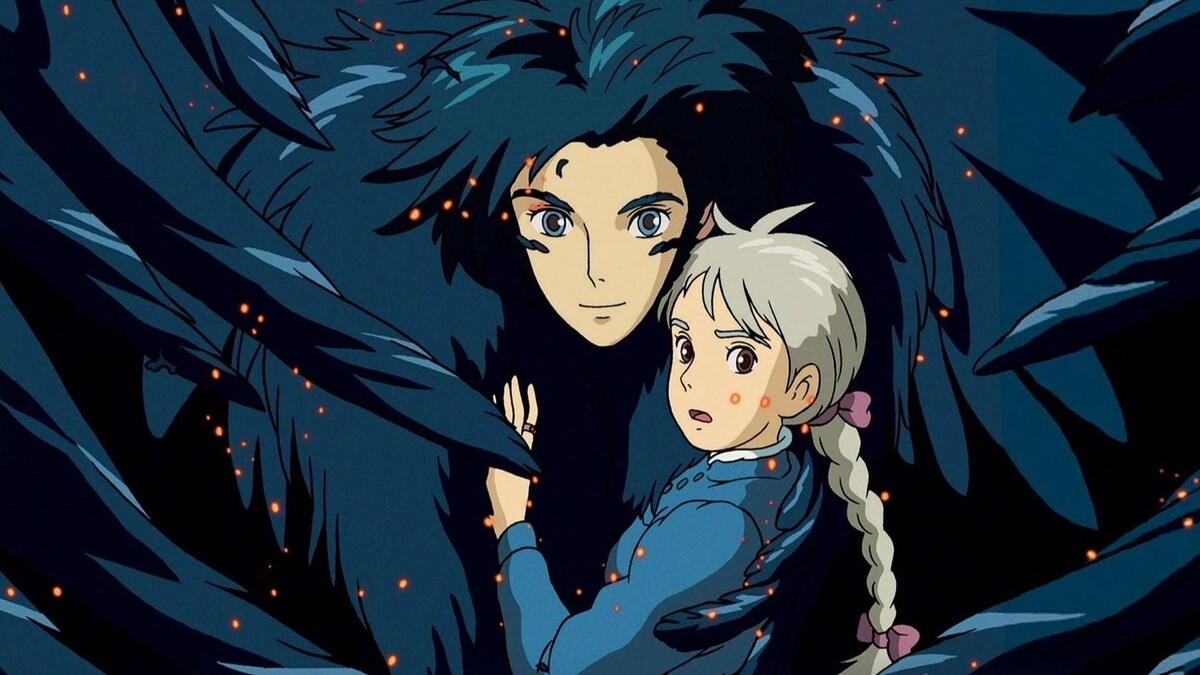
Since November 14, the film by the classic of Japanese animation Hayao Miyazaki, which has already celebrated its twentieth anniversary, has started again in Russian distribution. What lies at the core and what secrets does "Howl's Moving
Open material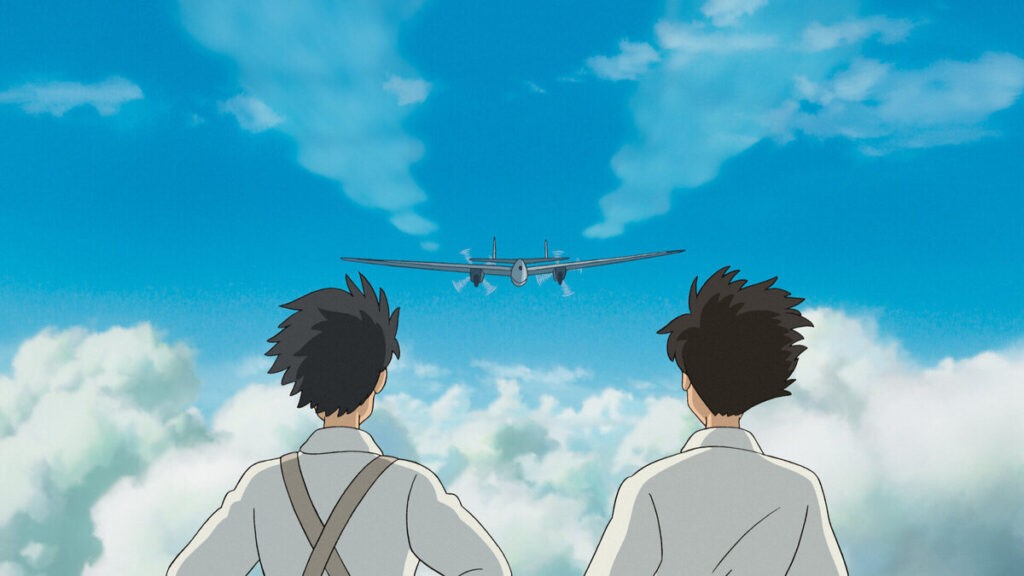
Real Historical Events
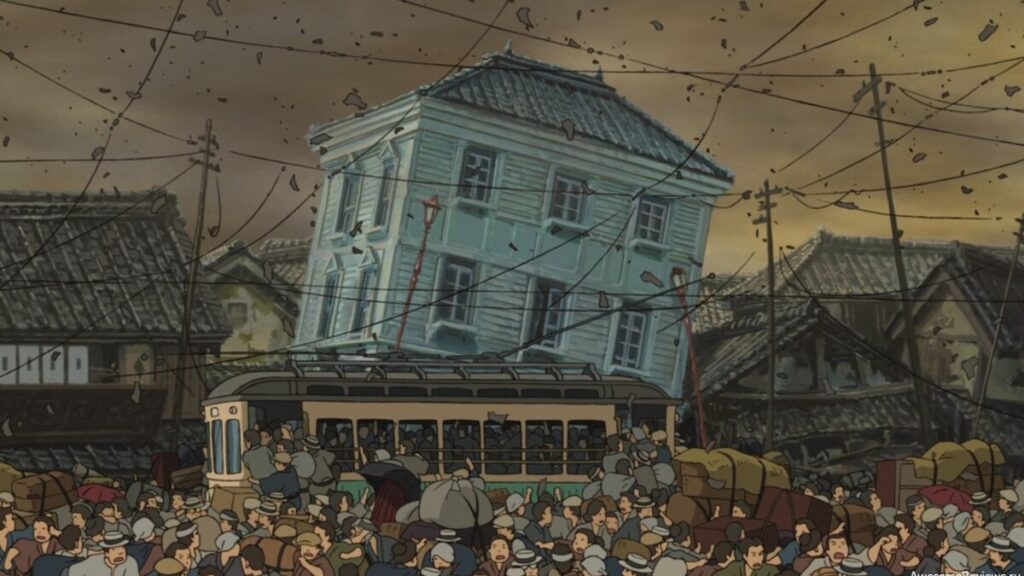
The first incident we encounter in the anime is the Great Kantō earthquake of 1923. "The Wind Rises" accurately depicts the events and aftermath of the disaster. Destruction, fires, and thousands of victims. The earthquake almost completely destroyed Tokyo and Yokohama, becoming the most destructive in Japan's history, with a death toll of 142,800 people.
When the characters travel to the aircraft factory, a crisis due to lack of work is briefly mentioned. This scene also has a historical analogue — the Shōwa financial crisis. It is believed that the Kantō earthquake was the cause. As a result, a large number of banks and small factories went bankrupt. That is why the characters in the film are rushed in their work and constantly told that another crashed plane could be the final point. The company where Jiro works fears bankruptcy.
German Influence
In the episode where Jiro and the team of engineers visit an aircraft factory in Germany, we see how the Germans react to the Japanese. They don't allow them to take an extra step or touch anything. This is because during World War I, Japan was part of the Entente in alliance with Great Britain and other countries opposing the Third Reich. Due to such defections, the Japanese were treated with distrust and kept under close watch.
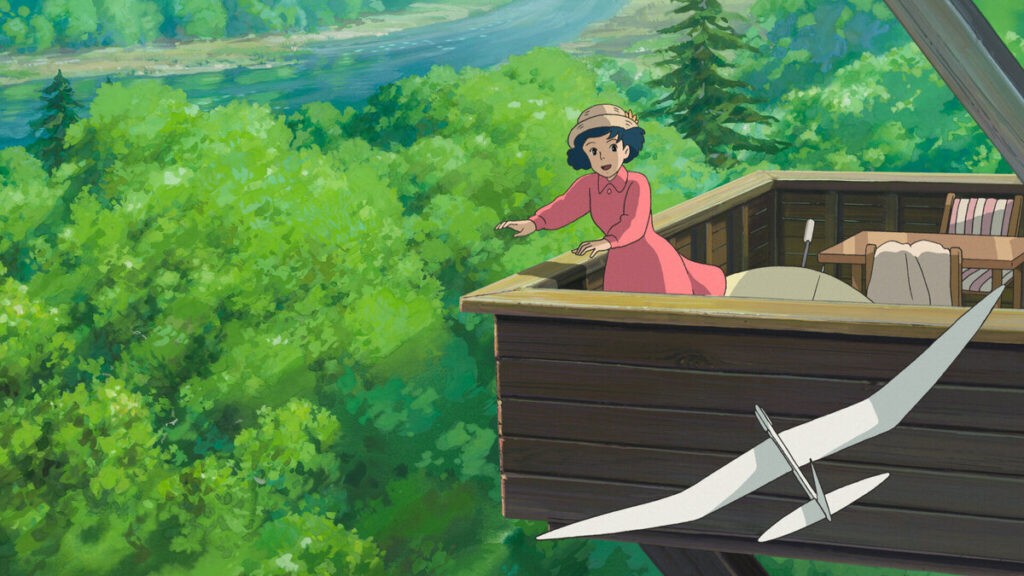
By the way, the characters often mention Thomas Mann's novel "The Magic Mountain," which influenced the behavior of the Japanese by showing how the European intelligentsia behaves. Much attention in the novel is given to tuberculosis and the fight against it. That is why Naoko Satomi, Jiro's wife, stays in a mountain sanatorium. All these are references to history and literature.
— A wonderful night. This is "Der Zauberberg."
— Thomas Mann, "The Magic Mountain"?
— A great place to forget. Attacked China — and forgot. Installed Manchurian puppets — forgot. Left the League of Nations — forgot. Made the whole world our enemy — forgot.
In 1931, Japan invades China, occupies Manchuria. In 1937, it declares war, and in 1933, it leaves the League of Nations. The characters' stay on the "magic mountain" allows them to forget all the complex and terrible events happening in the world. And the German Castorp, whose prototype is the hero of Mann's novel, reproachfully reminds that not everything is as quiet and calm as it seems.
"The Wind Rises" incorporates all the circumstances of that time, and in its realism it can be compared to "Grave of the Fireflies," another cult anime. Miyazaki once again raises themes of war and love, which have become unshakable both for him and for all humanity. "The Wind Rises" is the most "non-magical" work of the creator, but as tender and heavy as a children's fairy tale can be, which it may seem at first glance. But only at first!
Comments
0No comments yet.
Sign in to join the discussion.