
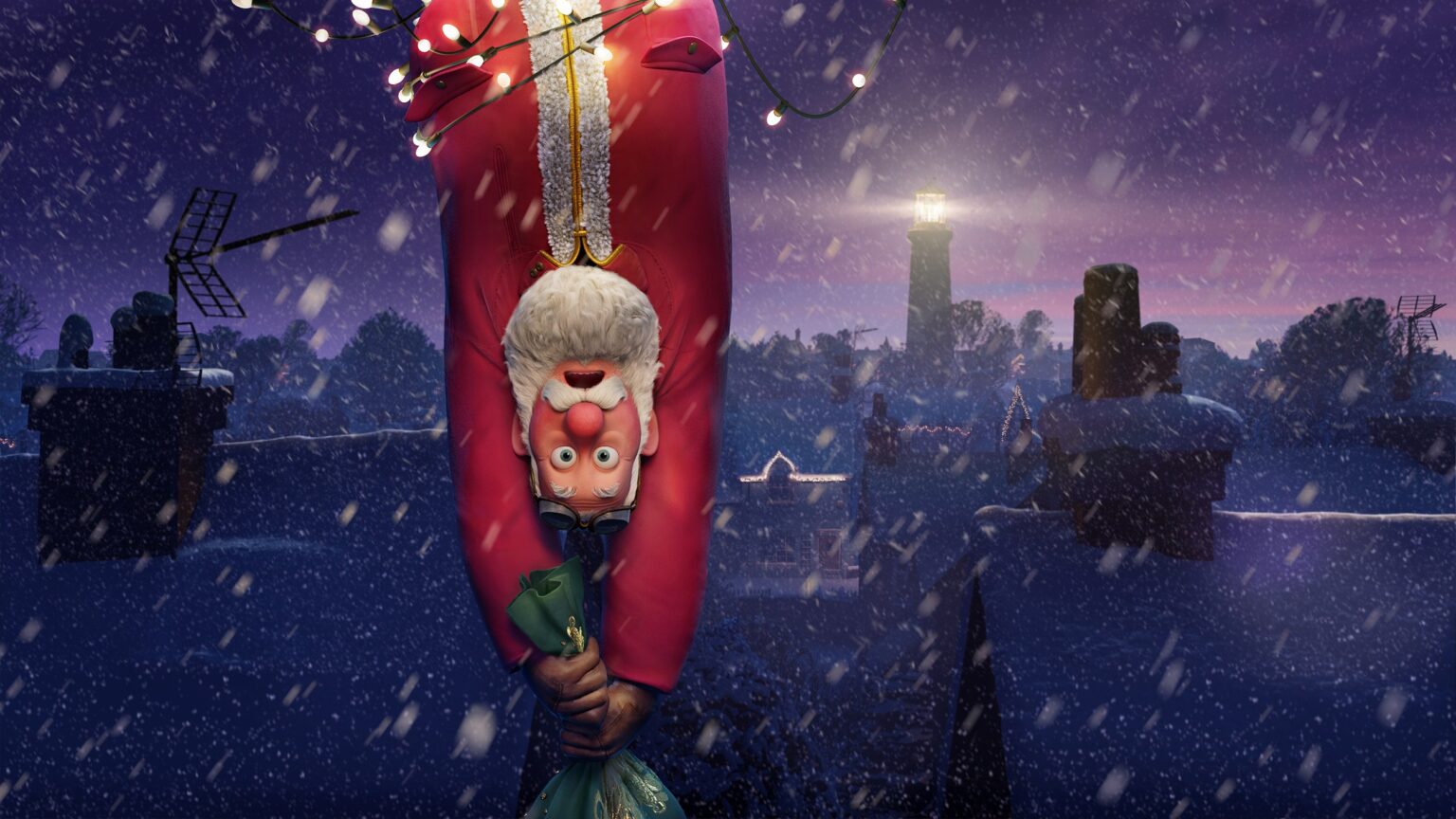
A cartoon from the screenwriter of "Love Actually," following the same script paths, may disconcert the viewer with highlighted social issues and a far from magical Christmas atmosphere, yet it is not bad at all. What's what? Let's figure it out.
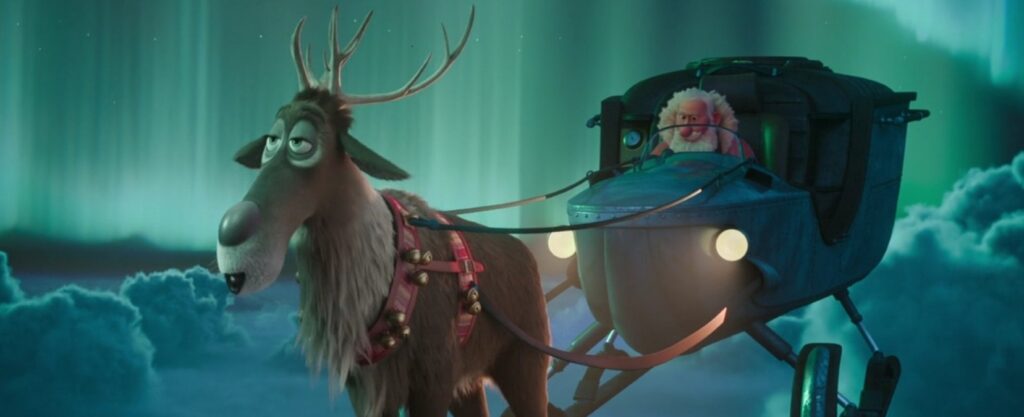
England. The small town of Wellington-on-Sea is engulfed in a snowstorm. Guided solely by the carefully directed light of the lighthouse keeper, a technologically equipped sleigh, driven by a single reindeer who has already seen much this night, lands on a random runway of snow-covered roofs. Santa has not only come to deliver presents to the residents of Wellington but also to tell the viewer the story of people for whom that Christmas went completely wrong.
The film "Love Actually" is a classic of Christmas cinema and, being a regular in holiday roundups (you can read about this and other Christmas movies in ), has even partly become an anti-trend. Ironically, it is this film—the image of outdated traditions—that Richard Curtis, the screenwriter of both films, will joke about in the cartoon. And even if you don't know this fact in advance, the older generation will still get intuitive hints while watching, because Curtis literally repeats the plot structure of "Love Actually" in the animation "That Christmas": he splits the presented characters into parallel storylines that, connected by some character, will come together to form a single group.
The story begins for all the characters in the school auditorium at a play (a familiar setting). But it is only a formal gathering point, because here everyone is disunited. The silent split occurs because of the play itself: parents who adhere to classical views and the established story do not accept the contrived reinterpretations made to suit modern trends.
The story of Jesus, as presented by a teenager, suddenly becomes a "multicultural show with pop songs" and notes about global warming. "That Christmas" expresses a clear negative attitude towards the absurd changes to the story, conveying through the parents' faces their bewilderment that the stage is somehow filled with broccoli, corn, and beans, and the walk to Bethlehem has suddenly become a statement about consciously refusing airplanes that pollute the atmosphere. It seems that Curtis's text inspired the writers of the 2024 Olympics opening ceremony...
But the presentation is interesting not only for its obvious condemnation of the hysteria of "modernizing" everything and everyone, but also as a lead-in to the characters, whose stories the plot will follow in three different narratives.
One of them is about a timid boy named Danny, who is being raised by his mother, a nurse working herself to the bone, after a divorce. He can't muster the courage to confess his feelings to a girl, and he also has to spend the day with a strict teacher—a lonely and formidable woman whom even adults fear. An amazing story about emotional traumas that shape loneliness, futile hopes, and true gratitude can lead even the most apathetic to a path of bright thoughts.
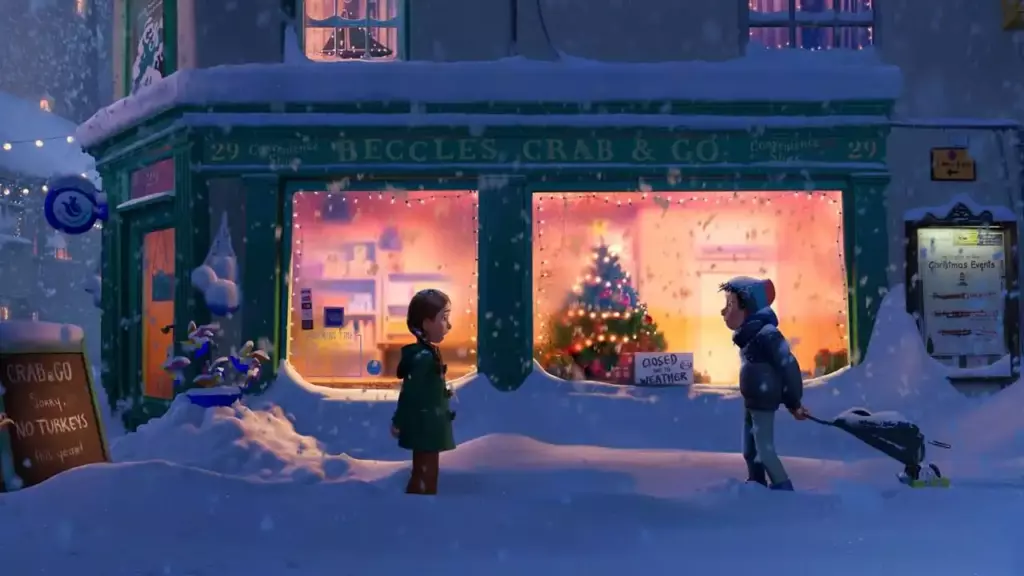
The second story is about twin girls—one timid and one overly bold. Despite the clichéd joke about their interchangeability due to identical DNA, they are different both in appearance and character. Their storyline is not only about mistakes, fears, and the meaning of the word "bad," but also an example of sisterly love that can bring positive changes to polar opposite personalities.
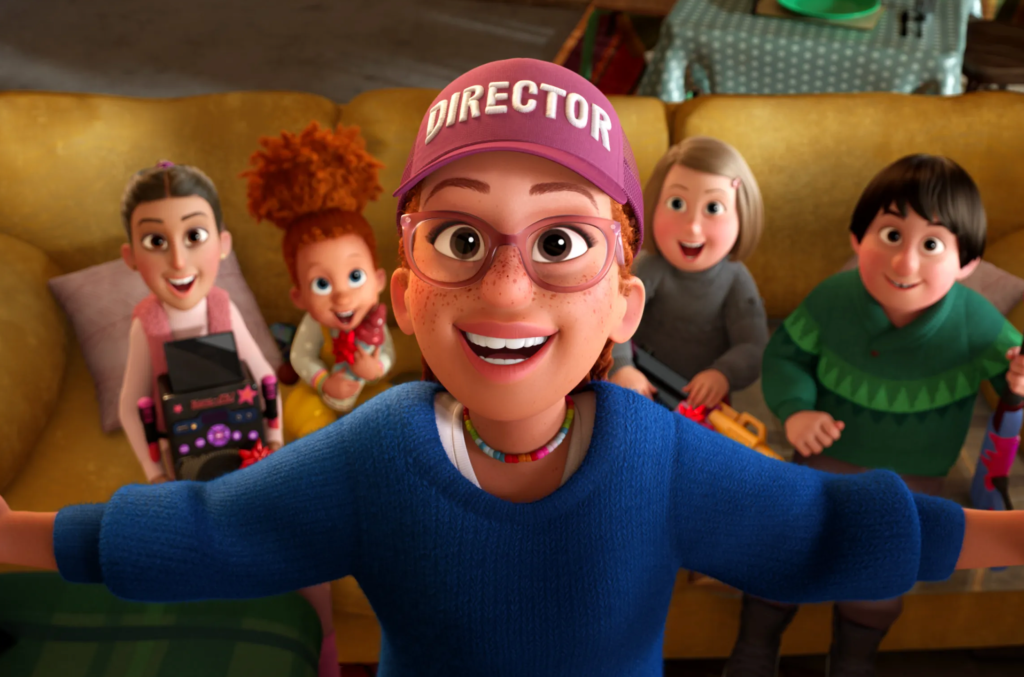
The third story, about families with children gathering for a traditional dinner, will reveal the theme of responsibility, cohesion, and tell about appropriate adjustments to the established Christmas celebration script within the family, in contrast to the thoughtless and incorrect intrusions into history proposed at the play.
And no matter where you dig, none of the stories will seem particularly magical and serene to the viewer, despite the cartoon being billed as a Christmas one. Reality is full of bad deeds, resentments, greed, and loneliness, and even snow is not always something fairy-tale. Yes, we are told without embellishment that this whole atmosphere of magic is superficial if a person is plagued by problems and inner demons. That children don't need any gift as much as they need their parents, and that children themselves are not necessarily bad even if they do bad (rather, mischievous) deeds, because actions can have quite noble motives.
The cartoon generally stuns with drama in certain moments, leading to discouraging conclusions. It turns out that parents are not always right, they can be overly critical of older children, and at the same time, they themselves are not always ready to take responsibility for what is extremely important to a child.
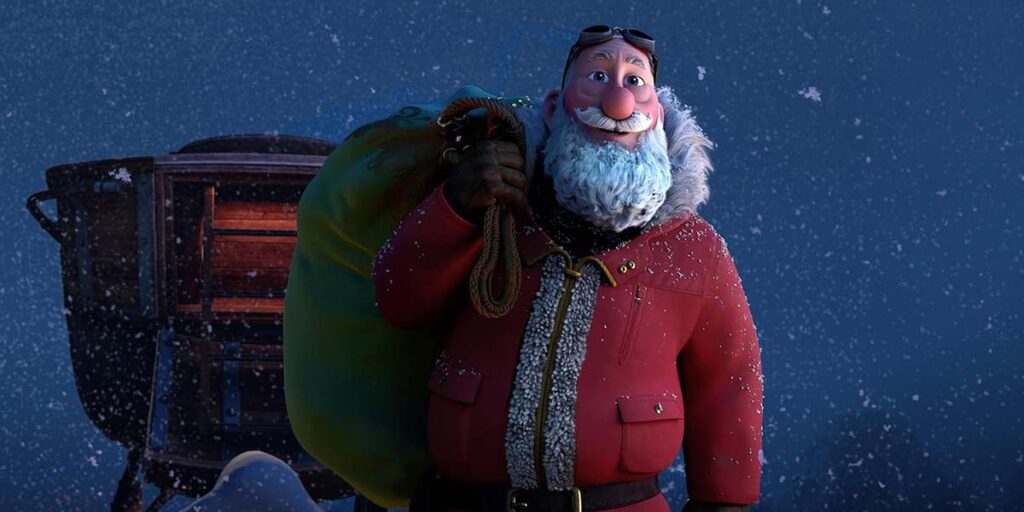
And Santa Claus is not the main character on Christmas night, but rather a kind of guide. His role literally boils down to the one already offered to us by "The Chronicles of Narnia"—to give a tool that becomes the starting point for personal change. "That Christmas" systematically leads the viewer to the conclusion: the magic of one night will solve nothing if a person does not try to change something in their life themselves. And this directly concerns the fight against internal obstacles that prevent one from living happily in unity and harmony.
But don't worry, because there are plenty of positive moments in the cartoon. They are dictated by inspiring conclusions that there is a way out of loneliness, even seemingly hopeless, and that an unpleasant routine can easily be turned into a celebration. That being strict is sometimes very useful, because it hides an inner core that forms leadership qualities, and a woman who combines the roles of a caring mother and a good worker is a true hero who really needs help, support, and attention.
But the humor of the cartoon is very specific. "That Christmas" builds it not only on classic triggers (children are still scared when parents address them by their first and last name) and modern trends (the first thought of parents when a child screams is a panic attack), but also does not shy away from jokes below the belt. Literally... Special mention should be made of the sarcastic and, let's be honest, fed-up (like all of us by the end of the year) reindeer, who didn't even get lucky with introductions.
In the end, the plot twists lead the viewer to a demonstration of real unity, built on a reasonable correction of one's own self, acceptance of others, and the belief that everyone can be good. Perhaps "That Christmas" will not become the cartoon that evokes as many feelings as another European example, "Klaus," and most likely will not become a classic like Curtis's "Love Actually," but it is quite capable, like the light of a lighthouse, of illuminating the darkest places and guiding with light to better conclusions.
Comments
0No comments yet.
Sign in to join the discussion.