
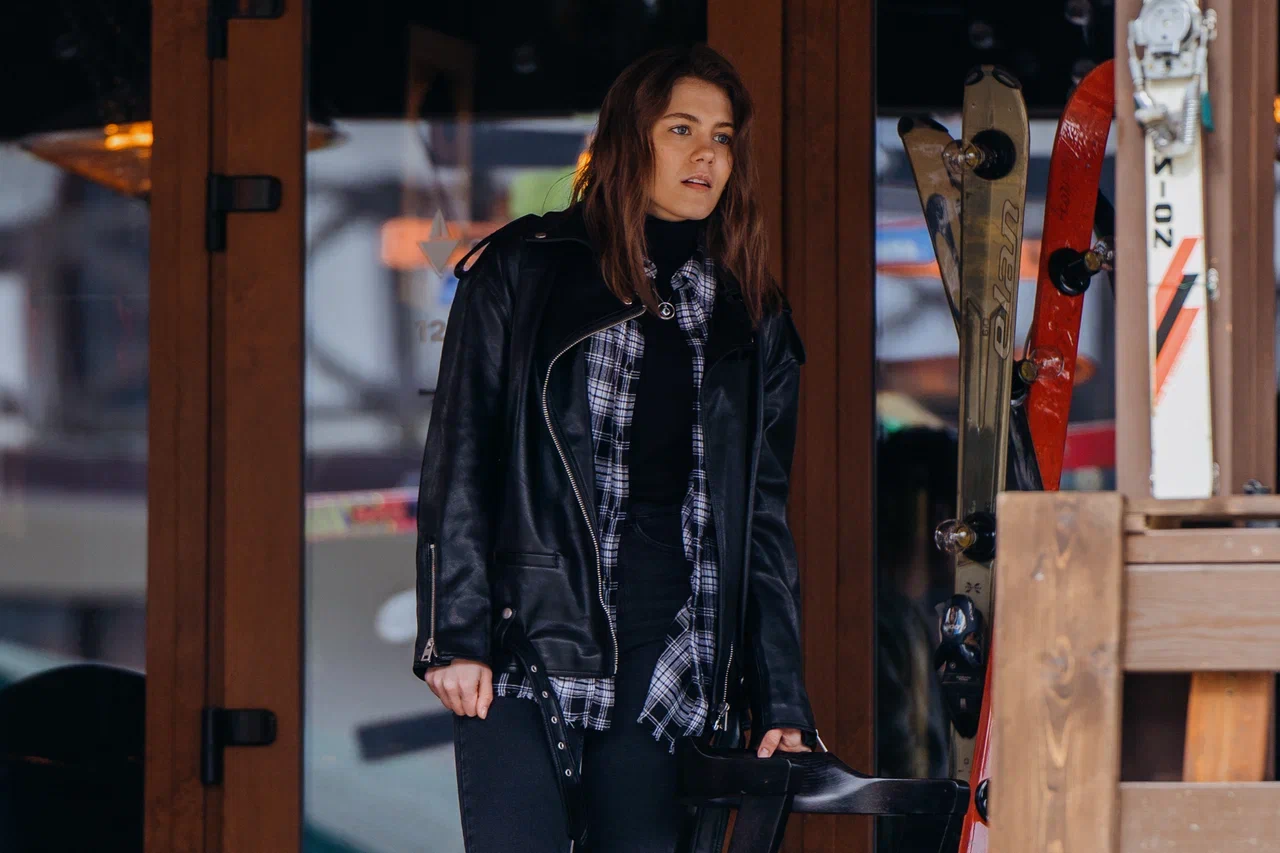
On December 28, the comedy series ‘Krasnaya Polyana’ from the director of ‘Bezprintsipnye’ will be released on the Kinopoisk online cinema, with actress Rinata Timerbaeva in the lead role. We asked Rinata what it’s like to be the main character on sc...
– The promising series ‘Krasnaya Polyana’ will be released on Kinopoisk very soon, with you in the lead role of the adventurer Sasha. Obviously, she is a very interesting and extroverted character. Tell us, how are you similar and how are you different?
I think we are similar in that we both worry a lot about not offending or hurting anyone. But life is such that whether you want to or not, intentionally or not, you do it. We also both have optimism – a belief that everything will be fine.
And we are different in that I have never pulled off the kind of scams that Sasha did. Otherwise, I wouldn’t be talking to you here. (laughs)
At the same time, she is more easygoing in character; she has a talent for deception. That’s her way of solving problems – to lie or not tell the truth. It seems to me that throughout the series, she struggles with this, trying to trust people rather than run away from them.
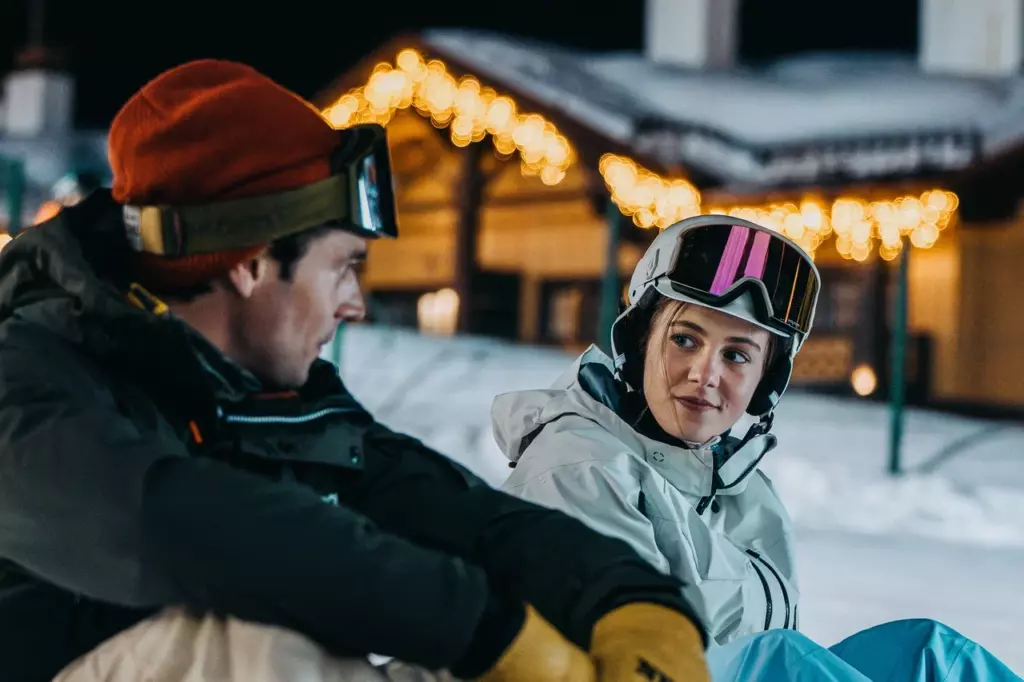
– It’s really hard for your character to trust people, given her background. After all, she is an adventurer, a swindler. Sasha runs away from Moscow to Krasnaya Polyana to escape her problems, but she gets into new troubles and makes real friends, which she never had before.
Yes, she has trust issues, and it’s great that the character’s development is built on that.
– What personal qualities did you bring to the image of Sasha?
I can’t completely separate Sasha from myself, because the person she turned out to be is in some way me. I saw her through the prism of my own life and some everyday situations.
I think I gave her some naivety. Sasha is very naive sometimes, despite her character. She reacts to some things very openly. Maybe she wasn’t written that way exactly. But I see myself in her because she sincerely wanted to believe and trust, but she is just very afraid of it. That’s definitely from me.
– Rinata, what did you learn about yourself while playing the role of Sasha in ‘Krasnaya Polyana’? What was revealed to you?
I wanted some adrenaline, I wanted to do something that would make my blood boil. Maybe I just got so into the character.
I wanted emotions that you don’t get in ordinary life. But, thank God, outside of filming, this can be compensated by sports and communication. (smiles)
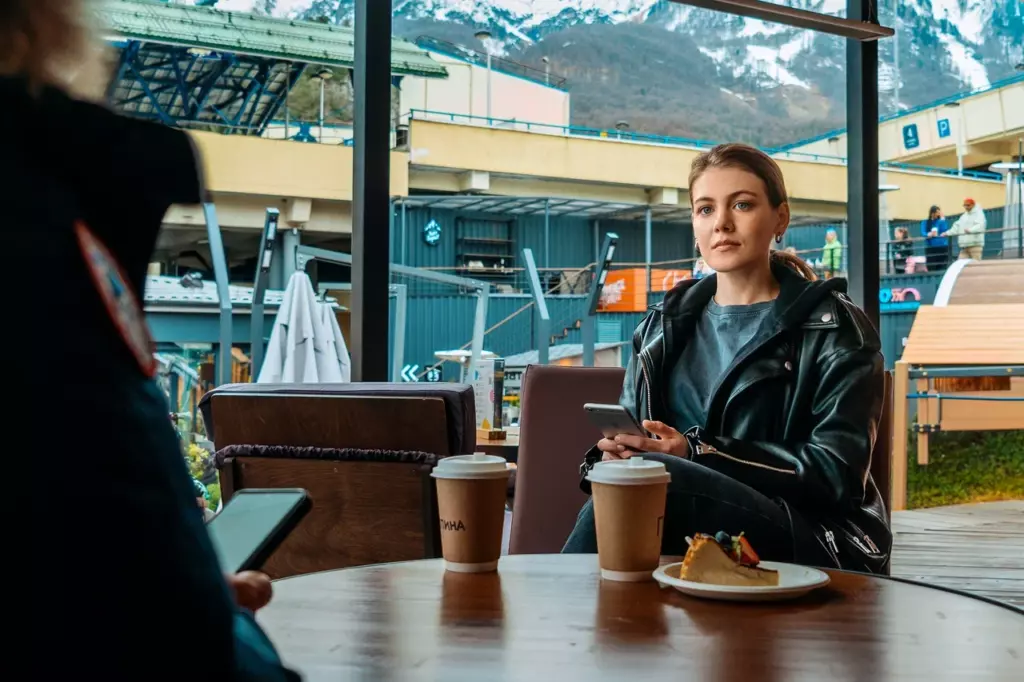
– Perhaps the character revealed some interesting ability in you that you had but didn’t know about?
Sasha is a character who finds common ground with everyone. Maybe not immediately, but over time, everyone starts to love and accept her. Such an active girl: she jokes with everyone and immediately understands how to behave in any situation.
I probably took that too. By the way, it’s a great communication skill. You are ready to show yourself to people as you really are and are not afraid of it. But she comes to that. I think I also came to that during filming.
– Which heroines are closest to you in character? Ones like Sasha, or some others?
Sasha has certainly become close, but at the same time, on set, I felt something: sometimes I didn’t want to act the way she does.
For example, Sasha is used to always landing on her feet. By any means – she doesn’t care. But it’s very hard not to lie, but to tell the truth. It’s much harder than hiding something. And at the same time, it takes a lot of energy to constantly deceive. And you don’t always deceive for something bad. You can deceive for a good purpose – that happens in life too.
So I think that heroines of different characters are close to me, because in life you are different too, there’s no other way. In life, there is no black and white. Life is a mixture of all colors.
– What feelings did you have when you found out you were cast in the lead role in such a large-scale project?
I told this story to my friends. It was very unexpected. I was filming in the middle of my fourth year, and at the same time we had a graduation performance, and I also had a role there, and then another performance. One night, I recorded a self-tape, and in a light mood: I had to record it, I recorded it, and I let go of all worries about it in advance.
I was also lucky that we had some break in studies: either a not very busy week, or someone got sick. So I was able to go to Moscow.
I arrived, met with the director Roman Lvovich Prygunov. I was very nervous, but we recorded the necessary scenes. Before that, I even got lost on the way to Mosfilm because the taxi took me to the wrong place. I had to call and say I was lost. They called me back and asked, “Where are you?” And I replied that I didn’t know, there was a fence, they wouldn’t let me into Mosfilm. In short, they called a new taxi, and so I ended up at Mosfilm for the first time. I saw the museum at the entrance and thought, “Wow, history was made here!” I remember walking in, being greeted by such nice people. Then we had the audition, and that same evening I went back to St. Petersburg.
A week later, we had a run-through of a speech performance, we were talking with the teacher, and I always put my phone away during that time. So the phone was lying somewhere to the side, and suddenly I hear: one, a text message came, then a second, then another. I decide to turn off the sound, pick it up, look, and there’s a message from Maria Gogotova: “Rinata, hello, you are approved.”
And I remember that feeling: I broke out in a sweat, I look and think, “No way.” I immediately locked the screen, and we continued the class. An hour later, I leave, take my phone, walk down the corridor and think, “Wait, did I dream this?” I open the messages again, look, and then I just run into the workshop, gather my closest friends in a circle and say in a half-whisper: “So, don’t tell anyone, but I’ve been approved for the series. I don’t know what I’m going to do, how I’ll tell the teachers, but I’ve been approved for the lead role.”
A few days later, I was already called for costume and makeup fittings – I had no idea how that worked. I arrive there, my hands and legs are shaking, I think, “Oh my God, where am I, what am I?” It seemed to me that I would wake up now and none of this would happen.
Until the first “action” happened in Sochi, I didn’t fully believe that I would be filming. I thought, I’ll do something here and go back to my regular studies. There we will put on plays, learn poems, do everything but not filming.
On one hand, I felt that it was something very, very kind and good. But on the other hand, literally my whole body was screaming that something would go wrong, they wouldn’t let me go, the plane wouldn’t fly with me – I had that impression until the very end.
When the “action” finally happened, only then did the realization come: that’s it, I’m filming, in the lead role, I need to get used to it somehow. But on the set, to the actors in crowd scenes and the artists who played in episodes and saw me every day, I said that I was also filming an episode. I was a maid there, skiing, and the main character was supposedly someone else.
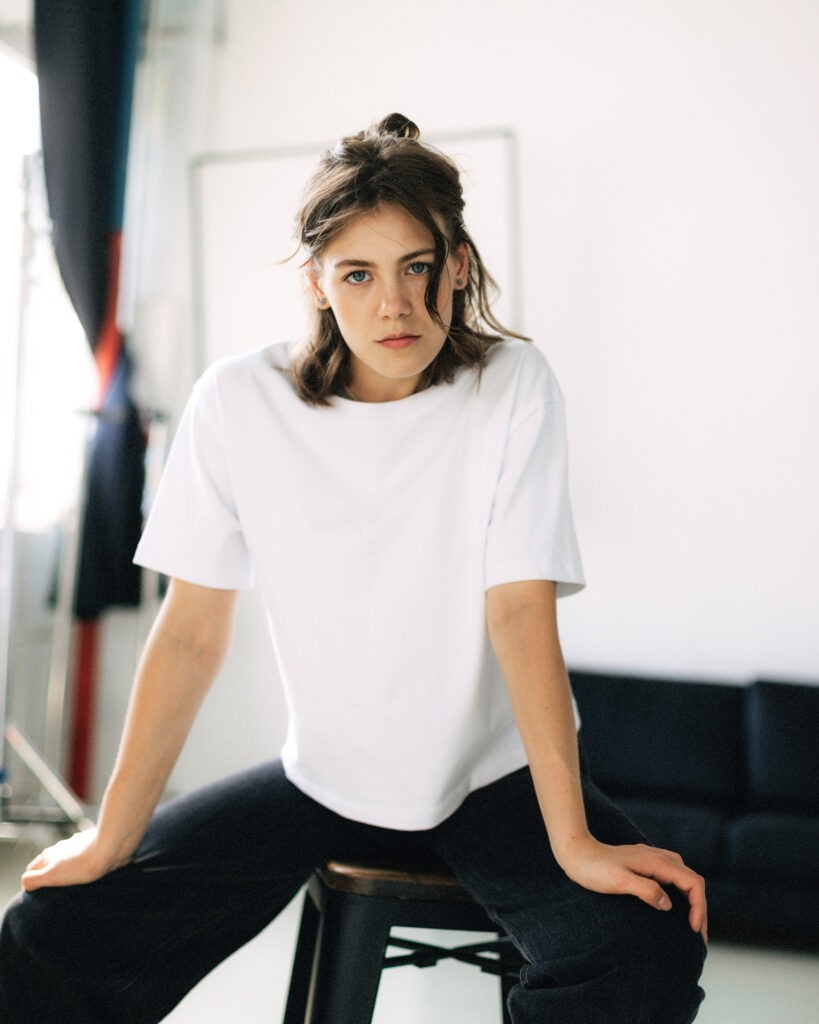
– You turned out to be so modest – you didn’t want to admit that you were playing the main character.
I just didn’t want to be distracted on set, and I didn’t want people around me to worry. I was very nervous myself, so the first thing I did when I was approved was to ask for the full script, which could still be rewritten during filming – that’s normal. So I printed it out, took it to school, read it, made notes, asked my friends what they thought about this or that scene. At home, I also have an impressive folder with the script.
– You mentioned that during your studies you performed in plays. How did your theater experience affect your work in film? After all, theater and film are different things.
At first, it was a bit difficult on set. I realized that I was doing everything a little theatrically. I even did a theatrical analysis of the role. But in the series, there are scenes where you don’t need to think so globally, as they say in our workshop, “transitional scenes.” There may be several transitional scenes that lead you to the main one. In the main scene, the whole event happens. Of course, I’m simplifying a lot now, but that’s the gist. And in the first few days, this theatrical analysis just got in the way.
Plus, being in frame and on stage are just slightly different existences. After all, in theater you have to be louder, more emotional. That’s because you are in a large space, and you need to convey your performance to every viewer, even the one sitting farthest away. And on set, I immediately had such a loud, trained voice, but that wasn’t actually needed there. I had to find my own voice, the one you have in life, like we are talking now.
But at the same time, I remembered all the advice from my master Semyon Yakovlevich Spivak. He is a wonderful theater director, and we always enjoyed watching his plays. You know, even though they say film and theater are different things, no, it’s all the same. The main thing is that you are truthful with yourself, truthful with the viewer, and it doesn’t matter whether they watch you live or through a screen. It is extremely important to carry that truth. I always remembered Semyon Yakovlevich when I had questions for myself and for the profession.
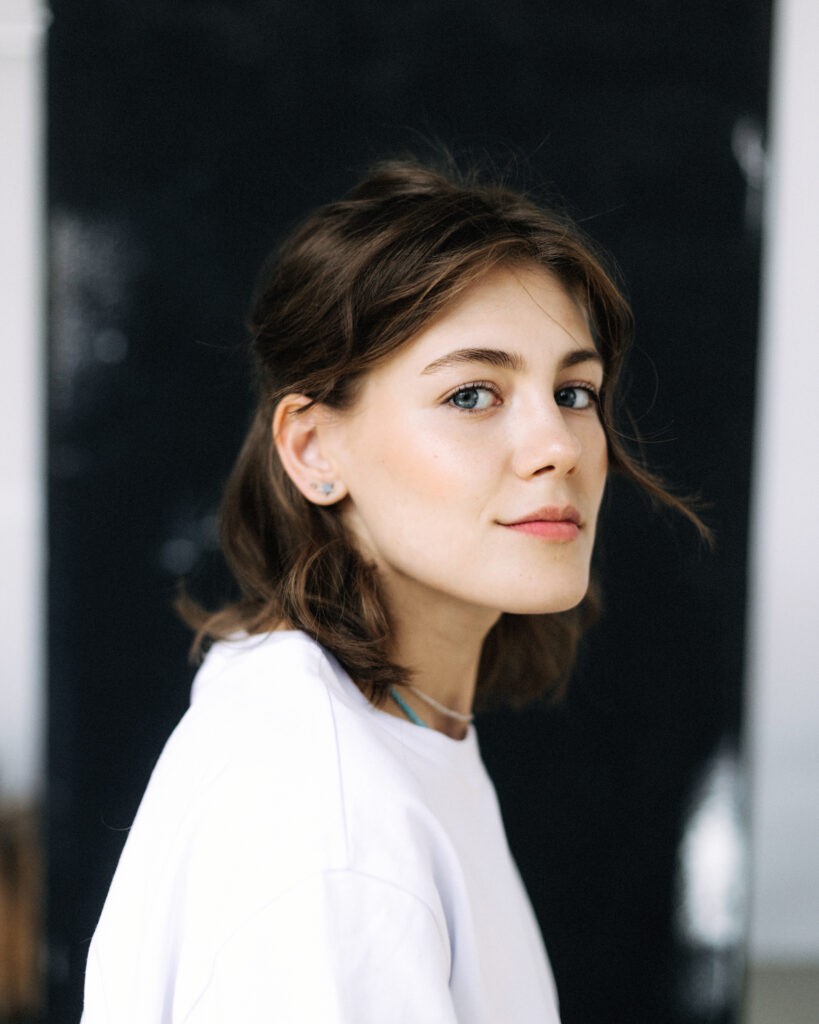
– You studied at the Russian State Institute of Performing Arts in St. Petersburg. Why did you decide to enroll there and specifically with that master?
I applied for a very long time. I only got in on my third year. And now I understand why. I did a lot of things: professional volleyball, music school, filming with a camera. And at some point, acting appeared in my life. Or rather, it was always there, but it became conscious around the 10th grade.
And also, all my life I wanted to be a veterinarian – my whole family knows that. And it’s very funny because even in the series “Friends,” which we all watched together, Joey talked about his dreams and said he wanted to be a veterinarian but became an actor. When I saw that episode, I suddenly realized that I and several of my friends wanted to be veterinarians or doctors, but became actors. There’s a funny trend, but I don’t know what it’s connected to.
I prepared and applied to different universities in Moscow and St. Petersburg, it was 2020, the coronavirus pandemic.
It was a very difficult admission, via video calls. Many of my acquaintances couldn’t pass the audition then, even though some had been applying for a second year. I understand why: it’s quite difficult to understand who you need and what their abilities are via video. However, in St. Petersburg, I managed to pass the first and second rounds.
At that time, restrictions were lifted, and those who passed the selection rounds were invited to St. Petersburg. I went, and we had our first in-person auditions there. We read prose, poetry, and fables, and danced a prepared dance.
I remember, of course, being very nervous. I arrive at the Youth Theater on Fontanka, and there is also such a huge Izmailovsky Garden – incredibly beautiful, it was June, the garden was all fragrant, already green.
I walk in, and with surprise and delight, I see that we are being auditioned on stage. Not in some office at the institute or in a classroom. But on stage. It’s huge, people are sitting there, and in the distance – Semyon Yakovlevich, who is not visible. He was sitting in the dark (laughs), and we had no idea that the master was there, it turns out.
And so I read everything I have, and I also had to show a dance. I prepared a solo tango. I’m ready, the music starts, I, you know, move my leg, and from afar a voice: “No, thank you, not necessary.” I think: “Well, that’s it, they won’t take me. This is the end.” And that person says: “Sing.” I take the guitar and say: “I’ll sing ‘Cocainette’ now.” Again: “No, thank you, not necessary. Please sing ‘Farewell of Slavyanka’.” I sang. And they answer: “That’s it, thank you.” Then I realize that this time it’s definitely over, and they won’t take me.
I go outside, wait for the results with everyone else. They come up to me and say: “You pass to the next round.” From that moment, a weight was lifted off my shoulders, and all the other rounds went not exactly easily, but somehow very well. I’ve said it many times: when I came there, for some reason I felt very good there. I feel pleasant being there. As if I were at home. And with all the guys, we immediately became friends. Amazingly, those who initially became friends remained. That’s the kind of course we ended up with.
And a whole life of four years happened together with Semyon Yakovlevich and our other teachers.
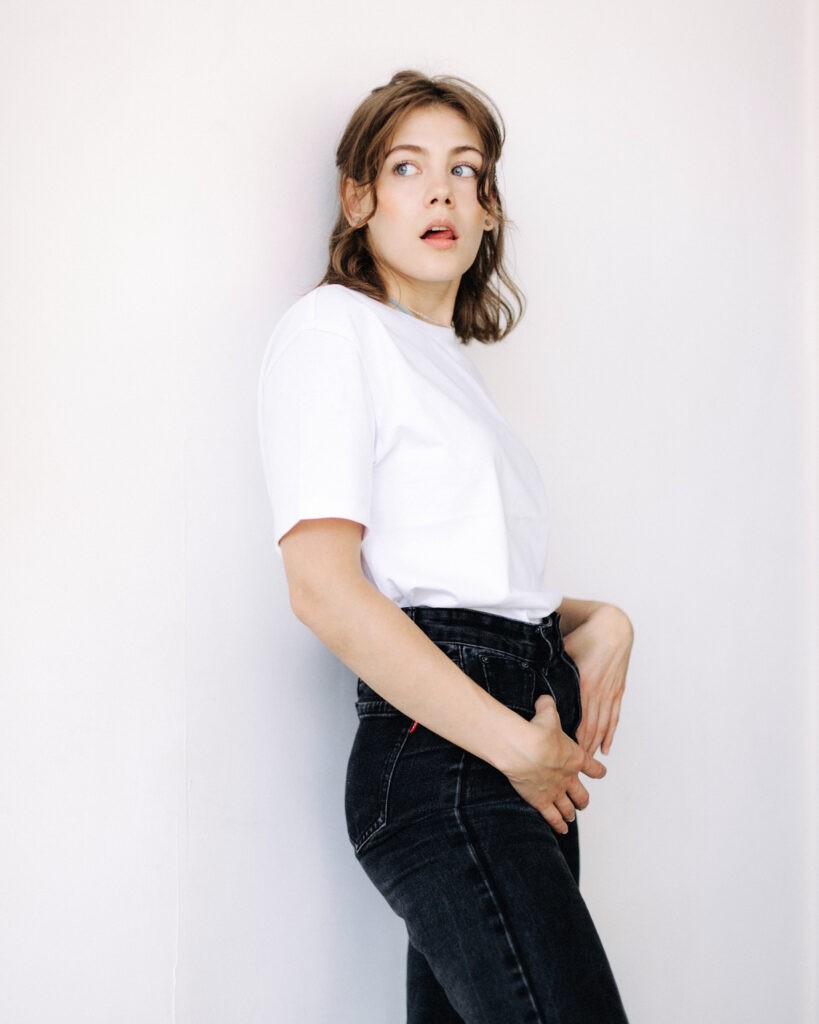
– You described it so vividly that I imagined it all: that garden where you stand, as if on the threshold of a new amazing life. And I was struck by your choice of Vertinsky.
Yes, yes, yes! (laughs)
– It was like watching another mini-series.
A series about admissions – that’s probably my dream. At least one of them. I think only the guys who applied to theater schools will understand this. Because how many stories can be collected from everyone – I had that many alone over these four years. And it would be very funny if everything was properly put together and filmed. You can’t imagine or conceive of such things. And these stories happen in real life.
– I agree, it would really be very interesting. And I think not only young actors who recently applied themselves, but also many others, because it’s a fascinating profession. Moreover, it’s really one of the most pleasant professions – at least, that’s how it seems from the outside. Still, it’s a job with many difficulties. Tell us, how do you rest from it, how do you switch off?
I draw a lot. I play the guitar. But what helps me most is sports. If I need to clear my head, I go for a run or to the gym. It calms me down. When there are too many thoughts in your head and you are constantly analyzing everything, it takes a lot of energy.
Moreover, the acting profession is like an addiction in the best sense of the word. And when you are without it for at least a week or two, you want to go back. So I switch to sports, or just put on a great movie. You want no one to bother you for a few days, you exhale, and then you’re ready to work. Well, I’m not yet at the age or status to say, “Yes, I’m so tired of my work!”
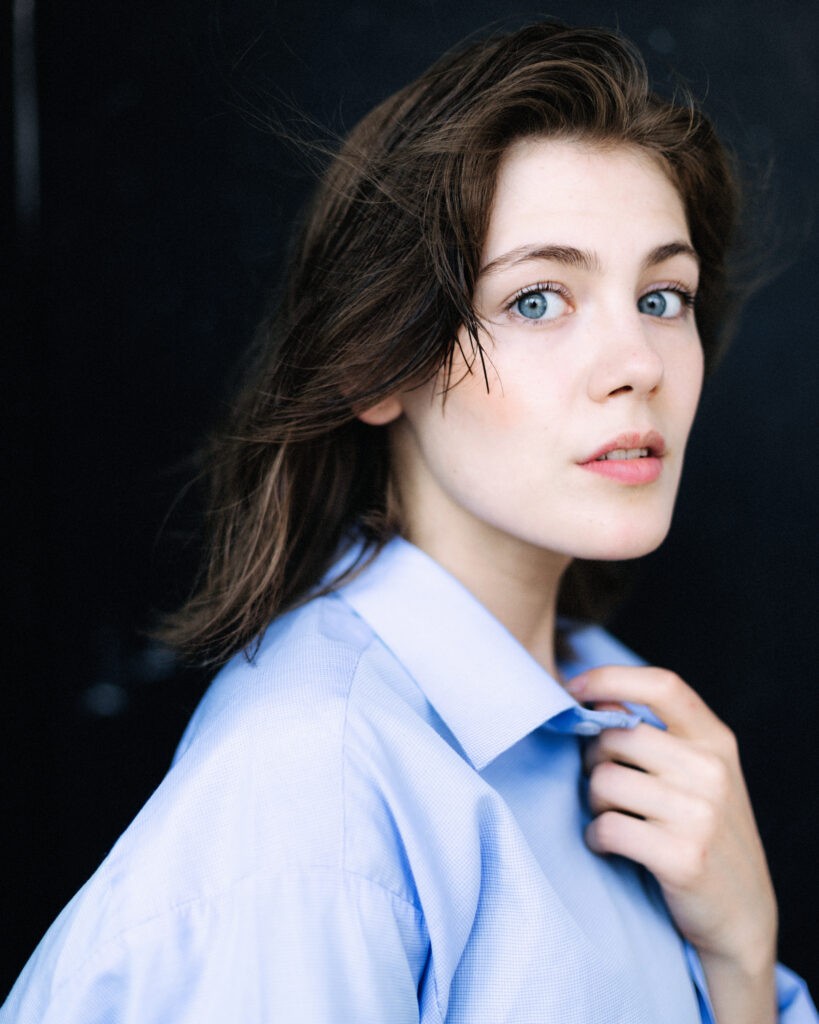
– By the way, I came across your photo with a skateboard online.
Yeah! (smiles)
– I also have a board, but I can only ride a little, and it mostly lies idle. What about you?
There’s a story about the casting. I arrived, and Roman Lvovich says to me: “You skateboard, right? So you can snowboard too. You know how, right?” I answered “Yes,” but I had never stood on a snowboard in my life, although I really do skateboard well. And he adds something about tricks, and I reply that I know everything.
I come home and think: “Lord, why, why did I do that?” Because I just lied to him. And I was so worried and anxious about it that the first thing I did when I got home was take snowboarding lessons. It was snowing, and I went for several days to those lessons. And then in Sochi, they also put me on a board, but it turned out to be quite easy after a few sessions. That’s how I managed to ride. Maybe sports also helped, because I have coordination, and my long years of playing volleyball and skiing since childhood also played a role. I generally ride everything: rollerblades, bicycles. That all helps, of course.
– That’s where Sasha showed up, when you said you knew how to snowboard.
Yes, yes, it’s in moments like that that I feel that here she is, my beloved Alexandra.
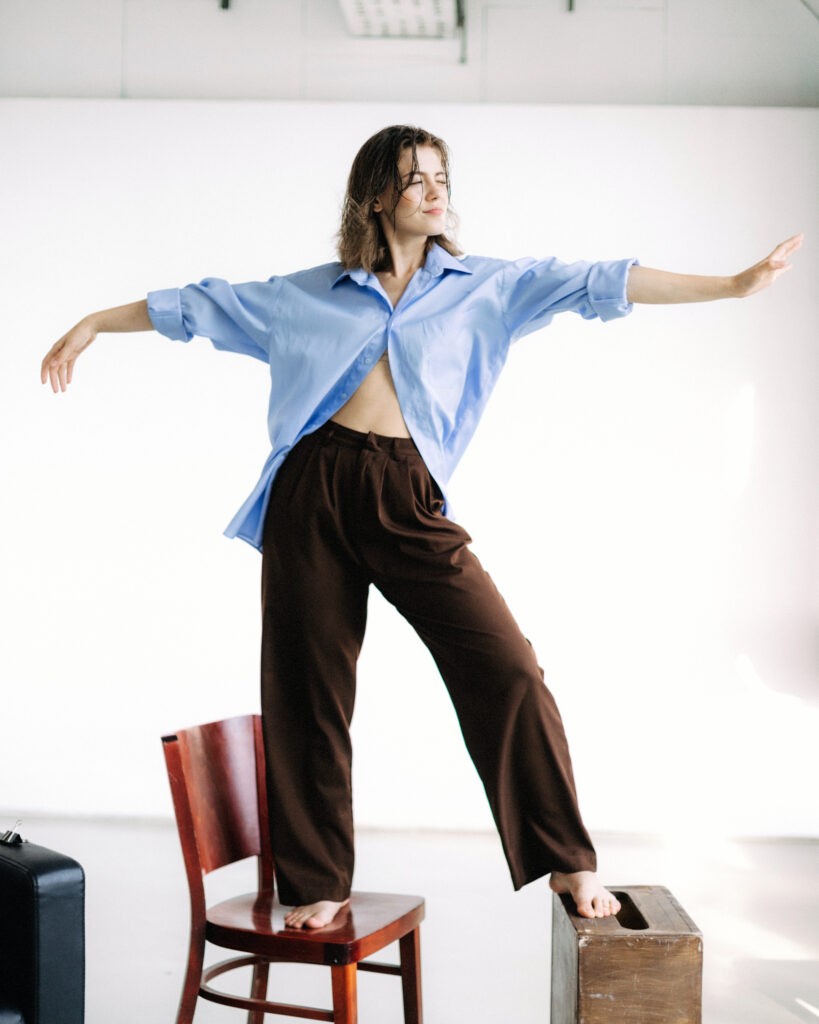
– What fears did you have before the ‘Krasnaya Polyana’ project, and were they justified?
The fears that everyone has: whether you will succeed or not. Whether your work will be good or not. Probably, these questions worry all young actors and artists.
And everything else that happened on set, or any worries in my head, was within the bounds of normal human logic. One day can be good, another not so much. Roman Lvovich supported me a lot, and my colleagues on set too. If something didn’t work out, we calmly discussed it and did everything to make it turn out great. On set, you understand that over four years of study, you were given theory that now needs to be applied in practice. But at the same time, you realize that it’s not some instruction manual. You encounter the fact that it needs to be adapted and applied to yourself. So theory always needs to be tested in practice. I hope I applied it well. Tested it.
– How did participating in ‘Krasnaya Polyana’ change your life?
I met new wonderful people. On set, you get new thoughts about the profession, about people. I can’t say that anything changed drastically. Externally, definitely not. Perhaps my inner self-perception changed. Plus, it’s the first project. I think after the tenth one, I’ll be able to say something more coherent. It’s like the first probing of the ground.
– As far as I know, you live in three cities: Ufa, St. Petersburg, and Moscow. Have you already chosen the city of your heart and decided where you want to live?
Well, three cities is an exaggeration, of course. My hometown is Ufa. I go there to visit relatives, and I haven’t done anything there for a long time except meet with my loved ones and friends.
Now I’m faced with this choice between Moscow and St. Petersburg. I think everyone has had to choose between Moscow and St. Petersburg at some point. For now, I live in St. Petersburg. I’ve gotten so used to it over four years that it’s very sad and painful to leave. And scary, probably. Of course, all factors point to the fact that I should try moving to Moscow. But I’m still thinking.
– What do you love about each of these cities?
Before enrolling, I lived in Moscow for a year. I didn’t get into theater school and first studied at another university to become a journalist. Every day I went outside and walked along Red Square, thinking: here it is, Moscow – the city of opportunities. I was breathing, so to speak, deeply: everything was new for me there. New job, new acquaintances. I was a volunteer, then a video operator, and also managed to work in a restaurant. And at the same time, I was preparing for admission, living with the dream that I would study acting in this city. But in the end, I got into St. Petersburg.
When I arrived in St. Petersburg, the first thing that struck me was its beauty. And the first year I compared them: Moscow is a city! Boiling, alive. And St. Petersburg is very beautiful, but somehow calm for me. But after studying, I realized that I really love calmness. (smiles) So it’s very hard to leave there.
I come to Moscow as a guest, and to St. Petersburg as home. That’s probably the difference for me.
– Tell us about Ufa – the city where you were born.
I left Ufa in 2018 and then thought that Ufa was a village, I had nothing to do there and nowhere to apply.
I haven’t lived with my parents for about 6-7 years now, and every time I visit them, it’s something very warm. You drive through the streets and see a beautiful big city that is developing, a lot has opened in Ufa. I’m very pleased to see that. I even went to the Ufa Museum this year. I wanted to know what it was like, for example, 100 years ago, because the city is relatively young.
And recently I had this thought: it’s a pity, of course, that I don’t live here, but many factors influence that. Of course, I most want to live here because of my family, because I see them very rarely in person.
Of course, it’s a very warm place, very comfortable. And I’m the kind of person who can’t be too comfortable, otherwise they don’t develop. There’s a phrase from “Alice in Wonderland” that describes it well. Alice runs with the Red Queen, and she asks her: “Why are we running?” The Red Queen replies: “To stay in place, you have to run. To develop, you have to run twice as fast.” And this thought is that when you feel like you’re already worn out and think you’ve done everything – remember that you can run twice as fast.
So in Ufa, I would just run. But in Moscow and St. Petersburg, I would run twice as fast.
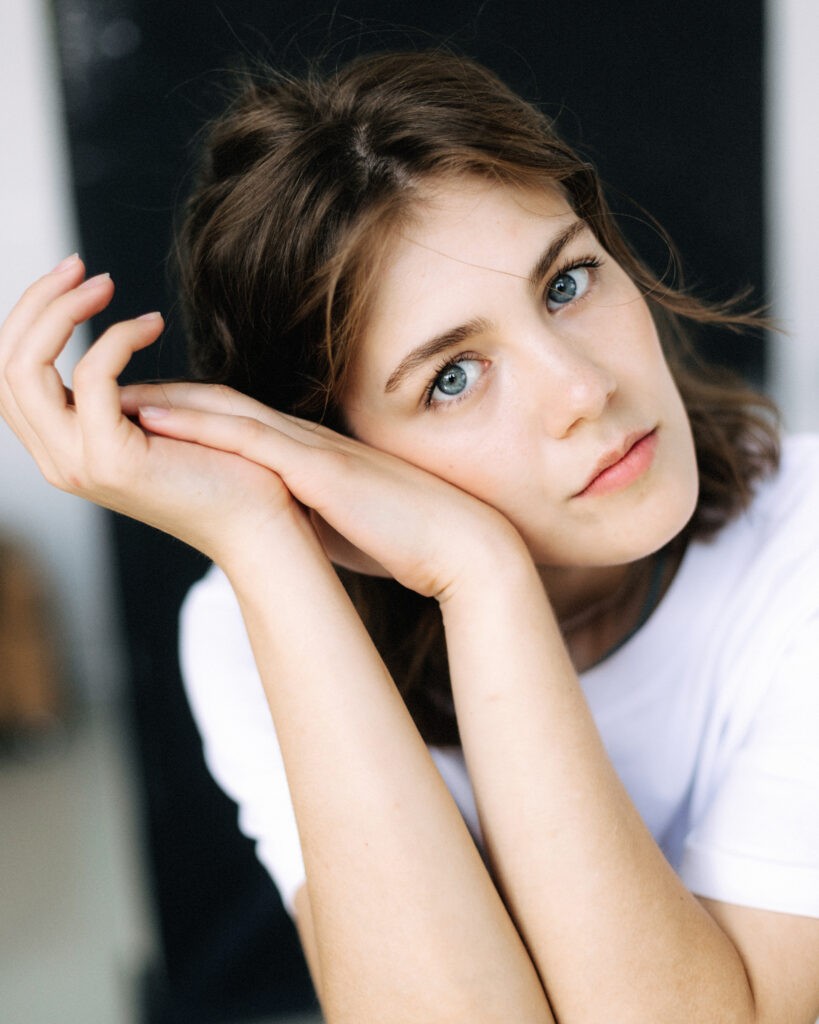
– You mentioned that you watch movies when you rest. Tell us, what themes in cinema interest you the most? Do you have favorite directors?
I really love Paolo Sorrentino, Woody Allen, Wes Anderson, Guy Ritchie, Quentin Tarantino. In this graduation year, I also watched many Soviet films.
I watched “The Flight” from 1970, with the amazing Lyudmila Savelyeva and Alexei Batalov. Then “We Are from Jazz”. I also discovered a completely poignant film by Sergei Solovyov, “One Hundred Days After Childhood”. About how a 16-year-old boy falls in love for the first time.
Of course, as a girl, I’m close to all kinds of love stories, but I also love action movies. I would like to star in something like that. Either sci-fi or an action movie.
I recently watched the series “The Sopranos”, just to clear my head. It’s a mafia story, not that I recommend it, but I liked it.
Now at our theater, Semyon Yakovlevich is staging a new play based on a certain script, and there is also a mafia story there. I would like to play in something like that. I really like that genre internally. I would like to play some crime boss’s wife who donates money to charity one day, feels sorry for a wet kitten, and at the same time can calmly watch competitors being drowned. I like that fine line between good and evil. Good is what she decides, not what people invented.
– Which actors from the old Soviet school inspire you? Who would you like to learn from if you had the chance?
As a child, of course, I adored Irina Muravyova. She is a wonderful actress. Also Liya Akhedzhakova. I recently rewatched “Office Romance”.
That’s the case when an actor played in an episode but everyone remembered them. That very scene where she chooses boots. Liya Akhedzhakova is, of course, an incredibly talented artist. And probably also Alisa Freindlich. I went to a play at the BDT, “One Summer”. She plays there with Oleg Basilashvili. We all grew up on her films. Those are three actresses I admire. And thanks to them, I wanted to become an actress myself.
– What job offers would you not accept and why?
I wouldn’t accept something I probably disagree with. Something that contradicts my principles. I’ve had several offers that my agent and I turned down.
Or you read a script, and it doesn’t inspire you at all. When you don’t understand it. In that case, I don’t see the point in working on it. Of course, someone else might be inspired by it. Someone might want to work with that script, make it cooler and better than I would, being like, “Well, I don’t really like it, but let’s do something.”
After all, every director chooses the material that ignites a flame inside them, and they want to convey it to the viewer.
I look at Semyon Yakovlevich’s work, how he stages his plays – he can’t eat or sleep if he’s staging. He thinks only about it, talks only about it, he starts comparing all examples from life with the material he chose. And he chooses material very wisely, of course. He would never choose something that is not to his liking or that he doesn’t understand.
Not that he “read and didn’t understand” – of course, he understood. It’s more that he doesn’t understand spiritually. He doesn’t spiritually understand why this heroine acted this way and not otherwise.
At all our rehearsals, we brought excerpts from works. And the first question to us was why we chose that. At first, I didn’t understand – we chose it and that’s it. Only after a while did I realize that if you can’t say why you chose it, then you shouldn’t be doing it.
And when choosing material, I want to stick to my opinion and inner intuition.
In general, you just have to like it – it’s very banal, but it’s true. Even this “understand or not understand”: if you really like it, then you will be able to understand. If not, you won’t do anything.
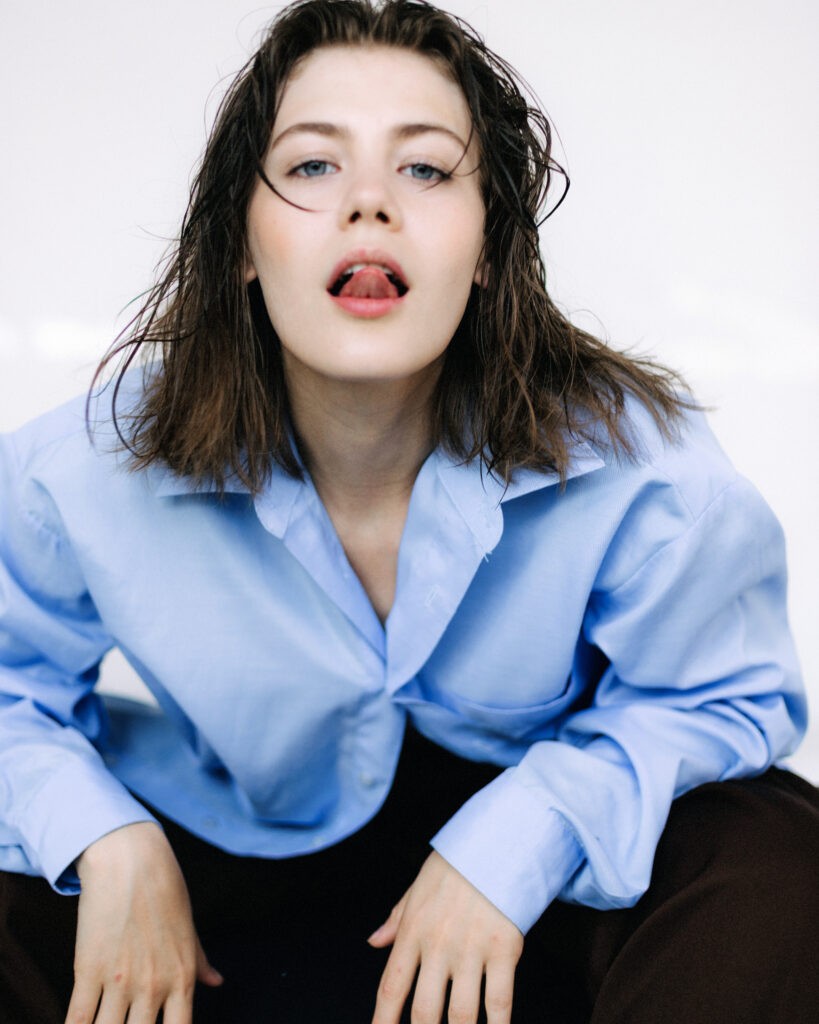
– The magazine “Rules of Life” covered the festival “New Season”, and in that article, you were mentioned as a new bright star that has lit up on the domestic horizon. What does it mean to you to be a new face in Russian cinema, and how do you feel about it?
I haven’t read those articles at all; they just haven’t come across me. And I don’t know how to feel about it. Maybe it’s my inner modesty. I don’t consider myself that. I hope we made a cool project that people will like.
– What moment in your career was a turning point for you?
The turning point was, of course, ‘Krasnaya Polyana’. It’s the first such project. I don’t have a very big career yet. I would say I’m just at the beginning of my journey, I’m only 24, and everything is still ahead, I hope.
And ‘Krasnaya Polyana’ was the first such long project for me. For three months, even three and a half, we were on an expedition. And so far, no other project has overshadowed those emotions.
– What do you think is the meaning of the acting profession?
We once had a conversation with our speech teacher, Vladislav Evgenievich Komarov. I can compare it to when little children start asking their parents questions about God. In the same way, we, beginning artists, ask questions about the profession.
At some point, you think: “Well, what am I doing? Why? What for?” Doctors treat people, plumbers fix pipes, artists paint. Although artists probably also have that question, why they paint. There must be something you get as an output. You took an interview from me today, you will have material.
In fact, you don’t get something physical when you work with yourself and with the audience. But I really liked the phrase from our teacher: “If you have the opportunity to give someone hope, even just a smile, then it’s worth it.”
I once watched an interview with Maria Aronova, she told a story about a time after a performance when a female spectator came up to her. Maria came out after the performance thinking about how tired she was and why she needed all this. At that moment, a woman came up to her and said that her husband had died. She often comes to this performance and each time seems to relive good emotions. The spectator thanked Maria for helping her cope with the loss. I might have mixed something up, but that’s the gist.
And it was the same after our performances in the workshop, when people came up and said they really liked it, they laughed a lot or cried a lot, or just called their mom after that.
I understand that our series is a comedy, that after it, people probably won’t call their moms. But I hope that comedy is also needed now. People need to smile, because it’s hard to be in negative emotions all the time. Maybe it can brighten someone’s day. Like some series brightens mine.
The acting profession is about giving people a piece of yourself. After theater, I come out very inspired, or on the contrary, I think about whether I’m living correctly.
And you need to ask yourself such questions too. Also, the acting profession is about the soul. The human soul. I said something very smart now, of course. (laughs) But I have such an attitude towards the profession that it should bring happiness to people. And just being on screen or on stage is not for me.
Comments
0No comments yet.
Sign in to join the discussion.