

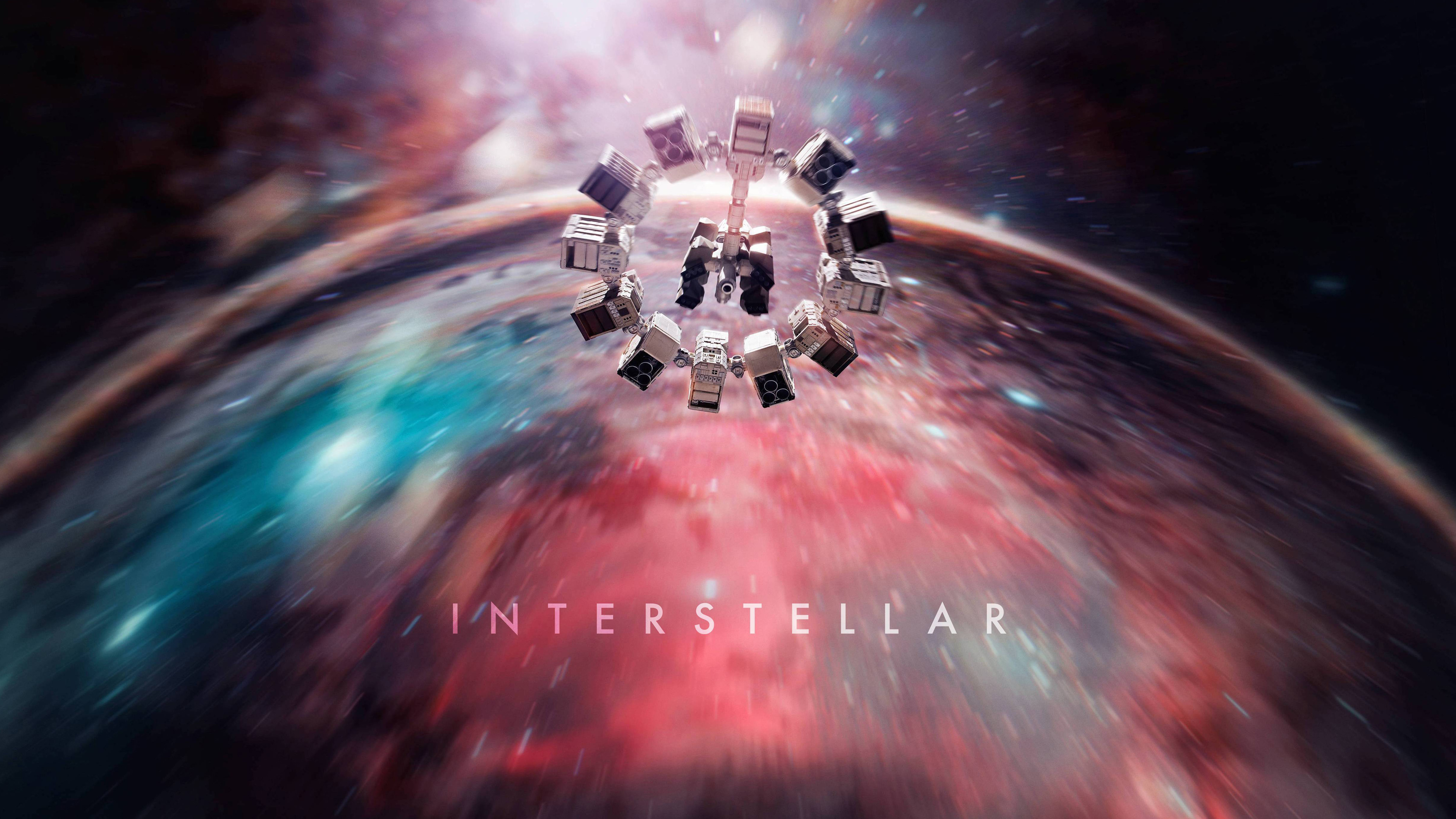
If you haven't heard yet, 'Interstellar' turned 10 this year. We also decided to write a text to pay our respects to the film and its creators. We are a bit late, we were just on Miller's water planet, so we didn't make it exactly on the anniversary...
On November 6, 2014, the world premiere of "Interstellar" took place — a film that many called the most personal in Christopher Nolan's career. Moreover, the space movie is considered the most feminist in Nolan's filmography, even though he is regularly criticized for cardboard female characters (after all, it is the main heroines who make the fateful decisions that save humanity).
The director joined the project when another filmmaker dropped out. Nolan was not afraid to work with material that was already partially shaped: he simply began actively making edits, adding his own ideas, and adapting the script to his vision.
The final result evoked two mutually exclusive reactions from audiences: for some, the film touched their hearts deeply, while for others it became the main cinematic irritant of 2024 due to plot contradictions and flaws. Nolan himself takes the criticism of "Interstellar" calmly: he does not consider himself a genius or an artist, but rather a craftsman, as he acknowledges that his films are based on technical tricks, abstractions, and conventions. He usually does not use cinema as a way to express something personal that bursts from his heart; for him, it is a chance to reflect others' experiences and communicate with the audience.
Although, perhaps in "Interstellar" he made an exception and shared something intimate. Well, cinema is a subjective thing, and in this article we will try to understand what Nolan wanted to say and whether he succeeded.
The author of this material is a longtime fan of director Christopher Nolan's work. While working on this article, I decided to break the material into several parts: one part analyzes the meanings and subtexts of the film, the second focuses on the filming process to show the technical complexity of the film. As a result, the material turned out to be huge, but I tried to compensate with interesting facts and quotes from the director himself. I hope that in the end you won't be bored (again) diving into Christopher Nolan's star universe.
The material contains many spoilers, so if you haven't seen "Interstellar" yet, we advise you to watch the film first and then return to our material.
On Earth
Formally, the development of the idea for an unnamed project about space travel began back in the 2000s, when Steven Spielberg was in the director's chair and Jonathan Nolan (Christopher's brother) was working on the first draft of the script. But it can be assumed that the first seeds of the concept of interstellar travel for the film we now know as "Interstellar" may have originated in the 1970s, when seven-year-old Christopher Nolan first saw "Star Wars." Raised on Carl Sagan's science show "Cosmos" and inspired by George Lucas's space opera, he created his first film — Space Wars, consisting largely of NASA archival footage obtained by his uncle.
Initially, in Jonathan Nolan's version of the script, there was only one planet — an icy one, and there the main character was not greeted by Matt Damon, but by Chinese-dug mines, robots, gravity control devices, fractal aliens that could absorb sunlight, and a space station beyond space and time. In the finale, the hero managed to return to Earth through that same wormhole.
That is what the film "Interstellar" might have been like in another universe where Steven Spielberg remained the director of the project. But in 2009, the filmmaker left to work on other films, and Jonathan suggested Warner Bros. hire his brother Christopher, who was just saying goodbye to the Dark Knight trilogy in 2012. And just two years later, in 2014, the most personal film of Christopher Nolan's filmography would hit the screens.
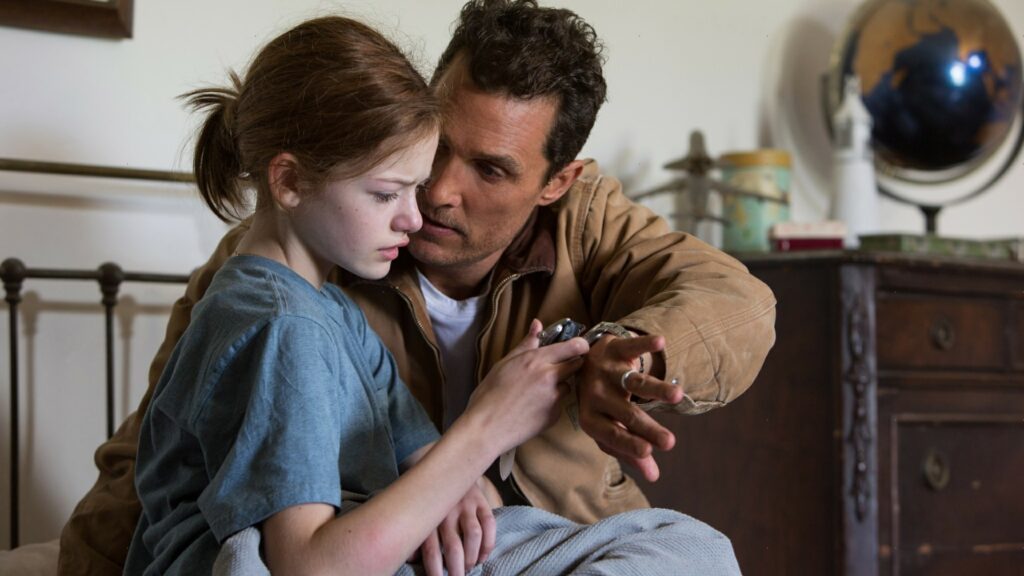
Joining the project, Christopher rewrote two-thirds of the story his brother had conceived. The exposition in the film, where we are introduced to the Cooper family and then the underground NASA employees prepare for the flight — that was Jonathan's idea. Christopher added only one, but very important character for him — the daughter Murph. Initially, in the script draft, Cooper only had a son, but Christopher was very worried that due to filming he would be separated from his daughter, who was 11 at the time. So he made Matthew McConaughey's character a father of two, while emphasizing the special closeness of the father specifically with his daughter, not his son. All the events that happen to the characters of the space mission after going into space — that is the script corrected and polished by Christopher, with references to "2001: A Space Odyssey" and "Close Encounters of the Third Kind" (Nolan sometimes said that "Interstellar" became his own "Space Odyssey," referring to both the film's ideas, the scale of events in the plot, and the difficult filming).
"Interstellar" — Science Fiction About Love and Survival
Christopher Nolan managed to fit several films into one movie. At first, it seems like we are watching a horror film, where unknown forces leave symbols on the dusty floor. Then we are presented with a film about a space journey. In the finale, we experience a deep family drama.
At the same time, "Interstellar" is not limited to these genre formulas. The film about a space journey at some point turns into a classic epic about survival, only the wild jungle or snowy mountains are replaced by cosmic voids. Here we see different sides of the coin.
You know, Cooper, why don't they send robots on such missions? A robot can't improvise because you can't program the fear of death. Our instinct for self-preservation is the greatest source of inspiration. ("Interstellar")
On one hand, a strong survival instinct pushes Dr. Mann to deceive, using which he lures the Endurance crew to his planet. Isolation and loneliness until the end of life — that is something the human psyche cannot easily come to terms with; it is impossible to exist in such conditions. This is essentially death, just not physical, but spiritual.
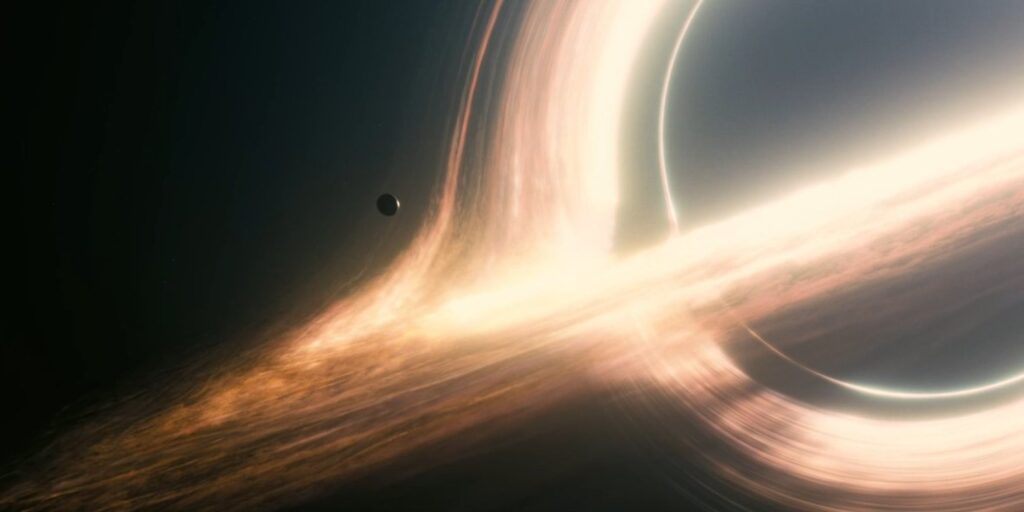
On the other hand, Cooper also faces the survival instinct, but the dilemma overtakes him in different conditions — when he falls from the Gargantua black hole into the tesseract — a hypercube existing in five dimensions. Despite the freedom of action in this space and the opportunity to fight for his life, Matthew McConaughey's character gets stuck at one place — at Murph's room. In many ways, he does this out of guilt for abandoning his daughter, and this feeling turns out to be stronger than the desire to survive.
It is the tesseract storyline that helps us understand that "Interstellar" is a kind of ghost story, but not like in horror films, but like in a family drama. Here, parents become the ghosts of their children's future. Christopher Nolan wanted to add this idea to the film because he was worried about being separated from his daughter. If you know this subtext, it is felt throughout the film. The ghost story is beautifully bookended: it begins with sand symbols on the floor and falling books, and ends in the hypercube, where Cooper tries to communicate with Murph from the past.
By the way, the tesseract in the finale is one of the main elements of "Interstellar" that causes misunderstanding and irritation for many. Most perceive it as an intervention in the plot to somehow get out of a dramatic dead end. But this is not a random thought that dawned on Nolan as he reworked the script; it was in the film from the very beginning. The heroes first mention unknown alien friends during conversations about the wormhole at the NASA base. The strange hypercube is their creation.
Moreover, Nolan himself noted that a similar plot element was used by Kubrick in his "2001: A Space Odyssey," only there the mechanism created by aliens was based on intellectual capabilities. In "Interstellar," emotional connections come to the forefront, on which the value system of extraterrestrial beings and the method of interacting with the tesseract are based. If you connect to Cooper's personal tragedy as a parent, the intangible and not always logical communication of the hero with the aliens becomes understandable on an intuitive level.
Here we come to the discussion that "Interstellar" is a film that explores the power of human love. According to many, this is the main problem and flaw of the film, which tries to appeal to science but veers into emotions. According to the film's plot, when logic recedes and the heroes decide with their hearts, it is then that they make the right decisions. But this does not mean that Nolan wanted to say that science is unimportant. The director simply wanted to remind that love is important.
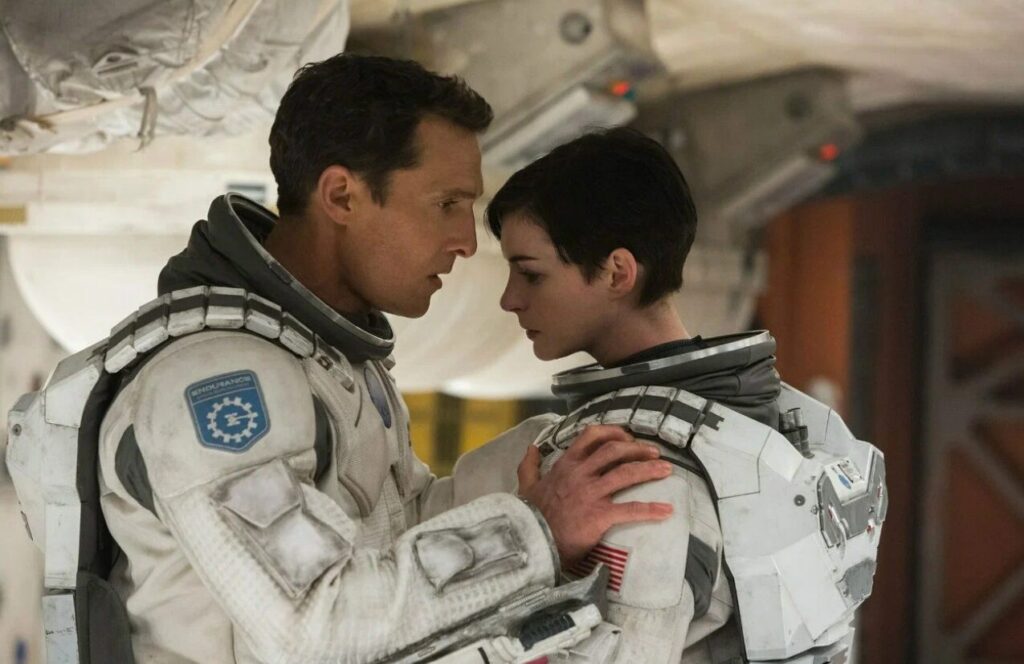
In the conventions of cinema, such a statement against the backdrop of the airless space of the cosmos feels as beautiful and sincere as ever. Out of love for his daughter, Cooper leaves Earth, and out of love for her, he tries with all his might to return. It is this feeling that drives him, not the desire to become a hero and leave a mark in history. Thus, Nolan reflects on the nature of human actions: why did people perform and continue to perform various feats in real life? The answer is simple: either for survival, or to see the face of a loved one once more. People are not inclined to think on a global scale, although culture loves to exalt and embellish people's motives, adding to them the desire to save humanity. This idea is most clearly articulated by Dr. Mann before he leaves Cooper to die.
All of the above leads us to the conclusion that "Interstellar" is a science fiction film that is devoid of genre clichés. Christopher Nolan leaves out what is usually shown and is an important plot element in sci-fi. We have to guess the details of the depicted world ourselves. For example, we do not see news shouting about the dust apocalypse, there are no shots of suffering humanity or meetings of scientists studying ways to save people or the planet.
In films that talk about the apocalypse, we usually expect scenes explaining what is happening. In "Interstellar," the situation on Earth is described quite briefly: we get information through a series of short interviews about the climate crisis at the beginning of the film, and when we see dusty things in Cooper's house. Moreover, these conversations with elderly people about the apocalypse are excerpts from the 2012 documentary mini-series "The Dust Bowl" by director Ken Burns. Nolan inserted them into the film with the author's permission.
Then we are immersed in the personal story of the main family, learning about problems on the farm and at school. As a result, the fantastic film does not give us the expected scale to reveal the issues. Instead, it tells in detail the tragic story of one family, separated by time and space.
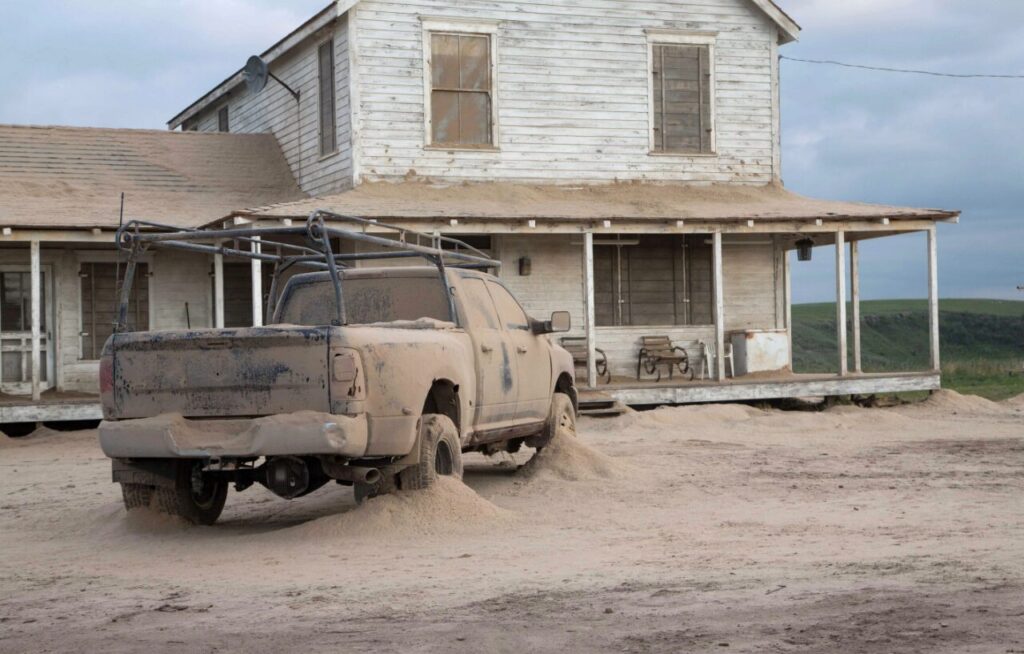
Betrayal, Rootlessness, and the Main Villain of "Interstellar"
The plot of "Interstellar" is like a layered cake. When one layer ends, another is revealed, opening new possibilities but also establishing new dilemmas. Throughout the film, a story of betrayal runs like an invisible red thread: first, Cooper is emotionally devastated by Professor Brand's lies, and then he finds himself on the brink of death due to Dr. Mann's deception.
In a sense, betrayal is a consequence of the characters' rootlessness in "Interstellar." Nolan has already explored this theme in his other films — "Memento," "Inception," and the Dark Knight trilogy. No ties hold the heroes in one place; they are on their own, so in the end they have nowhere to go. Many of them have nothing to lose, and this clouds moral compasses.
In "Interstellar," this idea is embodied primarily by those very scientists who set off to study other worlds for the benefit of humanity. They thought that the absence of close ties was convenient, but when they found themselves far from their home planet, they experienced true loneliness. It is this feeling that permeates the entire film in contrast to love. The more the heroes stake, the stronger their loneliness and loss. On the other hand, the more connections a hero has, the harder it is for him. And this thesis is vividly illustrated by the story of Cooper, who is millions of light-years away from his family.

However, Nolan does not try to show only the negative side of such isolation. Through the actions and decisions of the heroes, he demonstrates that loneliness is sometimes a necessity. After all, to move forward, you inevitably have to leave someone and something behind.
Therefore, "Interstellar" is the most emotional film of Christopher Nolan's career so far. The director reflects on attachments and relationships between people: whether feelings can point people in the right direction and change destinies for the better (including through rearranging books and secret codes). Reflecting on human relationships, he smoothly leads the story into a discussion of missed opportunities, unspoken words, and decisions not made. After all, Cooper does not free himself from ties with his family, but continues to cling to them and return to his parental trauma — that he abandoned his children on Earth. Nolan has already demonstrated this same circling in the film "Memento," where Guy Pearce's character could not cope with the loss of his wife, and his only goal became revenge for the death of his beloved.
"The strength of our bonds is an important reminder that we are not alone." (Christopher Nolan)
As mentioned earlier, the theme of the bond between father and daughter appears in the film for a reason: Nolan was worried about being separated from his daughter due to filming. Therefore, "Interstellar" became for him personally also a film about fatherhood. But Christopher does not want the main villains to ultimately be the mistakes of parents or the betrayal of specific characters. In his film, the main villain is time, which always works against the heroes. Against the backdrop of the inexorable passage of time, the actions of Professor Brand and Dr. Mann pale.
In Space
Searching for Cosmic Landscapes on Earth
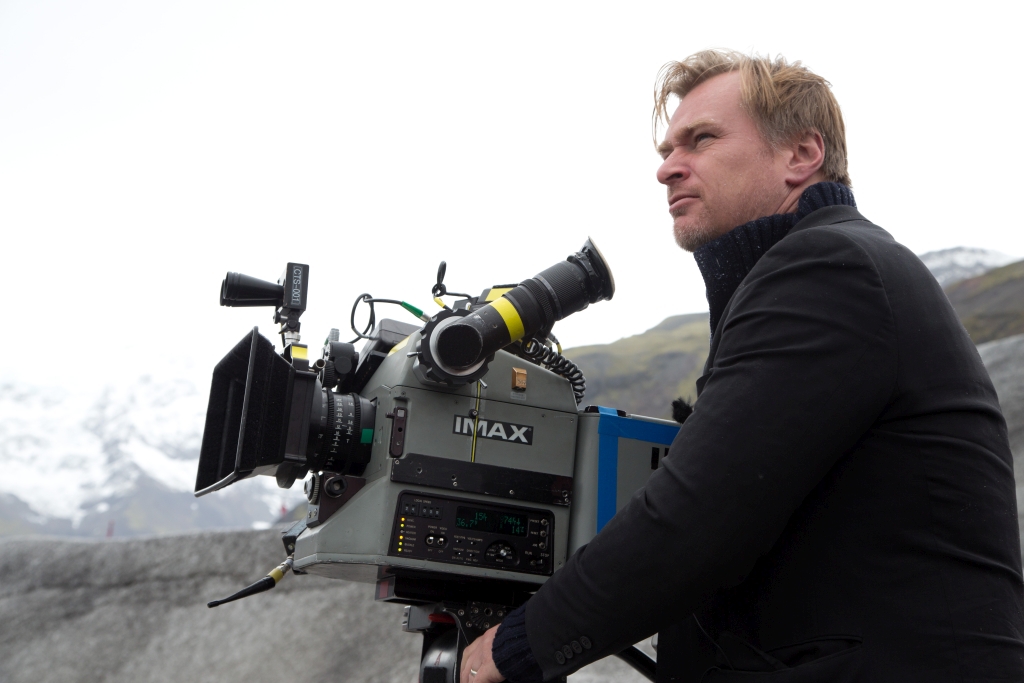
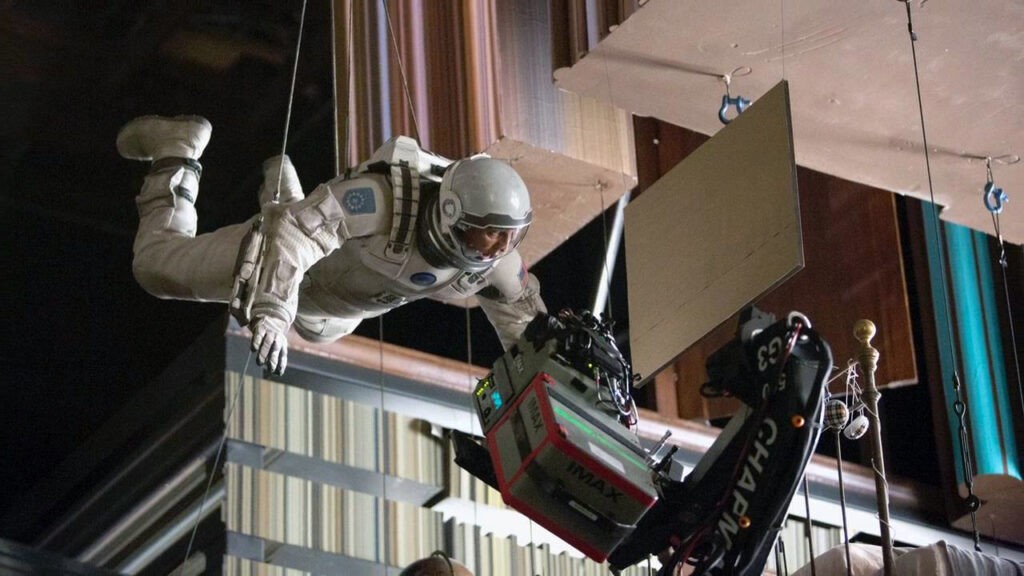
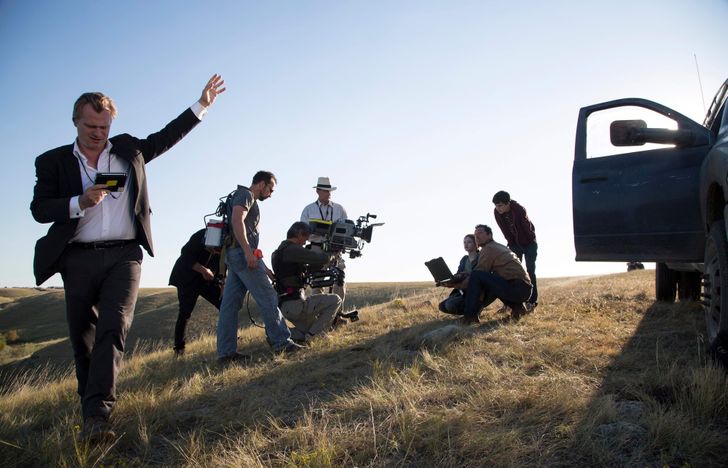
Christopher Nolan is famous for minimizing the amount of computer special effects in his films and reducing the role of green screen. The downside of this decision is a bloated budget, but as long as studios allow him, why not. The director loves location shooting and using analog special effects. For example, the explosion scene in Paris for the film "Inception" was shot on the street with real special effects, almost without computer tricks. Working in "outer space" did not force Nolan to abandon his rule.
The filming process of "Interstellar" began in August 2013: the first location was the Canadian province of Alberta, where the Cooper family lived according to the plot. Nolan had previously filmed mountain scenes there for "Batman Begins," and now his team planted five acres of corn there to demonstrate the consequences of the climate apocalypse. The idea of planting corn was borrowed from Andrei Tarkovsky, whose films Christopher loves very much. In his time, Tarkovsky specially planted a field of buckwheat for the filming of "Mirror," which later bloomed with white flowers on screen.
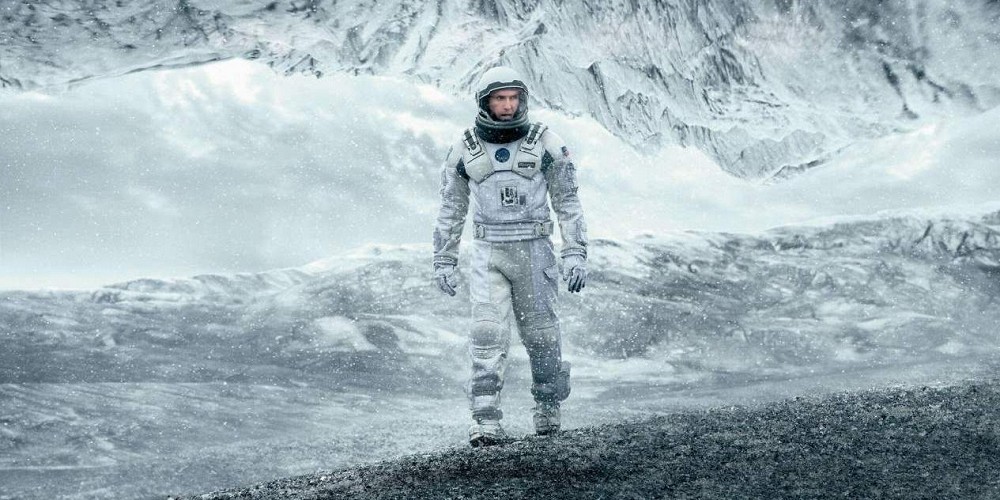
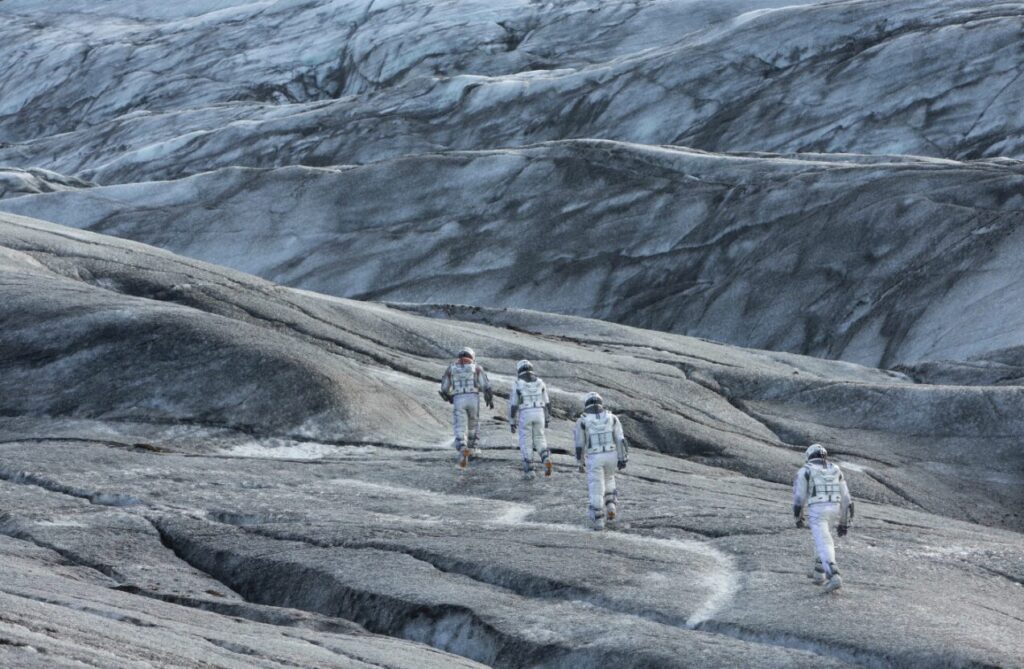
The incredibly beautiful landscapes for Miller's planet — a water world — were found by the film crew in Iceland on the Svinafellsjökull glacier. Previously, epic scenes of the League of Shadows training for "Batman Begins" were filmed in these natural settings.
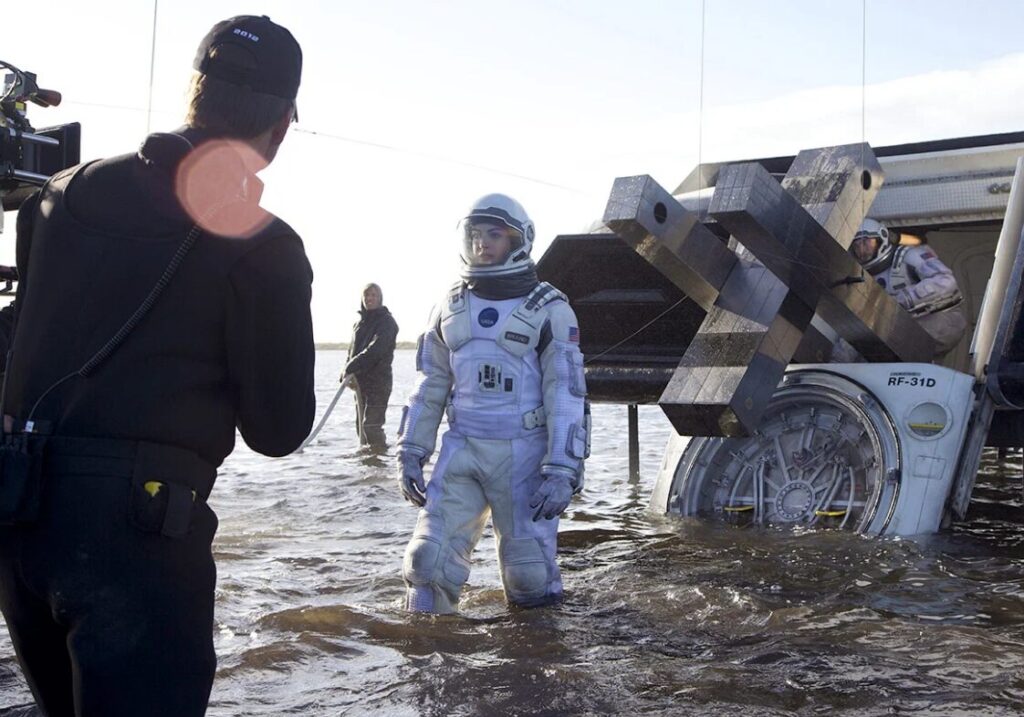
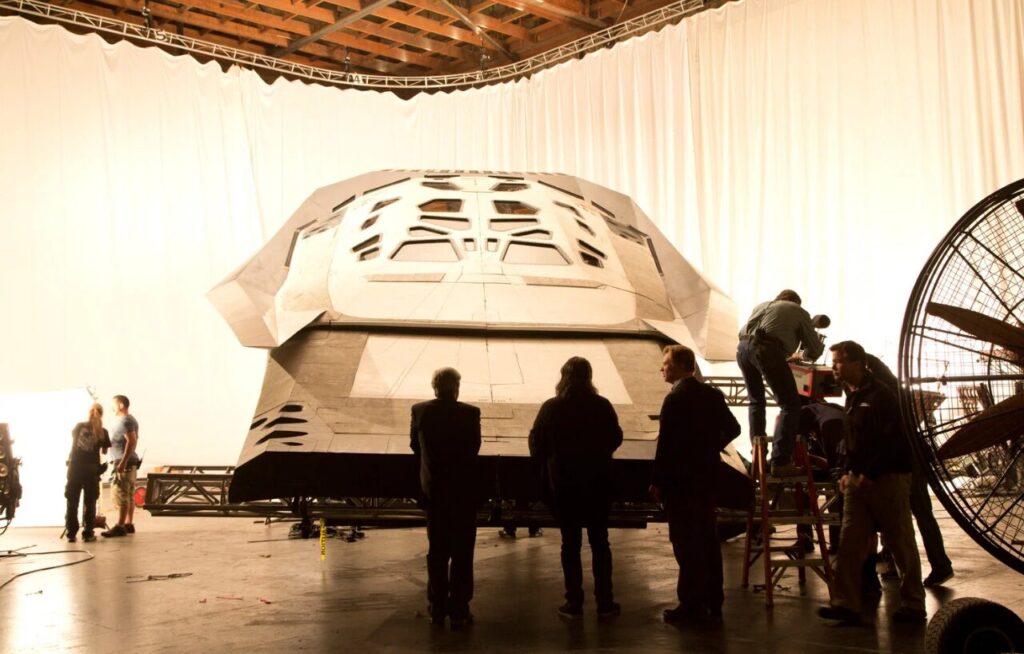
As for one of the main elements of "Interstellar" — the space shuttle "Ranger" — Nolan followed his principles here as well. A full-scale model of the shuttle was specially built on hydraulic cylinders for filming, allowing the actors inside to feel any vibrations in reality. The shuttle was located in a pavilion in Los Angeles — the same one where Nolan filmed the Batcave for "The Dark Knight Rises." Later, while working on the spy thriller "Tenet," Nolan surpassed himself even more: for one scene, he set fire to the fuselage of a real Boeing aircraft (and he had only one attempt to film everything needed).
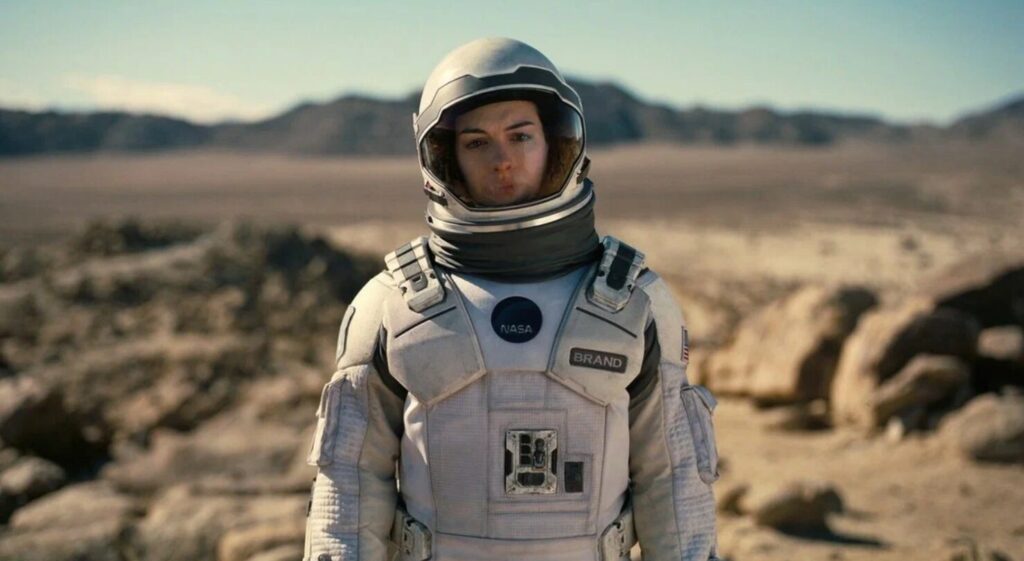
One hydraulic system in the fake shuttle was not enough for the actors to experience the real feeling of flight. Therefore, a huge panoramic screen was placed around the model, onto which cosmic landscapes were projected. So when Anne Hathaway and Matthew McConaughey looked out the porthole "into space," their delight was genuine, and the space was almost "real."
The emotional part in the actors' performances is of particular importance to Nolan. In particular, he wanted to saturate "Interstellar" with emotions, to make the displayed images awaken powerful feelings in the audience — awe, so that the scale would take your breath away. For this, he used all means: visual imagery and music. It was also important that the audience react to the characters.
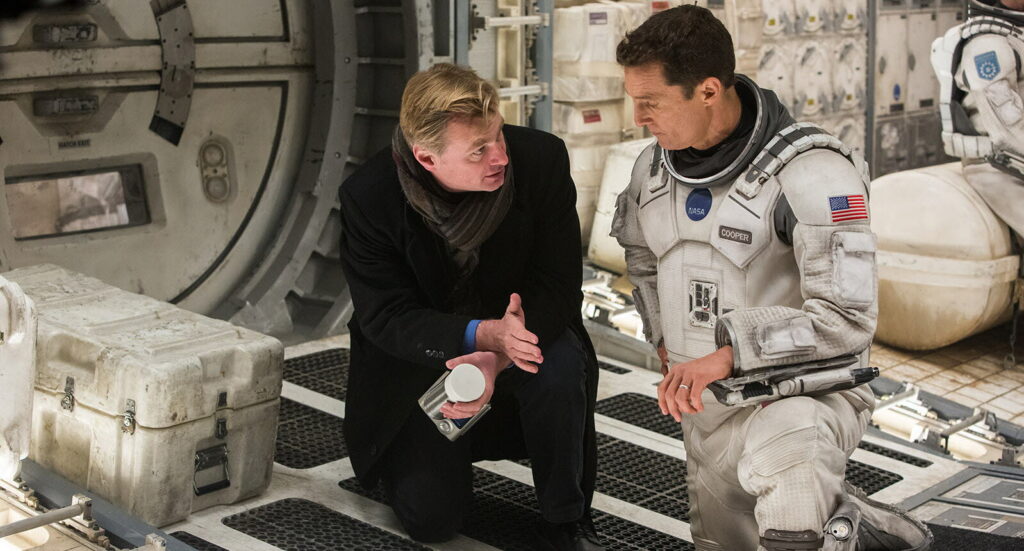
But when extracting strong emotions from actors, it is important not to overdo it. Therefore, Christopher Nolan made sure that the sincerity and openness of the actors, especially in dramatic scenes, did not overflow, so that the audience did not feel like they were intruding into something too personal. According to the director, one of the most touching scenes in the film for him is when Cooper listens to all the video messages after returning from Miller's planet (funny that this dramatic moment eventually turned into a meme).
"There was a risk that Matthew McConaughey's reaction would be too naturalistic, because this episode awakened his own paternal feelings... In this regard, the work of actors fascinates me very much. I sit on the set and watch them, face to face, only occasionally glancing at the monitor to follow the mise-en-scène.
My task is to try to live the episode as the audience will see it, to open up to the actors' emotions. Sometimes an actor plays too sincerely, with an open heart, and thus repels the audience: the scene becomes unbearably heavy, as if we are intruding into someone else's personal space." (Christopher Nolan)
Christopher believes that one of his main tasks as a director is to synchronize the film with the audience's perception. That is, to ensure that specific scenes evoke certain emotions in the audience, but without overdoing it. It sounds like a kind of manipulation of the audience's reaction. But on the other hand, this is how the director talks to us through the screen, pointing out what worries and concerns him.
Soundtrack That Carries You into Space
While Christopher Nolan was actively working on the set, composer Hans Zimmer, who wrote music for many of his films, was composing the soundtrack for "Interstellar." Moreover, this collaboration began in the most informal and spontaneous way. Even before Zimmer's full agreement to work on the film, Nolan sent him a brief annotation of one page: in it, he laid out the essence of the project and wrote a few lines. Based on this information, the composer was supposed to compose some melody with the potential to become the film's musical theme.
Hans Zimmer came up with a very personal musical piece. Later, when the director described to him the scale of the film and the grandeur of the story, Hans doubted that his sketch would fit. But as it turned out, Nolan wanted exactly what the composer gave him: from this sketch, the soul of the film was later born, as the director himself says.
Another thing that was important for Christopher was that the soundtrack use an organ. Zimmer was worried that in that case, the music would resemble melodies from old Hammer horror films (the first films about Frankenstein, the Mummy, and Dracula): in them, the organ sound created an atmosphere of tension, hinting at key and frightening moments to the audience.
But Nolan needed the organ to evoke a sense of cosmic scale in the audience, so that everyone who watched would feel awe from the film. To enhance the effect of the organ sound, the director and composer decided to record the compositions in two places: at George Martin's AIR Studios in London and at Temple Church, where there was incredible echo. Also, choir parts for "Interstellar" were recorded in this church: for unusual acoustics, Zimmer came up with the idea of turning the choir with their backs to the microphones. The orchestra, consisting of 100 people, including 34 string players, 24 wind players, and 4 pianists, was recorded in the studio (we list this so you understand the scale).
But you have to pay for the scale of the idea, especially with time. The recording of soundtracks was not happening fast enough; there was a risk of not recording all the music by the film's release, thus falling behind schedule. Therefore, Christopher Nolan got involved in the process: recording tracks in the studio and the church began to happen in parallel. The director controlled the process in the church, and the composer in the studio, and vice versa.
Nolan's idea succeeded: the music in "Interstellar" sends chills down your spine and gets under your skin, simultaneously evoking a sense of grandeur and telling something personal and secret. This was also appreciated by the jury of the American Film Academy: the film had many Oscar nominations, including for Best Sound and Best Original Score (and it won the award for Best Visual Effects).
But this did not save Nolan from criticism: many expressed dissatisfaction, as the music seemed too loud and overshadowed the characters' words, making them sometimes difficult to understand. In response, the director said that they wanted to make the sound physically tangible, to convey the power of the scale of events. To enhance the vibration of the sound in the film, they used all possible means, including technical capabilities. However, everything has both positive and negative sides.
Nolan decided to go the extra mile not only with the soundtrack but also with the sound in the film. He completely abandoned the noises that are usually used in science fiction films to dub processes, for example, inside a spaceship. Instead of overlaid hums, beeps, and rustles, the sound was recorded directly on set, capturing the actors' movements in the shuttle. And they even "voiced" the robot "TARS" in Nolan's assistant's office: the sound of its "steps" is the sound of moving drawers in a filing cabinet.
Nolan and Zimmer put their whole hearts into developing the music and sound for the film, so that it would not just be background, but a separate important element without which "Interstellar" would not be itself. Unsurprisingly, the director has a scene that he considers the most emotional of his entire career, largely thanks to the music. This is the rocket launch scene, when Matthew McConaughey's character tearfully drives away from his children, while the countdown to the rocket launch is heard off-screen, and a powerful organ plays. The culmination of the father's personal tragedy is the moment when the entire screen is engulfed in fire — this screen image Nolan borrowed from Fritz Lang, who first used it in his 1929 film "Woman in the Moon."
How to Feel About "Interstellar"?
When talking about "Interstellar," people remember the technically complex work done by the film crew. And how realistically they depicted science on screen, which is not surprising, because the consultant for the film crew was theoretical physicist and Nobel laureate Kip Thorne. Thanks to him, the cosmos in Nolan's personal epic looks and "sounds" realistic, and the phenomenon of dilated time, the appearance of the tesseract, and the patterned shapes on the dusty floor are not the director's crazy fantasy.
But the scientific nature of "Interstellar" does not mean that there is no room for emotions in the film. Discussing the meanings and ideas of the Nolan brothers, and studying the intricacies of the filming process, it is clear that Christopher did not want to create a sterile scientific epic about space travel. He conceived a love story, told through the prism of space and time surrounded by a vacuum.
"Reality in cinema works according to its own wonderful rules. The director always asks the audience to believe in the impossible and helps them do so. Cinema is still fiction."
This is how Christopher Nolan likes to speak, explaining the meaning and plot ideas of his films. Every film is primarily a way for the director to communicate with the audience through visual images, metaphors, and dialogues/monologues of the characters. And any cinema, even documentary, cannot be completely objective, because even the slightest editing and change of angle can change the perception of what is happening on screen. One such moment brings fiction, fantasy, and interpretation of a particular person into reality, turning the film into an author's statement.
"I noticed that 'Interstellar' gives more to those who do not try to resist it. To those who do not treat it like a crossword puzzle to be solved, or an exam to prepare for... If I need to convince you that the film works, then it just didn't work for you."
This is how Christopher Nolan responds to everyone who criticizes the film. And perhaps this is an excellent answer, because cinema is a very subjective art.
One of the sources of information when writing the material was Tom Shone's book "Christopher Nolan: The Films, Mysteries, and Wonders of a Cult Director."
Comments
0No comments yet.
Sign in to join the discussion.