


'Armand', a Norwegian conversational film about a scandal between parents due to an incident with their children at school, is being released in wide release in Russia. In this review, we tell how a monotonous Scandinavian drama turns out to be an em...
Actress Elisabeth (Renate Reinsve) is called from rehearsal to the school where her six-year-old son Armand studies. The worried mother is met by the primary school teacher, and together they wait for the parents of the other boy. Ahead of them lies a difficult and tense conversation about Armand's behavior, who is suspected of violent actions against his classmate Jon. But the further the conversation about the terrible incident goes, the more obvious it becomes that perhaps the problem is not with the children.
Before talking about the film, it is important to clarify that the director of 'Armand' is Halfdan Ullmann Tøndel, the grandson of Ingmar Bergman himself. Despite Tøndel's denial of his relative's creative influence, his debut film exudes a deep psychologism and a desire to dissect human personalities—exactly what his grandfather loved. Talent in this family is likely passed down through genes; at least, the Cannes Film Festival jury highly appreciated 'Armand', awarding it the Caméra d'Or (prize for best debut feature). Additionally, the film became Norway's candidate for the Oscar.
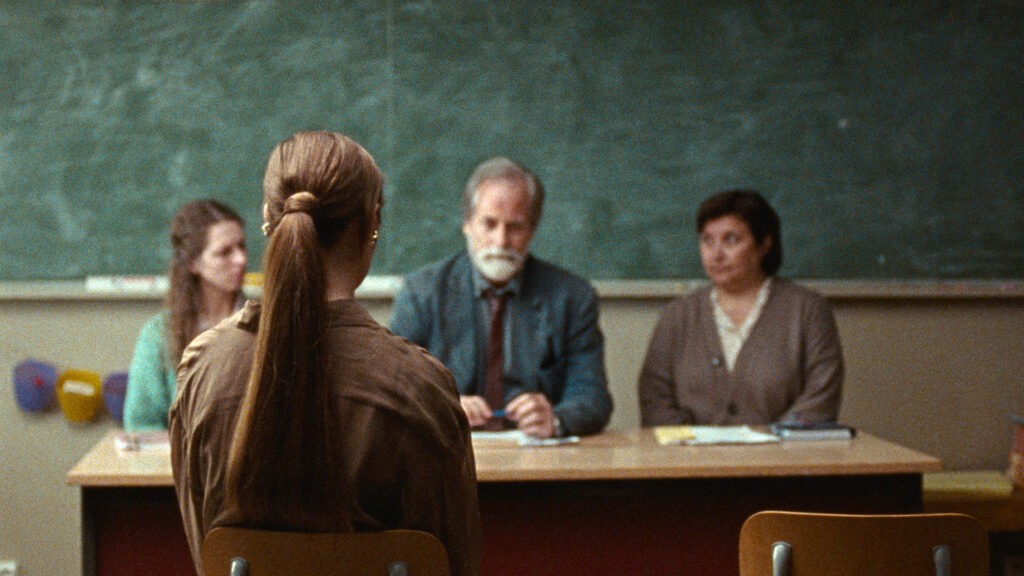
At the center of the plot is a scandal caused by one student's actions towards another, but we do not see the boys themselves on screen. After all, the main characters here are not the children, but their parents. 'Armand' is a tragic drama about how far feelings like envy, jealousy, and hatred can drive a person. The primary school students are rather used by the director as a pretext to discuss how rotten the adult world is. For the parents, their children become pawns in a dishonest and quite cruel game.
Globally, the film has no plot: for two hours we watch people locked within the school walls sorting out their relationships. Will we be bored? Not for a second, because 'Armand' slowly but surely sucks you into its web. The tension in the drama is largely created by the use of an unreliable narrator: we don't understand who is right, who is wrong, we doubt and ponder how we would act in the heroes' place. The lack of a moral compass and a point of reference in the story causes discomfort, as it is difficult for us to choose the right side. In the end, together with the unfortunate Elisabeth, we rush between different floors and offices in search of salvation and truth.
The heroes of 'Armand' wander in their own lies, drown in a thirst for revenge, and hide their vulnerable egos behind passive aggression. All this eloquently speaks of their weakness, which we observe in the finale. Moreover, not only the parents but also the school staff demonstrate their powerlessness, unable to resolve the conflict peacefully. They succumb to the pressure of circumstances and instead of truth begin to seek convenience, and instead of help, they show condemnation and criticism. In doing so, they admit their incompetence.
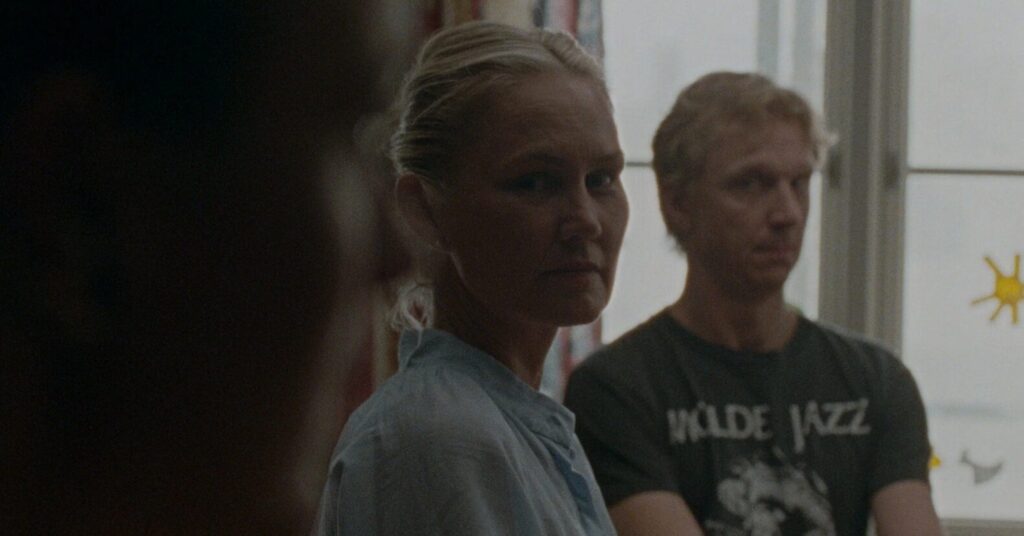
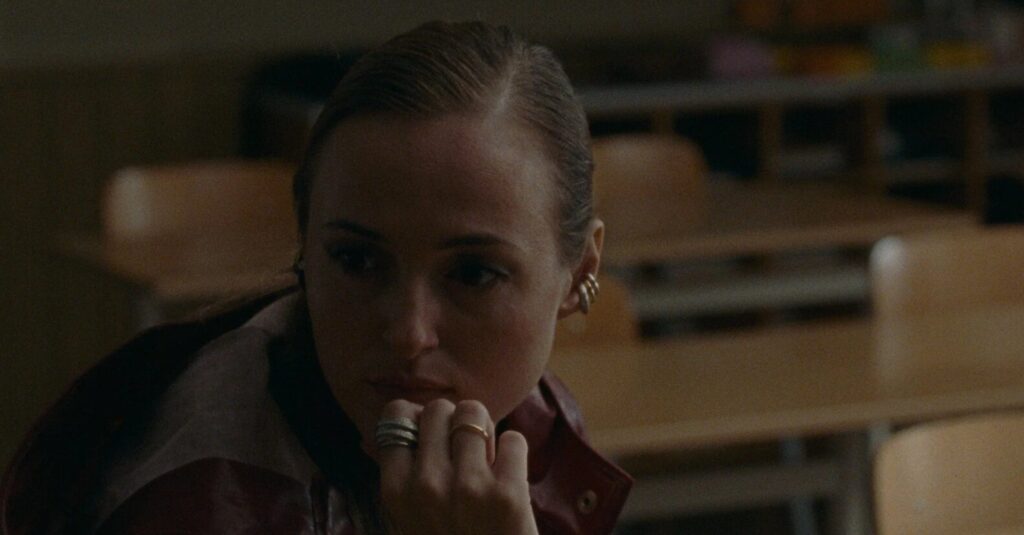
The director dumps on us a load of family secrets, unexpressed pain, and despair. Moreover, 'Armand' speaks to us primarily on a sensory level, demonstrating the characters' emotions, conveying their feelings through glances and movements. After all, it is sometimes so difficult to put into words what lies hidden in the soul. And thanks to the excellent work of the actors, especially Renate Reinsve, we seem to experience all these emotional swings ourselves.
The tension is felt not only in words and intonations but also in the atmosphere itself. Tøndel visually shows how heated the air is, and the sudden heat outside is used as an additional catalyst for the scandal. Only the downpour in the finale washes away the nervousness and fatigue of the characters from the extracurricular squabbles and brings the truth to the surface. A similar method of cross-referencing events and the surrounding world was used, for example, in the recent film 'I Told You So'.

'Armand' is a film about not jumping to conclusions, otherwise you may pay dearly for it, and social and personal prejudices can play a cruel trick on you. Family secrets can even destroy you. Ingmar Bergman's grandson made an anxious and emotional, yet very talkative film that makes you think about the relativity of truth and dig deeper into yourself.
The Norwegian drama 'Armand' was released in wide release in Russian cinemas on December 5 thanks to the film distribution company A-One.
Comments
0No comments yet.
Sign in to join the discussion.