
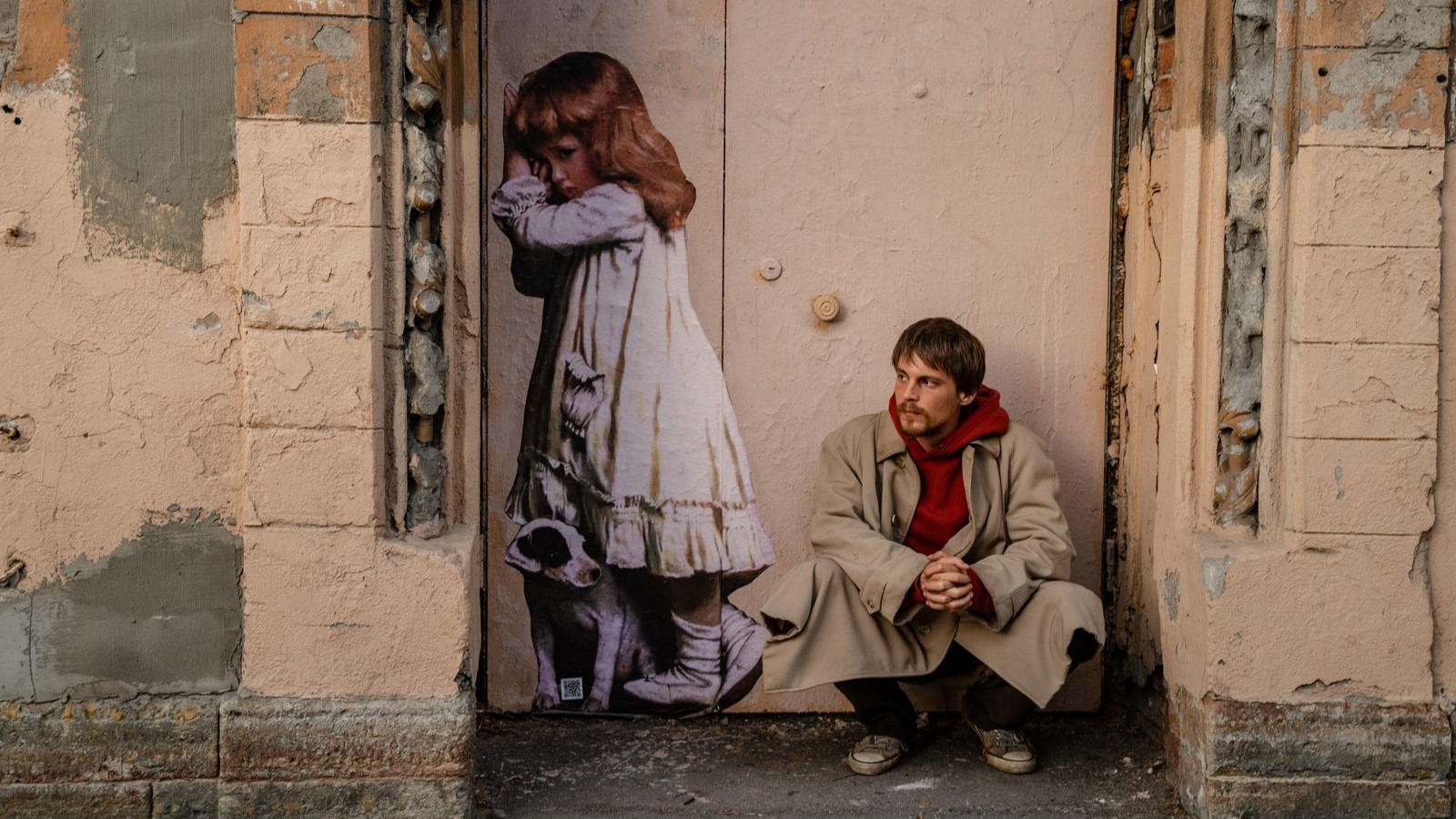
On November 2, the long-awaited and desperately advertised 'adaptation of the great novel' was released on Kinopoisk, which, however, was soon replaced by a 'new reading'. Many publications have already hinted that making such a thing is a crime, and...
Before we begin our discussion, an important caveat is needed. Calling this series an 'adaptation of the great novel' or even a 'new reading' is already a crime against humanity and art. Therefore, we are compelled to call it this: the series 'P'.
The plot of the series 'P' does, more or less, correspond to the content of the novel, mixed with the creators' flights of fancy and a couple of drawn-out scenes from another work of Dostoevsky's 'Great Pentateuch' — 'The Brothers Karamazov'. But the 'new reading' lies not only in this mishmash but also in moving all events to the present day. This reveals the first flaw — the characters' lines taken from the original are not stylized. Because of this, perhaps an artistic device, a conflict of form and content arises: the sentence is constructed in the manner of the 19th century, but it contains neologisms, and overall, this sentence is voiced by an elderly hipster in a supermarket setting ('P' is an extremely unsuccessful performance by Ivan Yankovsky).
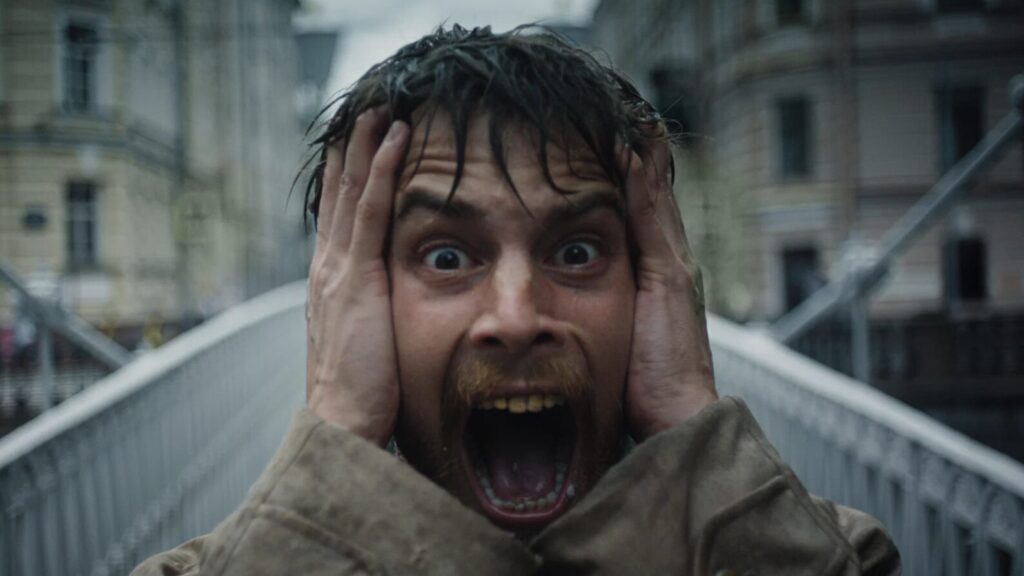
Although this conflict is not the most fatal and one could try to get used to it. After all, the lines from the novel combine very well with the charisma of some actors (Boris Khvoshnyansky, Vladimir Mishukov), creating an image, albeit not in the spirit of Fyodor Dostoevsky's characters. But by the second episode, the creators grew tired of stylizing their own additions to match the original, so lines from the 19th century coexist with completely unprocessed modern phrases.
It is pointless to recount all deviations from the original plot, so let us focus on the most fatal ones. In 'Crime and Punishment', Rodion was capable of a good deed, even if he regretted it afterward. It was simply some instinctive, irresistible urge in him: 'And why did I get involved in helping here? Is it for me to help? Do I have the right to help? Let them swallow each other alive, what is it to me?'. Perhaps it is his very nature, his upbringing ('Remember, dear, how in your childhood, during your father's lifetime, you babbled your prayers on my lap, and how happy we all were then'). In the series, this is decisively absent, deliberately. Their Raskolnikov does not help Marmeladov, does not help the girl followed by 'Svidrigailov'.
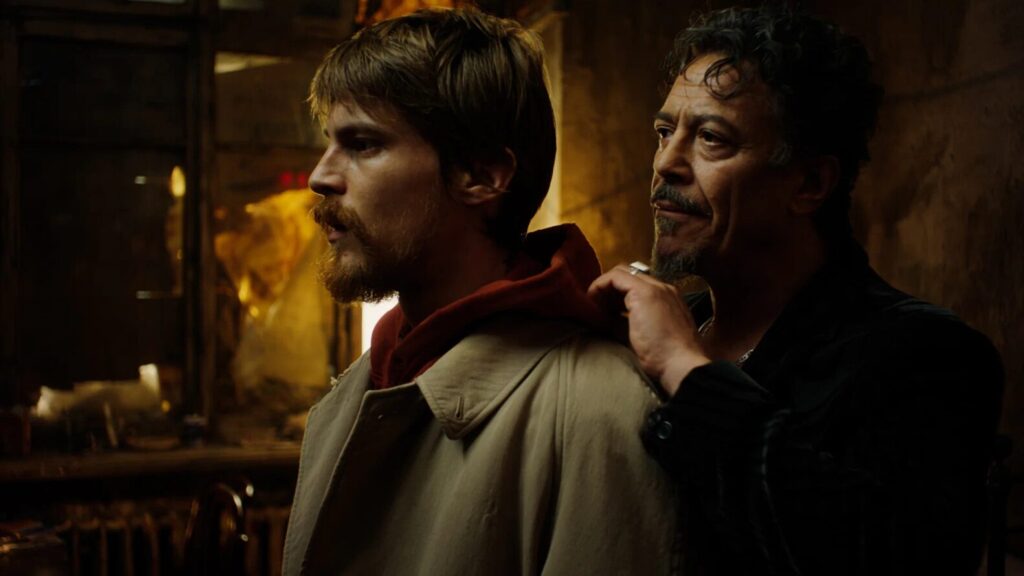
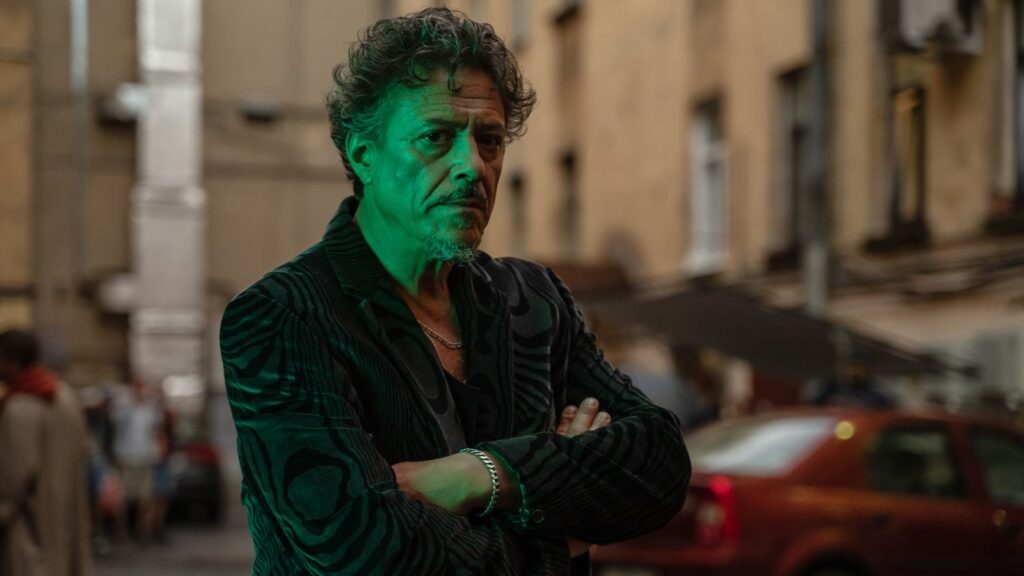
In addition to the story about Zhuchka (which Rodia tells out of the blue), the series 'P' features a whole character from 'The Brothers Karamazov' — the devil who appeared to Ivan. Why he is in the series is a valid question, but what matters here are the rules of his presence in the world of 'P'. In Fyodor Mikhailovich's work, the devil came to Ivan either in a dream or in reality; here, the character played by Boris Khvoshnyansky is more than physical, he can directly influence the world around him, and his actions have consequences. Needless to say, nothing like that happened in 'The Brothers Karamazov'.
The devil who appeared to Ivan is both his secret, demonic 'I' and the devil in the literal sense, since the theme of faith and unbelief occupies a key place in the poetics of the novel. But in the series 'P', the devil is more like Mephistopheles, a tempter helping Rodia realize his theory.
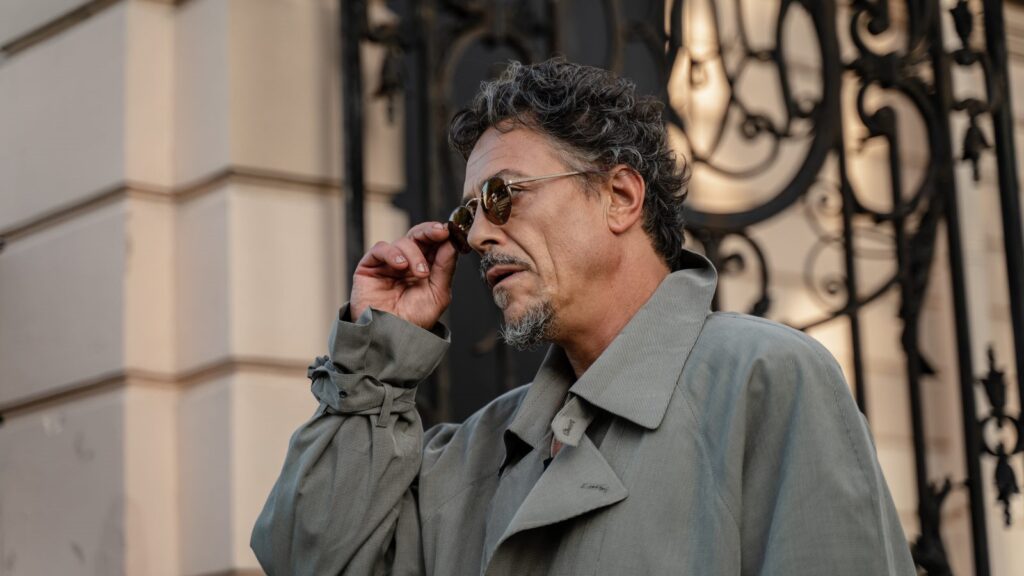
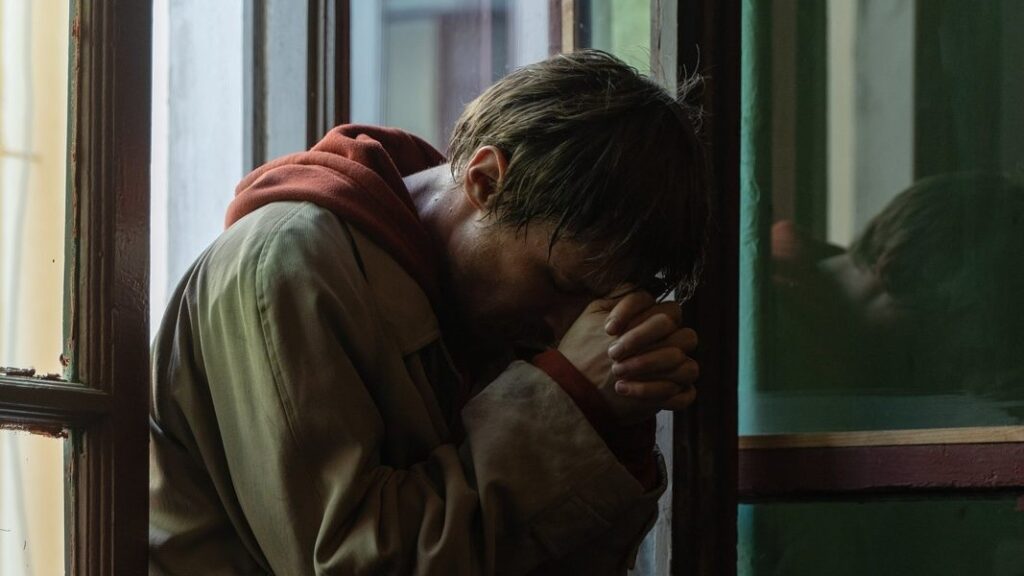
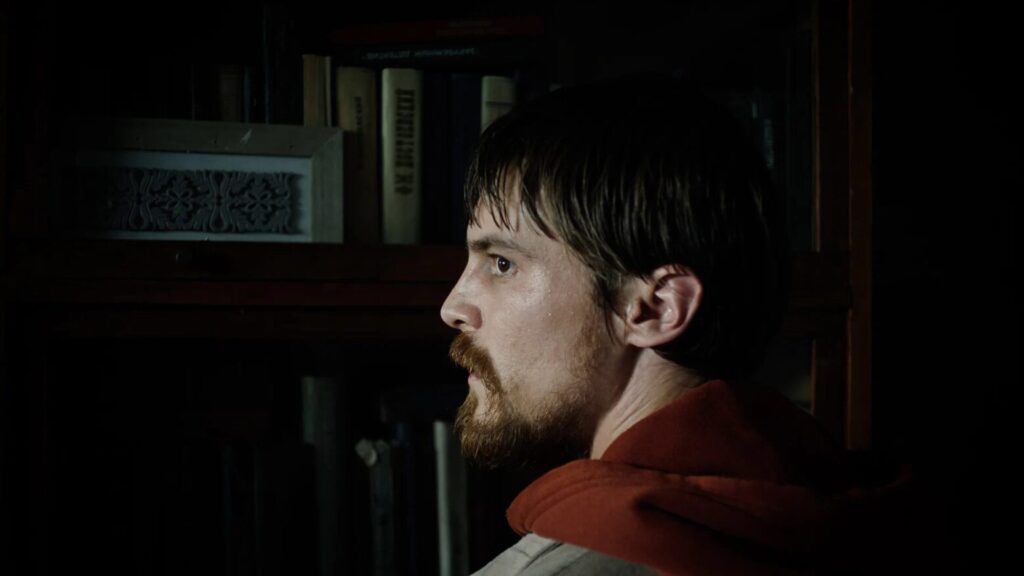
It turns out that if you push through the thorns of the creators' own additions and inappropriate aesthetic devices, the series begins to pose terrifying questions. In the world of 'P', the entire murder seems to be orchestrated by the devil, and as soon as he leaves Rodia, Raskolnikov repents literally the next day in some kind of hysterics (recall that Dostoevsky's Raskolnikov repented only at the end, already in hard labor, in an incredibly beautiful, seemingly timeless scene, resurrecting in the second week after Easter). It turns out that their Raskolnikov is not guilty of the excessively brutal (indeed demonic) murder? Perhaps the creators had some exaggeratedly humanistic mission in justifying Rodion, but it looks like a substitution of the novel's main theses.
In the world of 'P', the devil is an external circumstance, part of the environment, dictated by his external, physical nature. But Fyodor Dostoevsky was against justifying human actions by environment: '...by becoming better ourselves, we will correct the environment and make it better. For only in this way can it be corrected.' In his novels, he did not seek external circumstances to answer the question 'why did he kill'. And the creators knew this, because they used quotes from 'A Writer's Diary'.
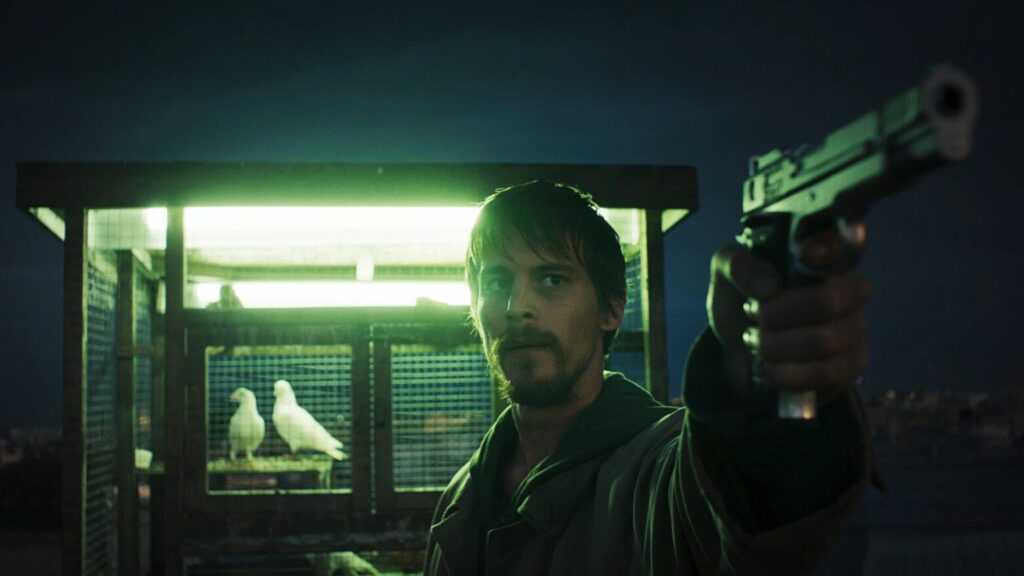
Because the internal conflict is transferred to the external world in the series, this device looks like an excuse for Rodia both for the murder and for his theory. But 'by making man responsible, Christianity thereby recognizes his freedom'. In the series 'P', on the one hand, the bright side of Raskolnikov's personality, which he suppressed with obsession with ideas, is thrown out, and on the other hand, there is this image that cleanses the hero — the devil, who incited, helped, and tempted.
Such a substitution not only has nothing to do with the poetics of 'Crime and Punishment' but also directly contradicts the original source. By taking Dostoevsky's images, fitting them to some vague idea of the novel, the creators constructed directly opposite theses, distorting the very essence of the work.
Moreover, why did they steal Dmitry Karamazov's lines 'I did not kill, I did not kill'? After all, if we talk about duality, it is precisely Ivan and Rodia who can be called non-identical heroes, constituting a certain typological series in Fyodor Mikhailovich's works (which also covers his other works). The authors discovered this identity but distorted it. Ivan is also a 'man with a theory', but he has a more complex moral question, his devil was meant to reveal his indirect guilt in his father's death, his unconscious motives and impulses that he hid and denied; it was his dark identity, in no way connected to the physical world. Need it be said that Raskolnikov had no unconscious, indirect guilt that he needed to discover in himself?
I sincerely hope that the devil ended up in this series to show that the creators are very well-read and highly intellectual people, and there was no time to think about such questions. But it turned out to be a direct polemic with the author, because in the world of 'P' there is nothing bright, only darkness. Everything bright that was in the original has been removed or replaced. Moreover, the bright, literally divine, was also present in 'The Brothers Karamazov'; it occupied the same place as the demonic, because in Dostoevsky's poetics these concepts are binary.
If we assume that the devil can appear to all typical heroes of Fyodor Mikhailovich, people with an idea, then why, God forgive me, did he appear to Dunya? In the world of 'P', does she also have some theory or idea? Is she also a direct or indirect 'murderer'? Such antics on the pages of the script and pretentious, vulgar symbols and images (like the drowned woman in the Svidrigailovs' house) make it clear that the creators unconsciously gave rise to these terrible questions. If the main theses of the 'new reading' are so elaborate and flat, most likely there was no time for such discourse... Or something else.
The overall absurdity of the series 'P'; unsuccessful decorativeness (due to the conflict of form and content); awkward strained dialogues against the hum of the streets; runtime filled with God knows what; images and quotes from 'The Brothers Karamazov' that are not woven in stylistically or logically; incoherent editing reminiscent of melodramas on the 'Russia-1' channel — these are far from all the project's shortcomings. But there were also bright spots. At times, the negative moments are brightened by excellent cinematography and enchanting musical accompaniment, which has a dreamlike atmosphere that matches the style of the novel.
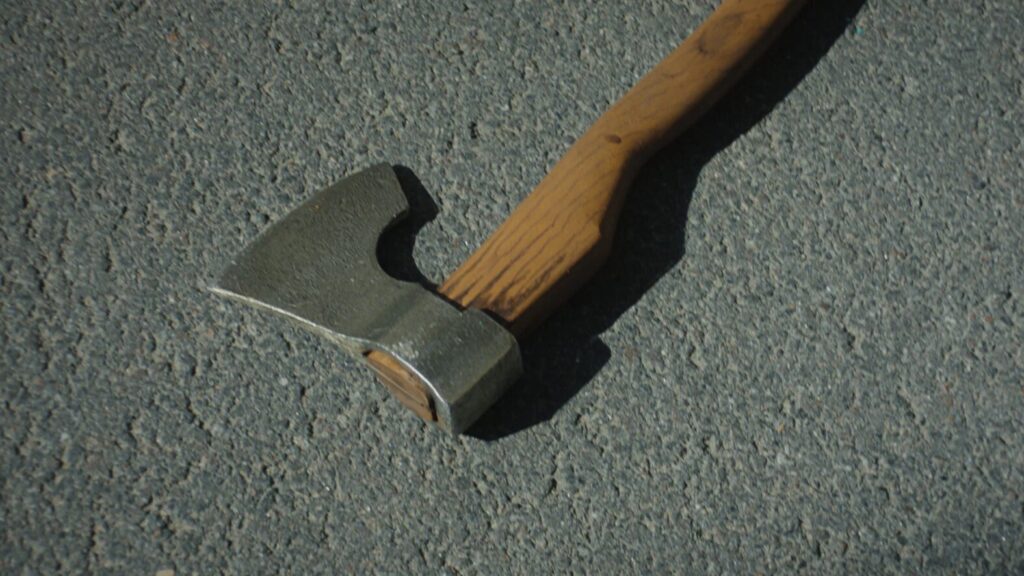
What basic respect can there be for the creators of the series as authors, if the series shows no basic respect for the creator of the novel? While watching, one feels sorry that this is not a brilliant postmodern self-irony with a touch of new sincerity, but simply a disgusting work that tries to debunk all the ideas of the original novel's author. In the world of the series 'P', everything dirty and low exists in a vacuum. It is not relative, because there are only wild, dark sides, presented in a hyperbolic and completely unconvincing manner.
Among other things, Fyodor Dostoevsky's works are close because they present not only the demonic identity of man but also the opposite, bright one. His exploration and understanding of the slightest movements, deviations, and moods of the human soul is hardly comparable.
If the goal of the adaptation was to discard everything bright and holy in the novel, and to lower and vulgarize all the characters, making them flat caricatures of themselves, then it has certainly been achieved. And if this unit of art is a reflection of society, the current human soul, and the result of a 'new reading', then we are, of course, moving further away from God.
Comments
0No comments yet.
Sign in to join the discussion.