From November 14, the film by the classic of Japanese animation Hayao Miyazaki, which has already celebrated its twentieth anniversary, has been re-released in Russian distribution. What lies at its core and what secrets does 'Howl's Moving Castle' h...
"Howl's Moving Castle" is Hayao Miyazaki's main anti-war film, skillfully combining not only an anti-militarist agenda but also emotional thrill, personal experiences, and beauty. The story is based on the book by English writer Diana Wynne Jones — "Howl's Moving Castle," published in 1986. The Japanese animator was attracted by the image of the moving building, which raised questions that Miyazaki wanted to answer personally.
Studio Ghibli announced the anime in 2001, but the director did not start working on it immediately due to the promotional campaign related to , which caused "Howl's Moving Castle" to be frozen until 2003. Miyazaki said that the image of a boy catching a falling star from the sky had been stuck in his head since college. Perhaps this idea became the trigger for working on "Howl's Moving Castle."
A young girl, Sophie, devotes all her time to the family hat shop, from which she may not leave for days. The heroine's life is monotonous and boring, but only until she meets Howl, who gives her a fleeting romantic adventure. It would seem that life would now sparkle with new colors, but the Witch of the Waste, who instills fear in the townspeople, knocks on Sophie's door.
It is she who casts a spell on the heroine, about which she cannot even speak, let alone ask for help. Now, once young Sophie has become an old woman, and only the mysterious wizard Howl, who lives in a moving castle in the waste, can save her.
The adaptation largely deviates from the original. If in Wynne Jones' book the central problem of the characters is themselves, then in the animator's work, along with personal rebirth, war comes to the forefront.
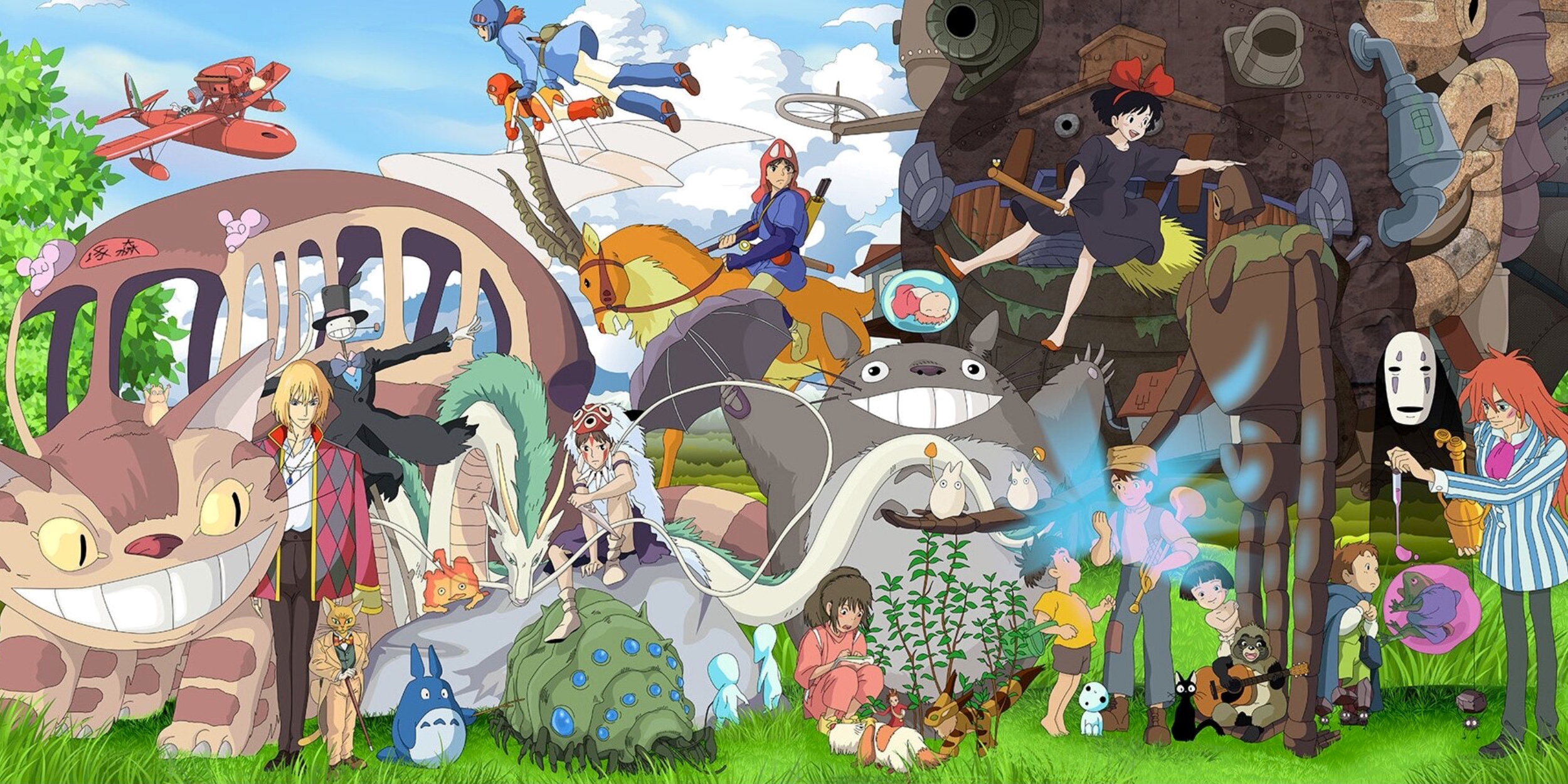
It is not surprising that it often appears in the author's works, take for example "Nausicaä of the Valley of the Wind" (1984), where the story begins in a world ravaged by nuclear war, or "Princess Mononoke" (1997), which skillfully weaves together the themes of "nature and man" and "man and man," where the conflict is based on aggressive and bloody confrontation.
For Miyazaki, war is a childhood horror he had to endure. The future animator witnessed his hometown being bombed; the living scenes of horror gave rise to the director's anti-militarist stance. The world of "Howl's Moving Castle" is shattered by a senseless war, which became an allusion to the US bombing of Iraq. By the way, it was because of such a direct message that the anime had chances to fail at the box office and be rejected by foreign audiences.
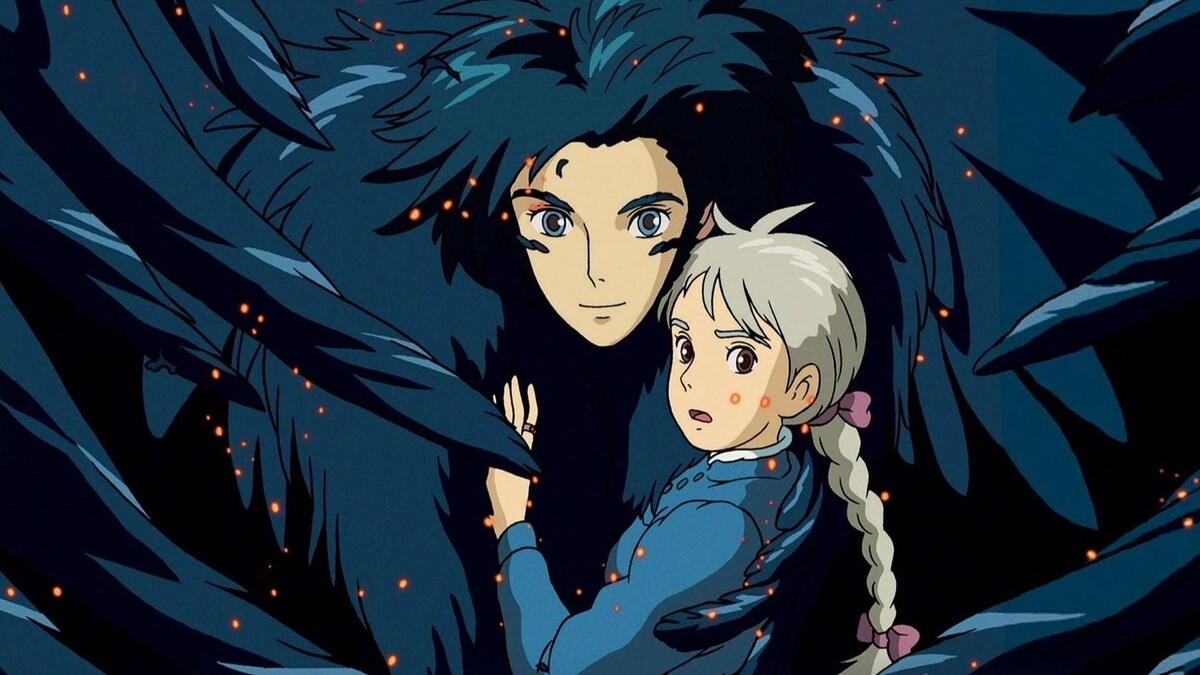
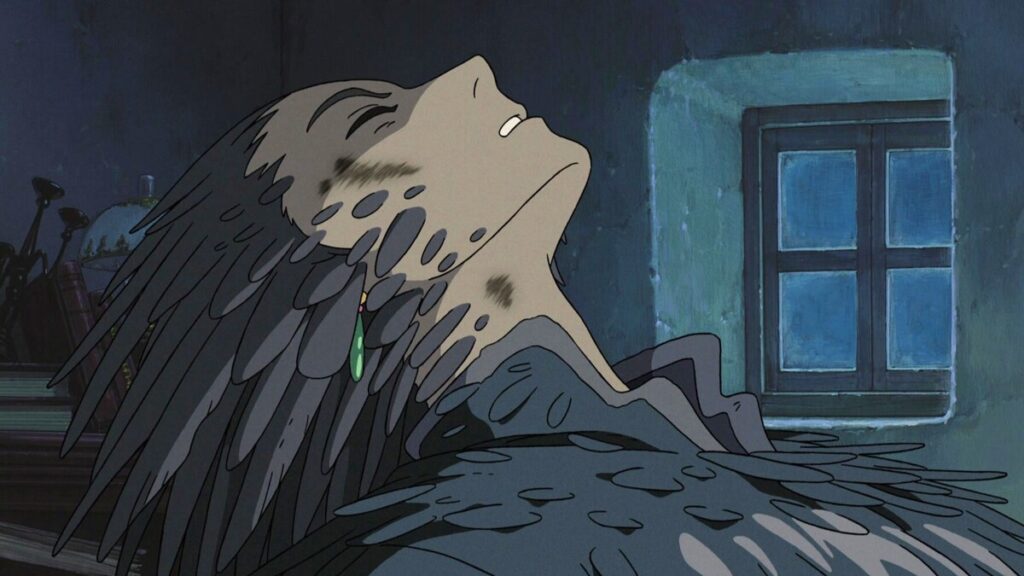
The work does not reveal the beginning of the conflict or talk about the reasons, but shows the consequences that affect people. One of the central characters who is morally torn because of this is Howl. He continues to fight, but each time he doubts and fears. At the beginning of the film, the character is shown as a confident and powerful wizard, but over time he is revealed not as an unfeeling person. Howl is broken by war and forced to fight, each time transforming into a terrible demon.
Still from the anime 'Howl's Moving Castle'
The hero does not want to fight and kill other people. The form into which the character transforms is a clear demonstration of how people, even with good intentions and unwilling to go to war, lose themselves and turn into monsters. In the case of Howl and other wizards of "Howl's Moving Castle," this happens literally.
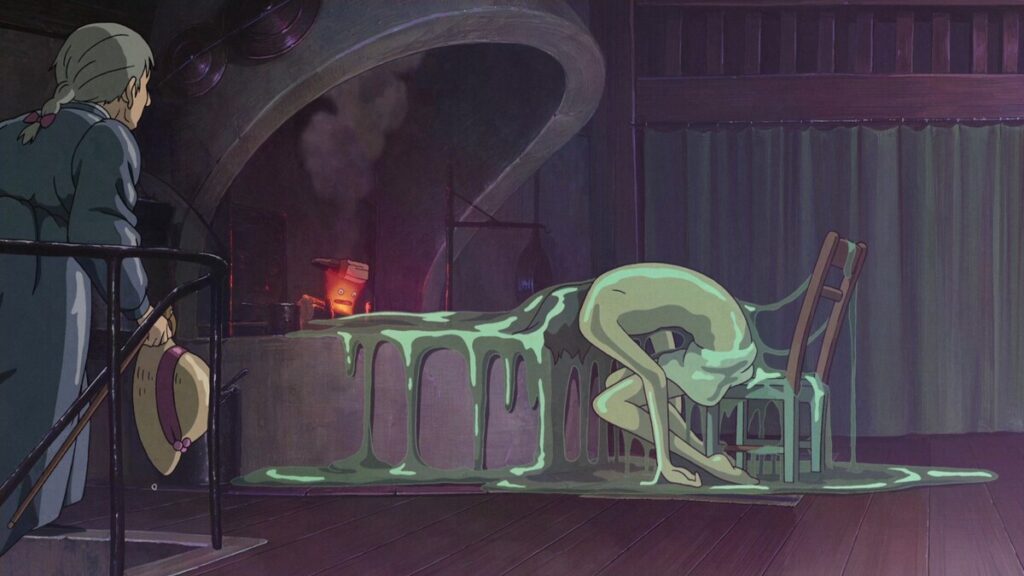
The wizard is infantile and continues to be a child with corresponding whims: his hair dyed the wrong color, and he is already ready to withdraw into himself and destroy the castle. But one cannot remain like that; a certain maturation occurs every time the castle door switches to black, and the hero goes into the darkness where shells explode. Such a peculiar Shinji ("Evangelion"), only in Miyazaki's world.
By the way, the wizard's obsession with appearance is a reflection of internal fears. The constant change of appearance initially helped to serve different countries, and subsequently grew into an attempt to escape from himself and responsibility.
Still from the anime 'Howl's Moving Castle'
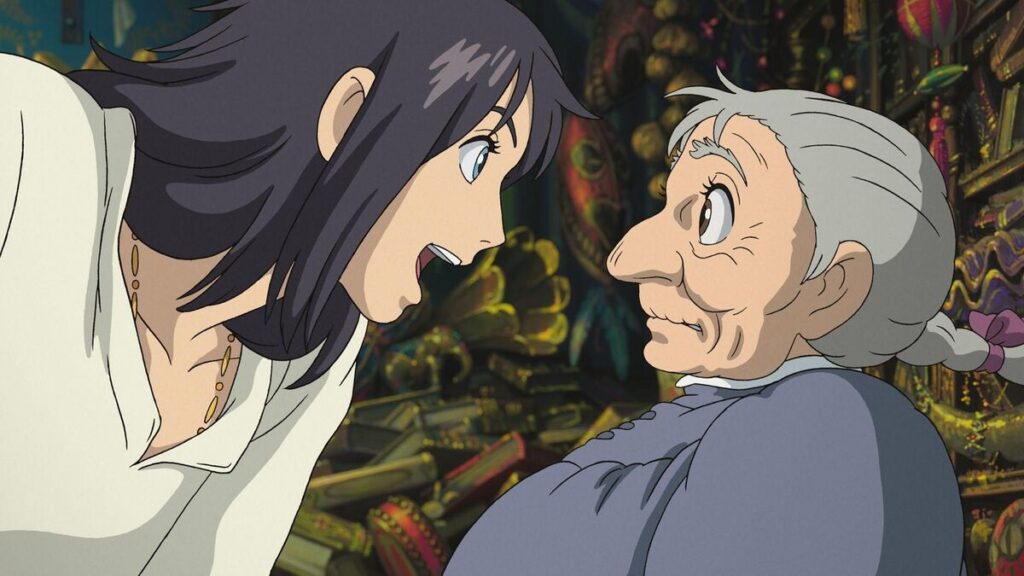
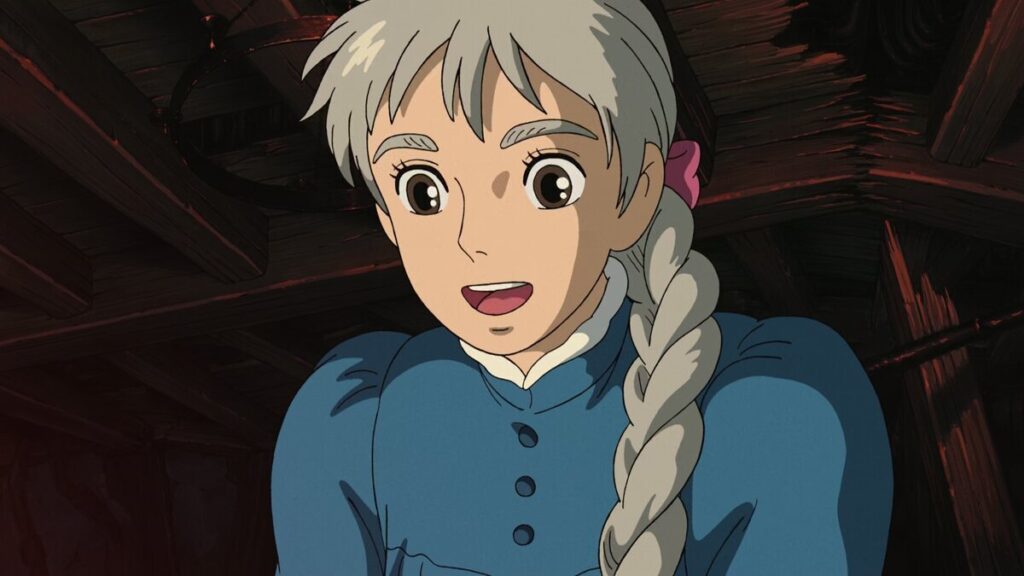
In "Howl's Moving Castle," Howl is not the only dual character. Sophie is an 18-year-old girl trapped in the body of an old woman. For the heroine, such a transformation opened up the world and moved her life from a dead point, so it's hard to say that the Witch of the Waste's curse is so terrible. The idea of magical transformation was not about transitioning to a specific age, but about true mental years. Conditionally, an old woman was already trapped inside young Sophie, and the Witch of the Waste simply gave the heroine a corresponding appearance.
As the plot progresses, the character gets younger, but this happens not because of Howl's magic or anyone else's, but from Sophie's internal state. The more confident and calm she became, the faster she grew younger. That is why in her sleep Sophie assumed her true appearance. Also, one can often notice how the heroine's appearance changes from frame to frame, for the same reason.
By the way, at the end of the film, the girl does not fully return to her original appearance; she retains gray hair. They become a symbol of confidence and calmness within the heroine, as well as a large baggage of life experience. Again, Sophie is Miyazaki's Benjamin Button, only her appearance directly depends on her inner world.
Still from the anime 'Howl's Moving Castle'
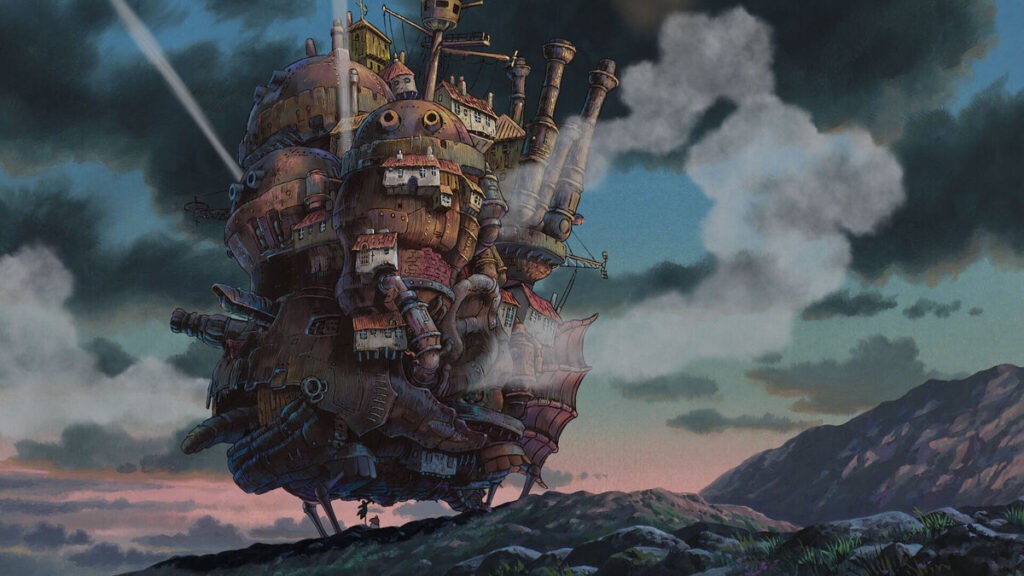
It is hard not to emphasize the beauty of "Howl's Moving Castle." High detail, atmospheric landscapes, and everything we love Grandpa Hayao for. The basis for the visual component of the work was folklore and old Europe. The appearance of the castle is a direct reference to the familiar hut on chicken legs. It's funny that initially the animator insisted on ten legs for the castle, but other animators convinced him to abandon this idea due to the complexity of animation.
One of the sources of inspiration for Miyazaki was the Soviet adaptation by Lev Atamanov of "The Snow Queen" (1967). In Andersen's work, Gerda goes to the North to remove the spell from Kai; in "Howl's Moving Castle," Sophie goes on a journey to find help for herself and free Howl from the demon.
"When I watched 'The Snow Queen,' I was glad I became an animator. I thought there is no more beautiful job than creating wonderful worlds — no, even the very possibility of such work is already a great happiness."
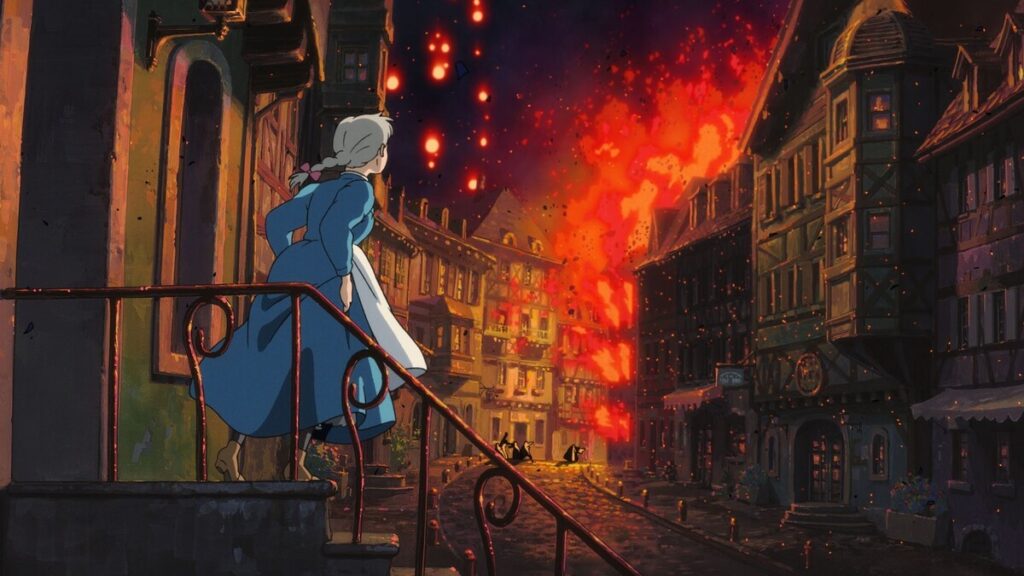
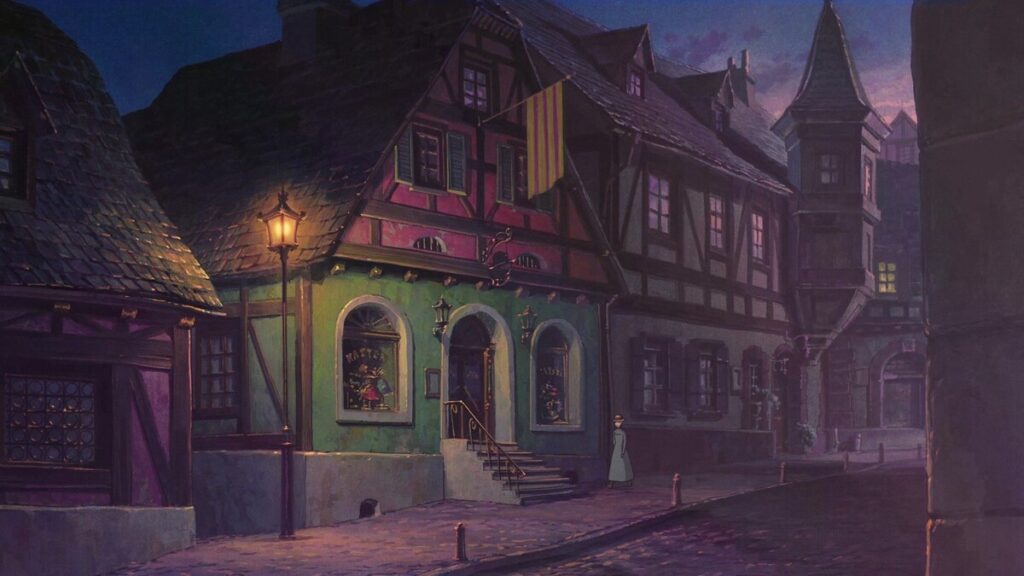
To create an accurate image of the cityscapes, the animation team went to Europe to study the texture and details of the culture. The basis for the town where Sophie lived was Colmar and Eguisheim, the commune of Gueberschwihr and German Heidelberg. Paris and Lisbon served as prototypes for the capital of the fictional world of "Howl's Moving Castle," and the visuals of the waste were drawn from the rocky plateaus of the Aran Islands group in Ireland.
Still from the anime 'Howl's Moving Castle'
Despite all the admiration that has been expressed for "Howl's Moving Castle" for twenty years, the film is not perfect. In all the beauty of what is happening and the multitude of messages and references, a crumpled plot is hidden. Sophie and Howl transform thanks to a series of events, but they happen too rapidly; the characters simply do not have time to perform such an abundance of actions to change so much both externally and internally.
In the fairy tale story, the relationship between the characters develops truly like a fairy tale. Everything happens too quickly; it is difficult to trace the moment when the characters fell in love with each other. This understatement occurred because Miyazaki removed part of the book's plot and many moments of interaction between the characters. For example, in the original, Sophie was more sharp-tongued and often argued with Howl.
Still from the anime 'Howl's Moving Castle'
"Howl's Moving Castle" is an immortal classic that continues to delight viewers and maintain a level of quality. For many, Miyazaki's works opened the door to the world of Japanese animation and set a guarantee of quality. Despite the plot shortcomings, Sophie's story remains truly beautiful, mature, and instructive. It is suitable not only for children but also for adults, and definitely will not be a one-time film.


Comments
0No comments yet.
Sign in to join the discussion.