
Let's break down the film 'Strange Darling,' which has become perhaps the biggest surprise of the year for genre film fans.
The film Strange Darling has become one of the pleasant surprises of this year, offering viewers a thrilling roller-coaster ride with a non-linear structure and hidden aces up its sleeve. In this article, we'll break down the film, its twists and ending, reveal what the creators hid after the credits, and answer popular questions about the movie that horror king Stephen King called a 'masterpiece.'
Spoilers ahead
Who is the Victim?
The main plot twist in Strange Darling is that the victim in the first half of the film is actually the serial killer, meaning the supposed maniac is in fact the victim.
Such a narrative move is not new, but screenwriter and director JT Mollner spiced it up with non-linear storytelling (here, a nod to young Quentin Tarantino is usually given). Because of this approach, the cat-and-mouse game becomes even more thrilling for the viewer than it would be in a traditional narrative format.
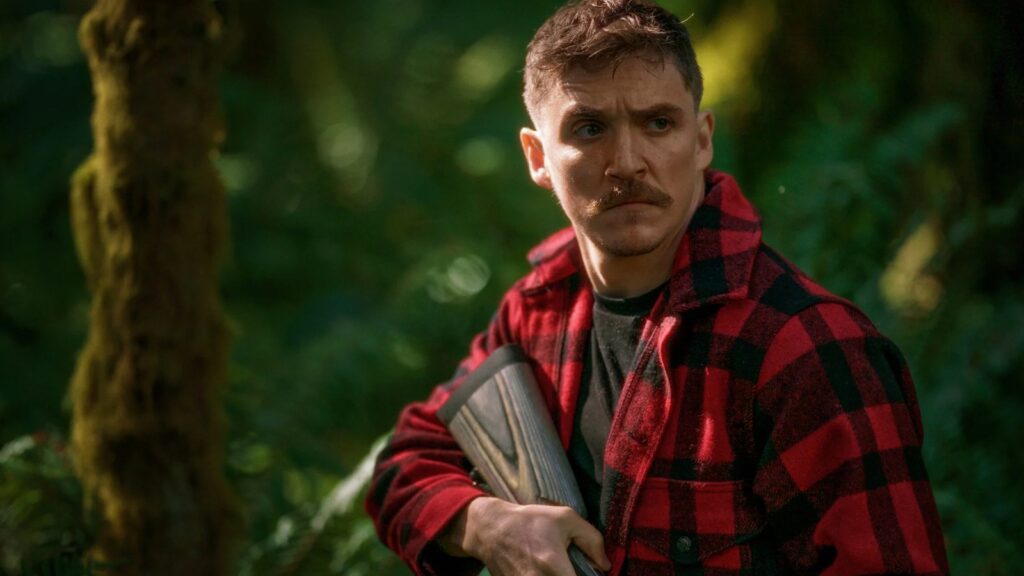
Strange Darling begins as a classic thriller (or even horror) about a maniac, where a rugged-looking man with a shotgun (Kyle Gallner) chases a bloodied blonde (Willa Fitzgerald) trying to hide in the woods, where she finds a house. This is just the beginning of the film, but not the story. In the plot, this is already Chapter 3.
We then move between chapters in a somewhat chaotic order:
- We peek into Chapter 5, where the girl hides from her pursuer in a country house;
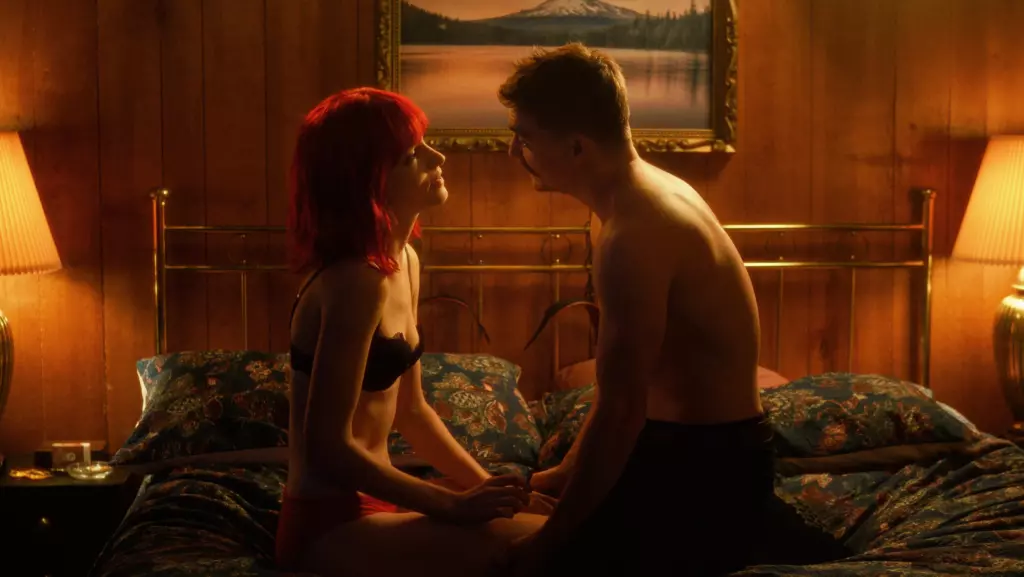
- We return to Chapter 1, where our heroes flirt before engaging in peculiar BDSM practices;
- We move to Chapter 4 — the heroine seeks refuge in that same country house, where she is met by a sweet elderly couple.
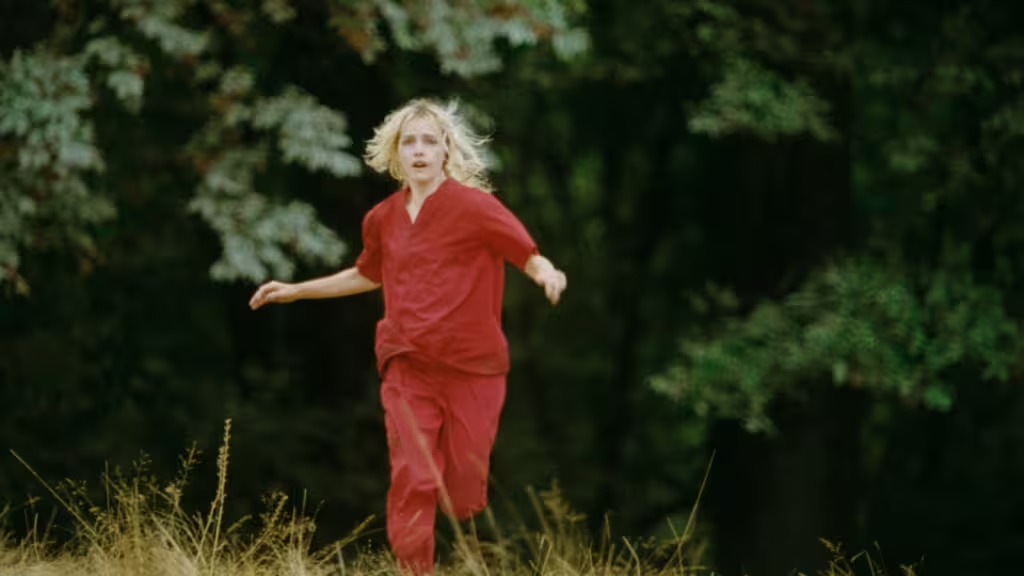
And here we encounter the main plot twist — the girl kills the elderly homeowner (his wife hides in the woods). Despite being pursued, we already understand here that Willa Fitzgerald's character is by no means a victim, but rather the opposite. After that, we are shown Chapter 2, from which we learn what happened between the main characters: the girl drugged the guy and tried to kill him (as she had obviously done repeatedly), but he managed to shoot her, after which the chase that began the film ensued.
Ending Explanation of 'Strange Darling' and Director's Comments
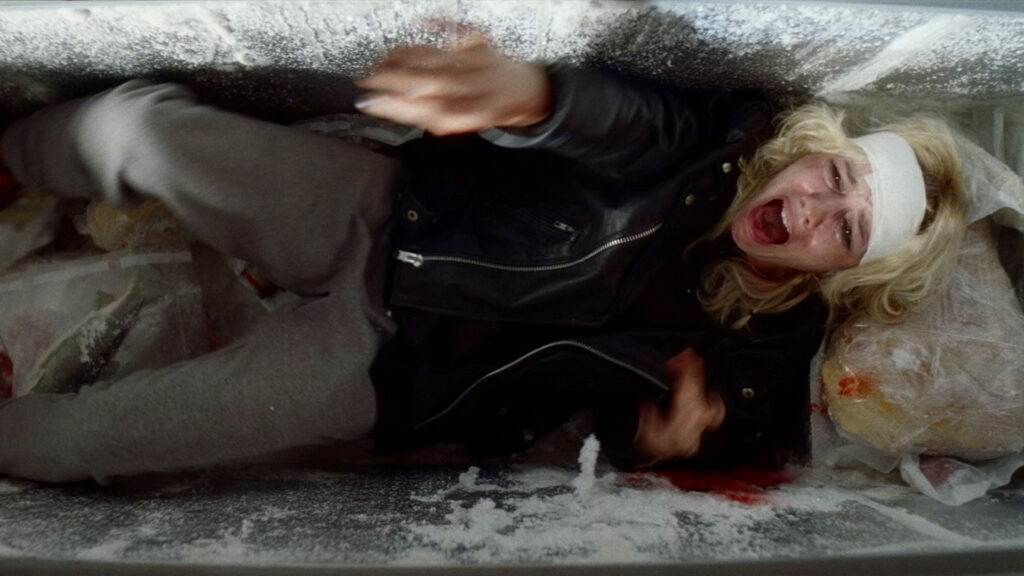
At the end of the film, the still-unnamed girl is handcuffed to a freezer, but she manages to do what she couldn't before: kill Gallner's character, in this case by biting his jugular vein.
She then plays the victim in front of the police officers who arrive at the scene — a strategy that has already worked multiple times in the film with other characters and with the audience (a very clever move by the screenwriter!) — and ultimately ends up free, after which she kills both of them.
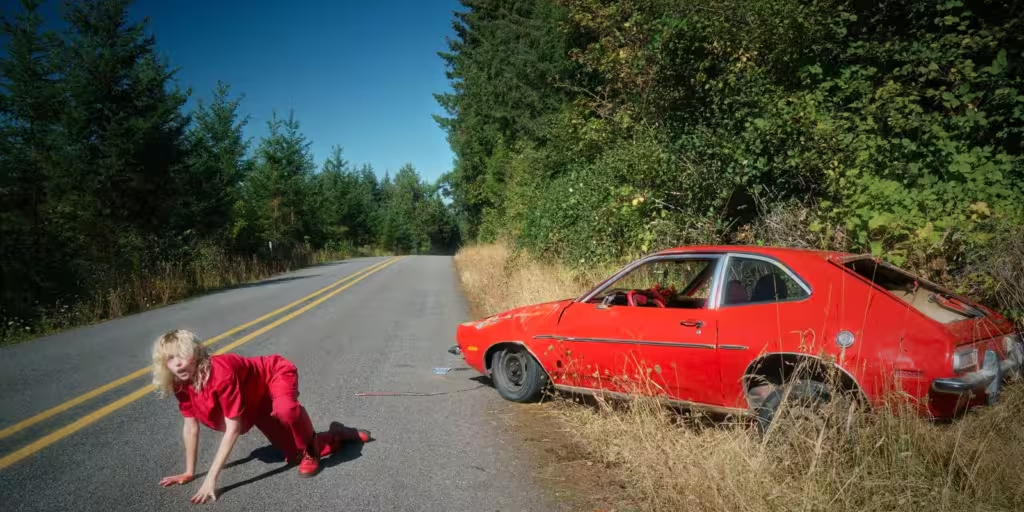
Beaten, bloodied, and bruised, she stumbles to the road and stops a passing pickup truck. The woman behind the wheel stops, helps her into the car, and then sees her pull out a gun. In response, the driver pulls out her own gun and shoots the Electric Lady (the serial killer's alias).
We then watch as her life fades away, just as the color drains from the picture.
After the release of 'Strange Darling,' JT Mollner told Variety about the unexpected ending, stating that it would have been impossible without the strong cast, including Fitzgerald and Gallner:
I talked with Willa and Kyle about how they should always convey the truth, the emotional truth of their characters, rather than playing in a way that misleads the audience.
If you rewatch 'Strange Darling,' their performances will seem honest, and you won't feel like you're being deceived. I think that's why so many people like it.
A few scenes before her death, the Electric Lady explains that she killed her victims because she saw demons in them.
The idea was to create a serial killer who is not necessarily a sociopath. She feels remorse and is compelled to commit these acts, but she is uncomfortable with it.
If you kill people, there are many different motives based on some mental illness. But we wanted to ensure that there is humanity in both characters. Even if they sometimes do terrible things, we wanted to make sure we showed their perspective and point of view.
Screenwriter and director JT Mollner
Interestingly, just before the finale, the heroine sees a demon in her own reflection. This has spawned a compelling fan theory: the girl wanted to commit suicide rather than kill the driver. Supporting this is the fact that the driver was an adult woman, not the typical male type of the Electric Lady's victims.
Mollner himself refused to confirm or deny this version:
I made a pact with myself never to answer that question. I know how I feel about it, and there are so many different versions of what people understood from that scene. I like the complexity of that scene, and I like that you came to that conclusion, because it certainly could be that.
Is Strange Darling Based on a True Story?
There is a reason so many people have asked this question, even though the answer is obvious.
The film begins with an introductory card with the following text:
Between 2018 and 2020, the most prolific and unique American serial killer of the 21st century committed a calculated, multi-state crime spree that began in Denver, Colorado, continued through Grand Lake, spread across Wyoming and central Idaho, and culminated in the dense forest of Hood River County, Oregon.
Based on police interviews, detailed eyewitness accounts, testimony, and observations from various law enforcement agencies, this is the dramatic story of the last known murders in this rampage.
Although it sounds like a realistic true crime case, similar to 'The Texas Chain Saw Massacre,' none of the claims in the introductory card are real. They were invented for dramatic effect to give Strange Darling an ominous sense of realism. There is no real story behind the film.
What Was Shown in the Post-Credits Scene
At the end of 'Strange Darling,' there is a post-credits scene. If you can call it that.
At the very end of the credits, we hear the voice of actor Giovanni Ribisi, who does not appear in the film but (surprisingly) is its cinematographer. As a radio DJ, he says the following:
From the high desert of the majestic American West, I wish you all a good evening, or a good morning, or a good day, wherever you are on this great land of ours.
He then introduces himself as Art Pallone, after which the credits end. Presumably, this name is a combination of two references: Art — a hint that the voice owner is responsible for the film's visuals, and Pallone — the maiden name of JT Mollner's mother.
Comments
0No comments yet.