
On the eve of Halloween, we recall forgotten classic horrors. If you're tired of rewatching the chronicle of Michael Myers' difficult life, we offer horror films for every taste: from noir about Satanists to a cult slasher about the nature of state p...
For horror fans, Halloween is practically New Year's Eve, meaning it's a reason to rewatch beloved classics. But even 'Scream' and 'The Blair Witch Project' can probably get old someday. We've gathered little-known but outstanding horror films that are good (and sometimes scary) to celebrate the holiday with.
«The Demon» (1963)

A brilliant gothic film about an Italian village where a witch has appeared. Or maybe not. Young Purif (a brilliant role by Dalia Lavi) is in love with farmer Antonio, but he does not reciprocate. As a last resort, Purif resorts to black magic and makes a love potion with blood, and for this, of course, she cannot be forgiven. The villagers begin to exorcise a demon from the girl, although with their mass hysteria and unprecedented cruelty, they should probably look for demons within themselves.
The film's director Brunello Rondi is known primarily for his screenwriting collaborations with Federico Fellini, while his directorial projects languish, frankly, in obscurity. And that is, of course, a great shame. 'The Demon' is not just a competent folk horror, of which there were many in the sixties. It is a study of collective and individual psychosis, an attempt to see people where it is always easier to see demons. Rondi's work impresses not only with the depth of psychological observations but also with technical perfection: it is a film of rare beauty, and while watching, it seems that hills and dark-haired girls have never been filmed by anyone like this.
«Cujo» (1983)
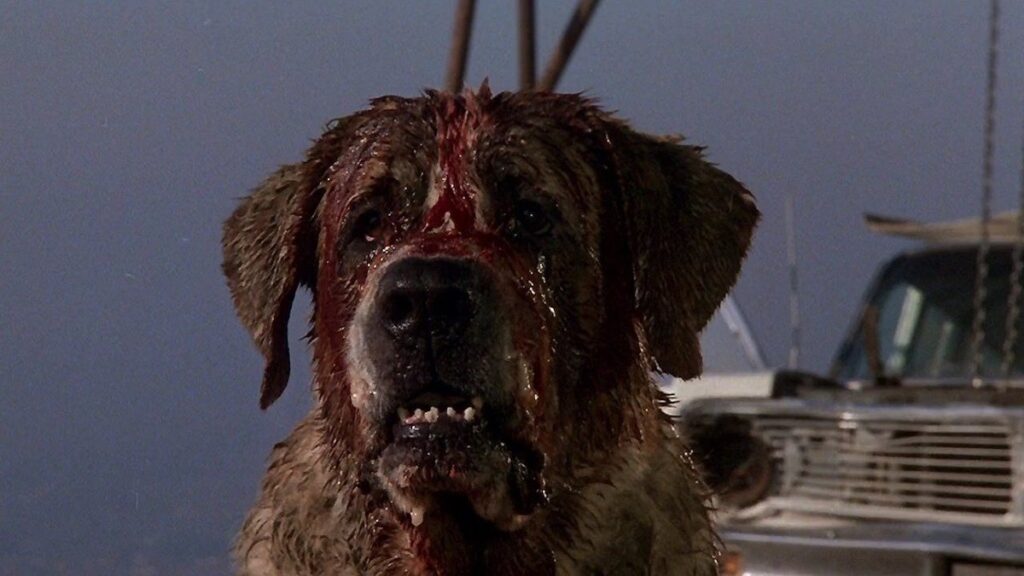
A completely undeservedly forgotten slasher that had every chance to become a true classic of the genre. One of the first film adaptations of novels by Stephen King, whose works are read voraciously but are successfully brought to the screen quite irregularly. Fortunately, 'Cujo' is not that case, and King himself was quite pleased with the film.
Like the novel, Lewis Teague's film tells the story of a woman named Donna who comes to a small provincial town with her little son. At the same time, a huge St. Bernard living with a local mechanic is bitten by a bat and infected with rabies. Donna and her son, who accidentally drove into a parking lot, become hostages of Cujo and cannot leave the car.
'Cujo' is good because King in the novel, and Teague after him in the almost step-by-step adaptation, eliminated stereotypical plot twists, replacing the traditional villain with a knife with a huge and terrifying dog that turned out to be no less cunning and dangerous pursuer. 'Cujo' often breaks templates. The scariest things here happen in sun-drenched locations, and the director's focus is not on bloody massacres, but on the suffering of the main heroine (brilliantly played by Dee Wallace-Stone) who desperately wants to save her son from the cramped and stuffy trap of her own car. These scenes create such tension that sometimes you want to close your eyes.
«The Seventh Victim» (1943)
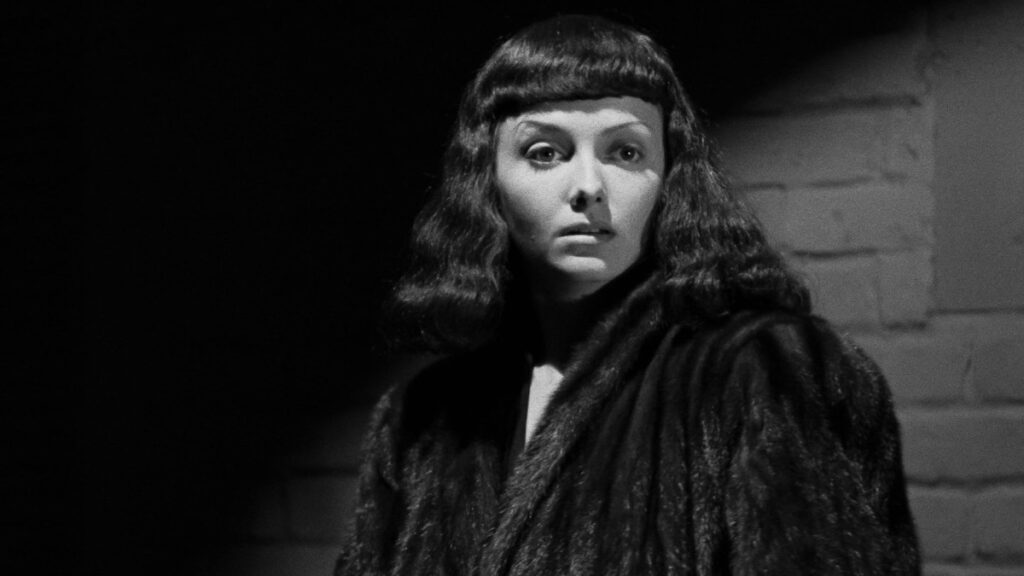
A girl named Mary (the debut of the great Kim Hunter, whom we all love and remember for her role as the chimpanzee Zira in the first 'Planet of the Apes'), living in a boarding school, is informed that her sister has not paid for her tuition and accommodation for six months. Mary, left without funds, cannot afford to lose her last close relative and goes to New York to search for her. There, mysterious disappearances, suicides, and a mysterious satanic cult behind it all await her.
'The Seventh Victim' is unique as one of the first attempts by American cinema to comprehend the theme of conspiracy theories, the existence of societies within society. Director Mark Robson, despite being a debutant, had serious inclinations and valuable experience for such a serious undertaking — before working on the film, he was an assistant to Orson Welles on the set of 'Citizen Kane'. Like the capitalist Kane, the Satanists here are supposedly the secret rulers of the world and, of course, inspire some fear, but at the same time evoke pity. These are very lonely people; like everyone, they sometimes have nowhere to go, and rather than making real friends, it turns out easier to turn to Satan.
The film is interesting not only as a conspiracy thriller for the sad but also as a study of female emancipation, an attempt to find individual freedom in a world of collective constraints. Lost against the backdrop of more famous horrors from the same studio (like 'Cat People' or 'I Walked with a Zombie'), 'The Seventh Victim' nevertheless deserves both fame and recognition — it is a smart and bold film.
«Duel» (1972)

Steven Spielberg can direct everything. Including dynamic thrillers, like 'Duel', born at the dawn of the director's career. A low-budget but effective film that reveals Spielberg as a talented director tells the story of a traveling salesman named David (Dennis Weaver) who urgently needed to go on a business trip from city A to city B. On the way, he is overtaken and then pursued by a terrifying-looking truck, whose driver seems to be absent.
Spielberg's little masterpiece, in which the main opponents are not people, but their cars, which have ceased to be a luxury and have turned into a cult among means of transportation. So much so that Spielberg noticed this and effectively replaced people in the frame with a red sedan and a rusty tanker truck.
This film is purely adrenaline-fueled, without any meanings or subtexts. Understandable, clear, saving the viewer's attention and sometimes inspiring genuine horror. When a seemingly clumsy truck can disappear from view and unexpectedly jump out from around a corner. Later, this mechanical monster would inspire the creators of another road horror called 'Jeepers Creepers'. And the spectacular but meaningless chase after the truck through the desert would be recreated by George Miller in his trilogy about Mad Max.
«Rabid» (1977)
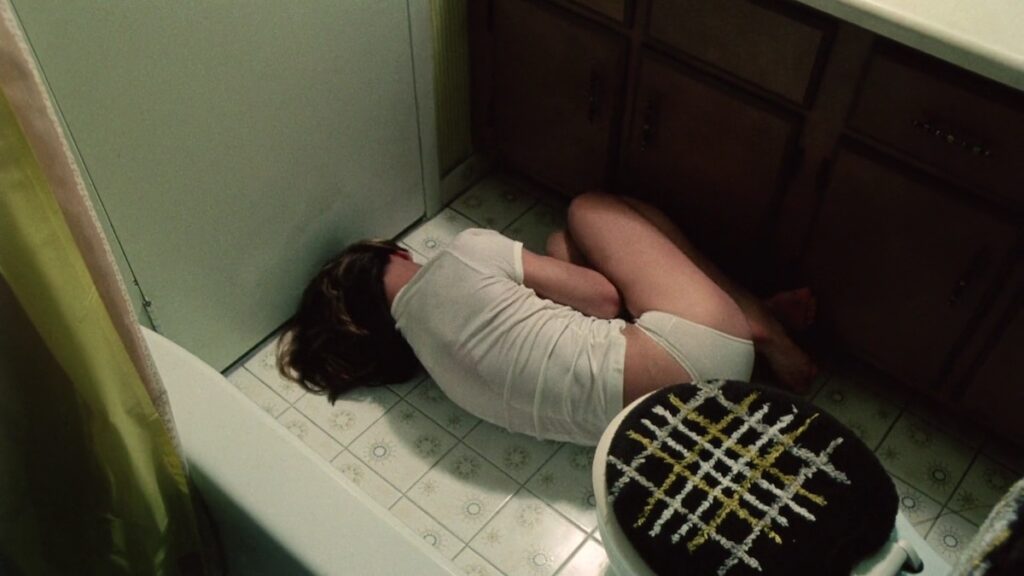
A terrible accident occurs on the road, but since there is no hospital nearby, the injured young people — a motorcyclist and his girlfriend — are taken to a plastic surgery clinic. The guy turns out to be fine, but the girl, who is in a coma, receives a skin graft. A few months later, she regains consciousness and seriously injures a doctor, and then other visitors to the clinic. The thing is, a stinger now protrudes from her armpit, with which she drinks the blood of her victims. The girl, in other words, has become a vampire. Those whose blood she drinks become infected with something like rabies and die after a couple of days, usually managing to bite someone before that.
David Cronenberg's second feature film is rarely remembered when discussing the director's filmography, and that is, frankly, simply unfair. The 1977 film found its best expression of his early style — attempts to combine social commentary and the study of corporeality. Naturally, vampirism here is a metaphor for HIV, but perhaps not only that. Cronenberg is concerned that society welcomes sexual liberation but fears its fruits — the sexual, so to speak, question is carefully pushed into the shadows with such persistence that it eventually emerges in the most unexpected places.
'Rabid' is interesting both for its innovative modernization of vampirism and for its open articulation of what was always more of a subtext in Dracula films, and, of course, for its brilliant finale, in which wrong decisions, not rabies, become the real main epidemic.
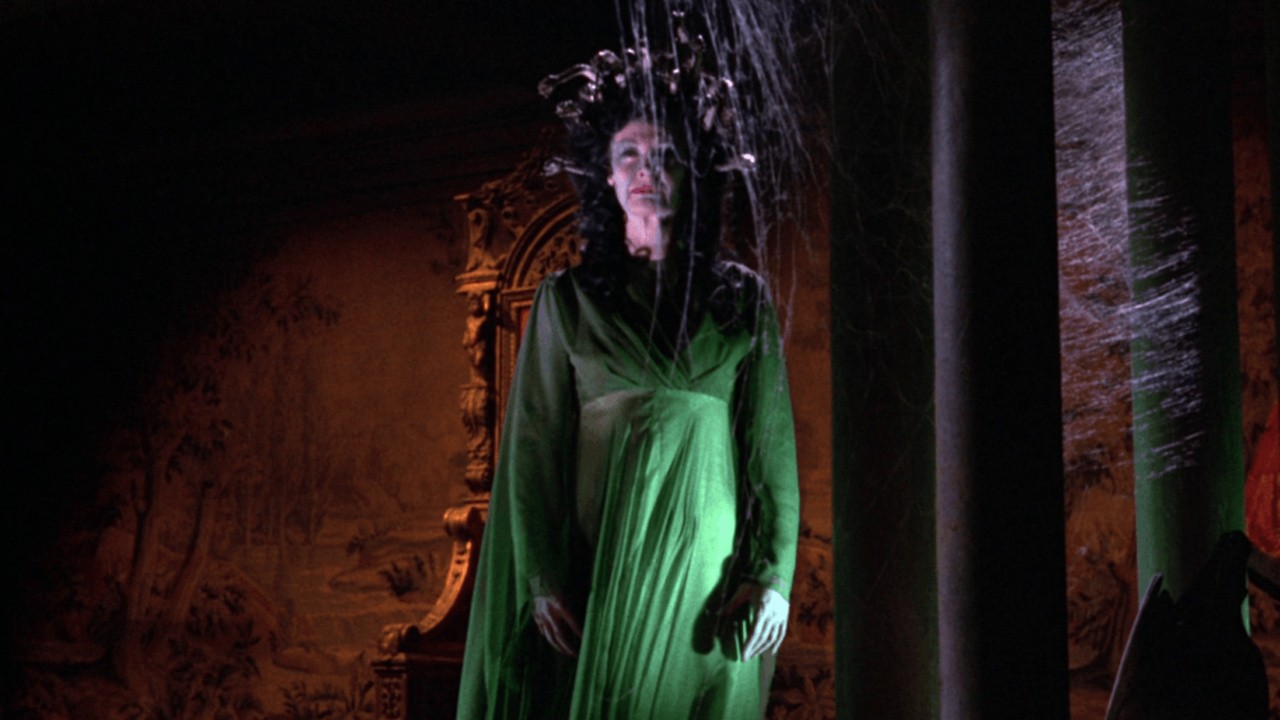
«The Gorgon» (1964)
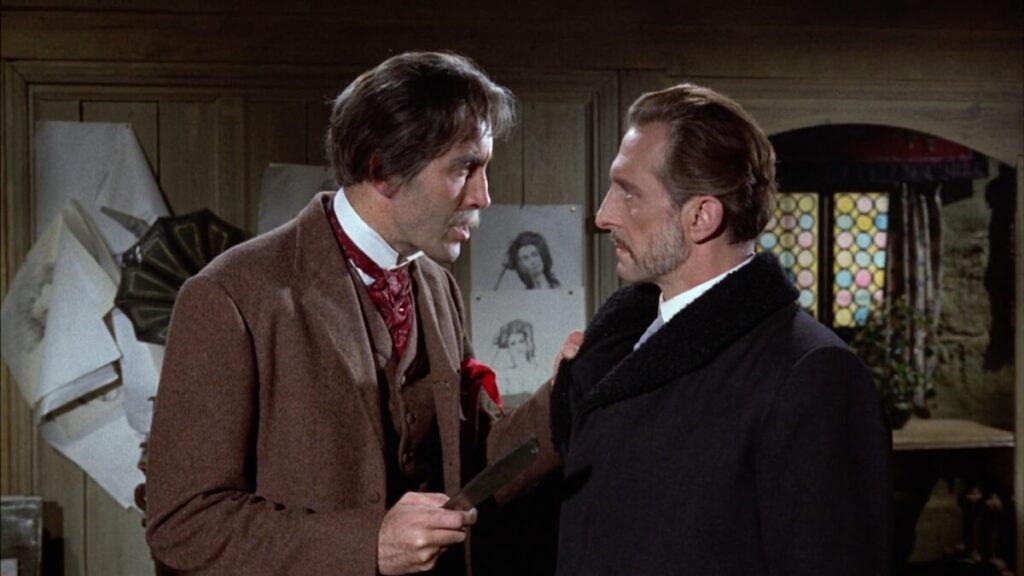
A little-known late film from Hammer Studios — a deliberately slow, drawn-out film in which the non-obviousness of the intrigue is enhanced by the slight absurdity of the setup. It is a rural detective story about the search for one of the Gorgon sisters (relatives of the deceased Medusa), who miraculously ended up in a German village. Thanks to her efforts, somewhere in the first third, the protagonist and the tone of the film also change. In addition to the overall atmosphere of mild madness, the story of the Gorgon is not revealed immediately: at first, despite the spoiler in the title, viewers can only guess what turns perfectly alive and decent people into stone statues.
In the legacy of Hammer and the filmography of Terence Fisher, an outstanding director ('The Curse of Frankenstein', 'The Devil Rides Out'), 'The Gorgon' is quite obviously a second-tier film. However, there is something to see and love in it. First of all, of course, it is the duo of Peter Cushing and Christopher Lee, the lead actors, whose every joint scene is a rare joy. Moreover, Lee here appears in the rare role of a positive hero, while Cushing perfects his usual image of a decent person who knows which choice is right but cannot make it.
«Maniac Cop» (1988)
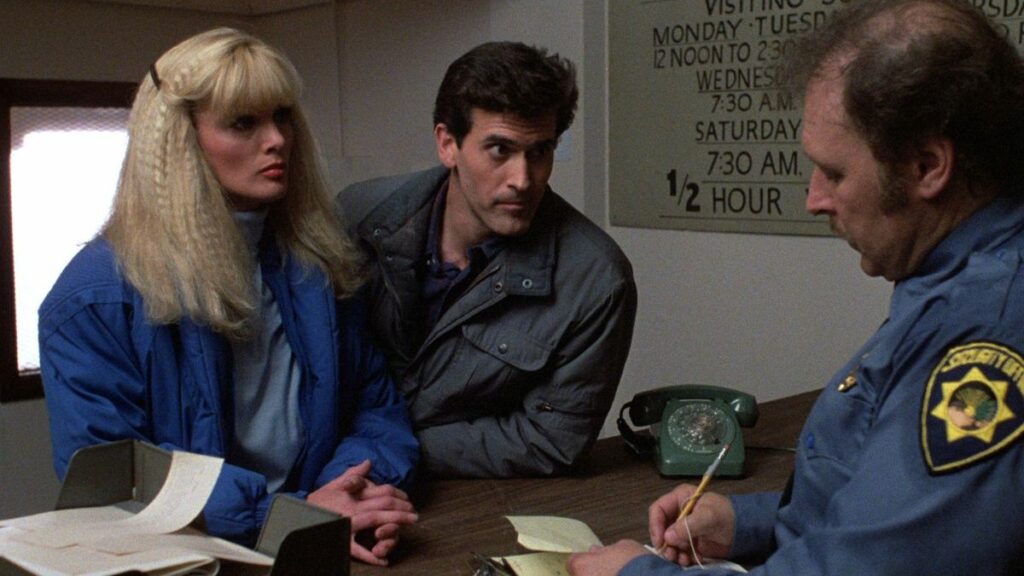
A straightforward and fun slasher from the VHS era, which few people remember now. And completely in vain. 'Maniac Cop', for its simple plot and effective violence scenes, received two sequels (Nicolas Winding Refn himself planned to revive the franchise, but this question remains open) and a semi-underground cult status among fans of trash cinema. Suffice it to say that 'Maniac Cop' is a joint product of Sam Raimi, William Lustig, and Bruce Campbell.
The first two films of the franchise are responsible for a conscientious bloody fireworks display and a straightforward plot, while the third, as tradition dictates, adds an element of comedic slapstick. Add to this a frivolous satire on the serious paranoia of American society in the late 80s and early 90s, which lost trust in everything, including law enforcement, and flinched at its own shadow. In short, Lustig's film is a true copsploitation, worthy of if not the top of the B-category, then its golden mean.
Comments
0No comments yet.
Sign in to join the discussion.