
On the eve of Halloween, our team decided to share a selection of the scariest horror movies: from slasher classics to torture porn.
While there is an official scientifically determined list of the scariest horror movies, everyone has their own fears. So our editorial team steeled their nerves and compiled their own watchlist of terrifying horror films that can turn your soul into an ice cube. Consider yourself warned.
“The Bay” (2012)

By the time of its theatrical release, found footage could no longer be called a “breath of fresh air” in the horror genre. Horror films styled as chronicles or documentaries were abundant back then. There were even movies with a similar plot setup, such as the Spanish “[REC]” from 2007. Nevertheless, “The Bay” by Barry Levinson stands out for its frightening realism. That is, of course, if you take at face value the unscientific nonsense that, due to steroid-laden chicken feces dumped into the water, isopods grew 60 times in number and size.
The film presents itself as “archival footage” allegedly seized by the FBI but leaked online by an unknown source. The story centers on journalist Donna Thompson, who finds herself in the town of Claridge during Independence Day celebrations. Within hours, a terrible epidemic grips the town: authorities cover it up, doctors and scientists throw up their hands in confusion, and panic prevails among residents. There is no scripted cliché like a zombie virus here. In its depiction of an epidemic on screen, “The Bay” is no less believable than “Contagion,” which everyone rushed to rewatch when COVID-19 hit.
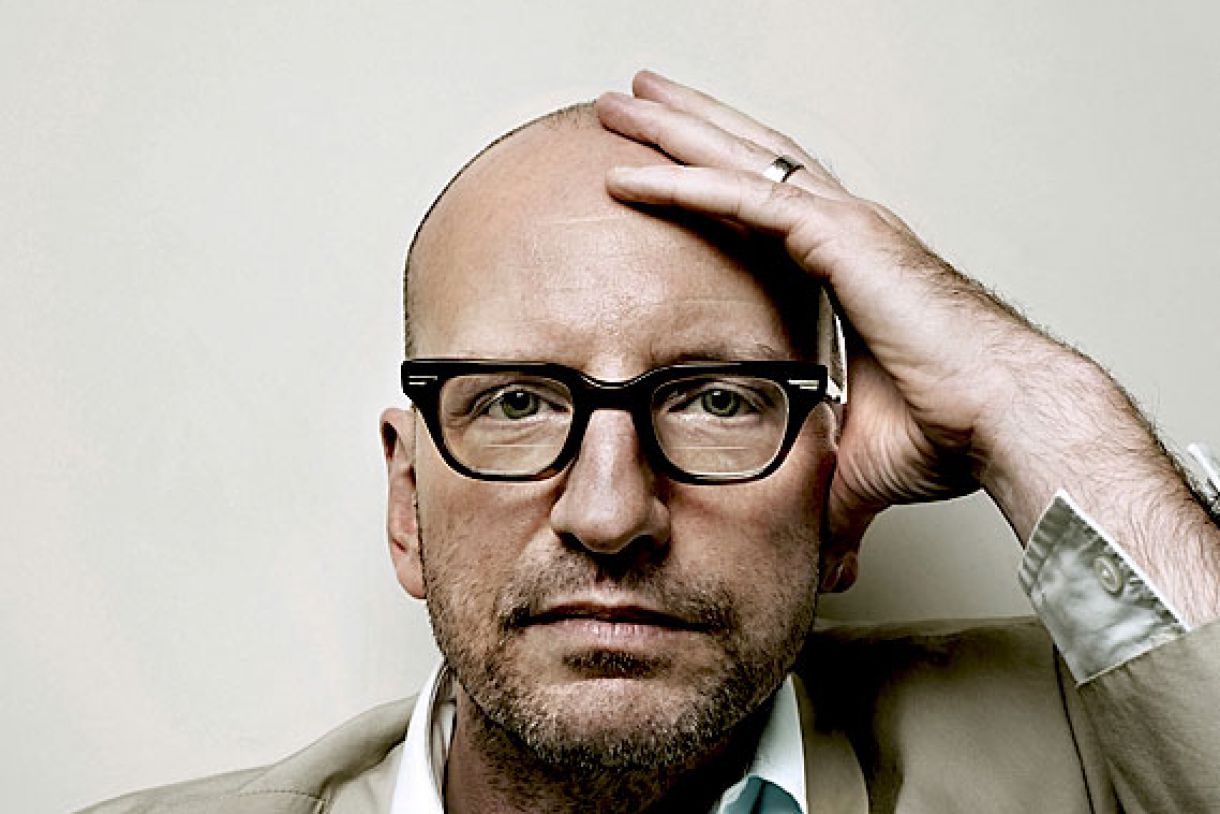
Steven Soderbergh turns 58! Remembering the best works of the talented American filmmaker.
Open material“Martyrs” (2008)
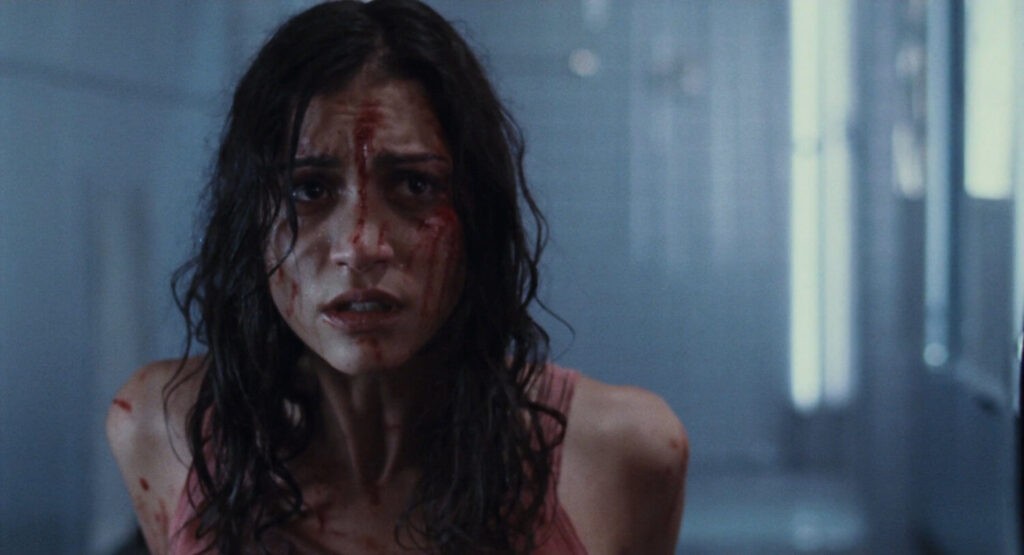
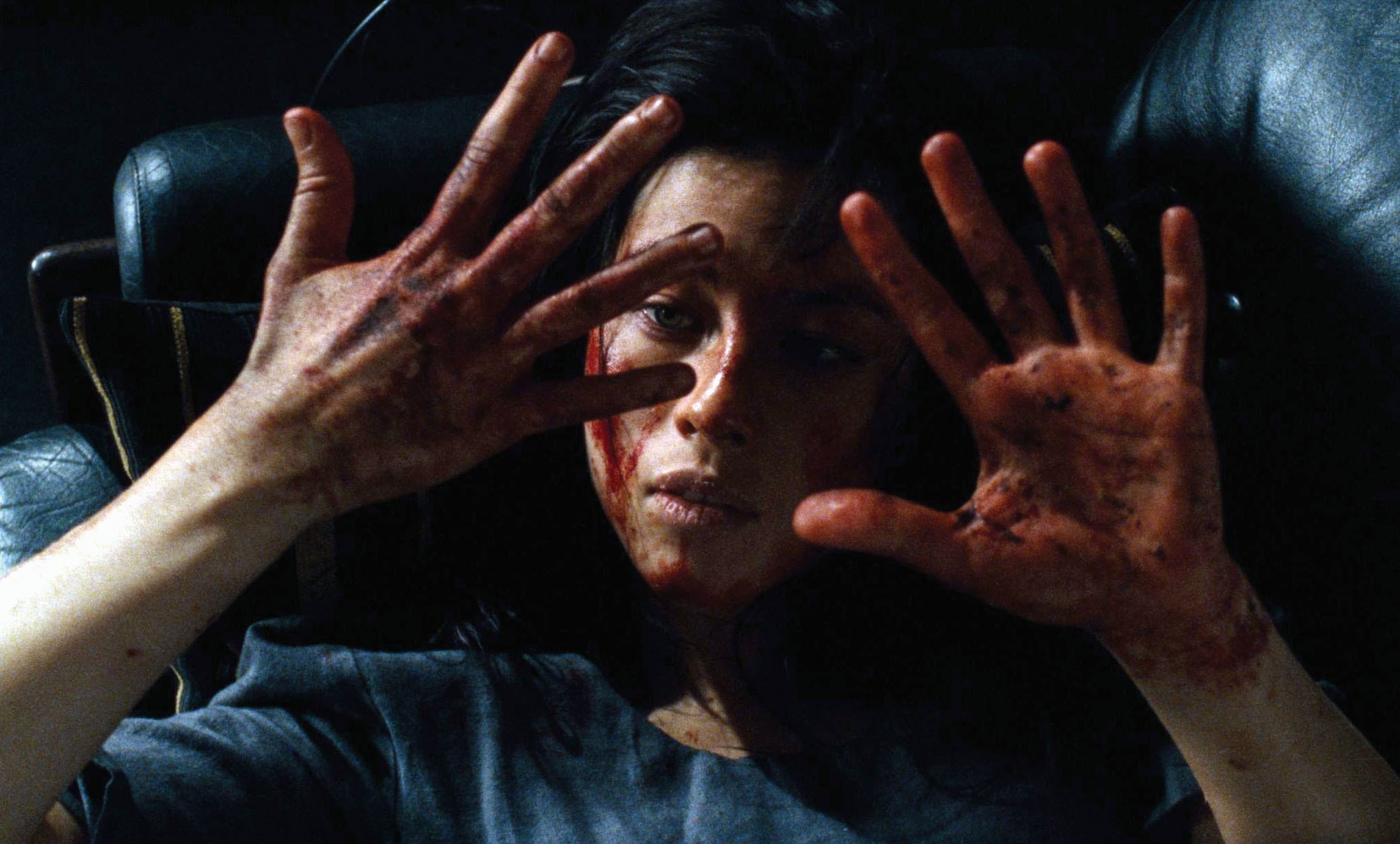
French New Extremity is the most common phrase used to describe this film. And probably the most meaningless. Indeed, in the 2000s, France attempted to break away from the American tradition of postmodern horror (from “Scream” to “Hostel”), where everything was somewhat unserious, and began making shocking torture porn. However, if French extremity cannot be understood without “Martyrs,” then “Martyrs” itself would be a great and unprecedentedly unbearable film even without any French extremity.
It is pointless to retell the plot. In short, this is a film about a mysterious sect that tortures young girls. But not as punishment—rather to drive them to a state of frenzy, a specific ecstasy—a state in which they can see what awaits people after death and still have time to tell about it. Director Pascal Laugier claims the idea came to him when he learned that the word “martyr” in Latin meant “witness.” At that moment, he apparently decided to make all the unfortunate viewers of his film such witnesses.
Despite scenes of physical torture, “Martyrs” is primarily about the suffering of the spirit. About how cruelty—not so much physical again—turns from a means into an end. About how it can be elevated to a cult, worshipped, and offered sacrifices. And about how these sacrifices will not end as long as dark basements and the fear of death remain in the world.
“The Babadook” (2014)
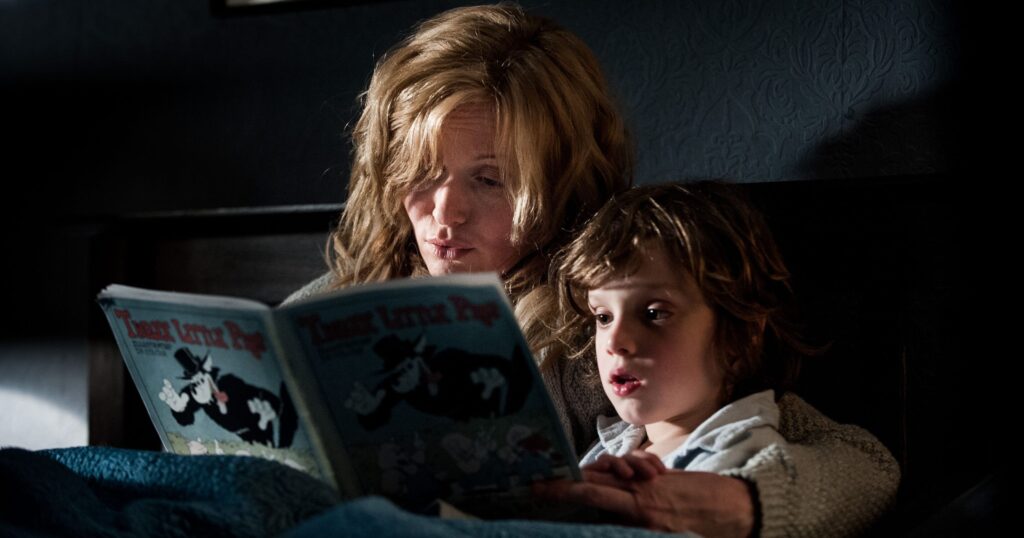
A dark and terrifying film by Australian director Jennifer Kent, who later made another horror, “The Nightingale,” which also garnered some critical acclaim. The success of “The Babadook” lies in Kent’s undeniable skill in weaving together supernatural beings, social drama, the blurred line between dream and reality, and a small story about a very sad loneliness when everything is against you.
At the center of the story is a lonely woman with a young son suffering from attention deficit disorder. Constant care for the boy, endless side jobs, unrelenting grief from the loss of her husband, and constantly irritating child protective services workers. All this makes the protagonist a sleepwalker who gradually becomes indifferent to everything. Even to her own child’s pain. Eventually, it reaches a point where her son starts seeing an evil spirit called the Babadook, and the mother finds it increasingly difficult to distinguish reality from fiction.
“The Babadook” is, without any discounts, a scary film. And even ten years later, it can outshine any representative of the genre. The ability to virtuously frighten both adults and children is not given to everyone. And fortunately, Jennifer Kent possesses this talent. The film masterfully plays with both the confused consciousness of the heroine and the consciousness of the viewer, physically embodying demons from the hidden corners of human fear on screen. And it’s better not to know what they look like.
“Sinister” (2012)
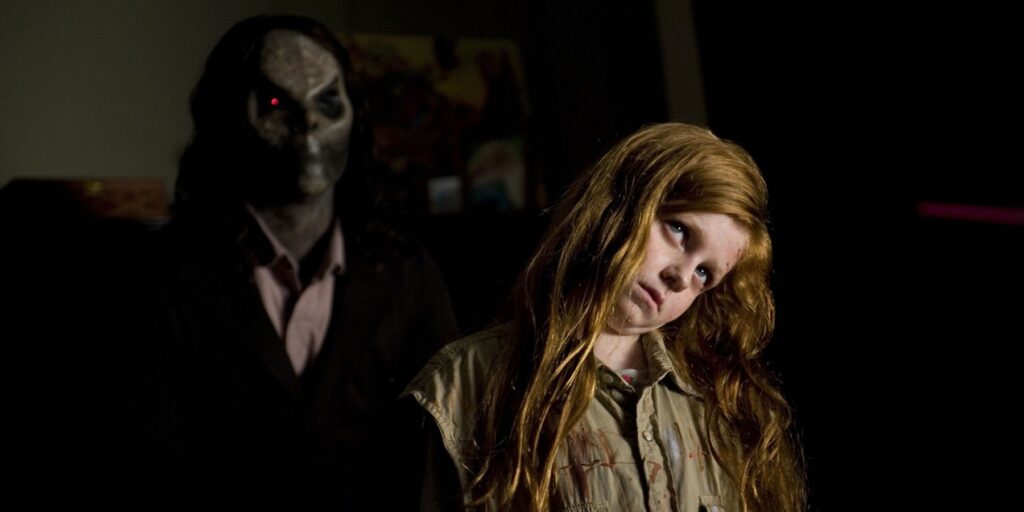
“Sinister” is, without exaggeration, the scariest horror movie I have ever seen. As a 14-year-old teenager, I skipped the last Friday math class, claiming a headache, and went to the cinema with friends for the evening show. The walk home from the cinema in the twilight became a terrifying ordeal for everyone in our group. But the real horror awaited ahead: during a late-night computer game before the weekend, the lights suddenly went out on the entire street. To say I was scared is an understatement. I was so frightened that I had to wake up my mom, making up the stupidest excuse imaginable. Although, perhaps every teenager at half past one in the morning is interested in whose pack of gum is on the fridge?
Since then, I have rewatched Scott Derrickson’s film at least twice more, and each time it was terrifying (and guess what, the creators seriously aimed for a PG-13 rating, yeah). Even though I know where the jump scares are, the unsettling atmosphere and the interesting detective story (albeit not without clichés) always do their job. “Sinister” is not just a “scare machine”; it is also a decent film with a worthy discussion about the choice between family and career. Plus, it has Ethan Hawke! That makes the sequel even more disappointing, which looks like a mere collection of one-time jump scares and is essentially unnecessary for the original.
“The Texas Chain Saw Massacre” (1974)
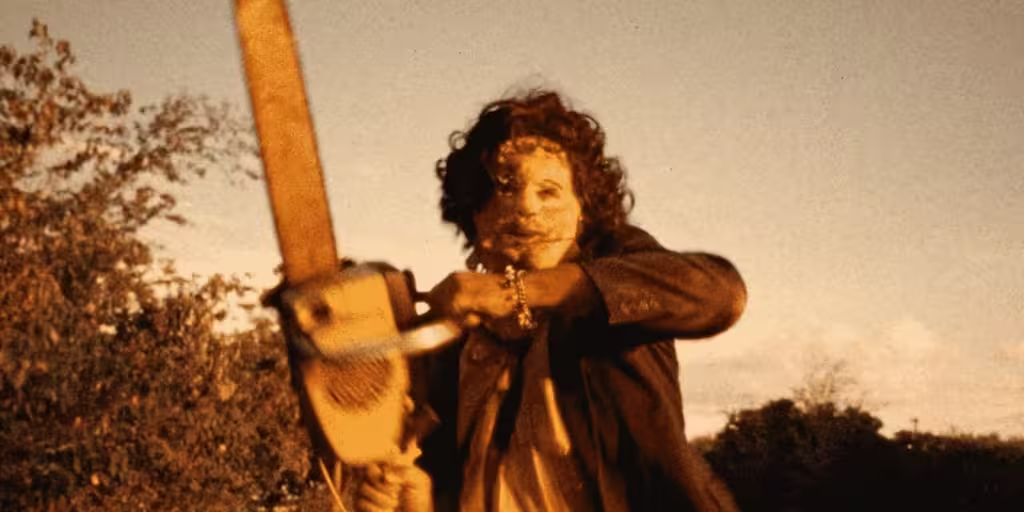
The most famous predecessor of the slasher genre, the great film by Tobe Hooper, an American horror classic, is still capable of stunning the imagination today. Not with a banal plot—young people go to the countryside and one by one meet their death there—but with a mixture of omissions and documentary precision. At first, everything proceeds slowly and even boringly, but in the second half, the film, if you will, blossoms.
Hooper shows the suffering of the girl (Marilyn Burns) with just the right degree of authenticity to make it impossible to watch, yet equally impossible to look away. The peak of this agony is reached in the famous close-up of the eye. We do not see the cannibal perverts raging, we do not see what they are after; we only see the eyes of actress Burns. And the horror in those eyes is scarier than any makeup, fake blood, or suspense. If ever the slasher genre came close to being called art (there are, in fact, several such episodes), it was at the moment when Tobe Hooper decided to look not at evil itself, but at its reflection. And it, naturally, turned out to be far more terrifying.
“The Shining” (1980)
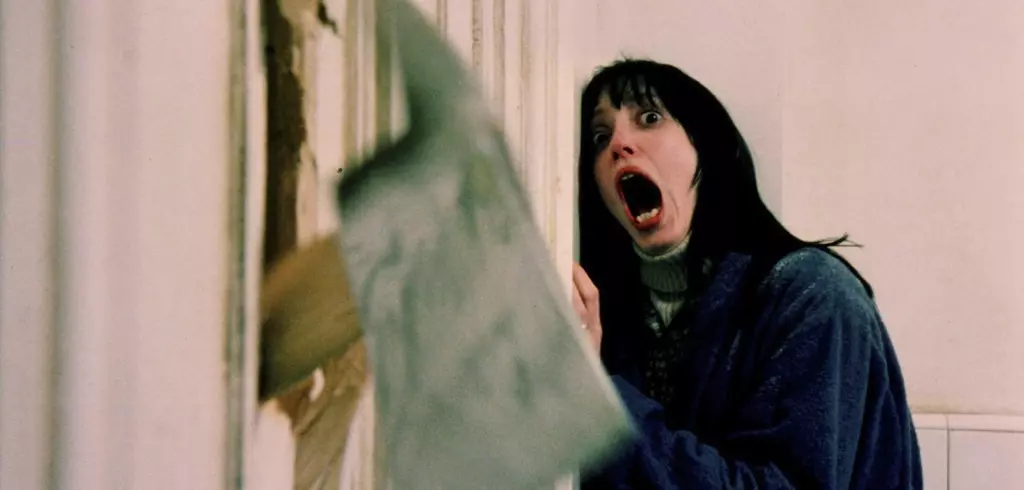
“The Shining” by Stanley Kubrick is a horror film that immerses you in a state of tension through its aesthetically refined components. Why do I consider it one of the scariest, even though, seemingly, what fear can it evoke now when even individual fragments are used in a somewhat comedic context in films like “Ready Player One”? Because I believe that the tension that runs like a thread through the entire film is much harder to endure while watching than the fear arising from disgust.
And “The Shining” handles this beautifully, using a combination of the hotel’s provocative colors and situational moments in contrast to the external snowy whiteness, which in this particular case, you’ll agree, does not evoke any pre-New Year joy either!
We get a magnificent framing of the story of the degradation of a personality with nowhere to go. It is precisely the focus on a specific character that draws you into this “terrible” attraction of madness, which you inevitably begin to emotionally experience, while Jack Nicholson skillfully directs the movement of the “derailed” consciousness!
“Under the Skin” (2013)
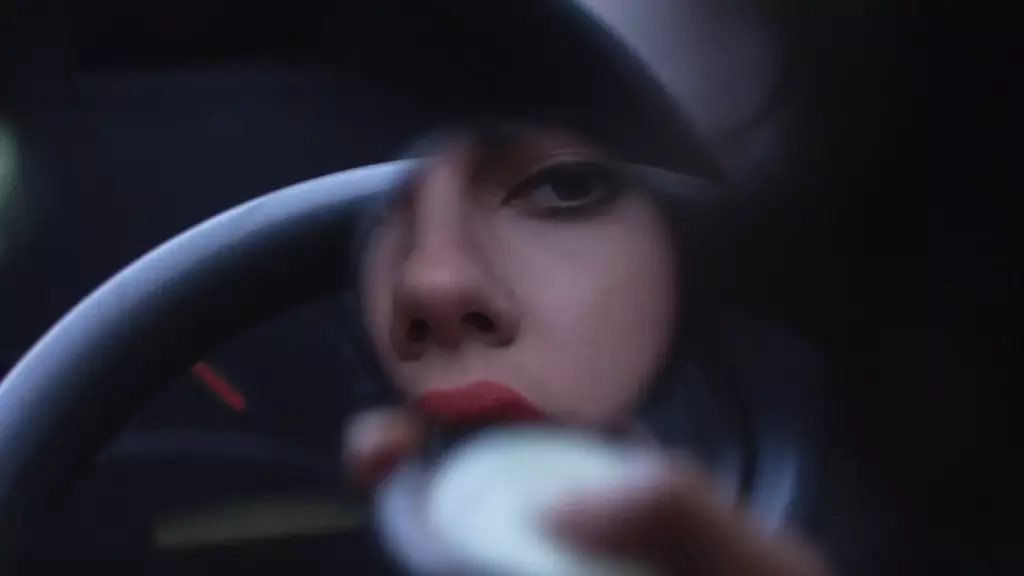
Under the Skin by Jonathan Glazer is perhaps not the scariest film in the world, but it is certainly one of the most uncomfortable. It is an atmospheric story in which Scarlett Johansson plays an alien creature exploring human nature by “consuming” men.
The film is cold, unsettling, strange. Its visual imagery and abstract approach to the plot create a sense of discomfort and fear of the unknown. The fear here arises from the gap between our understanding of humanity and what the heroine represents—not just a predator, but a consciousness trying to understand and comprehend a world alien to itself. The hunting scenes are shot with detachment and emotionlessness, making them more frightening than any jump scare.
And if before we could imagine a naked Scarlett Johansson as a product of erotic fantasies, after “Under the Skin,” such images might also find a place among nightmares.
“It” (2017)
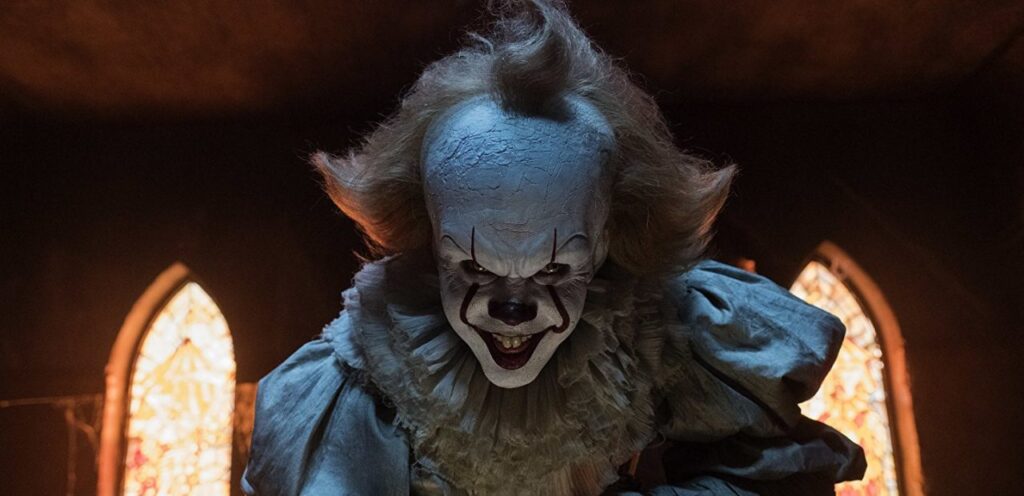
When I first watched this film, I was not much older than its main characters. I no longer remember how I managed to get into a screening at that age, but I vividly remember my impressions. In total, while waiting for the second part (released in September 2019), I read the original novel by Stephen King from cover to cover and rewatched Andrés Muschietti’s film at least five more times—that’s how much this story captivated me!
But even if we remove the subjective factor from the equation, “It” is a wonderful horror attraction even by 2024 standards, especially if you are tired of modern slow-burners with their pretentious metaphors and sluggish pacing. The jump scares in Muschietti’s film are effective, if not particularly inventive. But I especially want to highlight the projector scene, during which it is still impossible not to flinch. Of course, the film’s greatest achievement is the terrifying clown Pennywise played by the talented Swede Bill Skarsgård. In my opinion, he is the most memorable horror antagonist of the 21st century.
“Oddity” (2024)
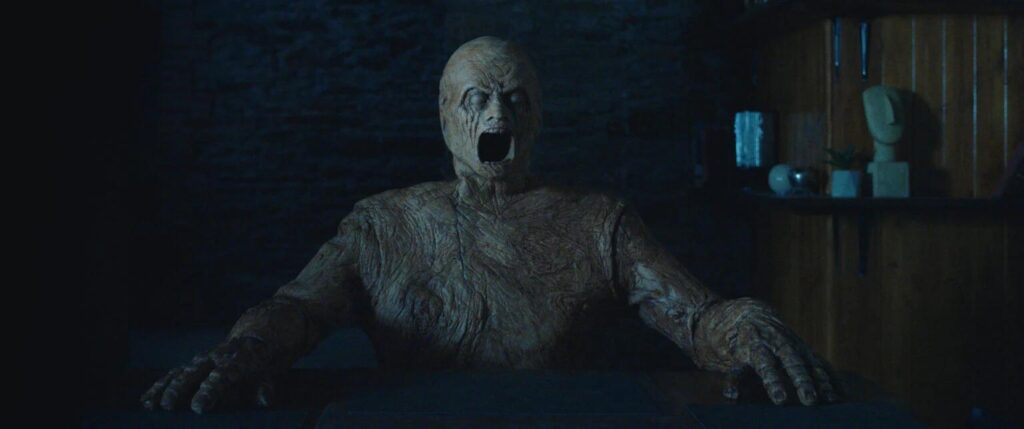
A semi-detective horror film about a blind medium girl investigating (with the help of supernatural forces, among other things) the mysterious death of her sister. While on screens, art—or elevated horror—basks in audience attention and reverence, where authors prefer to slowly build atmosphere and communicate with the viewer through metaphors of dysfunctional social phenomena, the creator of “Oddity,” Damian McCarthy, cuts to the chase, continuing the revival of already somewhat forgotten but still reliably working genre tropes. He favors practical effects, anxiety-inducing violins that send chills down your spine, and the tireless popping out from around the corner of yet another macabre figure.
— is a clot of tension, dark humor, fright, and a simple detective intrigue. One way or another, a couple of times here it will be scary even for those who no longer remember why in childhood they didn’t stick their leg out from under the blanket and fell asleep with the light on.
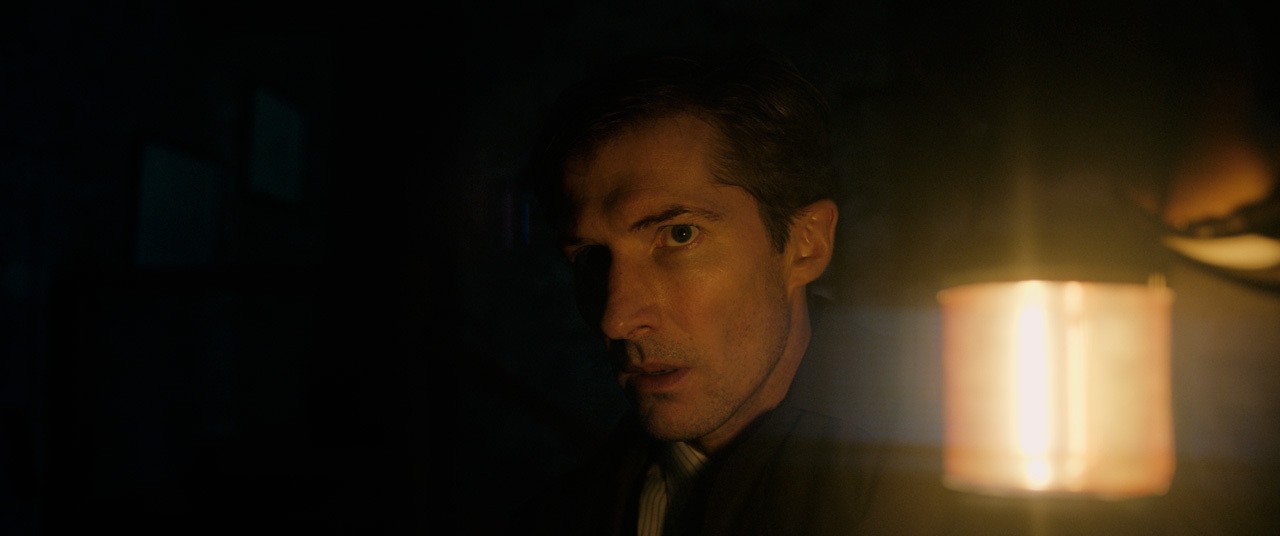
Starting November 28, you can get scared by the film “Oddity,” another shadowy hit in the horror genre by Irish director Damian McCarthy, who previously surprised audiences with his
Open material“Insidious” (2010)
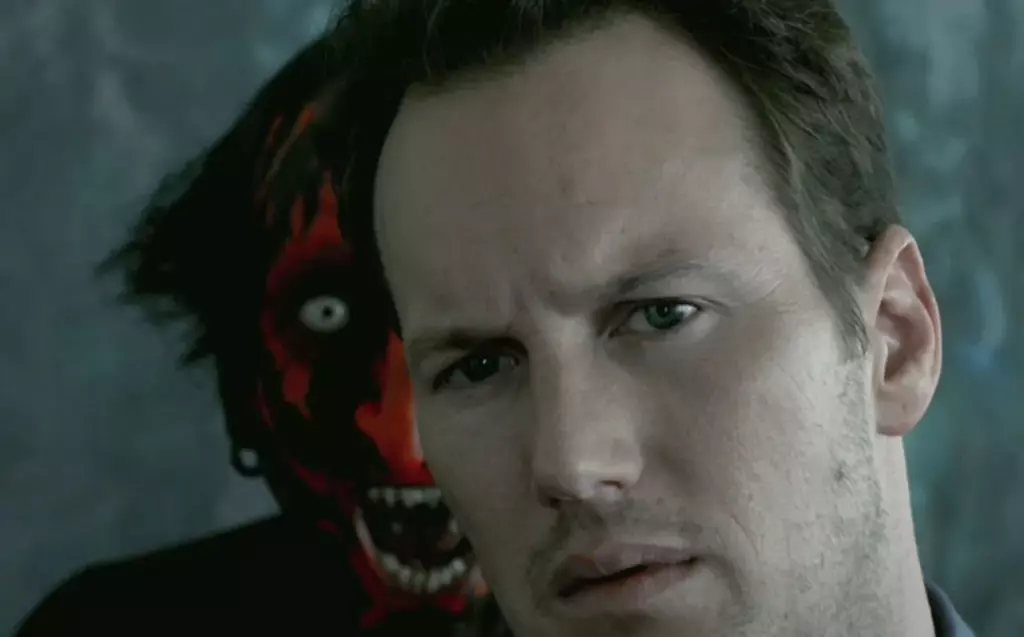
Probably, out of our entire editorial team, I chose the most banal horror films, which, moreover, also occupy the first two places in the broadbandchoices platform study on the scariest horror movies. But what some would call trivial, I consider classic (especially since these films coincided with my teenage period and a wild desire to “watch a scary movie”). I am sure that when “Insidious” is mentioned, most viewers immediately recall the terrifying red face of the demon, onto which a meme would now fit very organically: “Boo! Scared? Don’t be afraid. I’m a friend, I won’t hurt you. Come here, come to me…”
Today, “Insidious” is a franchise of five parts, where the latest film has turned into a melodrama with rare jump scares. However, the first two films are still capable of being very frightening. I watched the original the night before going to the cinema for the sequel, and that was far from my best idea. Although at the time, of course, I bragged about this achievement to my friends, who knew well how scary James Wan’s film is. Since then, a good half of horror movies no longer seem as scary (and even “The Conjuring” didn’t particularly frighten me in the cinema), but now I always look at old ladies with a bit of caution. And why aren’t they placed in the same category as other terrifying things, like clowns?
Comments
0No comments yet.
Sign in to join the discussion.