
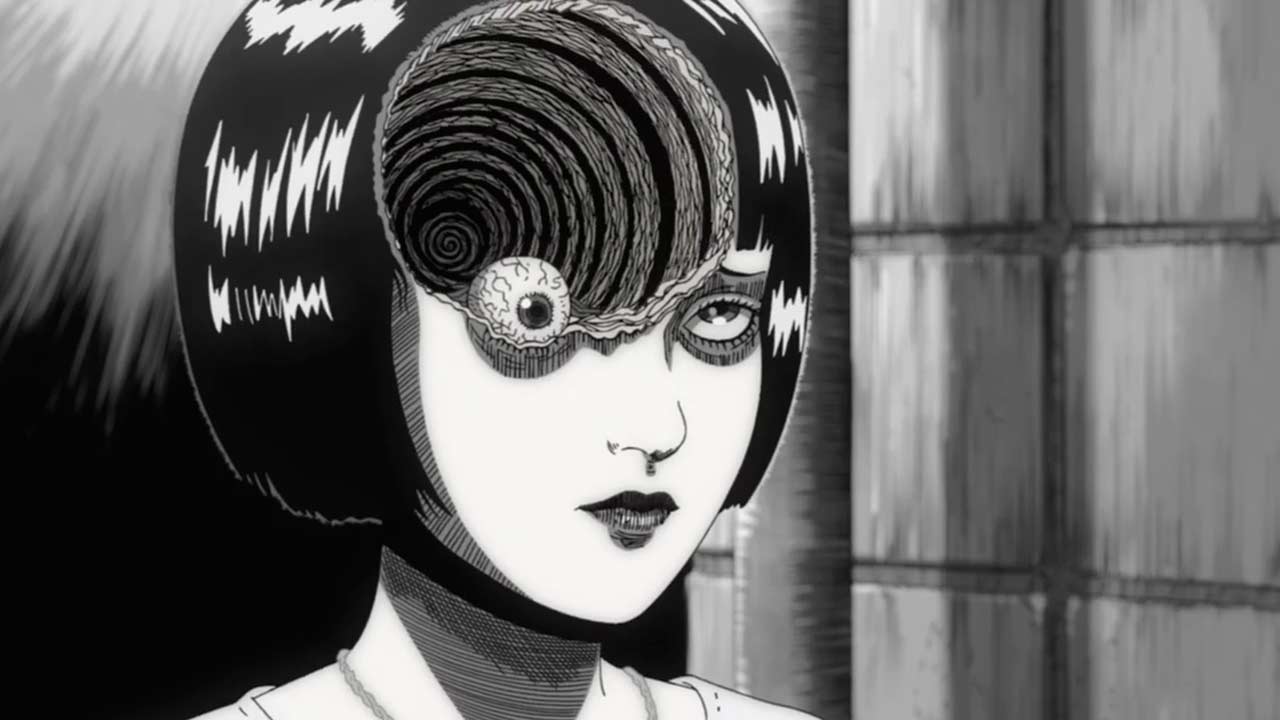
On October 19, the final episode of the short anime series 'Uzumaki' based on Junji Ito's cult manga was released. At first, it might seem like this is the first worthy adaptation of the author's works, but we still do not recommend harboring optimis...
The anime series 'Uzumaki' is based on the three-volume manga of the same name by Junji Ito, a renowned horror manga artist who has been working in the genre for over 35 years. His works have been repeatedly adapted for the screen, both as live-action films ('Tomie' and the same 'Uzumaki') and as anime ('Junji Ito: Collection' and 'Junji Ito: Maniac'), but unfortunately, something always prevented the creators from making a worthy adaptation. It seemed that this time everything would surely work out, but all hopes were suddenly swept away by a whirlwind.
Before we begin, we'd like to urge you to subscribe to our Telegram channel 'After the Credits' (here's the link). There we post posters, trailers, and various interesting and fun news from the world of cinema.
What's the story?
In the town of Kurouzu, strange things suddenly start happening. High school student Shuichi is the first to notice something is wrong, and he suggests to his girlfriend Kirie that they leave. The boy has every reason to be suspicious: constant whirlpools, increasing whirlwinds, and his gradually losing his mind father, obsessed with the idea of the spiral. His beloved seems to notice these oddities too, but she doesn't take the idea of leaving seriously. They don't return to this quite sensible thought even when Azami, Kirie's classmate, develops a funnel half the size of her head on her forehead where a scar used to be, and Shuichi's father commits suicide in the bathtub, twisting his own body into a spiral.
Then it gets worse, more absurd, more disgusting: snail people, snakes intertwined with each other (and not only), animated curling hair, and much more. The roads twist, preventing anyone from escaping Kurouzu, and the city and its inhabitants become dependent on the characteristic curved line, which is reflected literally everywhere, contributing to both physical metamorphoses and general madness. Shuichi names this phenomenon the 'Spiral Curse'. No one can hide from it, so the main characters can only resist with all their might, while also trying to solve this mystery.
Everything is intertwined, but not predetermined
'Uzumaki' was first announced five years ago, in the distant pre-COVID year of 2019. Since then, the adaptation has fallen into production hell, with the release postponed many times: sometimes due to the ill-fated pandemic, sometimes due to the creators' desire to perfect everything. The authors assured that enormous attention was being paid to the visuals, as they were striving to make the picture close to the original.
Of course, after so many years of waiting, audience expectations soared to the heavens. Especially since only four episodes were announced, although the source material consists of three volumes of 200 pages each (enough material for a standard single-season series of 10-12 episodes). Naturally, concerns arose that a good half of the manga would be cut, as it's difficult to 'pack' six hundred pages into four episodes, even with non-standard runtime (up to 34 minutes). However, the main problem turned out not to be the cut material. Such compromises can be forgiven if the adaptation is done competently in other aspects, which, unfortunately, cannot be said about this adaptation.
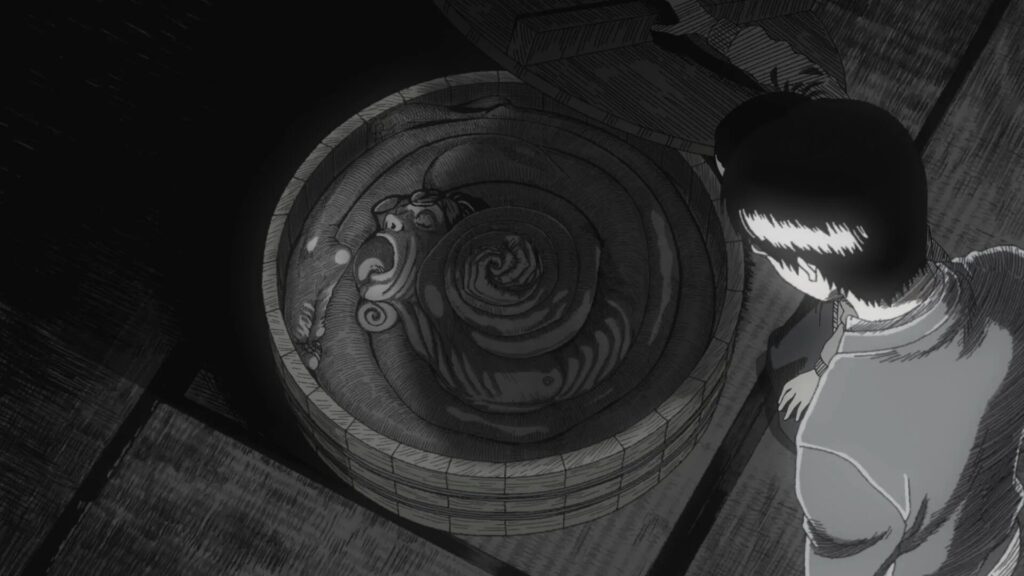
Initially, it was announced that the title was being handled by Studio Drive, which successfully released the third season of the series 'KonoSuba: God's Blessing on This Wonderful World!' this year. However, at the time of the premiere, it turned out that the first episode was handled by the virtually unknown studio Fugaku. But what difference does it make if 'Uzumaki' started off very briskly? From the first minutes, it's noticeable that a lot of effort went into the anime: meticulously crafted black-and-white animation with elements of rotoscoping and clear attention to detail, in excellent balance with the dark atmosphere of absurdity, a slight sense of anxiety and discomfort from what is happening. At first glance, the creators managed to closely approach Ito's authorial style and transfer it to the screen, almost completely preserving the charm of the source material.
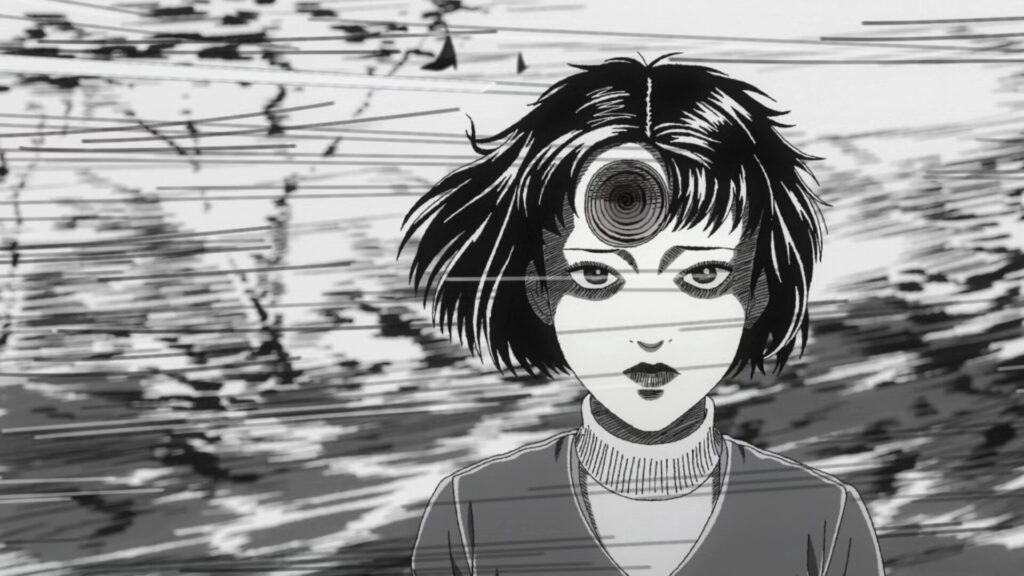
However, all the positive impressions and five years of fan expectations are twisted into a pretzel as soon as the second episode starts. It turns out that Fugaku wasn't the only studio working on the series: only the beginning and the end are their work. The middle (episodes two and three) is handled by Studio Akatsuki, and the animation quality drops incredibly there (Akatsuki will find a way to mess up Uzumaki in any reality).
You say a word to him, he gives you a spiral
In contrast, the gap in quality literally looks like the phrase 'spiraling down'. Unsurprisingly, after such a twist in the art, the internet was flooded with a wave of criticism and dissatisfaction, and the user rating began to drop sharply (before the release of the second episode, the title's rating on MyAnimeList was above 8 out of 10, and at the time of writing this material, it is 6.2/10).
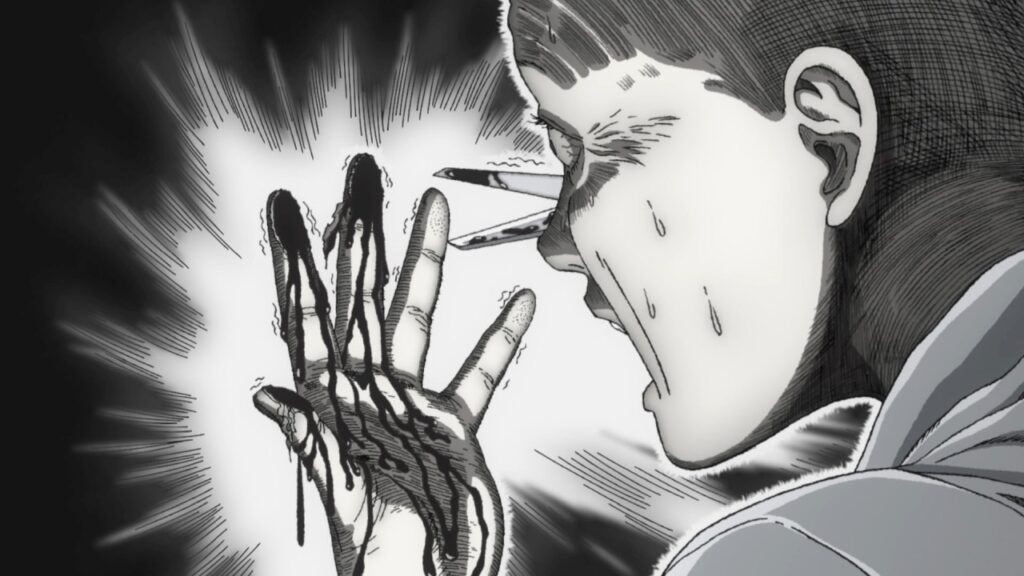
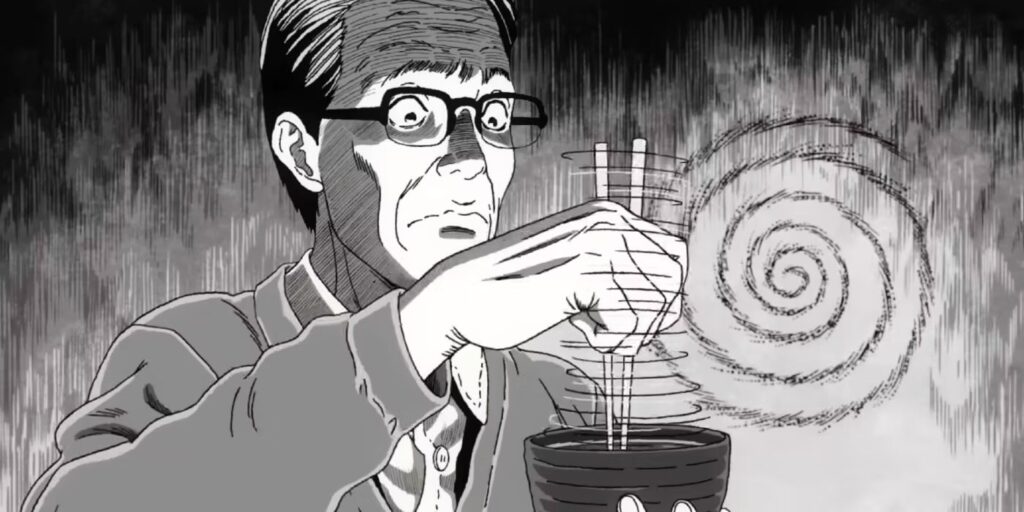
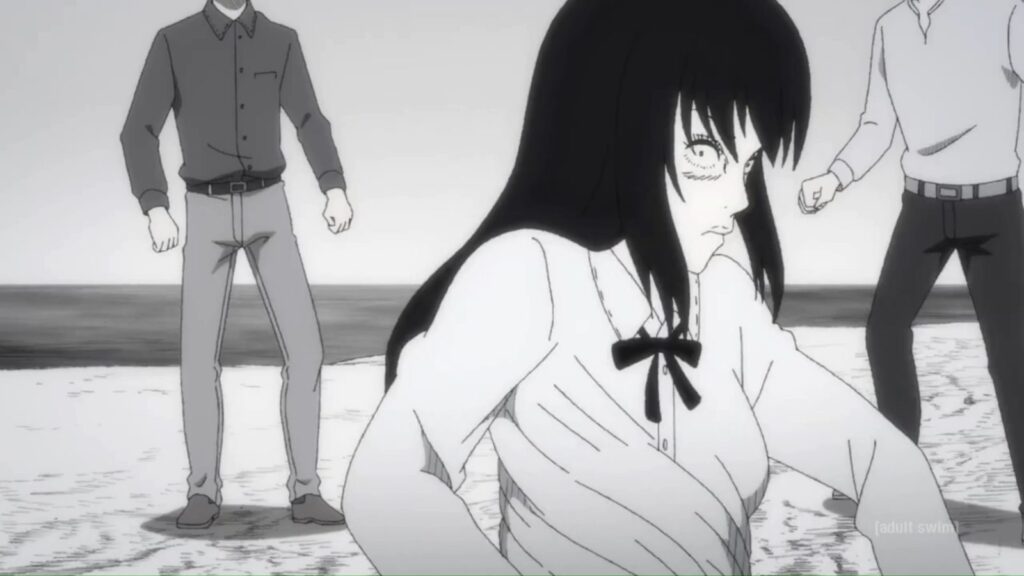
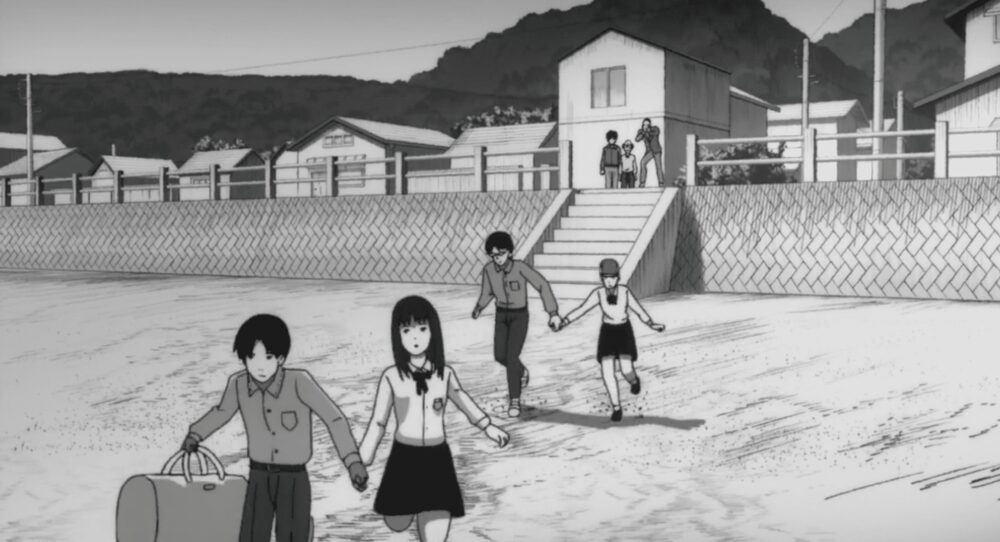
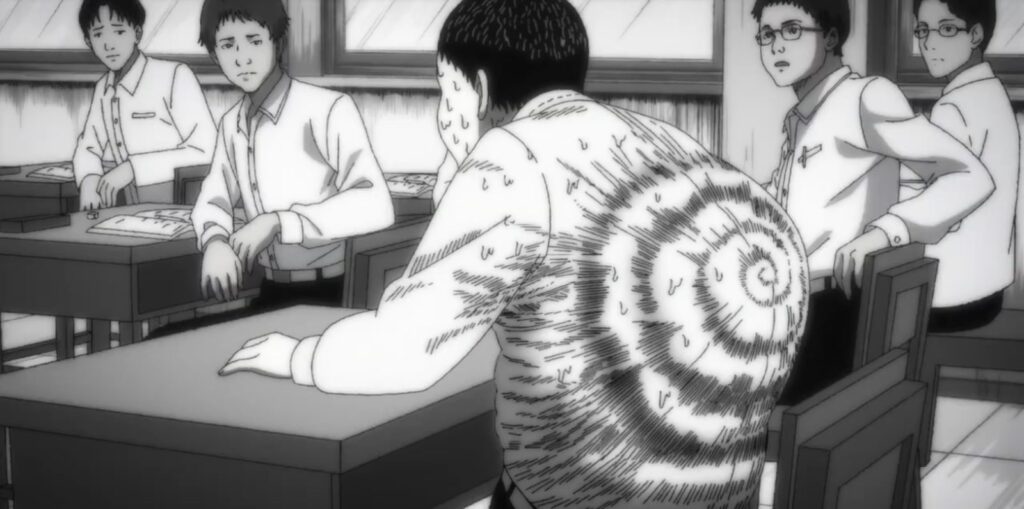
Producer Jason DeMarco even apologized and tried to justify by saying they were 'betrayed', but didn't specify by whom (the post has since been deleted). He also said that there were three possible paths after this unpleasant incident: left — not finish and not release 'Uzumaki' at all; straight — finish the first episode and release only it, leaving the project incomplete; right — release all four episodes with all the flaws and full understanding of the inevitable reaction. As you can guess, they chose to go right.
Apparently, the option of taking more time for refinement and seeking additional funding was not even considered, which is strange given the numerous delays. Couldn't Adult Swim and Production I.G, credited in the titles, help in any way? It's hard to believe that a budget of one bowl of rice for two episodes was the only option.
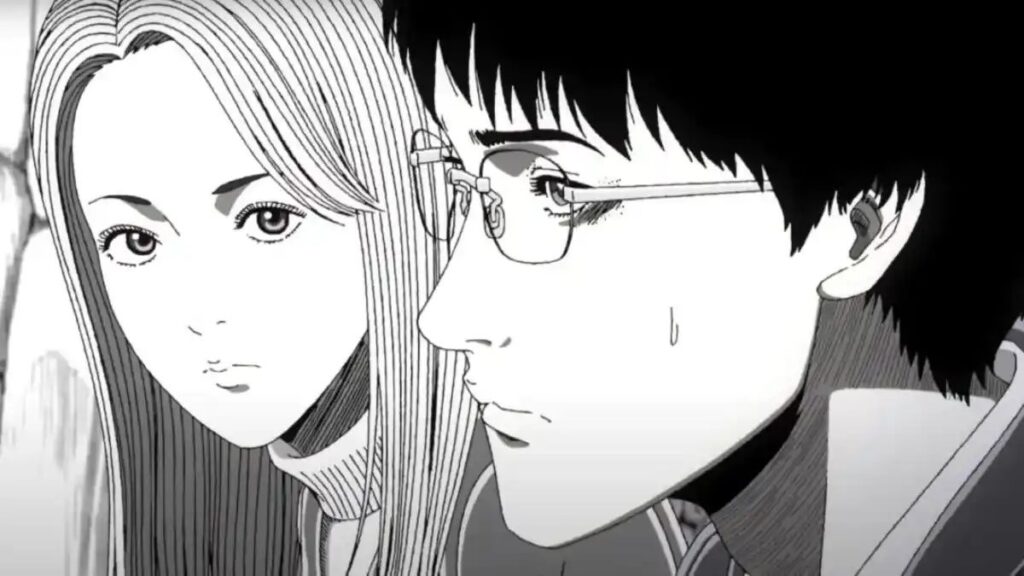
Naturally, against the backdrop of the colossal failure in animation, other problems that a high-quality picture could have masked begin to stand out. At the conceptual level, 'Uzumaki' is an authorial reflection on the insignificance of man in the face of something powerful and inexplicable. Even in the most insane situation, people continue meaningless and sometimes absurd attempts to delay the inevitable, trying to give everything a rational explanation. At least that's how it was in the original, with 20 chapters of 30-40 pages each. In the adaptation, all the gradual horror of the source material turns into some kind of jumbled mess of super-strange events with absolutely illogical reactions from the characters to what is happening.
What in the manga smoothly flowed from one situation, in the anime happens in parallel, layering on top of each other. Because of this, the characters often look stupid and unnatural, as they perform certain actions without any motivation. Even without reading the original, it's clear that either the story became choppy and chaotic after the script work, or on screen (and, accordingly, in the manga) there is simply unjustified nonsense under the guise of body horror. Given the references to Lovecraft and Carroll, and some original thoughts and ideas, it doesn't seem that the problem lies in the source material, so the conclusion about sloppy work with the text suggests itself automatically.
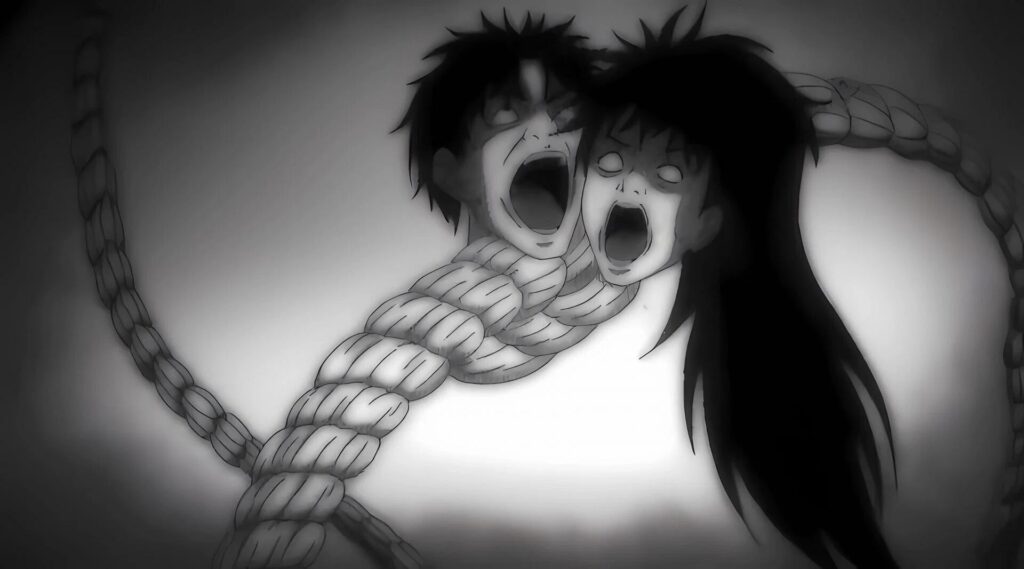
As a result, 'Uzumaki' looks not like a serious philosophical work that induces discomfort with its eerie atmosphere (a recent film does a much better job at that), but like a typical dream at a temperature of 39.5°C set to Korney Chukovsky's poem 'The Crooked Song'.

'The Substance', which won the Best Screenplay award at the 2024 Cannes Film Festival, was released in Russian theaters on September 19. In our article, we discuss the nature of fear in this film
Open materialWhat's the bottom line?
'Uzumaki' is another unsuccessful project based on the manga of cult author Junji Ito. Apparently, the 'Spiral Curse' lies on the author's adaptations, just like on the town of Kurouzu. No matter which work is chosen for adaptation, no matter who takes it on, everything twists in such a way that fans are justifiably left dissatisfied. Perhaps in the future, there will be a lucky person who can dispel the curse and solve the mystery of transferring complex material to the screen with minimal damage, but certainly not this year. Honestly, I probably wouldn't even recommend looking at the calendar too often, so that the miracle comes unexpectedly and truly makes your head spin.
P.S. In the anime 'Uzumaki', every episode except the first has post-credits scenes, so don't rush to turn them off.
Comments
0No comments yet.
Sign in to join the discussion.