We figure out where the frightening image of the clown came from and discuss why they are not just cheerful good-natured people.
Recently, the premiere of the third part of the film about the maniac clown Art took place. In honor of this event and the upcoming Halloween, we decided to reflect on the topic of killer clowns in cinema and pop culture: where did they come from and why do they scare us so much?
It may seem that the image of the killer clown in mass culture arose only at the end of the 20th century with the growing popularity of 'It' by Stephen King, but no. The first mentions of a bloody jester were back in the 19th century. One of them is considered to be the story by Edgar Allan Poe'Hop-Frog', telling about a king-jester and his court jester Frog.
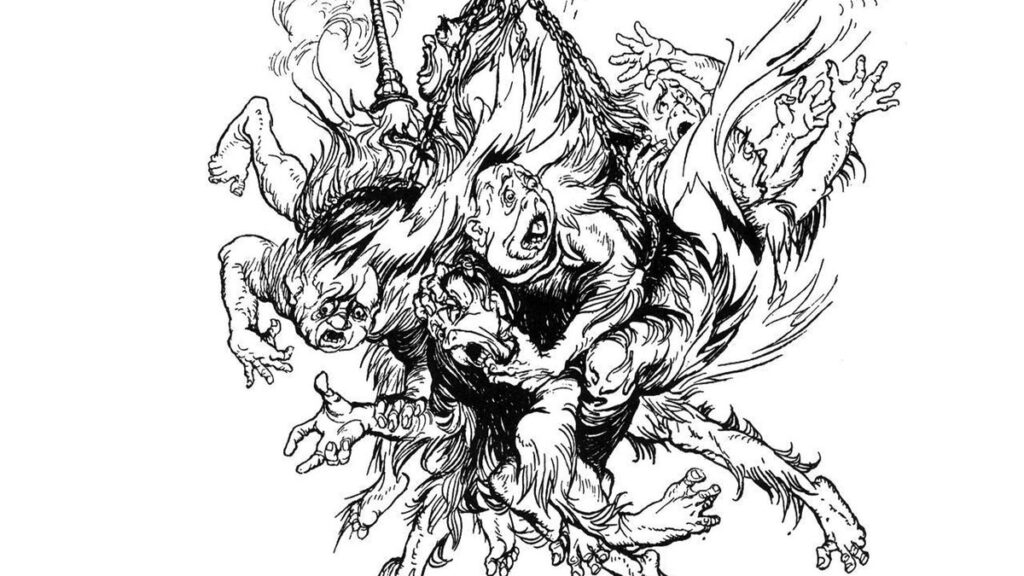
One day, unable to bear further mockery, Frog offered the king and his retinue to dress up as orangutans: he doused them with tar, rolled them in hemp, and tied them with chains, then set them on fire with the words: 'I am a jester — and this is my last joke.'
Illustration for Edgar Allan Poe's story 'Hop-Frog'
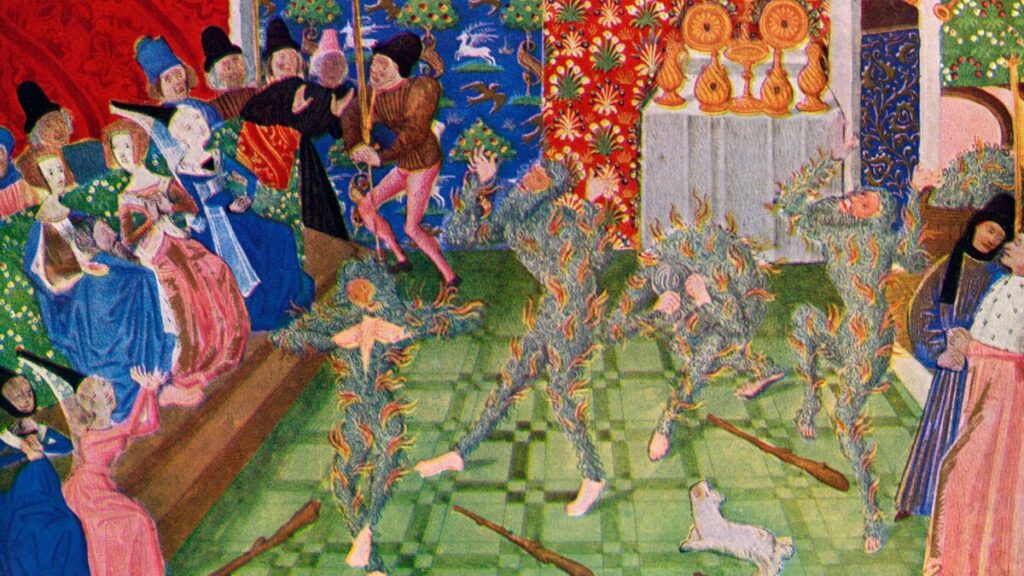
According to Jack Morgan from the Missouri University of Science and Technology, Poe's story has a real prototype — 'Bal des Ardents'. To please and entertain King Charles VI, it was decided to hold a masquerade ball, which ultimately ended in tragedy. Due to a torch, the costumes of the participants, including the ruler, caught fire.
In subsequent years, the image of the killer clown also appeared in pop culture. For example, in the play Catulle Mendès 'La Femme de Tabarin' (1874) and the opera Ruggero Leoncavallo 'Pagliacci' (1892).
'Bal des Ardents'
The Emergence of Clowns in Cinema
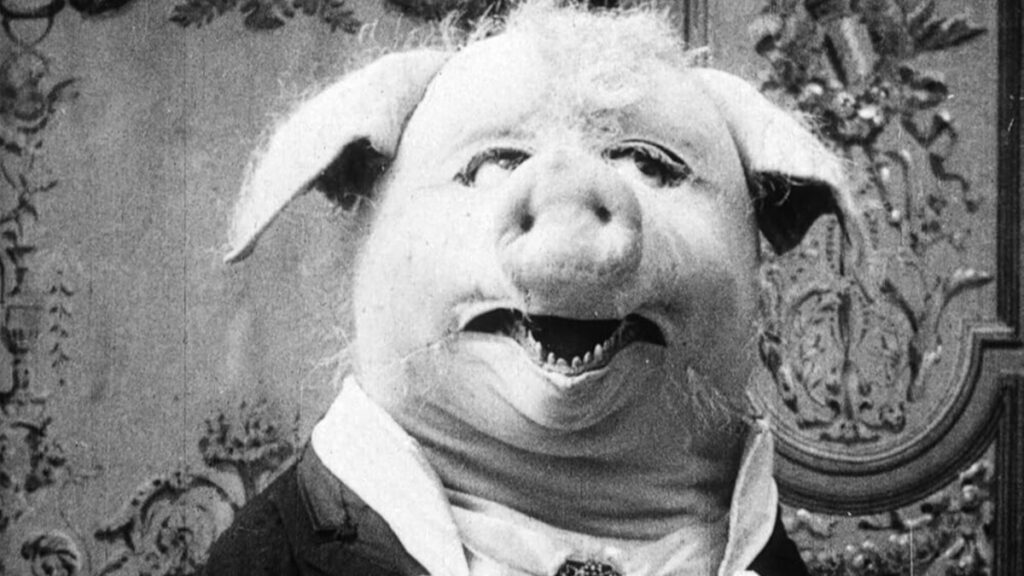
Cinema as an art form was not immediately perceived. In the early years, it was considered entertainment to attract crowds. Unsurprisingly, at the beginning of the 20th century, the plots of many films revolved around fairs and circus performances ('The Dancing Pig' (1907), 'The Unknown' (1927), 'Freaks' (1932)).
Circus horrors of the first half of the 20th century were about everyone except the familiar brightly made-up jesters. There was no talk of killer clowns. What can we say if their very appearance was rare, and if jesters did appear, they were as positive characters ('He Who Gets Slapped' by Victor Sjöström, 1924). The only example of an almost villainous clown can be considered 'Spies' (Fritz Lang, 1928). At the end of the film, the clown Nemo appears — one of the images of the main villain Haghi.
Over time, cinema moved away from circus plots and such stories faded away. The main impetus for the emergence of killer clowns is considered to be the high-profile case of John Wayne Gacy (late 1970s). His appearance significantly tarnished the reputation of red-nosed jesters and created negative sentiments in society. That's when coulrophobia emerged.
Still from the film 'The Dancing Pig'
In 1982, 'Xtro' (Harry Bromley Davenport) was released, where a living clown doll commits various atrocities. This is still not the familiar image that is now broadcast in pop culture, but the beginnings are there.
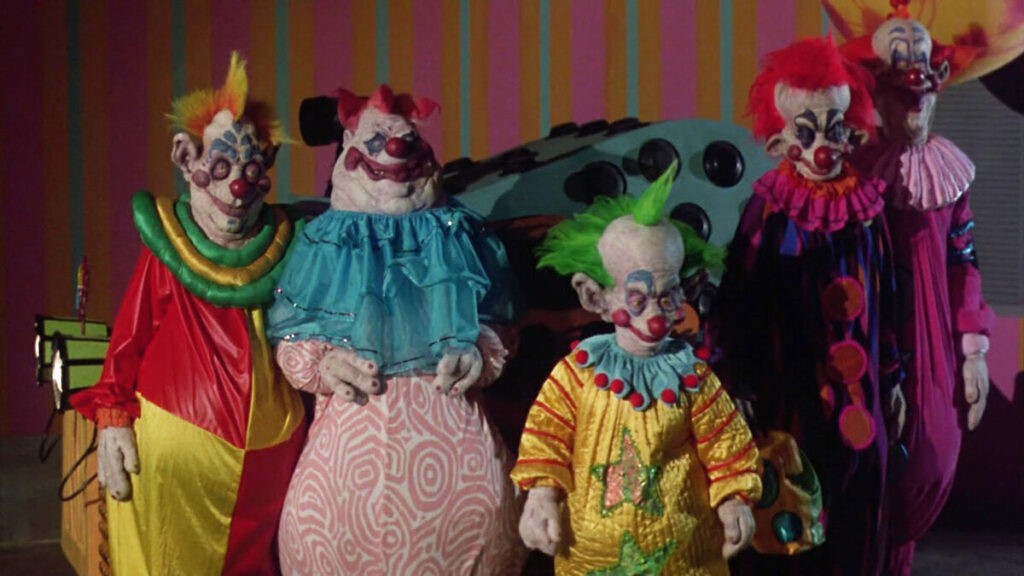
A vivid demonstration of evil clowns before cinematic Pennywise can safely be called the comedy horror film Stephen Chiodo 'Killer Klowns from Outer Space' (1988). A group of alien clowns lands on Earth, sets up a circus tent, and feeds on people. Here you have both maniacs and unknown extraterrestrial beings. King's references are visible.
Maniac clowns appeared in cinema even before the adaptation of 'It', but they were not key characters or typical representatives of slashers. A huge push for the 'clown boom' was given by the aforementioned Gacy, and Stephen King in 1986 developed it to its apotheosis.
Still from the film 'Killer Klowns from Outer Space'
The Case of John Wayne Gacy
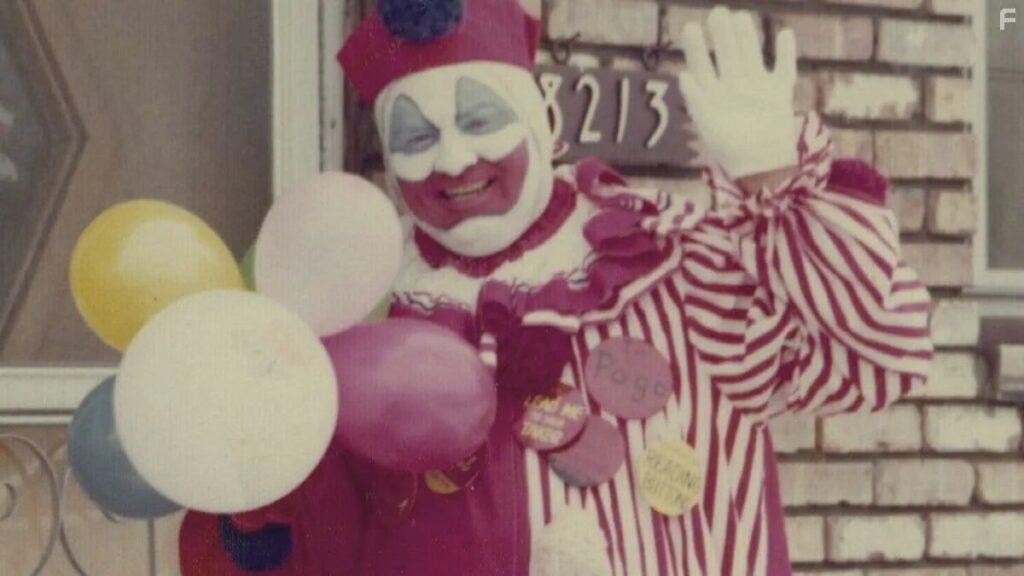
A great public resonance was created by John Wayne Gacy. An exemplary citizen and neighbor's favorite, who over several years mercilessly killed and raped young men aged 15 to 20, and buried the bodies on his property under the house.
Gacy was a member of a clown society and often conducted children's events, which is why he is considered the first real maniac clown. But this image was attributed to him by the media, making his story incredibly marketable. John Wayne never killed people in a clown costume.
His story caused a public outcry and formed such a frightening image that it led to new fears, which became easy to exploit and sell in movies and books. It is commonly believed that Stephen King based the image of Pennywise the Clown on Gacy. But the writer himself repeatedly denied this, citing a coincidence.
John Wayne Gacy
Pennywise — Your Children's Best Friend
It's unclear who made more noise about maniac clowns: Gacy or Pennywise? Riding the wave of popularity in the 90s, King's villain was talked about everywhere. In those years, the clown costume for Halloween took on new colors; I'm sure it was like in 2017.
The familiar image of the killer clown first appears only towards the end of the 20th century. Of course, with the birth of Pennywise — the character from Stephen King's novel 'It'. In 1978, the writer came up with the idea to write a novel based on the most terrible childhood nightmares and put a terrifying clown at the forefront. By the way, in the same year, Gacy was detained and arrested, and the media did not stop, repeatedly telling his story.
Pennywise is a monster from another dimension, terrorizing the town of Derry for decades. The terrifying hero can transform into the image of what the victim fears most in the world. A universal monster, isn't it?
The character's image was talked about for a long time. First, after the novel's release in 1986, and then it gained a second wind with the release of the eponymous adaptation in 1990, becoming one of the main cinematic clowns of modernity.
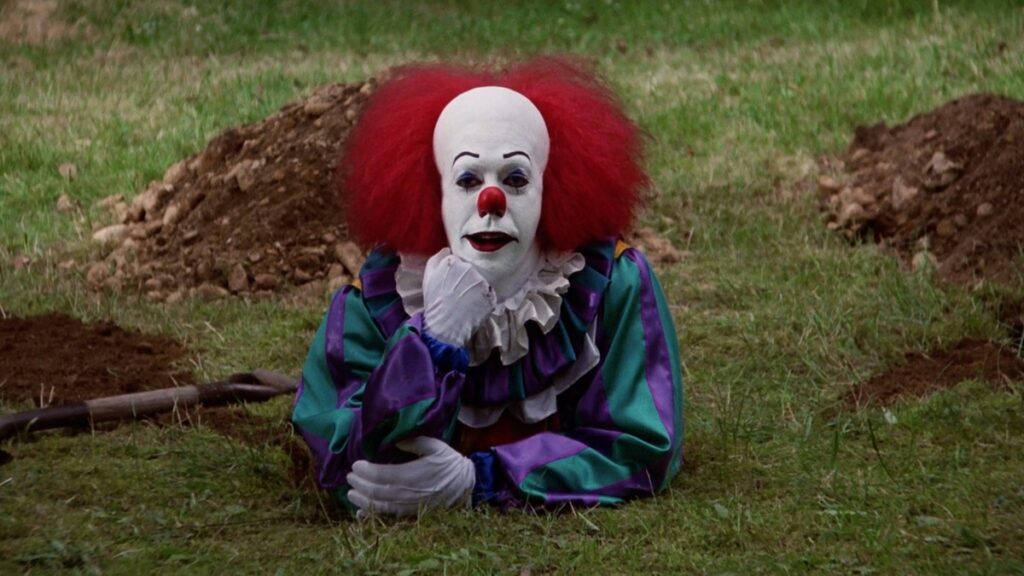
Still from the film 'It' 1990
In Tommy Lee Wallace's film, the visual embodiment of Pennywise can be called classic. Bright wig, colorful costume, and red nose: this is exactly the image children are used to seeing in real life. Pennywise from 1990 scares not with blood stains or a terrifying smile, but precisely because he looks like an ordinary person in a clown costume.
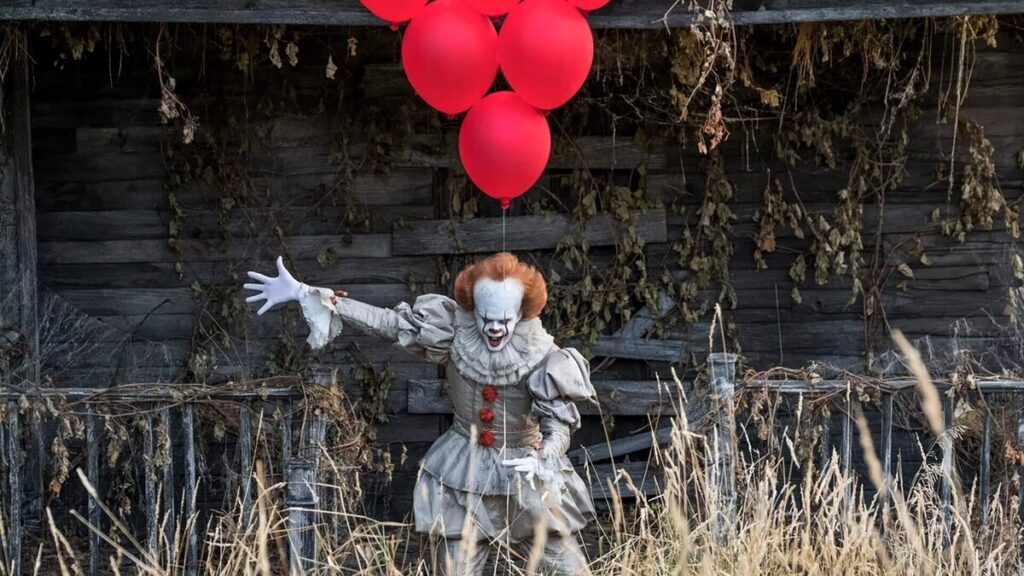
The modern King character from the 2017 and 2019 adaptations moves away from the familiar image of a kind jester and visually approaches the Victorian era: pantaloons, a special collar, and more. This decision was made based on the idea of making Pennywise timeless. The character has existed for centuries, and the appearance emphasized his long existence. The image turned out more frightening but deviated from the bright and colorful clown costumes we are all used to.
Still from the film 'It' 2017
Art — Quite the Sadist
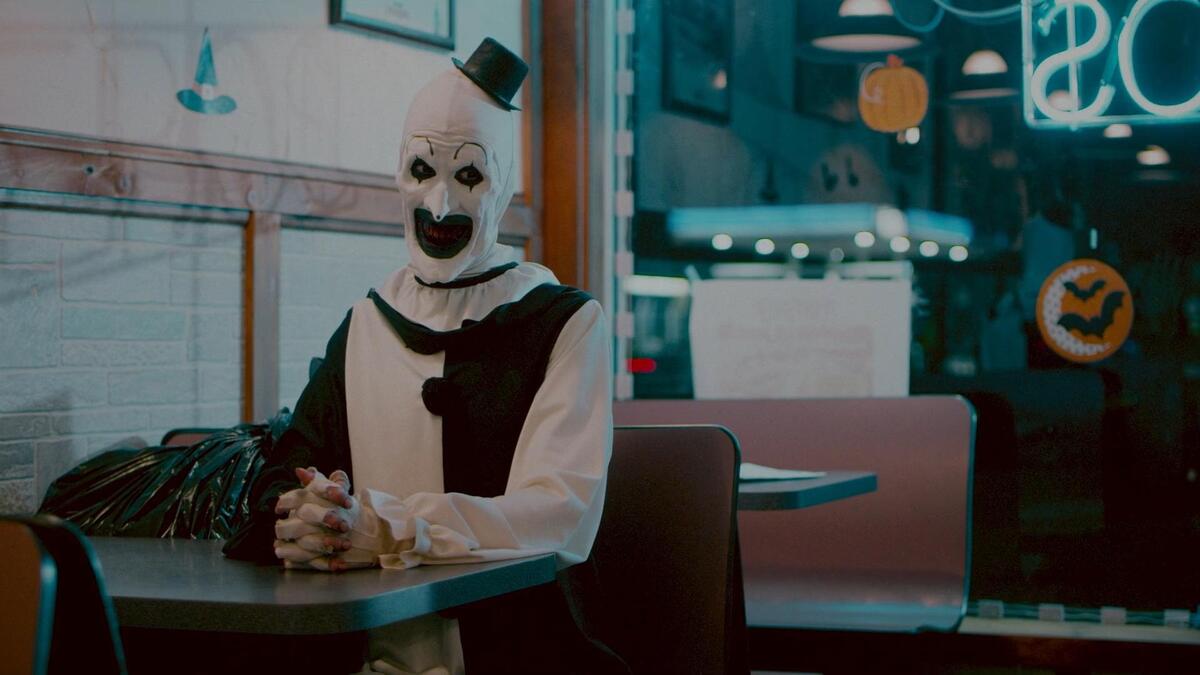
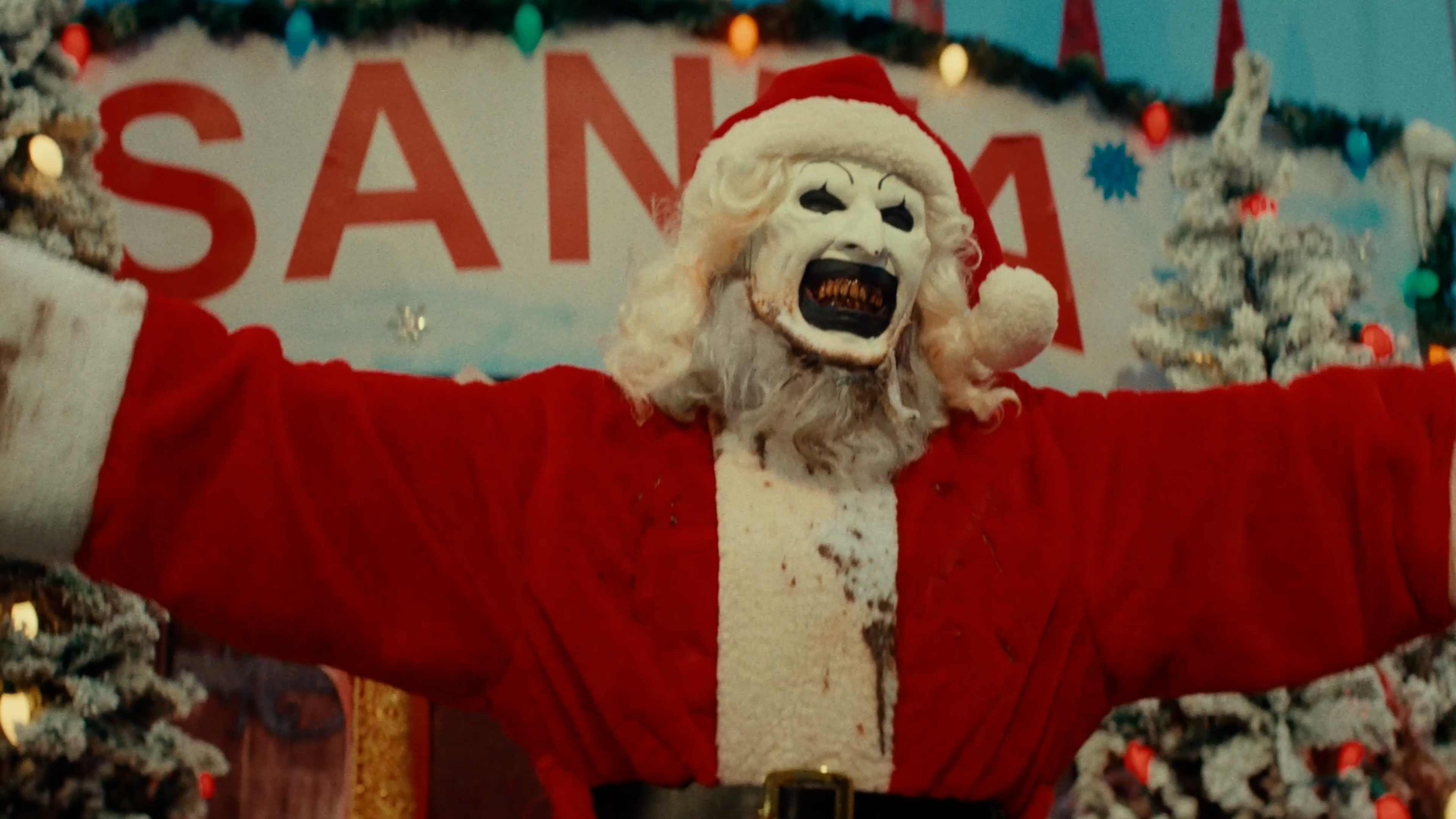
In the conversation about the most terrifying and cruel cinematic maniac clowns, the first position is occupied by Art — the main antagonist of the 'Terrifier' trilogy.
His image is more reminiscent of a mime: black-and-white attire and not a single spoken word. Truly frightening not only by his outfit but also by his appearance, which bodes nothing good. Art is an extraordinary clown, whose arsenal includes not only stabbing and cutting objects but also revolvers.
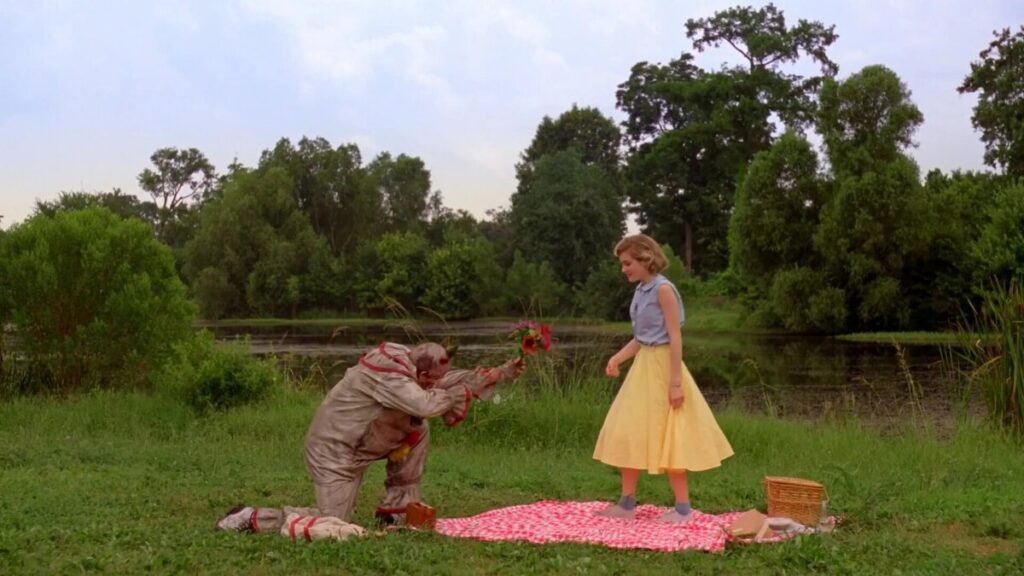
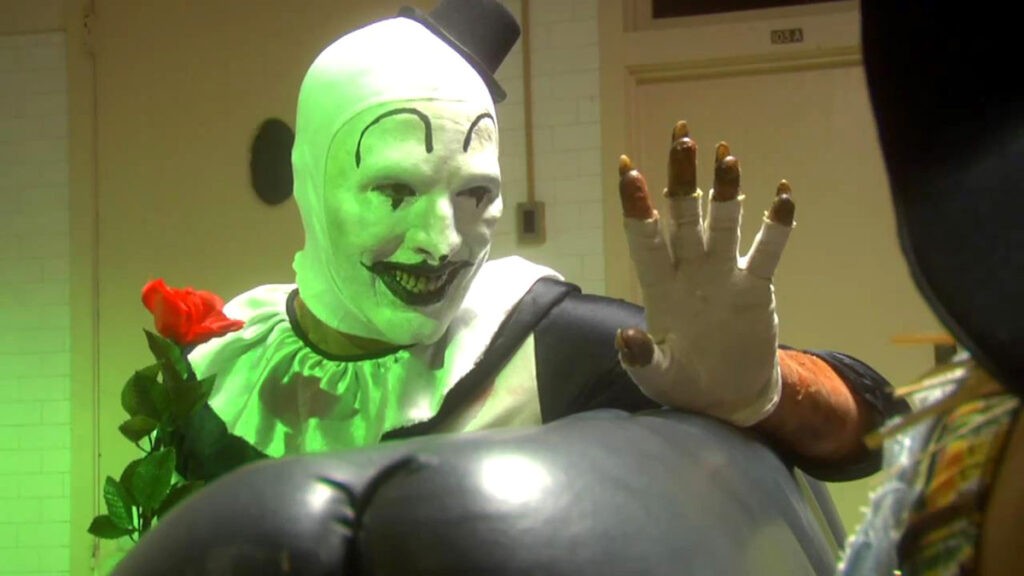
The character's first appearance was in Damien Leone's short film 'The 9th Circle' in 2008. At that time, Art's appearance was even somewhat cute: a face with soft features and a smile that wouldn't scare immediately. By design, the clown initially appears cheerful and comical, and only then reveals his nature.
Still from the film 'The 9th Circle'
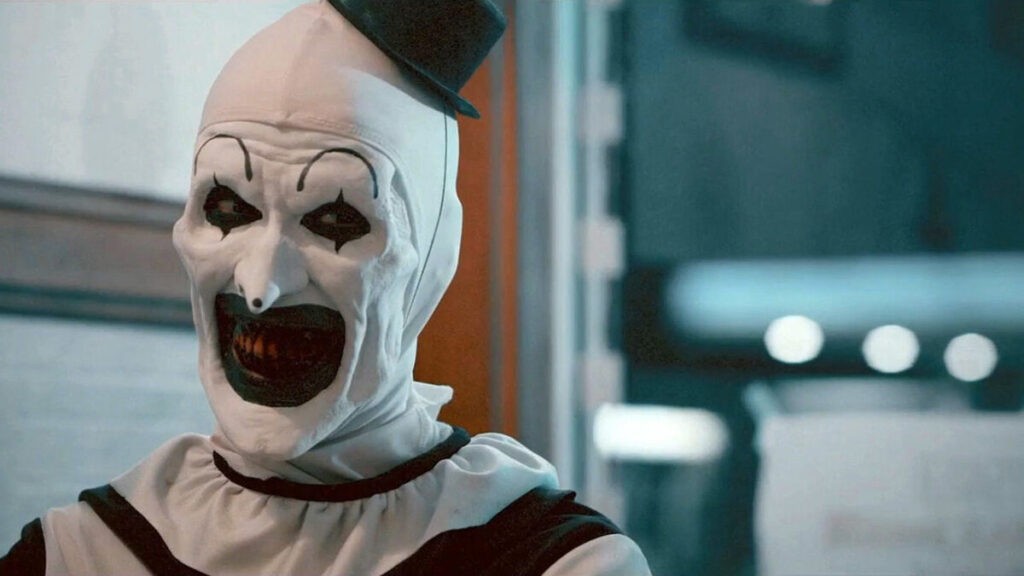
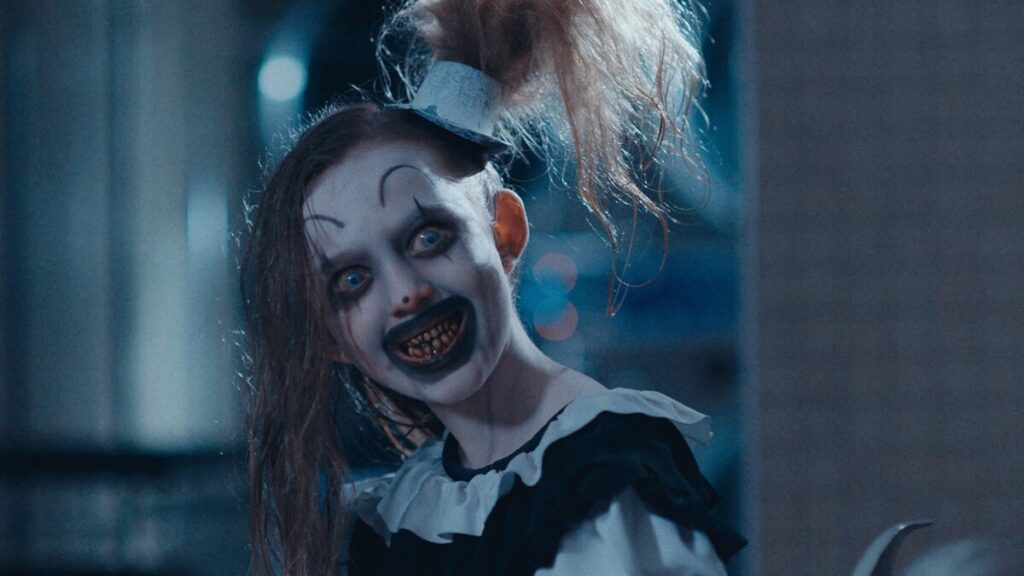
This cannot be said about Art's image in the 'Terrifier' films. A sharp face and a beastly look made the clown's appearance frightening even without murders. Leone aimed to make the killer the complete opposite of Pennywise from the 90s: mute, bald, and using firearms. Quite atypical for a slasher villain, and especially a classic clown, right? After Mike Giannelli left the role of Art, David Howard Thornton took over.
'Mike is just a guy dressed as a clown, while David is a clown. If you know him personally, you know he's a walking cartoon. In real life, he's like Roger Rabbit, and you'd never believe he's Art the Clown — he can switch and bring himself into a dark state.'
Still from the film 'Terrifier'
'American Horror Story': Twisty the Clown
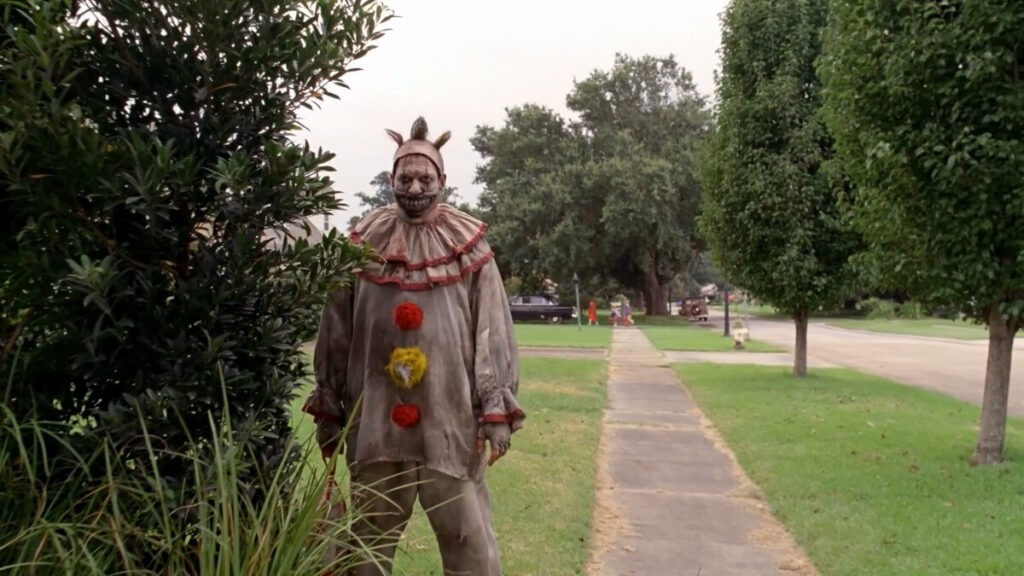
Another prominent representative of cinematic clowns is Twisty — the antagonist of the fourth season of the series 'American Horror Story'. Unlike King and his Pennywise, the prototype of the 'AHS' antagonist is directly inspired by John Wayne Gacy, whom we discussed earlier.
Of the three, Twisty was a real clown. Because his mother often dropped him on his head as a child, the character grew up stupid but very kind. Twisty loved children and portraying a funny jester for them was a joy. But the dwarfs of the traveling circus disliked him and spread rumors that the clown molested children.
After being fired and an unsuccessful attempt to make his own toys, Twisty sees no better solution than suicide. But even that he fails at. Now behind the mask with a wide smile hides a missing lower jaw.
The character quickly became a serial killer of adults. Behind such actions was a personal ideology — Twisty believed that by doing so he was saving children from terrible people and parents. The clown's image is not the most pleasant. On one hand, a relatively canonical costume, but on the other — dirty clothes, blood stains, a frightening mask, and a hat made of human skin. Not the most good-natured sight for children's eyes.
Still from the series 'American Horror Story'
Why Are Clowns So Scary?
In fact, the fear of clowns can be easily explained. Behind the makeup, bright clothes, mask, and wig, anyone can hide. Absurd behavior, sudden movements, and a constant smile — all this subconsciously makes people associate a clown with a mentally unhealthy person from whom anything can be expected.
For some, the clown image became the beginning of social phobia. These jesters often mock someone in front of others, creating a show. This can develop a fear of being ridiculed in front of a wide audience. Pop culture and stories of maniacs played a big role in shaping the image of the villainous clown. A strange childhood film featuring a scary clown — hello, coulrophobia!
By the way, bright makeup is not always funny and cheerful. Professor Joseph Darwin from California State University, Northridge, notes that a hidden face under makeup makes children see a threat due to high sensitivity to contrasting colors.
Still from the film 'Terrifier 2'
Such an ambiguous image of a clown in real life successfully overlaps with cinema and literature, where even a not-so-successful character fits perfectly if his flaws are turned up to the maximum.
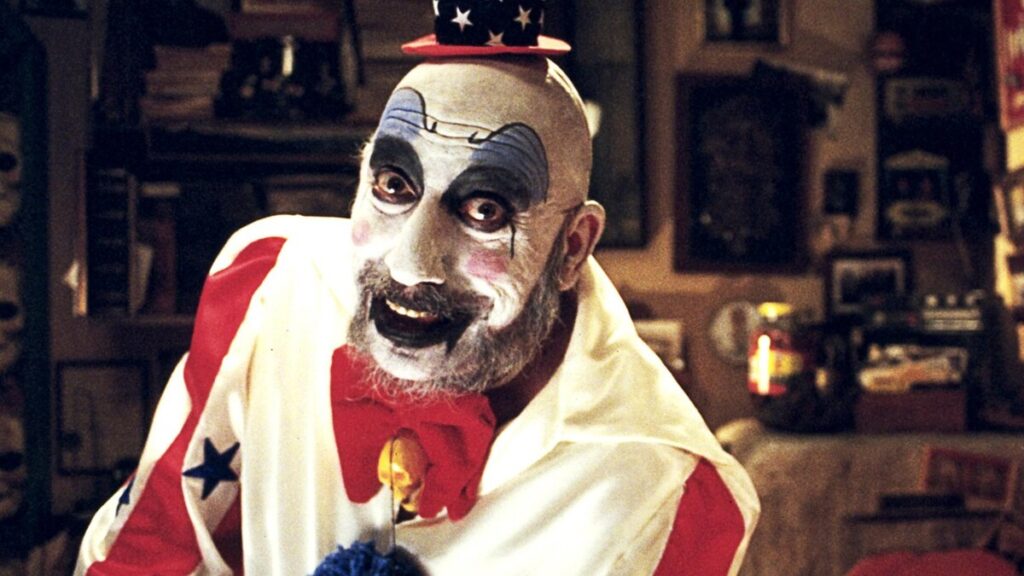
A Selection of Films (and One Series) with Maniac Clowns:


Comments
0No comments yet.
Sign in to join the discussion.