
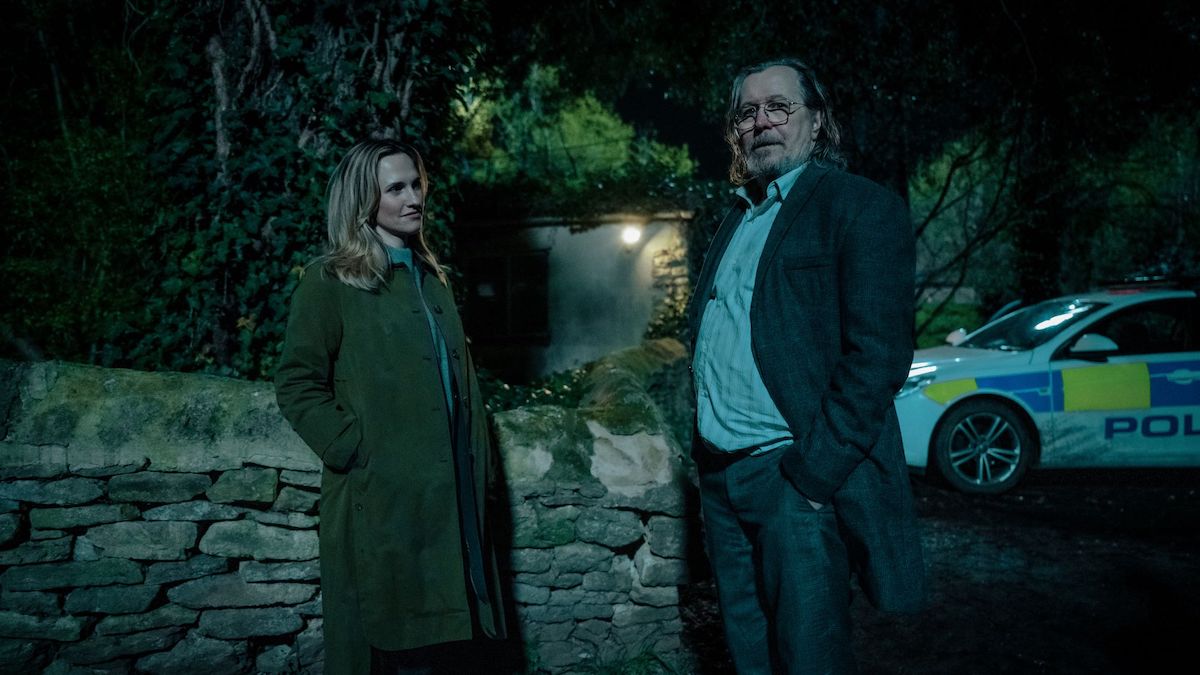
The fourth season of the series 'Slow Horses' has concluded. Why the show about how Gary Oldman and his hapless subordinates save Britain out of boredom is still not to be missed — in our review.
The finale of the third season did not pass without consequences: the previous head of MI5, Tearney, resigned, and the head of the "Dogs," the service's special forces, Nick Duffy, was killed. Catherine Standish, Lamb's secretary, after quarreling with her boss, decided to leave intelligence. River's grandfather David (the great Jonathan Pryce) hasn't left yet, but it's clear it's only a matter of time: the elderly spy's dementia is progressing. Naturally, no one benefits from the changes.
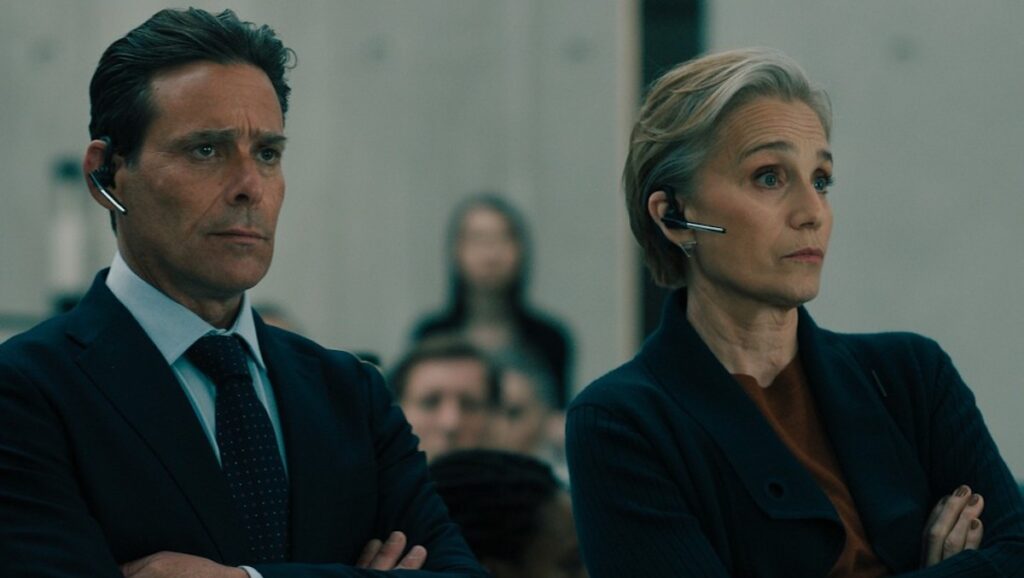
Instead of Tearney, they appointed not the experienced Diana Taverner (Kristin Scott Thomas), but the incompetent bureaucrat Claude Whelan, whose only serious skill is stringing words into extremely irritating sentences. Duffy's replacement is somewhat more promising: Emma Flight (Ruth Bradley, excellent) hasn't fully revealed herself this season, but she has every chance of becoming a character dear to fans' hearts.
Instead of Standish, an annoying secretary who learned something she shouldn't about the management was exiled to Slough House (the department for disgraced spies who can neither be fired nor sent on serious missions). And instead of a grandfather, River (Jack Lowden) naturally won't find anyone, although in the new season two figures emerge who claim the status of father figures for him. The charm of this series, of course, lies in the fact that out of two outstanding professionals, the young man prefers the one who stinks.
Change, the slow departure of the past—this is the key theme of the season, the first in 'Slow Horses' where the plot is completely unimportant and therefore ridiculously convoluted. In the very first episode, David Cartwright kills a double of his grandson who arrived from France. To understand who the grandfather killed and whether they tried to kill him, River disappears from the scene and goes to France himself.
Meanwhile, in London, everyone is a bit too busy to care about Cartwright's presumed death—an explosion occurred in the city center. The terrorist is quickly found, but he turns out to have fake documents once issued by MI5 itself for its agent. The investigation into the bomber's identity leads to a conflict between Taverner and her boss. Whelan wants to conduct intelligence activities publicly, while Taverner tries, in general, to explain to a civilian that the point of a secret service is not exactly about honesty and openness.
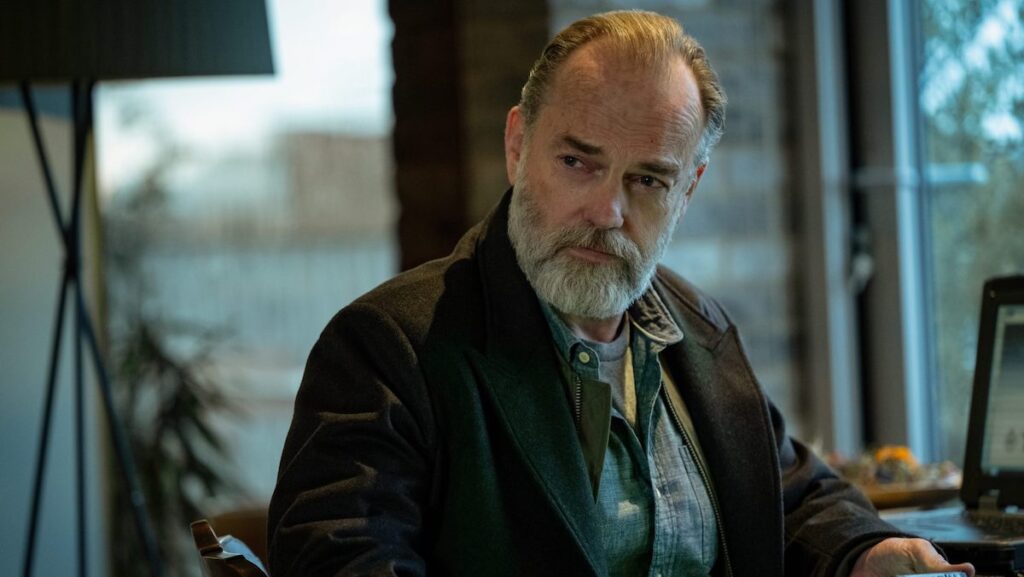
The employees of Slough House are somewhat lost against the backdrop of such large-scale disasters: all serious problems are solved without them, River, the most capable employee, is in France, and their boss Jackson Lamb (Gary Oldman) is rushing about either without purpose or without an idea. For the first time in all the time we've been watching him, he seems not to understand why he's even needed there. Only a barely perceptible connection between the explosion and River's double revives Lamb, making him not exactly run, but briskly walk. This connection is revealed in the sinister figure of Frank Harkness (brilliantly menacing Hugo Weaving), an ex-spy and hitman whose networks entangle the heroes, though they themselves don't realize it yet.
It's worth saying the main thing right away: this is still a captivating spectacle. Moreover, in the fourth season it becomes finally clear that 'Slow Horses' delights not so much with intrigue as with moments, scenes. Jackson Lamb jokes in the most unexpected places, looks for a hangover cure with a view of a corpse in the bathtub. River Cartwright wants to tell colleague Louisa (Rosalind Eleazar) about his grandfather's illness, but she thinks he's confessing his love to her. The cruel and Machiavellian Diana Taverner demonstrates principles. When the bureaucrat boss orders to shoot to kill, only Taverner can object.
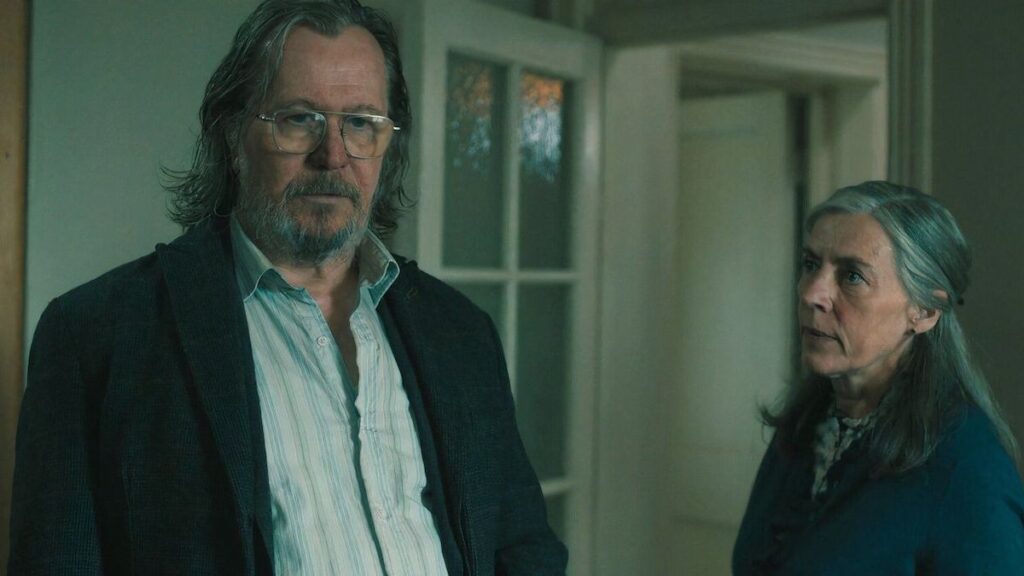
In the new season, 'Slow Horses' finally literally lives up to its name: the retirees Jackson Lamb, David Cartwright, Sam Chapman (an episodic character who has an outstanding arc this season) are indeed, generally, not too fast. They can no longer keep up with the young and can't keep pace with the times, and the main drama, perhaps, is that it's not only bad for them, but also for the times. Time is rapidly shrinking: old spies are morally bad, but at least they admit it to themselves, making an ethical choice each time. The new ones kill without looking, then give a TED Talk about it.
Despite endless paranoia, 'Slow Horses' is a show of surprising internal integrity, or one might say, beauty. The characters here constantly make mistakes, law enforcement is morally corrupt, the intelligence service is a state within a state that is forgiven any crime for the sake of a dubious common good. Politicians are unprincipled, spies are incompetent, everyone betrays everyone. Yet, through the total disillusionment with all existing social institutions, something else still shines through. The overall picture is always even somewhat worse than one might assume, but at the level of friendship, love, and colleague relationships, everyone, even complete losers, has a chance. If not for happiness, then for loyalty, which in spy cinema is always, in general, tantamount to a miracle.
It also seems like a miracle that the creators managed to shoot four excellent seasons in one breath (over two years!). In short, they achieved the impossible. This is as impossible as two incompetents taking down intelligence special forces (third season). Or as an aging alcoholic (Lamb, of course) getting up from his worn-out chair and uncovering a long-standing conspiracy of sleeper KGB agents in a couple of days (second season). Yet all this is possible, if only by a miracle and only for the heroes of 'Slow Horses' and their creators. But even that is surprisingly encouraging.
Comments
0No comments yet.
Sign in to join the discussion.