
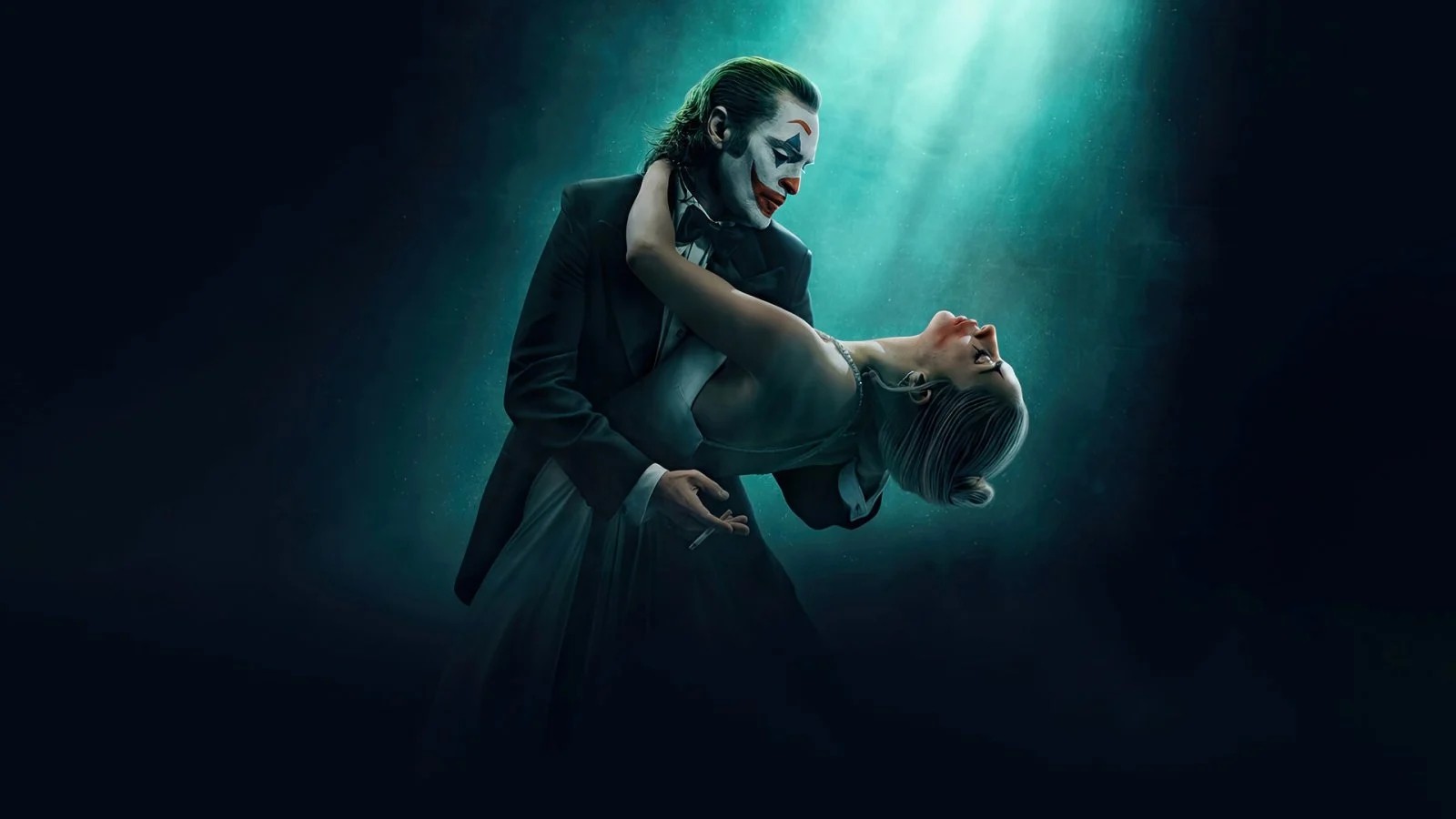
Joker: Folie à Deux has hit theaters, a film that only the lazy haven't criticized. This is undeserved, and in fact Todd Phillips has made a beautiful sequel. All its merits (and some shortcomings) are in our review.
The plot of Joker: Folie à Deux begins some time after the events of the 2019 original (over $1 billion at the box office, wins in Venice and at the Oscars, universal love): Arthur Fleck (Joaquin Phoenix, madly beautiful, as always) is undergoing compulsory treatment at Arkham. There, during choir practice, he meets Lee (Lady Gaga), who turns out to be his devoted fan and immediately falls in love with him.
But their relationship is hindered by one significant circumstance — Assistant District Attorney Harvey Dent (Harry Lawtey) intends to hold a show trial for the Joker and send him to the electric chair. What a novelty — becoming a martyr and a symbol of public struggle against the establishment.
People are comfortable with templates. The unknown frightens and is met with hostility. That's how humans are wired. It's dictated by our nature — it's the law of survival. Largely due to the authors' departure from the familiar and expected decisions, the film Joker: Folie à Deux was met with a wave of criticism, unlike the beloved original, which echoed long-loved films that were ingrained in the audience (and even more so in the press). You didn't have to be a rabid movie fan to see in the first Joker the King of Comedy and Taxi Driver not as cinephile references, but as the basis of narrative and visual storytelling.
Folie à Deux is a completely different film. It has no direct references or analogies. It went its own unique path. Director Todd Phillips and lead actor Joaquin Phoenix (rumor has it the idea for the sequel came to him in a dream) tap-danced on audience expectations and sang it all with old-fashioned songs like That's Life. While the dissatisfied audience clicks their tongues at yet another musical interlude in a story about a comic book psychopath, the filmmakers offer a fresh and interesting perspective on the development of the titular character and our perception of him as an individual and a public symbol.
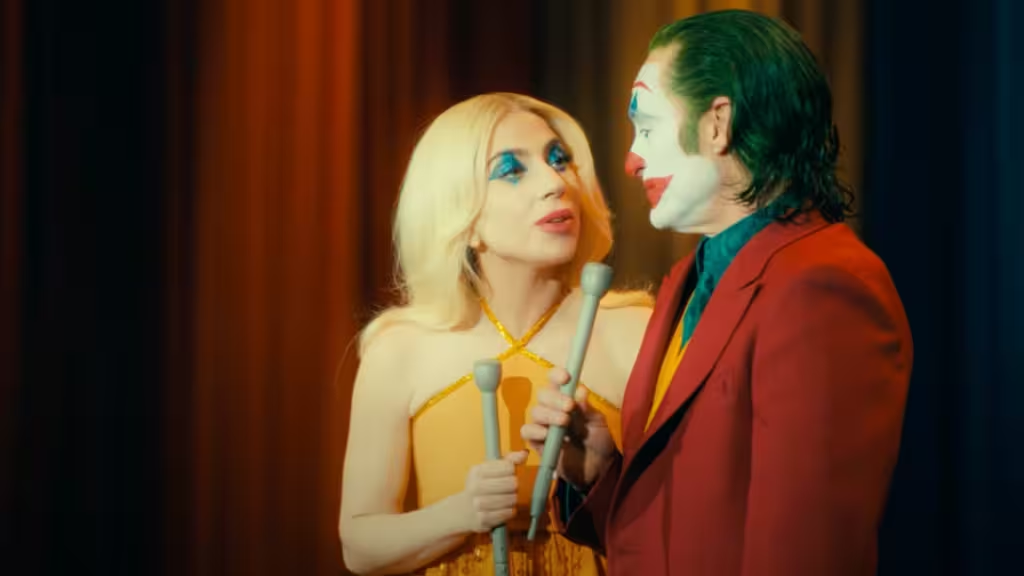
One of the important ideas of the first Joker was that loneliness drives you mad and pushes you to insanity in attempts to be noticed. In the sequel, the authors reflect on whether attention (and even love) can fix that. Can bright feelings bring back a person who has stepped onto a dark path? With the appearance of Lee in Arthur's life, who he thinks sees the real him, the hero literally becomes inspired. He is ready to sing and dance — in both literal and metaphorical senses. And it doesn't matter that instead of a stage, he has barbed wire fences, and the audience is replaced by cruel guards who grab their batons at every opportunity.
At the same time, Phoenix's character, as we remember from the original, became a symbol of revolution. And he kind of likes it to some extent, because he was noticed, he became important. At this point, one would expect development — even larger riots, intoxication with permissiveness, burning the infamous Gotham to the ground, and lots of absurd madness for which the character is loved.
But here too, Phillips rejects the rule of sequels (more of the same, bigger and more expensive). His Arthur (the film is about Arthur, not the Joker) is at a crossroads; he likes being heard, but at one point he realizes that he is seen, by and large, not as he really is. He is not the mouthpiece of the oppressed crowd, not the leader of madmen ready to wreak anarchy. He is a sick person struggling with his demons.
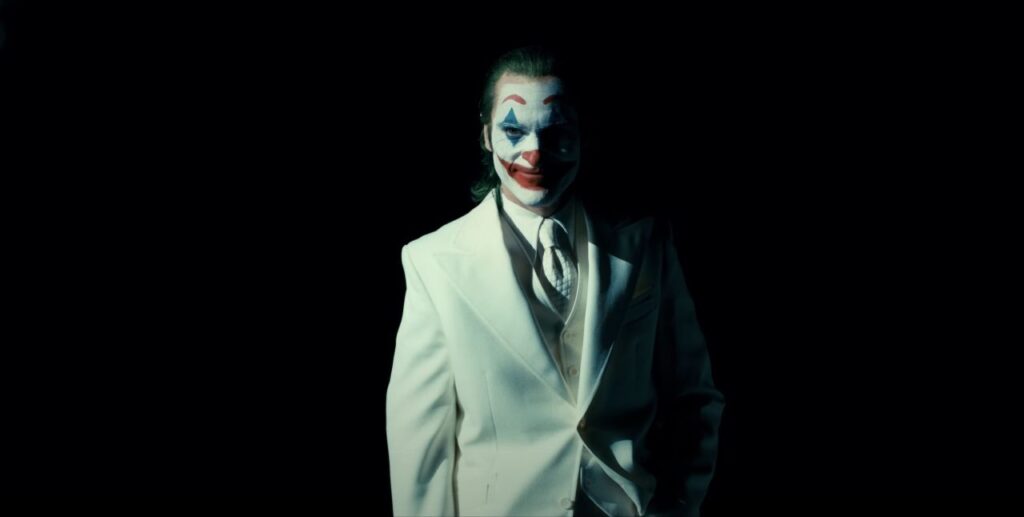
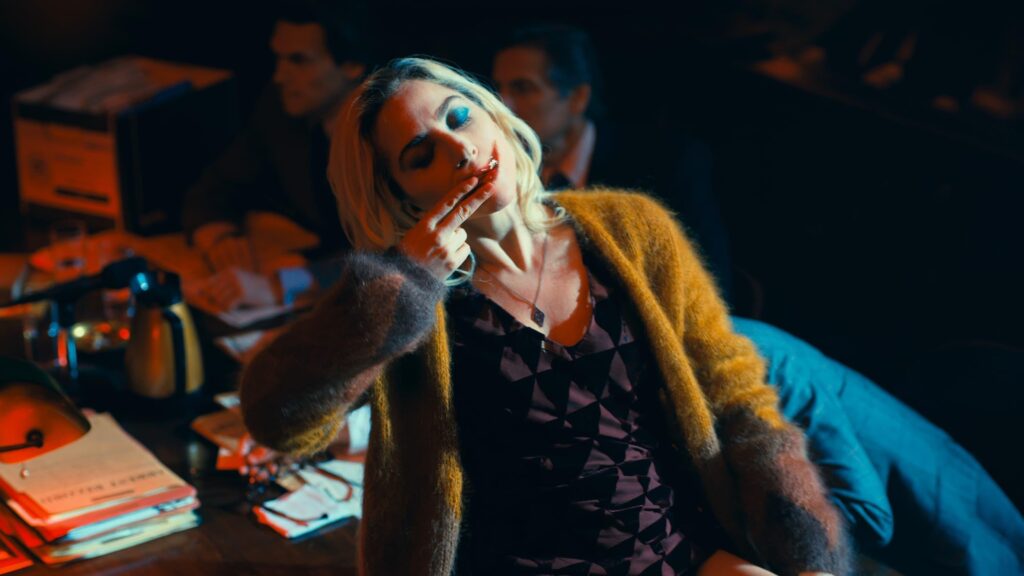
Although the film is entirely dedicated to Arthur Fleck, Lee (aka Harley Quinn) plays an important role in the story. She is not a fully independent character (for which the film is often criticized, unfairly), rather she can be called a catalyst for a new battle of personalities within the protagonist. She is like a trigger that awakens the Joker in Arthur and fuels him with passion and madness.
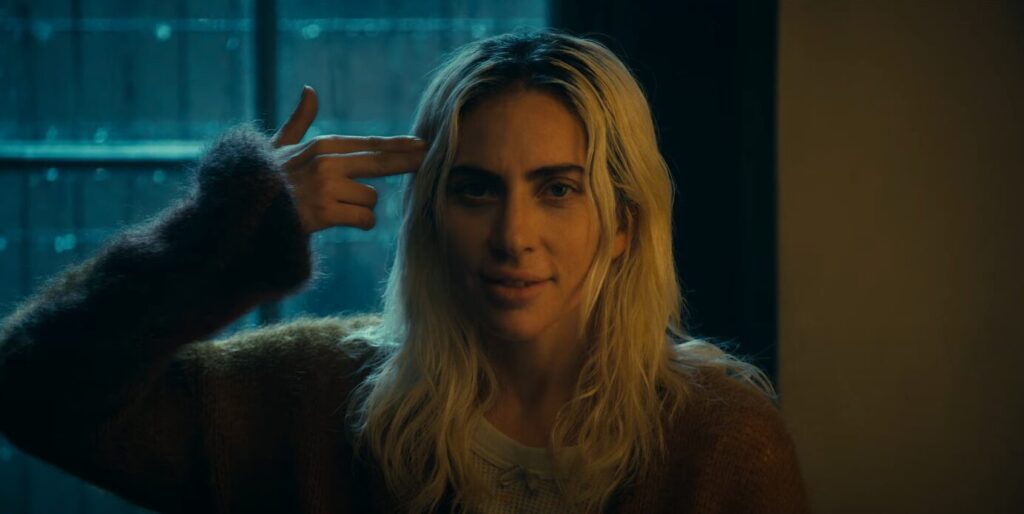
Lady Gaga looks magnificent in this role. Accustomed to always overshadowing everyone on screen (hello Bradley Cooper from A Star Is Born), here the actress takes on the role of second fiddle. For a while, she even restrains her outstanding vocal abilities. In some scenes, by the will of cinematographer Lawrence Sher, she has to act with just her eyes, and she handles this task brilliantly.
Harley Quinn as played by Lady Gaga is not like we are used to from comics and other adaptations. Like the Joker, unexpected metamorphoses awaited her here. She is not as flighty, but still crazy; she is not codependent or submissive to an abuser, but is obsessed with her object of adoration to the utmost limits. She is not prone to unjustified cruelty, but if she wounds, it is fatal.
In Joker: Folie à Deux, Todd Phillips, if not made a revolution, at least broke the templates. He crossed a comic book movie with a courtroom procedural and added fantasy musical numbers where people are spectacularly killed every now and then. He did not follow the path of traditional sequels and did not make the film more epic than the original, but on the contrary, turned it into a minimalist and to some extent even intimate film with three and a half sets. But it looks, damn it, very beautiful.
And even if not everything succeeded — some musical numbers feel superfluous, and the presentation is sometimes more pretentious than its content — the attempt should be considered successful. And the general discontent is a perfect proof that the prank worked.
Trailer:
Comments
0No comments yet.
Sign in to join the discussion.