
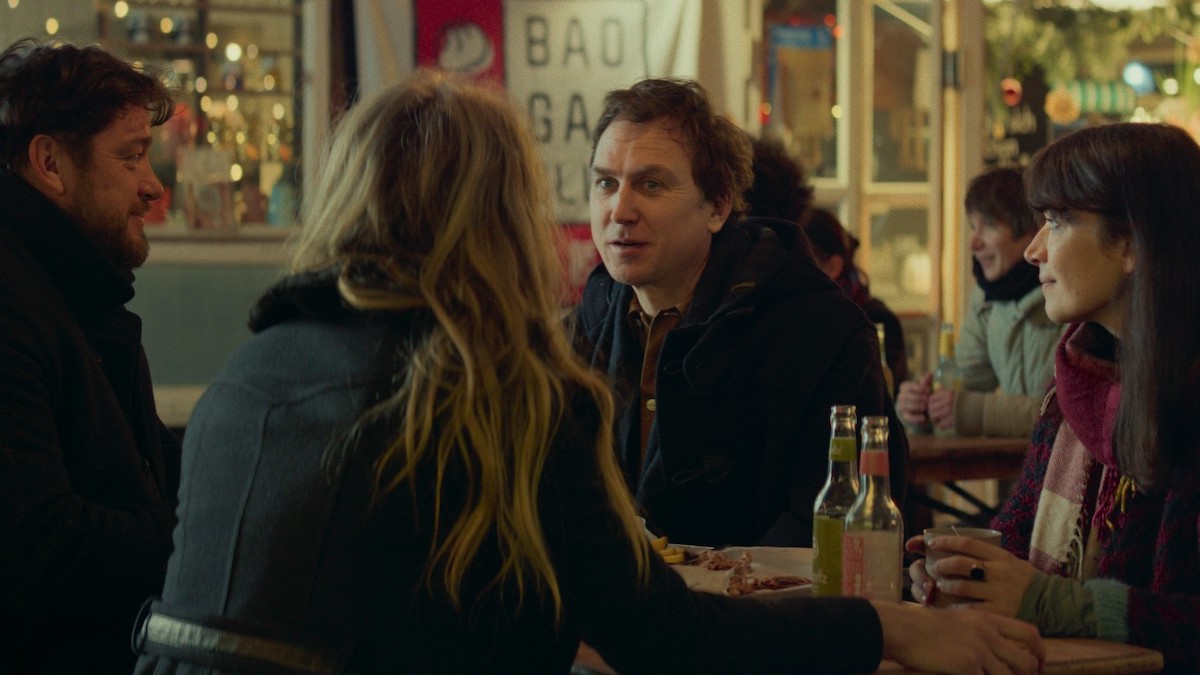
The film 'Life', a prize-winner at the Berlin Film Festival, is being released. Why this three-hour family drama deserves attention — in our review.
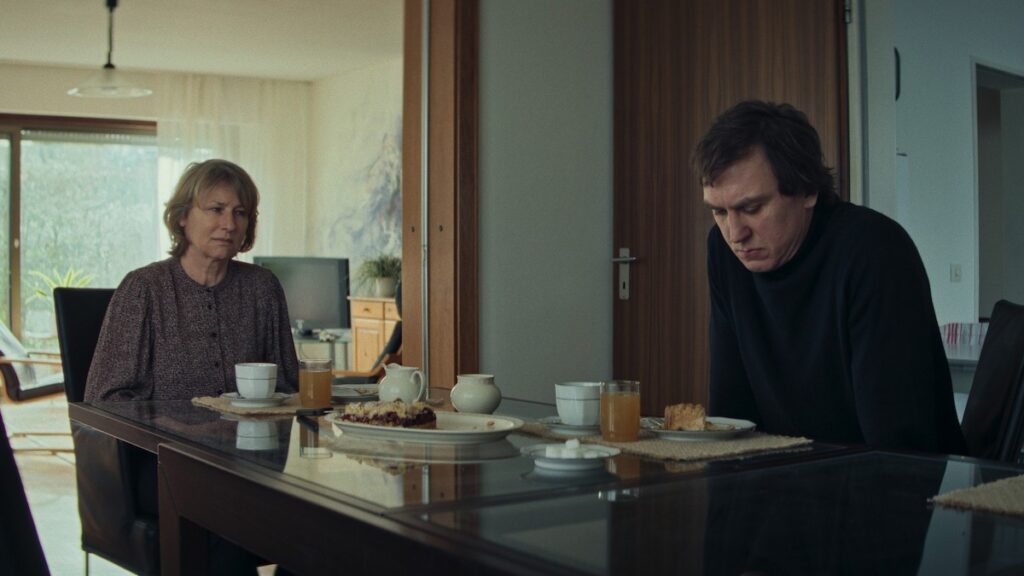
In the plot of the film 'Life', elderly German woman Lissy Lunies (Corinna Farfuch, outstanding) is dying of cancer — without proper care, special help, or hope that someone will bring her a glass of water before she dies. Her husband could bring it, but by all signs he will die even earlier: Gerd, who has fallen into deep dementia, spends his remaining days walking without pants through streets he no longer recognizes. The first half hour of the film is dedicated to the tragedy of two old people — lonely, unhappy, losing touch with the world (for Gerd it simply doesn't exist, and Lissy can't reach her children) — and it is, frankly, an exhausting spectacle (somewhere in the register of Michael Haneke's 'Love').
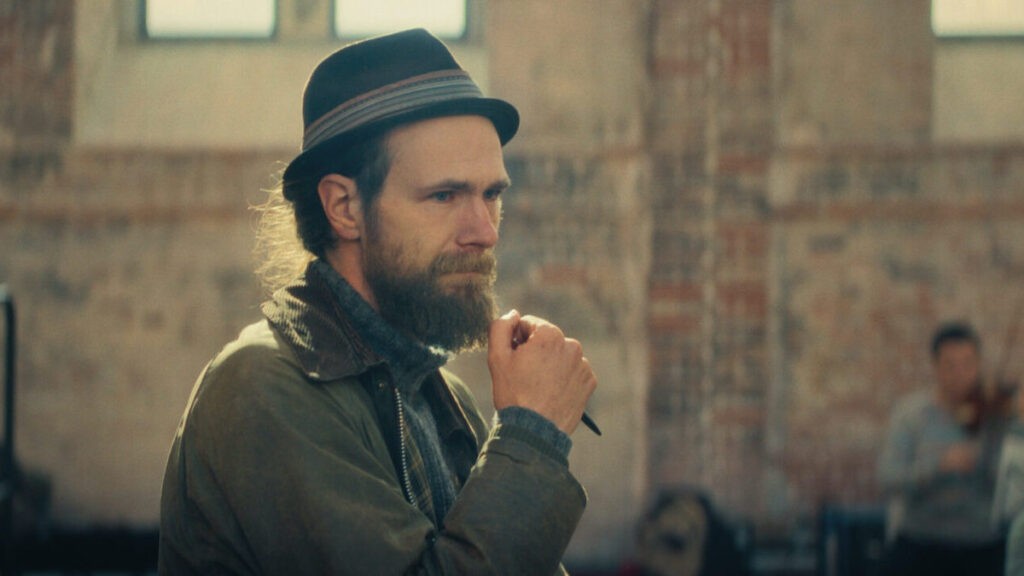
The next two chapters — there are five in total — are dedicated to Lissy and Gerd's children, Tom and Ellen. Tom Lunies (Lars Eidinger, known in particular for eccentric roles in the series 'Babylon Berlin' and 'Irma Vep') is a successful conductor, head-deep in rehearsals for 'Dying', a symphony by his friend, composer Bernard (Robert Gwisdek). The author dislikes his own work and constantly postpones the two most important events in his life — the premiere and suicide. The key intrigue is which will happen first.
Tom cannot fully share his friend's suffering: firstly, the friend suffers not without pleasure and continuously throughout their acquaintance; secondly, the woman Tom loves years after their breakup is preparing to give birth to a girl. Not from him, at that. And it is he who will end up babysitting her. He does answer his mother's calls, albeit without enthusiasm: they don't love each other, and both know it. And both know it will all end soon.
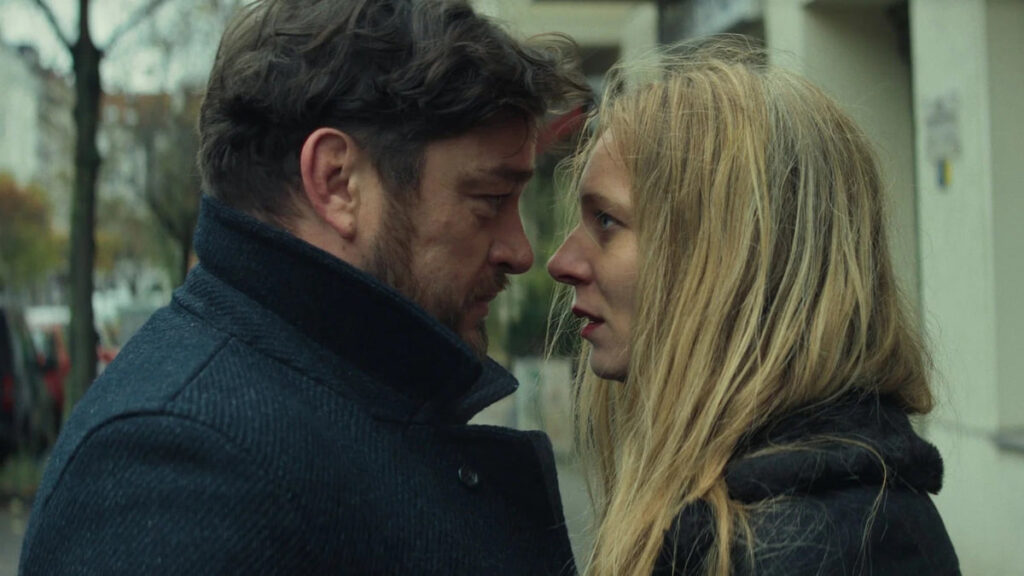
Ellen (Lilith Stangenberg, mesmerizing), Lissy's beloved daughter, appears in the characters' conversations but does not appear on screen until the second hour. When she does, it is grandly: an alcoholic, a dental assistant, with excellent hearing, a voice, and a complete lack of desire to live, she wakes up in a hotel in Eastern Europe, scaring peacefully breakfasting guests and trying to figure out what she is even doing there. Back in Germany, hungover, invariably in black glasses, she goes to work, makes up stories about the handsome dentist Sebastian (Ronald Zehrfeld), and at some point invites him to a bar (drinking together is more fun), after which a romance begins.
Tom and Ellen do not communicate; their lives run parallel, and every deviation from that course, every meeting, is a potential catastrophe, a source of awkwardness and hatred. Probably towards each other, but maybe also towards themselves. The film is in a sense about this total lack of love. The characters can find love and understanding, but always outside the family, in connections they create themselves. Over three hours, contrary to the classic scheme of films about estranged families (someone else, say, might have made '11' on the same theme), Lissy, Tom, and Ellen do not grow closer but drift apart.

The worldwide release of 'Fast X', announced as the first part of the finale of the Toretto family's adventures, consisting of either two or three films. About how the franchise meets
Open materialDirector Matthias Glasner does not seek easy, established paths. This is a three-hour slice of life as the filmmaker knows it. He himself had a conflict with his mother (among other things, she said he was not Fassbinder, so he could not be a director), he does not communicate with his sister, and he has, characteristically, a composer friend. This autobiographical, hard-won quality gives the film a special charm: it is difficult to watch, yet impossible to tear away from.
The main formal achievement of the director is holding the three-hour canvas within set boundaries, not missing small details against the backdrop of big ideas. The film practically avoids the obvious, does not dwell on banalities; on the contrary, it is a story full of life and its characteristic mixture of absurd and sublime situations. At the most romantic moment of the evening, Ellen has to pull out Sebastian's tooth with pliers (a great scene, undoubtedly). Tom does not make it to his father's funeral because he inexplicably took an electric car to the German countryside. Ellen gets drunk and sings amazingly. The performance of the composition 'Dying' is interrupted by ridiculously loud coughing in the hall.
The central scenes of the film are generally connected with music. During a rehearsal, Tom suggests slowing down the tempo of Bernard's piece, playing it not for 15 minutes but 25. The music sounds different, the composition impresses, and the slowed-down 'Dying' suddenly finds a pulse. Glasner does something similar. By allowing the characters to move in their own sluggish, sad, or, as with Ellen, unsteadily drunken rhythm, he finds the necessary intonation. In its sad longueurs and unexpected flashes, 'Life', through its acting, editing, and music, conveys someone else's tragedy even better than words, making it involuntarily one's own.
Glasner's sensitivity to details makes us listen to him even when he decides to make a statement through one of the characters. Whether it is Lissy and Tom's argument about the nature of love, or Tom's argument with his ex about attitudes toward suicide, these rare programmatic speeches are embedded in the film with a certain mastery. The tension of the situation in which the characters debate is transmitted to the dialogues, the conceptual tension between positions that are either on the threshold of death or think too much about it, and in any case, speaking about anything, ultimately speak about it.
The director's key idea also concerns death, or rather its perception. It is always near; life can easily turn out for many to be nothing more than a process of dying. This is scary, but it is from this proximity of fate, the ultimate limit, and the constant danger of getting too close to it, that art is born. All the main characters — the three members of the Lunies family with their excellent hearing, the depressive composer Bernard, the diligent pianist in the orchestra — balance somewhere near the finish line of life's prospects, and each uses their talent differently.
However, for each of them, this talent blossoms only at some edge, and to illustrate this charming thought, one could already make a film. But Glasner goes perhaps a bit further: in the film 'Life', he is interested not so much in the characters' musical achievements as in their life, in which almost everyone lacks a key talent, though it is not entirely clear which. This strange common misunderstanding is voiced at some point by Tom, saying that maybe life is not for everyone. Not exactly a comforting conclusion, but whoever seeks comfort in German festival dramas has probably chosen the wrong theater.
Comments
0No comments yet.
Sign in to join the discussion.