
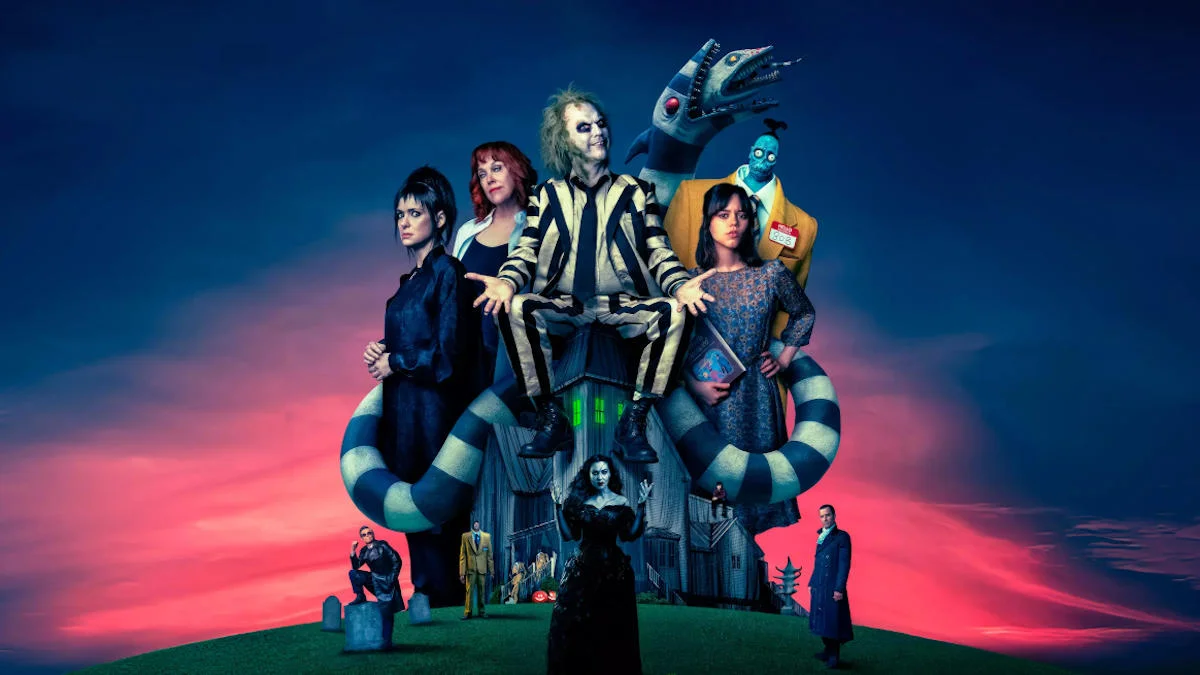
'Beetlejuice Beetlejuice' is one of the most unexpected sequels among Tim Burton's films (and one of his best films in recent years). And the statement that he has never been so alive – which he clearly wishes for us as well.
In the finale of 'Beetlejuice' (1988), Lydia Deetz (Winona Ryder) finally seems to have become a little happier and less lonely in her own way. But years passed, and 'life' happened to her: her marriage to the father of her daughter Astrid (Jenna Ortega) ended in divorce, and then he disappeared altogether on a trip to the Amazon, after which the mother and daughter, so similar to each other, stopped communicating.
At the start of the sequel's events, Lydia is the host of her own successful show about 'haunted houses', dating her producer, an oppressive gaslighting jerk named Rory (Justin Theroux), who throws around psychological phrases and terms like a seasoned infopreneur, and numbs her anxiety with antidepressants: she is sure that the trickster demon (Michael Keaton) from the afterlife, who tried to marry her over thirty years ago, is watching her. After the sudden death of her father (Jeffrey Jones), the whole family, including Lydia's stepmother, contemporary artist Delia (Catherine O'Hara), who has become an influential owner of a multimedia gallery, reunites in the town of Winter River for the funeral—in that very house.
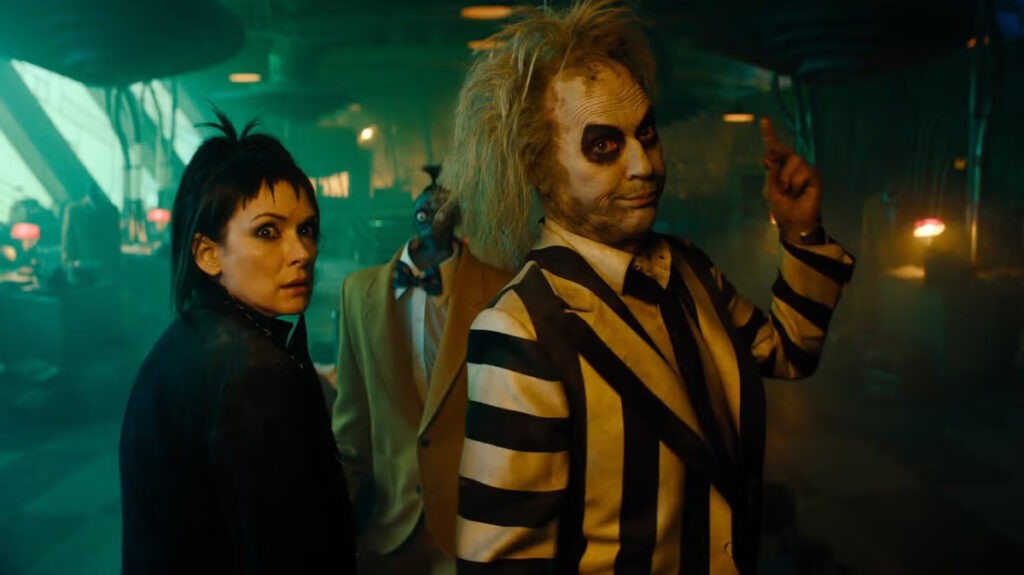
, having assembled his dream team from almost all the actors from the original film, a new muse in the person of Jenna Ortega, the screenwriters of his Netflix superhit 'Wednesday' (and strengthening the 'writing' room with Seth Grahame-Smith) acts not only as a director, but also as a man in love: the ex-wife of Beetlejuice, the heroine of Burton's girlfriend Monica Bellucci named Delores, has the most spectacular 'entrance', reminiscent of Sally from Henry Selick's 'The Nightmare Before Christmas' and 'Death Becomes Her' by Robert Zemeckis, a beautiful black-and-white scene about her relationship with Beetlejuice is shot in Monica's native Italian, and overall the camera admires her in every frame. And of course, this is one of the most touching parts of the film, which makes you not think at all about how necessary Delores is for the plot – who are we to argue with such feelings, and is it possible to refuse to look once more at one of the most beautiful women in the world?
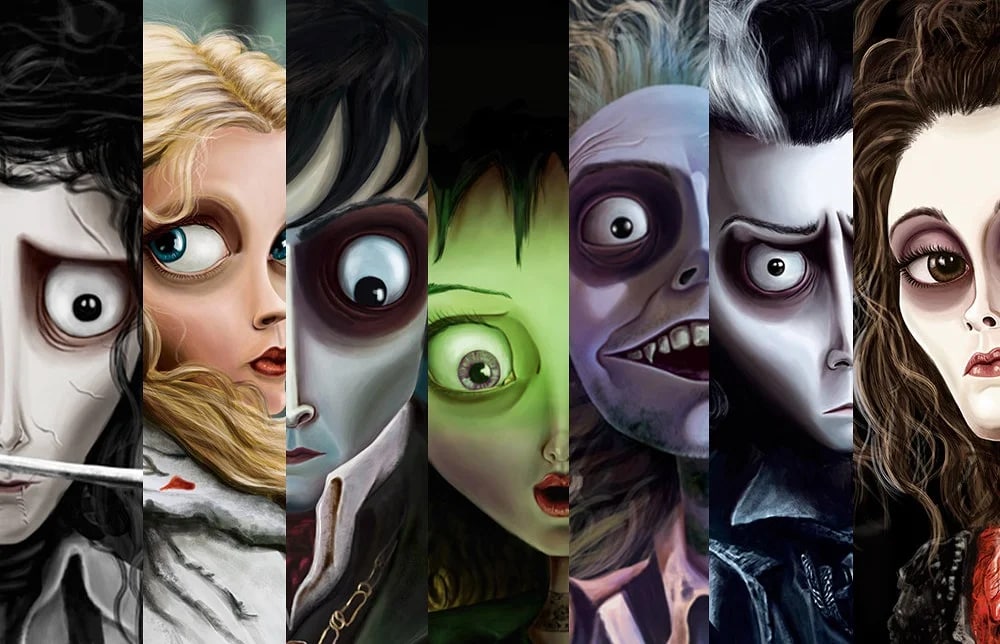
While Netflix is breaking record after record with Tim Burton's series 'Wednesday', our team decided to choose the 10 best projects of the master of gothic and unconventional cinema.
Open material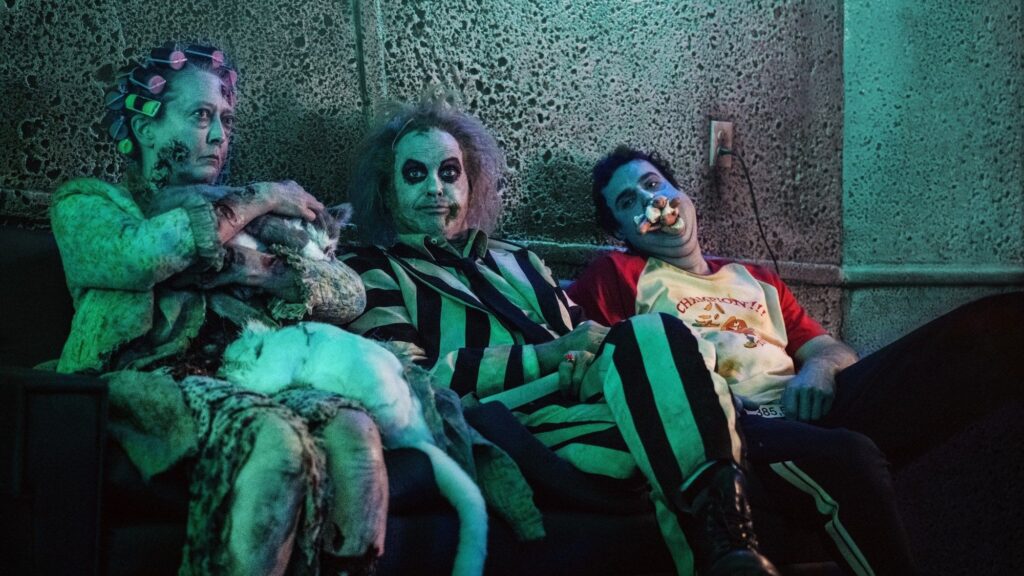
Also present:
- the story of Astrid's teenage crush on a mysterious boy (Arthur Conti) with a copy of 'Crime and Punishment', who seems just as misunderstood and lonely as she is;
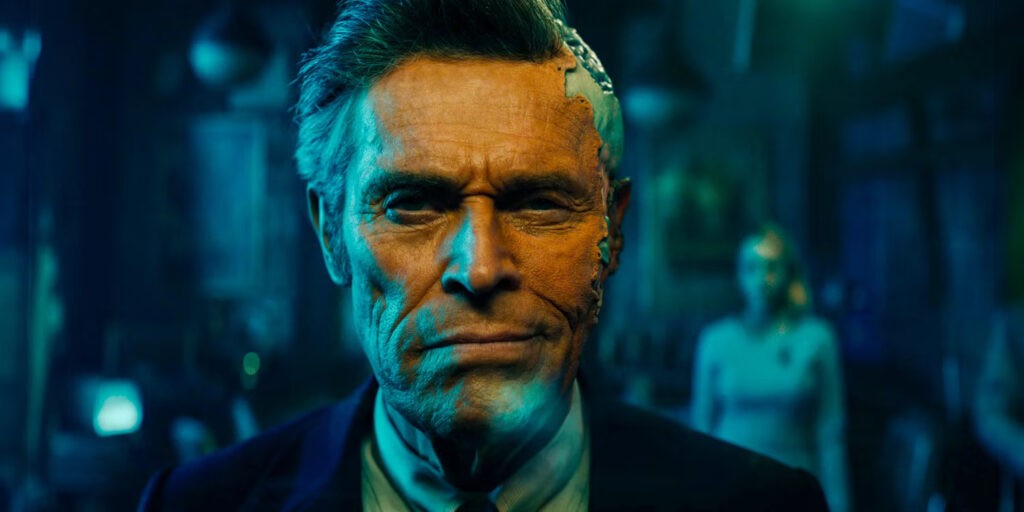
- the wildly funny storyline of Wolf Jackson (Willem Dafoe) – in life he was a famous Hollywood actor, and after an accident on set he became a detective in the afterlife and keeps order;
- breaking the 'fourth wall';
- jokes that take aim at 'Disney', bloggers, and contemporary art;
- an endless multitude of hand-made sets;
- stop-motion animation;
- beautiful costumes and makeup created under the direction of artist Colleen Atwood, with whom Tim Burton made his best works.
This return to the uneven, crazy, beautiful and attractive world of the visionary director, who instilled in so many people a love for gothic, macabre and dark humor, feels exactly as it should be. And if eternal rest resembles Soul Train (a wonderful play on words invented by the authors – in the afterlife there is a 'soul train', inspired by the eponymous American music show featuring performers in rhythm and blues, soul and hip-hop), and love resembles the song MacArthur Park, then there is clearly no need to fear either dying or, even more so, living.
Trailer:
Comments
0No comments yet.
Sign in to join the discussion.