
From 'The Bullfinch' to 'Major Grom' – recalling our favorite domestic projects of the 2020s in honor of Russian Cinema Day.
August 27 is Russian Cinema Day. Cinema that we love and talk and write about a lot. In honor of this holiday, our editorial team decided to recall those films of the 2020s that we remember the most. This is not exactly a top, but an attempt to capture the start of a new decade, to record how diverse, experimental, and sincere it is turning out to be.

Boris Khlebnikov is one of the relatively few domestic directors who manage to make sincere and lively cinema. There is no falseness or excessive grimness in his films, which, for example, Andrey Zvyagintsev occasionally sins with. What Khlebnikov shows on screen is the very truth of life, almost devoid of cinematic gloss and unnecessary aestheticization. At the same time, despite this quasi-documentary approach to everything—from writing dialogues to camera angles—Khlebnikov and his team fill their films with that genuine sensuality that from the very first minutes makes you empathize with the characters and experience the full range of emotions.
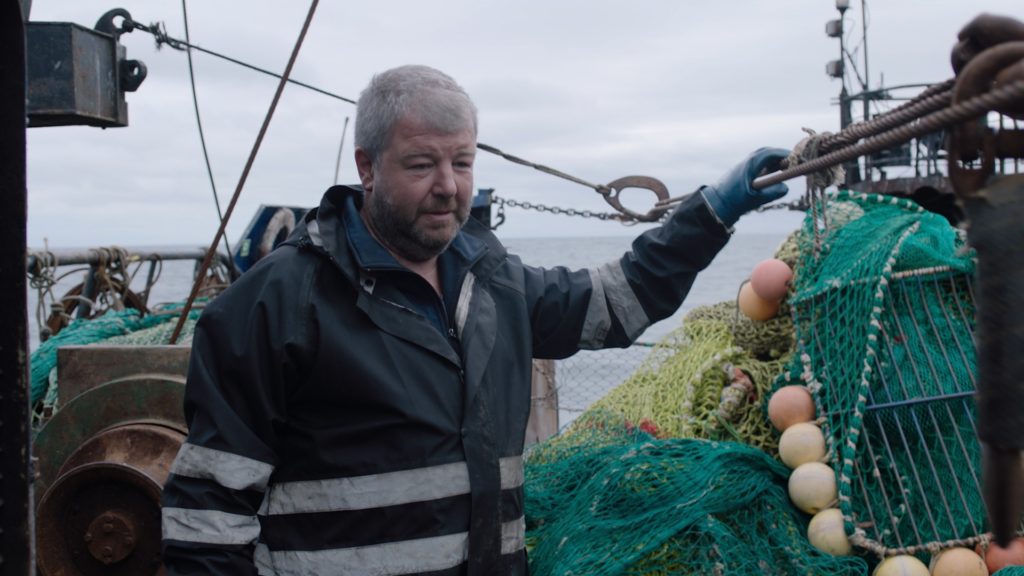
'The Bullfinch' is both a coming-of-age story in harsh conditions, a dramatic thriller in a confined space, and a gripping disaster film. But above all, it is a fairly realistic and therefore heavy drama about the clash of two generations, about the eternal conflict of fathers and children. The appearance of two inexperienced students on a fishing vessel throws everyone out of their comfort zone. The relationships between the characters gradually heat up to a point where even the viewer realizes that tragedy is inevitable. The director clearly takes the side of the young in this confrontation. True, he shows that they are not homogeneous either.

'The Accomplices' is the narrative directorial debut of documentary filmmaker Evgeny Grigoriev. The plot follows biathlete Pyotr (Yura Borisov) and his wife Nastya (Liza Yankovskaya) returning to their native village, where local crime boss Vitya the Cannibal (Pavel Derevyanko) has long established his own order. On the day of Pyotr and Nastya's arrival, the Cannibal kills a local resident. Pyotr realizes that no one will investigate the crime and enters into a conflict with the village's shadow ruler.
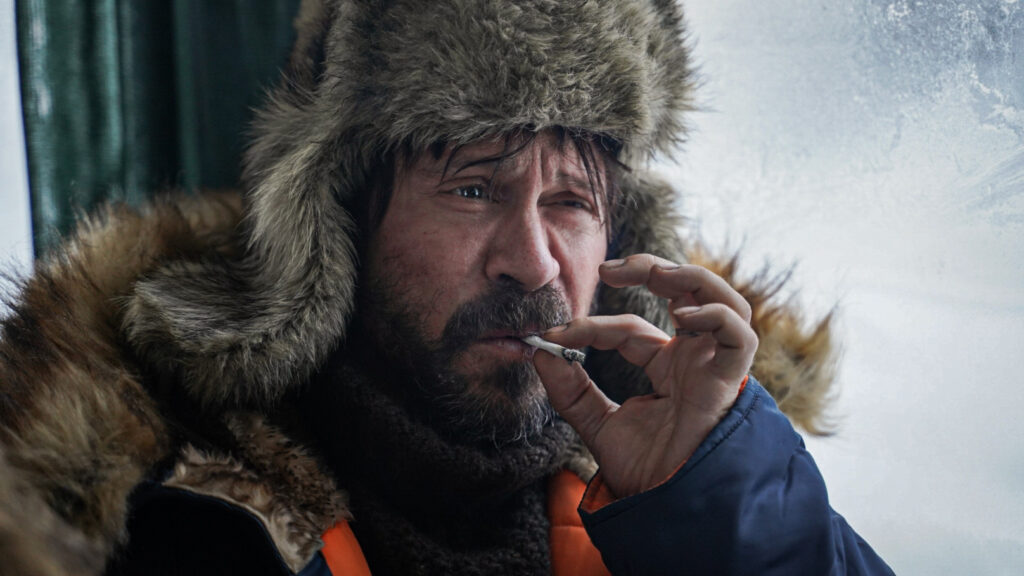
'The Accomplices' is a taiga western with the obligatory genre features like the harsh laws of the frontier. A film about instant growing up and the ensuing possibility of choice: to become free or to close the eternal chain of accomplices upon oneself. Who will be next and in what matter? Of course, eternal themes are also present: revenge, betrayal, fear, return to roots, male upbringing, and the chance to correct past and future mistakes.
The main decoration of the film is undoubtedly Pavel Derevyanko, who sharply and accurately played a bandit-shaman with a gold tooth, a mythical wanderer in a human body.

In 2021, the first feature-length film was released. Although the adaptation of the well-known and popular comic series among fans began back in 2017 with several short films.

'Major Grom: Plague Doctor' is a Russian comic book film that succeeded.
Open materialThe first film showed that domestic cinema can create solid action movies for evening viewing. Beautiful St. Petersburg, spectacular fight and explosion scenes, as well as familiar character types that almost immediately feel like family, quotes that go viral, growing shawarma sales—all this is about 'Major Grom' and thanks to it.
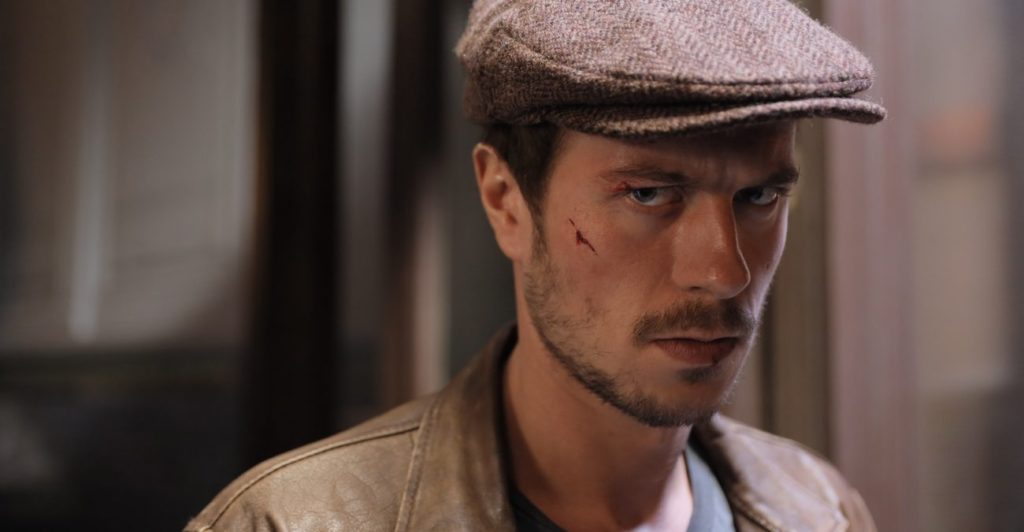
Of course, the first experience was not without mistakes, which they tried to correct in subsequent films – and 'Major Grom: The Game'. And you definitely want to return to this alternative St. Petersburg again and again.

'Grom: Difficult Childhood' is a prequel to the widely publicized adaptation of Bubble studio comics. Instead of a direct continuation of the story, the creators decided to tell about the early years of the famous
Open material
Insanely beautiful, meticulously detailed, frightening, bitter, sexy, and angry—I really love 'The Execution', and sincerely consider it one of the best films in the genre over the last 10-15 years, not only among those made in Russia but in general. One of the best works of the incredible Evgeny Tkachuk, Niko Tavadze, from whom it's impossible to take your eyes off—pure charisma, reminiscent of Vysotsky, Butusov, and simply all the sad-brutal acting archetypes at once, the beautiful siren Yulia Snigir, and Daniil Spivakovsky as never seen before.
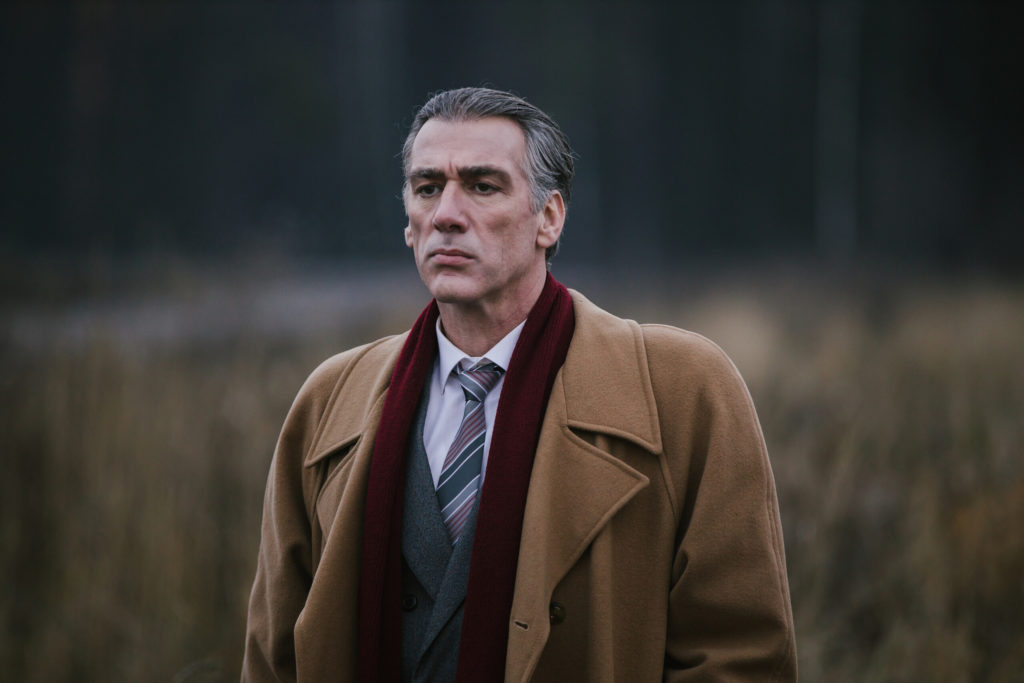
And yes, it's extremely obvious how much director Lado Kvataniya was influenced by 'Memories of Murder' by Bong Joon-ho, 'Se7en' by David Fincher, and other 'bangers' about the most horrific sides of humanity, yet his film is not an empty 'dupe' of all these films. It resembles a beloved child who grew up absorbing the best traits of his parents and became a harmonious and independent talented personality.

The beginning of the 2020s can safely be called the era of Roman Mikhailov, who burst into Russian cinema like a hurricane and released several very high-level films in quick succession. And in this cohort of bizarre, incomprehensible, but endlessly atmospheric films on the border between dreams and reality, I would call 'Vacation in October' the most successful. This is a cinephile's paradise, where love for cinema as an art is elevated to an absolute, mixed with the influence of David Lynch's work, lucid dreaming practices, and Soviet-Russian aesthetics.
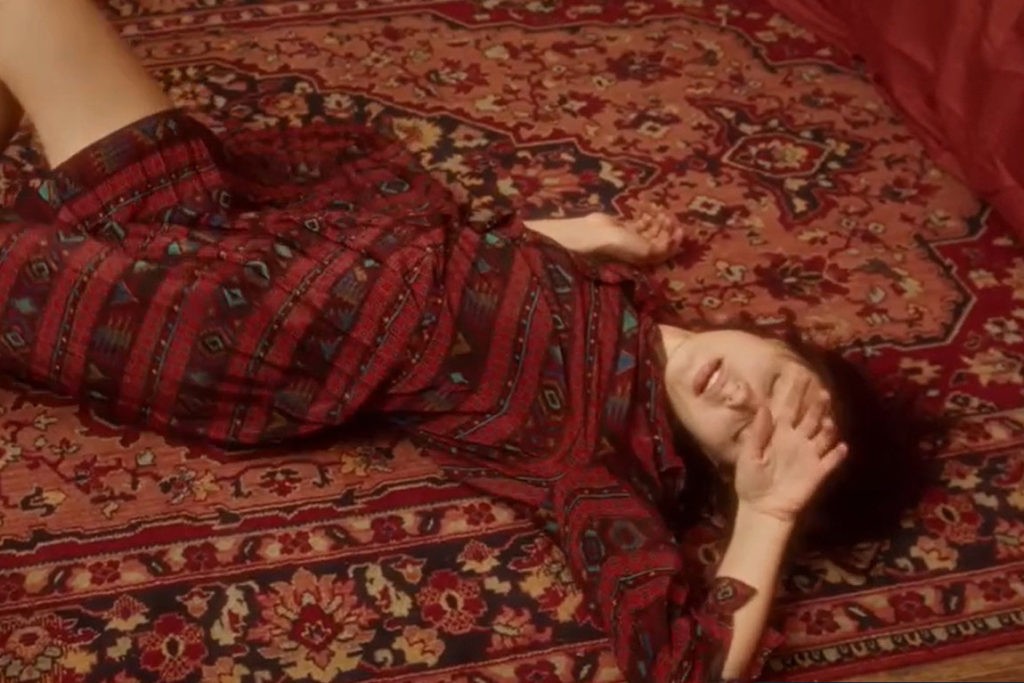
The story of a girl dreaming of becoming an actress and ending up on the set of some incomprehensible something, from the first minutes takes you into a kind of trance, like Alice in Wonderland. No less wondrous characters await at every step, no fewer questions about the world order arise in the process, no less attractiveness in all this amazing limbo. And in the end, this is one of the films that marks the era of new art cinema in Russian cinematography, which simultaneously reinterprets the past and hints at a promising future.

'Dear Comrades!', the latest feature film by Andrei Konchalovsky, is a terrifying film about the shooting of a workers' strike in Novocherkassk, shown through the eyes of a staunch communist woman. In discussions about the film, the director later often avoided admitting what he himself showed—how scary it is to live without hope for change, how in a society without freedom, the elderly are lost and the young are doomed. And a middle-aged party worker, waiting for news about her presumably deceased daughter, is forced to glorify Soviet power and deny even hints of the truth.
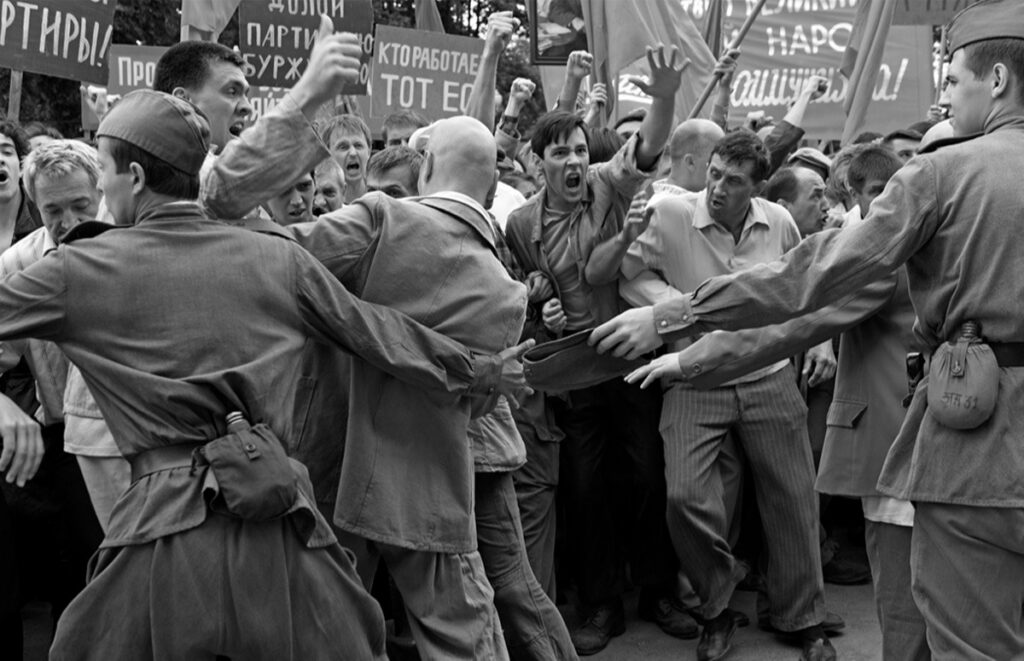
Konchalovsky is a complex, ambiguous director and a rare author who managed to return to the style of his youth at the twilight of his career without looking ridiculous. His early films are masterpieces of neorealism, shot under the influence of early Visconti and De Santis; his films of the 2010s and 'Dear Comrades!', with which he opened the new decade, are also essentially neorealist works—dark, precise, semi-documentary studies of life; modernity as seen from Italian fifties.
Throughout his career, Konchalovsky could not pass either a guilty or an acquittal verdict on reality. The first was not allowed by his surname, the second by his artistic vision. In 'Dear Comrades!', a tragedy about the gap between reality and its descriptions—facts and news—having returned (both in style and time of action) to the times of his youth, the director seems to have finally made up his mind.
Comments
0No comments yet.
Sign in to join the discussion.