

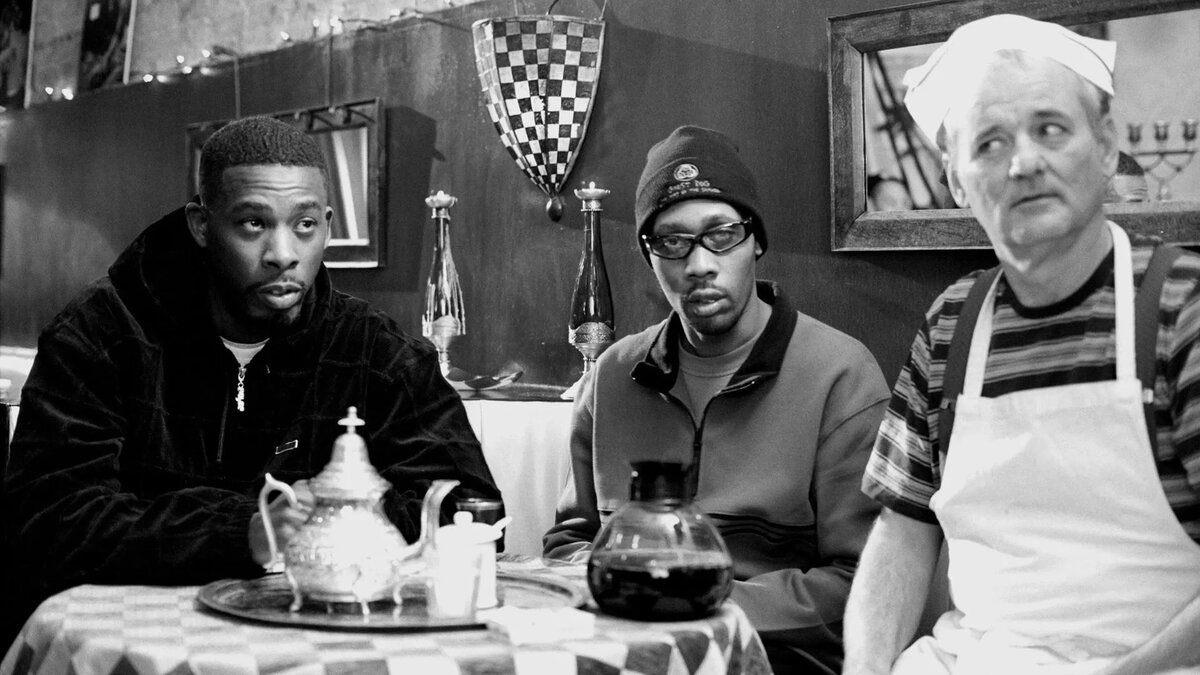
"Talkies" by Jarmusch, Polanski, Linklater and many others: analyzing the iconic works of authors, talking about the features of dialogues and more.
With the development of technology, sound came to cinema. At the beginning of the 20th century, the idea of adding it to a film was considered crazy and was met with skepticism. Filmmakers believed that sound and dialogue could destroy international connections and deprive cinema of a universal language. But progress moved forward, and talented directors did not want to stand still.
A century later, "talkies" emerged—a type of film built entirely on dialogue. In this article, we will analyze the techniques of different directors and talk exclusively about works where conversation is the main character of the film.
Dialogue — Conveying Mood
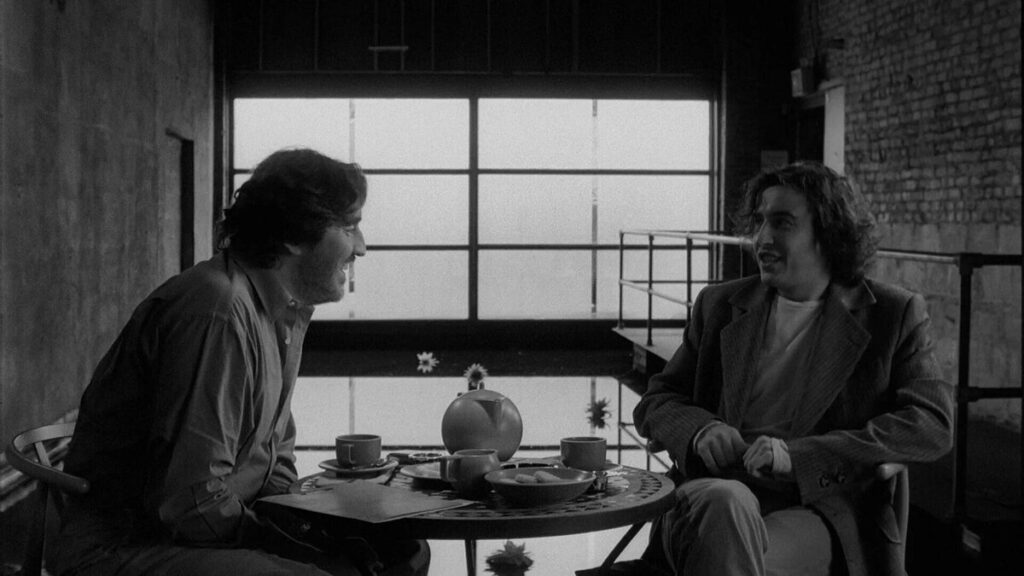
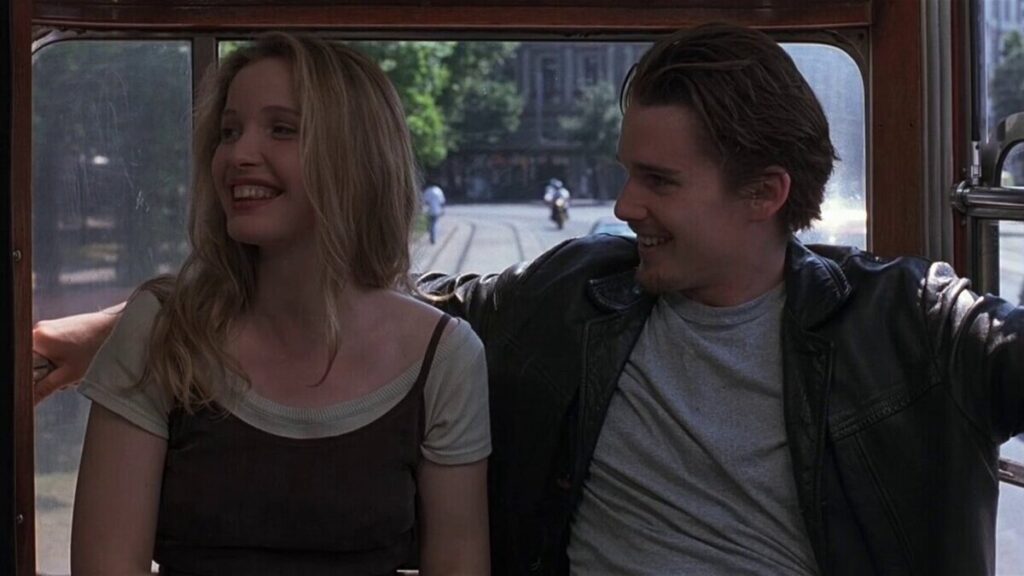
Speech on screen can do a lot, even be the main character of the film. For comparison, let's take "Coffee and Cigarettes" and "Before Sunrise" by Richard Linklater to clearly show the difference in conveying mood.
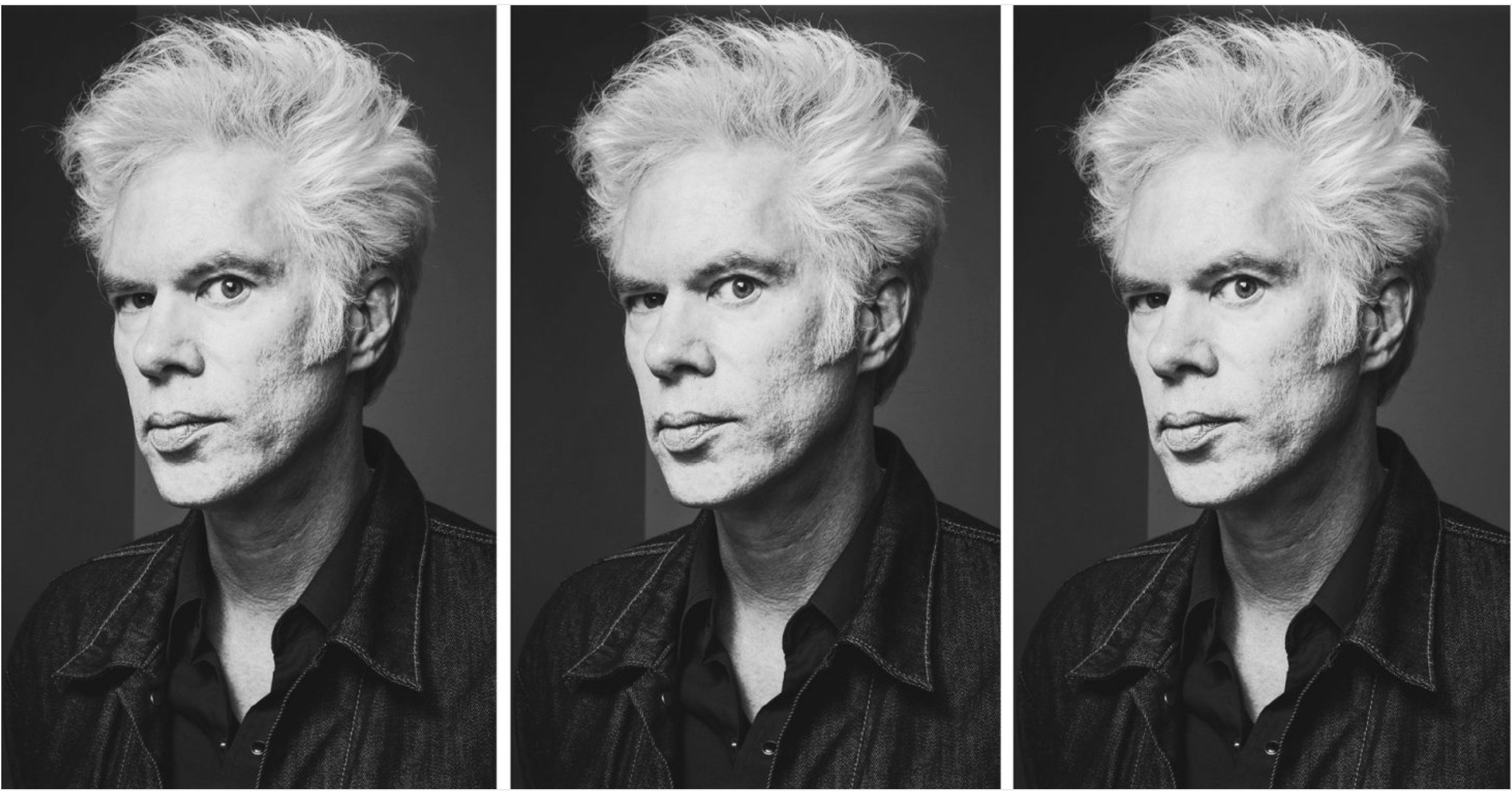
Jim Jarmusch is 68! Let's remember why we love this outstanding and unique American director.
Open material"Coffee and Cigarettes" — 11 short stories with different people, united by ordinary conversation topics. "Before Sunrise" — the story of a future couple's acquaintance. The characters in both films behave similarly, but Linklater's lovers "breathe" more easily. This is the difference in the use of dialogue.
Jarmusch's characters are presented as strangers, old friends, or found relatives, but they all talk as if meeting for the first time. There is awkwardness and a lack of topics between the characters, making the dialogue filled with meaningless facts or silly phrases. Despite the difference in status among characters from different short stories, they all talk about the same things. In a new excerpt, we can hear literally the same as in the previous one, whether it's a conversation between workers or famous musicians.
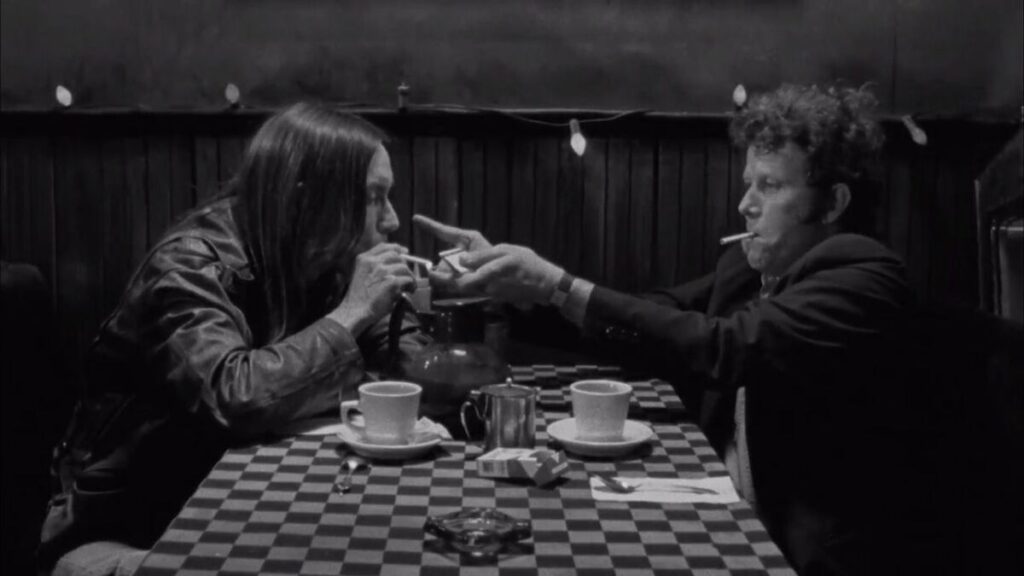
For example, a dialogue between two musicians. An unsuccessful phrase, an awkward attempt to justify oneself, and a desire to leave. This is how Jarmusch's characters solve the problem.
— I recently worked with this drummer from Los Angeles, nicknamed Robot Giant. He plays so cool, rings. I immediately thought of you. Maybe you'd like to play with him.
— Wait, do you think I need to learn from a professional? Am I not good enough? Is that what you're saying?
— No, I just... You know, he's a great musician. I thought... I just wanted to tell you about this guy. He's cool.
*The guys sit in silence, in awkward silence. They drink coffee.*
— You know what? I think I should go.
Or an interesting story leading to a dead end:
— And it had a small fluorescent light? Nikola Tesla invented fluorescent light. Without him, we wouldn't have alternating current, radio, television, X-rays, asynchronous electric motors, directed particle streams, lasers... None of that would exist if not for him.
— Yes, and the rock band "Tesla".
This technique creates discomfort and allows the viewer to feel it themselves. Silence, an unexpectedly intellectual dialogue, and then silence again. Through ordinary conversations, the director makes the characters simple; deep thoughts do not make them smarter, but only serve to fill an awkward pause.
"I just hear the characters talking in my head and write down what they say. I don't have a plan for the conversation; I just like listening to them, even eavesdropping, and writing down any nonsense they say. I'm happy when that happens. Otherwise, I get upset because the dialogue seems contrived, since I'm inventing it, not recording it."
Linklater's strangers are not shy of each other; they are open to the world and to dialogue. The characters are presented as naive dreamers. Having met by chance on a train, they discuss important and meaningful topics. Smart thoughts here are not used to dilute awkwardness; on the contrary, the phrases highlight the personalities of the characters, who try to express themselves as much as possible in a short time.
— Why does everyone think conflict is bad? A lot of good comes from arguments.
— I don't know. You see, I think about why I can't accept that my life has to be difficult. If I expected it, maybe I wouldn't get so angry and would just be happy when something good happens.
— Maybe that's why I'm still studying? It's easier to find something to rebel against.
Linklater's dialogue became a way to reveal each of them. Naive philosophers who are not ashamed to open up to each other. Light narration and casual dialogue are the main techniques of "Before Sunrise."
Talkies of this kind are aimed at conveying emotions. The main goal is to show the mood between the characters and their attitude towards each other. Aimless dialogues become the main reflection of what is happening. No insults or dubious situations are needed to show tension or peace.
Conversation — Clash of Opposing Opinions
Another important technique in the "talkie" direction is the clash of opposites. Different points of view, philosophy, and religion become the driving force of the plot in dialogue.
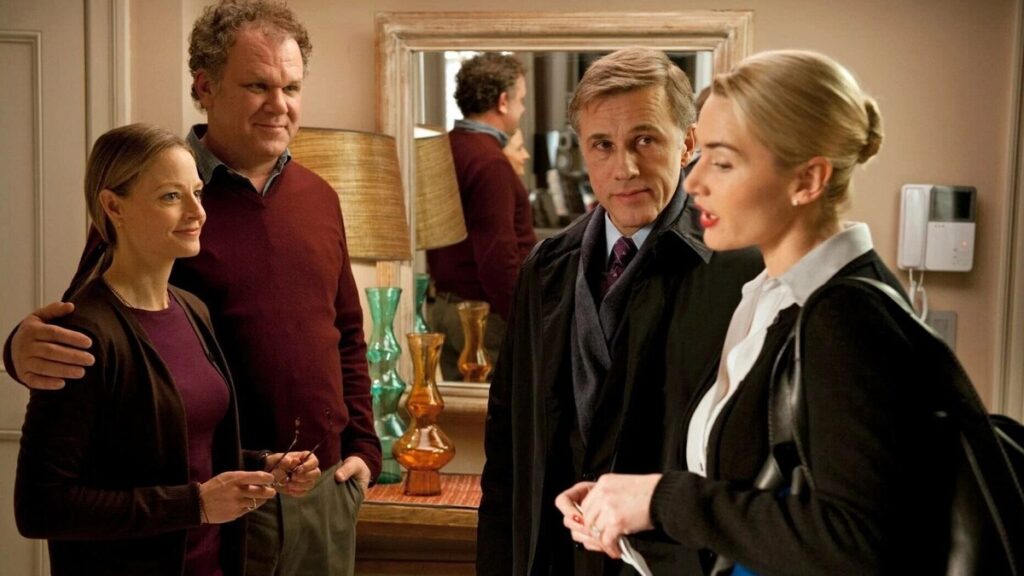
For example, let's take "Carnage" by Roman Polanski and "The Sunset Limited" by Tommy Lee Jones. Polanski's characters are offended parents who meet to discuss their sons' fight. Each family sides with their own child—that's the confrontation. Despite the film's title, there is no literal carnage, but there are deep emotional wounds and hidden grievances that surface during the dialogue.
In the film, the confrontation reaches its peak. It is no longer a polite conversation of intellectuals, but low and dirty name-calling that reveals the true nature of the characters. This technique adds sharpness to the narrative and intensifies the atmosphere. The characters have no goal of reaching the truth or having an important and useful conversation. They are fixated only on themselves, on how to prove they are right and humiliate the opponent.
— Do you think my son is a snitch?
— I'm just joking. Then yours is too.
— So, yours is too?
— He snitched on Zachary.
— We pulled it out of him.
— Michael, we're getting off track. Maybe you pulled it out, but he snitched on him.
— We treated you well. We bought tulips. My wife passes me off as a liberal, but actually I can't stand this sentimental nonsense. I'm a hot-tempered son of a bitch, got it?! Like all of us. No, sorry. Not all. We are not hot-tempered sons of bitches.
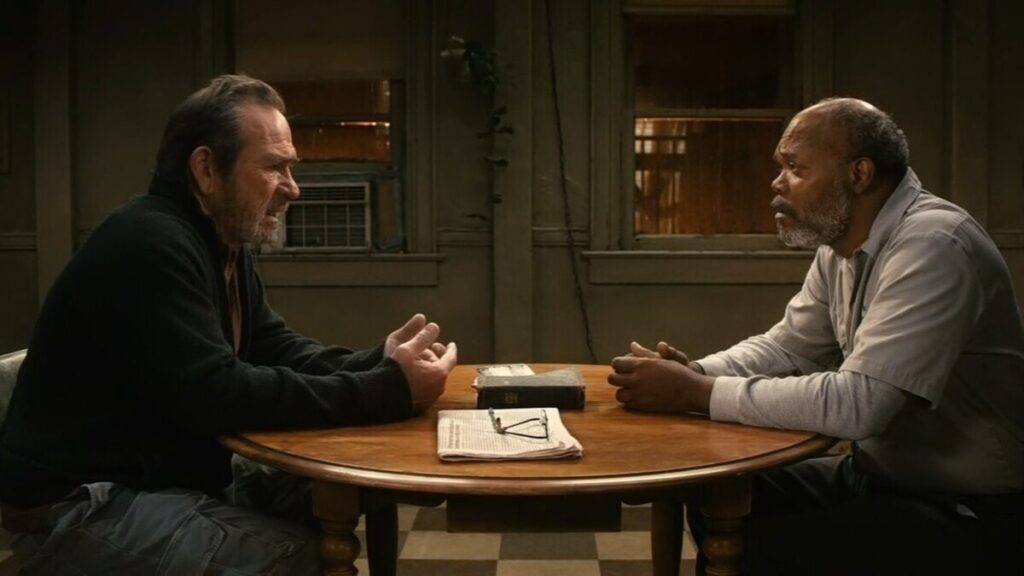
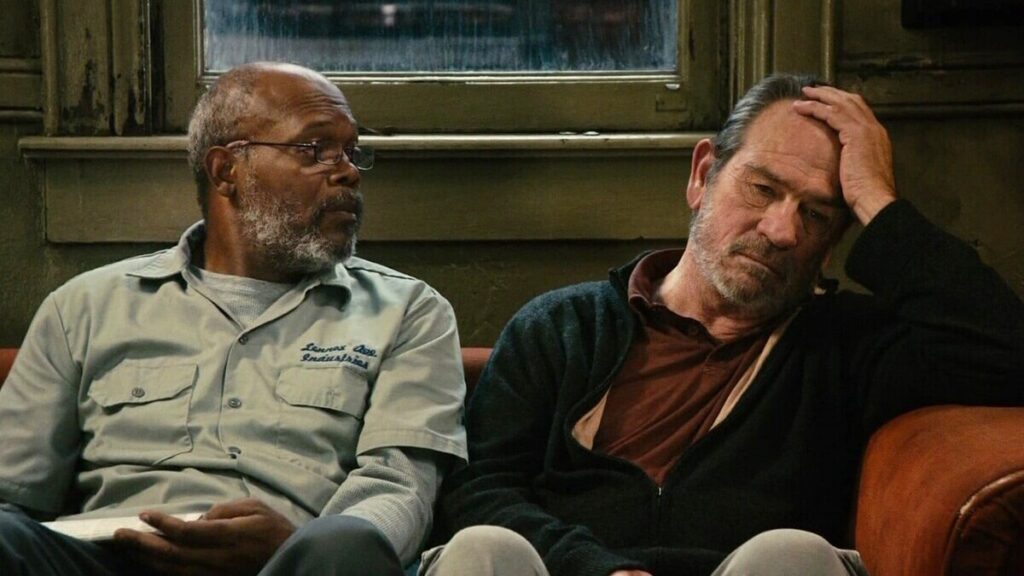
With Jones, it's different. In "The Sunset Limited," there is a confrontation, but the argument pursues different goals.
A man saves another from suicide. A discussion begins between an atheist professor who sees nothing good in religion and life, and an ordinary believer. The characters' conversation is built on different beliefs about life, philosophy, and much more. But for them, the struggle lies in understanding the worldview of the other person.
— You don't understand that people like me see some human flaw in the pursuit of God.
— Of course I understand. And I completely agree with you.
— You agree with that?
— Yes, they lack God.
— Sorry, but I think the very idea of God is nonsense.
Although the characters pressure each other with their beliefs, trying to prove their truth, they do not cross the line. They are ready to listen and hear, to accept the opponent's pain and empathize. This technique allows us to hear an intellectual debate and show different views of the world.
— Your question — the Bible is full of warnings. Most books, if it comes to that, teach us to beware. Beware of what? Choosing the wrong path. How many wrong paths? Many. And how many right ones? Only one. That's the imbalance you're talking about.
— You should be on TV, professor. You're such a charmer, you know. Seriously. I doubted you were a professor until you gave that speech.
While Polanski pits his characters against each other, creating complete carte blanche, Jones gives the characters the opportunity to speak out and try to find an outlet. Talkies can use the same techniques but apply them differently.
Do Opposites Attract?
One of the drivers of dialogue is several people with different views or temperaments. Group communication is a common form of narration and character development used by talkies.
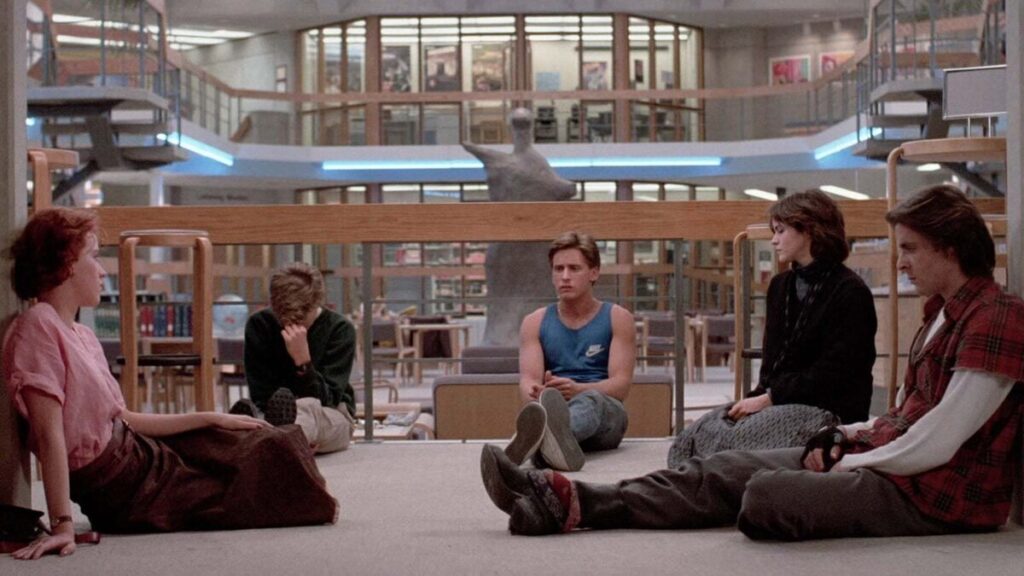
For example, "The Breakfast Club." Five students with bright but opposing views meet in a closed room. The only way to avoid boredom is communication. The characters have never spoken before; they only saw each other in school hallways and passed by.
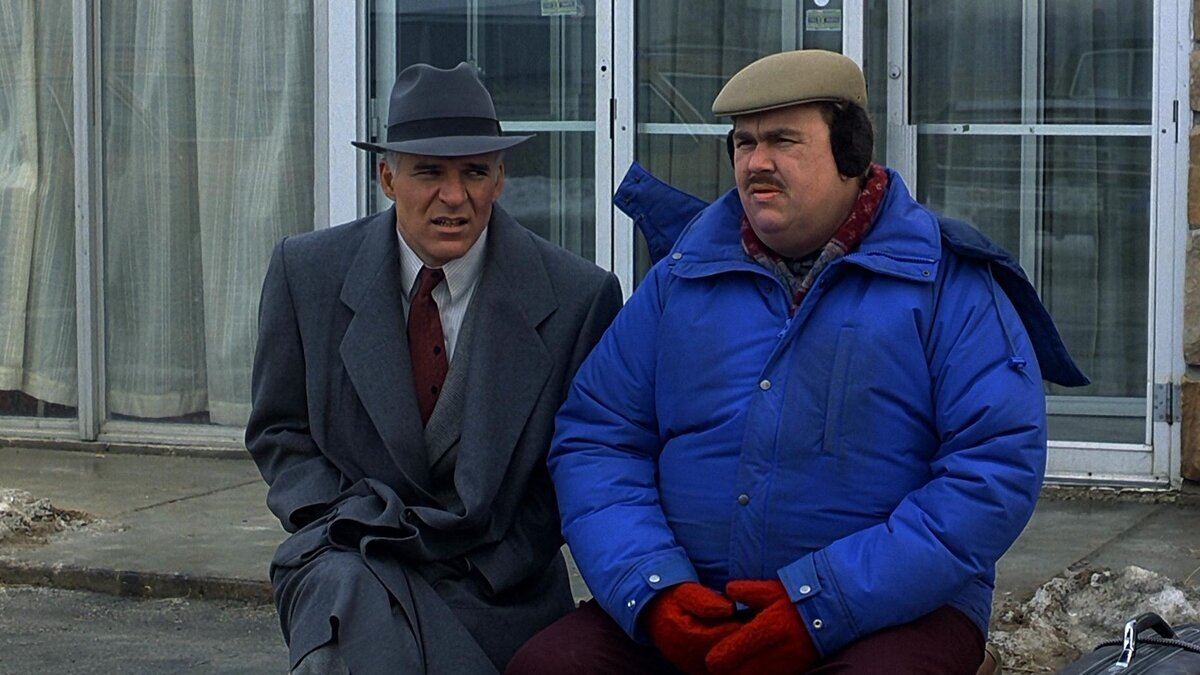
"Planes, Trains and Automobiles" or maybe "Curly Sue"? Let's talk about family films that made John Hughes so beloved.
Open material
— So on Monday, what will happen? – Brian repeated the question, but also uncertainly.
— Will we still be friends, you mean? If we are friends now, right? – Claire asked.
— Yes.
— Do you want the truth?
— Yes, I want the truth.
— I don't think so.
— I think Allison and I are better than you guys, right? We, the crazies... – I just wanted to say to each of you, I won't do that! I don't want to and I won't! – a tear rolled down his cheek. – Because I think it's really mean...
The technique used by Hughes allows strangers to turn into close friends, even if only for a day. Conversations bring them closer and allow them to find similarities in each other's differences.
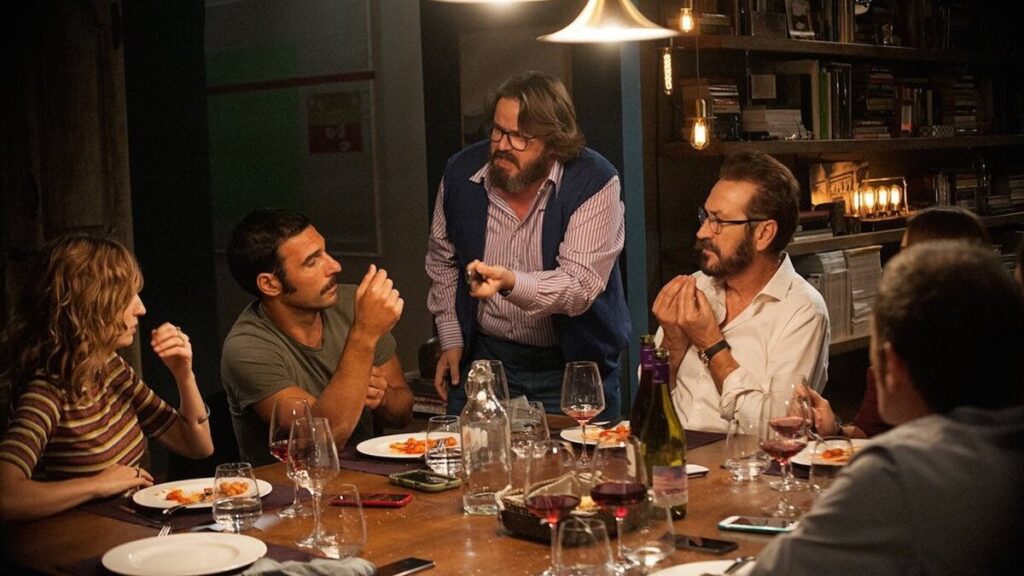
Here's another example, but the opposite. The same "Carnage" by Polanski and "Perfect Strangers" by Paolo Genovese. At the beginning of the film, the characters already know each other, and some have close relationships. Polanski's married couple is just two people, but close, knowing everything (or almost everything?) about each other, and Genovese's group of friends.
The approach where the characters are already acquainted turns in the opposite direction. While Hughes' characters unite, the characters in the other two films reveal each other's secrets and find skeletons in the closet. No matter how similar and close they are, dialogue leads their relationship to a dead end and creates tension.
For example, an excerpt from the film "Perfect Strangers":
— Your mother hit me more than my father did.
— Apparently, she didn't hit you enough.
— Yes, but if Yara hadn't read the message...
— So, it's Yara's fault for reading it?
— No. But you should have deleted them immediately. If you started an affair with a young girl, then be more careful, right?
— Specify: be more careful in SMS or in shitty actions?
Cinema is a reflection of real life. Conversations mean a lot; they don't have to be interesting; dialogue can destroy or create. In all three films, it reveals the characters. But it does so differently and from completely different angles.
To show the intensity of passions or the beginning of a romantic story, it is not necessary to use special effects and action. Everything can move through words, and talkies prove this.
Comments
0No comments yet.
Sign in to join the discussion.