
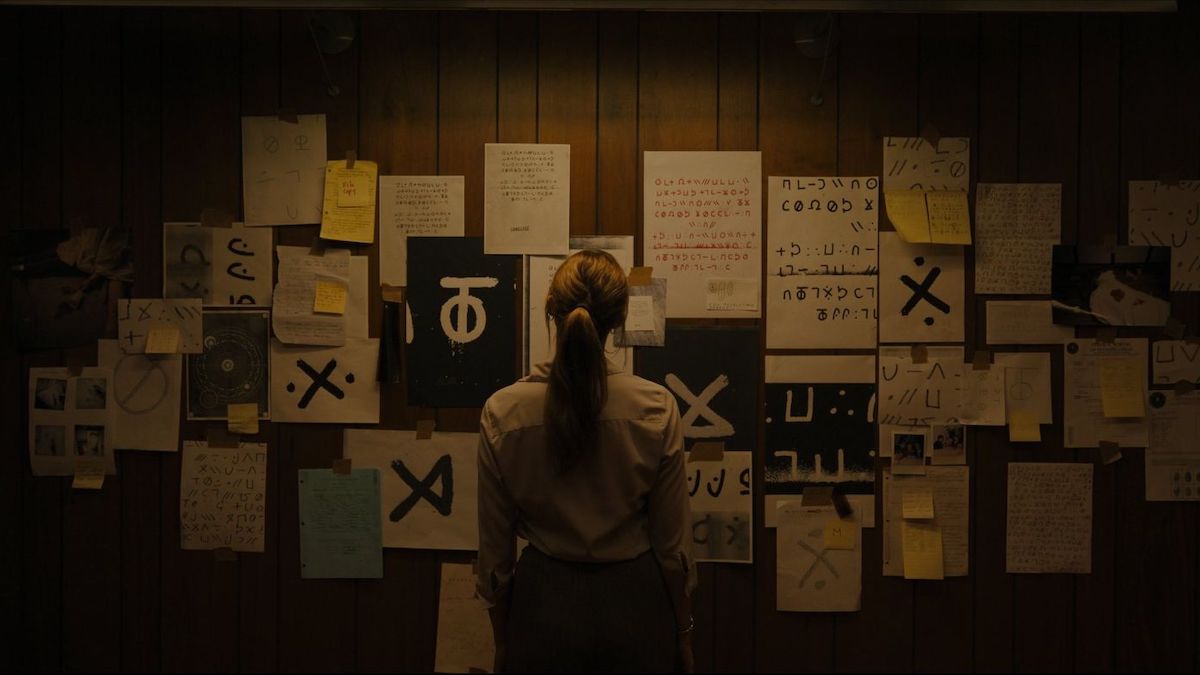
'Longlegs', the season's most fashionable horror about the FBI's pursuit of a Satanist maniac, has been released. In the role of the frenzied cultist is Nicolas Cage. About how director Oz Perkins deceives expectations while remaining himself—in our...
Lee Harker, a reclusive FBI Academy graduate who only calls her (slightly crazy) mom and is interested solely in work, hardly expected that on her first day of service she would lose her partner (shot point-blank) and end up investigating a thirty-year-old cold case. Satanists, encrypted letters, men who on random dates in different places go insane, kill their entire family, and then themselves. The FBI doesn't know how to approach this mysterious case: what do the victims have in common? What drives completely normal fathers and husbands mad? What cipher is used in the letters, and what does their author, the titular maniac Longlegs, want to say with all this?
Does it resemble Demme's 'The Silence of the Lambs'? Fincher's 'Se7en'? Probably, but the similarity is largely cosmetic. Building on classic thrillers about hunting a maniac, he once again makes a film that only he could make. This is an occult horror, a sad gothic poem—or, given the T. Rex track on the soundtrack, a glam rock song—about loss, despair, loneliness.
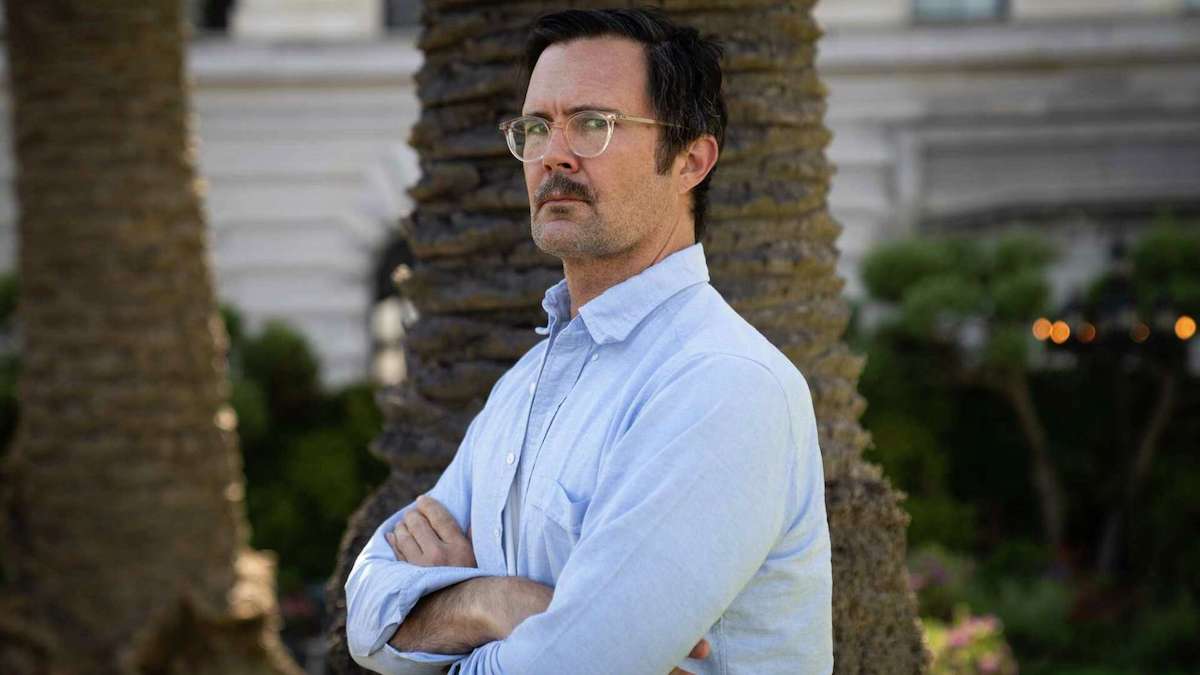
The horror 'Longlegs' by director Oz Perkins about Satanism and a serial killer is being released. We examine the key themes and plots of the season's most fashionable filmmaker.
Open materialPerkins's previous works were not particularly popular, and the unprecedented success of 'Longlegs' is primarily due to the active marketing campaign launched by studio Neon. However, the advertising played a cruel trick on the film: now that the movie has drawn not only long-prepared Perkins fans but also those expecting to see a new 'Se7en' or a terrifying horror with buckets of blood, many find it hard to hide their disappointment.
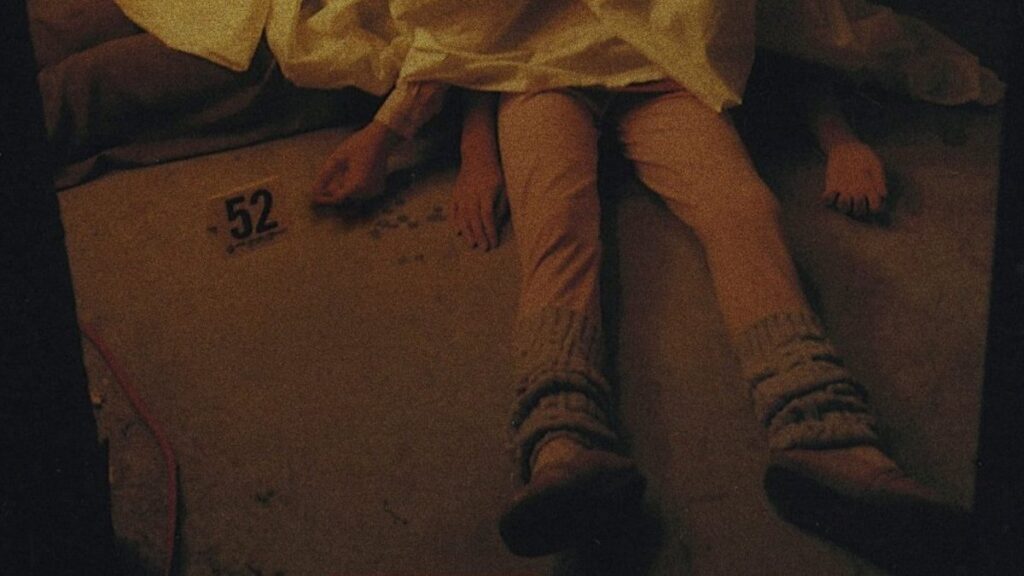
Perhaps some films really don't need giant box offices and imposed expectations—without them, 'Longlegs' could be written about as a quiet masterpiece, a gem of underground distribution; now even good reviews don't so much praise the author as justify him. Negative ones, on the other hand, compare Perkins's film to the excellent works of Ari Aster and Robert Eggers or, for example, the less excellent hit of last year 'Talk to Me', and obviously not in favor of the former. This is unfortunate: in the direction of elevated horror with heavyweights, the author has never competed.
He is subtler than Aster, a very skilled director but with the grace of a lumberjack, and more modern than Eggers, although their debuts—'February', 'Hereditary', and 'The Witch'—have many thematic overlaps (primarily, they are films about family crisis, psychosis, the triumph of evil). But Perkins's cult and what his horrors scare with are things of a slightly different order. With each film, the director penetrates deeper into the genre only because he immerses himself more and more, pulling out ever deeper fears of his own.
And, of course, he creates new ones: forgetting <strong>Nicolas Cage</strong>, who played the titular maniac in the film, will be difficult for many. The actor once again decided to become the hero not just of our dreams, but of our nightmares. The main star of the advertising campaign, creepy, absurd, excessive, always on the edge, it is Cage, so to speak, who sold this film to the general public, and even if the movie had nothing besides the artist's performance, people would still go to see it. And it really would be worth going. Cage sings (!), worships Satan, scares children, scares FBI agents, and ultimately proves that he is truly already a classic artist. In terms of excess and grandeur—on par with the great Vincent Price.
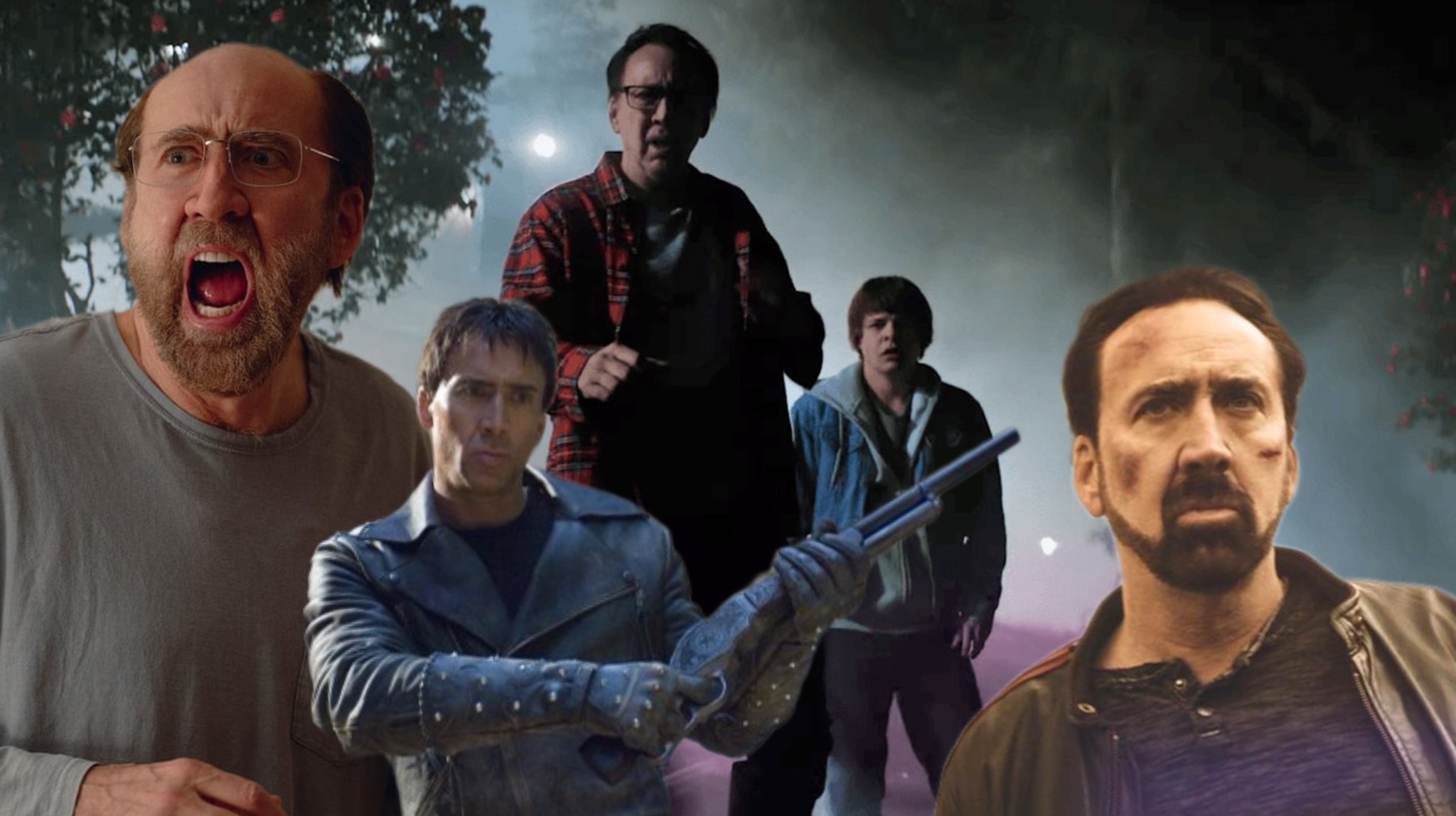
Cage may not be a regular in horror films, but he is a frequent guest of the genre. We recall his iconic roles—from cult classics to those unknown to the general public.
Open material<strong>Maika Monroe</strong> is not far behind him. Her performance is more restrained, more economical, but it is an excellent role. When, in response to the question of whether it's scary for a woman to work in the FBI, she pauses for a moment and says with sadness in her eyes: 'Yes, scary,' it's clear that she became the scream queen for a reason. At the same time, despite the actively promoted analogy in advertising, Monroe played not a new Clarice Starling, but a classic Perkins heroine.
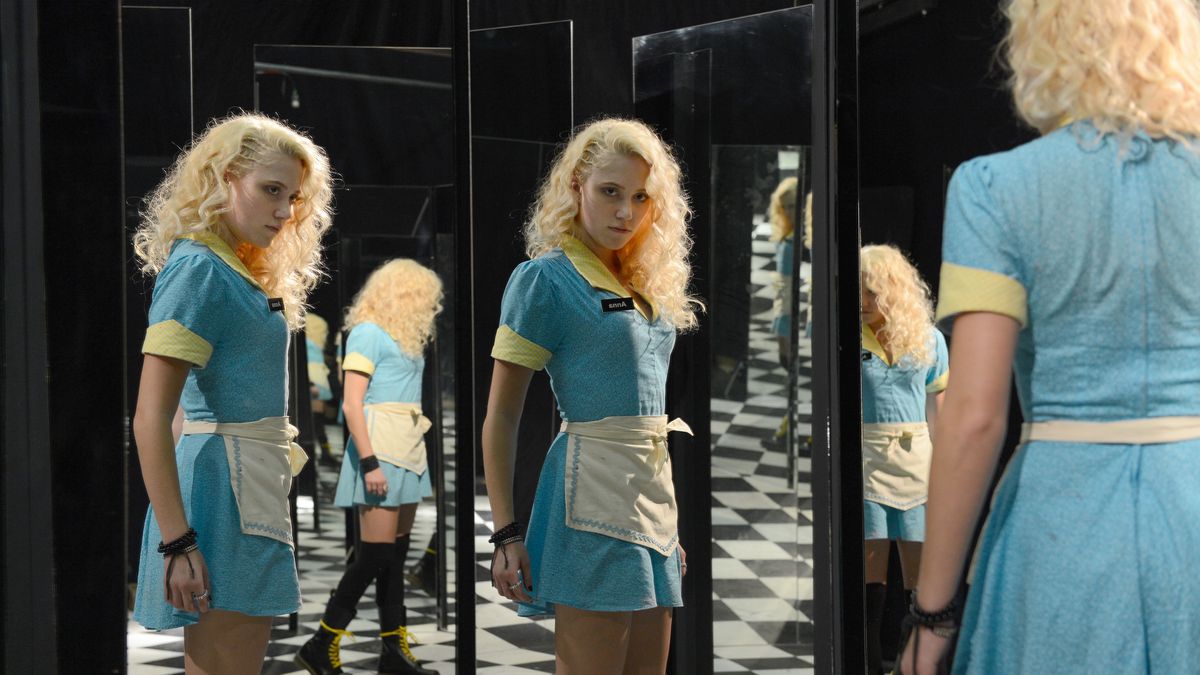
Scream queen, star of atypical dramedies—many labels are hung on Maika Monroe because of her talent for being diverse. And this list only emphasizes that.
Open materialLee Harker is a sad, taciturn girl who sees a little more than others (especially men) and suffers from it. The parallel with Kiernan Shipka (who has a wonderful cameo in 'Longlegs') from 'February', the author's debut film, is perhaps even too obvious, especially in the finale. The role of men within Perkins's filmography hasn't grown much either, and the ending, for example, is purely feminine: even FBI agents, representatives of authority, are merely powerless puppets. They are unable to understand what is happening or break free from others' bonds. However, in Perkins's view, no one is probably capable of that in principle.
Like all of the director's past films, 'Longlegs' explores the fragility of our everyday life, the permeability of modern life. The nuclear family, intelligence services, church, traditional values, rural idyll. All these wonderful and, most importantly, stable things become the real target of the maniac, who encroaches on order as such. The horrific murders that Lee Harker and her rather pleasant boss (more from 'Se7en' than 'The Silence of the Lambs') investigate are frightening not because of their cruelty (what haven't we seen?), but because of their strangeness.
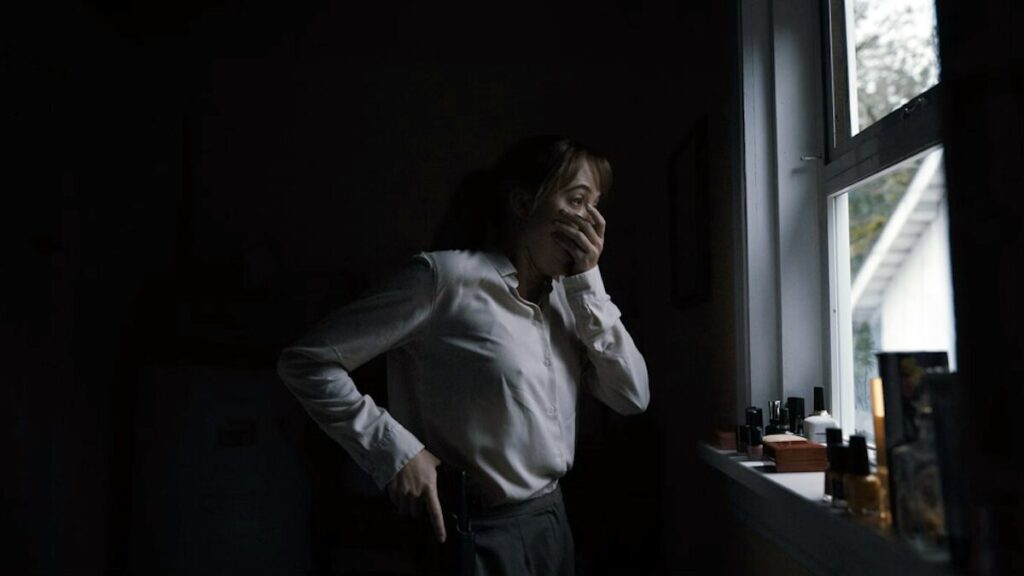
Random people, random places, random murder weapons. The fabric of everyday life has torn, and something dark is about to break out. This is hinted at by the mysterious letters, and the FBI, trying to find the criminal, or rather the one behind it all (likely, as usual, the devil), seeks to restore the usual order of things, to protect stability. If the maniac is right and the FBI's investigation results are correct, then the world is the devil's property. Behind the illusory order lies the real one; prayers that saved no one have an effective analogue—petitions to dark forces, and in general, everything is not what it seems.
The dualism of the obvious and the occult, the external and the hidden, is embodied in the film with rare mastery. Even the portraits on the walls in the characters' homes emphasize their existence in completely parallel worlds. Bill Clinton looks at the state officials from a formal photograph, Richard Nixon watches over the everyday life of an exemplary family, while the sanctuary of the Satanist Longlegs is adorned with Mark Bolan and Lou Reed, underground stars. It is clear that these people will never agree on the structure of the world.
As in the best horrors, in 'Longlegs' Satanism and esoteric motifs constitute only one layer of the narrative. To the same extent, it is a film about loneliness, about the daily grind of a difficult job, and about the horror of secrets we keep or that are kept for us. This is a film of interesting psychologism, but not one that delves into psychoanalysis. There is something to say about the characters, but they themselves do not say much about themselves. Only in their eyes flickers the horror of realizing doom, hopelessness. And this horror, involuntarily transmitted to the audience, is central to the film. People here could not bear life, could not bear the horror that dwells everywhere, even under the stairs. And they could not bear how the most terrible things in the world are done for the sake of the brightest feelings.
'Longlegs' can probably be criticized for many things—for the inconsistency of the plot, for the fact that in the finale the heroine's service weapon inexplicably changes, for the fact that the whole intrigue with the ciphers, so diligently built up, is resolved in a sense off-screen and completely without imagination. Perkins's cinema allows itself narrative gaps, and sometimes relies more on style (impeccable) than anything else. But those whom the film managed to hypnotize will remember it with both warmth and cold horror. Because it is a joy to see a future genre classic in theaters, but it is scary to imagine if there is more truth than fantasy in this classic.
Comments
0No comments yet.
Sign in to join the discussion.