
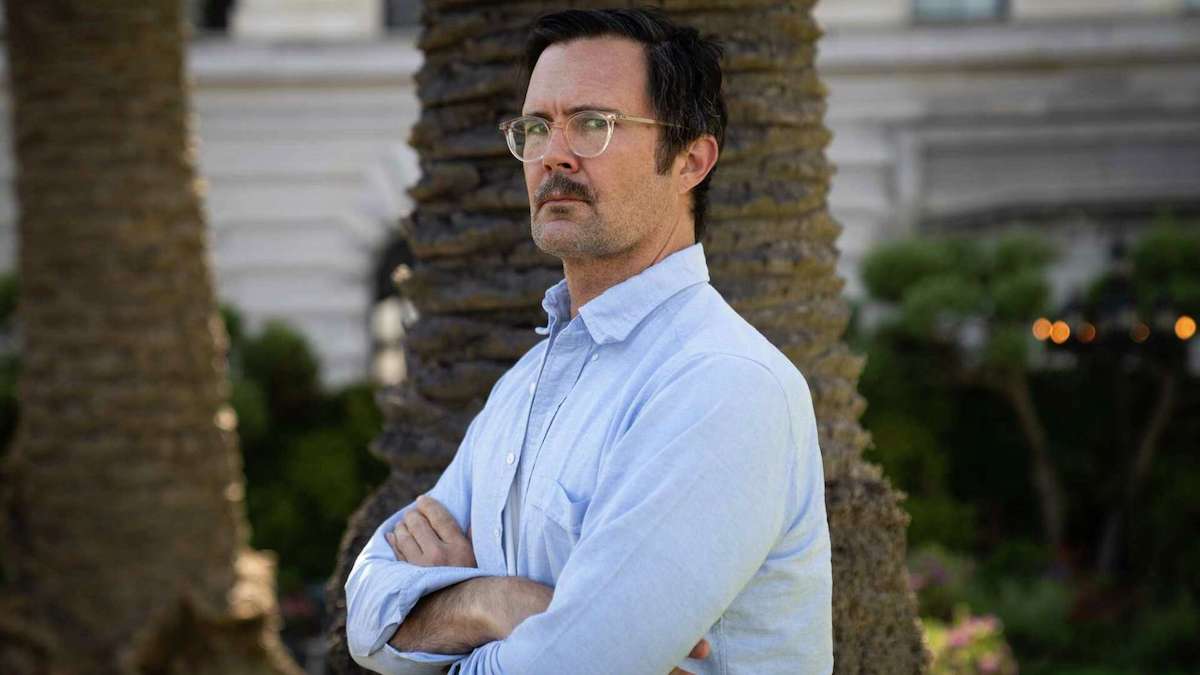
The horror film "Longlegs" by director Oz Perkins about Satanism and a serial killer is being released. We analyze the key themes and plots of the season's most fashionable director.
The world lies in evil.
Our property is not really ours, but belongs to those who lived before us. At best, our homes belong to sad ghosts who couldn't part with a life well lived. But usually, they belong to the killed, angry, restless victims of this world, from whom we now rent this world.
Children serve Satan, and that too is understandable. Catholic boarding schools, closed-type schools, working, always busy, unhappy parents—none of this exactly fosters a happy childhood and the joys of socialization. Teenagers are lonely, and no one hears them. No one except the devil, of course.
Everything is built on lies, secrets, and communication gaps. Dialogue is almost impossible, always associated with fear, misunderstanding, and awkwardness. Nothing is revealed the first time, no lesson is learned immediately. Everything in the world happens twice: the first time as a tragedy, the second as an even greater tragedy.
Such, in the most general terms, is the world of the films of Oz Perkins, son of Anthony Perkins and one of the most promising American horror directors of our time.
Father, Son, and Norman Bates
He followed in his father's footsteps in cinema. Literally. Anthony Perkins, a wonderful actor, entered film history as Norman Bates from Hitchcock's Psycho. Oz took his first steps in this story in 1983, playing his father's character as a young man. "Psycho II," directed by Franklin Richards, however, did not become a hit and did not glorify any of the project's participants, and is now remembered only as the debut of actor Oz Perkins. And, of course, as yet another argument in the debate about why one should not make sequels to great films twenty years later.
Perkins played his best role only in the 2000s—in the cult rom-com "Legally Blonde." He then appeared in several more films, but significant acting success never came to him. Then, at the insistence of Mike Nichols, a classic of American cinema and a friend of his father, the forty-year-old Perkins decided to go into directing. And he didn't regret it.
Of course, Oz Perkins is a nepo baby, the son and grandson of cult actors. But just as this didn't help him in his acting career, it hardly influenced his directorial success. The success, moreover, is extremely modest—the director's first three films were not hits, and although a certain cult formed around them, it is rather outsider. The fate of his parents indeed defined Perkins's cinema, but not in the way it usually happens.
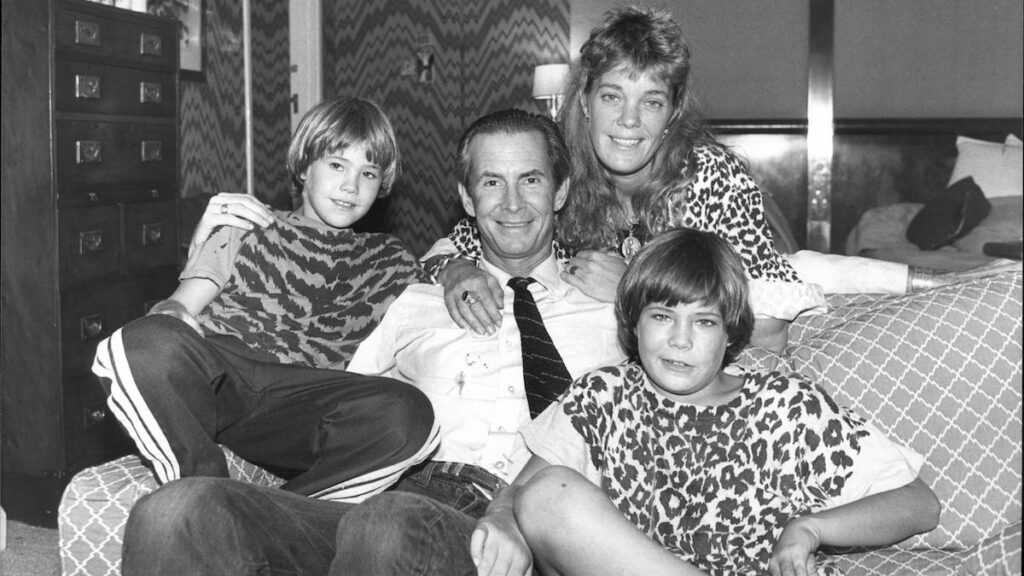
Anthony Perkins died in the 1990s from complications of AIDS. Perkins's mother, Berry Berenson, who started as an actress and fashion model but gained fame as an outstanding photographer, died in a plane hijacked by terrorists on September 11, 2001. The death of both parents—unnatural, tragic—left a deep imprint on Perkins's personality and career. An imprint very noticeable in each of his films.
Horror Is the Saddest Genre
All of Perkins's films are primarily explorations of longing, chronicles of loss, bereavement, and rupture. He himself believes that the best horror films are, first, classic (Perkins's tastes are old-fashioned, and he almost principledly does not watch the conditional "MaXXXine"), and second, not so much scary as sad. "The Exorcist," for example, is a chronicle of childhood loneliness, the hardships of growing up, and "Rosemary's Baby" is a story of confinement, the inability of a young wife to understand herself and her husband with his seemingly completely different life.
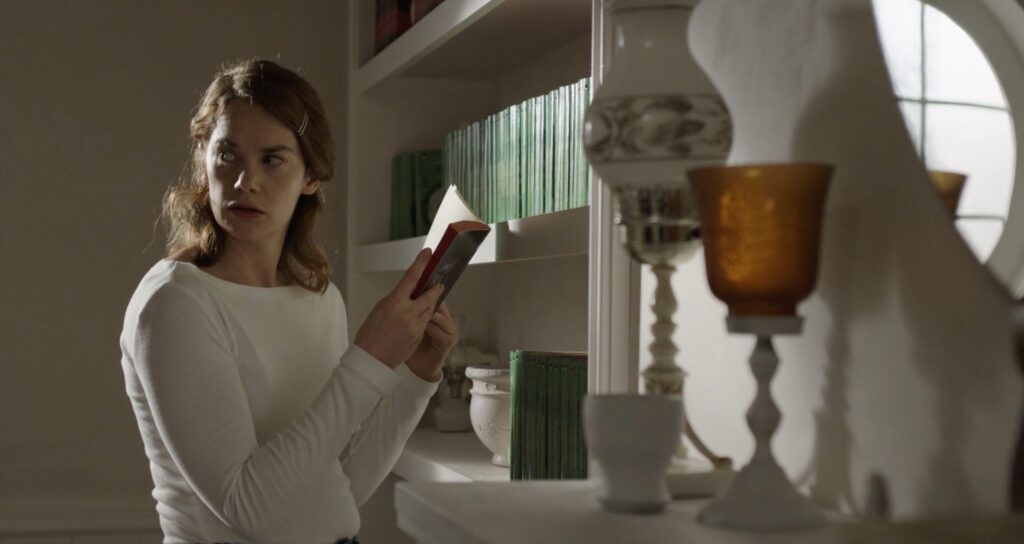
In "February," a mysterious voice tells Kat (Kiernan Shipka), a student at a Catholic boarding school, that her parents have died, and then orders her to kill all the inhabitants of the school. It is dedicated to the story of Lily (Ruth Wilson), a withdrawn hospice nurse who tries to make contact with her elderly patient, but the patient calls her by another name and thinks Lily is a ghost. In "Gretel & Hansel," the author's only studio film ("February" and "Pretty Thing" are early and underestimated representatives of the elevated horror trend), children, experiencing the death of their father and the estrangement of their mother, try to find a path to a better life, but it too is associated with losses.
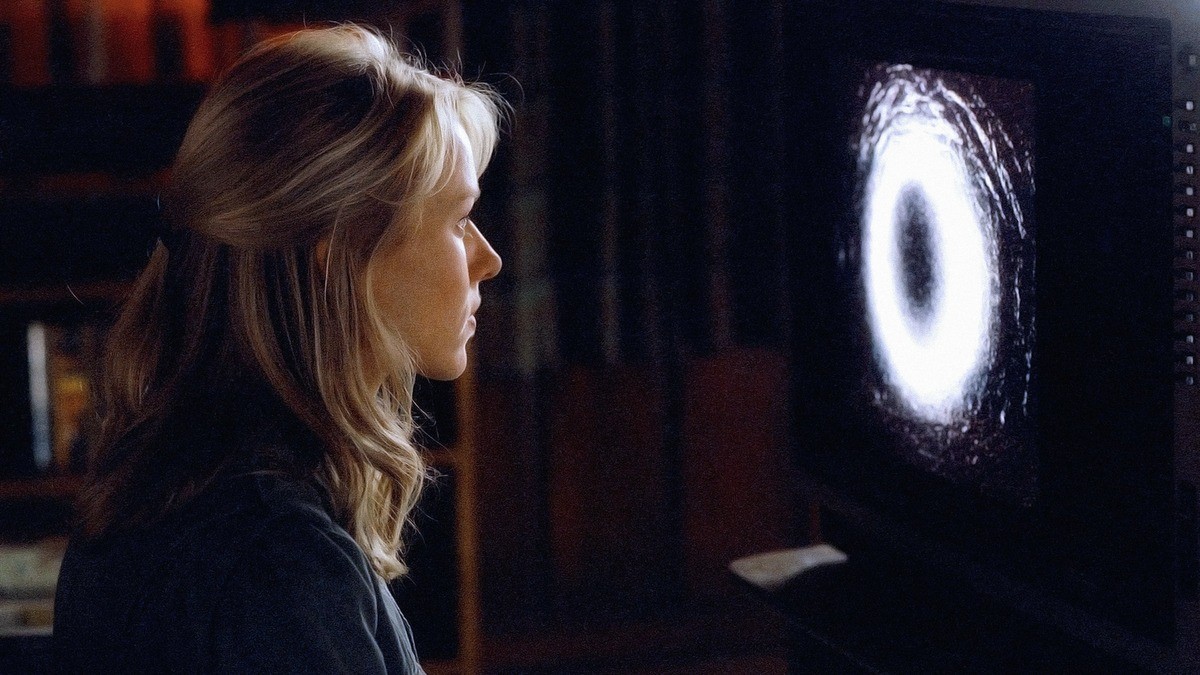
The editorial team's favorite films about ghosts—of consciousness, the past, old mansions, and new technologies.
Open material
Loss cannot be fully overcome; it drains the soul, leaving a gap, an emptiness. This theme is most literally revealed in "February." Unable to cope with loss, Kat lets a dark force into herself, because with Satan at least she is not so alone. Kat's inner emptiness is reflected in the space: the abandoned dormitory corridors, the deserted, snow-covered roads—everything, down to the extinguished fire in the boiler room at the end, screams of loneliness, the inevitability of longing.
Perkins often references 1970s cinema, and in "February" with its economical expressiveness, the roots of the director's style are especially noticeable. The film most resembles Roeg's "Don't Look Now" and Antonioni's "Red Desert," two classic films about saying goodbye to the past, in which the state of the characters is reflected in the external world. In "Don't Look Now," the protagonist's confusion and tangled consciousness seem to be transmitted to Venice, restless and labyrinthine. In "Red Desert," the loneliness of the main character, her emotional emptiness, is spoken by everything: from the gray grass to the industrial landscape immersed in smoke.
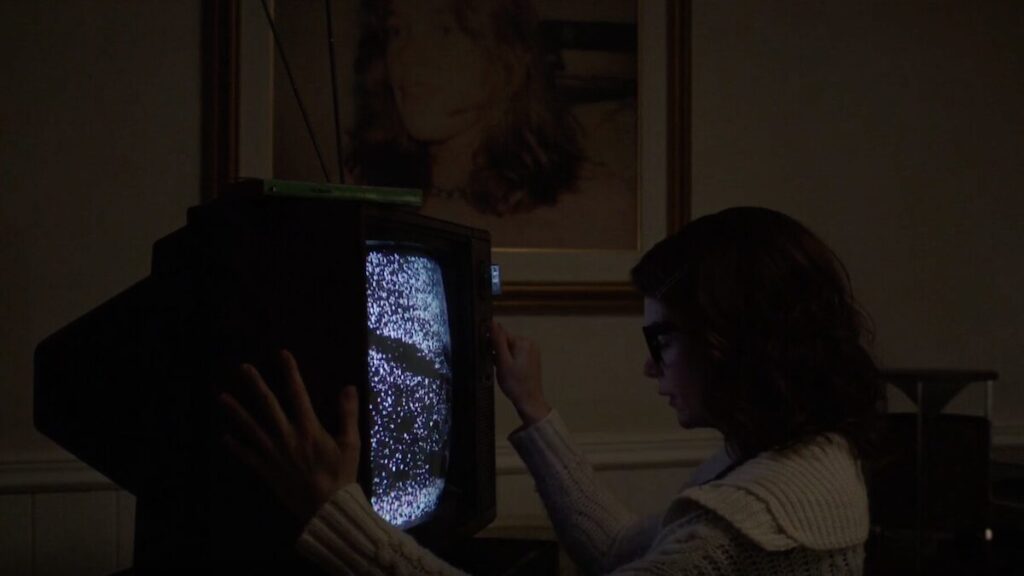
The director's second film, "I Am the Pretty Thing That Lives in the House," is structured somewhat differently. It is also an economical, gothic story, but the space is no longer a metaphor for the heroine's feelings, but a full participant in the events, the main driver of the plot. It rejects Lily: the stairs creak on their own, the TV refuses to work, the telephone cord lives its own life, the stain on the wall becomes more frightening and blacker (the previous owner of the house is buried in the wall). And only when the heroine finally loses hope—to get out, to save herself, to live on—does the mysterious house accept her.
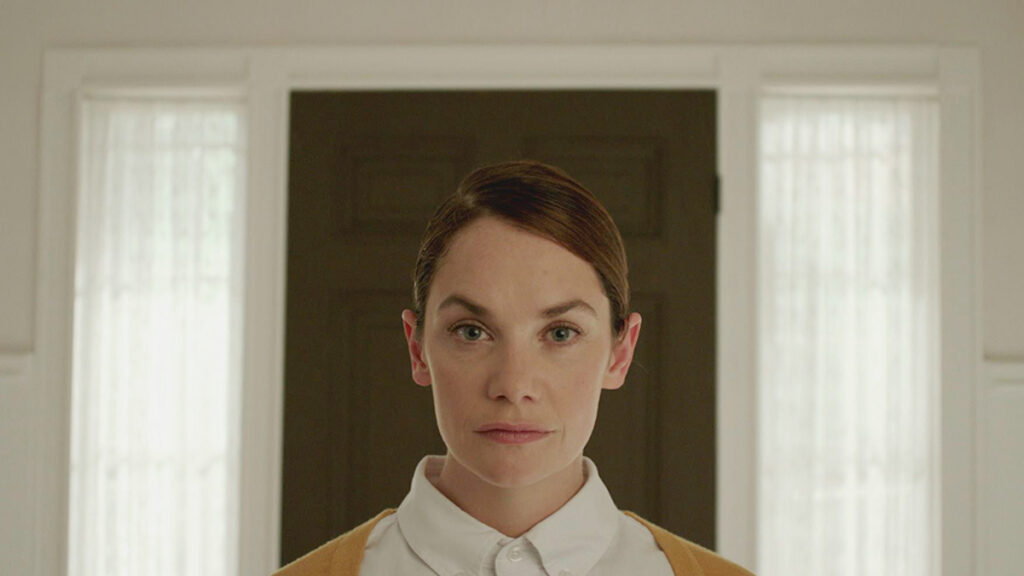
As with the dark force in "February," the influence of space on the heroine is linked to her loneliness. Her unsettledness, indecisiveness leave her alone with ghosts, skeletons in the closet. And not her own, but others'. But the otherworldly world in both films does not just fill the void in the characters' lives, but consumes them.
"Pretty Thing" is the author's most personal film. It is dedicated to his father (A. P. in the credits stands for Anthony Perkins), and as the director himself admits, it is an attempt to comprehend their relationship, to realize the role of his long-dead father in his life. Perhaps that is why Perkins invited his father's colleagues from the film "Catch-22" to the film. The first adaptation of Joseph Heller's great postmodern novel was one of the hits of Anthony's mature career, and he and director Mike Nichols remained friends until the former's death. From "Catch-22" came Paula Prentiss (as the elderly writer), who was also friends with the actor, and Bob Balaban (as her business manager), who made his film debut in Nichols's film.
Perkins's studio horror, "Gretel & Hansel," for all its stylistic similarities, tells a slightly more global story. It is also a claustrophobic film, but unlike the locations of "February" and "Pretty Thing," the witch's dark house, promising children sweets, is not the end of the journey but a transit point, a place of passage where the brother (Sammy Leakey) and sister (Sophia Lillis) need to decide their future. The children's adventures, inseparable in all other versions of the story, are reinterpreted by Perkins as a story of growing up and parting.
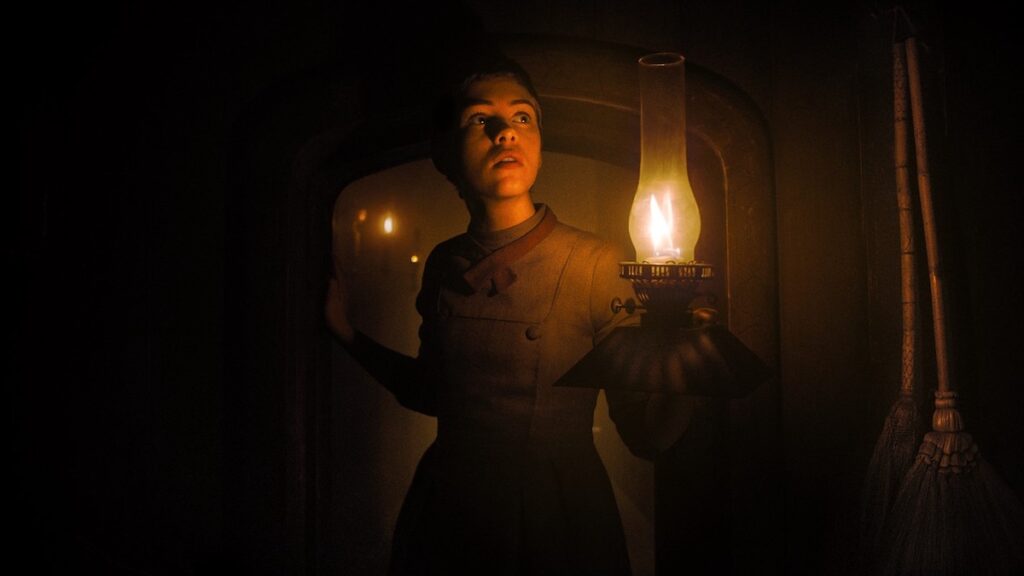
Gretel must take care of her younger brother, but she suspects that in a few more years, their paths will diverge. Where a boy could go in the Middle Ages is quite clear: from the very beginning, Hansel dreams of a career as a woodcutter and, so to speak, cuts his way in that direction. But what is Gretel to do? She goes to work as a maid in a wealthy house, but both her mother, who sent her there, and the master of the house understand that Gretel will, of course, be in the service sector, but in a somewhat different capacity.
"Gretel & Hansel" is a story about finding oneself in a world where it is more customary to sell oneself. About asserting one's rights to one's body, life, and destiny. However, the only role that gives the heroine such an opportunity is the role of the witch. Freedom turns out to be accessible only through a connection with dark forces.
(Fe)Male Gaze
Girls on the threshold of a new life stage are at the center of all of Perkins's films. The director explains his commitment to stories from a female perspective, first, by the specifics of the genre—male protagonists are traditionally both more boring and less receptive to the mysterious. Second, by the fact that, as a man writing about women, Perkins fantasizes more; his stories always retain something mysterious even for himself.
It is to girls that the mysterious is revealed, those places and events to which men have no access. The director of the boarding school in "February," the elderly woman's business manager in "Pretty Thing," or Hansel—none of them are capable of truly understanding Kat, Lily, or Gretel. The priest can ruin everything and exorcise the demon, but he cannot see it—it remains truly real only for Kat. The manager, who visits the house occasionally, sees the stain on the wall but cannot understand what Lily has long understood: that it is not old pipes but old ghosts that are to blame.
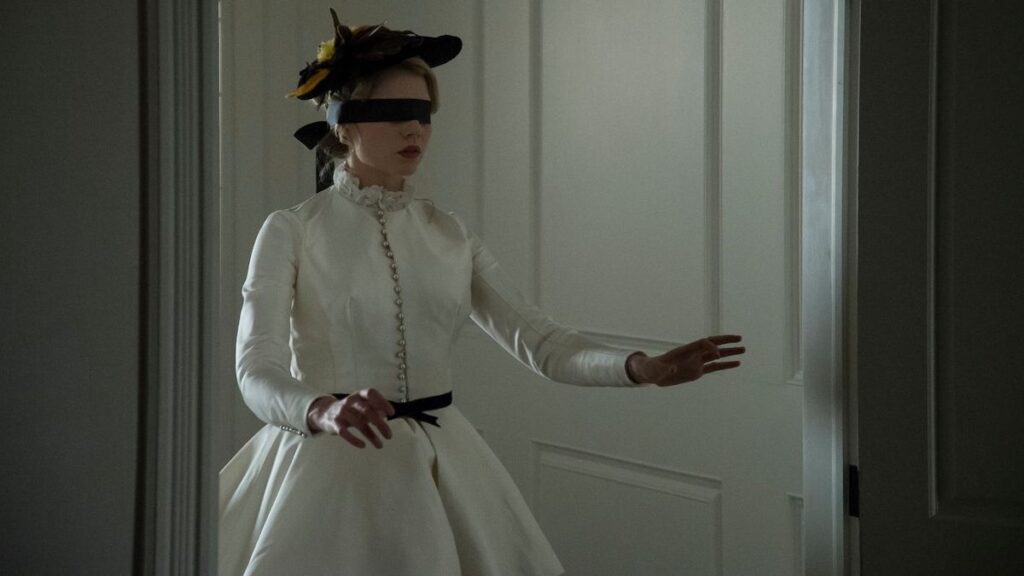
However, the position of the heroines in the director's films is dual: the girls can see but not act; they have access to another world but cannot find a place in it. To live happily, Gretel must give up a lot, betray her convictions, become a universal scarecrow, as witches always are. Kat, to escape loneliness, must become possessed, an enemy of society, and Lily, to start living for real, must become a horror film heroine, a character in others' nightmares. A deal with evil, with conscience, turns out to be the only path to freedom.
Strong-willed, observant, but tragic, unsettled, these girls ultimately become witches, murderers, ghosts, because they are pushed out by a cruel and mostly male world.
Gothic
This position of the heroines reveals the gothic roots in Perkins's films. The gothic of his films is not superficial, not external—it is not in the ghosts or the snow-covered roads. At least not only in them. This cinema is primarily of a gothic mood—its characters suffer in an unjust world. Unlike romantic characters, they do not have the strength to resist the world. Lonely, abandoned, cursed, they succumb to evil, lose, suffer. Nature around is cold, space is hostile, fate is foggy. This is a world inhabited by ghosts and, as it turns out in "Pretty Thing," belonging to them.
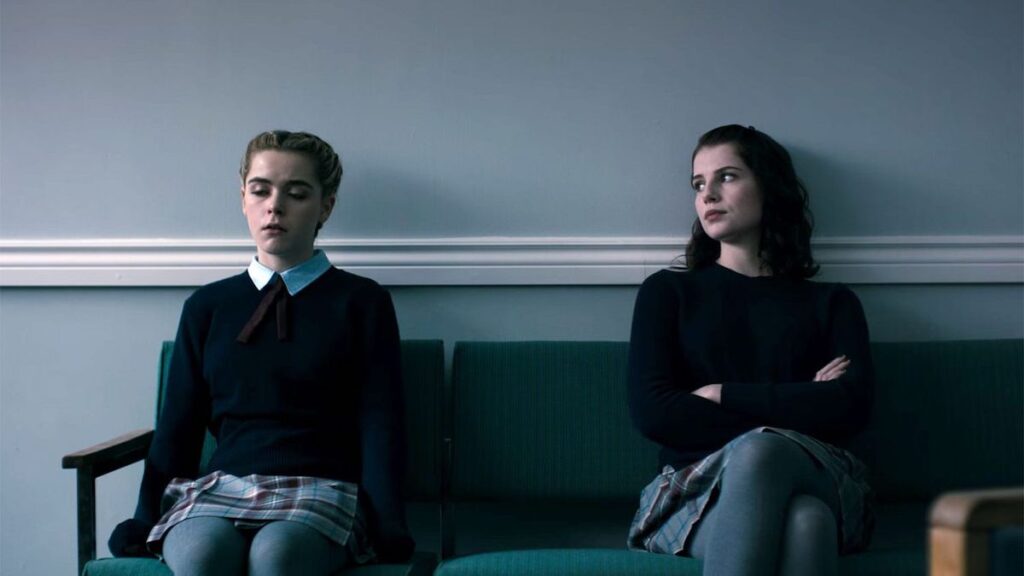
Like classic gothic works, Perkins's films are built on doubling. For example, in "Wuthering Heights," the tragedy plays out twice in different generations. In "The Monk" and the great parody of it, "The Devil's Elixirs," the plot is built on the confrontation of doubles, doomed to repeat each other's mistakes. Mistakes that are also intergenerational.
"February" is structured on the same principle: two girls, two times, two roads (there and back), two sacrifices. In "Pretty Thing," the elderly writer confuses two heroines, and they end up being doubles. Gretel and Hansel, in turn, having lost their way in the forest (a classic gothic location), end up at the center of someone else's family tragedy, becoming victims of someone else's curse.
Decay, decline, disintegration, schism—from these gothic themes, Perkins assembles not novels but poems. Built on repetitions, montage rhymes, "February" impresses not with a complex story, but with how doomed life flares up and fades on screen; how in a film about the last month of winter, the arrival of spring seems an impossible, inaccessible prospect. "I Am the Pretty Thing That Lives in the House" is a film about ghosts that itself resembles a ghost, a clot of someone else's longing. Permeable, fragile, never really ending, but rather dissolving with the credits.
According to the director, cinema as a medium has little in common with series and their novelistic structure, and films can more often rely not on plots but on specific emotions, feelings. Perkins's own films indeed resemble songs or poems: "February" with its flip-flop structure is a poem, and "Longlegs," as the author himself says, is a film with the rhythm of a T. Rex song (a cult English rock band from the 70s).
Hopes
Very soon, "Longlegs" will be released in Russian theaters, which, thanks to the active advertising campaign of the studio Neon, has already become a hit at the American box office. The film is called both the most accessible and the scariest of the director's horrors. We will find out what happens if you cast Maika Monroe as the investigator and Nicolas Cage as the maniac in a week. And in a year, the author's next film will be released—the comedy horror "The Monkey" based on a story by Stephen King, a long-awaited opportunity to see how Perkins doesn't get sad but jokes.
Comments
0No comments yet.
Sign in to join the discussion.