

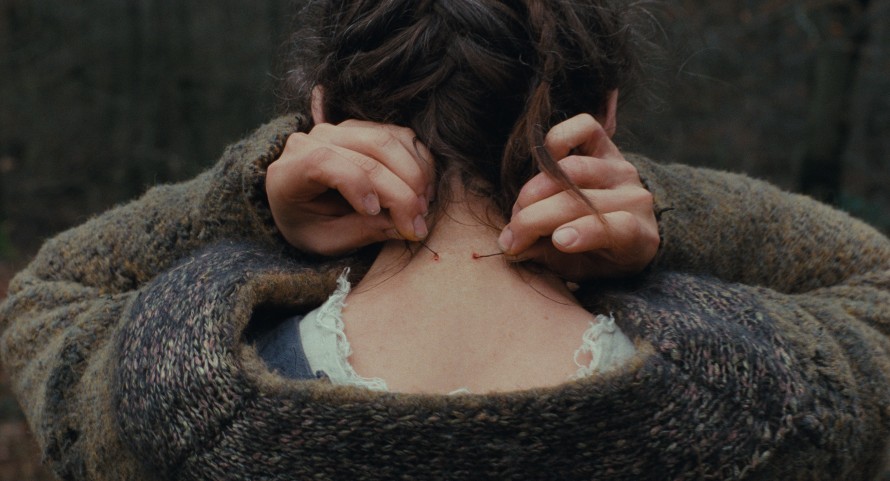
In wide release, the folk horror film 'The Devil's Bath', a movie that frightens not with mysticism but with the way of life in a particular Austrian village.
The plot of the film 'The Devil's Bath' unfolds in Austria in the mid-18th century. A young girl, Agnes (Anja Plaschg), prepares to marry a wealthy local peasant, Wolf (David Scheid), and leave her father's house, where she lived with her mother and brother. The marriage seems not to be one of convenience, but of genuine love (or so it seems at the beginning). Wolf is a caring man, pragmatic, and has already bought a small house on the outskirts of the village. It seems a bright future for the couple is just around the corner. However, all of Agnes's dreams and hopes unexpectedly crumble on the very first wedding night (and then on subsequent ones), when her husband flatly refuses to touch her.
The bewildered Agnes is frightened by this. And then there is the perpetually dissatisfied mother-in-law (Maria Hofstätter), who begins to appear in their house more often than she should, constantly harassing her daughter-in-law with reproaches about an unprepared dinner or unwashed pans. In short, everything unfolds like a fairy tale about an evil stepmother and stepdaughter, with much the same setting as in the works of the Brothers Grimm or Charles Perrault. This is fertile ground for an almost documentary chronicle of loneliness and the fear of inadequacy.
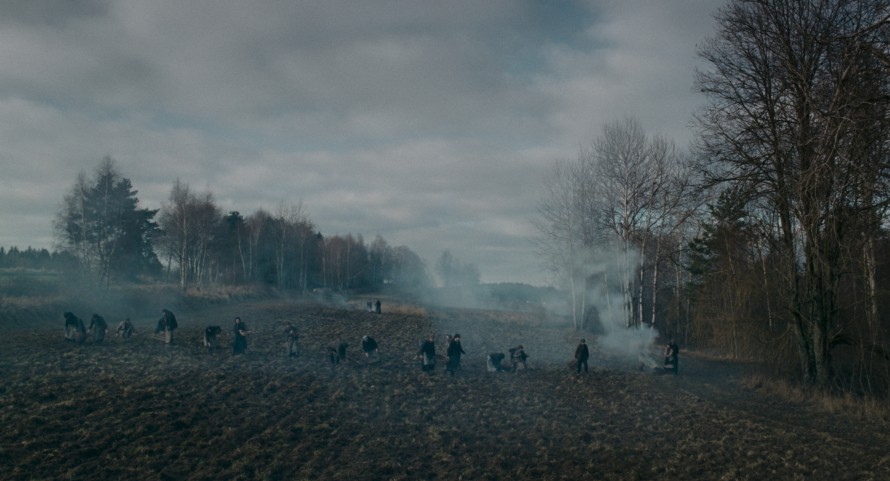
Despite everyone trying to convince Agnes that she belongs here and has nothing to fear, she does not feel that way due to her character traits and delicate mental balance. All of the girl's sincere intentions to create a cozy home, have a child, and live an ordinary life first encounter a cold distrust, and then outright hostility, which even the film's authors do not dare to explain. Agnes does nothing wrong, but the thing is, she also wants to live outside the ingrained rules and foundations: to admire butterflies, lie on the grass, listen to the forest speak.
And in conditions of heavy manual labor, rare (more desperate than merry) drinking bouts, endless gossip, and perpetually gray clouds, this is not so much wrong as it is deadly, even though the space of 'The Devil's Bath' is only conditionally patriarchal. The only man who gets any significant screen time is Wolf, but he too is under the yoke of his despotic mother. In the end, poor Agnes gets neither the desired child, nor her husband's support, nor solidarity from her mother-in-law, nor even understanding from her own mother, who sends her back when she comes asking for help. It is no wonder that the girl soon begins to slowly sink into depression, and from there the edge of the abyss is not far off.
The fresh Austrian horror film from the directorial duo Veronika Franz and Severin Fiala ('Goodnight Mommy', 'The Lodge', 'The Maid') has been taken under the wing of the increasingly popular company Shudder, which does not shy away from giving creative freedom to newcomers and greenlighting auteur projects primarily in the horror genre. These include, for example, the recent small hit 'Evil Dead Rise' and the controversial post-slasher 'The Unborn'.
However, this time Shudder took a risk and dug deeper, giving an advance to a product of a somewhat different kind, bearing little resemblance to the genre in the usual sense. 'The Devil's Bath' is not even a trendy post-horror, but rather an existential thriller, wrapped in the chthonic atmosphere of Scandinavian forests, as if from the films of Robert Eggers. If you try hard, you can find here plots from both 'Men' and 'Poor Things'. But while in the latter two everything somehow strove toward the light, in 'The Devil's Bath' the authors lean mostly toward darkness, viscous and hopeless as swamp mud.
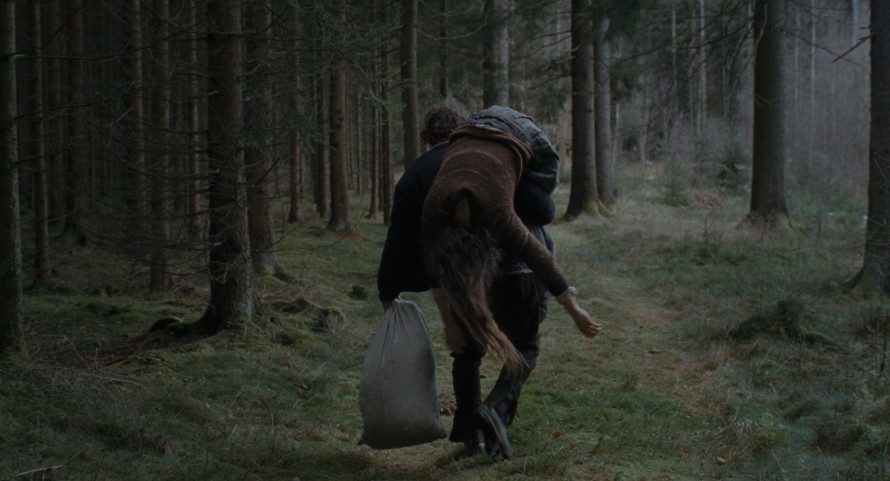
That this dark pastoral will not have a happy ending is clear from the prologue, when young Agnes finds the corpse of an executed woman displayed for all to see. With this bad omen, the authors only emphasize their honesty toward the viewer, as if to say, get ready, it only gets worse from here. And they did not deceive. In 'The Devil's Bath', there is a complete absence of signs of the irrational; this space is filled not with genre tropes of horror as such, but with anxious feelings of impending doom, expressed mainly through artistic means, thanks to the lens of cinematographer Martin Gschlacht (for which the film deservedly won an award at the Berlin Film Festival for outstanding artistic achievement).
These are lingering shots of the dark forest, the earth black with blood, dead fish with white eyes, and the claustrophobic dugouts of the village inhabitants. An ordinary, uncontrived historical chronicle, which, as we know, can be scarier than any demon under the bed. Franz and Fiala make no allowances and offer to watch Agnes's earthly journey from beginning to end. But this journey into darkness, filled with bitterness, fear, and despair, will be long and painful. It is better to prepare for it in advance.
Trailer:
Comments
0No comments yet.
Sign in to join the discussion.