
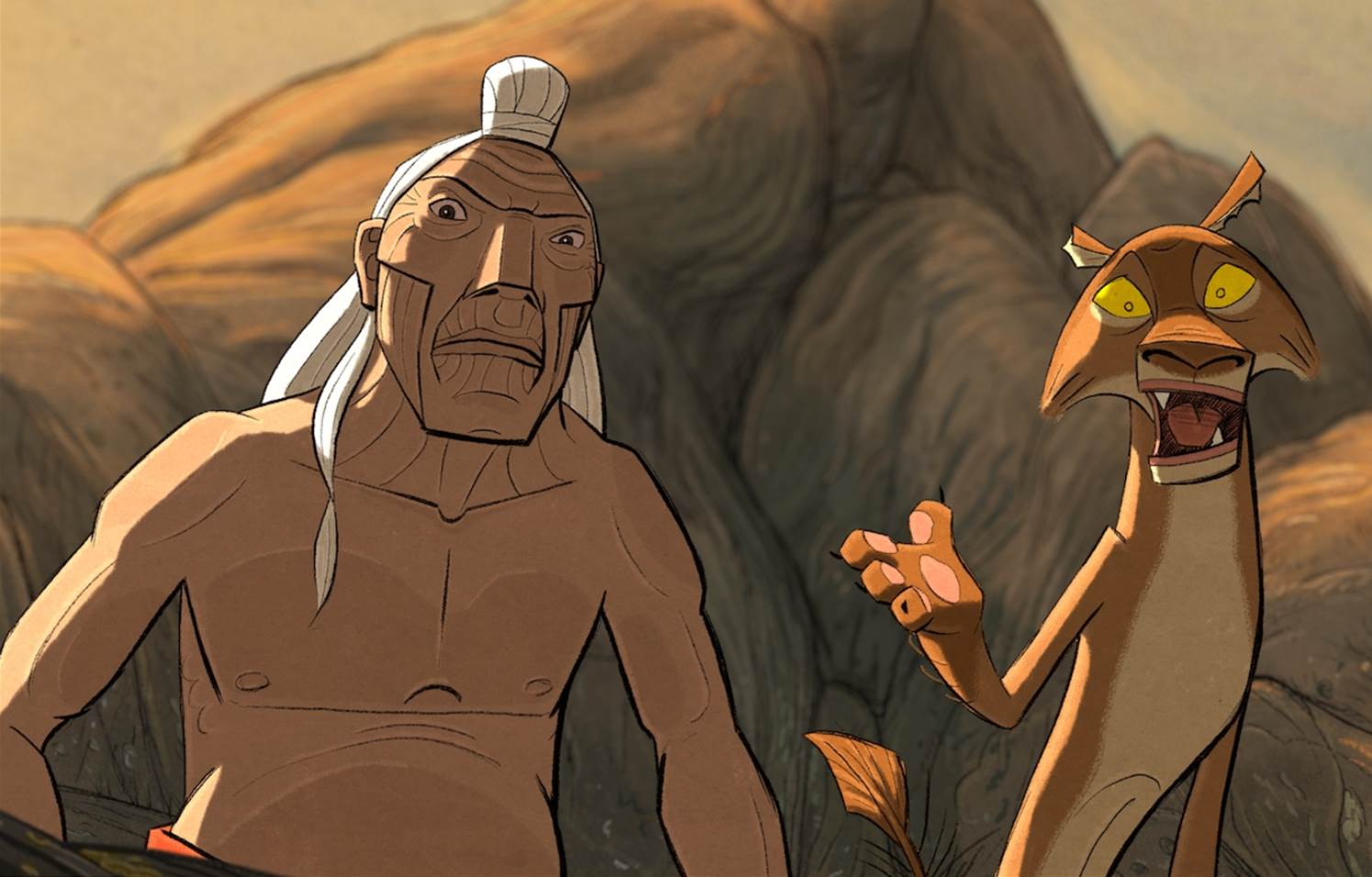
Since June 13, the Hungarian animated film 'Four Souls of Coyote' has been in Russian release, where the myths of indigenous peoples of America meet the current environmental agenda.
Nowadays, Native American teenagers protest against the construction of an oil pipeline on their reservation (immediately reminiscent of ). Trying to find answers to many pressing questions of modernity, they turn to the community elder, who, in the form of a parable, retells them the myth of creation and original sin.

The fourth season of the anthology series 'True Detective' has concluded on HBO. For the first time, the show was made without the involvement of its creator Nic Pizzolatto, but despite record viewership,
Open materialProjects like 'Four Souls of Coyote' are worth their weight in gold. Retelling a plot archetypal for many cultures, but through the lens of Native American folklore, the creators speak about the threat posed by a consumerist attitude toward nature, the importance of preserving national traditions in the modern world, the ruthlessness of capitalism, and finally, that the Western worldview with its pronounced anthropocentrism is destructive in itself. And the film conveys all this not directly, but between the lines, correctly placing accents in the story and symbolically intertwining myths, colonization, and the advance of big business.

The central character of the animated film is Coyote, an antihero trickster akin to the Scandinavian Loki and Arabian djinns. According to the legends of the Great Plains peoples, it is he, not the Creator God, who creates humans from clay in order to devour them and satisfy his insatiable hunger. But the Creator punishes him for this deed by assigning him the role of mentor to the new beings. It is Coyote who pushes the local 'Adam' and 'Eve' to commit the original sin—eating meat.
And it is Coyote, who embodies the destructiveness of unrestrained consumption in the story, who brings Europeans to the New World, but having recognized their true intentions and his own wrongdoing, he rises to defend his world. Incidentally, with the arrival of colonizers on the American continent, the image of this animal in folklore becomes more positive. Without losing its satirical content, it simultaneously appears as a protector of the Native American people, who, using his ingenuity, repels the uninvited guests. The inclusion of this episode in the film reflects the meticulous approach of its creators to transferring folklore to the screen.
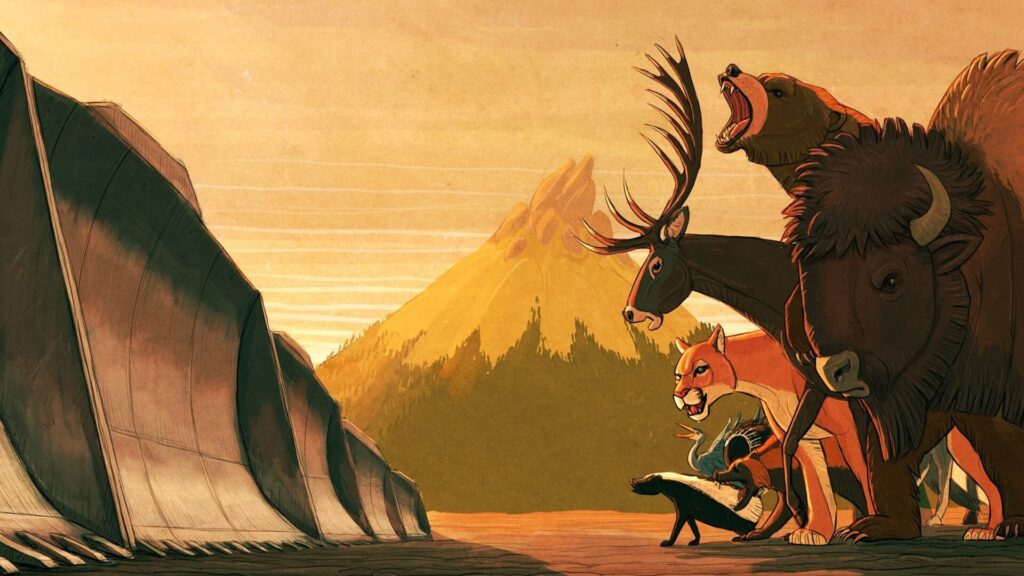
Of course, one cannot fail to mention the absolutely delightful animation and soundtrack of the film. From a visual standpoint, 'Four Souls of Coyote' is no less remarkable than the works of Tomm Moore and Michaël Dudok de Wit. So, I think we will hear more about the Hungarian studio Cinemon in the future. The film's soundtrack consists of ethnic chants somewhere at the intersection of folk and indie genres and contributes to the authentic revelation of the setting. I especially note the composition from the opening scene: together with the quote at the beginning, it perfectly sets the tone for the entire work!
Summarizing all of the above, 'Four Souls of Coyote' is a wonderful parable film about pressing issues, even though it turns to fictional plots and events of long-past days. Hungarian Áron Gauder asks whether we too might have something to learn from Native Americans, for example, their attitude toward the world around us.
Trailer:
Comments
0No comments yet.
Sign in to join the discussion.