
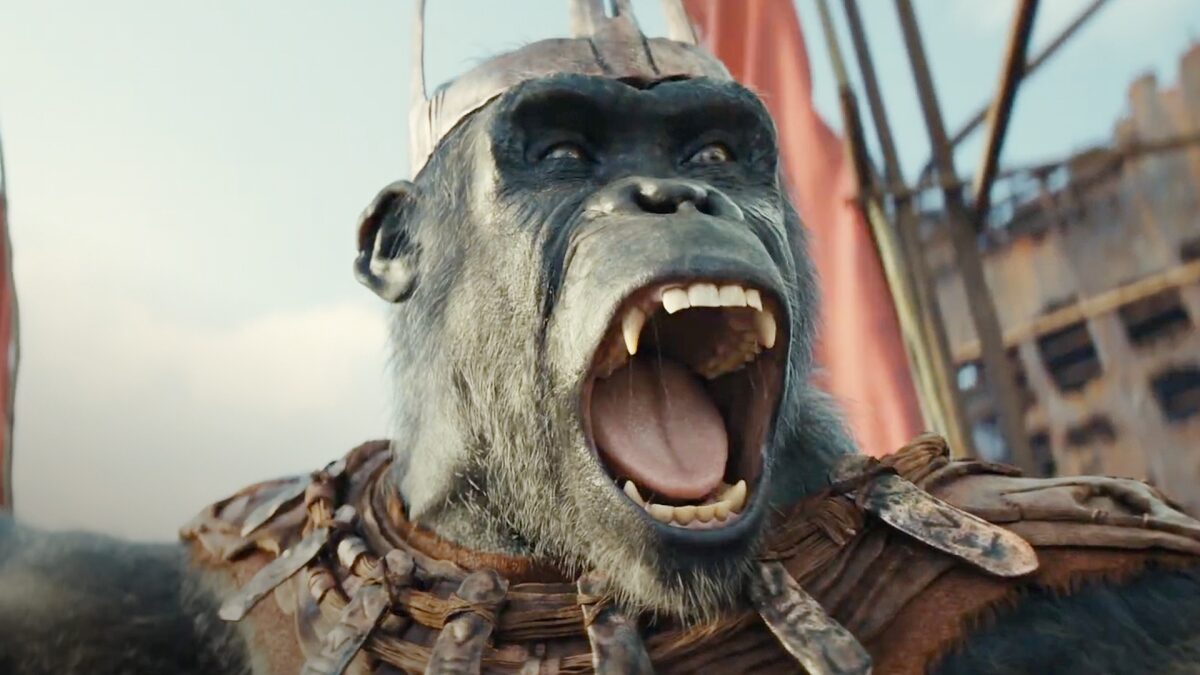
Kingdom of the Planet of the Apes, the tenth installment of the franchise about talking primates trying to build a society, has been released. Read our review on why apes together are still strong.
Many generations after Caesar's death, apes have scattered across the land and live in small tribes. In one such tribe grew Noa (Owen Teague), the chief's son, a friend to all apes, a faithful helper to his mother, and generally a positive character. To become a man, Noa must obtain his own eagle: steal an egg, wait for the chick, and tame the bird. In Noa's tribe, everyone has eagles; his father is the head eagle keeper—in short, a crucial quest.
Naturally, the young chimpanzee breaks the egg while chasing a wild girl (Freya Allan, a new trendy actress, and a good one at that) who was stealing food. But this quickly ceases to be his main problem: that same night, their village is attacked by aggressive primates wearing masks and carrying electric shockers on staffs. Noa's world crumbles; his father dies in battle with a gorilla, and the tribe is taken into slavery in an unknown direction.
Everyone thinks Noa is dead too, but he fell from a height and survived (much like Simba—the scene is even directly quoted). Now the hero must save his tribe, befriend his father's eagle, which follows him and pecks at him, and of course meet new friends, old enemies, and unexpected inhabitants of the unfamiliar world.
Such a plot, frankly, doesn't shock those who have seen more than two movies in their lives, but that's the phenomenon of Planet of the Apes. All parts of this franchise were built on the amusing idea that if you replace human characters with apes in classic stories, it becomes significantly more interesting to watch. Curiously, this formula has worked for fifty years and could seemingly work for another fifty (and Kingdom is supposed to start another trilogy).
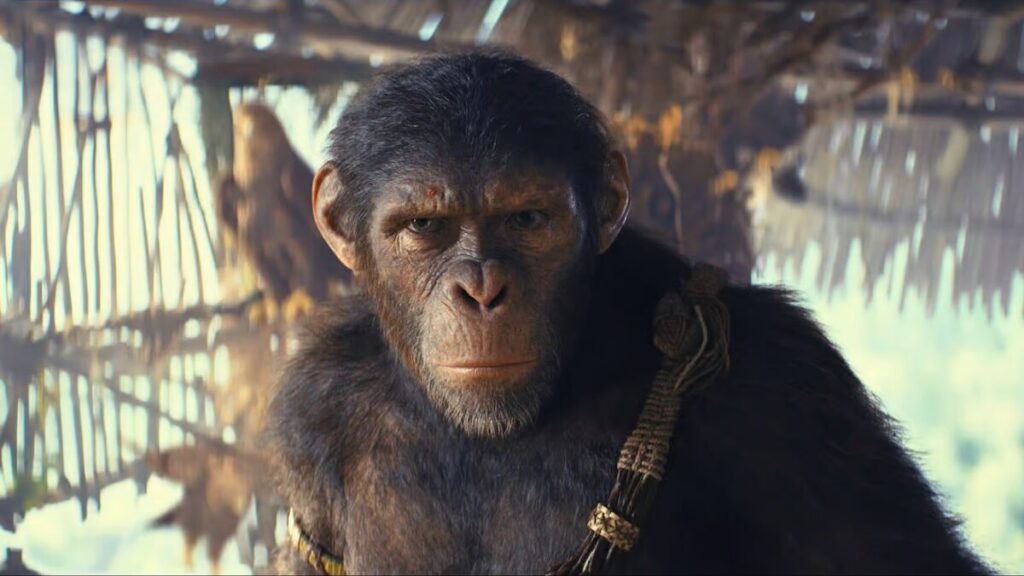
The film's set of references is quite clear: Conan the Barbarian, The Lion King, and any other movies you can recall about an inexperienced youth saving his people or avenging them while becoming a man. The motif of initiation is key for Kingdom: everything begins with an incomplete ritual, and the hero's journey is about filling that gap. Symbolic maturation is replaced by real maturation. Noa must now learn about the world, and every character he meets is not only an enemy or ally but also a teacher.
However, director Wes Ball, namesake of one of the worst directors in the world, famous for the silly film The Maze Runner, doesn't seek easy—and especially straightforward—paths even in such a simple plot. Kingdom of the Planet of the Apes offers at least three forty-minute introductions (hero in the tribe, hero on the road, hero in a foreign tribe) that barely form a single narrative: each subsequent part doesn't continue the story but starts over for some reason. This is essentially a sentence without syntax, like the chimpanzees communicated in Dawn of the Planet of the Apes.
At first, Noa meets an orangutan named Raka (Peter Macon), a member of Caesar's order, who is busy preserving the legacy of the great leader. Raka is a humanist, hates tyranny, and looks like a veteran of the hippie movement (as they say, 'Where's the bananas, Lebowski?'). For him, Caesar is the source of ultimate wisdom, the final argument in any dispute. If Raka had his way, he would speak only in quotes from his beloved leader, but the orangutan is endlessly talkative, and Caesar, of course, is not Otto von Bismarck. His legacy consists, as is known, of two phrases: 'Apes together strong' and 'Ape not kill ape.' Not much, though it covers all occasions.
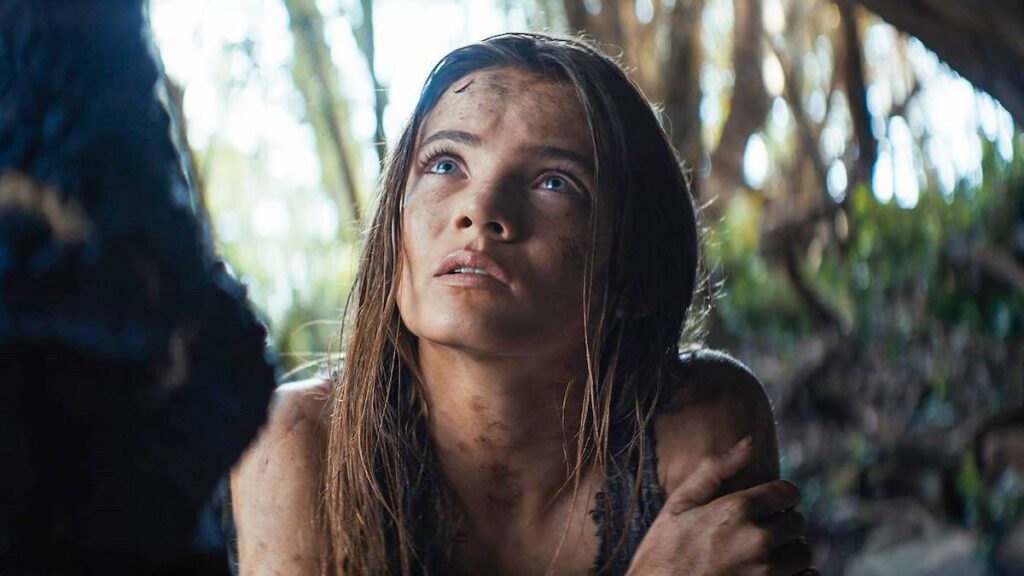
Because of the orangutan's kindness, and since his beloved Caesar got along with humans, the heroes save that wild girl because of whom Noa failed his initiation. She turns out to be able to speak, which naturally shocks everyone—apes haven't encountered speaking humans since the events of War for the Planet of the Apes. Mae (that's the girl's name) is a character with an unclear function, and actress Allan has little to do for most of the film, but that's something like a setup for the future. From Mae's fragmented speeches, a viewer unfamiliar with the franchise learns that before Caesar, the world was arranged completely differently, and the apes' territorial and civilizational claims seem unfair to humans. After all, it's the planet of the apes, not humans, whatever the film's title says.
The final brick in Noa's development is laid by the unbalanced bonobo Proximus (the outstanding Kevin Durand), whose warriors enslaved the hero's clan. Proximus resembles a fascist version of Tony Robbins and calls himself Caesar (as in the Roman Empire, the name became a title). Above all, he wants to obtain the achievements of human civilization, hidden, naturally, in a bomb shelter. For his royal ambitions, the new Caesar enslaves apes, constantly repeating that they are 'together strong.' Slave labor, naturally. And, of course, that's not what Caesar meant when he coined that aphorism.
However, director Wes Ball's key point is that it doesn't really matter what Caesar meant. The apes' problems stem from an excessive obsession with history. All the film's characters think too much about the Roman Empire (in which they are, of course, not alone). They try to infect Noa with this, and he periodically resembles a Zoomer who accidentally ended up in the midst of a decade-long Facebook discussion. During years of absolute power on the planet, apes never invented philosophy, so their political debates end either in a fight or in an appeal to history and then a fight about the meaning of history. Which, however, philosophy doesn't prevent.
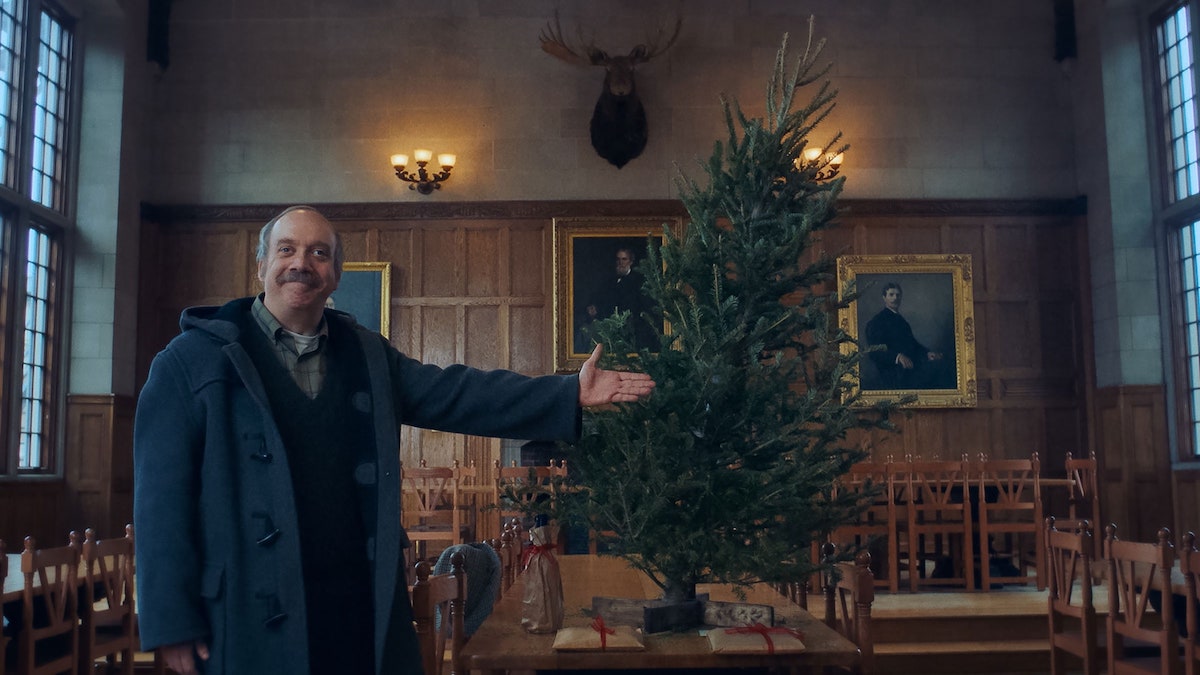
On the internet, you can (and should) find Alexander Payne's new film, the New Year's comedy 'The Holdovers' – a deep and surprisingly warm movie, for which one of the smartest directors in A
Open material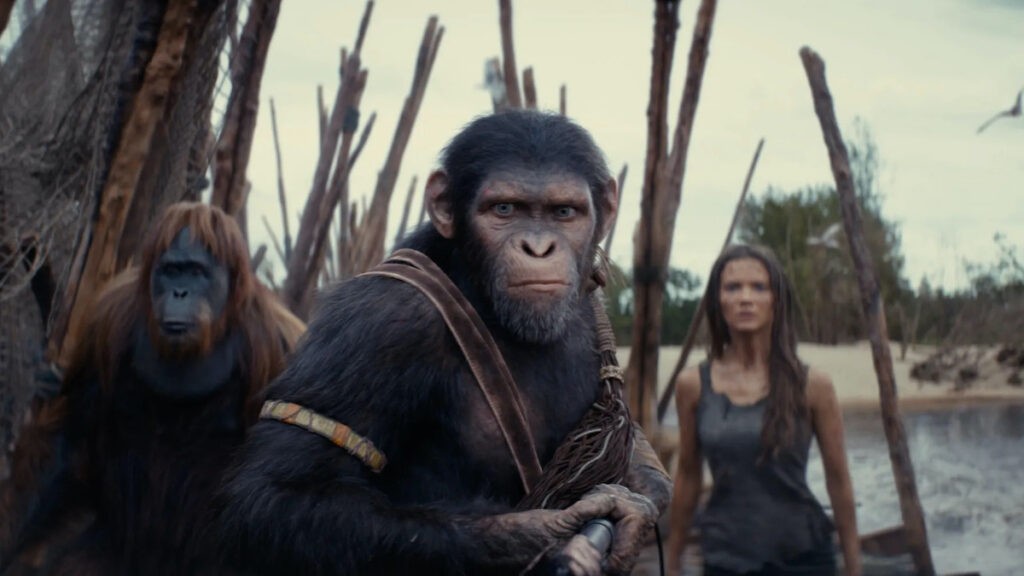
Planet of the Apes as a franchise has always been a reaction to current events. The original 1968 film was a brilliant metaphor for slavery and the civil rights struggle; its sequels were interesting, though not always aesthetically successful, statements about animal rights, class inequality, and the prospects of nuclear war. In the 2010s trilogy, slightly more abstract, behind biblical plots and references to classics, one can also see a lively, thoughtful cinema about the cost of political choice, xenophobia, and the burden of war. Kingdom stumbles in expression and shifts in tone but continues this noble tradition.
Ball's film is a manifesto against substituting moral questions with historical ones. It's a film about the danger of trying to avoid complex ethical issues by shouting about a great legacy. Noa must ultimately learn to think seriously about others, to judge himself seriously. To understand that an ape does not kill another ape not because Caesar said so, but because killing is fundamentally not very right. Turning to the past doesn't help any of the characters: Mae doesn't notice her own questionable decisions, Proximus turns into a parody of his historical idols, Raka gets stuck in dogmatism.
Kingdom, however, can hardly offer any hope. By showing that each character's path is a dead end, director Ball either ultimately emphasizes the value of unity or simply disappointedly turns off the camera. In the end, the heroes have only two things left: to trust each other, even though none of them deserves trust, and to look at the sky. This is probably some Kantian moment (the moral law within me, the starry sky above me), but there's a feeling that the director simply doesn't know how to end it. But then again, who does?
Comments
0No comments yet.
Sign in to join the discussion.