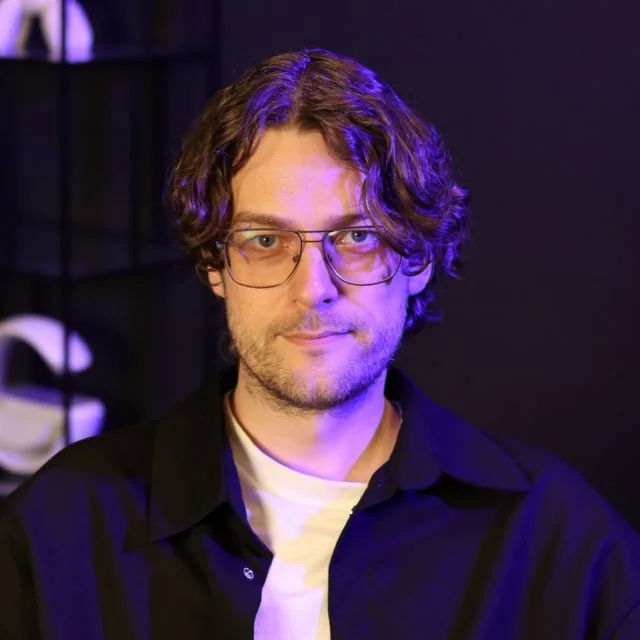


From "The Big Heat" to "Touch of Evil" – a selection of films appearing in the series "Sugar."
"Sugar" is a neo-noir series from Apple TV+ set in modern-day Los Angeles. Private detective John Sugar (Colin Farrell) is not only excellent at his job (he finds missing people) but also a huge movie buff. Sugar's latest case—finding the missing granddaughter of legendary film producer Jonathan Siegel (James Cromwell)—only makes him delve deeper into the underbelly of Hollywood.
Throughout the eight episodes of the first season, Sugar's journey to find Olivia reminds him of scenes from his favorite classic films, which are edited into the series as if we are seeing brief flashes of what runs through Farrell's character's mind.
IndieWire has compiled a complete list of films that appear in "Sugar," including descriptions of how and where these scenes are used in the series. We have adapted this material for you to add to your watchlist and give you a better idea of how creative this Apple streaming project turned out to be.
Warning: This text contains spoilers for the series "Sugar"
"The Big Heat" (1953)
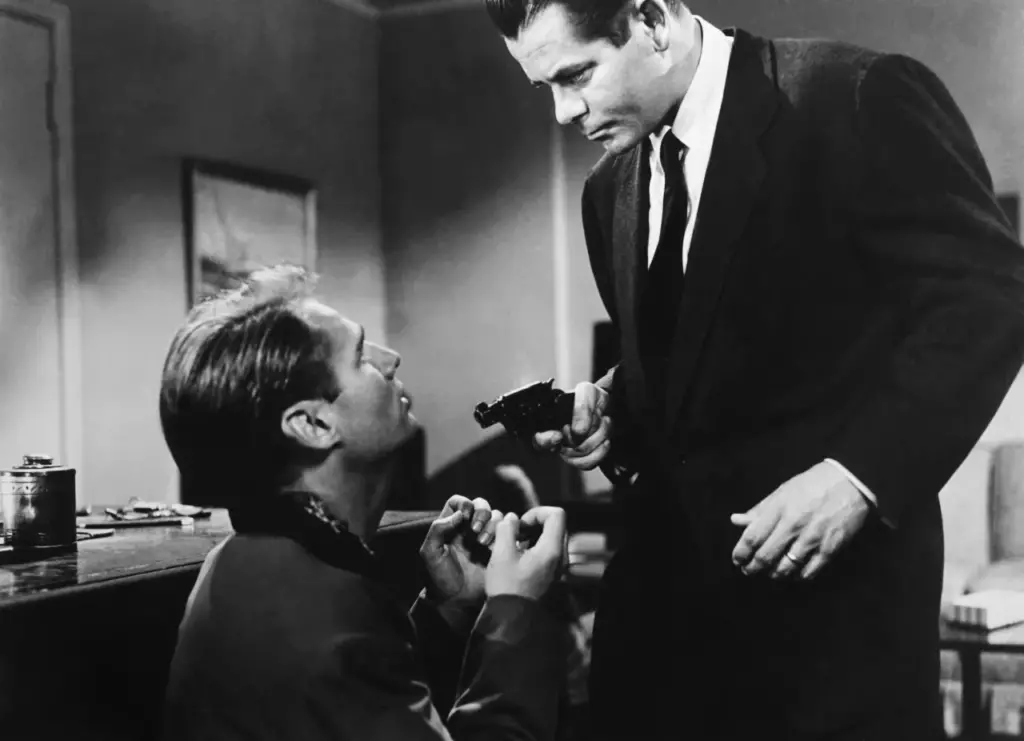
Director: Fritz Lang
Cast: Glenn Ford, Gloria Grahame, Lee Marvin
Episode 1: Ruby (Kirby) gives Sugar a gun that Glenn Ford used in the film "The Big Heat," hoping his love of classic cinema will outweigh his hatred of weapons. The scene is intercut with shots of police sergeant Dave Bannion (Ford), seeking revenge, using that gun.
"Kiss Me Deadly" (1955)
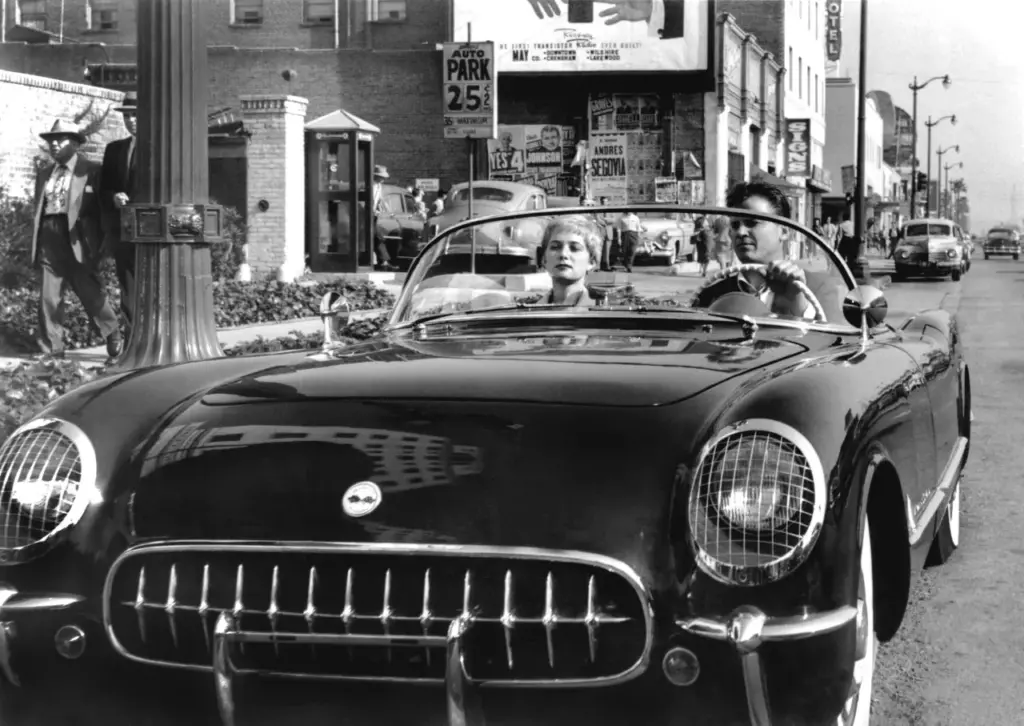
Director: Robert Aldrich
Cast: Ralph Meeker, Gaby Rodgers
Episode 1: As Sugar drives away from Ruby's house, shots of his driving are intercut with shots of detective Mike Hammer (Meeker) driving through Los Angeles in his Corvette. Additionally, the song "Kiss Me Deadly" is frequently heard in later episodes of "Sugar."
Episode 7: When a beaten Sugar wakes up on a motel floor under Melanie's watchful eye, we see a scene with Mike Hammer and Lily Carver (Rodgers) in a car. Lily tells Hammer, "When people are in trouble, they need to talk, but you know the old saying." This phrase gives Melanie the idea that Sugar himself wants answers about the trouble he's in.
"Johnny Guitar" (1954)
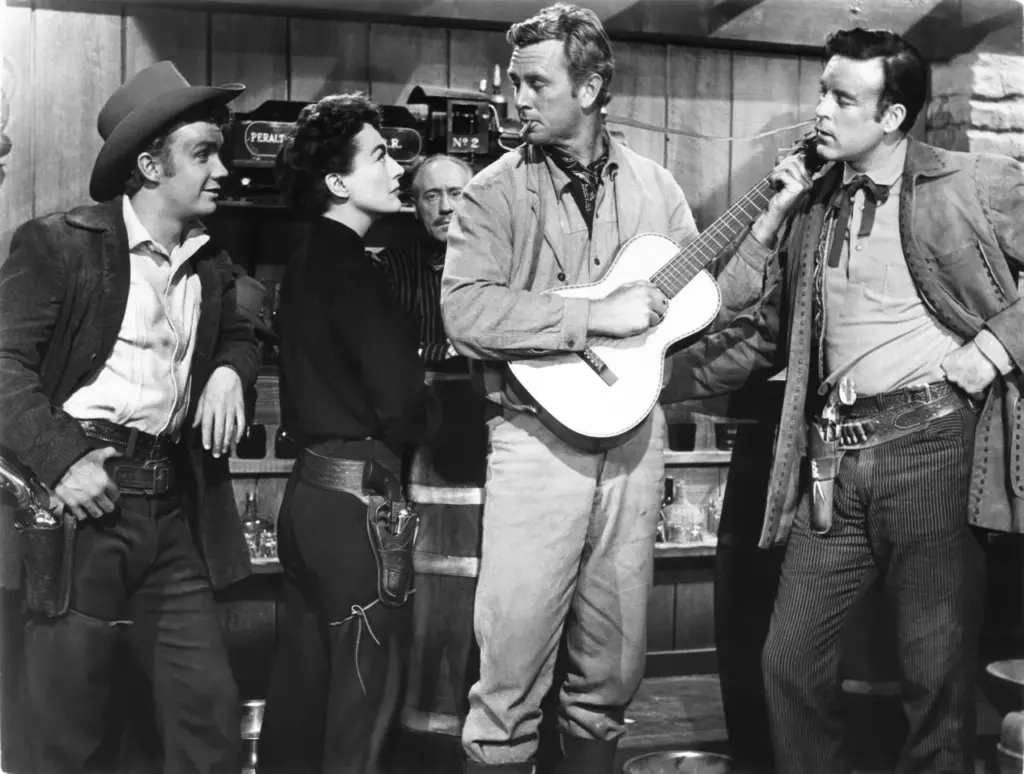
Director: Nicholas Ray
Cast: Joan Crawford, Sterling Hayden, Mercedes McCambridge
Episode 1: While tailing Melanie (Amy Ryan), Sugar tries a new whiskey recommended by the bartender. His drinking is intercut with a brief flash of a scene where Hayden's character Johnny Guitar shoots.
"Gilda" (1946)
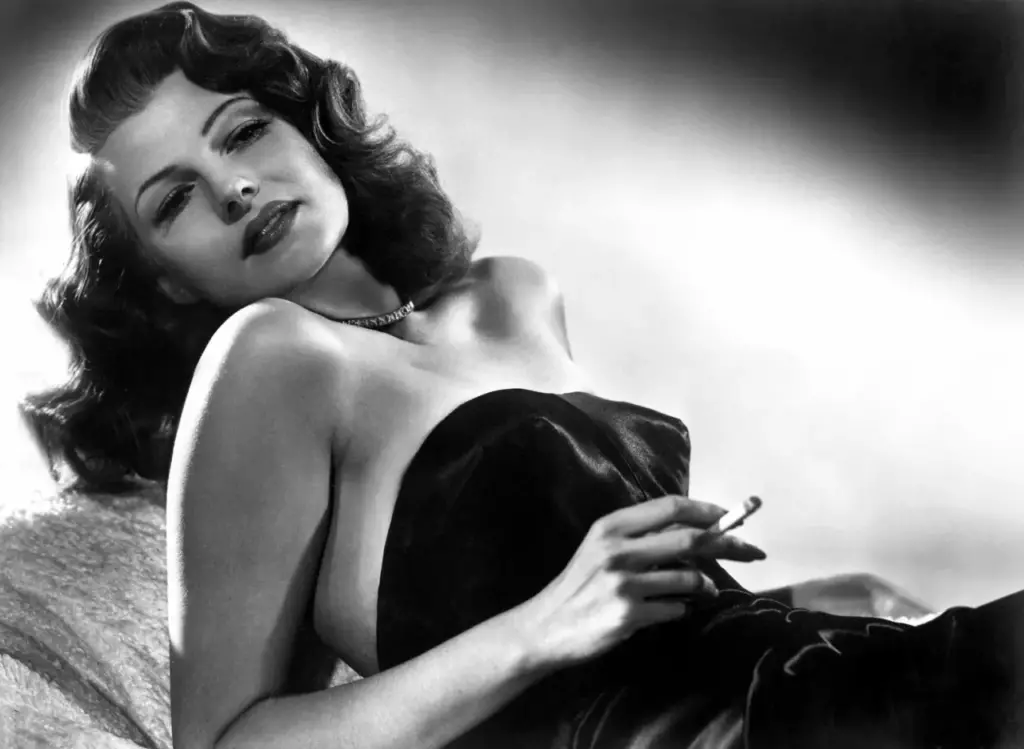
Director: Charles Vidor
Cast: Rita Hayworth, Glenn Ford, George Macready
Episode 1: When Sugar drinks with Melanie, he explains why he likes alcohol despite his inability to get drunk.
"Romance, probably. I get it from movies," says Sugar, and at that moment Glenn Ford appears, this time as Johnny Farrell, raising a toast to Gilda (Hayworth).
"The Strange Love of Martha Ivers" (1946)
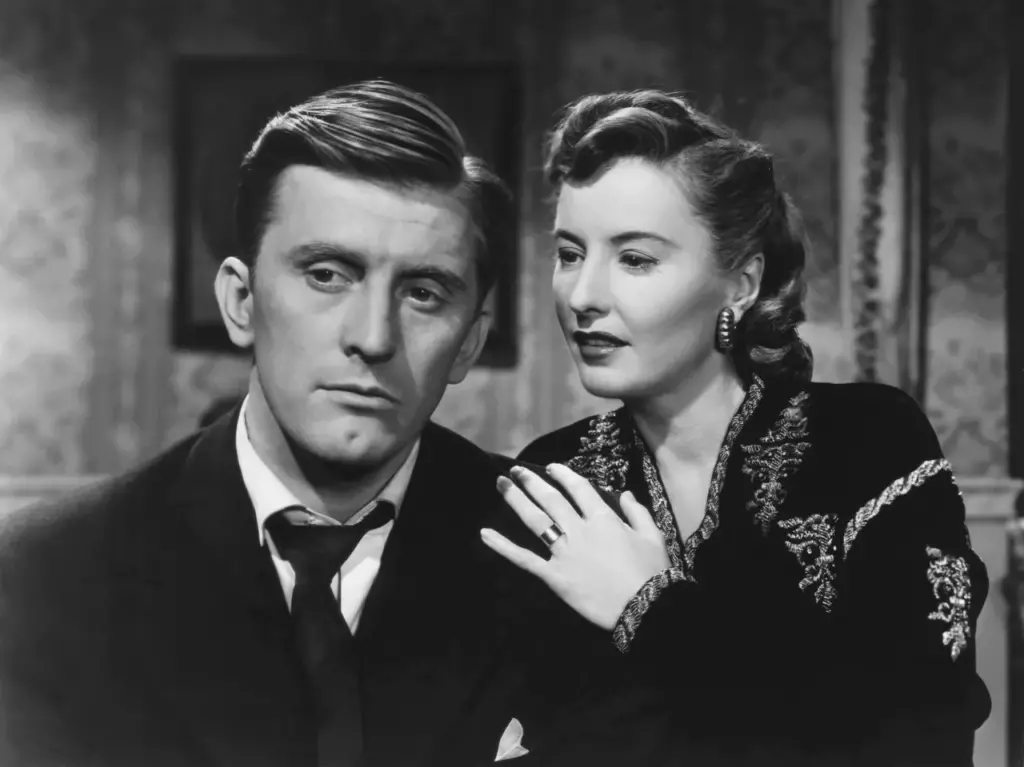
Director: Lewis Milestone
Cast: Barbara Stanwyck, Van Heflin, Kirk Douglas
Episode 1: Sugar brings a very drunk Melanie home and settles her on his couch. Before leaving, he turns on a classic movie channel, and a scene with Barbara Stanwyck and Kirk Douglas from "The Strange Love of Martha Ivers" appears on screen.
"Sunset Boulevard" (1950)
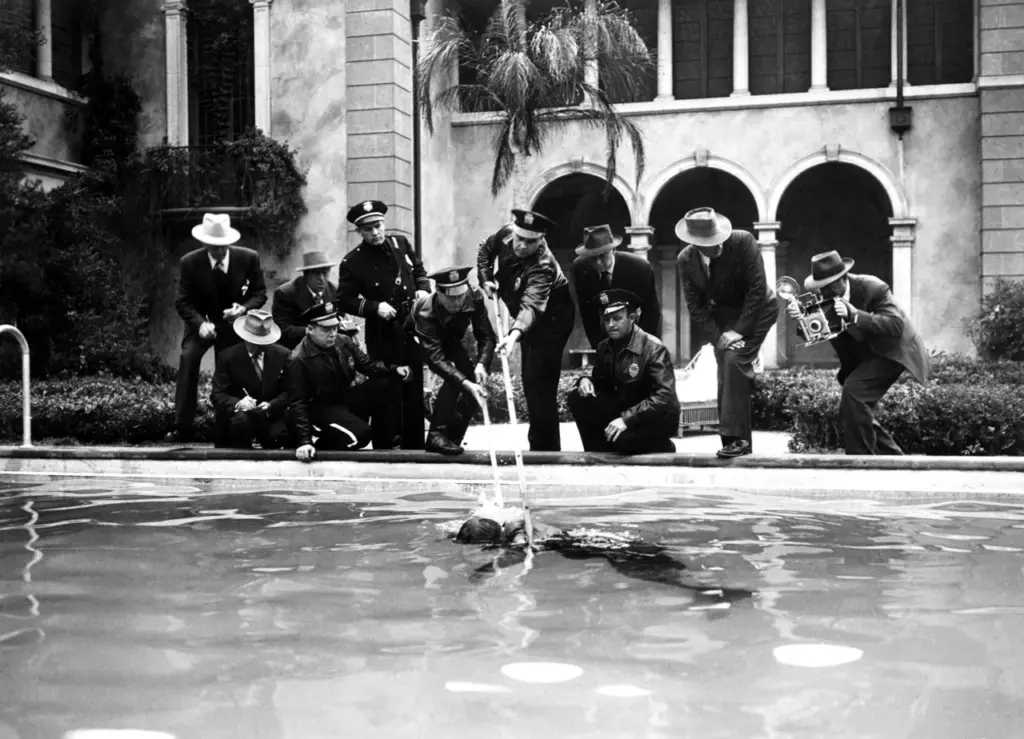
Director: Billy Wilder
Cast: William Holden, Gloria Swanson
Episode 2: The episode opens with the iconic image of screenwriter Joe Gillis (Holden) floating face down in a pool. This famous opening scene from "Sunset Boulevard," which prompts Gillis to tell the story of how he ended up there, pairs well with Sugar doing laps in his hotel pool and contemplating (narrating) the details of his own investigation (discovering a body in Olivia's car trunk) from the first episode.
"Dead Reckoning" (1947)
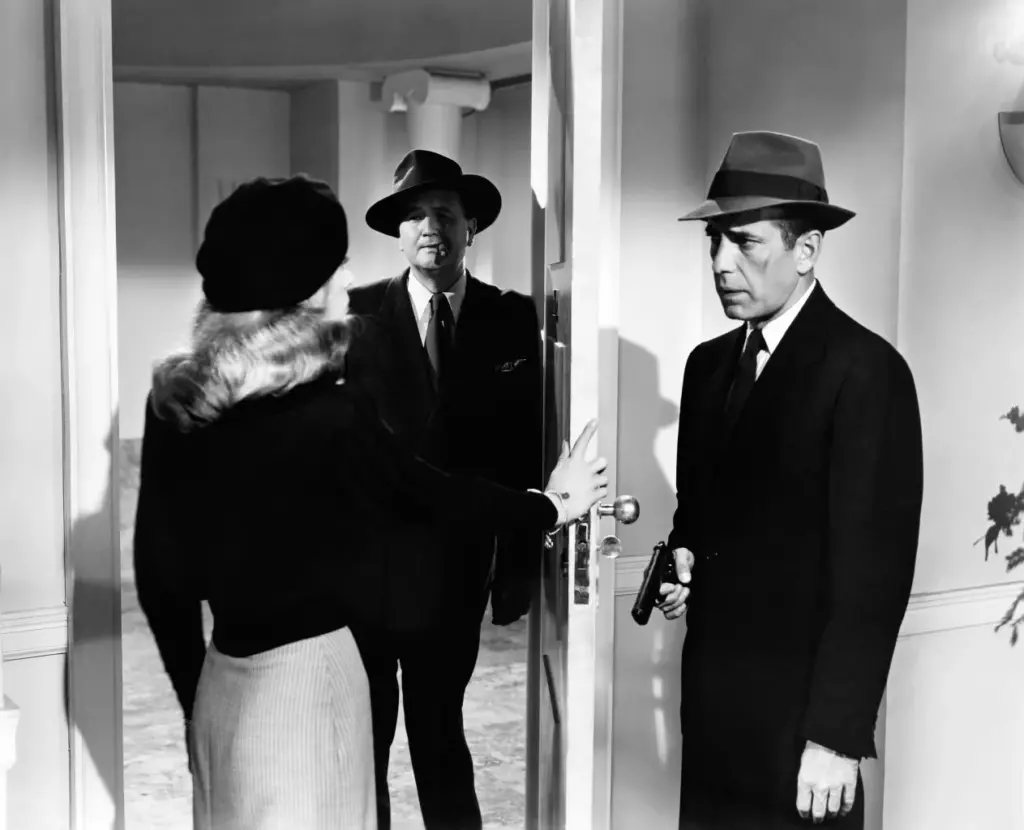
Director: John Cromwell
Cast: Humphrey Bogart, Lizabeth Scott, Morris Carnovsky
Episode 2: This episode features a lot of Bogart—three different films with the great actor are used. The first is "Dead Reckoning," in which Rip Murdock's (Bogart) investigation into the mysterious past of his fallen war hero friend intertwines with Sugar's investigation into Olivia's disappearance.
Episode 6: After Sugar learns that Ruby has betrayed him, scenes of Rip Murdock's (Bogart) betrayal by Coral Chandler (Scott) are intercut with Sugar's drive from Ruby's house.
"Knock on Any Door" (1949)
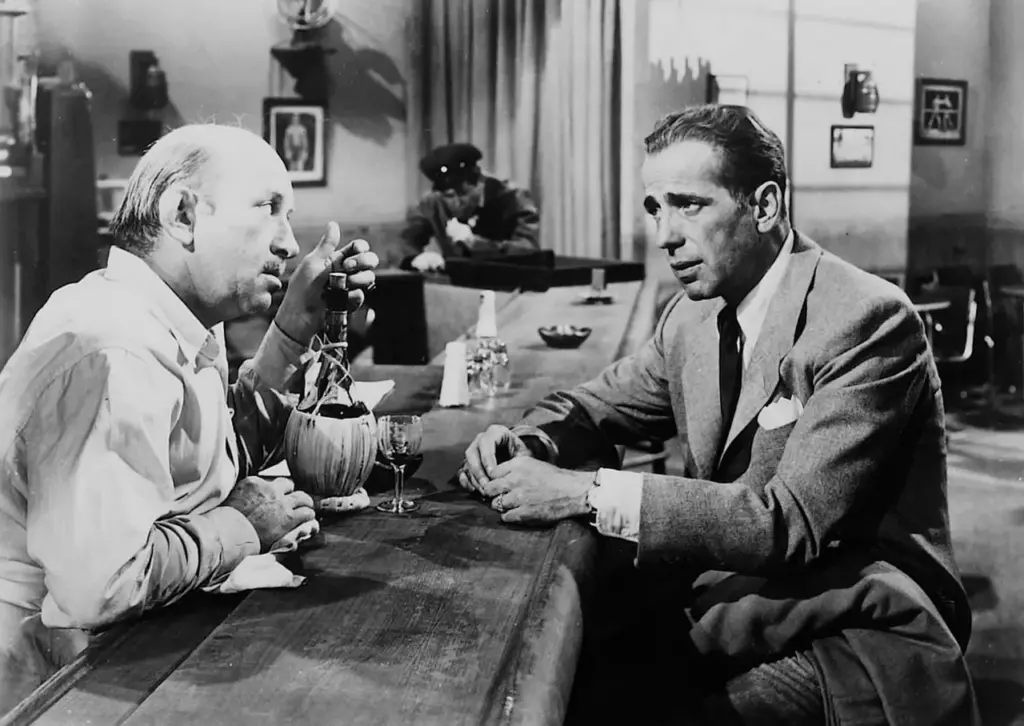
Director: Nicholas Ray
Cast: Humphrey Bogart, George Macready, John Derek
Episode 2: Scenes of Sugar talking with Olivia's friends are intercut with scenes of lawyer Andrew Morton (Bogart) using an unconventional approach to defend his gangster client accused of murder.
"Sherlock Jr." (1924)
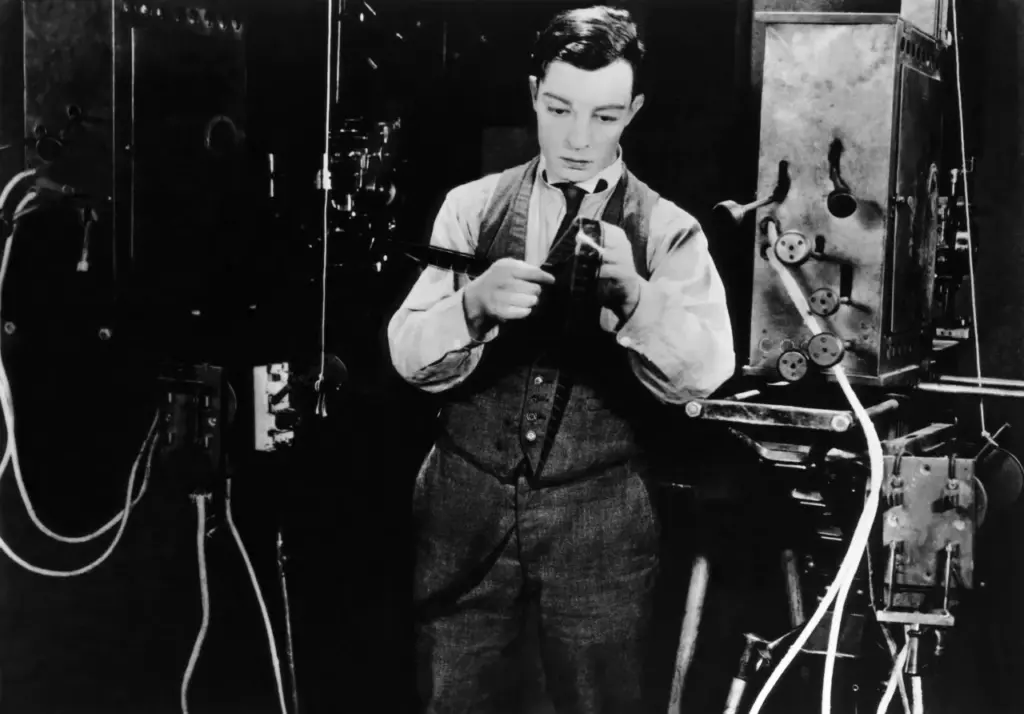
Director: Buster Keaton
Cast: Buster Keaton
Episode 2: Melanie, speaking to a group of Alcoholics Anonymous, says:
We live in a world where millions of people have the ability to love and be loved, but for some reason we can't get our act together.
As she speaks, not only recent events but also old movies flash through Sugar's mind. A shot of Buster Keaton's sad face is very expressive in the context of Melanie's words and John's subjective montage of memories.
"In a Lonely Place" (1950)
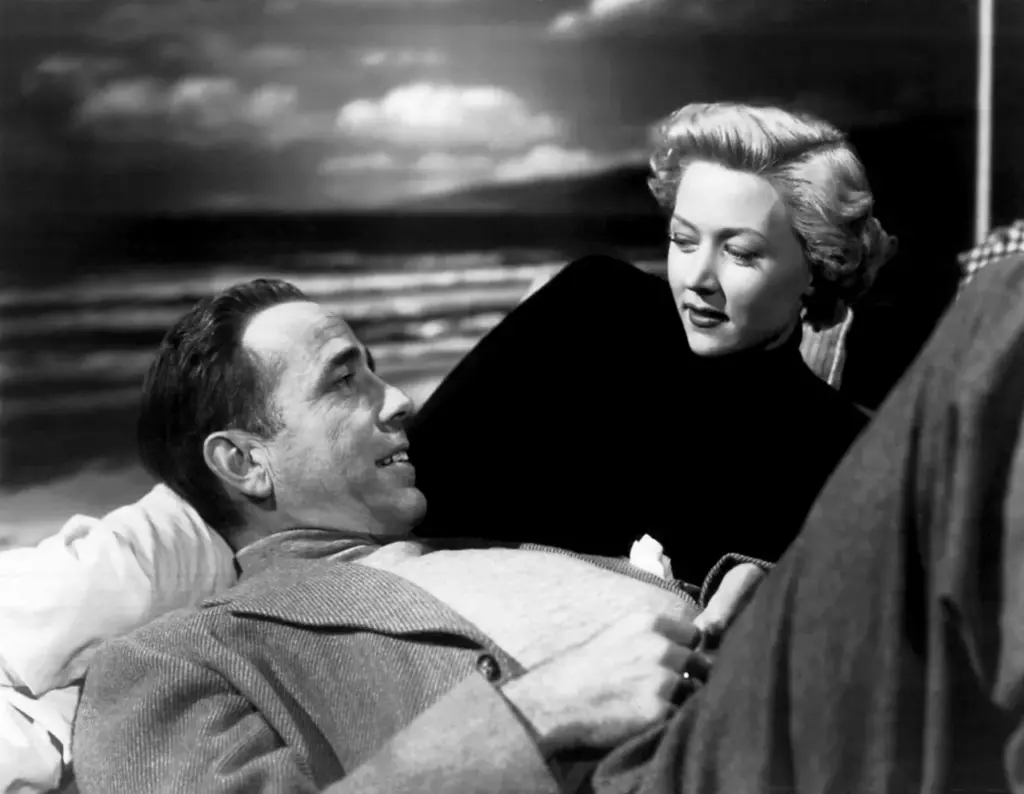
Director: Nicholas Ray
Cast: Humphrey Bogart, Gloria Grahame
Episode 2: After the Buster Keaton image (see above), Sugar switches to "In a Lonely Place" while Melanie continues talking to her AA group. These shots are significant: Laurel Gray (Grahame) helplessly watches the alcoholic she loves (Bogart) fall into despair.
"Minnie and Moskowitz" (1971)
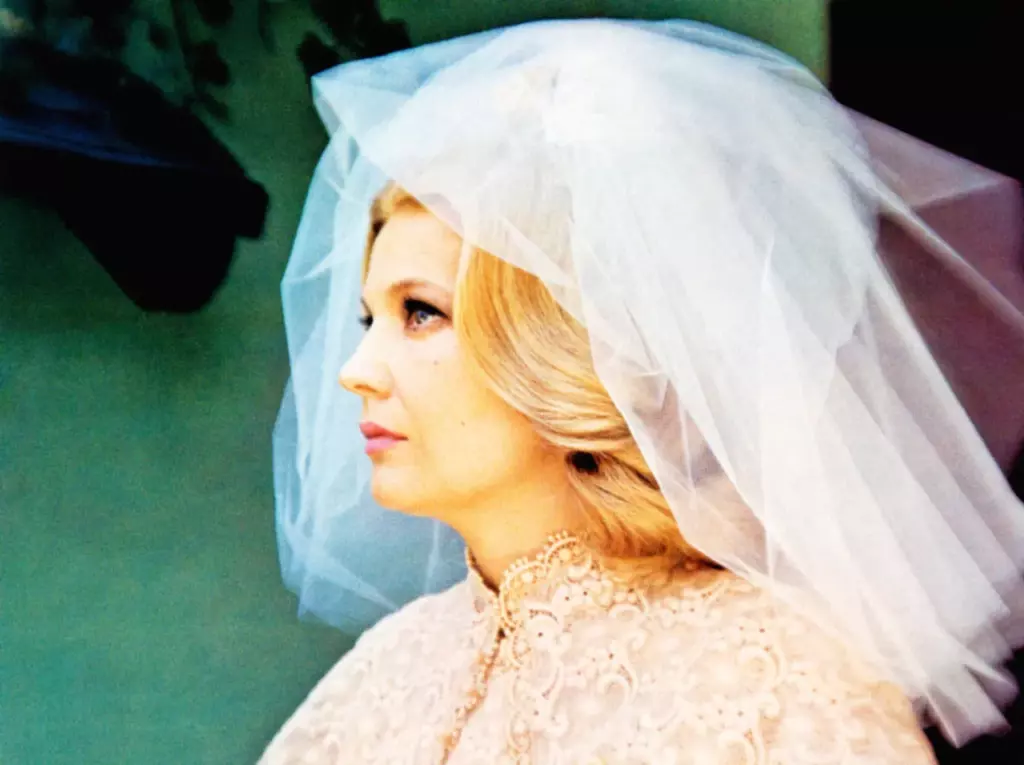
Director: John Cassavetes
Cast: Gena Rowlands, Seymour Cassel, Val Avery
Episode 2: John goes to the movies, and the series departs from its constant palette of black-and-white films to include a color indie film from the 1970s by John Cassavetes. His wife Gena Rowlands delivers an incredible monologue as Minnie:
I think movies are a conspiracy. They set you up from childhood. They set you up to believe in everything from ideals and strength to good guys.
"Detour" (1945)
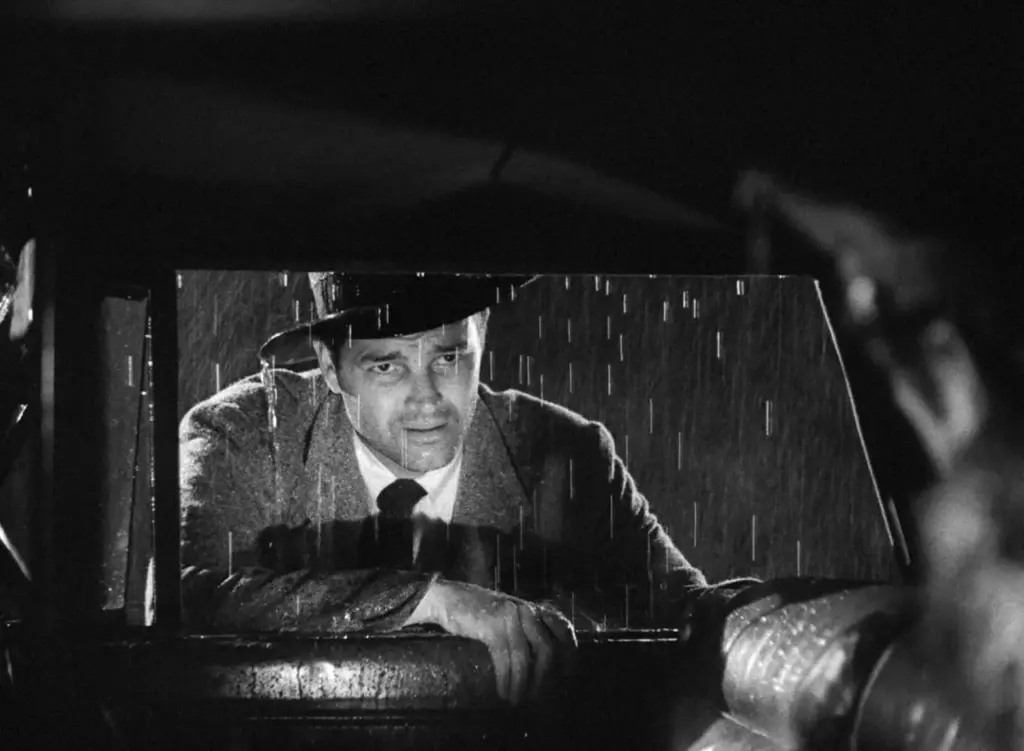
Director: Edgar G. Ulmer
Cast: Tom Neal, Ann Savage, Claudia Drake
Episode 2: As an example of old films playing on TV in the background, Ulmer's film is playing when Sugar visits a seedy Hollywood motel.
"The Great Train Robbery" (1903)
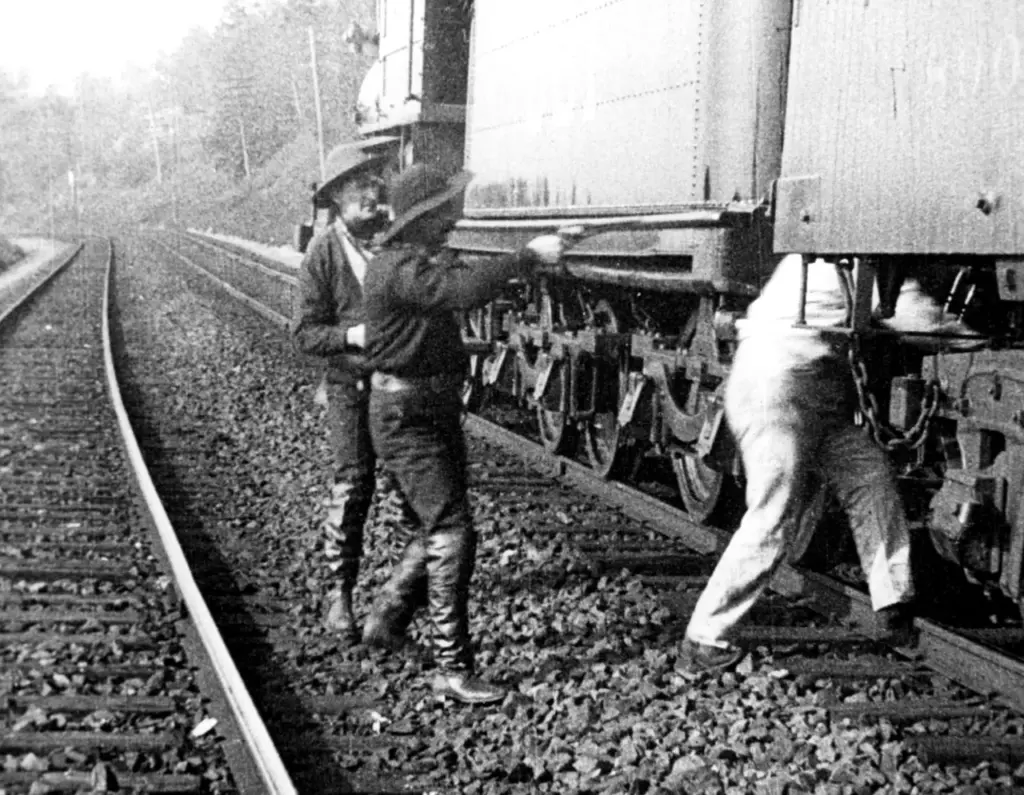
Director: Edwin S. Porter
Cast: Justus D. Barnes, G. M. Anderson, Walter Cameron
Episode 2: The silent film plays in the background (visible over Sugar's shoulder in his hotel). Porter's film for the Edison Manufacturing Company was one of the earliest and most successful genre projects: the plot involves two bandits robbing a steam locomotive in the Old West, echoing real events from the life of the infamous outlaw Butch Cassidy.
"The Killers" (1946)
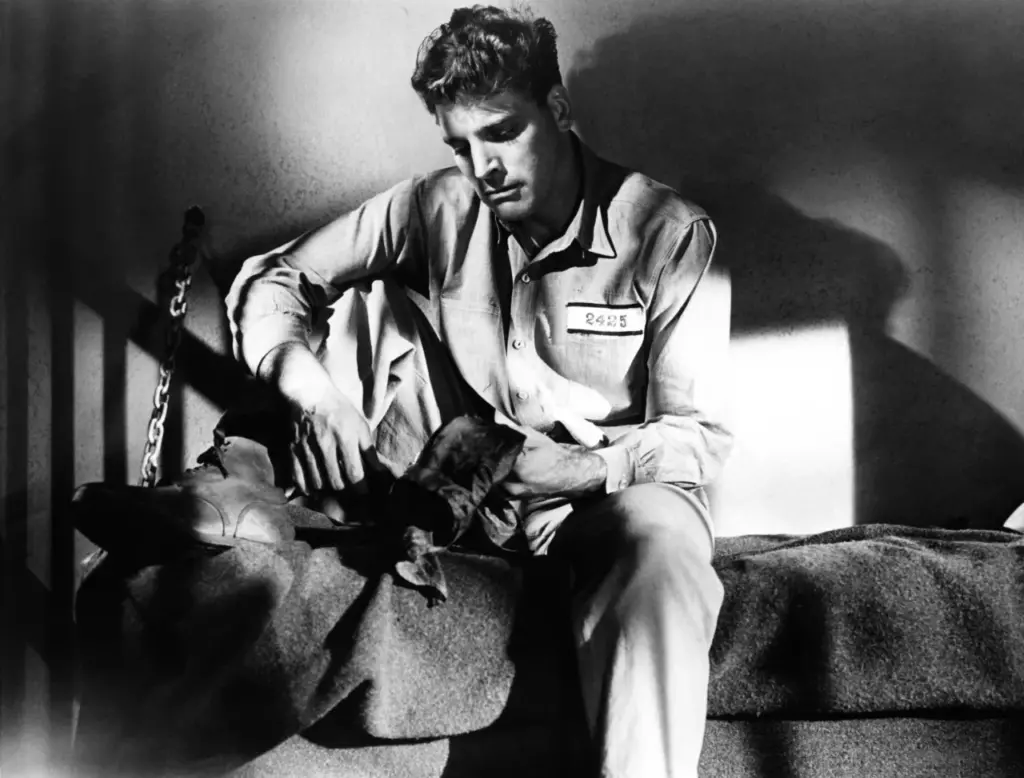
Director: Robert Siodmak
Cast: Burt Lancaster, Ava Gardner, Edmond O'Brien
Episode 3: Stallings (Eric Lange) tries to get the truth from Melanie and Teresa Vasquez (Sher Alvarez) about what happened to one of his men, threatening to put Teresa's hand in a blender. At that moment, Sugar rushes to the girl's apartment. John's attempts to get inside are accompanied by images of Lancaster from "The Killers," a classic noir based on a story by Ernest Hemingway.
"Double Indemnity" (1944)
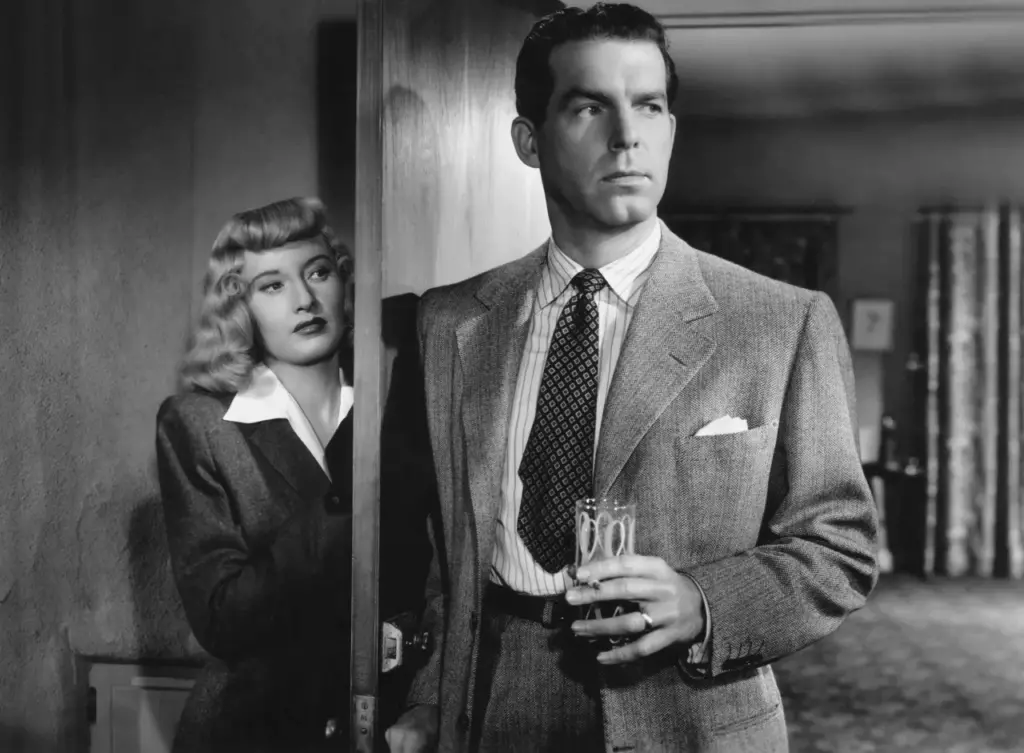
Director: Billy Wilder
Cast: Fred MacMurray, Barbara Stanwyck, Edward G. Robinson
Episode 3: As Sugar gets ready for an evening walk, his dog Wiley watches "Double Indemnity" on TV. John comments on the film and sits down to watch, clearly wanting to stay home with Wiley rather than go to the social event Ruby is hosting.
"The Thing" (1982)
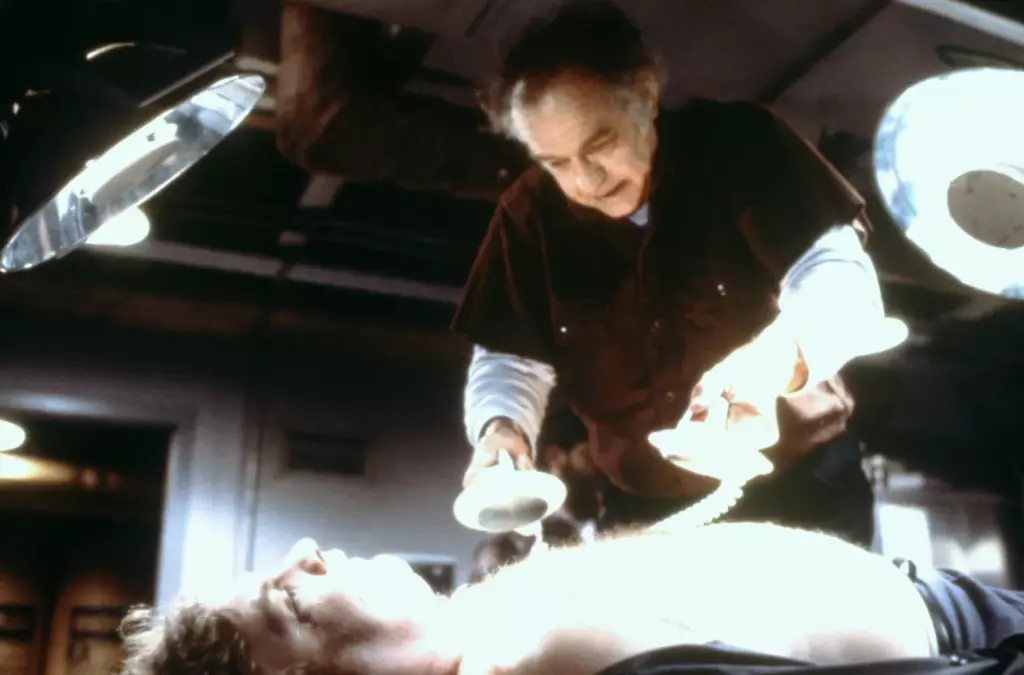
Director: John Carpenter
Cast: Kurt Russell, Keith David, Wilford Brimley
Episode 4: John goes to Dr. Vickers for an examination and references a scene from "The Thing" where Dr. Copper (Richard A. Dysart) removes something from Norris's (Charles Hallahan) chest.
"The Third Man" (1949)
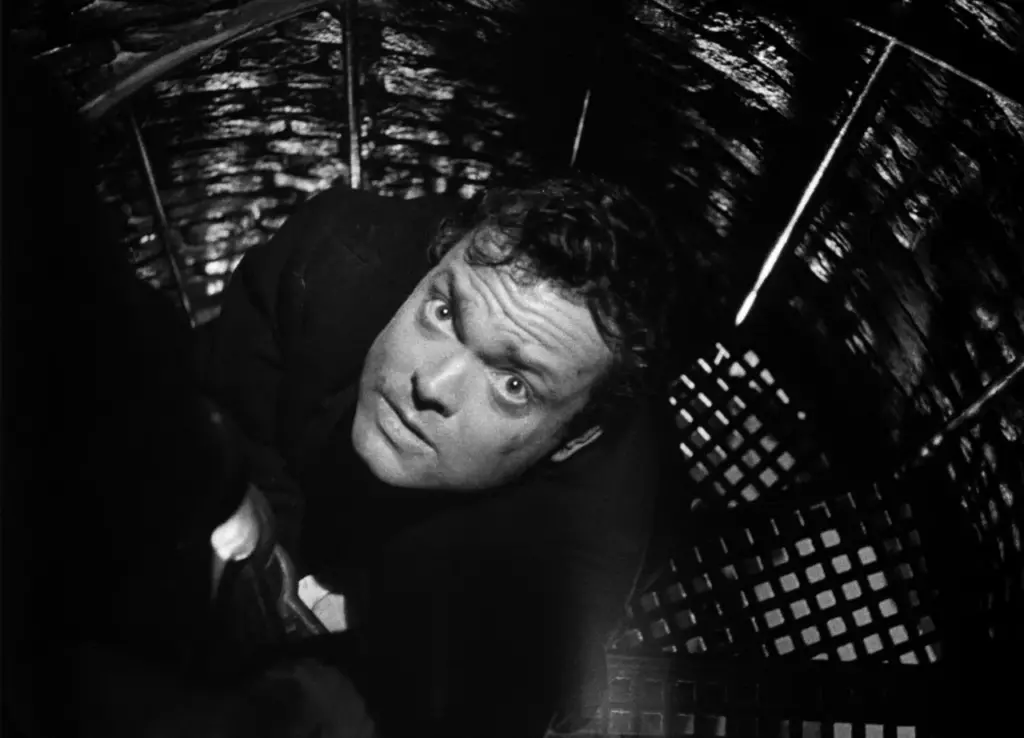
Director: Carol Reed
Cast: Orson Welles, Joseph Cotten
Episode 4: Sugar and Melanie go to Silver Lake to show Olivia's photo at local establishments where the woman saw the missing girl. Their investigation echoes scenes where Holly Martins (Joseph Cotten) searches for Harry Lime (Orson Welles) in the classic noir "The Third Man."
"TNT Jackson" (1974)
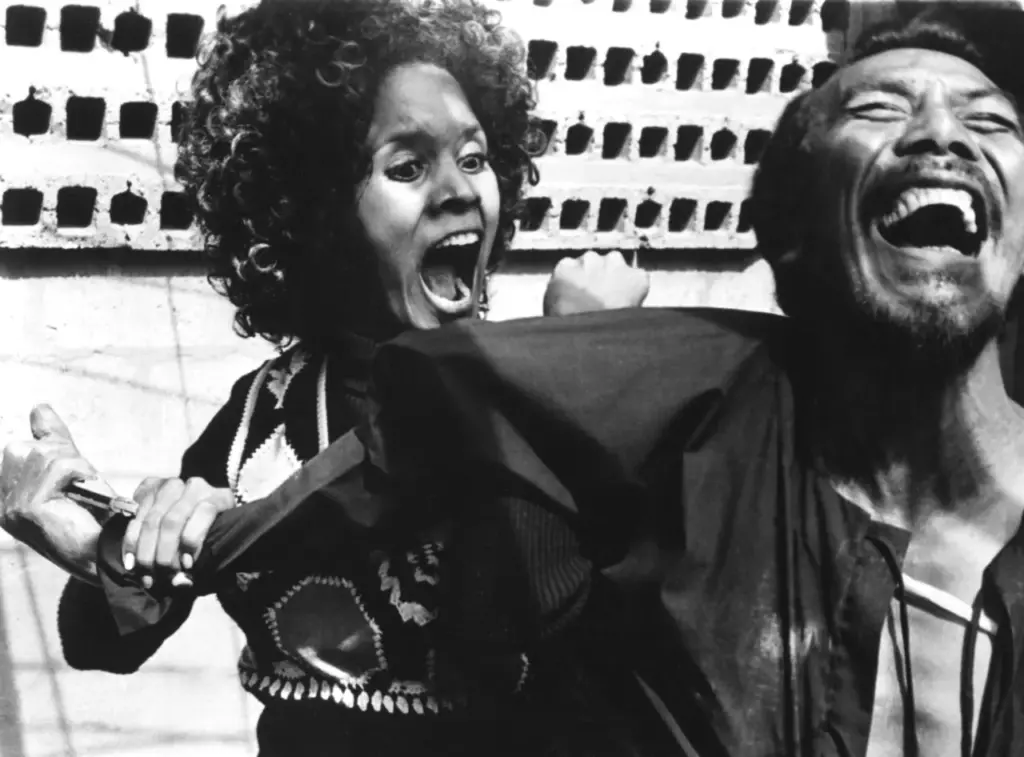
Director: Cirio H. Santiago
Cast: Jeanne Bell, Stan Shaw, Pat Anderson
Episode 4: In the background, behind Stallings' men, the 1974 film TNT Jackson is playing on TV.
"The Night of the Hunter" (1955)
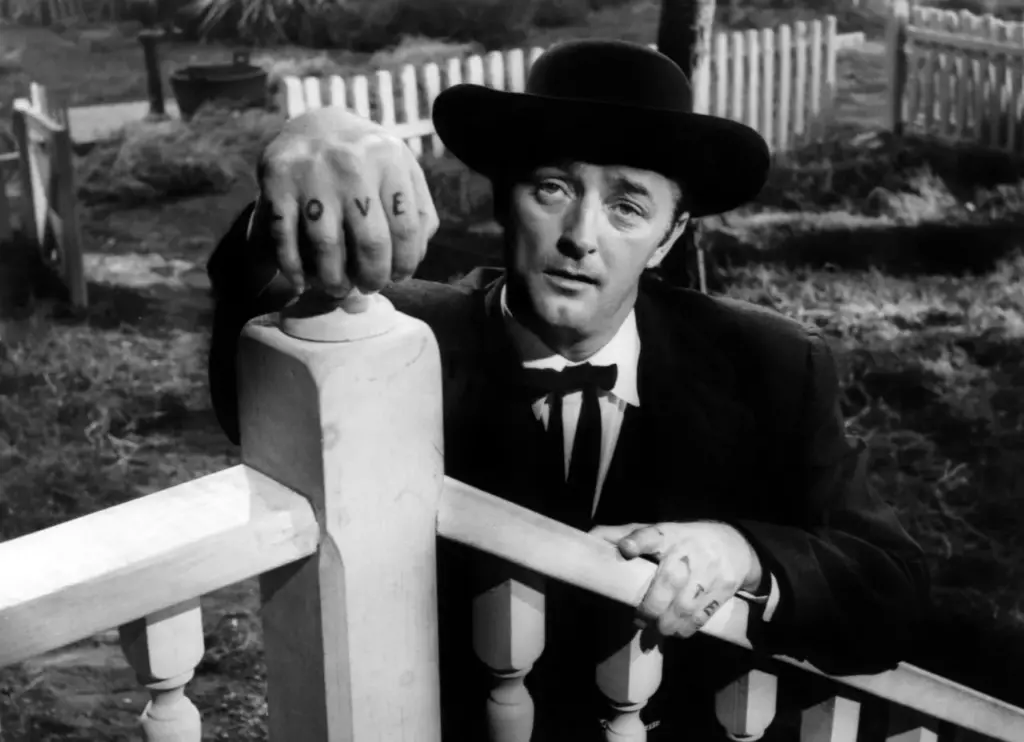
Director: Charles Laughton
Cast: Robert Mitchum, Shelley Winters, Lillian Gish
Episode 5: Sugar barely manages to save Melanie, who has barricaded herself in the bathroom to protect herself from one of Stallings' thugs. John not only disarms the man but also beats him. The flurry of blows is accompanied by shots from old films: the first image is a flash of Harry Powell (Robert Mitchum) from the scene in "The Night of the Hunter" where he delivers his famous "Love/Hate" speech.
Notably, both the scene and the speech also appear in Episode 6 during Sugar's final fight with Stallings.
"Touch of Evil" (1958)
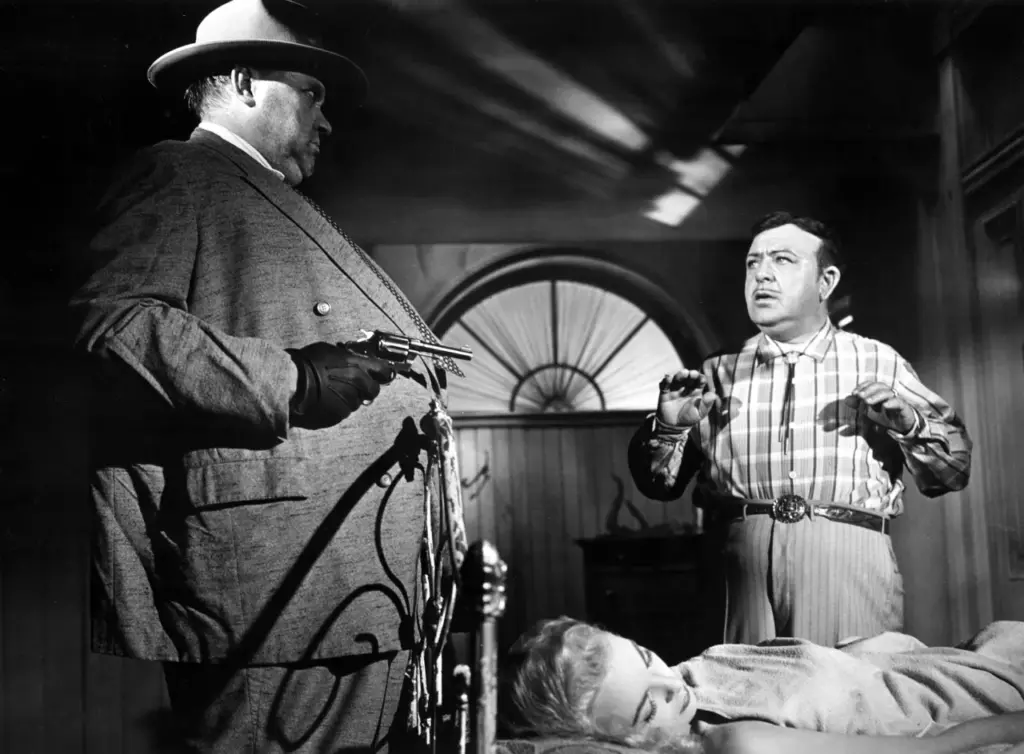
Director: Orson Welles
Cast: Charlton Heston, Janet Leigh, Orson Welles
Episode 5: While Sugar repeatedly punches Stallings' thugs (see above), close-ups of police captain Hank Quinlan (Orson Welles) appear in the frame. Quinlan is a character consumed by anger and loss that drive him to evil deeds. Later, shots of Susan (Janet Leigh) and Mike Vargas (Charlton Heston) with Quinlan are inserted into the scene following Sugar's outburst of violence.
"Sweet Smell of Success" (1957)
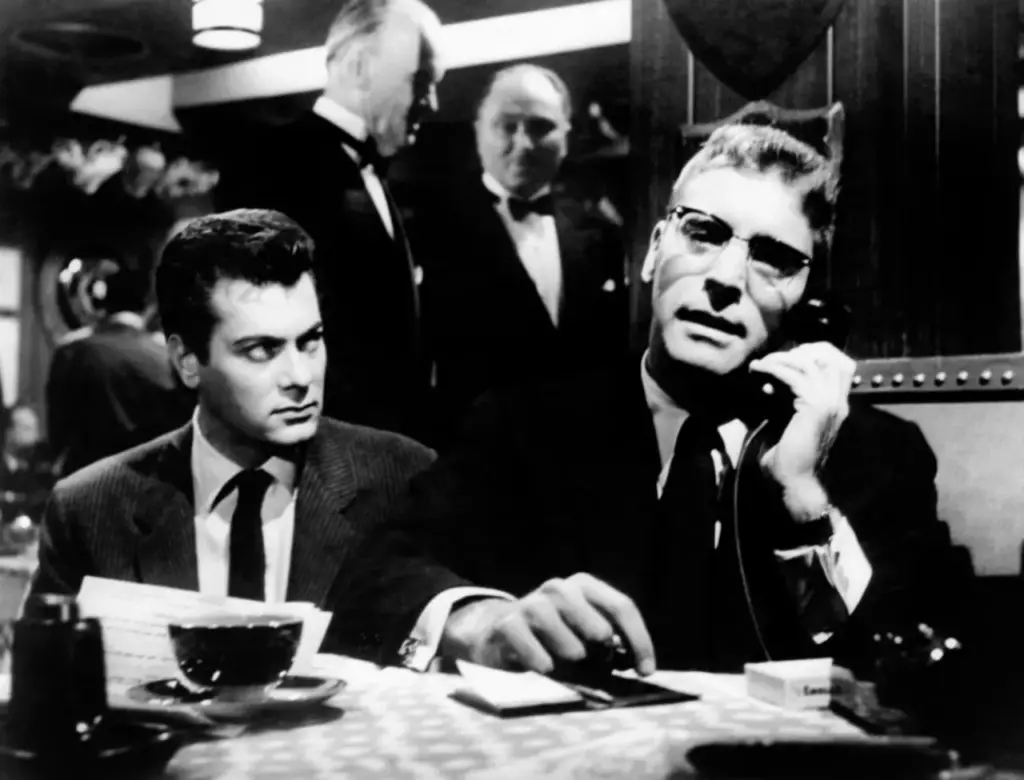
Director: Alexander Mackendrick
Cast: Burt Lancaster, Tony Curtis, Susan Harrison
Episode 7: Sugar returns to his bungalow, and J.J. Hunsecker (Lancaster) appears in the frame, saying, "Many people tell me I'm a very gifted man, but I still can't see around corners."
"Vertigo" (1958)
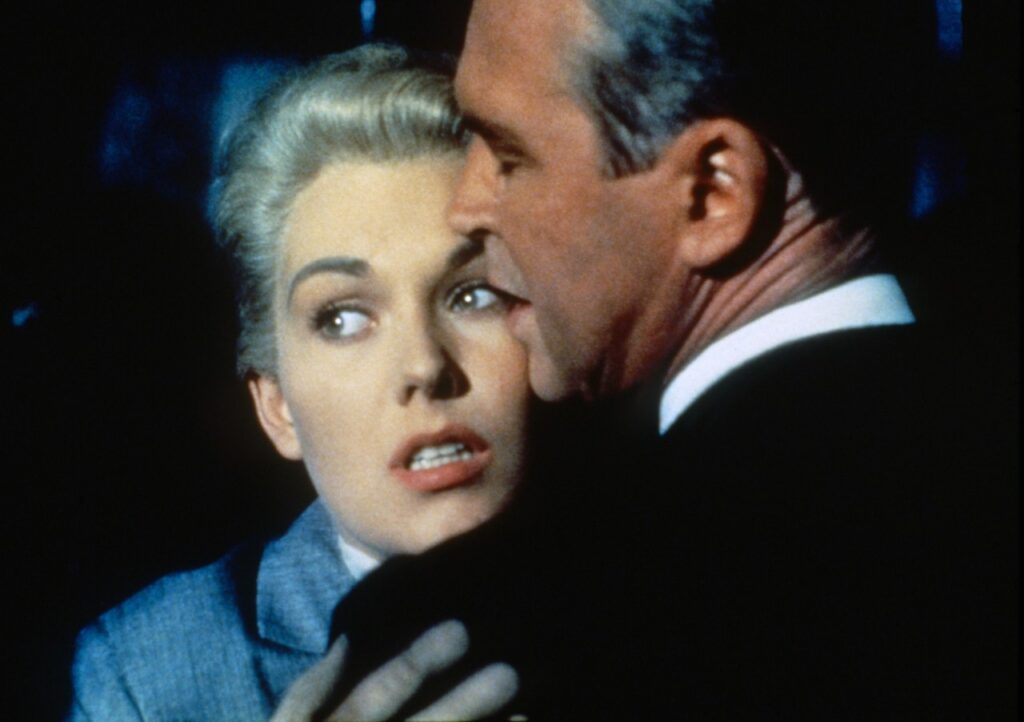
Director: Alfred Hitchcock
Cast: James Stewart, Kim Novak, Barbara Bel Geddes
Episode 8: Melanie watches "Vertigo" on TV in Sugar's room. Scottie Ferguson (Stewart) tells Madeleine Elster (Novak), the woman he has been hired to follow, that his name is John, but his friends call him Scottie.
"The Lady from Shanghai" (1947)
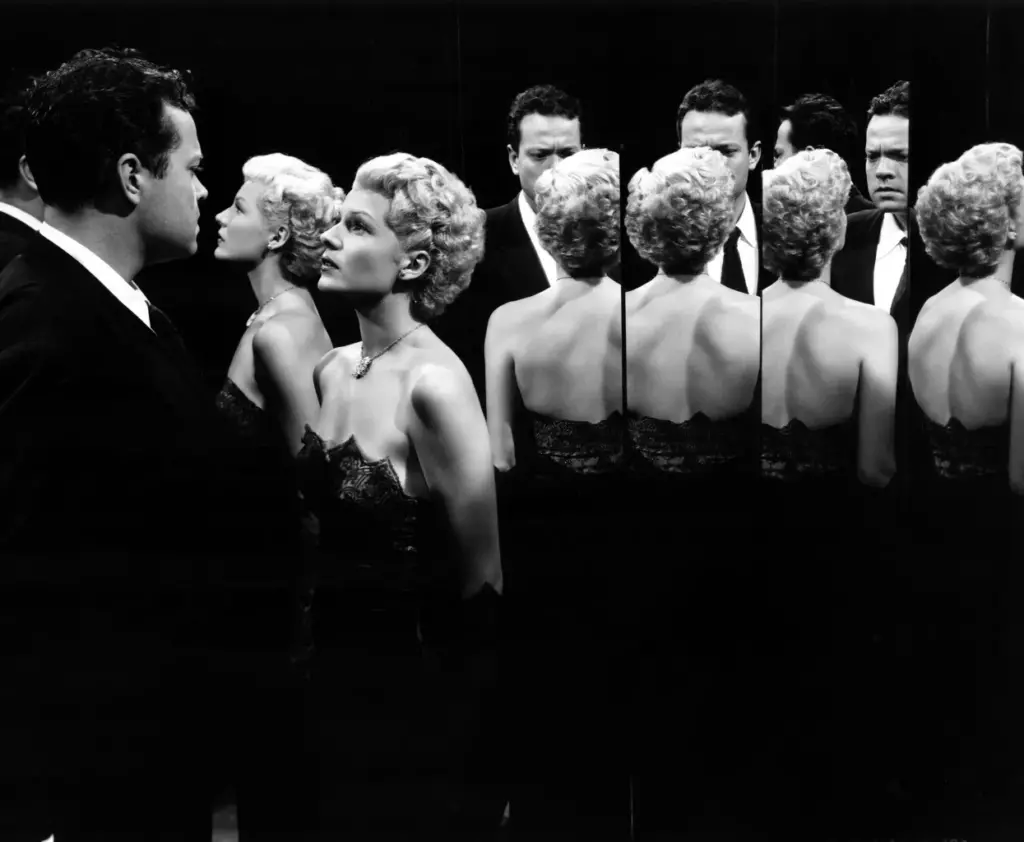
Director: Orson Welles
Cast: Rita Hayworth, Orson Welles
Episode 8: Sugar reunites Olivia with Melanie; they hug and cry. As Sugar leaves, we see Michael O'Hara (Welles) at the very end of "The Lady from Shanghai," wandering bewilderedly along a boardwalk toward the ocean. Sugar says over the archival footage: "The end is a strange thing. You know it's coming, and yet everything ends." We return to Sugar, now walking on the beach under a pier—a visual parallel to O'Hara.
Comments
0No comments yet.
Sign in to join the discussion.