
As part of the 29th International Film Festival on Human Rights 'Stalker', a screening of Natalia Gugueva's multi-genre (melodrama, psychological thriller, and detective story) work 'The Fog' took place, which has already won several awards at film f...
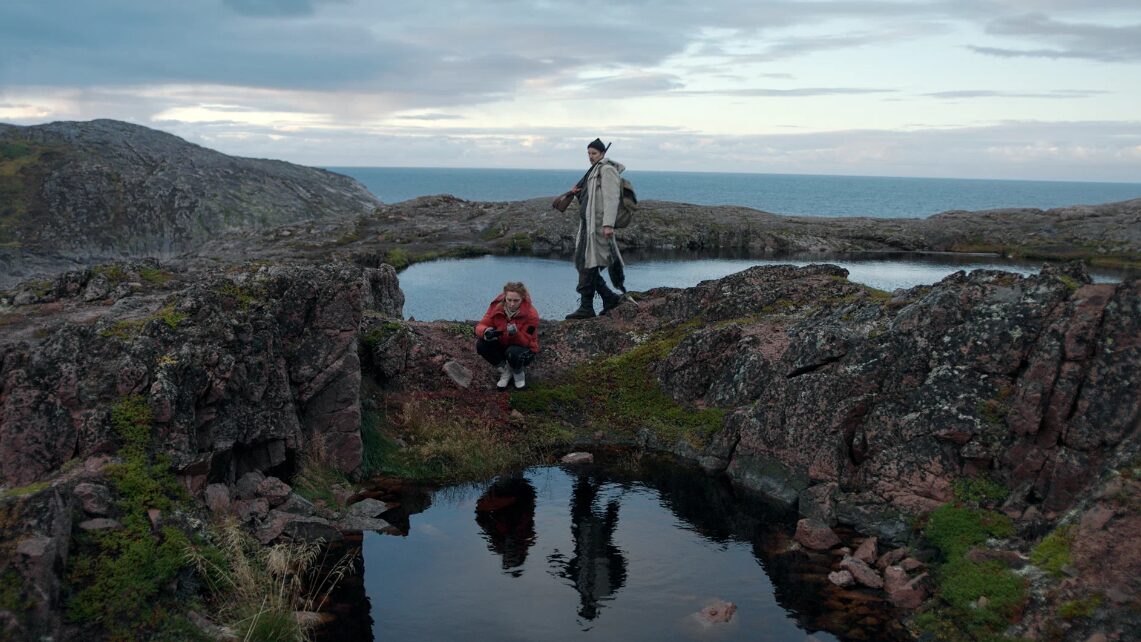
'The Fog' is the feature debut of Natalia Gugueva, the chief director of the documentary film department at Channel One. Her many years of experience in non-fiction cinema are evident in her special attention to the environment in which the characters find themselves. One of the film's main strengths is the northern landscapes, shot with such tenderness that they become almost tangible for the viewer. It is within these natural settings that the film's architecture unfolds.
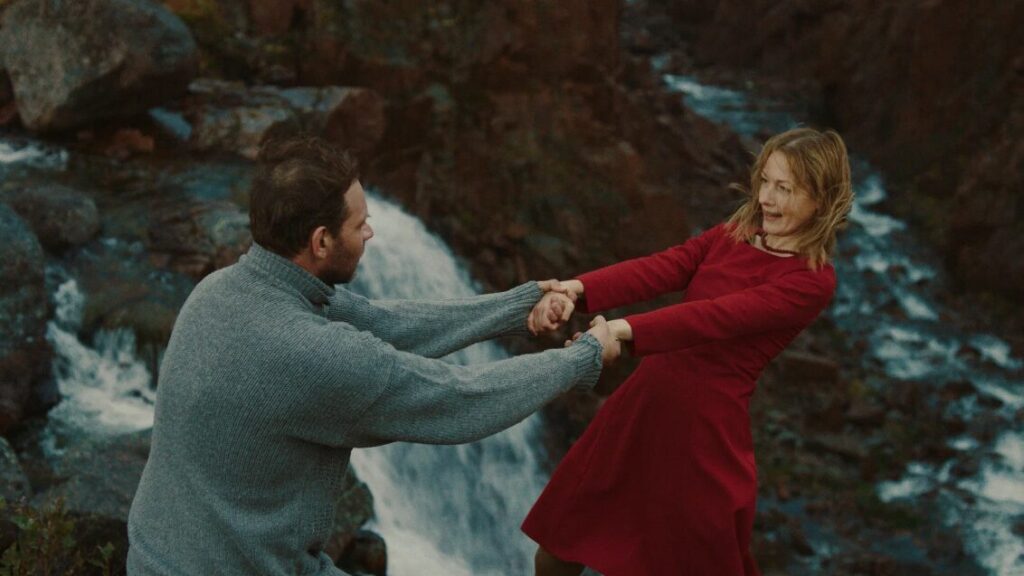
At the center of the plot is journalist Nastya (Valeria Repina), who arrives at a weather station to investigate the disappearance of two meteorologists, while entering into a sham marriage with one of the workers, Andrei (Denis Bondarenko). The initial eerie associations with Robert Eggers almost immediately dissolve into the texture of the island's steep cliffs, and the belonging of the two characters, locked together, to a love polygon provides some relief: the detective line will be limited to only two victims.
Studio A24 produces films truly worthy of attention. And which among them are guaranteed to give you a wealth of emotions — find out from our selection.
Open material'The Fog', as a psychological thriller, leaves a completely different feeling than the associations evoked by this genre. There is no oppressive, terrifying tension. But there is a subtle handling of the characters' behavior and their interaction with the environment. The entire film is built on the 'stimulus-response' formula, where variables are replaced, lost, disappear, resurface, but by the end fall into place. These jumps in the logical chain are primarily linked to jumps in time.
The detective line, plastered over with a love melodrama, is still the leading one in the film. Parts of the plot are mixed up, and this best realizes the poetics of mystery characteristic of detective stories. According to all genre canons (hello to Edgar Allan Poe and his 'The Murders in the Rue Morgue'), there are two storylines here: a crumbling marriage of meteorologists in the past, and a very peculiarly budding marriage of Andrei and Nastya in the present. These plots develop in parallel, and to enhance the drama, turning points in them occur simultaneously.
For a detective story with neither a butler, nor a gardener, nor eight women, the film's resolution is not particularly intriguing. But the path to its solution is worth watching 'The Fog' for (especially if that path lies through a northern, almost untouched island). The depiction of nature is not limited to contemplation but complements and develops the plot. The surrounding world here shapes the characters (no, not like Chernyshevsky). Fields of dried and wind-swept grass, rocky shores, heavy skies, and a restless sea not only fill the space between the characters and primitively reflect their emotional state but also serve as a particle of fate (the denouement illustrates this). The environment in 'The Fog' is the embodiment of something unshakable, on which a person's destiny depends (almost like 'fate' in ancient culture).
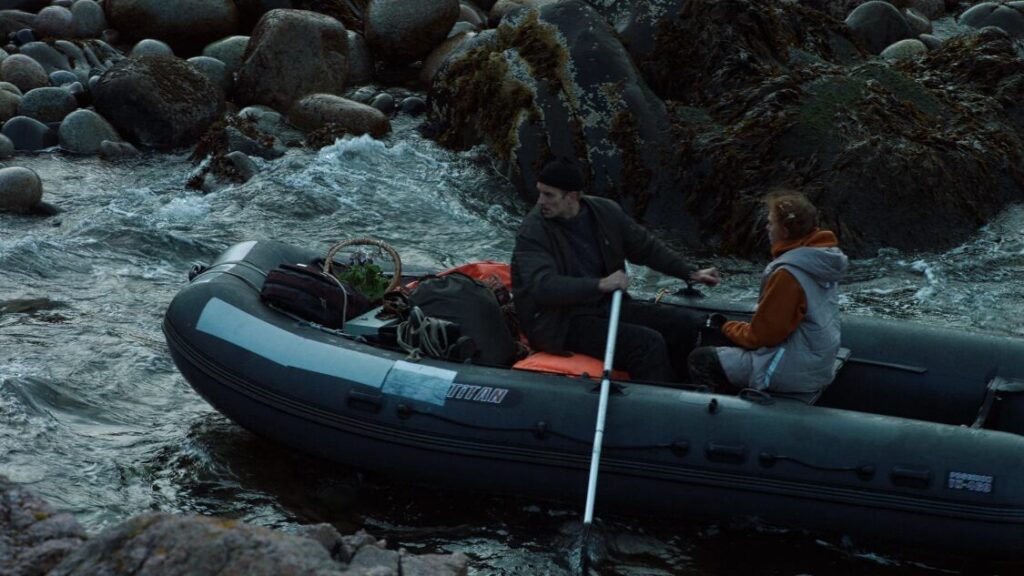
The concept of love in the script does not seem interesting. The relationships between mother and daughter, husband and wife, wife and a man who has grown such a sense of guilt that it can no longer be carried, for some reason do not evoke strong emotions. And the first awkward dialogues between Nastya and Andrei on the vast coastline remind of 'Submarine' by Richard Ayoade, which creates unjustified expectations of a touching first love.
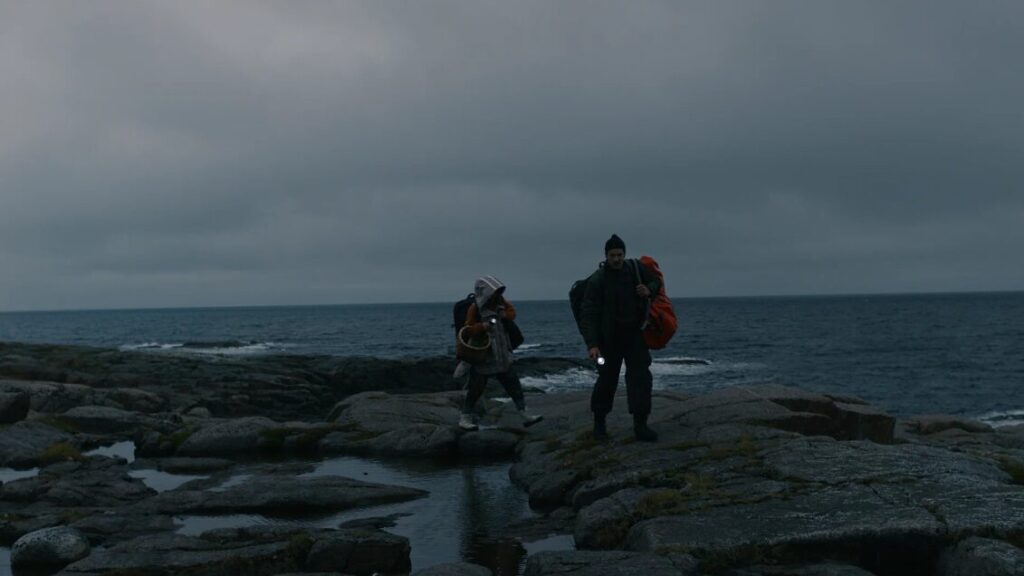
Overall, as a melodrama, 'The Fog' did not succeed. As a psychological thriller, it turned out more 'psychological' than 'thriller'. As a detective story, it succeeded best. And as a film that immerses you in the enchanting beauty of the north, it turned out simply wonderful. It is in this versatility that the true charm of Natalia Gugueva's debut lies. The main thing is to focus on the right piece of the film's artistic fabric.
Comments
0No comments yet.
Sign in to join the discussion.