
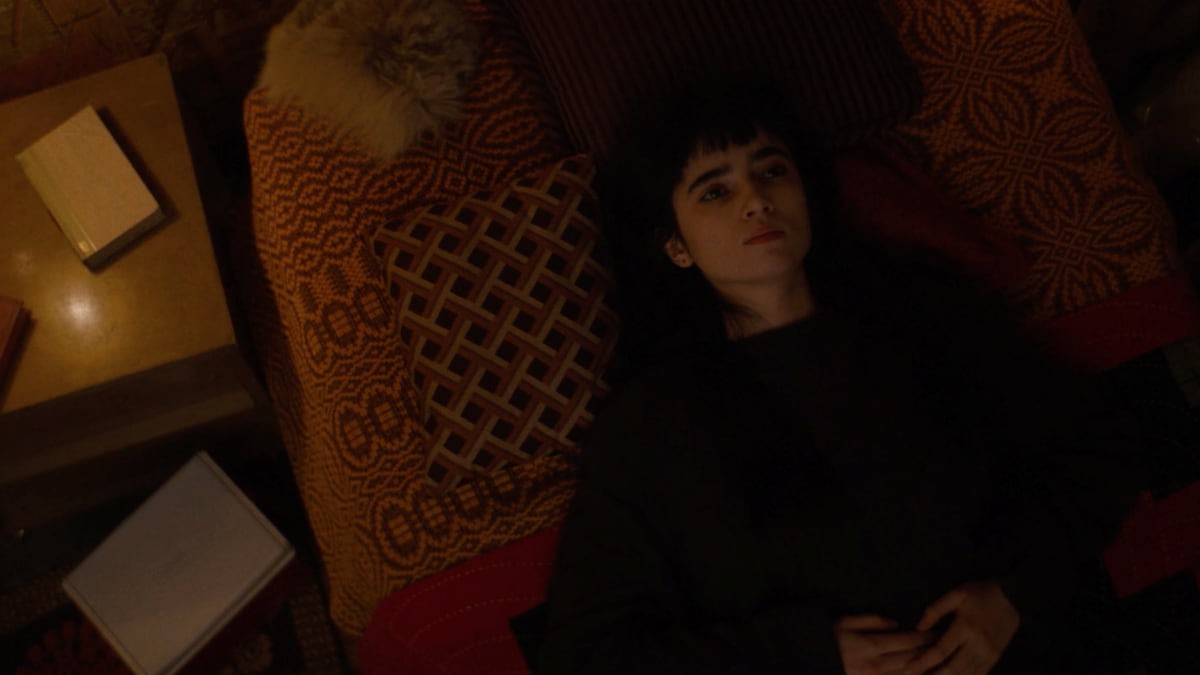
A film with the promising title 'Humanist Vampire Seeking Consenting Suicidal Person' is being released. Fully meeting expectations, it doesn't do much else. But is that necessary?
Vampire Sasha (Sara Montpetit) has refused to kill for blood since childhood, preferring to drink it from bags brought by her mother. She grew up in a very respectable vampire family—a kind father, a breadwinner mother, a slightly unhinged sister—and can't complain about childhood trauma, but she doesn't meet everyone's expectations. When she sees blood, it's not hunger that awakens in her, but empathy: she simply feels sorry for people, even though in her position, pity won't fill her stomach. Her father is understanding, her mother is angry and thinks it's time for her daughter to grow up. Meanwhile, the daughter is already sixty-eight. Vampires do live a long time.
68-year-old Sasha, who looks like an ordinary teenage girl, albeit a bit gloomy, is kicked out of the house to live with her sister. At her sister's, Sasha has a hard time—the sister knows no pity, and it's better for no one in their small Canadian town to go to the bars she frequents. But everyone goes anyway: filmmakers, alas, rarely take an interest in mortality statistics in towns with vampires. Tired of her own vampire powerlessness, Sasha even contemplates suicide, but ends up at a meeting of a psychological support group for potential suicides, where she meets Paul (Félix-Antoine Bénard), a depressive teenager who thinks too much about life, and even more about death.
Their plan, which gives the film its title, is simple but brilliant: killing a suicidal person should finally work for Sasha. Paul will get what he wants—relief from the torments of teenage life in the Canadian provinces—and Sasha will get what she needs. She will finally become a full-fledged vampire and be able to find sustenance on her own. Apparently, not everyone in Canada wants to live, and the girl will surely scrape together enough for a business lunch.
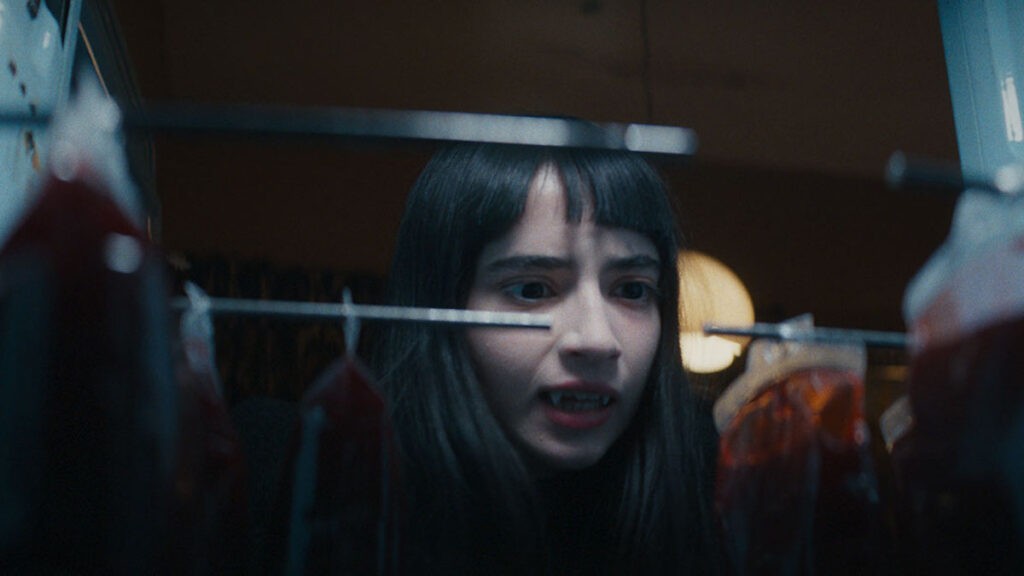
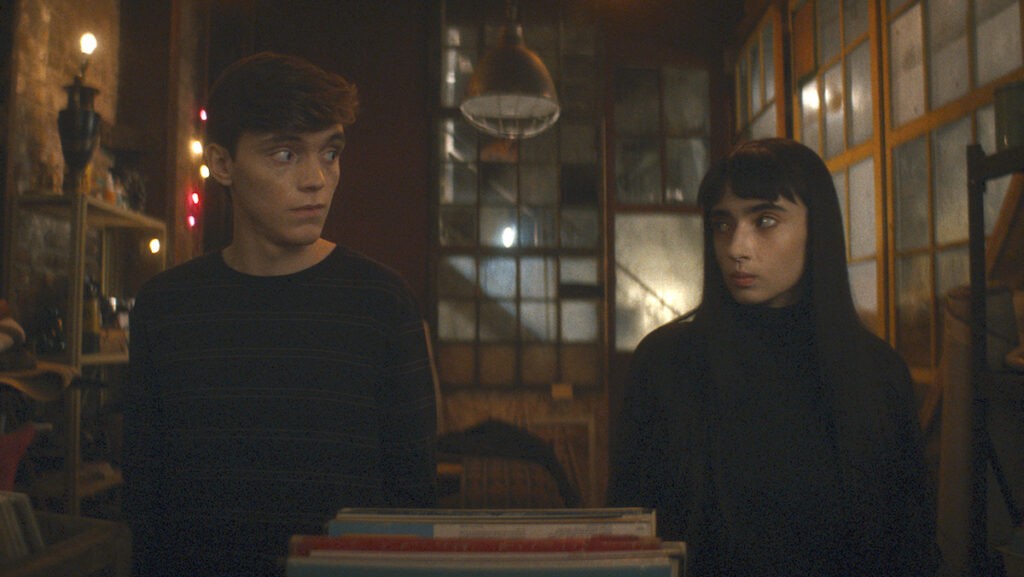
As a last wish, Paul asks Sasha to give him one night to take care of all his affairs—say goodbye to his mother, get back at school bullies. That's basically it. There are critically few things to do. Sasha follows the teenager (given the age difference, it's 'Harold and Maude' for the very young, yes), and this is the most interesting part of the film. The night, which in vampire cinema is always a time for either love or horror, here turns out to be a kind of intermission in the middle of life—an opportunity to think, remember, and be sad.
'Humanist Vampire' lives up to its name—it's a naive, not too groundbreaking, but truly humanistic film that takes seriously the main thing: the feelings of its characters. The experiences of two teenagers, victims of bullying and victims of their own nature, are presented for a b-movie (and that's what it is, essentially) with unexpected subtlety; there are more silences than words, more awkward pauses than varied clichés. Paul and Sasha, and this is thanks to the young actors, look so natural together that at some point it's easy to forget that this is a movie about the hardships of vampire life. After all, everyone's problems are the same, and even in Sasha's story, without changing the terms, instead of the hardships of drinking blood, you could substitute, say, a reluctance to work for some large corporation.
On the one hand, such universality of the author's perspective is pleasing: it's hard to see an equal in another, a human in a vampire, and when it happens so easily and touchingly in a low-budget black comedy, there's something wonderful about it. On the other hand, the very tone of tenderness and sentimentality becomes somewhat tiresome by the second hour; it even hinders the melancholy on which the entire film rests. Melancholy implies at least some doubt about a happy ending, doubt that everything will ultimately go as it should. In its sentimentality, however, the film simply cannot see the world as such a bad place that suffering in it is hopeless.
Moreover, the authors, either deliberately or simply due to a lack of such ambition, refuse to use the opportunities that open up before them. After all, the plot about a vampire who doesn't want to drink blood is not just a setup for a cute indie film in the spirit of Sundance. Twenty years ago, in the same Canada, an outstanding horror film 'Ginger Snaps' was released about teenage sisters, one of whom was bitten by a werewolf. She suddenly grows distant from her sister, develops her own interests, and also has to eat people.
The atmosphere of sad nightmare, unbearable doom that distinguishes 'Ginger Snaps', one of the best films about the hardships of puberty and self-discovery, is hard to replicate, and hardly necessary. However, the tragedy of a heroine who periodically turns into a monstrous beast and wants to kill is actually not so far from Sasha's humanistic struggles. The difference is that Sasha doesn't have to transform into anyone, and that's even scarier.
What distinguishes vampires from werewolves is that lycanthropy is a disease akin to madness: you can always say that it wasn't you who killed, but the monster that takes over you. Vampirism, on the other hand, is a lifestyle, a conscious extreme egoism. A vampire knows that to live, he takes another's life, but simply removes himself from ethical evaluation. And yet, it's hard to blame the girl. She was born this way. She would gladly choose a different life. She has been distancing herself from the inevitable for sixty whole years.
Unlike werewolves, whose peak popularity came in the Middle Ages, vampires are villains of the era of developing capitalism. Late capitalism domesticated this horror, made fear understandable; vampire dwellings from distant castles turned into cozy, albeit usually dirty, apartments; the bloodsuckers themselves became more funny than frightening. The eternal conflict of two vampire traditions—the decadent, repulsive (Count Orlok from 'Nosferatu') and the sexual, dangerous in its attractiveness (Count Dracula of Bela Lugosi)—ended in no one's victory, as everyone lost to hipsters. And the vampire finally became not a symbol of distant horror—an inhabitant of the land of shadows or an immortal style icon—but an ordinary egoist, the embodiment of everyday, mundane injustice.
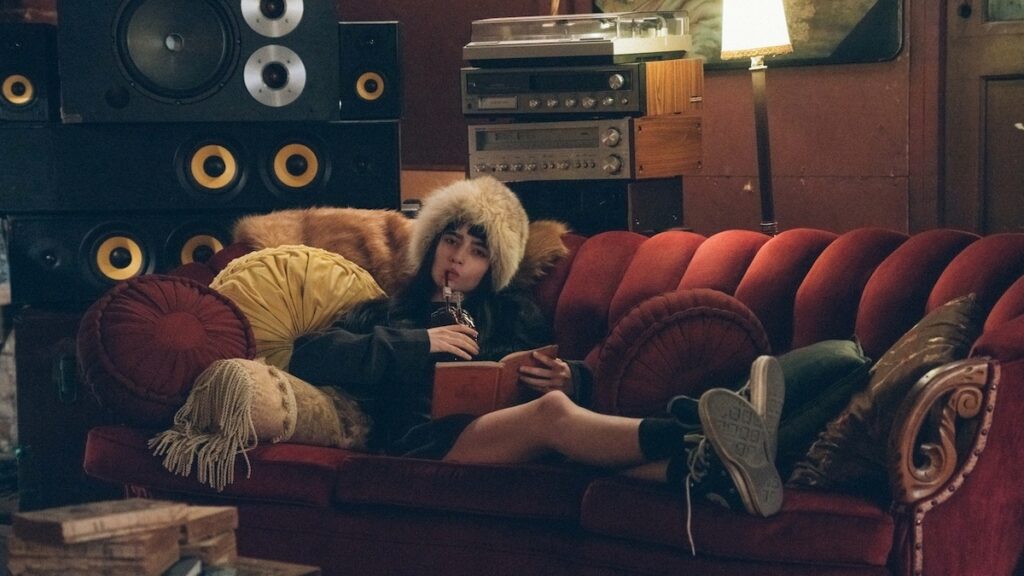
And in this sense, 'Humanist Vampire' gains some depth precisely through the demonstration of the inevitability of evil as everyday life. It's a rom-com about very (mostly) nice people who just happen to be unlucky enough to live at others' expense and kill neighbors for dinner. Vampires are no longer a metaphor for the rich, but rather for all those who come to terms with injustice. That is, everyone. Perhaps, in this optics, it's even scarier than the black-and-white horrors of 'Nosferatu'. But in its optimism, the film shows that even at sixty-eight, you can still solve an ethical problem the right way. And love does help. 'Afisha' suggests watching this movie on a first date, but generally speaking, watching it while meeting the parents is an even more promising prospect. If you try it—write to us.
Comments
0No comments yet.
Sign in to join the discussion.