
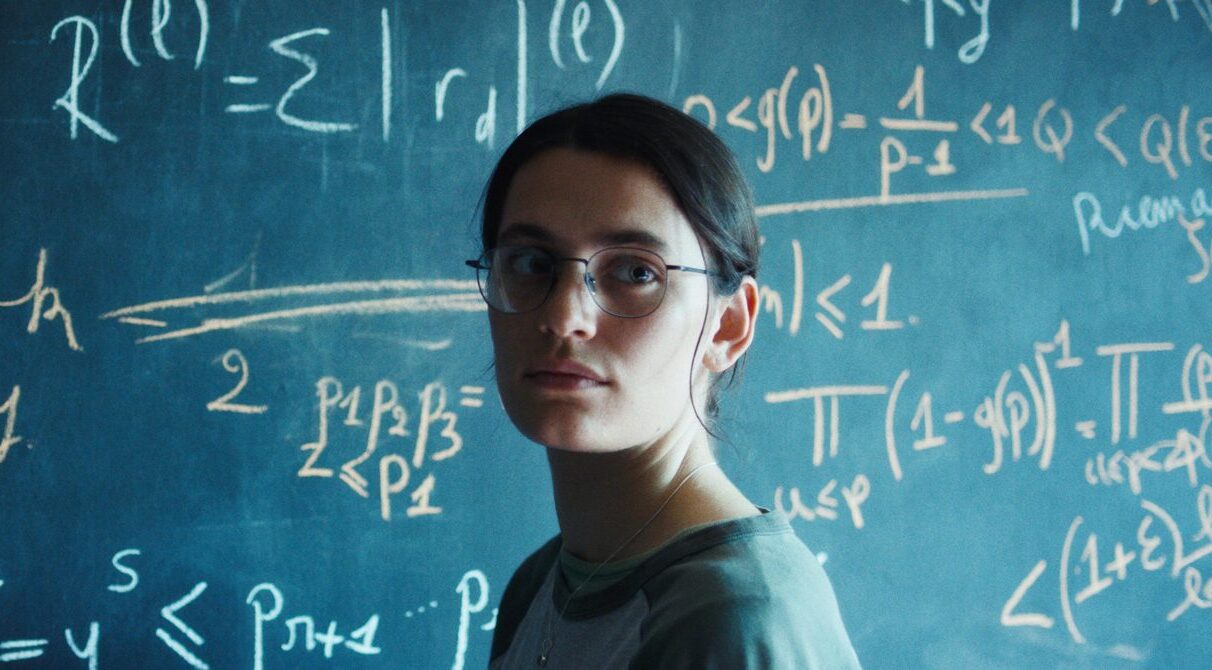
In some Russian cinemas, you can still catch the film 'The Theory of Prime Numbers'—a French film about mathematicians that was shown in the non-competition program of the Cannes Festival a year ago. The characters of this film try to prove Goldbach'...
Condition
Marguerite Hoffmann (Ella Rumpf) lives in Paris and is writing a dissertation on arithmetic progressions of prime numbers. She walks around the university in slippers, thinks about mathematics during walks, spends her evenings in the dormitory only working, and when working, she cannot stop. In short, she exists in her own reality: since middle school, she has mostly thought about numbers and formulas, and now she literally lives for science and is working on one of the most ambitious problems in modern mathematics—trying to prove Goldbach's theorem (the very theory of prime numbers referenced in the title, which in reality as of 2024 remains unproven).
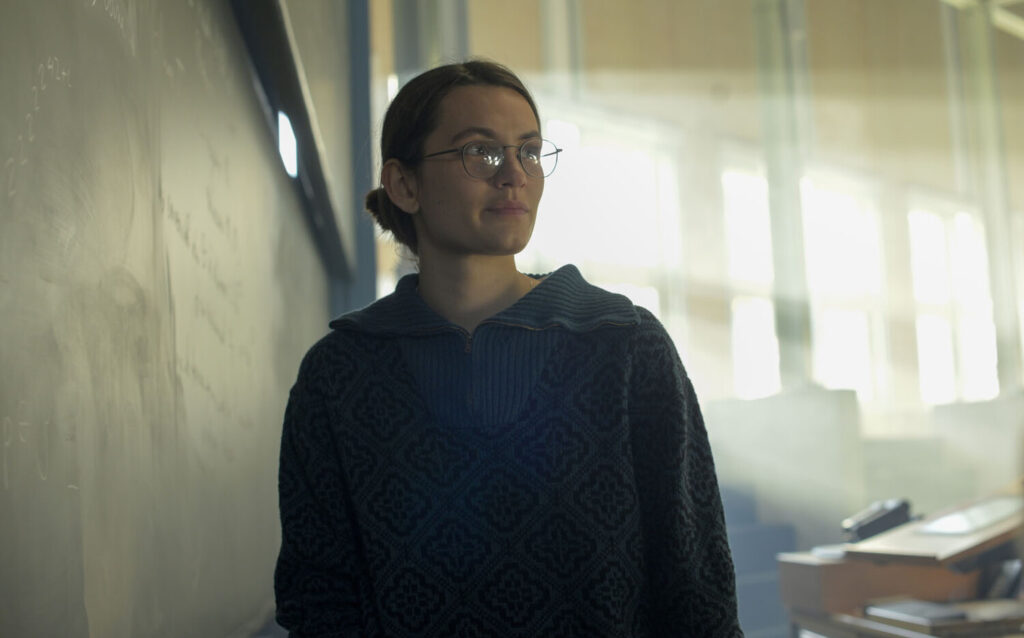
She is assisted in this by her supervisor—a somewhat detached, strict professor who works on the same topic and will do anything to go down in the history of science (played by Jean-Pierre Darroussin—not only a César Award winner but also the husband of director Anna Novion: he participates in all her projects, and this one is no exception). And the École Normale Supérieure in Paris—one of the country's leading universities—becomes a very organic setting for such a pastime: shown fleetingly through packed lecture halls, a noisy cafeteria, and student groups (mostly male), the university looks like a peculiar starting point for discovering something new—whether scientific knowledge or an unfamiliar adult life.
Question
Everything would be fine, but at a certain point, Marguerite's constructed world begins to crumble: first, her supervisor brings in another PhD student (Juliette Frison), who studied at Oxford and works on the same theory, and then, during a presentation of her work, the young scientist (along with the attentive audience) discovers an error in her calculations and realizes that everything she has worked on for the past several years is worthless.
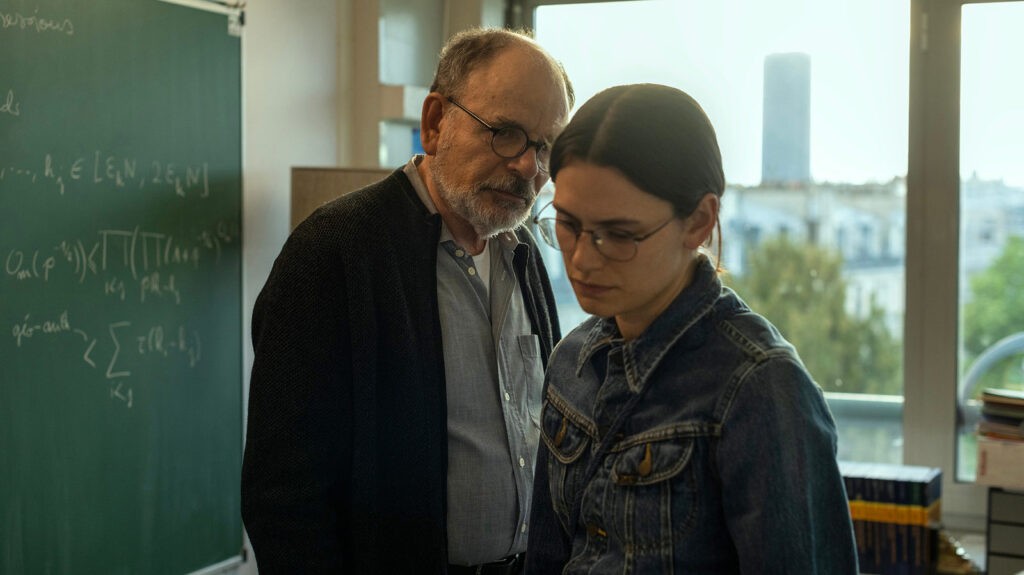
The turn is surprisingly sharp: this error immediately literally crosses out Marguerite's entire scientific career, the professor abandons his PhD student, and she realizes that everything is lost. And since that is indeed the case, the most logical solution is to break with science and the university, and now she will have to answer questions of a different nature: how to live on, how to earn a living, whether emotions are compatible with mathematics, and whether there is life outside science.
Solution
Of course, 'The Theory of Prime Numbers' turns out to be a film about mathematicians, not about mathematics per se: the average viewer spends an hour and a half looking at multi-level formulas, hearing abstruse words, marveling at the achievements of modern science, but understanding none of it—except that the characters are apparently geniuses. Obviously, this would not be a big problem if Novion had well-developed the human story she emphasizes from a psychological perspective—but unlike her protagonist, the director solves her task rather mundanely.
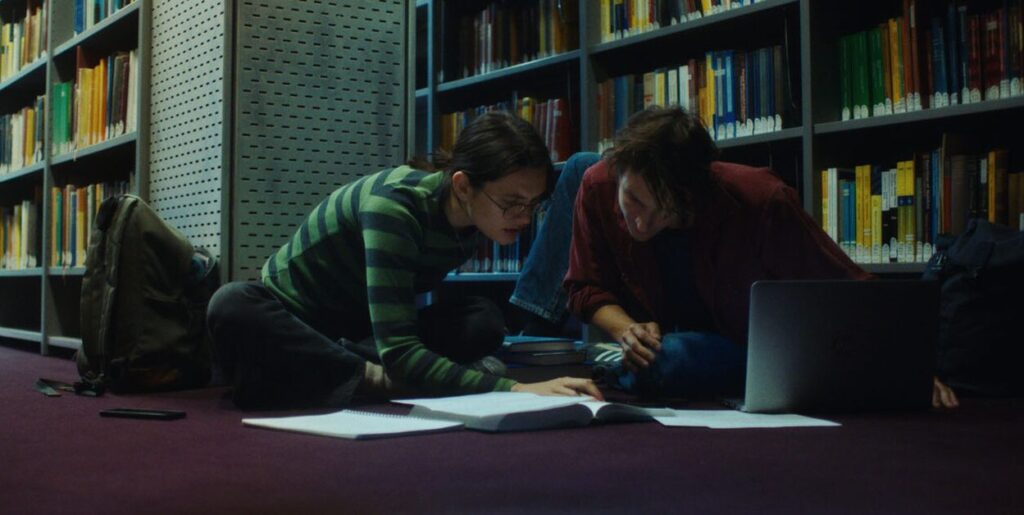
The story of the young scientist's crisis in 'The Theory of Prime Numbers' boils down to an ordinary antithesis: there is the protagonist (very smart, asocial, and quite 'crazy' because of her mathematics), and there is the world that does not understand her but in which she must live her life. Instead of university classes, she now has to play mahjong in Chinatown—there, naturally, Marguerite beats everyone and earns big money. The heroine's mother (Clotilde Courau) certainly does not approve of such earnings, and her roommate (Sonia Bonny Eboumbou) borrows a couple thousand to pay the rent but instead predictably spends it on herself.
Interestingly, gambling and mathematics coexist in 2023 cinema more than once: recall, for example, Roman Mikhailov's 'Let's Go to Macau'—a random plot parallel to 'The Theory of Prime Numbers': a Russian film about poker, directed by a former doctor of physical and mathematical sciences who then started making films and released five films in two years (including ).

On October 26, 'Vacation in October' is released, another attempt by Roman Mikhailov to combine dreams and reality on screen.
Open material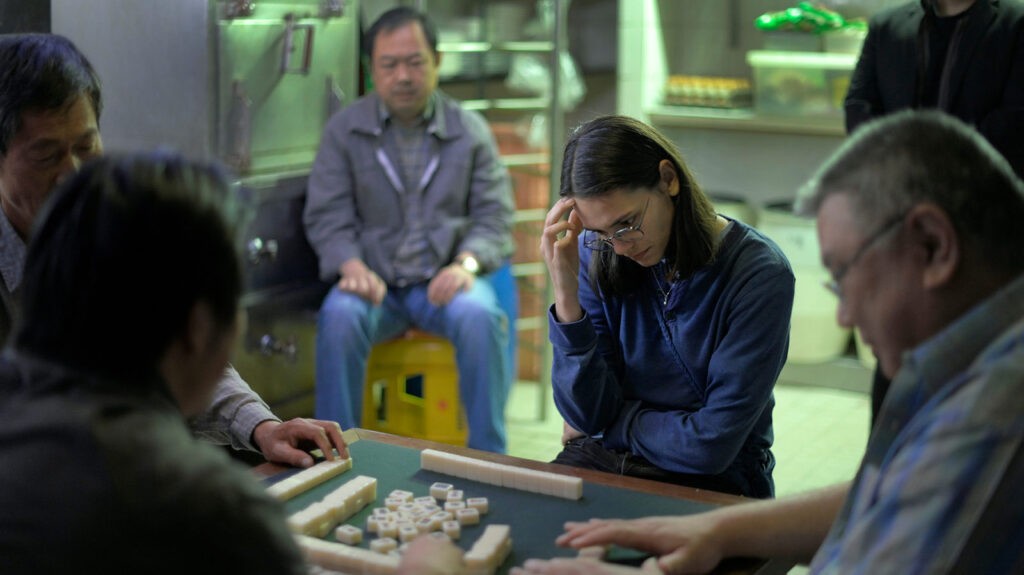
Marguerite's constant desire to 'order the world with mathematics' seems like a theme that could be developed and developed, but Anna Novion does not dwell on it for long: apparently, it is more important to make a beautiful story about a heroine who initially failed and then had a happy ending. The main thing is to make the viewer believe it—however, if the predictability of the action is combined with the feeling that you do not even really understand what the characters are doing, this may not be easy.
The Theory of Prime Numbers: What Was to Be Proved
'The Theory of Prime Numbers' is shot as if without visual accents: only one image seems clearly formulated on screen—the walls of the apartment, on which Marguerite, like on a university blackboard, places her calculations. The main characters exist within these walls—surrounded by writing akin to Egyptian hieroglyphs. Ella Rumpf and Julien Frison, it must be said, played their characters very vividly, and both were nominated for the César Award for 'Most Promising Actors' for their work in this film (and Rumpf even won the statuette).
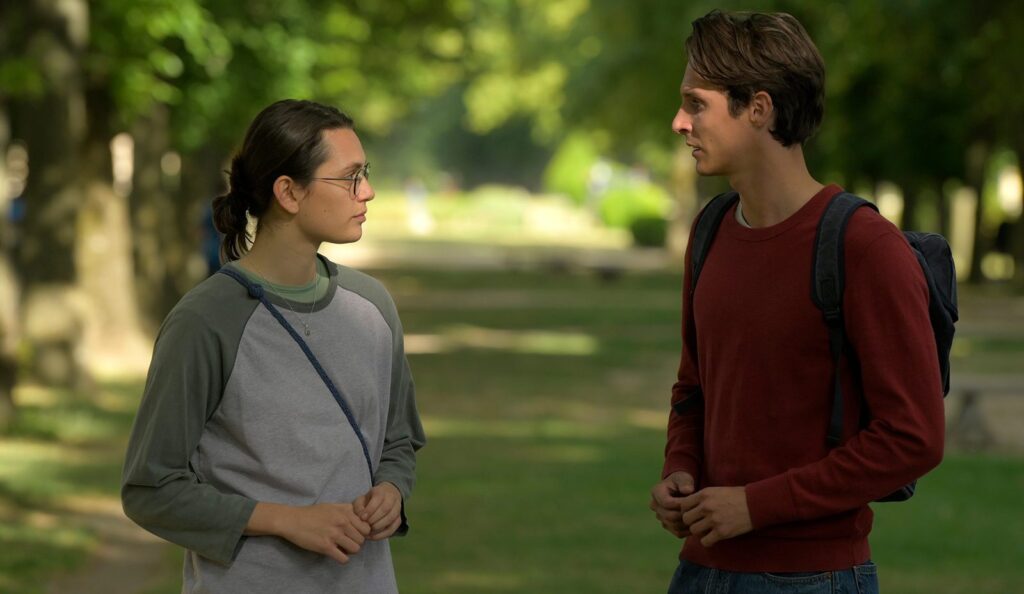
Of course, 'The Theory of Prime Numbers' cannot be called a completely awkward film—rather, it is simply not very remarkable, ordinary cinema that will find its audience. If you will, Anna Novion has produced a screen adaptation of the stereotype about people who do mathematics—and along with it, a story about competition in academia and love, which seems even more important than Goldbach's theorem. The film will end quite idealistically, but idealism, unlike cliché, can be forgiven in a film (as in any other melodrama). Youth, at least, will forgive: if not everything, then naive dreams for sure.
Trailer:
Comments
0No comments yet.
Sign in to join the discussion.