

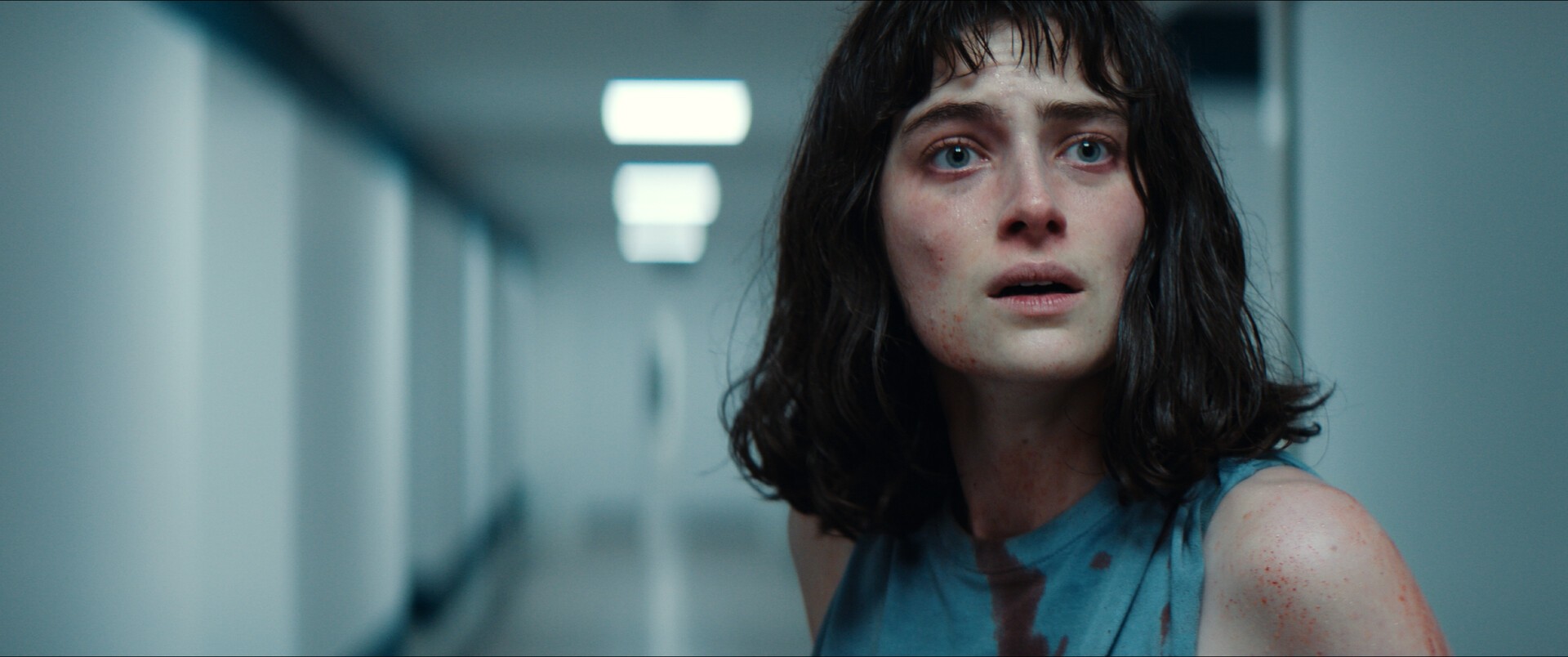
The film 'The Cursed: Insomnia' is in wide release. Why this chamber horror deserves more viewer attention — in our review.
Claire (Millie Brady) is one of seven test subjects in a surgically sterile laboratory of a successful pharmaceutical company. A double-blind study is being conducted on the group of volunteers. The essence of the experiment is that neither the doctor nor the patient knows which group the subject belongs to, making it easier to determine the drug's benefits or side effects. At first, everything seems to go according to plan, but later the subjects begin to notice that they can stay awake for 30 hours or more, and as it turns out later, this is not a positive nuance, but quite the opposite — deadly.
Soon the participants learn that their immune system has gone haywire, their brain has overheated, and at any moment it could shut down forever with horrifying consequences for the body — all it takes is to doze off. After one of the test subjects dies, a secret protocol is activated in the lab, blocking the only way out. The unfortunate ones, who haven't slept for more than five days, need to hold on for another 24 hours until help arrives. Claire and her group are left alone in the lab with their fears, past traumas, and anxious anticipation of the future. And also with a wild desire to close their eyes and get some sleep.
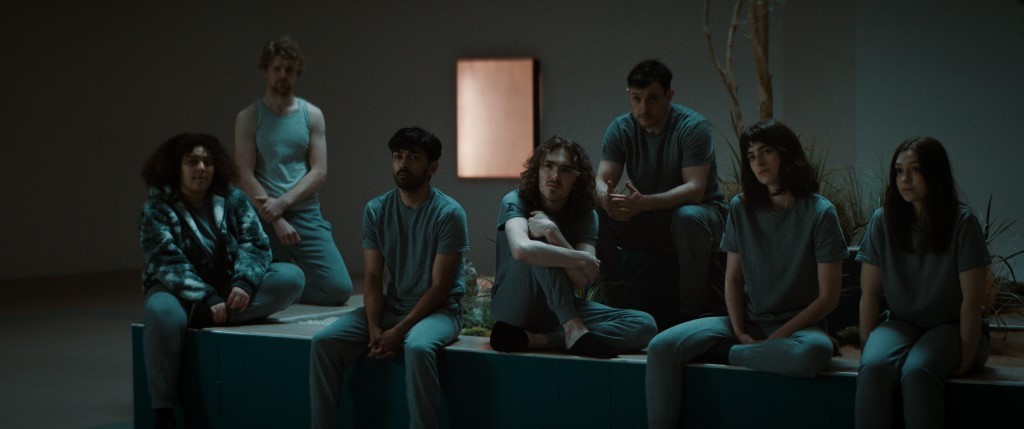
Irish debutant in feature film Ian Hunt-Duffy does not try to impress the viewer with an innovative method of viewing the genre, following a well-trodden path, but does it elegantly, and most importantly effectively and with taste, primarily demonstrating the talent of a decent visionary. In the film 'The Cursed', everything is compact and appropriate, there is tension almost everywhere, especially the hallucinations of the characters, driven mad by five days of insomnia, look good. The director turned them into short but full-fledged and scary horror episodes (one for each subject), neatly quoting not only Agatha Christie (unexpectedly) and 'The Flatliners' by Joel Schumacher, but also generally going through the rich genre heritage from Hitchcock to Cronenberg.
At the same time, the director finds room for bulletproof symbolism, like the parable of the mouse in a jug of milk that decided not to give up (so that it would be understood on absolutely all levels). But the director benevolently did not develop this theme further, showing a scene where the heroine herself releases the mouse to freedom, and it hides back into the cage. Leaving a warm place, even if it is a medical laboratory, is desperately difficult. Everything here has long been clear, but what lies ahead? Only uncertainty, and it is very frightening.
'The Cursed' could have turned out to be a fairly ordinary, modern horror with the main postulate about working through childhood traumas that leave their mark on later life and how they can ultimately lead to the edge of the abyss. In this thought, they are straightforward (so as not to deviate from the general agenda) and not entirely uninteresting — it is clear that the director has something to say here too, but Hunt-Duffy took a different path and took the liberty of presenting the story a little deeper, more piercingly, without being limited to strictly defined frameworks.
'The Cursed' not only paints in broad strokes the harsh truth, cruelty, and unscrupulousness of the capitalist system, represented here by an infernal pharmaceutical company that needs broken and destitute people for experiments.
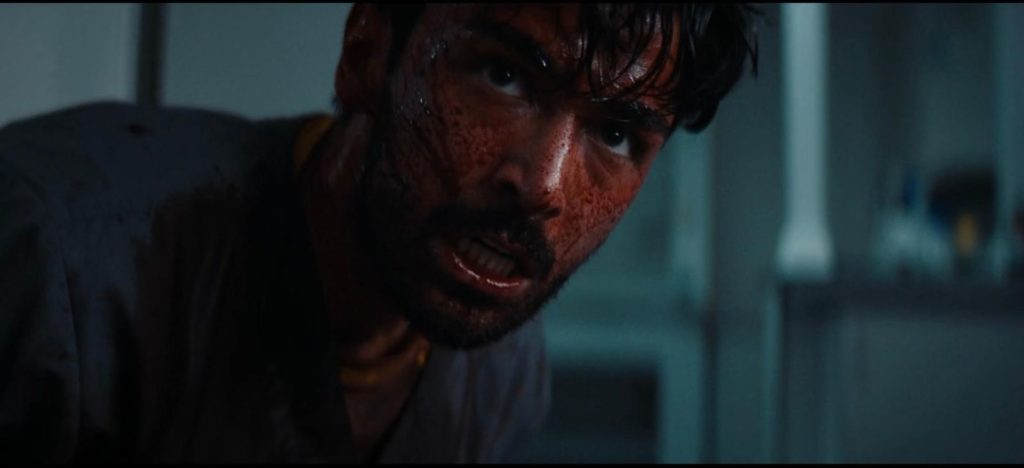
It is precisely these that the director decided to look at more closely, because the heroes of 'The Cursed' are not yet fully grown, but already tired children, consciously making a deal with the devil (shown for clarity in one of the episodes) in the hope that there, at least, it will be no worse than at home with the hateful everyday life, where each has a separate skeleton in the closet. But this is an escape to nowhere, to that reality that you wouldn't wish on your enemy: decadence without a sense of camaraderie, the gaze of the abyss, the possibility of remaining on the sidelines without even receiving a sense of satisfaction, and the look at the sunlight — the main genre sign that everything is over — here looks not like salvation, but like a last will before death. That moment when the demon released from within turns against you.
It is not difficult to guess whose side the director's sympathies are on — no one is ready to part with life, even if it seems totally hopeless at first glance. And if there is a chance to prolong it, even in such an extreme way as an artificially induced stroke, it is better to use it. And even better not to sign dubious consent forms for personal data processing and pharmacological research.
Comments
0No comments yet.