
At the end of February, the digital premiere of last year's festival hit 'The Zone of Interest' by Jonathan Glazer took place on Amazon Prime Video streaming. What the film turned out to be and why it is worth watching in the original rather than dub...
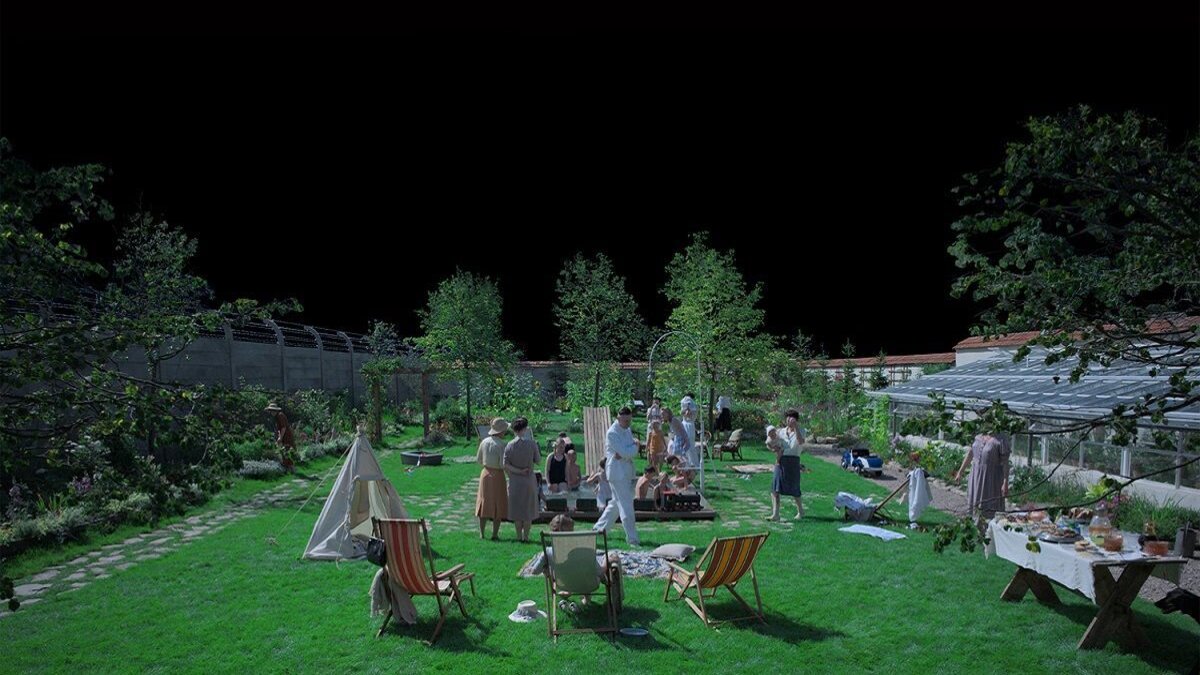
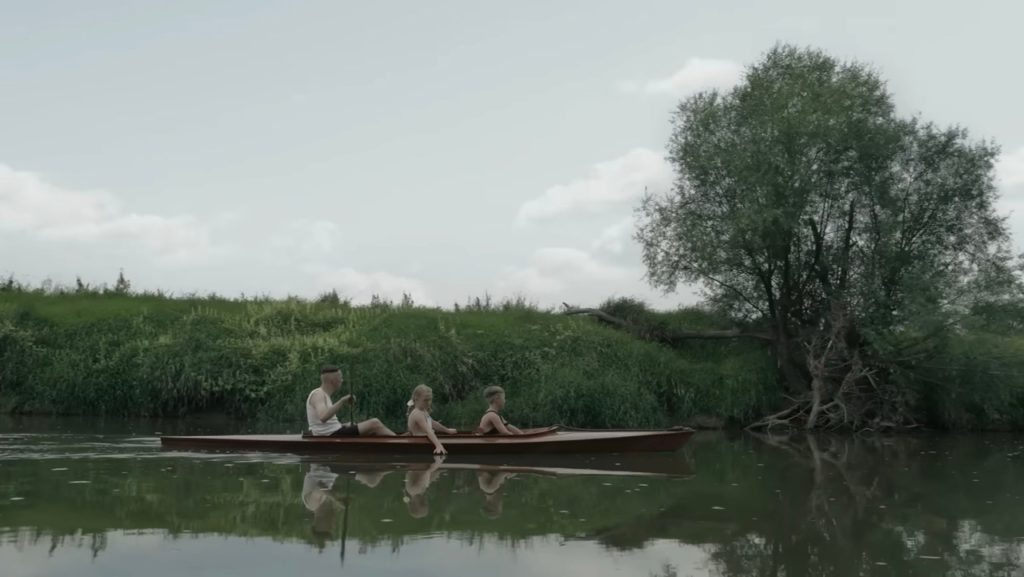
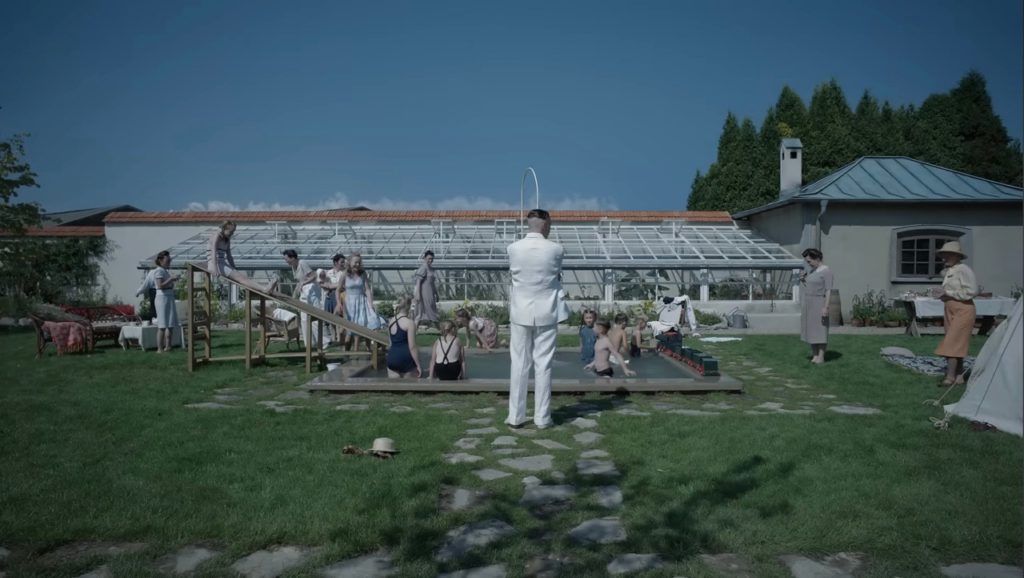
The married couple Höss and their many children live in a cozy house in the countryside: for the children there is a river and a large garden, for the mother (Sandra Hüller) a greenhouse with flowers of all kinds, and the father (Christian Friedel), in his free time, fishes in a boat gifted by colleagues and takes care of his beloved horse. This seemingly ordinary family is distinguished from others by the nature of its head's work and where they chose to create their paradise on earth. Literally behind the fence is one of the largest Nazi concentration camps — Auschwitz, where Rudolf Höss serves as commandant.
An Uneasy Idyll
The plot of the film can be described in two sentences, as can the penetrating dialogues be counted on the fingers of one hand. For an ordinary film, these two points would play rather negatively, but 'The Zone of Interest' is structured a bit differently. The theme of the Holocaust is very specific for art; it is difficult to show it in a non-trivial way without whitewashing the antagonists. Therefore, Glazer's film looks like a completely non-ordinary film about this terrible tragedy. For example, in an interview with the Financial Times, he said that for filming, the team equipped a house located next to the real Auschwitz with ten cameras that filmed the actors remotely, creating the effect of a kind of reality show.
Talking about 'The Zone of Interest' as a film about the 'banality of evil' is already banal, yet it is through this lens that one must view the world of the film. Another aspect that distinguishes this film from, say, Roman Polanski's 'The Pianist' and Steven Spielberg's 'Schindler's List' is the main characters — absolute antagonists, whose presence fills an innocuous, at first glance, scene with animal cruelty and cynicism. Here the mistress of the house distributes beautiful blouses to the maids from unknown sources; there the father's colleagues discuss the expansion of the 'enterprise' while the teenage son dresses in uniform to participate in a youth event. The duality of meanings pursues from the first to the last frame, frightening the viewer with its cold-bloodedness and hopelessness.
'The Zone of Interest' and Its Subtlety
Being a non-dialogue film, 'The Zone of Interest' balances between depth of content and inventive form, which, of course, looks more impressive. Sound is the faceless hero of the film. It creates an eerie sense of someone's presence in the house, but instead of the typical horror movie trope, the 'ghosts' turn out to be the camp prisoners, whom we can either hear or see what remains of them.
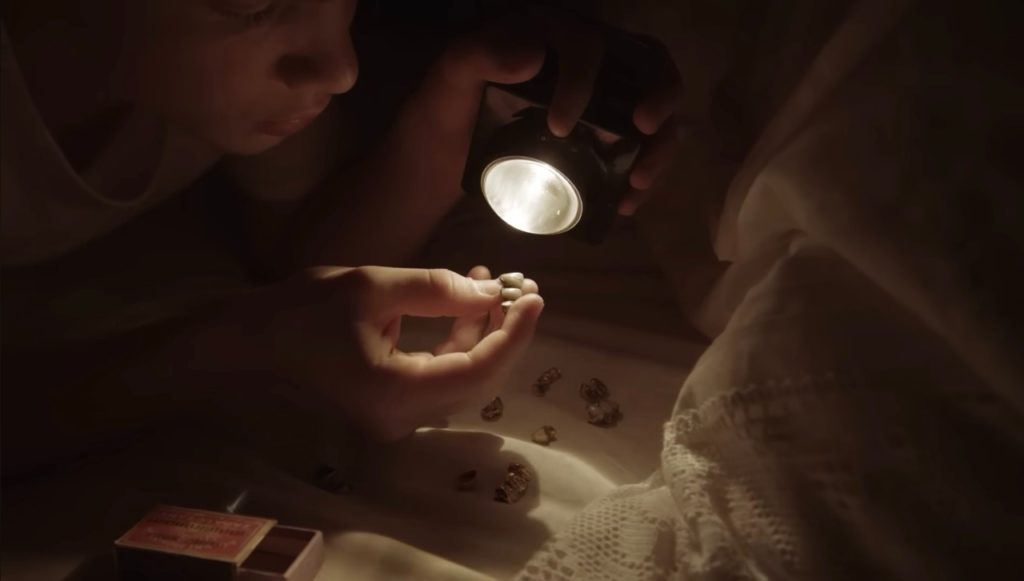
Comparing the modest chic of the Höss house with the dirty-brown barracks and large chimneys with billowing smoke, visible in almost every frame, creates an undeniable discomfort. The sound design broadens the picture of this place, adding context to what is happening. Thus, the film reflects a real fact from Rudolf Höss's life — wanting to protect his family from 'extraneous sounds,' he hired a special person to turn on a motorcycle engine when needed. The combination of this monotonous sound with the laughter of the family's children or the clinking of dishes at dinner is juxtaposed with the desperate, heart-rending screams of people, the sounds of iron, and a continuous hum.
Contrast is also embedded at the visual level — in associative parallelism. Historical knowledge concerning concentration camps here resonates with painful and unconscious oppositions: life in a snow-white house versus existence in a squalid barracks. The Hösses' affectionate dog and the fierce camp dog; in one house, little boys sleep on bunk beds with soft mattresses, hugging toys, while in another, similar boys sleep two to a straw bed; for the commandant's family, throwing away untouched food is as easy as pie, while in the camp it is scarce, and so on.
'The Zone of Interest' is not a complex dramatic film with ordinary, solid work by artists and cinematographers, but this is more than compensated by the inventiveness of the direction, technicality, and subtle acting (Sandra Hüller's character simply steals the film; her work on the character's gait and facial expressions makes you truly hate the loving mother and wife). The measured pace and asceticism create an effect of ordinariness, in which every minute of the runtime you notice the horrifying details of a human crime. The film's ending underscores this with a bold double line, turning Rudolf Höss's dreamy gaze against himself and his system, from which only horror and a lingering pain remain in history, in the Auschwitz museum and many other places.
Comments
0No comments yet.